The film’s devastating imagery and its innovative, mournful score by Simon Fisher Turner definitely deserve the big-screen treatment, so enter our competition and you could win a pair of tickets to any BFI Southbank screening of The Great White Silence. Just answer this simple question:
What was the name of the Norwegian explorer who beat Scott and his crew to the South Pole?
Email your answer to silentlondontickets@gmail.com by Thursday 19 May. The winner will be picked at random from the correct entries and emailed with the good news. Best of luck!
There’s a new film club in west London – Ealing’s Classic Cinema Club, which plans to show great movies from around the world every Friday night. They’re launching themselves in fine style, with a brace of silent films: Chaplin’s City Lights and Fritz Lang’s Metropolis.
From sentiment to science-fiction, that’s two very different silents, and this will be a great to watch some wonderful movies as well as an opportunity to meet fellow film fans in an area rich with its own cinematic heritage. First, the world-famous Ealing Studios are just down the road; second, I took Film Studies A-level at the local sixth-form college. OK, maybe I didn’t think that one through properly.
The following week, on 27 May, the club will show Eisenstein’s Ivan the Terrible (1944), which should be a fine accompaniment to the Soviet silents being screened at the BFI this month.
As ever, if your local film society is planning any silent screenings – do let me know.
City Lights screens on 13 May and Metropolis will be shown on 20 May, both at Ealing Town Hall. All screenings start at 7pm sharp and will be followed by a short discussion. Tickets cost £7.50 or £6 for concessions. Tickets may be reserved (but not bought) in advance by writing to classiccinemaclub@hotmail.co.uk or phoning 020 8579 4925. Membership is also available at £5. More details about the club can be found here.
With thanks to @ianburge on Twitter for telling me about these screenings.
You can’t throw a plate in London this month without hitting a screening of a Russian silent film, what with Battleship Potemkin and the BFI’s Kino season, and the Barbican is getting involved too. The final episode in the cinema’s City Symphony strand is Dziga Vertov’s weird and wonderful Man with a Movie Camera. It’s a masterpiece of montage, with a whimsical sense of humour and a remarkable rhythm.
Dziga Vertov’s ‘city symphony’ creates a montage of daily life in Moscow (with some scenes shot in Odessa) and emerged as one of the most innovative and experimental films of the silent era. Stunning photography by Vertov’s brother Mikhail Kaufman depicts the pulse and energy of the city in the late 1920s, the people at work and play, and the machines that make the city tick. A landmark in avant-garde cinema.
The film will be shown on 35mm film, and will be accompanied by a live score from In the Nursery, a synth-based band from Sheffield which has soundtracked several silents. Here’s a review of their Man with a Movie Camera score from a performance in 1999.
Comprised of relatively lush, ‘intelligent’ techno, the music adds a contemporary feel to a film whose joyous celebrations of modernity in all its forms still seems fresh… Seeing the film for the first time, I found it almost overwhelming. Although In the Nursery’s techno is less ‘industrial’ than it could have been, its unashamed populism does Dziga Vertov proud.
Man with a Movie Camera screens at 4pm on Sunday 29 May 2011 at the Barbican Arts Centre. Tickets cost £10.50 or £8.50 online or £6.50 for members. You can buy them here.
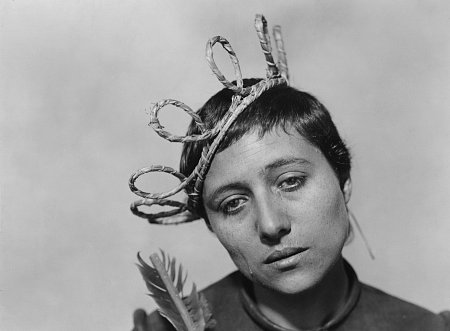
Just a quick note to say that I have reviewed Adrian Utley and Will Gregory’s glorious new score for The Passion of Joan of Archere, on the Spectator Arts Blog. If you get the chance to catch this at the Brighton Festival or I’ll Be Your Mirror in July, I’m sure you won’t regret it.
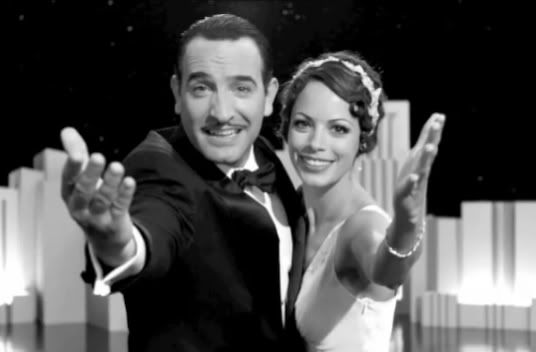
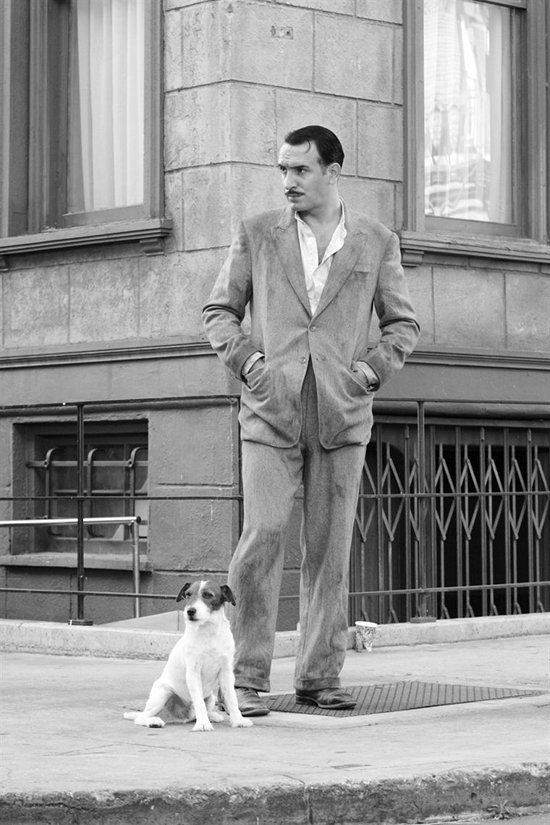
This is a turnup for the books. A new silent feature film by French director Michel Hazanavicius has been added to the competition lineup for this year’s Cannes Film Festival. The Artist (2011), starring John Goodman, is a silent, black-and-white, 1.33:1 film about the demise of a silent star’s career during the arrival of sound – and it will be competing with titles including Terence Malick’s The Tree of Life and Lars Von Trier’s Melancholia for the prestigious Palme d’Or prize.
There’s no confirmed UK release date for The Artist yet, but this news would suggest that we’ll see it sooner rather than later. Unfortunately, your correspondent is not a Cannes delegate, but I will be keeping track of the reviews coming back from the festival, and of course, hoping that this film does justice to the era we love. The 20 films in competition include work by Aki Kaurismaki, Pedro Almodovar, Lynne Ramsay and the Dardenne brothers. Still, wouldn’t it be something if a silent film won the Palme d’Or in 2011?
People who have seen Hazanavicius’s previous films – the retro OSS-117 spy capers – say he has a sure touch with period detail. His first film, La Classe Américaine, was actually a redubbed collage of extracts from the Warner Bros archive, so it’s reasonable to assume he knows his film history. The question is whether The Artist can avoid pastiche, and satisfy silent film fans as much as the wider audience – let alone the judges at Cannes. Goodman is joined in the cast by Hollywood veteran James Cromwell, and Penelope Ann Miller, who you might remember played Edna Purviance in Richard Attenborough’s Chaplin biopic.
The Artist (2011)
UPDATE:The Artist has been bought at Cannes by the Weinstein Company. The Weinsteins are saying “Oscar season release”, which we should perhaps take with a pinch of salt, not least because it means quite a long wait until we see the film in the UK. Talking about Oscars raises other questions, though. Would they be angling for a nomination for Best Picture or Best Picture in a Foreign Language? Will the intertitles be translated or subtitled outside France? Still, it’s definitely a vote of confidence in the film, and let’s not get ahead of ourselves.
You can watch some extracts here. Yes the interviews with the director and actors Jean Dujardin and Berenice Bejo are in French, but as you’ll see, the language barrier is no obstacle for the clips, which demonstrate a sophisticated visual approach to film-making. From the evidence here, The Artist definitely has more than a flavour of late 1920s Hollywood, using dance and humour rather than dialogue to tell its story. Bejo talks about: “un rapport tres sensuel entre le spectateur et l’histoire”, which seems to sum it up rather well.
The Artist screens at the Cannes Film Festival on Sunday 15 May.
Le Voyage Dans la Lune (1902)
And The Artist isn’t the only silent film screening at Cannes this year. Hugely excitingly, the festival will also host a screening of George Méliès’s La Voyage Dans la Lune (1902) – like you’ve never seen it before. A nitrate print of the elusive hand-painted colour version of the film was discovered in Barcelona in 1993 and has been salvaged, frame by frame, by Lobster Films, Groupama Gan Foundation for Cinema and Technicolor Foundation for Heritage Cinema. The beautiful film will be premiered at Cannes with a score by the dreamy French band Air. As soon as I hear about a chance to see this new version in London, you’ll be the very next people to know.
This month sees the return of Brighton Festival, a three-week cultural feast, featuring music, theatre, comedy and more than the city’s usual share of jugglers no doubt. It’s a very high-profile event – Burmese activist Aung San Suu Kyi is the festival’s Guest Director this year, and she has recorded an inspiring message for the festival website, all about creativity and freedom of expression.
Therefore I am very pleased to say that early cinema is among the artforms represented at the seaside festival, most notably by a screening of Dreyer’s The Passion of Joan of Arc, accompanied by Adrian Utley and Will Gregory’s compelling new score. I was fortunate enough to see (and hear) this last week in London and it really is a tour de force, so please do attend the screening on 29 May at the Concert Hall if you can. Details here.
But it doesn’t stop there. Professor Heard will be setting up shop in the festival’s pop-up cinema, for two magic lantern shows on 16 May. First on the bill, at 7.45pm, will be the Old Curiosity Show, featuring “bearded ladies, alphabetical acrobats, prodigious pigs, baby juggling and curious cinema advertisements”. Then at 9pm the professor will return with a little something strictly for the over-18s:
A sniggerfest of artistic fluffing material. A prurient look at Victorian erotica, plus further examples of the way in which Victorian gentlemen and ladies got their jollies. Definitely not for children.
Elsewhere, on the Festival Fringe, David Watts will perform his The Silent Movie Experience on 15, 22 and 29 May, playing along to silent comedies at the Komedia Studio. Details here.
Also at the Komedia Studio, an intriguing short theatre piece called Asta Nielsen is Dead: a Silent Movie will use projections and captions to pay homage to the Danish actress:
Lady Pumpernickel and Miss Carrota interact with projected texts and images, using methods found in silent films. As in silent films the performers will suffer from the tragedies of love & attempt to escape bizarre and humorous accidents. At the end there is just one open question: Who is going to die?
If you live near Bristol then you’ll know all about Bristol Silents already – those marvellous people who put on silent film screenings all year round as well as the annual laughathon that is the Slapstick Festival. But those of us dwelling within the confines of the M25 needn’t be too despondent. Bristol isn’t far away, and when you hear that Bristol Silents are putting on a screening of a classic film, with a new score and an introduction from Aardman Animation’s Peter Lord, I wouldn’t blame you for whipping out your train timetable.
So the film in question is Harry O Hoyt’s special-effects extravaganza The Lost World (1925) and the new score has been written by John Garden, who plays keyboards with glam dance-poppers Scissor Sisters. Over to Bristol Silents:
The magical special-effects work is by Willis O’Brien – pioneer genius of three-dimensional animation and of the combination of animation and live action, whose subsequent masterwork was to be King Kong.
The story is familiar enough – careful, deliberate build up; journey to a sinister land where prehistoric monsters still thrive, cut off from the rest of the world for millennia; the capture of a dinosaur and the results of bringing in back to civilization (in this case London).
The marvel of the film is the extraordinary spectacle of seeing these pioneering stop-motion creatures eating, bathing and fighting. The sequences of a brontosaurus running amok in London still astonishes.
Time for some exclamation mark abuse, I feel. Louise Brooks! In Pandora’s Box! On the big screen! For free!
It’s true. The Prince Charles Cinema has generously donated a pair of tickets to see Pandora’s Box on 26 May to one lucky reader of this blog. All you have to do is answer a simple silent film question and drop me an email. This is the question:
Louise Brooks made one more film with director GW Pabst after Pandora’s Box. What was it called?
Know the answer? Then email both your answer and your full name to silentlondontickets@gmail.com by 11 May 2011. When the closing date rolls around I will pick one correct answer at random and the fortunate emailer will receive two free tickets to the Pandora’s Box screening on 26 May. Simple as that. Good luck!
But the Ritzy plans to mark its centenary with more than just film screenings. Its Around the Decades parties will kick off on 20 May with a swinging celebration of 1911, the year the cinema was built:
It’s spring 1911 and America’s hottest trend has finally set sail for Europe’s shores. Have you heard that “everybody’s doin’ it now”? Leave behind Mazurkas, Schottisches, Polkas, the Grizzly Bear and the Turkey Trot, and ready yourselves for London society’s most contemporary steps… RMS Lusitania Orchestra are flooding the town with the sound of RAGTIME.
The decade The Ritzy began was filled with a fair amount of war, several sinking ships (Titanic included) and even more Spanish flu but no need to be glum! We will be making sure that we only bring the best bits to our party Upstairs. So leave your bunkers and don your most opulent gowns and suits, whilst we take you back, waaay back to a time of true class and style. A night of foot-hopping rhythms, vintage chic and many a Singapore Sling. All hail King George V!
Music, vintage frocks and cocktails in one of London’s best cinemas? Well, why the devil not? Tickets for the party are £6 or £4 for concessions and the music starts at 8.30pm on Friday 20 May. More details here.
As we are about to break up for the Easter weekend, I couldn’t resist sharing this egg-cellent 1902 trick film by George Méliès, L’Oeuf du Sorcier, with you. And as Easter is the festival of rebirth and new life, you will surely have noticed that Silent London has shelled out for a new web address. Point your browsers at silentlondon.co.uk in the future. It’s shorter, snappier and easier to remember than the old address – so chick it out. And that clunky old URL will still work anyway, so even if your brain is a little scrambled, you should be able to find the site with ease.
Have a wonderful Easter break dear readers and I will see you back here next week for egg-citing announcements about silent film shows, cracking competitions and, hopefully, no more of these terrible yolks.
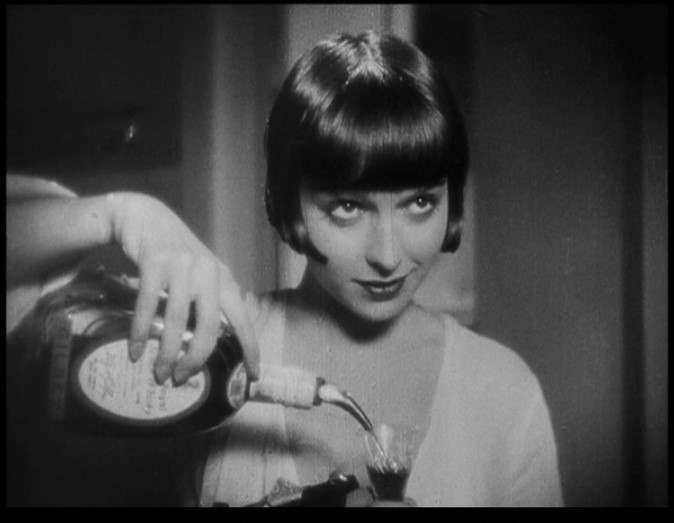
If you haven’t seen Pandora’s Box (1929) before, I’m actually a little jealous of you. This film and its notorious leading lady are so irrepressibly gorgeous that your first viewing really should be a big-screen experience – and this is the perfect opportunity.
By the end of the 1920s Louise Brooks had had her fill of Hollywood, and Hollywood had pretty much had its fill of her. Lucky, then, that she caught the eye of German director GW Pabst and moved to swinging Weimar Berlin to take the lead role in Pandora’s Box. Brooks plays Lulu, a hedonistic dancer who pursues her own pleasure at the expense of bourgeois morality, or pretty much anyone’s morality, come to mention it. The role has come to define Brooks and rightly so. Who hasn’t, when watching Brooks shake her iconic bob, thought: “That girl could get away with murder”? Pandora’s Box puts that theory to the test like no other movie, and Brooks’s sensual performance radiates here – even as events take a series of sinister turns and the film transforms from a backstage comedy, to a thriller, to something approaching horror.
Keep an eye out for your chance to win a pair of free tickets to Pandora’s Box next week, here on Silent London
Pandora’s Box screens at the Prince Charles Cinema on Thursday 26 May at 8.30pm. Live piano accompaniment will be provided by the marvellous John Sweeney. Tickets cost £10 or £6 for members and they’re available here.
Did you know that 30 April is Walpurgisnacht? It’s pagan festival celebrated in lots of countries across Europe. There are several different interpretations of the feast, but it’s always on the same date each year and it is usually associated with dancing, bonfires – and sorcery.
In one corner of Hackney, Walpurgisnacht will be celebrated this year not with a witch-burning, but a spooky magic lantern show. It’s always a joy to see a little bit of pre-cinema technology being used, shared and enjoyed in the capital, so I’m glad that Professor Heard, who treks up and down the country with his glass slides, is coming to the Last Tuesday Society to terrify the good people of east London.
Professor Mervyn Heard will conjure up the black art of Phantasmagoria with his 19th Century Magic Lantern. Watch and behold as skeletons waltz across the wall and nuns bleed to their death despite a life of virtue.
The Last Tuesday Society is based at a curiosity shop in Mare Street, Hackney, and hosts an eclectic series of lectures and workshops on everything from tantric sex to Iranian literature. The magic lantern show will be returning to the venue for Halloween, but that’s far too long to wait for your vintage thrills.
There will be two seatings for the Walpurgisnacht Gothic Magic Lantern Show. Tickets cost £10, and are available at the website here.
The Charlie Chaplin Google doodle is more ambitious than most. It links to this cute Chaplin-esque video. It hasn’t appeared here in the UK quite yet, but look out for it tomorrow, 16 April, which is the 122nd anniversary of the actor/director’s birth. Very nice of Google to mark the occasion, but this video does make you miss the real thing. Those of you who are Chaplin fans all year round and not just on his birthday might enjoy this article from the Spectator. It’s a preview of the forthcoming Chaplin museum in Switzerland and an interview with the film-maker’s son, Michael. Definitely worth a read.
The 14th British Silent Film Festival was held at the weekend, in the Barbican, the Cinema Museum and the BFI Southbank. A full report of the films, the lectures, the music and the gossip* will be forthcoming on this blog shortly. Meanwhile, here’s a piece I wrote for the Guardian Film Blog. It’s not quite a roundup of the festival, but it brings together some of the things we learned about silent film and music over the weekend – and I hope you enjoy it. If you were at the festival, let me know what you made of it, too.
Who says silent film screenings can’t be cutting-edge? Excuse the bad joke, please. The Sci-Fi London film festival is putting on a screening of Der Golem (1920) and the music will be provided by Sawchestra, who play saws (obviously) as well as toy instruments and other found objects. What’s more, they’ll be handing out some more instruments to the crowd, as they’re very big on audience participation. I can only imagine how rowdy this is going to get – but it sounds like a whole heap of fun.
Der Golem: How He Came Into the World is an early Expressionist horror, full of black magic, high drama and outright weirdness. The plot concerns a rabbi in 16th-century Prague who creates a man out of clay, and then brings him to life to terrorise those who are persecuting the Jews. It’s a little ridiculous, of course, but Karl Freund’s Expressionist cinematography is a treat, and playing along with Sawchestra should be a great opportunity to camp it up and enjoy this strange film.
Dir. Sergei Eisenstein, USSR, 1925, 71 minutes, cert PG
As the Black Sea foams and crashes into the shore, an intertitle describes the waves of revolutionary feeling sweeping Russia in 1905, and the 55-piece orchestra swells into action. Sergei Eisenstein opens his classic film Battleship Potemkin (1925) with an adroit combination of image, word and music – which we can now experience here in Britain for the first time.
So much is fresh to UK audiences about this 86-year-old film resident on countless Greatest Ever lists and pored over by generations of film students. First, there’s the original orchestral score written by Edmund Meisel and a handful of reinstated shots, some of which were excised from the unforgettably tense Odessa Steps sequence. Not only this, but the film has been beautifully restored, and the title cards recreated according to the director’s wishes. The language is stronger and more socialist than before. It’s bolshier.
Eisenstein’s second feature film is all about solidarity, as it tells the story of a mutiny aboard the eponymous battleship. A group of sailors refuse to eat soup made with rotten meat, and face a firing squad of their peers, but the spirit of comradeship intervenes as the crew rise up against the senior officers – and proudly hoist a bold red flag as they sail into Odessa harbour. On shore, the locals also support the sailors, with terrible consequences. The question is, will the rest of the fleet welcome the revolutionaries home, or follow the command to fire?
Because Battleship Potemkin is an appeal to fellow-feeling and collective action, it is only right that the restoration work creates a more immersive film, one that places no barriers between a 21st-century audience and its monumentally powerful imagery.
In this print, the maggots in the sailors’ dinner squirm in all their greasy glory and the splatters of blood on the Odessa Steps glisten, wetter than before and more gruesome. But it’s not all about horror. The sunlight glints sharply off the calm waters, or is diffused gently through the early morning mists. The scenes of small boats with white sails bringing supplies to the Potemkin are particularly gorgeous. That red flag is vividly, almost luridly hand-tinted red – as aggressively bright as the senior officers’ white trousers, in cruel contrast to the lower orders’ dingy uniforms.
The gloomy scenes below deck are free of murk, too, and we can pick out individuals in the massive crowd scenes. It’s perfect for tracing each extra’s individual path down those infamous steps, some trampling on bodies, and some stumbling over them as they fall.
Then there’s the score. Motoring through the film’s brisk 71-minute running time with a booming bass drum, the music is at its best mostly when it is bombastic. I liked the sustained woodwind sound before that first, fatal thrown plate, and the crashing percussion that announced the arrival of the cossacks. I wasn’t so convinced by the cracking sounds that synchronised with the gunshots, but soon these musical sound effects won me over. Occasionally the score tends towards jaunty, when perhaps it could have been tense, such as when the sailors dive off the Potemkin in an attempt to rescue a fallen comrade. But my qualms were swept away by the film’s final sequence: the music pulses faster and faster as the ship gains speed and prepares for battle, ratcheting up the tension superbly.
Battleship Potemkin, restored by the Deutsche Kinemathek, is on theatrical release from 29 April, screening in London at the BFI Southbank and the Curzon Renoir among other venues.
The Russians are coming to the BFI Southbank. In the year that sees the release of the restored Soviet classic Battleship Potemkin, the BFI is exploring Russian cinema with a seven-month programme: two months will be spent travelling through Russian cinema history, followed by a season of science-fiction and space documentaries, and a final season devoted to the director Alexander Sokurov.
It’s the first month that mostly concerns us, and the BFI is showing 12 silent features, plus a programme of early shorts (all playing twice) and a couple of educational events. That’s alongside Potemkin’s extended run and two special screenings with live scores (Eisenstein’s The Old and the New and Pudovkin’s Storm Over Asia). Plus, don’t forget that Eisenstein’s October is on in April. It could be a little daunting, so here’s the Silent London guide to what’s on when and what it’s all about.
Some of these films are very rarely seen, or at least very rarely seen on the big screen. That’s a polite way of saying that a couple of them are the kind of favourites that do come round fairly regularly. Which is not to say that you should give them a miss, but this is a good opportunity to see some Russian rarities, so pick your screenings wisely. Unless, of course, you plan to see everything, in which case I tip my (fur) hat to you.
It’s not all about Russia at the BFI in May. This L’Histoire du “Look” strand is dedicated to the development of visual style in the cinema, as part of the educational Passport to Cinema programme. Quite frankly, all six titles in this first part are worth a gawp, but we’ll restrict ourselves to the silents here – three gems, each shown three times, which should keep the BFI pianists busy.
The Cabinet of Dr Caligari (1920) is here representing the angular, dreamlike world of German Expressionism. The shifting perspectives of the scenery mirror the shifting narrative, where nothing is ever quite what it seems for long.
1 May 3.50pm/2 May 6.10pm (with introduction)/4 May 8.30pm
The Last Laugh (1924), directed by FW Murnau, is remarkable for being (almost) intertitle-free, allowing Karl Freund’s mobile camera and Emil Jannings’s powerful lead performance to to tell the story of a doorman who loses first his job and then his social standing.
4 May 6.10pm (with introduction)/5 May 8.40pm/13 May 6pm
Queen Kelly (1929) is known as a lost film, as star/producer Gloria Swanson walked off set one day, disappointed by director Erich von Stroheim’s less than wholesome interpretation of the Hays-approved script. Von Stroheim was sacked and sections of the film removed; it was later re-edited and completed as Swanson wished. However, the luxurious sets and glamorous costumes we expect from Von Stroheim are all present and correct – as is the melodramatic plot.
Update: The restored 1985 version of Queen Kelly will be screened, which has an orchestral score already, so there will be no live accompaniment.
2 May 3.50pm/9 May 6.10pm (with introduction and short animated film from NFTS)/21 May 8.45pm
All screenings except Queen Kelly have live piano accompaniment. Tickets cost £9.50 or £6.75 for concessions, and less for BFI members. They will be available on 4 April for BFI members and from 11 April for everyone else. More details on the website here.
At last year’s East End Film Festival, Minima rocked up at Spitalfields Market for an outdoor screening of Hitchcock’s The Lodger. To say that you enjoyed that evening would be an understatement – it was a great night and the film was an inspired choice, with a plot coloured by the East End’s most notorious villain, Jack the Ripper.
This year, the East End Film Festival has booked Minima for another silent screening, and it’s one that reflects a happier aspect of the local area. The East End of London has long been home to a strong Jewish community, and the festival is celebrating this with a Romanian film, Manasse (1925).
This is not just a fresh addition to Minima’s repertoire, but a UK premiere! I was completely unfamiliar with it before today, but I can tell you that it is directed by Jean Mihail, and based on a play from the turn of the century, which was written by Roman Ronetti on the theme of religious intolerance. It’s a story about a romance between a Christian man and a Jewish woman, the niece of the title character Manasse Cohen, a Bucharest banker (played by the famous Romanian actor Romald Bulfinschi). The play was hugely controversial and was not performed in Romania for many years. So one would imagine that this film, made a quarter of a century later when the Yiddish cinema scene was flourishing, would have been highly anticipated. I’m definitely intrigued.
The festival programme has this to say:
Manasse is a highly dramatic take on the problems inherent in Romanian society at that time. Mihail was one of Romania’s most important early directors, and he explores and debates the most sensitive of issues with sincerity, visual panache and unflinching dramatic power.
As with previous years, the film will be screened in Spitalfields market, and it’s scheduled for Saturday 30 April 2011 at 8pm. Tickets for the East End Film Festival are available as of this morning, but this screening is free. Free. So fill your boots, people.
This May, the BFI is offering a fantastic programme of silent film screenings. There’s the theatrical release of The Great White Silence and Battleship Potemkin, three German gems in a short season devoted to cinematic style and the first tranche in a monumental celebration of Russian cinema entitled Kino: Russian Film Pioneers. And this last strand announces itself with not one but two special screenings of Soviet classics with live scores.
First up on 5 May is Sergei Eisenstein’s The Old and the New, also known as The General Line (1929). This was Eisenstein’s attempt to celebrate the Soviet system of collective farming, but he broke off halfway through to make October, and the final film is more like an essay on the mechanisation of agriculture. Eisenstein’s montage editing, and somewhat suggestive imagery, elevate the film to something more exciting though. The film’s most celebrated sequence involves a cream separator – you can watch it at the top of this post. Really, there are no words. But you can see from that clip that the editing is rhythmic, almost musical.
No score was ever written for the film, but Eisenstein did write some notes, which have been lingering in the BFI archives all these years. Musicians Max De Wardener, Ed Finnis and the Elysian Quartet have constructed a score from these notes especially for this screening. This world premiere promises to be something very special – both of historical interest, and a thrilling combination of film and music too.
Storm Over Asia (1928)
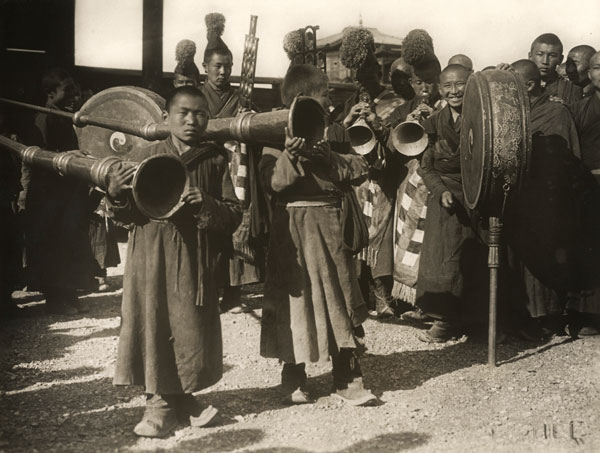
The second special event is on 20 May and has been curated by “live cinema” specialist Marek Pytel. It’s a screening of Vsevelod Pudovkin’s epic Storm Over Asia (1929) accompanied by Yat-Kha, a throatsinging rock band from Tuva, which is in the south of Siberia and borders Mongolia. The film, sometimes known as The Heir to Genghis Khan, tells the story of a Mongolian herdsman, Bair, who fights with the Soviets against the occupying British army. Bair is captured by the imperialists, who come to believe that is descended from Khan and try to use him for their foolish ends.
Storm Over Asia has been restored to its full length from the original negatives, and Yat-Kha’s music, described as “brooding, growling and earthy” should provide a contemporary but wholly sympathetic soundtrack.
The Old and the New accompanied by Max De Wardener, Ed Finnis and the Elysian Quartet screens at NFT1 on Thursday 5 May at 7.15pm.
Storm Over Asia accompanied by Yat-Kha screens at NFT1 on Friday 20 May at 7.15pm.
Tickets cost £13, or £9.75 for concessions, and £1.50 less for members. They will be available at the BFI website here.









 Silent London