Category Archives: Blog

The Silent London Poll 2012 – we have a winner

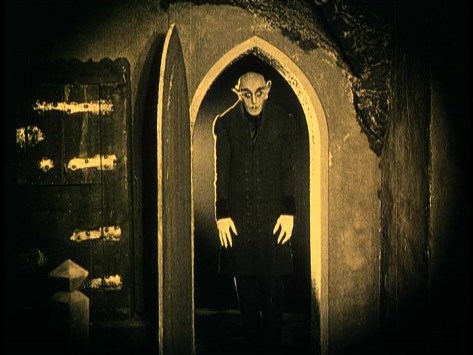
Nosferatu (1922)
Nosferatu (1922)

It’s enough to rekindle your faith in democracy. This year’s Silent London Poll was our biggest ever – with more than 1,500 votes cast and, I suspect, some hard lobbying on behalf of your favourite shows.

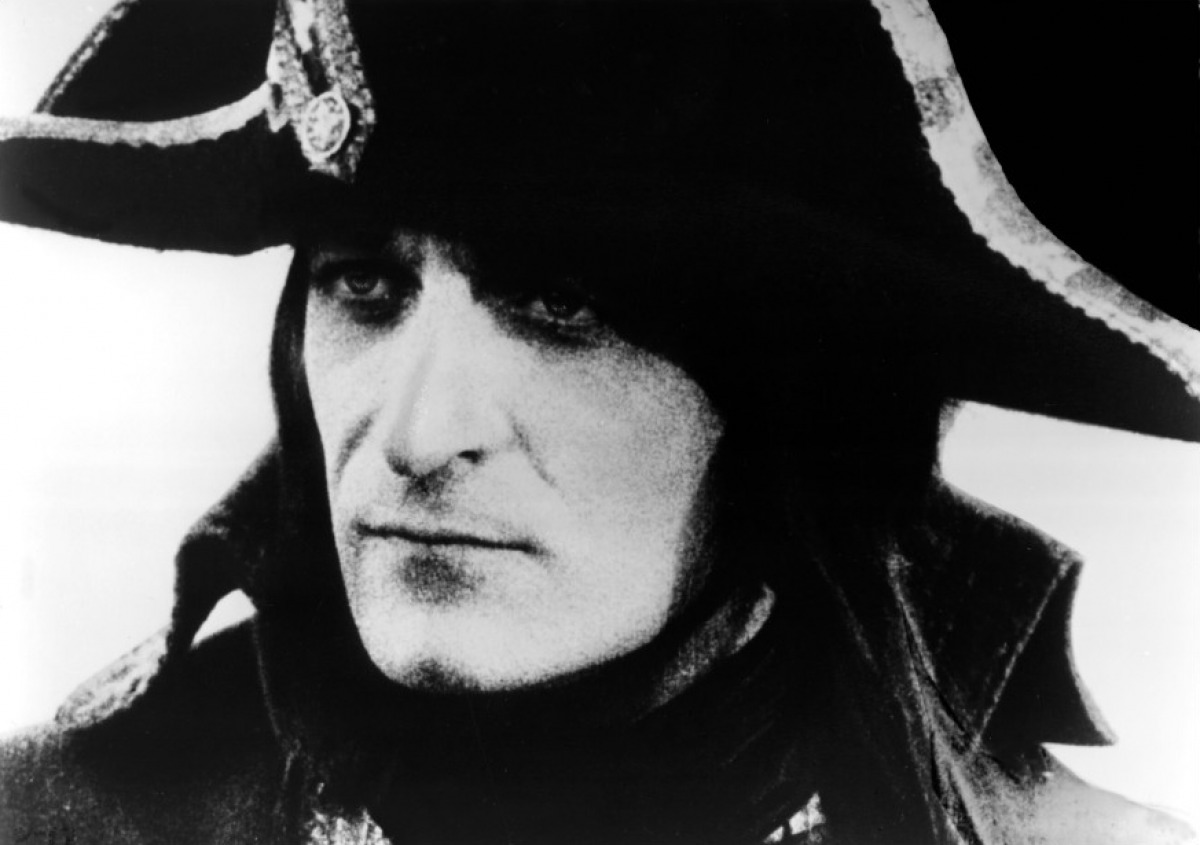
I can now reveal that this year’s winner was … the performance of Nosferatu scored by Minima with Paul Ayres’ Queldryk Choral Ensemble at Spitalfields Market as part of the East End Film Festival. A great film, an atmospheric venue and what sounds like a killer soundtrack from one of our favourite bands. Were you there? Or did you take part? If so – congratulations, and I hope we see some more similarly ambitious outdoor screenings in 2013.

The Nosferatu event gathered a massive 42% of the vote (and there were votes cast for some of Minima’s other performances this year) but an honourable second place goes to the stunning screening of Faust at the Royal Festival Hall with its romantic orchestral score by Aphrodite Raickopoulou.

Tied in third place were two screenings from the BFI’s Hitchcock season: The Manxman with music from Stephen Horne, and The Pleasure Garden with a score by Daniel Patrick Cohen.

Thanks for your votes  and for sharing the poll – it all adds evidence to the impression that it has been a great year for silent film in the country. Happy new year!

Merry Christmas and a happy 2013 from Silent London!

Here at Silent London we would like to wish all our readers a very happy Christmas and a prosperous new year. We hope your stockings are full of cinematic treats – and that your family indulge you when you want to press play on your Die Nibelungen DVD after lunch. We’d also like to take a moment to consider 2012, a truly landmark year for silent cinema.

Berenice Béjo in The Artist (2011)

The Artist, its retro charm, and its unstoppable award-gathering, dominated the first half of the year. Martin Scorsese’s adorable Hugo did almost as much to popularise the silent era – while Miguel Gomes brought a hint of Murnau to the arthouses with his Tabu. Pablo Berger’s sumptuous Blancanieves stunned the critics at festival after festival, too and with any luck will get a UK release next year. The fact that it has been nominated as Spain’s official entry for the foreign-language Oscar should surely help.

On the west coast of the States, Napoléon fever struck in spring, with popular screenings of Abel Gance’s epic, the first in that country for many years. Will we see the triptychs back in London in 2013? Maybe.

The Manxman (1929)
The Manxman (1929)

Meanwhile we were spoiled for choice for screenings in the UK – from a chucklesome Slapstick Festival in Bristol in January, the return of the Hippodrome Festival of Silent Cinema in Bo’ness in March, the 15th British Silent Film Festival in Cambridge in April, and a summer of silent Hitchcocks in London, culminating with the gala screening of The Manxman.

Perhaps that’s why this year’s end-of-year poll has been the biggest yet – we’ll be announcing the winner on Friday.

It’s been a year of growth for this site all round: we introduced a new regular columnist when Ayse Behçet began guiding us around Chaplin’s London in March. She’s now got her own site, so don’t forget to bookmark Charlie’s London. We’ve have more reviews than ever before, by a bigger team of writers, and we started podcasting too. Also 2012 marked my first (hopefully of many) trip to the Giornate del Cinema Muto in Pordenone – and my foolhardy attempt to blog it all, day by day.

The Silent London Calendar continues to be the raison d’etre of the site, though, so check regularly for new events. Early in 2012 we’ve got It at the Phoenix Cinema, introduced by Kevin Brownlow, and The Life Story of David Lloyd George, introduced by Ian Christie, to look forward to. A little bird tells me there will be news about the 2013 British Silent Film Festival to share soon, as well. And did I forget to mention the theatrical release of Anthony Asquith’s Underground?

Have a fabulous festive season everyone – and enjoy the silents.

Silent cinema and the web: resources

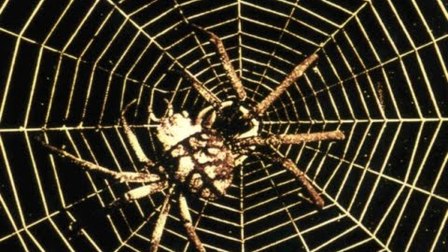
L'ARAIGNÉE D'OR
Geddit? L’Araigné d’Or (1909)

You have probably noticed that Sight & Sound magazine features a regular column called Primal Screen, devoted to “The world of silent cinema”. This is undoubtedly a Good Thing, although it doesn’t appear online, which in some ways, is a Bad Thing. With absolutely no respect for this position, when I was asked to write the Primal Screen column in the January 2013 edition of Sight & Sound, I devoted my wordcount to the relationship between early cinema and the web.

Hyperlinks don’t work on the printed page, or even on the digital version of the magazine, so I thought I would help out by posting some of the links to the sites I mention in the piece here, on Silent London. In fact, Silent London is one of the sites I mention, but you already have that one bookmarked, right?

Here goes:

Do buy the magazine, there’s lots of silent cinema in it this month, from Neil Brand on Beggars of Life, to Nick Pinkerton on Fritz Lang, and even myself popping up again to talk about the Battleship Potemkin/Drifters box set.

Arthur Melbourne-Cooper: matchstick man of the early silent era

This is a guest post for Silent London by Robyn Ludwig.

The British Animation Showcase at the 2012 London International Animation Festival screens this Thursday evening. Yet 113 years before these contemporary animators would bring their cartoon characters to life and to audiences, St. Albans-born Arthur Melbourne-Cooper (1874–1961) began making primitive stop-motion films, arguably the first and oldest surviving animations.

Trained by his father in photography, Melbourne-Cooper began his career in 1892 as an assistant to Birt Acres, another cinematic forerunner who has been credited as the first person to take 35mm film in Britain. Melbourne-Cooper was a cameraman on a number of Acres’ newsreels and trick films, until 1899, when he directed his first stop-motion animated short, Matches: An Appeal.

The film is a highly inventive advertorial piece, both a fundraising appeal and an advertisement for Bryant & May matchsticks. Using matches jointed by wire and captured frame by frame, Matches: An Appeal features a sprite little stick figure writing a propagandistic message on a wall, asking the audience to donate one guinea to send a free box of matches to a British soldier fighting overseas.

But with the original 35mm reel long lost, the release date of the film remains a contentious issue. Melbourne-Cooper, along with his descendants, insisted that the film dated to the beginning of the Second Anglo-Boer War, ahead of J. Stuart Blackton’s vanguard animation The Enchanted Drawing of 1900. Researchers, however, have argued that Matches was released in 1915, as an appeal for the First World War. Film historian Denis Gifford adds to the confusion by suggesting: “Recent research sets it as produced in the Great War of 1914. This may, however, be a reissue as the setting of this film is identical with Animated Matches (1908).”

Debate over provenance also surrounds Animated Matches Playing Cricket (1899) and Dolly’s Toys (1901). The latter is a live-action and stop-motion puppet animation, credited variously to lightening sketch artist and trick filmmaker Walter R Booth (1869-1938) or to stage hypnotist and filmmaker George Albert Smith (186-1959). Again Gifford seems uncertain, noting that “the plot is so similar to many later films made by Arthur Cooper that it could be his first production” or conversely, that “it could be another of … Booth’s regular trick films made at… Animatographe Studio”.

Less controversy over authorship surrounds Melbourne-Cooper’s Dreams of Toyland (1908) though the film is often listed as A Dream of Toyland (1907). In Dreams, a little boy falls asleep and his toys come to life, a surreal but spasmodically animated fantasy with a confounding array of playthings. The film, undeniably, replicates the motif from Dolly’s Toys, only this time with a male protagonist, and Melbourne-Cooper would repeatedly revisit these storylines, themes, characters and techniques in such films as The Enchanted Toymaker (1904), The Fairy Godmother (1906), In the Land of Nod (1908), The Toymaker’s Dream (1910) and Road Hogs in Toyland (1911).

Clearly Melbourne-Cooper was a prolific animator, in the nascent years of cinema to the outbreak of war in 1914, producing dozens of short films combining stop-motion and live-action. Regrettably he has become a dubious footnote in silent animation history, and has been consigned to an obscurity shared with Walter Booth, George Smith, Anson Dyer and other British animators of the era.

Animated Matches Playing Cricket, Matches: An Appeal, Dreams of Toyland and Road Hogs in Toyland can be viewed online at the East Anglian Film Archive.

References

Gifford, Denis. British Animated Films, 1895-1985: A Filmography. Jefferson: McFarland & Co. Inc., 1988.

Robyn Ludwig holds a Master of Film and Literature from the University of York, U.K., and a Bachelor of Arts in English Literature from the University of British Columbia, Canada. Her current research interest is animation from the silent film era. In addition, she has been an administrator in the charitable arts and culture sector for the past ten years, a fundraising consultant for film festivals, and a television critic for the Vancouver Observer.

In praise of early cinema: the theatrical and the cinematic

A Christmas Accident (1912)

This is a guest post for Silent London by Chris Edwards, who writes the Silent Volume blog.

Being a silent film fan can marginalise you. Recently, I went to a screening of Alfred Hitchcock’s Dial M for Murder. Afterward, the cinephiles were discussing Hitch films they’d seen. “What do you think of the Hitchcock 9?” I asked them. “The Lodger’s pretty good.”

Crickets.

It’s better among fellow fans. We all skirt the periphery together. We talk about the great silent classics, arguing their places in the canon; we discuss the latest restoration, the newest score, the anticipated Criterion release date, or what a crime it is that there isn’t one. We hear about an obscure gem, and then can’t wait to see it.

But it is possible to be marginalised even by silent film aficionados. I have felt it. Because, while I love all silent film, I hold a particular affection for the very earliest stuff: films made from the late-19th century to about 1913 or so. Films that many silent films fans have no use for.

Well, that’s harsh. And it’s not quite what I mean. Many silent film fans do love these old curios; it’s just that few of us love them for their artistic merit.

Rarely do we hear anyone discuss a director from this period as an artist, or the works themselves as having any profundity. Brief, stiff, and broadly acted, these ancient movies are valued primarily as museum pieces. They’re notches on a scale of development from proto-film experiments through to “modern” film as we have come to recognise it. They’re assessed in terms of what they lack. And I’m telling you, we’re missing out.

Why do I think that? Because some of these films have left me with ideas to ponder. Not just ideas about the history of film or the paucity of technique early filmmakers possessed, but real ideas. Rarely do they convey these concepts literally. Rather, they express them through their unique mashing up of the abstract and the verisimilar – the theatrical and the cinematic, the fake and the real – whatever you want to call it. They say things in their own way.

I don’t have space to describe too many examples. But I will tell you about some of the features of these films which intrigue me. Though they’re often dismissed as weaknesses, these features can also, in the hands of an artist, become the means by which early films convey meaning.

One feature is flatness. Much as a stage can only push back so far, these films, too, exist mostly in a middle distance. Vistas are, for the most part, backdrops, and not very convincing ones. Almost all shots are medium shots. This flatness is coupled with a strong sense of boundaries—top and bottom, and especially stage-right and -left. This is your space, viewer.

(Vintage gamers will see a natural comparison here to early video games. Much as films evolved from theatre, video games have evolved from board games and pinball. The games of the late 1970s to early 1980s retained the primacy of the board or static plane. There was much action in games such Pac-Man, Yars’ Revenge, Berzerk, and Asteroids, but your avatar typically stayed in that box.)

Yes, the result feels old-fashioned. But flatness and boundaries aren’t simply limitations. They can create very interesting effects. When you’re conscious of a scene as a flat plane with defined boundaries, and the actors are somewhat depersonalised by medium shots, you start looking at set, action, and boundaries as a unified object. As you would look at a painting.

I was struck by this last year while watching A Christmas Accident (1912): a holiday parable about two families (one poor and giving, the other wealthy and miserly) sharing a duplex. I blogged about it:

Director Bannister Merwin pays close attention to the two halves of his frame … he splits the lower façade of the house exactly in two, dividing the centre of the frame with a porch pillar standing between the two front doors. The rear of the house has almost-identical doors as well, with a tall railing spindle marking the midpoint between them. Gilton [the miser] almost never crosses the midpoint … We’re not to see the halves of the house as parts of a literal object, but rather, as the world of sin and the world of righteousness; compartmentalised, but close.

The pillar and spindle were not only part of the scene, but part of the frame, separating the characters visually to make Merwin’s point. In this way, A Christmas Accident resembles a medieval painting more than a modern film.

You can do a lot with a good set. And you’ll typically do more if you don’t have the luxury of multiple camera angles, close-ups and complex tricks.

Georges Méliès' Voyage Dans la Lune (1902)
Georges Méliès’ Voyage Dans la Lune (1902)

In terms of technical excellence and versatility, Georges Méliès’ sets have probably never been equalled. They’re seamless collections of pieces, each sliding into frame, perfectly timed, layer upon layer. They embed Méliès’ often-frantic actors in a fantastical world, pulsing with action. This world bears no more resemblance to reality than a comic strip does, mind you. But that’s a good thing.

Early directors’ near-indifference to aesthetic consistency is what I love most about them. I adore scenes of time-pressed people consulting clocks with painted-on hands; struggling to lift two-dimensional vases, and on and on. On stage, this kind of thing is a practical necessity, but in a film, it’s a choice.

It’s also a declaration of faith in us, as viewers. We’re people capable of merging these disparate levels of reality into one. Anyway, what’s so “real” about the environments we wander through every day – or the ones we see in most modern, live-action movies? Art and trickery is everywhere. These early films were just blunter about showing it.

The most powerful example of this I’ve seen occurs in His Majesty, the Scarecrow of Oz (1914). His Majesty is not a well-respected film; in part, I think, because it was made in an era when true cinematography was beginning to develop. But it is nevertheless a remarkable thing. Particularly for this scene:

[Mombi the witch] captures Gloria [niece of the King of Oz] and ties her to pillar. With an incantation she summons three other witches … and combines their powers with her own to create a cauldron-full of magic potion. Then … Mombi ladles the stuff over Gloria’s blouse. Mombi now cups her empty hand just below Gloria’s breasts. A heart (a stuffed heart in the shape of a real one) appears in her hand, and ices over. The now-frozen heart disappears, and Gloria’s capacity for love goes with it.

Wikipedia describes Mombi “pulling out her heart,” but that’s wrong. Nothing is pulled from Gloria’s chest.

Filmed in close-up, this scene represents a total dismissal of the boundary between literal and abstract – they co-exist in one cinematic reality, with limitless story-telling potential. I wish more films were like this. The closest modern comparison I can think of would be Who Framed Roger Rabbit (1988), but even in that case, the human actors acknowledge the physical differences between themselves and the Toons. In His Majesty, the differences are forgotten.

Look at these old, old films, and you can see the potential of the medium. Every hesitant movement of the camera inward, every subtle gesture chosen by an actor, pointed the way forward. But if you see these movies only as first steps to something truly great, you’ll be missing a lot. I say some of them are truly great on their own – in their era, in ours, and in the future.

Chris Edwards

Hindle Wakes (1927): an unconventional love story

Hindle Wakes (1927)
Hindle Wakes (1927)

This is a guest post for Silent London by Lucie Dutton. Lucie is currently researching a PhD thesis on Maurice Elvey’s early career. This post contains plot spoilers.

Lights! Fairyland! Romance!

This intertitle from Maurice Elvey’s 1927 version of Hindle Wakes might lead an audience to think that the film is just enjoyable froth; a pleasant way of spending a couple of hours but not much more. In truth, Hindle Wakes is far better summarised by another of its intertitles:  “Romance is all very well … but marriage would be a failure.”

Hindle Wakes, from the play by Stanley Houghton, is one of the finest works to come out of the British film industry of the late 1920s. It explores the social and moral pressures faced by a young woman who decides to assert her own sexual and feminist identity. During Wakes Week, mill worker Fanny Hawthorne takes a trip to Blackpool and embarks on an affair with Allan Jeffcote, the son of the mill owner. Fanny and Allan start off being slightly awkward when left alone together at the Pleasure Beach, but develop an ever-increasing ease with one another, until they kiss at the Tower Ballroom. The way the film is constructed leads the audience into thinking it is a conventional love story ­– but appearances are deceptive.

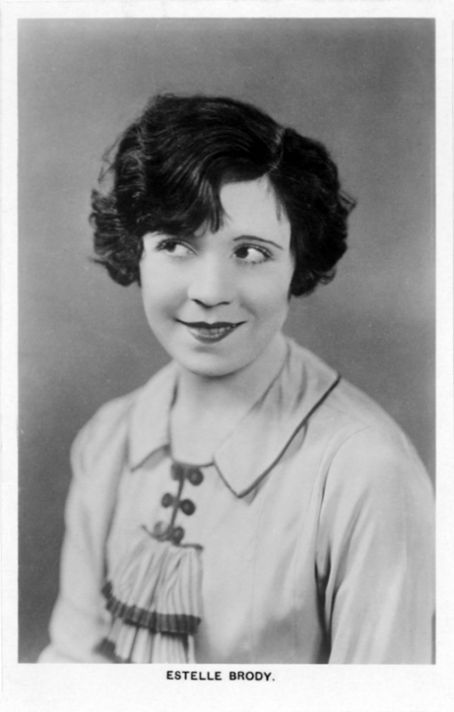
Estelle Brody
Estelle Brody

The affair is discovered and Fanny’s and Allan’s parents put pressure on the pair to marry. Fanny, however has other ideas – much to Allan’s consternation. She tells Allan: “I’m a woman, and I was your little fancy – you’re a man and you were my little fancy. Don’t you understand?” She determines to make her own way – without apology – rather than being “given away with a pound of tea, like.”

Fanny’s attitude is so appalling to her mother (Marie Ault at her most disapproving) that Fanny has to leave the family home. Watched by a street full of neighbours and her heartbroken father (Elvey regular Humberstone Wright) Fanny refuses to be shamed by her “little fancy” but retains her dignity: “I’m a Lancashire lass and so long as there are spinning mills in Lancashire I can earn enough to keep myself respectable.” And she does – the film ends with her working in the mill and agreeing that her loyal friend and admirer Alf may take her to the pictures that evening. This is a celebration of practical working-class feminism. It is Fanny’s freedom as a worker – her freedom to seek work anywhere and her confidence that she will find it – that enables her to maintain her own integrity.

Director Maurice Elvey admired Stanley Houghton’s original play greatly. He told Denis Gifford that he thought it was “the finest English play ever written … a really great play; it is really about something.” (The Denis Gifford collection of taped interviews with leading figures from the British film industry is held by the BFI.) He filmed it twice – once in 1917, with Colette O’Niel and Hayford Hobbs (who recently wowed Pordenone audiences as Walter Gay in Elvey’s Dombey and Son); and again in 1927 working closely with his colleague Victor Saville, starring Estelle Brody and John Stuart. Sadly, the 1917 version no longer exists – if it did, it would provide us with great scope for analysing Elvey’s development as a director. We would also be able to compare the performances of the great Norman McKinnel, who played mill owner Nat Jeffcote in both versions.

While Hindle Wakes boasts many fine performances, it is Estelle Brody who dominates the screen. Her examination of her face in the mirror to see whether it has changed following an off-screen sexual encounter with Allan is one of the best examples of acting in British silent cinema.

Hindle Wakes (1927)
Hindle Wakes (1927)

Brody was an American actor who worked with Elvey in the UK between 1926-28. Such was the resentment of the dominance of the American film industry at that time, publicists said that she was Canadian. Her obituary (by Kevin Brownlow) describes Brody and other residents of her retirement home watching Hindle Wakes:

“She was glued to the screen throughout. Apart from one or two who didn’t stay the course, all were transfixed. Afterwards, she was mobbed by the others congratulating her. Throughout the screening, the viewers, including some nuns, were constantly comparing the frail old lady in her wheelchair to the image on the screen with fascination and admiration.”

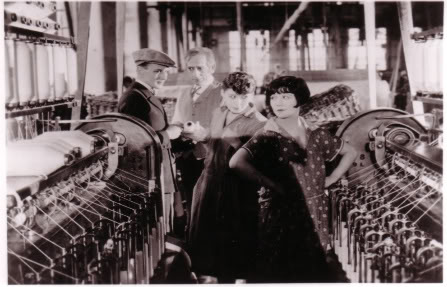
As well as strong performances, the film has some fine locations. Elvey was an early expert in location shooting, starting with his 1913 film, Maria Marten. For Hindle Wakes, he filmed in the Monton Mill in Manchester, in Eccles, at various Blackpool locations, and overlooking the sea at Llandudno. To ensure that the visiting actors appeared authentic in the mill scenes, the foreman advised them how to handle cotton bobbins and machinery.

Elvey, who had a reputation for working quickly and efficiently, shot 51 scenes at the Pleasure Beach and Tower Ballroom at Blackpool in 10 hours over the course of one day. The Blackpool scenes are one of the highlights of the film – with shots taken up Blackpool Tower, and on the Pleasure Beach Helter Skelter and Big Dipper. In the Tower Ballroom, Elvey filmed an ambitious dance sequence, which led to the film being advertised In Blackpool as “starring Estelle Brody and 5,000 local artistes”.

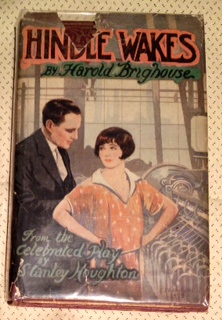
Hindle Wakes novelisation released to accompany the film

The film was well received on its release – Caroline Lejeune, writing in The Guardian (5 February, 1927) called it “the best advocate we have yet seen for the promulgation of British films” and said that Elvey had “made time and space and madness whirl before us on the screen … Elvey has successfully borrowed from the Germans what is apt to his own needs, shaped it to his hand, and made it for the time being his own.” She went on to name it one of her seven best films of the year (31 December, 1927). For Kinematograph Weekly (10 February, 1927), Lionel Collier said that Elvey, with his colleague Victor Saville, had “produced the best picture he has ever made, and an outstanding British triumph.” Even Variety – not known for its praise of British cinema – felt that it was a film that “did more to establish the birth of the British industry than any other” (13 October 1931).

We are privileged that in 2012 we are still able to see Hindle Wakes, 85 years after Elvey, Estelle Brody and John Stuart took their trip to Blackpool. It remains an important part of our cinematic and cultural history and comes highly recommended.

Lucie Dutton

Hindle Wakes screens at the West London Trade Union Club on Saturday 20 October. Read more here.

Phono-Cinéma-Théatre at Le Giornate del Cinema Muto

Cléo de Mérode dances Photograph: Cinémathèque française / Gaumont Pathé Archives, Paris

This is a guest post for Silent London by Neil Brand.

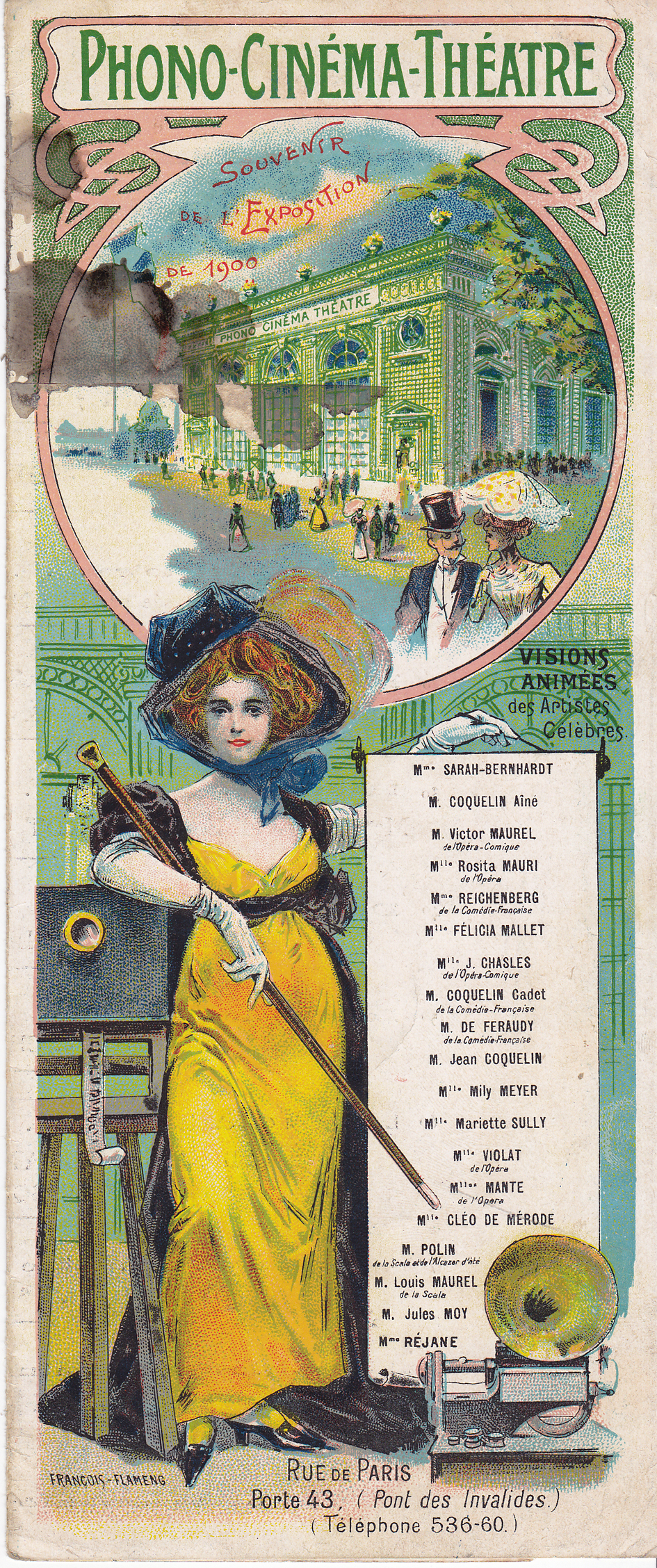
Among the gorgeously designed pavilions on the banks of the Seine at the Paris Exposition of 1900 was a small, ornate theatre called the Phono-Cinéma-Théatre, which contained a screen and a small musical ensemble.  Across the screen moved the greatest actors, dancers, mimes and clowns of the day – they spoke, they sang, they moved to music provided by musicians playing live and they were often in exquisite, hand-tinted colour. Five years after the birth of cinema, film and recorded sound brought France’s finest theatrical artists to mechanical life for the lucky generation of fin-de-siècle Paris. It was ephemera among ephemera, Toulouse-Lautrec’s posters pulled aside to reveal the artists that inspired him, and, of course, not made to last – half a century of progress and war on an industrial scale would sweep away those films and the spirit of The Banquet Years, as well as millions of those lucky or wealthy enough to experience them, leaving the rest of us with just the books, the posters, a few photos … until last week.

Phono-Cinéma-Théatre poster. Photograph: David Robinson Collection

On Thursday last the Giornate del Cinema Muto in Pordenone, Italy, showed 23 surviving films of the 41 originally shot, most complete with their hand-colouring, many with their synchronised sound, almost all accompanied live by a small ensemble directed and arranged by John Sweeney. John had spent months finding as much of the original music to the dances and songs as possible, then rehearsed synchronising them to the pre-recorded singing and dancers’ steps, which were set in stone over a hundred years ago – the result was an astounding time-bridge that placed us all more viscerally in the Paris Exposition auditorium than any sound and image record could have done – the artists were now  performing for us, their movements driven by John’s piano, their eyes returning our gaze and their efforts aimed at pleasing us.

It was all so relaxed – Little Tich missed a catch with his hat but just picked it up and carried on as if nothing had happened, the odd dance step was fumbled, but unlike the stiff subjects of so much still photography of the time, our performers did what they did for the camera just as they had done on stage for years (in some cases decades), blissfully uncaring of giving a “definitive” performance or of the legacy of our critical response from an unimaginable distance of posterity.

Sarah Bernhardt fought Hamlet’s duel beautifully, despite her 56 years, and with the addition of Frank Bockius’s uncannily precise sword clashes on triangle; Emilio Cossira sang Romeo’s aria from Gounod’s opera silently, his voice reproduced by Romano Todesco’s single notes on accordion, the intent of feeling vibrant in his features and his genial return for a second bow – Mariette Sully wrung genuine comedy out of singing and dancing “La Poupée” and Cléo de Mérode, La Grande Horizontale to many of the crowned heads of Europe, danced in the way that had turned those heads in the first place.

Sarah Bernhardt in Hamlet Photograph: Cinémathèque Française/Gaumont Pathé Archives, Paris

We found out what made 1900 audiences laugh, thanks to Jules Moy’s anarchic dancing master and Polin’s Troupier Pompette singing about, among other things, stroking a lady’s leg, wondering at the lack of resistance and, on raising her skirt, realising he is touching up the table leg. The entire 90-minute show was a triumph of 1900 and 2012 technology – I have worked with early film for 30 years, and never have I felt so privileged to see these wonders more clearly than any generation before, even the one for which they were intended.

Little Tich Photograph: Cinémathèque Française/Gaumont Pathé Archives, Paris

Above all, I now feel I understand turn-of-the-century Paris with a profundity that was impossible before last Thursday night – its potency, its sexuality, within which the highest arts of performance were also the most immediately sensual and arresting, its gaiety and love of sensation, the vibrancy and diversity of its entertainments. The combined efforts of the Cinémathèque Française, Gaumont, Lobster Films, Olivier Auboin-Vermorel and the historical and aesthetic energy of Pordenone director David Robinson have brought not just a corpse but a memory back to life – theatre as film as theatre, a heady concoction only available through the medium of “silent film” – in London, the equivalent would be seeing a complete night at the music hall from 1900, in full colour and with synchronised sound – for now, London must get to see this show, preferably in the perfect surroundings of Hackney Empire where the artists can emerge from the proscenium arch of a Matcham theatre – but maybe after Paris has seen its own long-lost child, this November at the Cinémathèque Française – and, of course, John Sweeney and his ensemble will be there to assist at the rebirth.

Neil Brand

The Silent London podcast: Pordenone special

Pola Negri in The Spanish Dancer (1923)

Greetings! I’m just back from spending a week at the 31st Giornate del Cinema Muto in Pordenone, Italy. Between sipping espresso and circling my favourite films in the schedule, I spoke to some of my fellow travellers about their experiences of this wonderful week of silent cinema. You’ll find full coverage of the festival on Silent London by clicking here, but in the meantime, enjoy this short podcast.

The Silent London Podcast is also on iTunes. Click here for more details.  The music is by kind permission of Neil Brand.

If you want to get in touch with us about anything you hear on the podcast, email silentlondonpodcast@gmail.com, tweet @silent_london or leave a message on the Facebook page: facebook.com/silentlondon.

Charlie’s London: a change of address

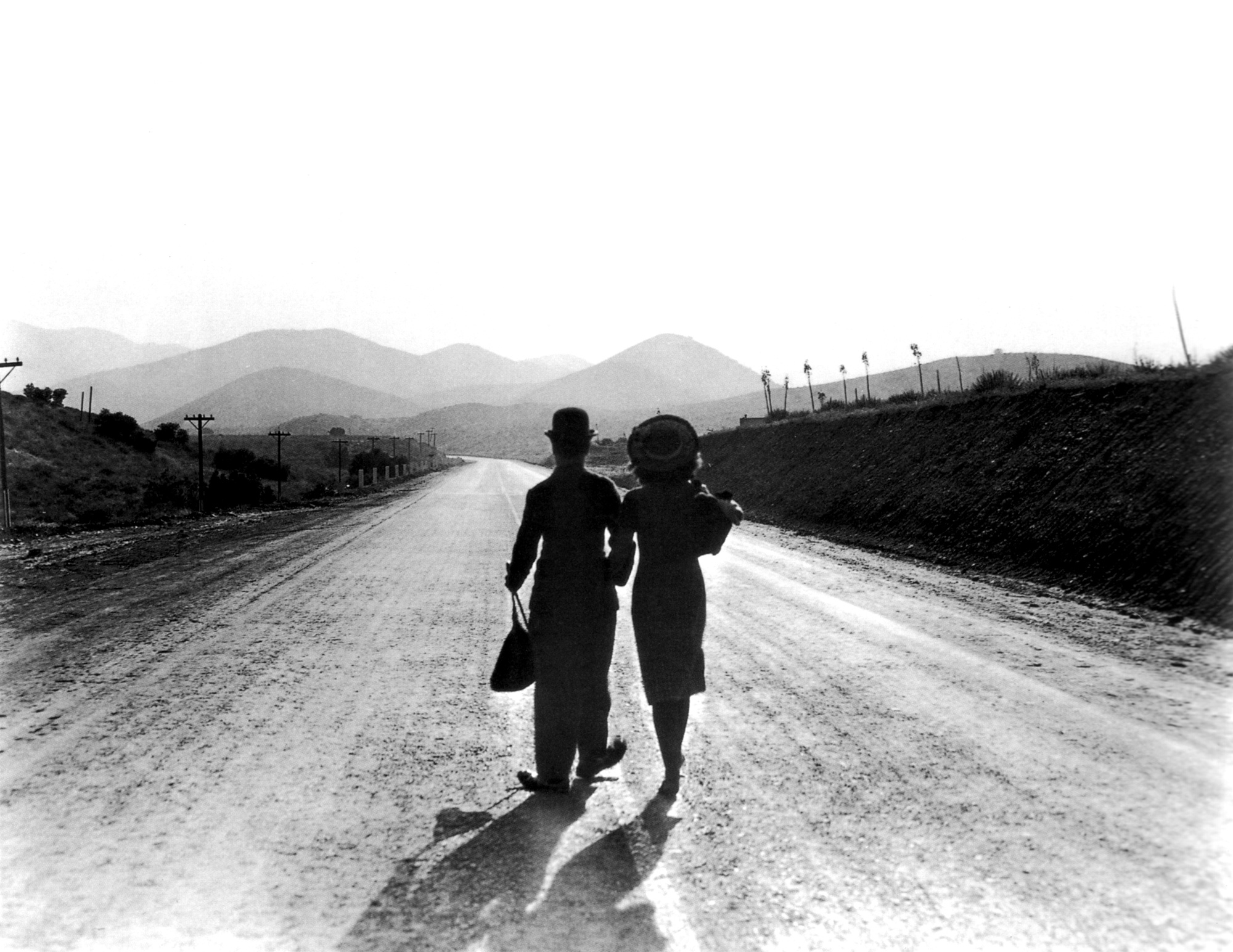
Charlie Chaplin in Easy Street (1917)

This is the final Charlie’s London post by Ayşe Behçet for Silent London. Charlie’s London is now moving to its own site!

Welcome to the last edition of Charlie’s London on Silent London. I had been thinking for a while about what would be the best goodbye post for a site I hold so very dear. Without Silent London, Charlie’s London would not have an audience and I would not have had the platform to express my love for one of the greatest artists/comedians/directors/humanitarians the world has seen.

Chaplin means something different to everyone. To me he has somehow become part of my family history! From little William in that workhouse to seeing my very own godson fall in love with his films, I can honestly say Charlie never leaves me. Recently I was lucky enough to attend the Southbank showing of The Circus and as I sat in what really is Charlie’s London I felt very honoured and emotional. It was not just because it was a Chaplin film, but because my grandmother and I had watched this film many times when I was a child. I clearly remember her singing “swing little girl” to me on more than one occasion; I wish she had been able to sit in one of those deckchairs with me and enjoy it for herself.

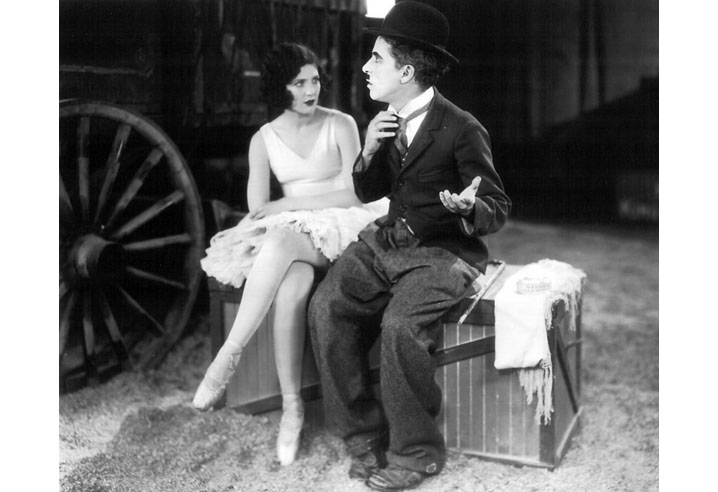
Charlie Chaplin in The Circus (1928)

There has been so much written about Chaplin the film-maker, the genius of cinema. There has been even more on Chaplin the man. What has interested me throughout my time writing this blog is Charlie the Londoner. It is true that most of his london no longer exists, but his presence still lingers those streets, even if people do not realise it. Poverty is still a massive problem in inner-city areas around the world, and South London is no different. Chaplin saw all this. For him it was a different age, a different life, but not a different London. You can see this in every one of this films: Easy Street, The Kid, Modern Times and right up until Limelight, Chaplin never forgot his roots.

While writing this blog I have learned an awful lot about my own family history, and myself too. I have enjoyed many chats with my mother into the early hours that often resulted in tears of laughter. The stories of my great grandmother and her false teeth! My own Nanna listening to Chaplin’s 1943 address to his Lambeth, my own rainy saturday afternoons with One AM and Kid Auto Races. Every street corner we turned in our Chaplin journey I would hear something about my own roots: my great grandmother being in a workhouse, my Uncle Fred living just off Methley Street and my mother remembering the bustle of East Lane Market.

Continue reading Charlie’s London: a change of address

Charlie’s London: Sydney Chaplin

Sydney Chaplin
Sydney Chaplin

This is a guest post by Ayşe Behçet for Silent London.

Today I am going to look at the importance of another figure in Charlie’s life, his brother Sydney, whom I feel should never be overlooked.

Until the groundbreaking biography by Dr Lisa K Stein (Syd Chaplin: a biography), Sydney’s story was only really told as a piece of the Charlie Chaplin jigsaw puzzle. She has completely changed this, showing Sydney as an individual who helped to create his brother’s career. Stein’s book allows us to see Sydney like never before. Her work is a testament to the extensive resources in the Chaplin archives in Bologna, as well as her own personal collection and enthusiasm for her subject. For me, it shows that the information is all very much still there for us to all see, it’s just a question of knowing where to look, having the guts to challenge what is already known, interpret it differently and give a new dimension to further Chaplin research.

Four years older than his famous brother, Sydney would look out for his younger brother for the rest of his life. Born in 16 March 1885 to the 19-year-old Hannah Hill, and originally known as Sidney John Hill, Syd become a Chaplin when he was a few months old upon the marriage between his mother and Charlie’s father. The bond these brothers or the rest of their lives was a powerful one. Their shared time in south London workhouses and poorhouses, while their mother suffered with mental illness, required great courage. These events would later shape the brothers’ outlook on their art and their lives – although in different ways. Sydney Chaplin junior, Charlie’s son by his second wife Lita Grey, would reportedly later joke that his father’s choice of name for him was very apt. Whereas Charlie lived and breathed his work until its completion, Sydney senior would adopt a much more laidback approach and enjoy the fruits of his labour. In my humble opinion, Sydney felt he worked hard so he could play hard, Charlie however felt he had to hold on to his tragedy, because it helped mould his comedy.

Continue reading Charlie’s London: Sydney Chaplin

Charlie’s London: Chaplin’s women – part two

Charlie Chaplin and Edna Purviance

This is a guest post by Ayşe Behçet for Silent London.

Hi everyone. Welcome back to another edition of Charlie’s London.

As promised I will be looking at two more women who I believe shaped his life, both on screen and off. Last time I looked at Chaplin’s mother and Mabel Normand, this week I will look at Edna Purviance and Oona O’Neill. I have to confess, Normand never used to be a favourite of mine, even though I consider her contribution to be important and often overlooked. Now, I have to say, I’m really in her corner. People have often said that Chaplin and Normand hated each other. People have also often said Chaplin and Mary Pickford hated each other too, for me, these relationships are one and the same. Their relationships were creative ones: if they clashed, let’s call it artistic differences.

Normand not only directed Chaplin but also acted as his leading lady too: a role taken most often by Edna Purviance, who appeared in 33 of his pictures including extra parts in Monsieur Verdoux and Limelight. Purviance was first cast opposite Chaplin in 1915 after a chance meeting with one of his associates in a Tate’s Cafe in San Francisco – the director was looking for a new female lead for his Essanay comedy A Night Out. Even after her final film with Chaplin, A Woman Of Paris in 1923, Purviance stayed on the company payroll right up to her death in 1958.

Chaplin and Purviance were romantically linked for many years, and unfortunately this is how some film enthusiasts and historians seem to want to remember her. I completely disagree with this. Chaplin would never have another leading lady like Purviance – Paulette Goddard comes close, but they don’t have the same bond on screen.

Continue reading Charlie’s London: Chaplin’s women – part two

Sight & Sound’s Greatest Films of All Time Poll – a silent resurgence

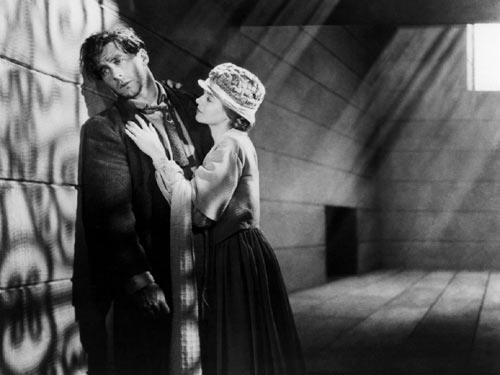
Sunrise (1927)
Sunrise (1927)

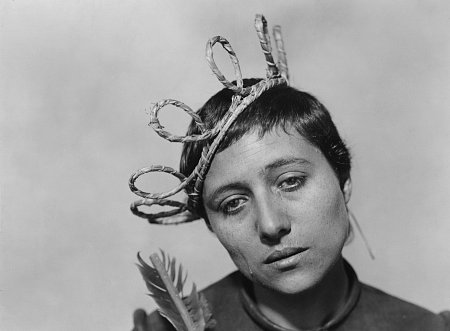
In 1952, Sight & Sound‘s critics picked seven silent films in their top 10 great Films Film of All Time selection. Today, they chose just three, but that’s one more than in 2002, 1992 and 1982. They’re much-loved films too: Sunrise: A Song of Two Humans, The Man With a Movie Camera and Dreyer’s towering The Passion of Joan of Arc. I am surprised that Battleship Potemkin fell out of the top 10, and would have expected The General or Greed, say, to nudge ahead of Movie Camera, but that’s a good, interesting spread of late silent cinema.

The Passion of Joan of Arc (1928)

When we see the top 100, I expect to see more silents overall – revivals and restorations of Metropolis, Napoléon and a general greater awareness and love for early cinema should see to that. And I would love to see some earlier films. I know I voted for one. But then, one more vote would have kept Potemkin in the top 10, and I didn’t nominate it, so perhaps I should keep quiet about my list…  The full poll details will shortly be online, so we can look forward  to lots more number-crunching. I can tell you that the top 10 silents voted for overall were: Sunrise, Man With a Movie Camera, The Passion of Joan of Arc, Battleship Potemkin, The General, Metropolis, City Lights, Sherlock Jr, Greed, Un Chien Andalou and Intolerance.

The Man with a Movie Camera (1929)

Yes, some people will tell you that the lead story here is the toppling of Citizen Kane by Hitchcock’s Vertigo – or the fact that there is nothing here more recent than Kubrick’s 2001: A Space Odyssey. That’s probably true, and you can read more about the list here, from the very wise Tim Robey. In fact, here’s the top 10 in full. What do you think?

  1. Vertigo (Hitchcock, 1958)
  2. Citizen Kane (Welles, 1941)
  3. Tokyo Story (Ozu, 1953)
  4. La Règle du jeu (Renoir, 1939)
  5. Sunrise: a Song for Two Humans (Murnau, 1927)
  6. 2001: A Space Odyssey (Kubrick, 1968)
  7. The Searchers (Ford, 1956)
  8. Man with a Movie Camera (Dziga Vertov, 1929)
  9. The Passion of Joan of Arc (Dreyer, 1927)
  10. 8 ½ (Fellini, 1963)

Charlie’s London: Chaplin’s women – part one

Charlie Chaplin and Paulette Goddard in Modern Times

This is a guest post by Ayşe Behçet for Silent London.

Welcome to another edition of Charlie’s  London! For this segment and the next I’m going to look at some of the women in Chaplin’s life, showing how influential, important and ultimately empowering some of these women’s roles really were.

A lot has been written about Chaplin’s private life; he was a dashing and charismatic individual whose appeal extended beyond stage and screen. Recently I was talking to a fellow Chaplin fan and friend in Bologna. We both agreed that there was something so beautiful about Charlie, it was no surprise that his private life become front-page news, whether the stories were true or not.  Putting the gossip aside, for me the women who shaped, moulded and even changed Chaplin were his mother Hannah, Mabel Normand, Edna Purviance and of course Oona O’Neill.

This subject will often be debated, with some enthusiasts and historians adding Hetty Kelly, Charlie’s first love, and even Paulette Goddard, his third wife and star of Modern Times and The Great Dictator, to that list. I hope with these two blogs I will explain why I have chosen this group. In this first instalment I will talk about Hannah Chaplin and Mabel Normand.

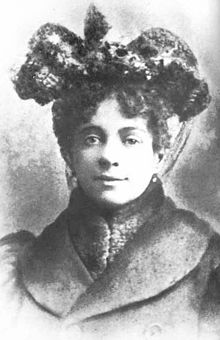
Hannah Chaplin
Hannah Chaplin

Hannah Hill, Chaplin’s mother, was arguably the most influential woman in his life. Her struggles in order to give Chaplin a decent upbringing, only to suffer such terrible mental health problems, no doubt haunted him for the rest of his days. I have spoken of Hannah before, and I am quite fond of her as a historical character, not only because she is the mother of my hero, but because I feel she is incredibly interesting. Historians have labelled Hannah as everything from a woman of ill repute to an undiscovered music hall genius whose renditions of the era’s classics would ignite her son’s thirst for the art.

The “fallen woman” analysis comes very much from psychologist Dr Stephen Weissman whose book Chaplin: A Life paints Hannah in a very unflattering light. His depiction of her affair with stage star Leo Dryden (the union that would produce Chaplin’s brother Wheeler) and his suggestion that syphilis was the cause of her madness (including references to her working as a prostitute) are seen as very controversial by other Chaplin enthusiasts and historians. David Robinson is quite rightly kinder to Hannah, noting the confirmed ancestral link to mental health dificulties within the Hill women as the roots of her tragic downfall, while also highlighting her faults such as her affair.

Continue reading Charlie’s London: Chaplin’s women – part one

Anson Dyer: Britain’s forgotten animation pioneer

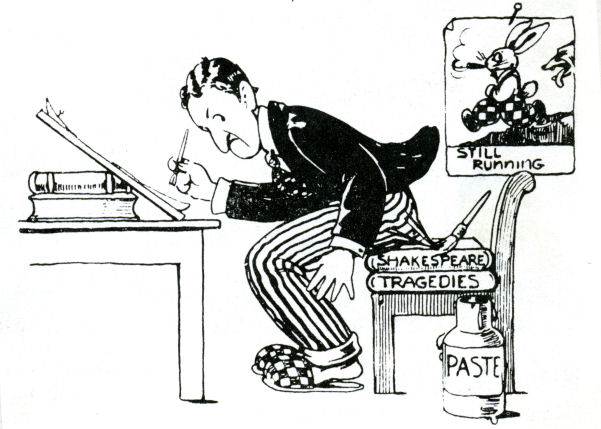
This caricature of Anson Dyer is probably a self-portrait (Source: ukanimation.blogspot.com)

This is a guest post for Silent London by Robyn Ludwig.

The animators whose films will be showcased at the British Animation Film Festival this Sunday owe a debt to Anson Dyer – though many may not even know it. 2012 marks the 50th anniversary of the death of Ernest John Anson Dyer (1876-1962), a masterful animator and pioneering director in the silent-era years of the British animation industry. Much less is known about Dyer and his early films, than of his peers in America and continental Europe. Yet film historian Geoff Brown notes: “For all the current lack of critical attention, Anson Dyer was a major figure in British animation for over 30 years, from the first world war to the aftermath of the second … [He] was promoted for a time as Britain’s equivalent of Walt Disney, with a prolific and popular output of children’s cartoons” (Brown, BFI Screenonline). Donald Crafton, in Before Mickey: The Animated Film (1898 – 1928), credits Dyer as helping British animators come “closer than anyone else in Europe to establishing a significant cartoon industry” (Crafton 252).

Dyer began his animation career in 1915, at the late age of 39, having spent 20 years as an ecclesiastical artist designing stained-glass church windows on commission. Yet most of his earliest films were secular in theme: propagandistic political satires in the “topical sketcher” tradition. When he joined Kine Komedy Kartoons in 1919, however, he began directing children’s material, including the Phillips Philm Phables series (also known as the Uncle Remus series). Later that same year, Dyer signed with Hepworth Picture Plays in Walton-on-Thames, and during this prolific period, he produced a number of Shakespearean parodies, and the family-friendly Kiddie-Graphs fairy tale series, including The Three Little Pigs (1922) and Little Red Riding Hood (1922).

Continue reading Anson Dyer: Britain’s forgotten animation pioneer

Charlie’s London: from the archives to the airwaves

The Charlie Chaplin Archive, Bologna
Heaven for a Chaplin fan … the archive in Bologna

This is a guest post by Ayşe Behçet for Silent London.

Welcome back for another edition of Charlie’s London. This week I am going to be talking about my debut appearance on the Silent London Podcast, as well as my recent trip to the thoroughly mindblowing Il Cinema Ritrovato festival in Bologna, Italy

Being a Chaplin fan you are never short of on-screen comedy capers to keep you entertained, but when someone tells you you can visit the Charlie Chaplin Archive in Bologna, Italy should you be in the area, well you don’t really have to think twice. My partner Kieran and I took a 6am flight to Bologna so that I could visit the archive, but also so we could enjoy the Il Cinema Ritrovato festival too.

At the Cineteca in Bologna we registered for the archive and the festival. All around us everyone complained about the heat, but being half Turkish I didn’t really mind. No sooner had we sat down for a coffee, my phone began to ping, it was Jenny, a fellow festival-goer who had not only made the journey to Bologna but was also staying in the same hotel as us. Pretty soon we were all together, along with Mark, another friend and great supporter of Bristol Silents looking over the festival plan.

Ayse and Charlie
Ayse and Charlie

Initially I began to look over the schedule from Wednesday to Friday, because I was due to be in the archives Monday and Tuesday, but this turned out this was a pointless exercise. In the end, I was in the archive until Friday morning and in total saw only five films at the festival. The film that left the biggest impression on me was the new restoration of The Life and Death of Colonel Blimp. Mark had told me many times before that it was a film I would enjoy, not only because I have a soft spot for Technicolor but because I have spent a lot of time researching the first and second world wars. He wasn’t wrong! It was a feast of restored beauty,  history and irony.

My biggest adventure came on Monday when I finally got to visit the Chaplin archives. Everything has been digitised to make viewing incredibly easy. The staff are so helpful and friendly, even with the busy festival under way in the grounds. Before I knew it I was engrossed, flicking through pages and pages of useful and exciting documents all relevant to a massive piece of research I am undertaking. Kate Guyonvarch, Kevin Brownlow and of course David Robinson all were there to give me a helping hand: their support was priceless. Imagine, as I have done, having read someone’s work since you were 11 years old, only to find them standing behind you in an archive and clarifying a sentence in one of their books that you want to quote in your research! That what David Robinson did, and he refreshed my memory on something I had a mental block on. After many cups of lovely Italian coffee and long chats I had more than 40 pages to take back to England: the tip of the iceberg had been scratched.

Bologna is a long way from South London! Charlie’s London had very much gone continental. Here is where my biggest conundrum lay – you can’t just take a bus to these archives. I knew I had so much I wanted to look at, but I was meant to be at a film festival, what was a girl to do? Luckily enough I have a very supportive partner who smiled and told me to book more time in the archives. So, what started as two days ended up being the whole week, and it was worth it! I discovered so much more about my hero.

Continue reading Charlie’s London: from the archives to the airwaves

Giorgio Moroder presents Metropolis: DVD review

Moroder's Metropolis
Moroder’s Metropolis

The mediator between the head and hands must be the heart, and so the popular affection for the 1984 revamp of Fritz Lang’s Metropolis has finally led to a 2012 DVD release. It’s 85 years since this film was made, but 28 years since it was made over by Giorgio Moroder – so will the original film or its renovations have dated more?

On the face of it, we really don’t need Moroder’s Metropolis on DVD. This may be the version that turned a generation of film fans into silent movie buffs, turning the fledgling early-80s silent film renaissance into a mainstream movie moment, but surely we’ve moved on since then? We’re still waiting for many silent classics to appear on DVD, but among those that are available there are some absolute beauties: masterpieces of restoration, with audio commentaries, informative notes and sensitive, sometimes even historically accurate, scores. In this country, many such DVDs and Blu-Rays have appeared on the Masters of Cinema imprint, part of the Eureka Entertainment group that has released Moroder’s Metropolis.

Moroder's Metropolis
Moroder’s Metropolis

Most salient of these releases is The Complete Metropolis, the almost-full restoration of Fritz Lang’s film: a product of skill, patience and the great fortune to find the missing footage in an archive in Buenos Aires. At a stroke, the movie was rehabilitated: no longer a grand mess, a gorgeous design pocked with plotholes. Simultaneously, Moroder’s idiosyncratic restoration was rendered obsolete.

But silent film fans don’t fear obsolescence. It’s our stock-in-trade. Nor are we averse to the first faltering steps towards new technologies. We embrace part-talkies, Pathécolor, Polyvision and undercranking. Moroder’s Metropolis should be viewed in this spirit. Would we restore a film this way again? No, but what will they think of our “state-of-the-art” digital restorations in 2040? Very little, perhaps, particularly if those digital copies become obsolete themselves, incompatible with new projection technology.

Continue reading Giorgio Moroder presents Metropolis: DVD review

An introduction to silent Hitchcock: Blackmail

Anny Ondra in Blackmail (1929)

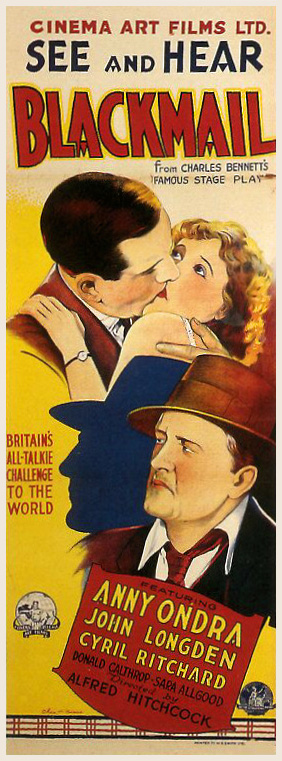
Blackmail, perhaps the greatest British silent film, was the work of a young director firing on all cylinders. As well as this masterful silent movie, Hitchcock made an acclaimed and pioneering talkie version, Britain’s first. It’s the silent Blackmail that concerns us, though, and it’s a fitting finale to Hitch’s silent years.

Blackmail (1929)
Blackmail (1929)

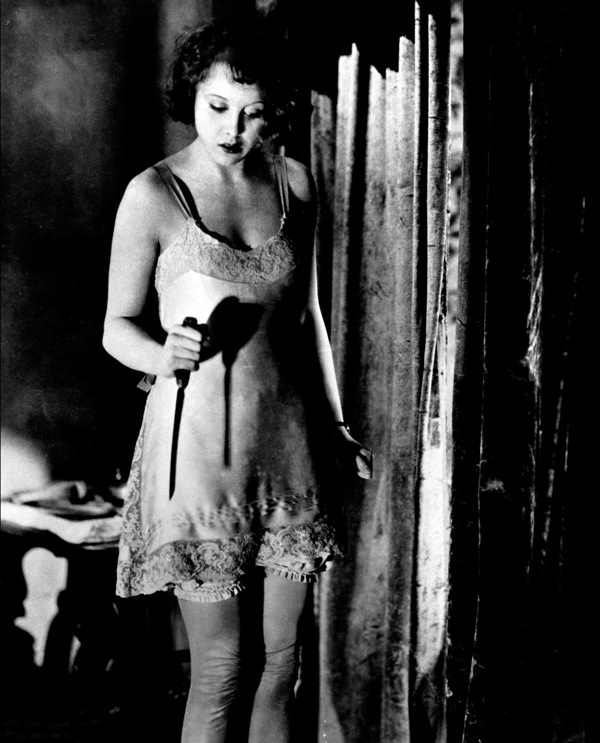
Anny Ondra is back, as Alice White, a young woman who rows with her dull policeman boyfriend in a Lyon’s Cornerhouse and wanders off with a dashing artist instead. When the dauber tries to take advantage of her in his studio, Alice defends herself, lethally, with a breadknife …

Here, as in The Lodger, Hitchcock’s London is superbly seedy. The opening scene of Blackmail shows the arrest of a shifty crim, holed up in bed in a tenement flat, and from the gossip who torments our heroine in her parents’s shop, to the blackmailer himself, everyone in the city seems to take an unnaturally keen interest in murder.

The way that Blackmail muddies a police procedural thriller with sex, moral compromise and guilt (and splashes of earthy humour) is a classic Hitchcock manoeuvre. Alfred was definitely hitting his stride here. However, one reason that Blackmail feels so much like the Hitchcock thrillers we know and love is that Charles Bennett, who wrote the play it is based on, went on to collaborate with Hitchcock on films from The 39 Steps to The Man Who Knew Too Much. Together, they created much that we think of as classic Hitchcock.

The question is, with a celebrated sound version available, why bother with the silent Blackmail? Of course, you don’t need to choose – they both have moments to recommend them. The finale at the British Museum (future shades of North by Northwest) is one of those great Hitchcock sequences that was conceived, and succeeds, visually. Sound adds nothing. Elsewhere, Hitchcock uses the freedom of a microphone-free set to set up some more experimental camera shots, where the sound film is a little more constrained. You won’t want to miss the famous “knife” sequence in the talkie Blackmail, but the silent version is unsettlingly creepy in its own way. I’d also like to champion Anny Ondra’s silent performance here – Joan Barry’s dubbed RP accent is just bizarre.

Synopsis: 

Grocer’s daughter Alice White kills a man in self-defence when he tries to sexually assault her. Her policeman boyfriend covers up for her, but she has been spotted leaving the scene by a petty criminal who tries to blackmail her.  (BFI Screenonline)

Hitchcock moment: Here’s the pivotal, and supremely Hitchcockian, murder scene. With Neil Brand’s score to boot.

Watch out for: That gruesome painting of a jester.

Links worth clicking:

Blackmail (both versions) screens this summer as part of the BFI’s Genius of Hitchcock season. More information here. There’s also a gala performance featuring Neil Brand’s live score at the British Museum on 6 July.

The Silent London podcast: comedy special

Charley Chase
Charley Chase … nice trews

Another podcast, and this time it’s all about the laughs in our comedy special. I’m joined in the studio by Phil Concannon of Philonfilm.net, Ayse Behçet, who writes the Charlie’s London series for Silent London, and podcast expert Pete Baran. Plus Chris Edwards of the wonderful Silent Volume blog also contributes a few well-chosen words on his favourite silent film: Exit Smiling, starring Beatrice Lillie.

We’ll be talking about our favourite silent comedies, and yours, and perhaps touching on a few films and film-makers you won’t expect. Plus we’ll be reviewing some recent silent film screenings, Ayse will be reporting back from the Cinema Ritrovato festival in Bologna and we’ll be taking a look at the calendar too.

There’s also a lot of business about trousers. And possibly the odd 90-year-old spoiler.

The Silent London podcast: comedy special

The Silent London Podcast is also on iTunes. Click here for more details.  The music is by kind permission of Neil Brand, and the podcast is presented in association with SOAS radio.

If you want to get in touch with us about anything you hear on the podcast, email silentlondonpodcast@gmail.com, tweet @silent_london or leave a message on the Facebook page: facebook.com/silentlondon.

An introduction to silent Hitchcock: The Manxman

The Manxman (1929)
The Manxman (1929)

Often referred to as Hitchcock’s final silent, because Blackmail was also shot as a sound film, The Manxman seems to be growing steadily in popularity, and with good reason. It’s a romance, yes, another Stannard adaptation of a hit novel by Hall Caine in fact, and I’m far fonder of it than Hitchcock professed himself to be.  “It was a very banal picture,” he told Truffaut. “It was not a Hitchcock movie.”

Well, that’s his opinion. The Manxman lays out a love triangle, with Anny Ondra (Kate), Carl Brisson (Pete) and Malcolm Keen (Philip) at each corner. Poor Brisson gets the fuzzy end of the lollipop again, when his best friend takes care of his girl while he is away at sea. The setting is a fishing village on the Isle of Man. Pete is a fisherman, but Philip, who wants to become a judge like his father and his father’s father, may have more to lose by the liaison than his friend does.

Anny Ondra in The Manxman (1929)

Anny Ondra is fantastic here: mesmerising and sensual. One moment a flirtatious femme fatale; the next a confused young woman. It’s a wonderful rehearsal for the performance she gives in Hitchcock’s next film, Blackmail. She’s gorgeous too, but perhaps not as gorgeous as the stunning coastal scenery. The landscape towers over, and frames the lovers, as if to say they’re trapped by their destiny, and by the place they come from, both. It’s not really the Isle of Man, by the way, but Cornwall.

While this isn’t Hitchcock’s final silent film, it’s worth taking a moment to enjoy, and appreciate his virtuoso work here. The Manxman remains a testament to Hitchcock’s achievements in silent film-making, and it’s no wonder that decades later he would still refer disdainfully to “photographs of people talking”.

Synopsis: 

In a small Isle of Man fishing community, two men, friends since childhood, find themselves in love with the same woman. Rejected by the girl’s father, Pete leaves to find his fortune in Africa, and Philip sees his chance with Kate.  (BFI Screenonline)

Hitchcock moment: Sometimes good news feels like bad news, especially when there’s a dark blot on the horizon.

Watch out for: Windows. And how much they can hide.

Links worth clicking:

The Manxman screens this summer as part of the BFI’s Genius of Hitchcock season. More information here.

UPDATE: The Manxman: London film festival review

Moroder’s Metropolis – the people have spoken

Metropolis, circa 1984

Ach, it’s no fun being a silent cinema purist sometimes. And while I wouldn’t necessarily describe myself that way very often, I was pretty sure I was in the fun-hating minority when the UK DVD release of Moroder’s Metropolis was first announced. Just to make sure, I ran a poll here on Silent London to find out what you guys think.

If you need to refresh your memory, Giorgio Moroder’s version came out in 1984 and looks very different to the latest restoration. Working with the most complete version of the film he could find at the time, Moroder added a rock soundtrack, washed some different scenes with bright tints and made the whole thing run faster by removing the intertitles and using the text for subtitles. It’s a strange beast, and perhaps needless to say, a cult favourite.

You ruddy love it. Well, some of you do. Quite a few of you like it, and while there’s a solid 20% with me, arms crossed and tutting in the outraged camp, you have convinced me to give Moroder’s Metropolis another go. What’s the worst that can happen? I first saw it many moons ago, on a worn-out VHS borrowed from the college library. Since then, I’ve seen the beautiful new restoration of the original film, and my appreciation for Metropolis has only grown. I hope I have lightened up a little, and I have even learned to play a Pat Benatar song on Guitar Hero.

So I’ll definitely be taking a look at the DVD when it is released on 23 July this year. Apparently it’s arriving in a smart “steelbook” edition, and interestingly, you’ll be able to stream it on demand from www.metropolismovie.co.uk too.

In 1984, Oscar-winning composer Giorgio Moroder (Top GunMidnight ExpressFlashdance) reintroduced Fritz Lang’s 1927 science fiction epic METROPOLIS to a new generation of moviegoers. He colourised scenes, added new subtitles, plus a throbbing rock soundtrack to Lang’s iconic imagery. Featuring songs from some of the biggest stars of the early MTV era: Freddie Mercury, Pat Benatar, Adam Ant, Bonnie Tyler, Loverboy, Jon Anderson and others, it became a dramatic vehicle for Moroder’s visionary music and a beautiful retro-futurist timepiece. Through faithfully maintaining Lang’s intriguing and timeless storyline, today, it is this version of METROPOLIS that first comes to mind for millions around the world.

 Yeah, that last sentence does still grate a little… watch this space.