This is a guest post for Silent London by Alison Strauss, director of the Hippodrome Festival of Silent Cinema, Bo’ness. The Silents by Numbers strand celebrates some very personal top 10s by silent film enthusiasts and experts.
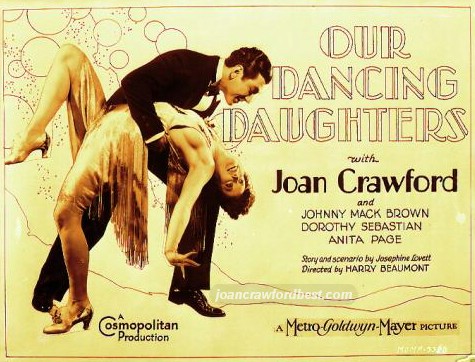
Our Dancing Daughters (1928)
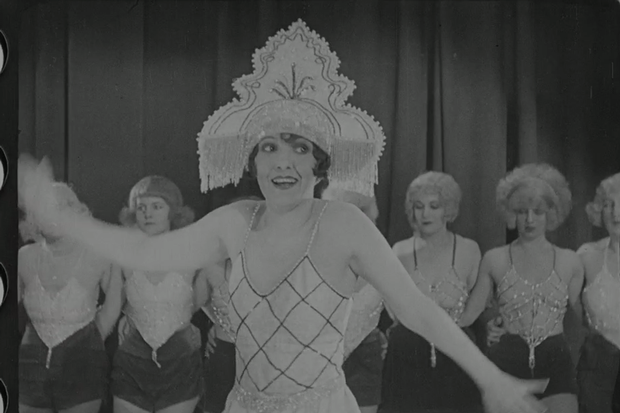
Our Dancing Daughters (1928, Harry Beaumont)
The moment when fun-loving flapper Joan Crawford launches herself on to the dance floor and sets the party alight with a high-tempo Charleston, ripping her skirt to a more liberating length as she goes.
Danse Serpentine (1896, Auguste and Louis Lumiere)
The 45-second kaleidoscopic record of a vaudeville dance – created by pioneering dancer Loie Fuller – in which an anonymous performer elegantly whirls her arms in the long-flowing fabric of her costume to mesmerising effect, thanks to the immaculate hand-tinting work of the Lumiere Brothers’ army of finely skilled women behind the scenes.
Pandora’s Box (1929, Georg Wilhelm Pabst)
Trained dancer and former Ziegfeld Follies girl, Louise Brooks is electrifying as Lulu, especially when, with all eyes on her, she takes to the floor at her own wedding with yet another admirer – a female guest – and the pair dance in a sexually charged vertical embrace.
The Four Horsemen of the Apocalypse (1921, Rex Ingram)
Another raunchy tango, this time with Rudolph Valentino in a sequence that launched him as a legend. The woman in Julio’s arms submits to his overpowering masculinity in this iconic routine that set the standard for all subsequent movie tangos.
(Watch from 14 mins, 50 seconds)
That’s My Wife (1929, Lloyd French)
Stan Laurel is persuaded by Oliver Hardy to masquerade as his wife in order to secure the bequest of a rich uncle. In one of the funniest sequences Stan, looking lovely in an evening gown, dances the two-step with Ollie in an effort to shimmy a stolen necklace down through his undergarments!
This is a guest post for Silent London by Paul Joyce, who blogs about silent and classic cinema at Ithankyouarthur.blogspot.co.uk. The Silents by Numbers strand celebrates some very personal top 10s by silent film enthusiasts and experts.
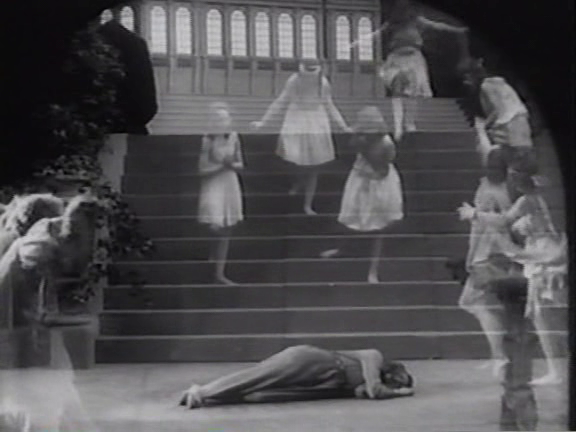
Cinematic dreams are a staple of the silent era more than any other, possibly because much of what was on screen had only previously been experienced in dreams for contemporary audiences. Now our dreams are founded on over a century of cinema and we’re so much harder to impress but … we can still dream on. Here’s a top ten of silent dreams with a couple of runners up as a bonus.
The Astronomer’s Dream (1898)
A madly inventive three minutes from George Méliès in which an old astronomer is bothered by a hungry moon as the object of his observation makes a rude appearance in order to eat his telescope.
Dream of a Rarebit Fiend (1906)
A feast of special effects in Edwin S Porter’s cautionary tale on the matter of over-indulging in beer and cheese. Jack Brawn plays the titular fiend who suffers all manner of indignities once he staggers home to his bed, whereupon his sleep is interrupted by rarebit imps and his bed flies him high into the night sky … Proof that the whole cheese-and-dreams rumour is actually true.
Atlantis (1913)
Atlantis (1913)
In August Blom’s classic – the first Danish feature film – Olaf Fønss’ doctor dreams of walking through the sunken city of Atlantis with his dead friend, as the passenger ship he is on begins to sink. It’s either a premonition or recognition that his true feelings have been submerged … JG Ballard was obviously later inspired to write The Drowned World.
Poor Little Rich Girl (1917)
Poor Little Rich Girl (1917)
After being accidentally overdosed with sleeping draught by careless servants, Mary Pickford’s character falls into a deep and dangerous sleep … As she hovers on the edge of oblivion the story runs parallel between the doctor trying to save her and her dreams in which those she knows are transformed in her Oz-like reverie. Sirector Maurice Tourneur excels as “the hopes of dreamland lure the little soul from the Shadows of Death to the Joys of Life”.
When the Clouds Roll By (1919)
When the Clouds Roll By (1919)
Douglas Fairbanks is harassed by vengeful vegetables after being force-fed too many in an effort to drive him to suicide (yep, it’s a comedy). Directed by Victor Fleming, who later returned to dreams with Dorothy and that Wizard. Continue reading The top 10 silent film dream sequences→
This is a guest post for Silent London by Kelly Robinson, and the first in a new series of posts bringing you very personal top 10s from silent cinema experts and enthusiasts.
From a programming point of view, it’s always good to have a few shorts up your sleeve: either to accompany a feature or to make up a shorts programme, which are always a good way to introduce new audiences to silent film. I’m trying to write short screenplays at the moment and I’m inspired by these film-makers, several of whom spent the majority of their careers working on shorts.
How to be an American Citizen (Alice Guy-Blaché, 1912)
Made in the US by Solax, film pioneer Alice Guy-Blaché’s production company, this is such a brilliant darkly anarchic comedy. View the version on the Retour de Flamme (06) disc by Lobster Films for one of the most inspired accompaniments to a silent film.
Ménilmontant (Dimitri Kirsanoff, 1926)
Breathtakingly stylish (talk about Eisenstein’s “kino fist”!) but also heartbreakingly moving, this is avant-garde cinema of the 1920s at its most profound. The scene on the bench is as poignant as anything by Chaplin or more recent master Krzysztof Kieslowski. Unforgettable.
Charlie Chaplin in Kid Auto Races (1914)
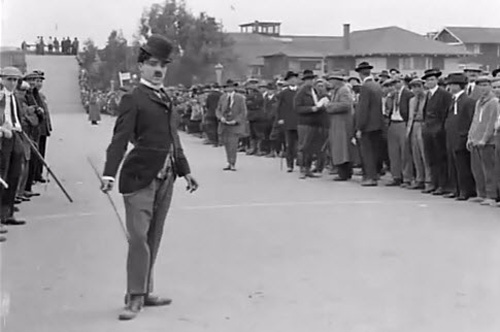
Kid Auto Races (Henry Lehrman, 1914)
Chaplin’s Keystone films are sometimes written off as unsophisticated fare, preceding a more nuanced approach to style and content at later studios. However, Chaplin’s performance here is pure clown, and shows why contemporary audiences immediately wanted more, more, more of “The Little Fellow”.
Leave ’em Laughing (1928)
Leave ’em Laughing (Clyde Bruckman, 1928)
I just have to think about the final sequence of the Laurel and Hardy classic and I start chuckling madly to myself.
Daisy Doodad’s Dial (Florence Turner, 1914)
“The Vitagraph Girl” pulls a face at being one of the first screen stars.
The Battles of the Coronel and Falkand Islands (Walter Summers, 1927)
This is a guest post for Silent London by Jo Pugh, based on hitherto unpublished information about the military record of British film director Walter Summers.
“I did fairly well in the war – not that it would interest you very much.” – Walter Summers, interviewed by Garth Pedler in 1972
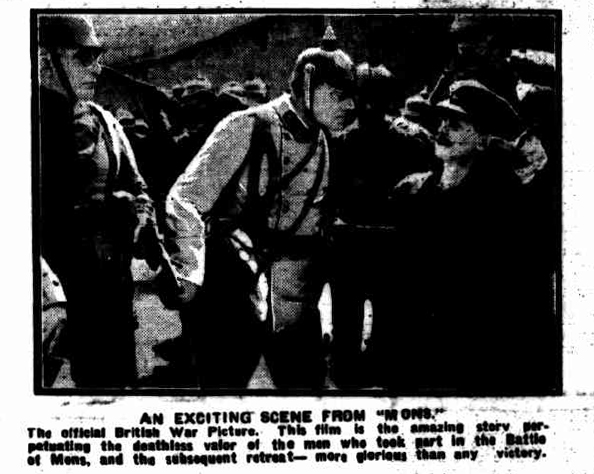
In 1924, Metro-Goldwyn-Mayer went to town on the international distribution of the British war film Mons, from the British director Walter Summers. Chronicling the 1914 defeat of the British Expeditionary Force in France (but a defeat as great as any victory – to paraphrase a classic Summers intertitle) Mons was promoted alongside Ben-Hur and its director “Captain Walter Summers, D.S.O., M.C.” praised for his wartime experience. One newspaper went further, asserting that Mons had “a genuineness and a reality that could only have been achieved by a director who had actually lived and fought during the immortal retreat.”[1]
Mons
History written by the victors is one thing, but history written by movie studio advertising executives may not meet the highest standards of evidence: Walter Summers did not fight at Mons, Walter Summers was not a Captain in the Great War, Walter Summers was not the recipient of a DSO. But the truth is not any less interesting. Walter Summers was a highly decorated war veteran but the precise details of his early life and military career have become a little mangled through a combination of hazy memory and the application of a bit of stardust. Surviving records allow us access to a little understood side of Summers and seem to place his film career in a slightly different light.
Walter Summers’ birth certificate
Walter George Thomas Summers was born on 2 September 1892 in the West Derby district of Liverpool. This date has become confused, probably because Summers seems so confused about it himself, writing conflicting ages on just about every official form going. His mother and father were both actors, his father (also Walter) a member of one of D’Oyly Carte’s touring companies who had a close association with Liverpool’s Royal Court Theatre. He died when Summers was quite young, leaving his mother, Mary Ann, to bring up Walter and his three sisters, Mary, Beatrice and Irene in Liverpool. In the 1911 census, Walter gives his occupation as “Theatrical Property Maker” – his association with the theatre began very early. On his application to become an officer, Arthur Lawrence, manager of the Royal Court Theatre, Liverpool, testifies as to Walter’s good character for the period 1903-6[2], in other words from the age of about 11 to 14. In their haste to join up in 1914, many young men lied about their age. Summers was a more seasoned 22 (though, characteristically, he wrote 21 on his form) and unlike many of his compatriots was not contemplating leaving England for the first time: he had already travelled to Australia and South Africa with Thomas Quinlan’s opera company, prior to his first film work with London Film Productions. This latter role probably culminated in work on George Loane Tucker’s version of The Prisoner of Zenda[3], in which a certain amount of armed European conflict is treated with all the seriousness of a works outing.
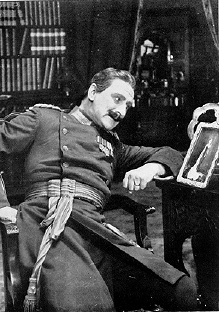
A thorougly Prussian baddie: Arthur Holmes-Gore as Duke Michael of Strelsau in The Prisoner of Zenda (1915). Holmes-Gore was killed at Gallipoli
London Film’s studio was a former skating rink at St Margaret’s, just over Richmond Bridge, which explains why Summers, the Liverpool boy, joined the army at Kingston. He joined up in October 1914, less than two months after the defeat at Mons. In retrospect, MGM’s claim that he fought at the battle is not very plausible: only members of the British Expeditionary Force, regular soldiers who had joined up before the war started, fought at Mons. Summers was a member of Kitchener’s volunteer army and would have been among the first significant wave of recruits to reach France. Even so, he didn’t leave England until the autumn of 1915, almost exactly a year after he had joined up. Joining as a private, Summers quite quickly rose to the rank of Sergeant in the 9th battalion of the East Surrey Regiment. This battalion is most closely associated with the playwright RC Sherriff, who used his experiences serving within it as the basis for his most famous play Journey’s End, subsequently directed on stage and then in 1930 on screen by James Whale, who had himself served in the Worcestershire Regiment. Summers and Sherriff knew each other but seemingly as comrades, not friends. Summers arrived in France a year before Sherriff and shortly after the battalion had suffered appalling losses at the battle of Loos. Subsequently, the 9th East Surrey fought at Ypres and the Somme. At the latter in July 1916, Summers was awarded the Distinguished Conduct Medal for his service at the Battle of Delville Wood. “A nightmare that men will dream again,” wrote the journalist Philip Gibbs, of the month-long conflict over the small piece of woodland believed to offer some tactical advantage. By the end of it, thousands had been killed and barely a tree was left standing.
Military Artist drawing of the Battle of Delville Wood, The Somme. July 1916. First published in “The Great War” Ed. H.W. Wilson, 1917
Summers won his Military Medal for leading a fighting squad of eight men from the battalion in a risky daylight raid on 25 January 1917 near Hulluch, in the Pas de Calais. One of six such squads, with orders to identify the unit opposite, “inflict losses” and obtain a sample of German bread, the small force ran across no man’s land under the cover of somewhat tardy smoke bombs and a smattering of “wild and erratic” machine gun fire.[4] With the element of surprise, the British killed a number of Germans (Summers shot at least one) before meeting “hostile resistance”. Summers’ group were among the last to withdraw from the German trenches. The force returned with three prisoners and the bread sample. By its own account it had suffered seven casualties and inflicted around 21. German records in contrast put their losses at eight.[5] Summers was personally commended for “the determined and fearless leading of his fighting squad”. Reading the description of the attack in the unit’s war diary, it is impossible not to be reminded of the raid depicted in Journey’s End. This is because it was indeed Sherriff’s inspiration for the attack that preoccupies his characters in the second half of the play.[6]
Janet Gaynor and her Christmas tree, via the Toronto Silent Film Festival
Merry Christmas and a happy new year to all our readers!
It has been a very busy year – in the best kind of way. We witnessed the long-awaited return of Napoléon to the capital, a short but fascinating British Silent Film Festival – and the birth of a new intimate screening series, the Kennington Bioscope at the Cinema Museum.
There have been some wonderful screenings at our favourite venues – from the Gothic silents at the BFI Southbank to a range of international films at the Barbican cinema. Retrospectives of Marcel L’Herbier and Jean Grémillon at both venues introduced many of us to the further reaches of French silent cinema. Theatrical releases of Underground, Nosferatu and The Epic of Everest boosted silent movie awareness hugely. Blancanieves proved that the art is not lost.
On a personal note, I was lucky enough to visit the festivals at Bologna and Pordenone, and I have enjoyed another year of blogging, writing and speaking about the silent cinema I love.
Next year, we’re anticipating a Buster Keaton season at the BFI Southbank, the 10th Slapstick festival and several events to mark the centenary both of the Little Tramp and the onset of the first world war. For more details, of course, you can check the ever-expanding listings.
But before we get too ahead of ourselves, let me know below what your highlights and yes, maybe lowlights, of 2013 were silent-film wise. Was it a good year for the silents?
Followers of Silent London intending to attend the London Symphony Orchestra’s live accompaniment to Michel Hazanavicius’ 2012 The Artist, in December this year, might care to know about Royal Albert Hall screenings of “the genuine article” in the 1920s.
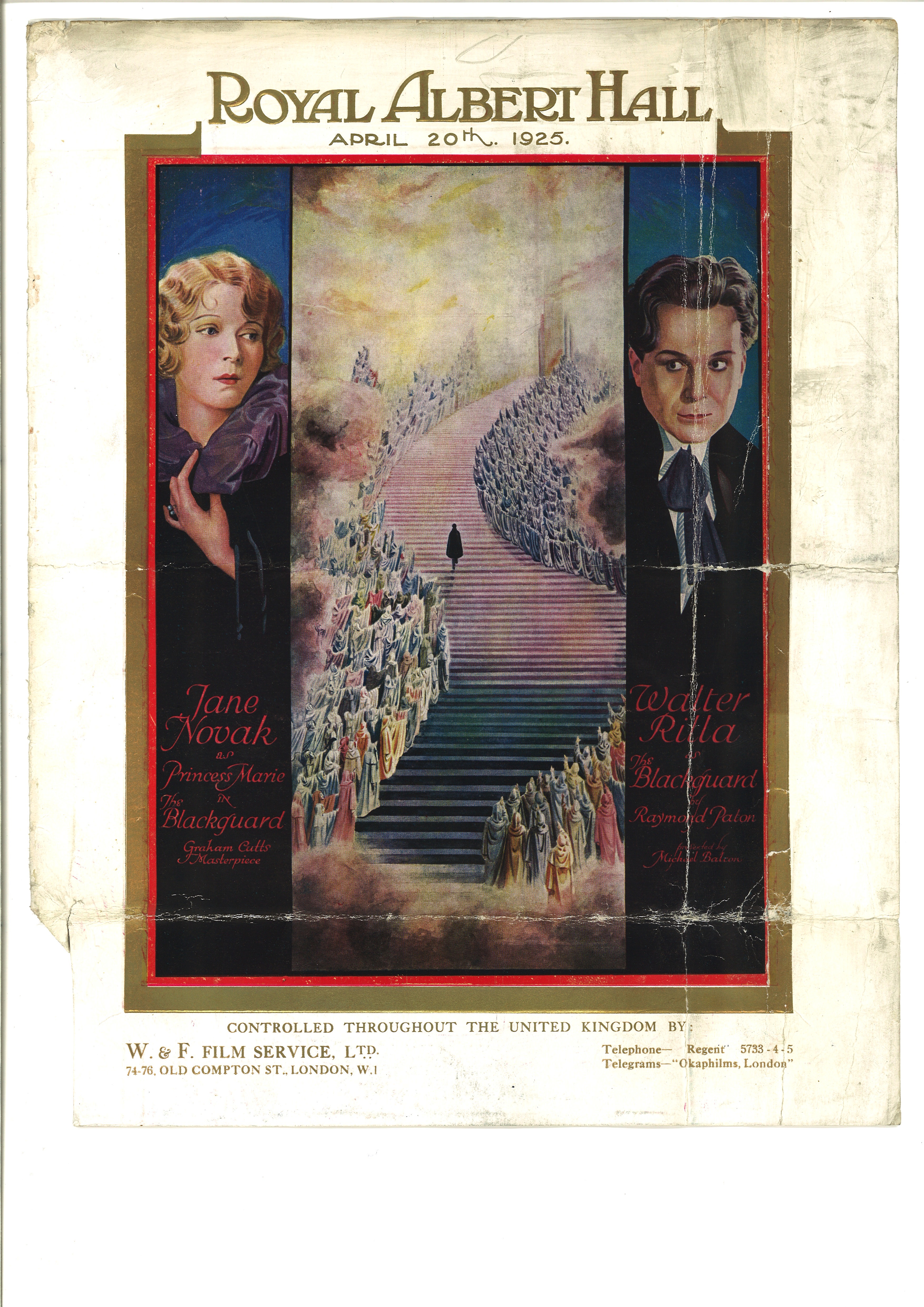
The end of the first world war was marked with a variety event, including films, at the hall. Subsequent presentations, running from October to December 1919, celebrated Allenby in Palestine and Lawrence in Arabia. Antarctic and Everest expeditions were commemorated in benefit screenings. In 1926, the RAF band contributed to a programme including a lecture by the aviator Alan Cobham, the film recording his arrival back in London after his flight to Australia, and an address from the prime minister of Australia: of course, the Imperial Institute was a close neighbour, perhaps influencing the selection of items recorded in the archive. European films screened included Murnau’s 1926 Faust and Turzhansky’s 1926 adaptation of Jules Verne’s Michel Strogoff. A lavish souvenir pamphlet (above) was published to accompany the trade show of Graham Cutts’ 1925 TheBlackguard, an adaptation of Raymond Paton’s novel, featuring a romance between a Russian princess and a violinist. A special attraction at the event was a dance performed by Serge Morosov “of the Imperial Russian School of Ballet”.
Faust (1926)
The novelist Naomi Mitchison, sister of JBS Haldane (a founding member of the Film Society) recalled in her memoirs the long run of Fritz Lang’s Die Nibelungen in the summer of 1924. The London Symphony Orchestra performed a Wagnerian prelude and a sub-Wagnerian score for the film (commented upon by Picturegoer critics as derivative), composed by G Huppertz.
The Sea Hawk (1924)
In addition to orchestral accompaniments, programmes give details of songs and soloists. Furthermore, for Frank Lloyd’s swashbuckler The Sea Hawk (1924), the prow of a ship was installed in front of the screen, while for Southern Love (Herbert Wilcox, 1924), balcony decorations and special effects were provided.
Indeed, a brief survey of Royal Albert Hall programmes confirms a more general observation to be drawn from the trade and general press: in the 1920s, performance and staging manifestly contributed much to the cinematic experience in London and to British audiences’ enjoyment of films, even outside regular cinema venues.
Amy Sergeant
The Artist screens at the Royal Albert Hall on 30 & 31 December 2013, with the London Symphony Orchestra and composer-pianist Ludovic Bource, conducted by Ernst Van Tiel. There is no official dress code for this event but anyone who wishes is encouraged to celebrate the elegance and style of Hollywood’s Golden Age of Glamour, and not just for the New Year’s Eve performances.
I know, we don’t look our age, but yes, Silent London has been keeping movie fans updated on silent film news, reviews and events for three whole years now. Thanks to everyone who reads this site, for your support, enthusiasm and intelligent comments. It has been, and continues to be, the cat’s particulars, and never a gimlet.
In the interview, Chandler asks Stephen about how he started out playing for silent films, and Stephen reveals that The Passion of Joan of Arc was the intimidating first film he ever accompanied. They also discuss the differences between composition and improvisation, and in more detail, the music that Stephen has played and written for Stella Dallas, The Manxman, Prix de Beauté and The First Born. Thanks to Chandler and Stephen for allowing me to post this fascinating conversation here on Silent London.
This is a guest post for Silent London by Neil Brand
In 1925, Bram Stoker’s widow, Florence, won a plagiarism case against film producer Albin Grau over the latter’s 1922 chiller, Nosferatu. To be frank, Grau didn’t have a leg to stand on – he had applied for a licence to film Dracula, been refused by Florence and gone ahead with filming anyway, changing a few character names. This hardly distanced his film from Stoker’s Dracula, whose plot he had lifted lock, stock and barrel for Nosferatu and Florence successfully sued to get his company closed down and every copy of the film destroyed. Thanks to one vital copy, lodged at the time in the US where Stoker’s novel was already out of copyright, we still have the movie and every print now available descends from that one saved positive.
But I’m beginning to think that a skilful lawyer could actually have argued Florence down. Over a lifetime of playing this masterpiece I have noticed that in two vital areas scriptwriter Henrik Galeen and director FW Murnau actually created a new monster that Stoker would barely have recognised – firstly Van Helsing is a small-part character who is in no way responsible for Dracula’s destruction; secondly Nosferatu, minus Dracula’s brides, only has eyes for only one woman – Mina Harker. And it’s beauty that kills the beast.
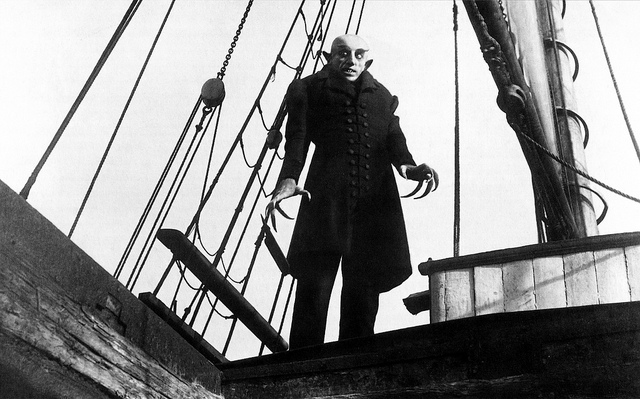
Nosferatu (1922)
I’ll go further – Nosferatu/Orlok is not Dracula, but director FW Murnau himself – with the result that today’s vampires flitting through Twilight and The Diaries are the children, not of Stoker’s night, but of Galeen and Murnau’s. And the music they make is very different.
The magnificent central section of the film depicts the vampire heading towards Whitby/Wisborg on board ship, disposing of the crew one by one like some hideous onboard buffet while Harker/Hutter plods back home across the mountains. Waiting on the beach is Hutter’s wife, the strange, other-worldly Mina, staring out to sea and during her sleepwalking catatonia delivering the devastating line: ‘My lover is coming!’
Nosferatu (1922)
But which lover, the Count or the Husband? Let’s look at what has brought them all to this point – Orlok has seen Mina’s picture and is about to gorge himself on Hutter for the second night running. Mina, staying with friends who have rescued her from a perilous walltop sleepwalk, suddenly sits up in bed with a cry – across a single shot-cut (but miles of the Carpathian Mountains) Orlok freezes in mid-bite and turns to face the direction of her ‘voice’ – off camera right. In Witold, she slumps. In Transylvania, he moves away, his meal untouched. The next time we see him moving he is heading away from the castle and towards Mina, bearing his coffins. From then on it is as if she is already under his power – and, I would argue, he is under hers.
Nosferatu (1922)
It is impossible to play Orlok’s arrival in Whitby/Wisborg as anything but heroic – the beautiful shot of the ship sailing itself to the dock; the scuttling figure with the coffin stopping outside Mina’s house for a brief smile and his first head-and-shoulder close-up in the movie; then the final river trip, standing proudly in a supernaturally powered rowboat, which deposits him at his new property where he enters by melting through the locked doors. No wonder Herzog chose Wagner for that sequence in his Nosferatu 70 years later. Orlok is a conqueror claiming his kingdom, from which he will stare balefully at Mina’s window while his rats destroy the city. And we are now, however unwillingly, rooting for him.
Murnau, by all accounts promiscuously gay and self-conscious about his appearance, obviously loved his vampire with the outsider’s love of a soulmate gifted with powers he can only dream of. Every flesh-and-blood male character in the film is weak or deluded; Hutter himself can only sit feebly by while Mina takes the strong course in dealing with both infection and infector. But as she makes up her mind we see Orlok imprisoned in his palace imploring her attention with a look that can only be described as heart-breaking. When she acquiesces, he comes to the feast like Don Juan triumphant, the shadow of his bony fingers enclosing, not her neck but her heart, which he squeezes as she writhes beneath him. Herzog would provide the perfect closure for their nuptials, Orlok looking up from her throat at the dawning light, only to have her draw his head gently back to her neck with the gentlest of arm-movements.
FW Murnau
Audiences new to the film always laugh at the opening and the speeded-up actions, but it is a wonderful tonic to hear the silence descend as Murnau and his vampire exert their power. I have never been able to play triumph at the Nosferatu’s demise because we have been taught by Murnau to admire and pity him as well as fear him, and in the last thirty years Herzog, Coppola and Joss Whedon have all followed Murnau’s lead. Genius that he was, Murnau made the connection half a century before the rest of us did – we know Orlok because he is us.
Every silent film is an invitation to the musician to tell their version of the story and, yes, “Nosferatu, the Love Story” is a spin, one of many that could be applied to this great film. But here’s my point: treating it musically as a horrific love story opens vistas of new insight on this masterpiece that are vastly greater and more rewarding than the simple terrors of the night. And when the tension between horror, lust and desire is working, one can almost hear the new blood coursing through the vampire’s veins …
We’re all saddened by the idea of silent film heritage sites falling into decay and disrepair. So I thought you would like to know about this crowdfunding campaign to restore the historic Essanay Studios in Chicago. As if you don’t know, the Essanay Studio was a major player in the first years of the American movie industry. Stars associated with the studio in its infancy include Chaplin, Gloria Swanson, Wallace Beery, Ben Turpin, Francis X Bushman and, of course, Broncho Billy Anderson, who funded the company in 1907 with George Kirke Spoor.
The studio building is now a college, and is seeking help with funding for renovations, and to transform itself into an arts centre, with a studio, performance space and an area where people can come and learn some silent movie history.
Before there was Hollywood, there was Chicago. This initiative seeks to preserve and revitalize one of the world’s first and last remaining silent film studios and a unique piece of a great city’s history. The restoration and rebirth of the Essanay Film Studio Complex will provide an opportunity for people of all ages and backgrounds to learn and experience the magic and mystery of early film-making and Chicago’s unique role. It will also extend and expand the studio’s cultural legacy by providing a community space for the performing arts.
After blogging the whole festival day-by-day, there was just one job left to do: a quick wrap-up for the Guardian film blog. How nice to see a picture of Mabel Normand on a national newspaper website!
You can always keep up-to-date with my non-Silent-London writings (should you wish to), here on my website.
Too Much Johnson (1938) George Eastman House/Cinemazero/La Cineteca del Friuli
I have just attended the world premiere of an Orson Welles movie.
The above statement is almost true. What we saw tonight in Pordenone was the restoration of a work print, not even a rough cut, of a theatrical device. The scenes Welles filmed in New York in 1938 were to be shown as part of a Mercury Theatre production of the 1894 play Too Much Johnson. It’s an elegant solution: replacing pages of expository dialogue with silent prologues, shot slapstick-style to suit the on-stage farce and add a wash of nostalgic charm. Welles never completed editing the prologues, and in any case, the theatre the play first appeared in could not accommodate the projector. In fact, Too Much Johnson folded due to bad reviews before it ever came to New York and these 10 reels were abandoned for decades.
And yet, Too Much Johnson is not just a curio from theatre history. These reels are not quite a film, but something far more than fragments. The experience of watching them on a big screen, projected from 35mm, with expert piano accompaniment from Philip Carli, and commentary from Paolo Cherchi Usai, was dream-like, exhilarating and occasionally laugh-out-loud hilarious. Because we don’t have a final cut of Too Much Johnson, the footage includes retakes, gaps and mistakes. The extant material is a hint of what might have been – but also the heights that Welles was to achieve later in his career.
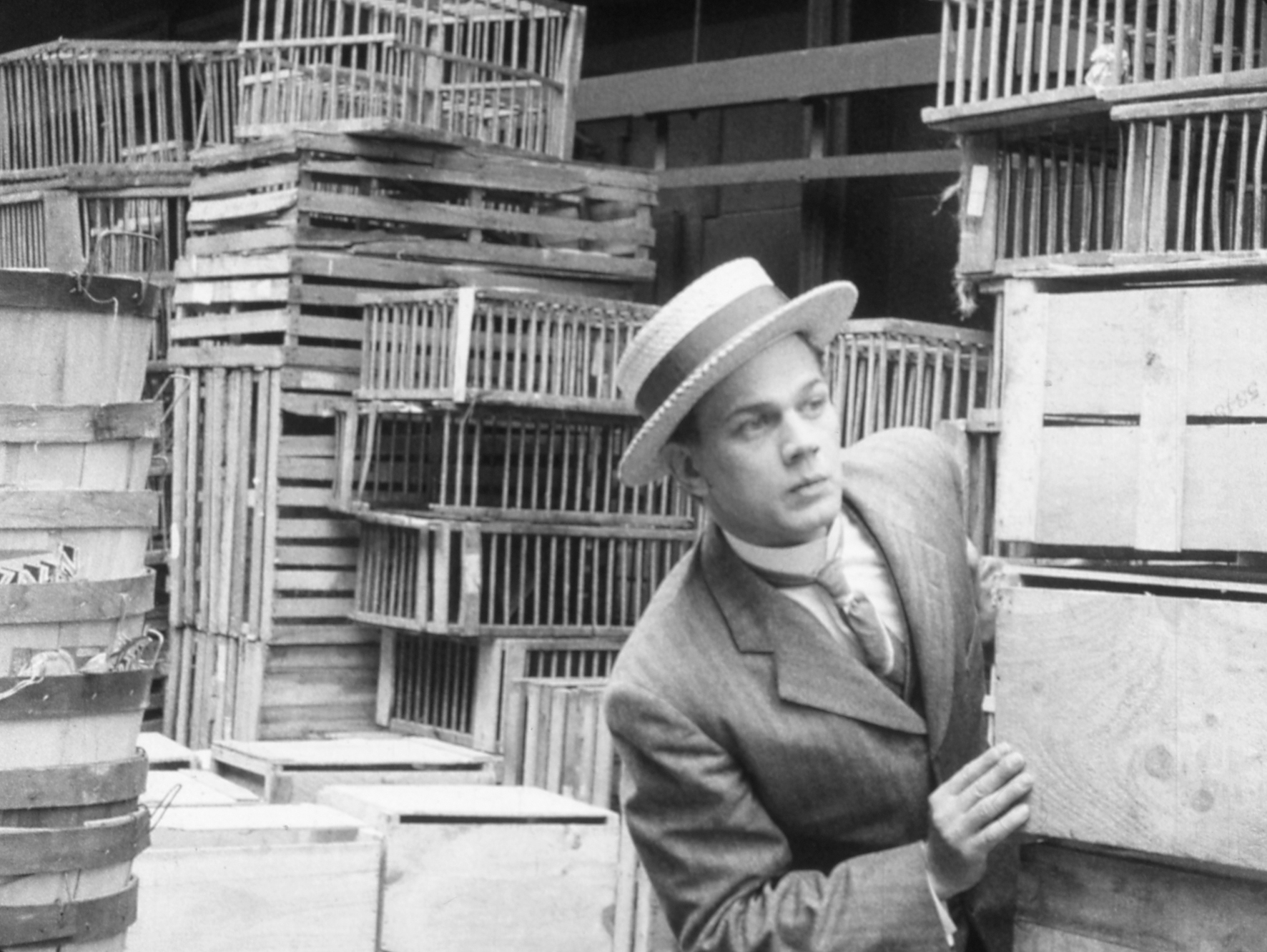
Joseph Cotten in Too Much Johnson (1938) George Eastman House/Cinemazero/La Cineteca del Friuli
This is slapstick, ostensibly of the rowdy Keystone school, but from the off it is enlivened by some decidedly arty touches: this is a very good-looking piece of work. All the footage was shot undercranked to create that Keystone feel, a blanket measure that creates some queasy side-effects. An early argument scene is edited so frenetically, with so many extreme closeups, that it is more Eisenstein with Mack Sennett. An anarchic running gag in those first interior scenes has pot plants bursting into the frame, not least in what I can only describe as an arthouse comedy sex scene, an ultra-high-speed bedroom farce. And as Joseph Cotten (our reckless hero) and Edgar Barrier (the outraged husband of his lover) pursue each other up and down fire escapes and across rooftops, the camera records it all from the acute Expressionist angles Welles was so well known for. A scene of Barrier patrolling Manhattan knocking men’s hats off their heads is shot from high overhead – as Barrier attacks the crowds and the crowds form into mobs to attack back, the effect is of a musical dance sequence, a street ballet. And the sight of the ground after his spree littered with discarded bowlers and boaters is almost surreal, surprisingly poignant. In fact, Barrier’s leering, moustache-twirling closeups, which may be intended to evoke melodramatic early cinema villains, are unsettlingly camp. The scenes set in Cuba (actually a quarry in Tomkins Cove, New York) are exercises in economy – and its limits. With a few rented (and comically precarious) palm trees dotted across the rocky ground, Welles shoots from low angles to transform the quarry slopes into cliff-faces, with his actors tiny stick men brawling on the skyline.
You hate bad dialogue, I hate bad dialogue. And clunky, needless expository dialogue is the worst: the most heinous crime in sound cinema. A good rule of thumb for screenwriters would be to look at each line they want their actors to spout and say: “Would this be an absolutely essential intertitle?” Without all those words, actors have to tell the story physically, by acting, rather than describing: they say a picture tells a thousand words after all. With 24 frames a second, who needs text, by that logic?
This is clearly a pet hate of mine – I rarely see a new movie without wanted to take a red pen to the script here and there. So thank heavens for All is Lost, the tremendous new film from JC Chandor (Margin Call), starring Robert Redford as a sailor lost in the middle of the Indian Ocean. Redford is the only actor in the film – it’s just him, the boat, the water and a series of catastrophes until the bitter end. And he’s fantastic in it – his nicely grizzled features reacting moment by moment to his impending doom. It’s a physical role for sure, as he tackles the high winds and rolling waves – but for the full Ancient Mariner angst, he needs to capture our sympathies too, and let us know what’s going on behind those famous blue eyes.
You’ll have guessed the twist: as Redford helms the movie solo, there’s no real dialogue at all. I don’t want to spoiler the film, but he speaks a few words; wouldn’t you curse a little, in his deck shoes? For most of the film’s 106-minute running time, however, all you’ll hear is the roar of the ocean, the clattering and cracking of his boat and a hell of a lot of weather. The score, by Alex Ebert, appears only sporadically, and there’s no intrusive internal monologue to break the tension either. So with all that space in which to act, and such a simple story, Redford is free to give an indelible, immense performance that’s a pleasure to watch. Or it would be, if one weren’t so terrified for him.
All is Lost wouldn’t qualify as a silent movie, I know that. In fact its stunning sound design is as Oscar-worthy as Redford’s star turn. But it is a rare sound film that has learned the extraordinary power of silents – and it’s really very special indeed.
Alexa Chung is described as an “It Girl” so often that it is safe, with apologies to Clara Bow, to go ahead and call her that. Which means that when she appears on the cover of British Vogue, as she does this month, the fashionistas take note. The Vogue cover story in question is a couture fashion shoot styled by the magazine’s fashion director Lucinda Chambers and photographed by the legendary Patrick Demarchelier. Did I mention that it is inspired by and named after one of our very favourite silent films: Chaplin’s heartbreaking, hilarious The Kid?
According to the pages of Vogue, “Alexa Chung channels her inner Charlie Chaplin in the the season’s most magical designs”. The outfits featured combine couture gowns by houses including Chanel, Valentino (!) and Versace with vintage hats (something of a trademark for Chambers), and classic Chaplinesque touches – oversized boots, baggy pinstripe trousers and even a spindly bamboo cane. It’s a fashion shoot rather than a fancy-dress act, so the source material has been interpreted, not replicated: Chung wears a peaked cap that’s more Jackie Coogan than Little Tramp, for example. But it’s not entirely fast-and-loose. You could view those designer dresses, embellished with pearls and sequins, as a nod to Edna Purviance’s upper-class character in the same film – meaning that Chung encapsulates the whole family. More likely, the Chaplin look has been chosen to offset all that opulence and to capitalise on Chung’s gamine beauty. She has long been celebrated for a certain “street-urchin” look that’s pure The Kid. In fact, she told Glamour magazine in 2012 that Chaplin inspired her dress sense, captioning a selfie with the words: “This is my Charlie Chaplin look – black trousers with suspenders and an Yves Saint Laurent shirt. Putting weird pieces of clothing together is what I’m good at.”
Alexa Chung’s ‘Charlie Chaplin’ look in 2012 (Glamour.com)
If you think it strange to see a woman taking fashion tips from a fictional tramp, played by a bloke nearly 100 years ago … well that does sound odd when you say it loud. But it’s not so off-the-wall as all that. Chaplin’s early years were spent in London music halls – that’s where he first performed, and where his parents had worked too. Male impersonators were popular in the halls, and fashion historian Amber Jane Butchart writes here about the immaculately turned out Vesta Tilley. When Chaplin first picked out his Tramp outfit, he may well have been thinking of this female twist on a masculine suit. The Tramp is in a kind of drag himself – in clothes that don’t quite fit, an outfit with aristocratic pretensions undermined by ragged hems.
Charlie Chaplin’s Little Tramp costume at the V&A museum (aquamarinejo.wordpress.com)
According to Chaplin’s autobiography he created the Tramp’s outfit from deliberately contradictory elements: baggy pants, tight jacket, oversized shoes and small derby hat provided by fellow actors and whangee cane owned by himself. Accessories such as the high-collar shirt, check waistcoat and tie are not accounted for, but Chaplin claims to have added a moustache to make himself appear older. In this first manifestation, the Tramp is scruffier and less affecting than he became later. The cigarette adds to his louche appearance and the cane is a parody of gentleman’s attire. Chaplin gives a professional clown’s performance in the tradition of the North American Tramp/Hobo; his costume is based on a collage of mismatched pieces that appear to have been randomly collected from discarded clothing … While the dissonant parts of the Tramp’s outfit do not cohere into a sartorial whole, their recombination indicates the character’s aspirations to be a dandy.
The Tramp’s clothes draw attention to the social significance of dress as well as to his affectation, which Chaplin developed as a feature of his performance. The collage effect, deriving from popular forms such as the circus and street theatre, resonates with the aesthetic strategies of the Surrealists and others. The pastiche of styles portrays the character as a fabrication, a social type rather than a rounded individual. While the rudiments of psychological motivation are there in the costume’s ridicule of the Tramp’s desire to belong to a higher class, the emphasis on disguise focuses the viewer’s attention on Chaplin’s self-presentation as star performer … The Tramp and his costume become the spectacle.
For a woman to dress up as Chaplin may seem drab (the dark colours, the masculine cut) but that is far from the case. It’s a look that demands attention, and playfully blurs gender and class divisions, which is sexy and provocative in itself. In fact, aspects of the Chaplin look are hugely feminine and easy to wear: tight jackets and baggy trousers are flattering to many women’s body shapes. The tailoring can be softened by the casual fit, or even a buttonhole flower and lots of smudgy eyeliner. Just check out how many women on the fashion site Polyvore are channeling their own inner Chaplins. Female celebrities from Jessica Alba (when pregnant) to Brigitte Bardot have raided the costume box to pay homage to the star. And female Chaplin impersonations multiply on screen – including Gloria Swanson in Sunset Boulevard but going far beyond that. Remember Jeanne Moreau in Jules et Jim? And the ultimate in tomboy-chic, Diane Keaton in Annie Hall – her tennis-date outfit has Chaplin fan written all over it. More recently, Melanie Laurent’s character Anna, having lost her voice, adopts a Chaplinesque costume in the romantic film Beginners.
In 2011, Comme Des Garcons put female models in androgynous cut-up coats and jackets that reminded many onlookers of Chaplin’s Tramp. This spring, Vivienne Westwood called for a Climate Revolution in a sequined oversized bowler and Magic Marker moustache. Supermodel-of-the-moment Cara Delevingne, no less, also claims to be a Chaplin devotee – it must be the eyebrows.
Miss Chaplin by Rio Surya Prasetia for Amica Indonesia
So Chaplin is big news in the fashion world right now, but this look isn’t just for the ladies. In a recent, and typically eloquent, post for Mr Porter, fashion writer Colin McDowell reclaims the silent star as a style leader – offering a neat precis of his career and particular qualities as well as his appreciation for film costume and his fastidious off-duty fashion. From spring/summer 2011, John Galliano presented a menswear collection inspired by the slapstick greats, in particular the urban-industrial attire of the Little Tramp – the models sported silent-era Hollywood makeup reinvented as gothic facepaint, with overalls, boots, prison stripes, moustaches and shocks of dark curly hair.
So why Chaplin in 2013? Well, the extent of Chaplin’s fame means that he will never disappear as a cultural reference point. The fact that his image has been protected by the Chaplin association all these years means that the source of his signature style remains intact and undiluted, no matter how many fashion shoots, fancy-dress parties or street imitators get their hands on it – so he is always ripe for a speedy revival. I need not mention how The Artist nudged the silent era back into mainstream consciousness, nor that 2014 will mark the anniversary of the Little Tramp’s creation. The acting success of Chaplin’s granddaughter Oona Chaplin (who was also photographed by Patrick Demarchelier for a very slinky shoot in Vanity Fair last year) may have given him another boost in fashion circles.
But if you break the Tramp’s look down into its constituent parts, as Cook does in the extract printed above, you’ll see exactly why he resonates in a time of austerity measures, bank bailouts and Occupy camps. These days Chaplin’s bowler hat and pinstripe trousers signify something more specific than “gent” – the modern bogeyman, the City Banker. Just as Chaplin remixed the attire of the upper classes to cock a snook at their pretensions, we can dress up as his character today and thumb our nose at the financial institutions that so often determine our fate. To distort the armour of the City, with rags or sequins, with a smile and knowing wink, is to expose a chink in it. Chaplin would enjoy that, don’t you think?
You may notice the widget on the righthand side of this page, ticking down the days until this blog dispatches itself to Italy, to report from Le Giornate del Cinema Muto in Pordenone. We have many reasons to get excited about the arrival of the world’s most prestigious silent film festival. There’s the debut of the lost-and-found Orson Welles short Too Much Johnson, the premiere of a new restoration of The Freshman with a score by Carl Davis, Italy’s first glimpse of Blancanieves, an Anny Ondra retrospective, a programme of Swedish silents, more treasures from the Corrick collection, Ukrainian classics, Mexican rarities, a strand devoted to Gerhard Lamprecht and much more.
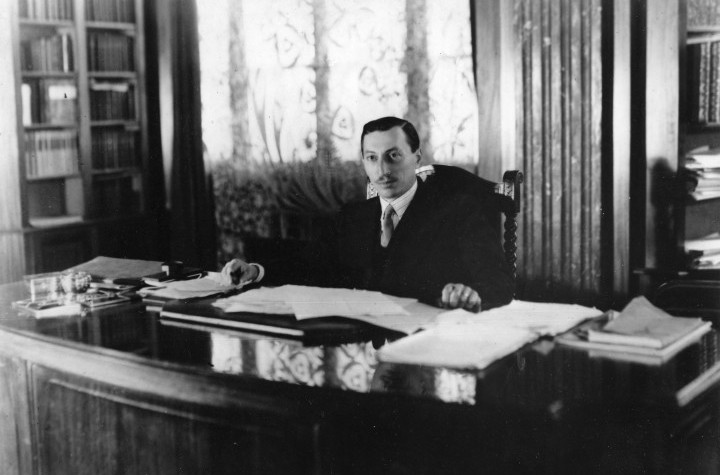
I had a smile on my face this morning, however, when I learned that a documentary co-directed by none other than a fellow classic/silent film blogger – the marvellous David Cairns of Shadowplay – will be showing at the Giornate. Natan takes a look at the controversial life of French film-maker Bernard Natan, and the various scandalous assaults on his name. Natan was a Jewish French-Romanian film produced, who was at one time the head of the Pathé studio. Financial troubles, antisemitism and allegations that he was a pornographer degraded his reputation in the industry. His story ends on an even darker note – he died in 1942, in Auschwitz.
Bernard Natan used to sign his films — literally, his producer credit was an animated signature inscribing itself on the screen. And then, as Natan’s reputation was destroyed and his company taken away from him, a lot of his films were shorn of their signatures. When the movies got re-released, it was considered embarrassing for their executive producer’s name to be seen. And during the Occupation, many Jewish filmmakers were quietly erased from title sequences.
Since then, Natan’s name has been restored to some of his films, and a few historians have attempted to restore his reputation. That’s the effort Paul and I hope to contribute to with our film, which should tell a dramatic and tragic story, shine a light upon some neglected corners of cinema history — but also help give Bernard Natan his good name back ~
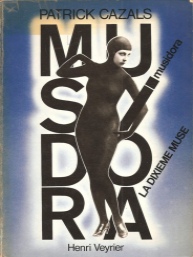
Musidora: la dixieme muse
The film has already shown at several festivals, including Edinburgh and Telluride – and it plays at Cambridge film festival this week. The Pordenone festival will also be screening a documentary about another French cinema legend: Musidora: la Dixieme Muse. The documentary, by writer and filmmaker Patrick Cazals, promises to trace the actress’s career right form the early days of Vampires and Judex, to her work in later life as a producer and director as well as at Henri Langlois’ Cinematheque, positioning her as a cornerstone of French cinema as much as a legend.
So that’s a nicely themed double-bill at Pordenone for us to savour, but French cinema pioneers are in vogue right now – you can’t have failed to miss the successful Kickstarter campaign for the Jodie Foster-narrated Alice Guy-Blaché documentary. It has been a massive campaign, conducted enthusiastically and cannily across social media. The line they have been using is that Guy-Blaché’s name is forgotten now because she has been written out of history by her male colleagues and successors. That may be true for many film fans, but just like Musidora, her name is already well-known in silent cinema circles – if Be Natural is to redeem her reputation, it must spread her fame to a far wider audience. While certainly impressive, Be Natural‘s 3,840 Kickstarter backers represent a drop in the ocean. The movie looks like it could be great though – and it’s the popularity of the documentary, rather than the worthiness of its intentions, that will return Guy-Blaché’s name to global renown.
Catch Natan at Cambridge if you can, or if you have already seen it or Musidora, do let me know your thoughts below. There’s a Variety review here. You can also like Natan on Facebook. I have to say, I am looking forward to all three of these films.
PS: I think Lady Gaga, for one, has been mugging up on her early French film – spot the Méliès refs and Musidora costumes in her latest video, Applause
Last night’s Jazz on 3 celebrated the art of live accompaniment to silent film, as part of the BBC’s marvellous Sound of Cinema season. The show, presented by Jez Nelson, features jazz and improvising musicians creating live scores for silent films. Listen again here, or catch up with the sessions by watching these gorgeous clips, with music from the live session by Alison Blunt (violin), Viv Corringham (vocals), John Bisset (guitar) and David Leahy (double bass). Here, they are accompanying an experimental film by Louise Curham called Pararaha, Ruapehu, Mt Clear.
The much-loved 1925 German film A Trip to the Planets was also among the films chosen for the session.
Another modern silent here, Composted Memorial by Sally Golding, an installation and performance artist know for her cine-sculptures. She desecribes the film, which is constructed from vintage 9.5mm home-movie fragments as: “A wonky filmic resurrection, as a cine-essay dissolving in destructive magic.”
It’s an unbelievable discovery, “stranger than fiction” as Paolo Cherchi Usai of the George Eastman House told me. Orson Welles’s 1938 silent movie Too Much Johnson, believed to be lost, destroyed in a fire, has finally turned up. Not only that, the film, which is admittedly just a work print, was discovered in a warehouse in Pordenone, home of the prestigious Giornate del Cinema Muto.
Rejoice, if you are going to Pordenone this year, because Too Much Johnson will have its premiere at the festival, on 9 October 2013, before screening at the George Eastman House (where the film was restored) in the US the following week. Cast your eyes on this lovely video preview of the film – and then click here to read a short piece I wrote for the Guardian about the film and its rediscovery. In it, Cherchi Usai tells me that the Welles film this lost-and-found work reminds him most of … is none other than Citizan Kane.
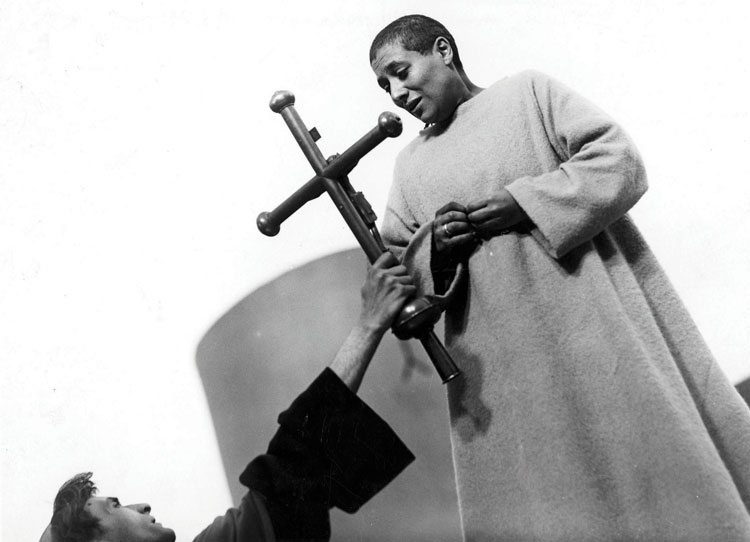
Scalarama is a far-reaching kind of film festival – one that covers the whole country, and virtually any manifestation of cinema you can think of. It’s dedicated to the spirit of the old Scala screenings in King’s Cross, London in the 80s and now in its third year, has a diverse and fascinating programme, fuelled by the passion of movie fans championing their own, often obscure, favourites. I am delighted to report that silent cinema is very much part of the month-long festival, with several screenings of Dreyer’s masterpiece, The Passion of Joan of Arc lined up, from Leicester to Canterbury. And it’s the gorgeous new Eureka print they’re screening too.
The Scalarama organisers asked me to share some thoughts about why I love silents, and why you (yes, you) should go to see The Passion of Joan of Arc, for the first in their series of podcasts supporting the festival. So listen up. I have listed the screenings below – Visit the Scalarama website for more details and links.
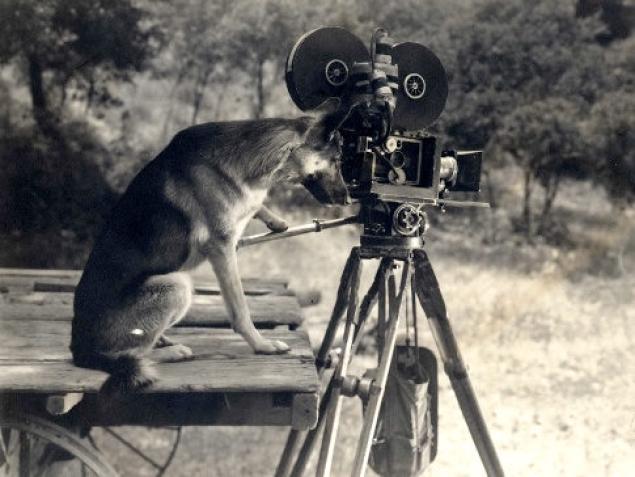
The post rate sure has slowed down around here. Blame the summer. Blame the day job. But that doesn’t mean that there are fewer silent movies being shown in London. Not at all. So this is just a gentle reminder that if you want to keep up to date with what is being shown where and when, take matters into your own hands, like Rin Tin Tin, here, and bookmark the Silent London Calendar page.
Check back regularly and you will find something new each time, we promise. Take next week: Landmark horror-doc Häxan is showing in Peckham, Neil Brand is accompanying a comedy double-bill and there is something mysterious occurring in Kennington – follow the link and all will be revealed.
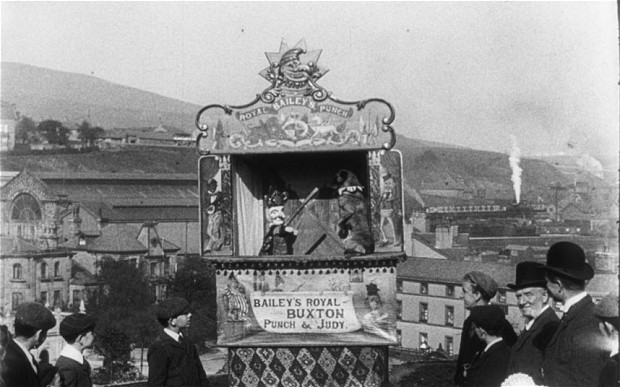
A still from Mitchell and Kenyon’s Punch & Judy Show in Halifax (1901). Copyright: BFI National Archive
So, last week, I found myself watching some early films in the BFI Southbank. Same old, same old, you might think. But these early films were being shown on massive MTV Cribs-style tellies in the BFI foyer. And while many of them were from the Mitchell and Kenyon archive we know and love, they were unseen treasures, having been gazed upon only by archivists during the past century.
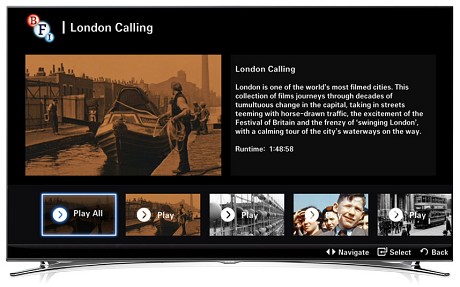
This unexpected alliance of Edwardian content and 21st-century technology has come about via the BFI’s new app, developed as part of the Film Forever project. It’s an app for Samsung Smart TV and Smart Hubs, and it allows viewers access to a treasure chest of film-related content, including a free Film of the Week (kicking off with A Zed and Two Noughts), interviews with film-makers, documentaries, and a whole heap of archival delights, including the M&K films. There will also be footage of events and interviews from the London Film Festival appearing when that all kicks off in October.
The archive goodies are separated into a variety of strands: London Calling and Cabinet of Curiosities, among them. There are silents across most of the ranges – many you’ll be familiar with, such as Daisy Doodad’s Dial or Wonderful London. It’s the Mitchell & Kenyon films that stand out though – they’re in a rather lovely collection called Edwardian Summer. There’s an hour and a half of footage here, a good hour of which is unseen. Robin Baker, the head of the BFI archive, calls these films: “Cinematic gold – you couldn’t get much more important.” What’s so vital about these short films, he explained, is that the “humanise the past”. They certainly captivated the crowd at the BFI.
You can see Blackpool in May 1904, with formally dressed holidaymakers parading on the pier or riding trams. There’s a Punch and Judy show, captured in Halifax in 1901 – your eye may be caught by the frisky puppy getting rather too close to the puppets, but don’t miss the plume of smoke that reveals a train station in the rolling hills behind the main event. A man in drag falls off a donkey (twice) in Hipperholme, West Yorkshire in 1901; Preston celebrates its Whit Fair in 1906. Delightfully, footage of the Chester Regatta delivers shots of boats gliding elegantly down the River Dee in the long hot summer of 1901. Watch a little further and you’ll discover a few courting couples doing what courting couples do in those very boats.
BFI’s Samsung Smart TV app
There’s silent London on show too – elsewhere in the package you can watch street scenes of Hoxton approximately 80 years before it became cool , for example.
I think it’s all gorgeous – I would like to sit down and watch all of the M&K treats in full, and there are some non-silent delights both sublime and ridiculous available too, including a Dufaycolor screen test featuring Audrey Hepburn and a public information film from the 70s starring Keith Chegwin. So this is wonderful news for those of you have, or are thinking of buying, a Samsung Smart TV, Hub or Blu-Ray player. It’s also good news for the rest of us. We may have to be a little patient, but as more of the BFI’s wonderful archive is digitised we can look forward to their films being made available in more ways. BFI apps for everyone please: not just on smart TVs, but on smartphones and tablets, perhaps?
 This is a guest post for Silent London by Alison Strauss, director of the Hippodrome Festival of Silent Cinema, Bo’ness. The Silents by Numbers strand celebrates some very personal top 10s by silent film enthusiasts and experts.