UPDATE: I updated this post on 6 September 2015 once the programme for the Silent Laughter festival had been finalised.
Our favourite south Londoners are at it again. Fresh from staging a triumphant weekend-long event in June, the Kennington Bioscope team promise a full day of chuckles with a comedy festival in October. Tell us all about it, Ken!
Programmes include shorts with Charley Chase, Lupino Lane, Laurel & Hardy and others; rare features with Raymond Griffith and Walter Forde (Britain’s best silent comedian) concluding with Harold Lloyd’s classic GIRL SHY.
Plus special presentations – Kevin Brownlow on his Buster Keaton Thames TV series ‘A Hard Act to Follow’, David Robinson on Laurel & Hardy (whom he interviewed in 1954), including some new discoveries, guests Tony Slide (historian, author, founder of ‘The Silent Picture’) and Matthew Ross (editor of ‘Movie Night’, Britain’s only magazine devoted to silent & vintage comedy).
Here is the final programme – the Raymond Griffiths films is Paths to Paradise (1925) and the Walter Forde title is You’d be Surprised (1930). And I have heard, from the most delightful little bird, that the vegetarian cafe next door will be open for food again, possibly with a special offer for festivalgoers.
Sounds great. The perfect cure for the post-Pordenone blues, Silent Laughter is a one-day event taking place at the Cinema Museum on Saturday 24 October, from 10am-10pm. Tickets will be available from 1 September so bookmark this page now.
Wait a minute, wait a minute …
Yes, you ain’t heard nothin’ yet. The Kennington Bioscope is branching out even further, into the realm of early sound cinema, with a little something they are calling Kennington Talkies. What?
Stan and Ollie in The Battle of the Century (1927)
Following the rediscovery in June of the missing reel of Laurel and Hardy’s classic comedy short, featuring the pie-fight to end all pie-fights, I can bring you even more good news. A near-complete restoration of The Battle of the Century (1927), by Lobster Films, will screen at the 34th Giornate del Cinema Muto in Pordenone, Italy this October.
The festival will open with a gala screening of the newly restored Italian film Maciste Alpino (1916), a first world war epic written by Giovanni Pastrone, and the closing gala will be The Phantom of the Opera (1925), starring the amazing Lon Chaney, with Carl Davis’s score performed live by Orchestra San Marco di Pordenone.
The midweek feast will be Henri Fescourt’s epic 1925 adaptation of Les Misérables, in four sittings – it’s six and a half hours long, after all. I am already preparing for that one.
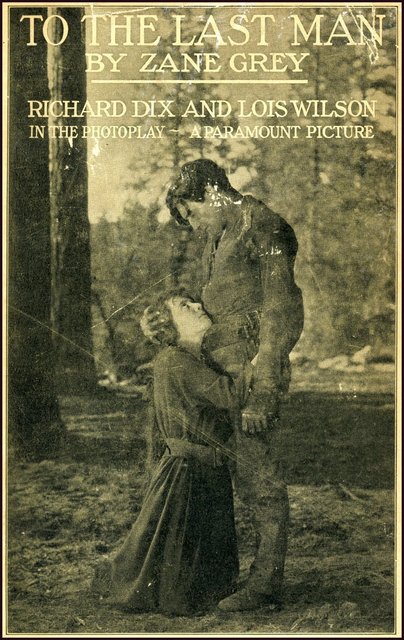
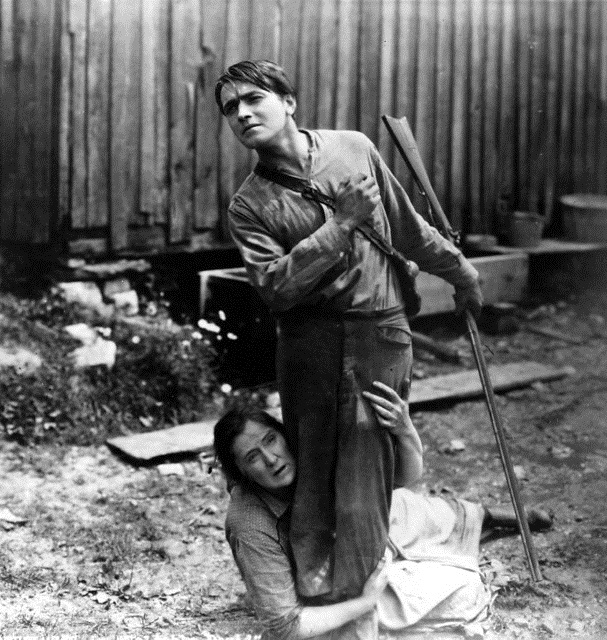
To the Last Man (1923)
Other anticipated highlights include a celebration of black performers on screen, including 100 Years in Post-Production, a reconstruction of the rushes of Lime Kiln Club Field Day (1913), a never-completed comedy starring African American stage star Bert Williams among its all-black cast. I am very keen to see the new restoration of Daisuke Ito’s Diary of Shuji’s Travels (1927) accompanied by a benshi as well as live music, and the recently discovered western To the Last Man (1923).
That last title leads one of the programme’s most exciting strands: a retrospective of the silent films of Victor Fleming. It also ties in neatly with a very promising strand devoted to the beginnings of the western in the silent era.
Two modern silents, at least, will feature: a short Iranian animation inspired by Tim Burton, Junk Girl, and a feature-length experimental film, Picture, conceived by Paolo Cherchi Usai. Judging by his past form, you may want to grab the chance to see that one when you can.
Not a modern silent, but a modern silent cinema mockumentary, Love Among the Ruins is “a faux documentary about the miraculous discovery and restoration of a long-lost Italian silent film”, featuring music by none other than Donald Sosin. It will be interesting to see how this one goes down at Pordenone.
Italian “strong men” Albertini and Aldini made dramatic “thrill” films in Germany in the 1920s, and the Giornate will screen a selection of these. I don’t know too much about these chaps – but I have been browsing these postcards …
From other sources, but not, so far, the festival itself, I hear that we will seen the freshly restored 1916 Sherlock Holmes starring the role-defining William Gillette also. Very exciting.
Early cinema is represented by more German Tonbilder films, selections from the Spanish archive the Sagarminaga collection, and a retrospective ofLeopoldo Fregoli.
We’re promised lots besides, including “alternative city symphonies”, more Russian Laughter (this strand was brilliant last year) Mexican films including El Automovil Grisand El Tren Fantasma.
And finally, I don’t have 100% confirmation on this, but it is likely that the Vitaphone Project’s restoration of the Alice White film Show Girl in Hollywood (1930) will get a runout at the Giornate this year … watch this space
Hello, this is an updated version of a post I wrote in time for last year’s festival – there are a few new tips for 2016 and other updates.
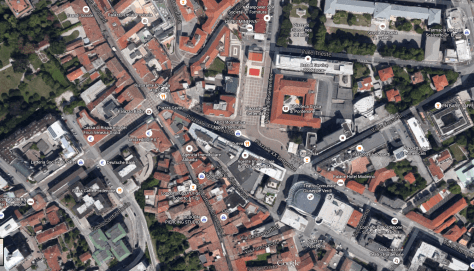
Pordenone: the circular building is the Teatro Verdi, and you can see the Cafe Bar Posta and the library (Bibloteca) nearby. (Google Maps)
Do you know the way to Pordenone? It’s about 80km north-east of Venice, but that’s not important right now. When I say Pordenone, I mean Le Giornate del Cinema Muto: the world’s most prestigious silent film festival, which takes place in the town every October. This year will see the 35th instalment of the Pordenone Silent Film Festival, a veritable institution, which showcases the best (and some of the rest) of silent cinema, accompanied by the world’s leading musicians. It’s eight full days of silent cinema, and a chance to meet the most knowledgeable early film enthusiasts around.
Never been? I think I understand why. Something about the words “prestigious” and ”institution” can be a little daunting. For years I thought Pordenone was not the place for me – it was for the real experts. I was intimidated too by the website, which is actually phenomenally useful, but a little hard to navigate and very text-heavy in two languages.
But as soon as I arrived for my first Giornate in 2012, I knew I had been a fool to stay away. Pordenone isn’t intimidating at all. And if you love silent cinema, which I know you do, it’s an essential indulgence. You can call that the Pordenone paradox.
So here’s a short guide to planning and enjoying your trip to Pordenone for this year’s festival. If you have any more tips – please share them below:
Forgive me if I’m wrong, but it feels like a long time since we saw a solid silent retrospective in this town. No need to bleat about it much longer though, eh, as the BFI has just the thing. DW Griffith – still arguably the most important American movie director of all time – will inhabit the BFI Southbank for most of June.
The season concentrates on the feature films up to and including Abraham Lincoln (1930), Griffith’s first talkie. Especial care is taken over Griffith’s best-known, and still-controversial, film Birth of a Nation (1915), in its centenary year. The movie will screen with introductions on both occasions, and a special roundtable event will bring together keynote speakers from UCL’s “In the Shadow of Birth of a Nation” conference to discuss the film. To provide further context, on 7 June the BFI will screen all three parts of Kevin Brownlow and David Gill’s DW Griffith: Father of Film documentary.
The Birth of a Nation (1915)
This is one of those events that should have every cinephile in the city licking their lips. And you don’t have to be a silent nerd or a completist to understand why. There’s far more to DW Griffith than the awful things he believed and the clever things he is credited with doing first. Watching the films, especially on the big screen, is the best way to appreciate his genius. And look at the cast list here too: the season features several turns from the wonderful Lillian Gish, as well as Richard Barthelmess, Lionel Barrymore, Douglas Fairbanks and Mae Marsh.
Well hello there, Elephant & Castle tube station. A few months back I wrote about the many wonders of the Kennington Bioscope – a regular silent screening event held at the Cinema Musesum, south London. Short version: it’s ace.
Now the Kennington Bioscope has gone one better than brightening up our Wednesday evenings. The Kennington Bioscope Weekender will take over the Cinema Museum for two days in the summer – 20 & 21 June – to screen a mouth-watering selection of silent films.
Two things to note straight away – first, the majority of these films will be shown on film, either 35mm or 16mm. The website makes it clear which is which. And second, the films have been chosen and will be introduced by an estimable group of film historians including Kevin Brownlow.
“If a cinema could give you a hug, this is what it would feel like.” That’s how Bryony Dixon described the Hippodrome Festival of Silent Cinema in Sight & Sound last year, and as usual, she’s not wrong.
This year I returned for my second trip to the festival, now in its fifth year, and the welcome was warm, the music was fabulous, the films magnificent and the crowds enthusiastic.
It’s a tribute to Ali Strauss, Shona Thomson and all the team behind Hippfest that this small town in Scotland draws silent movie fans from across the country (and the globe) as well as introducing the locals to the delights of EA Dupont, Mikhail Kalatazov and Buster Keaton. I had a stonking time in Bo’ness this year, and would recommend the festival to anyone who loves movies, music and merriment.
Here’s what I took home from Hippfest this year:
A tan. Well, a vitamin D topup at least. I made all the usual wry comments about “sunny Scotland” in the runup to my trip, but Bo’ness was truly bonny this weekend, and my, the Firth of Forth looks stunning in the sunshine.
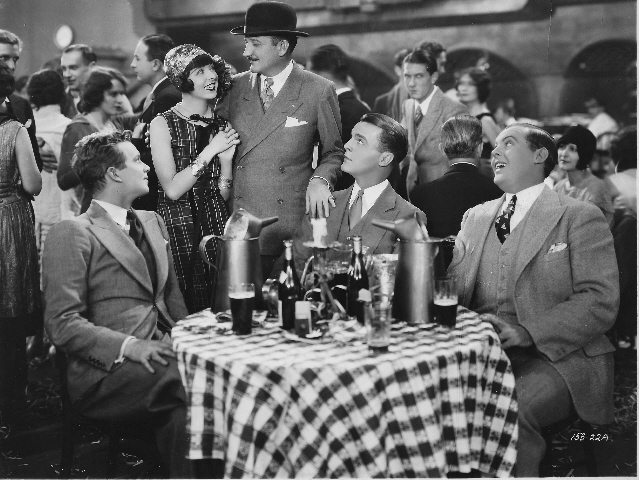
Synthetic Sin (1929)
More recruits for the Colleen Moore fanclub. It was an absolute honour for me to introduce the Friday night gala screening of Synthetic Sin – and I just knew that Ms Moore would charm the spats off the assembled audience. It was a fantastic screening, with raucous laughter threatening to drown out Neil Brand’s spirited accompaniment at times. All the gala shows were sold out – well almost all of the events were – which I think goes to show that people are prepared to take a chance on films, and stars, that they haven’t heard of before. I’m not sure the Hippodrome crowd will forget Colleen in a hurry though.
The fear of God. Well, flippancy aside, I was looking forward hugely to the Thursday night screening of William S Hart western Hell’s Hinges, not least because it would be scored by those groovy cats the Dodge Brothers. But as the band struck up and immediately began crooning “Satan is real” a shiver ran down my spine. The movie provided fire and brimstone, and the Brothers gave it space to breathe and fan those flames. A massively atmospheric screening, and a wonderful opener to my festival. So few people get a chance to see a pre-1920s film on the big screen at all – let alone with so much added cool.
The fifth instalment of Scotland’s only silent movie festival announces its programme today – and judging by previous years, you should start snapping up tickets straight away (tickets go on sale today, 10 February 2015, at noon). The Hippodrome Festival of Silent Cinema takes place in Bo’ness, a small town tucked away on the banks of the Firth of Forth in Falkirk, Scotland. Bo’ness has a stunning vintage cinema, the Hippodrome, which has been restored to its 1920s glory, and each year hosts of a celebration of the silent era that is as welcoming as it is wide-ranging.
HippFest celebrates its fifth birthday in style with three major World Premiere Festival Commissions, a pop-up cinema at Bo’ness & Kinneil Railway, the chance to discover forgotten stars Colleen Moore and Eric Campbell and get hands-on with a series of workshops and interactive events covering everything from beatboxing to Joan Crawford’s favourite dinner party recipes.
You can find all the information about the festival, and how to book tickets for the events, on the festival website here. You can also follow the festival on Facebook and Twitter. This year’s event runs from 18-22 March 2015 and below I have picked out some highlights from the programme. I have to say I am pretty excited.
Synthetic Sin (1929)
The Friday night gala screening will be the hilarious Synthetic Sin, starring Colleen Moore. There’s a dress code ladies and gents – flapper glamour! Neil Brand will accompany on piano and some silent movie blogger or other will be introducing the film …
“The Film Explainer” Andy Cannon will perform alongside extracts from Dr Jekyll and Mr Hyde, along with musicians Wendy Weatherby and Frank McLaughlin.
A weekend away … Estelle Brody and John Stuart in Hindle Wakes (1927)
According to the website of the Phoenix independent cinema in Leicester, the British Silent Film Festival is moving back northwards this year! The BSFF began in the East Midlands town back in 1998 and has subsequently been based at the Barbican and the Cinema Museum in London, in Cambridge and Nottingham. It will return to the Phoenix in Leicester from 10-13 September 2015, so mark it in your diaries now.
Here’s what the Phoenix has to say about the event.
Formed in 1998, the Festival fulfils an important role – presenting a wealth of treasures from the silent period to audiences who would not otherwise have access to their own film heritage and to the wealth of international silent cinema.
The Festival is curated, organised and presented by Laraine Porter, Bryony Dixon and Neil Brand and a team of UK experts and advisors in this field.
Open to all, the films are presented with live music from the world’s leading professional silent film accompanists (and we hope, local guest musicians) in a variety of entertaining and accessible ways.
Hat-tip to Jenny Stewart for the news – more details to follow as soon as they arrive.
Pola Negri in The Woman he Scorned (1929)
Meanwhile, back in the capital, the popular British Silent Film Festival Symposium will take place again this year at King’s College London. The one day event will be held on 24 April, and proposals for presentations should be sent to Lawrence Napper at King’s by 20 March 2015 – email Lawrence.1.Napper@kcl.ac.uk.
Drawing on the success of our previous events, we again seek to draw together scholars and enthusiasts of early British cinema. This one-day symposium is intended as a forum for the presentation of new research, scholarship and archival work into film culture in Britain and its Empire before 1930.
As such we would like to invite presentations from people working in all aspects of this field, including cinema in the wider context of theatrical, literary and popular cultures; cinema and World War I; cinema and technology, exhibition, reception and critique.
In the light of a recent AHRC award investigating the transition between silent and sound cinema in the UK (1927-1933), we would be particularly interested to include papers on this topic.
Excitingly, the day will be topped off with a screening of one of my very favourite British silent films: Paul Czinner’s The Woman he Scorned (1929), starring the wonderful Pola Negri.
London is the best city in the world for silent cinema. OK, so maybe I should admit to a little bias, but really, between the BFI Southbank, the Barbican, the London Film Festival, the Phoenix cinema in Finchley, and the capital’s many film societies, rep cinemas, arthouse cinemas, orchestras, concert halls and festivals (including the many visits of the British Silent Film Festival, the Fashion in Film Festival and the recently departed Birds Eye View Film Festival) we are sitting pretty for silents. Whether it’s a symptom or a cause I don’t know, but we also have many of the world’s best silent film accompanists based right here in the Big Smoke.
It’s in this context that in the summer of 2013, two of London’s fabulous silent film musicians, John Sweeney and Cyrus Gabrysch, set up a “silent speakeasy” called the Kennington Bioscope: “a silent cinematic event dedicated to the rediscovery of forgotten masterpieces”. Since then, they have been creating silent cinema magic in South London on a regular basis. The Bioscope is cinephilia at its best – if you’ve been, you’ll know what I mean. If you haven’t been, you are missing out, and I am about to make you jealous. I can’t let another Bioscope go by without telling you all how amazing it is.
The KB (as I have never yet heard one person call it) is held once every three weeks at the Cinema Museum – a volunteer-staffed Aladdin’s Cave of cinematic memorabilia and ephemera. There are more than a few reasons why you voted this place as your favourite silent film venue of 2014. It’s a wee bit like a time machine, whisking you back to a more sedate era of cinemagoing. There’s always an interval, ushers may well be wearing natty uniforms, someone will undoubtedly strike a gong to prompt patrons to take their seats, and the adverts before the screening will remind those assembled of the proper etiquette required. Tickets, which cost just £3, are made of cardboard and ripped off a reel. Most important of all, the projection booth is staffed by an expert projectionist, showing films of all shapes and sizes as often as possible.
The Goddess | Why Be Good? | On With The Dance | The Battles of Coronel and Falkland Islands | Damn the War! | Experimental cinema | The Tribe
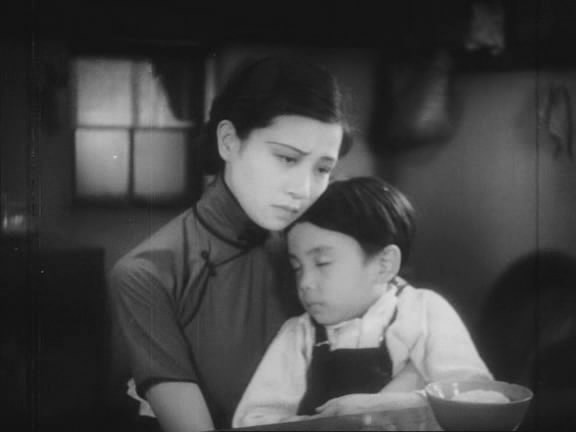
Silent film screenings aren’t like other movie screenings. For one, there’s no shuffling out, or chatting during the credits. In fact, there is a distinct order to proceedings: the final card indicates “The End”; the music stops; there is a brief hush; and then, applause. But at the screening of Chinese classic The Goddess (1934) during this year’s London Film Festival, one member of the audience broke ranks. While everyone else in the Queen Elizabeth Hall caught their breath, in that precious pause between the lush orchestral music and the thunder of appreciation, a gentleman behind me forgot himself, and punctured the silence. “Wow,” he gasped. And who can blame him?
The Goddess (Shen Nu) was, is, a masterpiece, a terrible tale told with great humanity and capped by a staggeringly powerful performance from tragic star Ruan Lingyu. She plays a prostitute, a “goddess” in Chinese slang of the time, who does what she does because she has another mouth to feed at home, her cherished infant son. The scenes in which we see Ruan at work, soliciting, are obliquely shot (shadows, feet, meet at sharp angles), but still somehow bold. Perhaps that is because we are shown her as a mother, a neighbour first, and the reality of her job is a touch too tough to comprehend. And at the beginning of the film, it’s clear that she keeps her work separate from her home life. But one day a venal gambler (Zhizhi Zhang) moves in to her house, and lays his hands on her earnings. And then the gossips begin gossiping and it becomes horribly obvious that the Goddess’s plans to give her son a better life are in jeopardy. Ruan’s beauty is almost more than the film can handle at times, but her performance is deftly nuanced and terribly soulful. The joy on her face when she sees her son succeed at school, her horror when she realises the trap she has fallen into: I am haunted by both of them.
While I know I am not the first to acclaim The Goddess, audience opinion was divided on the new score written by Chinese composer Zou Ye. It was undoubtedly beautiful, in fact for some it was too lyrical, but it drifted away from the film at times, missing the cues and shifts in tone that it should have been more alert to. When Ruan skips home with a brand new toy for her son, happy to be free at last, the music expresses her joy and liberation wonderfully. But that same tune continued over the heart-in-stomach lurch when she spots a hat on the table, and the whip pan that reveals the Gambler standing triumphant in her new flat.
Nothing to quibble about with the restoration though: the film looks gorgeous, clean and bright. I want, need, to see it again.
Why Be Good? (1929)
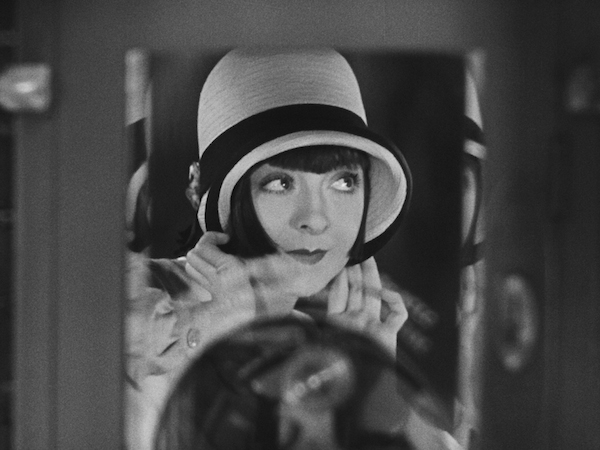
And I would happily snap up a ticket to see Why Be Good?(1929) once more, especially as Colleen Moore’s life story, and this film, offer such a fine balance to the tragedy of Ruan Lingyu and The Goddess. Moore was quite the perkiest creation ever to appear on screen (her character’s name in this confection is aptly, if bazarrely, Pert Kelly). With her sharp bob and expert comic charm, she was the flappiest of flappers and a huge silent star. And while her career may not have prospered in the sound era, her finances did. She is a happy example of a silent star who invested wisely and lived comfortably until a ripe old age, hanging around long enough to appear in Kevin Brownlow’s Hollywood TV series for example.
Sadly, however, the films she left for safekeeping in the studio archive were not so well cared for, so the chances to see her work are few and far between. Why Be Good? is a happy recent discovery and restoration courtesy of the Vitaphone Project and the Bologna labs. All of the Vitaphone discs for Why Be Good? were salvaged, so this silent film has continual sound: music mostly. I confess I was a little wary of the prospect of a running soundtrack of jazz tunes, but I was wrong to worry. The songs are carefully chosen and as well as some mundane sound effects (clattering dance steps, bells and whistles), there are some nifty sound-design jokes, including a comic scene in which two drunken sots “sing” and pound on a car horn.
As to the movie itself, Why Be Good? is a far more likeable rendition of Synthetic Sin, which showed at Pordenone this month. Colleen is a dance-loving shop assistant, who likes to ham it up as a fast-living flapper when really she’s a good girl through and through. When she falls for the boss’s son (a rather deramy Neil Hamilton) he can sense this instantly, but once their respective fathers start meddling the scene is set for hilarious and heartbreaking misunderstandings. Featherlight fun, with a feminist twist (no, really) and Moore is as sweet and smart as the jazz age scene-setting is seductive. Apparently Jean Harlow is in there among the extras. I well believe it, everything in this film looked too gorgeous for words.
Speaking of which, Why Be Good? was preceded by a delightful colour short called On With the Dance (1927) in which Josephine Baker herself and many lesser-known, un-named chorus girls take to the stage. Baker’s dance is labelled the Plantation – after the club, and no doubt the other thing too. She’s wonderful, but it’s a little uncomfortable to watch her dancing in dungarees and rags. Anyway, a real treasure from the archive this, and the following scenes of chorus lines spinning through dances ranging from the sublime to the ridiculous are notable for their splendid colour and kooky camera angles. The closeup of a bewildered punter, his sweating face superimposed with a kaleidoscope of high-kicking legs, was hilarious. Very The Pleasure Garden … And of course, this sort of thing is always better with John Sweeney on the keyboard, so we were very much in luck.
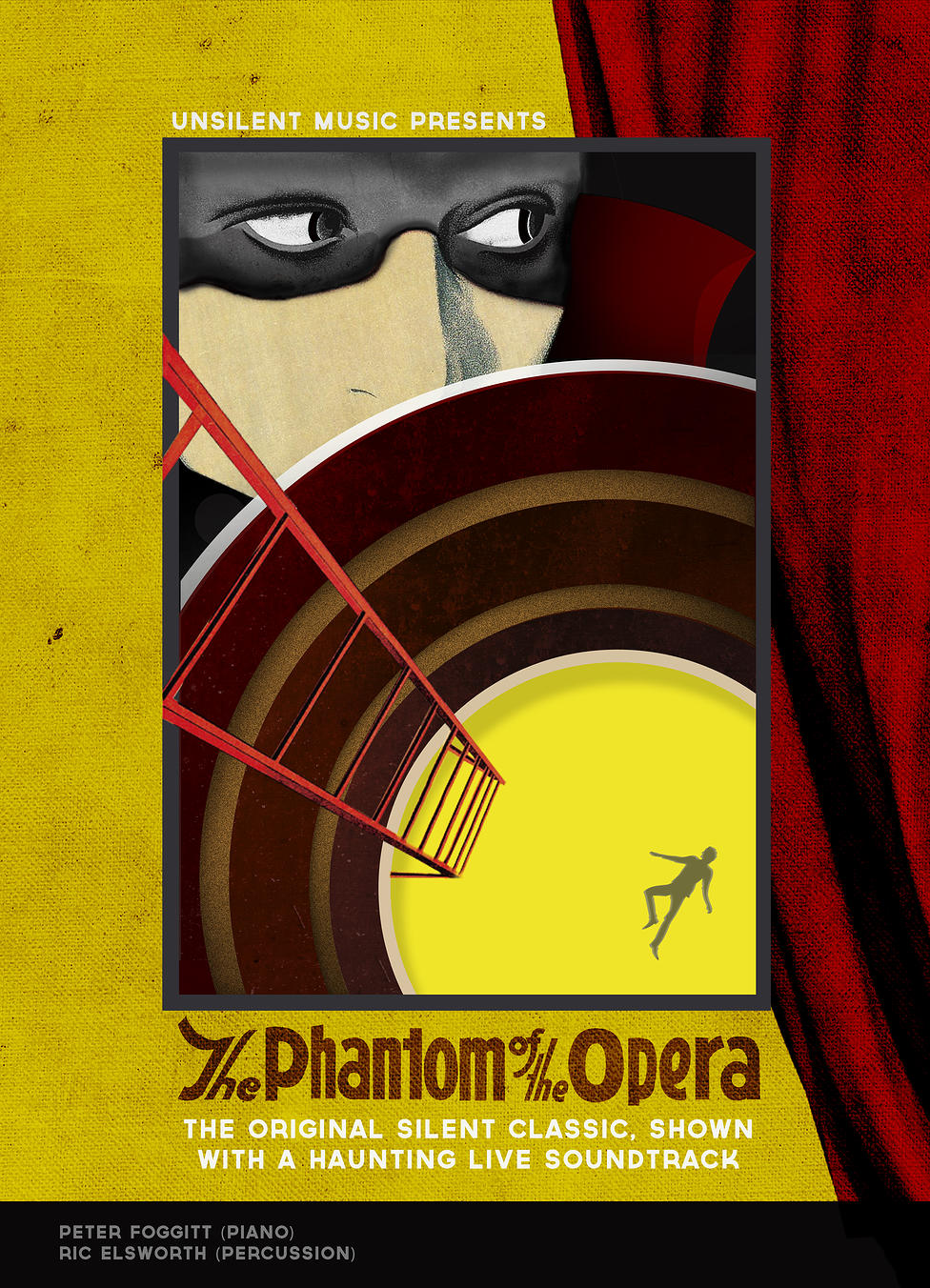
Unsilent Movies has been touring silent film and live music events for a couple of years now. This month, they are bringing their score for The Phantom of the Opera (1925) to venues across the UK. Percussionist Ric Elsworth tells you a little more about the project in this short video:
And here are those tour dates:
26th October – Leicester Phoenix Cinema
28th October – Shrewsbury Theatre Severn
29th October – Newcastle Tyneside Cinema
30th October – Oxford Ultimate Picture Palace
31st October – London St. James Studio
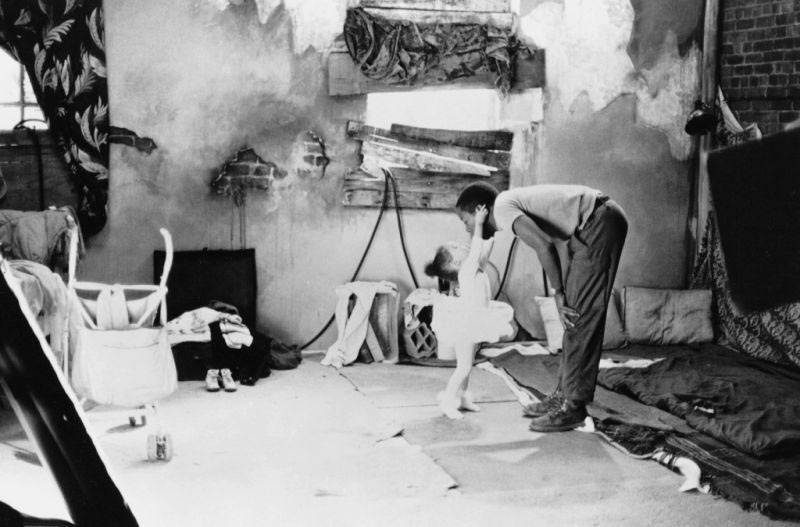
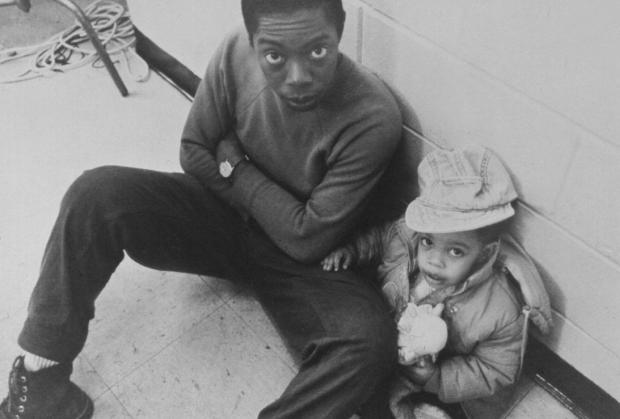
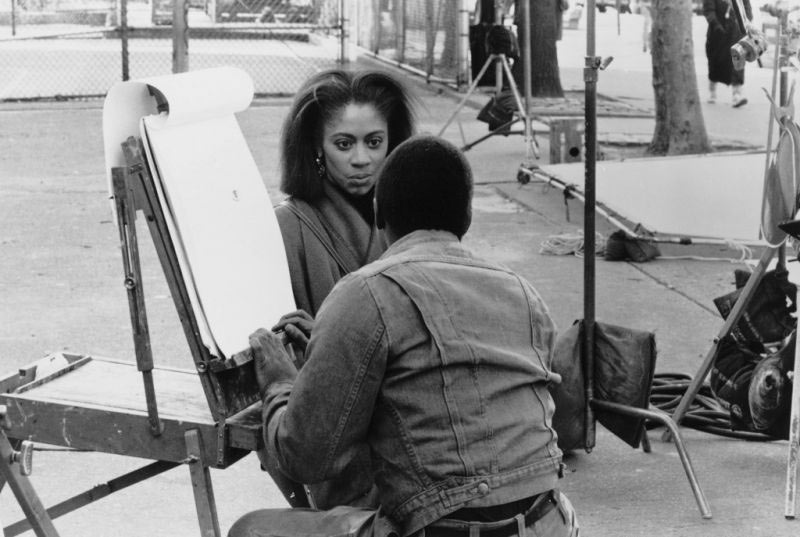
Sidewalk Stories (1989): Charles and Nicola Lane as the Artist and the Child. Photographer: Bill Dill
I barely knew a thing about Charles Lane this time last week. But since Saturday night I have been trying to find out as much as I can. Twenty five years ago, Lane directed a modern silent film of great style and bounteous charm, which was warmly received at the time, but has barely been heard from since. Like so much in the history of silent film, Sidewalk Stories (1989) is buried treasure, though from a rather more recent past. The good news is that the tail end of 2014 may finally be the time when Sidewalk Stories gets its due. The likelihood is that you will get a chance to see it soon, and I definitely recommend you take the opportunity when it arises.
As a film student, Lane was apparently very sniffy about silents, but when a chum insisted that he catch a screening of The Gold Rush, he relented. Chaplin worked his magic, and Lane was hooked for life. The influence of Chaplin is powerfully strong in Sidewalk Stories, a silent black-and-white comedy shot on the streets of New York;Lane directs and stars in the film, which has more than a touch of The Kid about it. Lane plays a street artist, who sleeps rough in a derelict building in Greenwich Village (yes, you might say he was a tramp), but, through some convoluted circumstances finds himself in charge of a small child. No messing about: the Artist’s foldup easel looks uncannily like the window-repair kit Chaplin equips himself with in the earlier movie. It’s clear that Lane has an eye for the most devilish of details. Lane’s two-year-old daughter plays the Child, and although it seems strange to critique a toddler’s performance, she’s fantastic and of course, utterly adorable. Sandye Wilson, an elegant woman with a devastating smirk, plays the Artist’s bewildering and benevolent love interest. Lane’s character is a cheeky one, all right, and a dreamer too: a nonchalant riff on Chaplin’s Tramp, which retains the sweetness and the acrobatics of the original but with a pared-down ego. Lane’s Artist is a more of an everyman than a showstopping clown: a little guy in a zip-up denim shirt and cargo pants with neatly cropped hair. Perhaps it’s because the big city is just a wee bit more terrifying in the late 80s. The Manhattan of this movie is perniciously hostile: crushing Lane’s character, and maybe squashing his performance a little too.
Sidewalk Stories (1989)
No matter. Here’s why Sidewalk Stories is easily worth 97 minutes of your precious time. It’s funny, it’s touching, it’s very clever and it has a quite remarkable lightness of touch. There’s some virtuoso material here, including some fantastically choreographed fight scenes and (a first for a silent movie?) a fantasy slapstick sex nightmare. There’s not a single intertitle here either. Most impressive of all perhaps is a sustained tracking shot early on that takes us from one end of a street in the Village to another, from the panhandlers and street sleepers, to the Artist’s patch where he and his fellow dancers and magicians are busy making believe that they are anywhere but urban hell. There’s some comic business with a piece of string and two beds that is simultaneously hilarious and terribly sad. I also enjoyed the way that a laugh-out-loud, but silly, gag at the start of the movie with yuppies grappling over a yellow cab (it’s the 80s, I’m allowed to call them yuppies) was replayed later on with a more sinister meaning. I particularly liked the fact that the second time around the carfight takes place during a chase that’s straight out of Harold Lloyd’s Speedy – Lane was clearly in close touch with his New York silent forebears.
When I checked out the silent films on offer at the London Film Festival this year, I missed The Tribe. Luckily for me, the sharp-eyed Neil Alcock noticed it and pointed me in the right direction. The Tribe/Plemya is a modern film, from Ukraine – the debut feature from Kiev-born director Myroslav Slaboshpytskiy – and it was heavily garlanded in the critics’ week at Cannes this year, so it’s definitely worth a look. And it’s definitely of interest to silent cinema fans.
It’s tricky to describe this as a silent film, though, seeing as it has diegetic sound – real diegetic sound, which was all recorded on set, not added in post-production. Nor can we classify it “dialogue-free” … there appears to be plenty of dialogue in The Tribe, but all of the words spoken are in Ukrainian sign language. There are, the trailer proudly proclaims, no subtitles or voiceover to soften that blow. I can’t find figures for how many people in the world speak Ukrainian Sign Language, although this site affirms it is in a healthy state, and two years ago, the Daily Mail reported that inventors in Ukraine had developed a “super glove” to turn UKL into audible speech via a smartphone app. The point is that I suspect none of the Cannes judges were fluent in it, and for them, and most of us, this film will play more like a silent than a talkie.
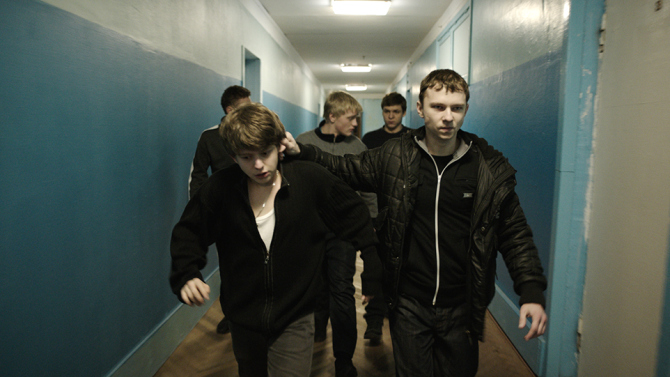
The Tribe (Plemya, 2014)
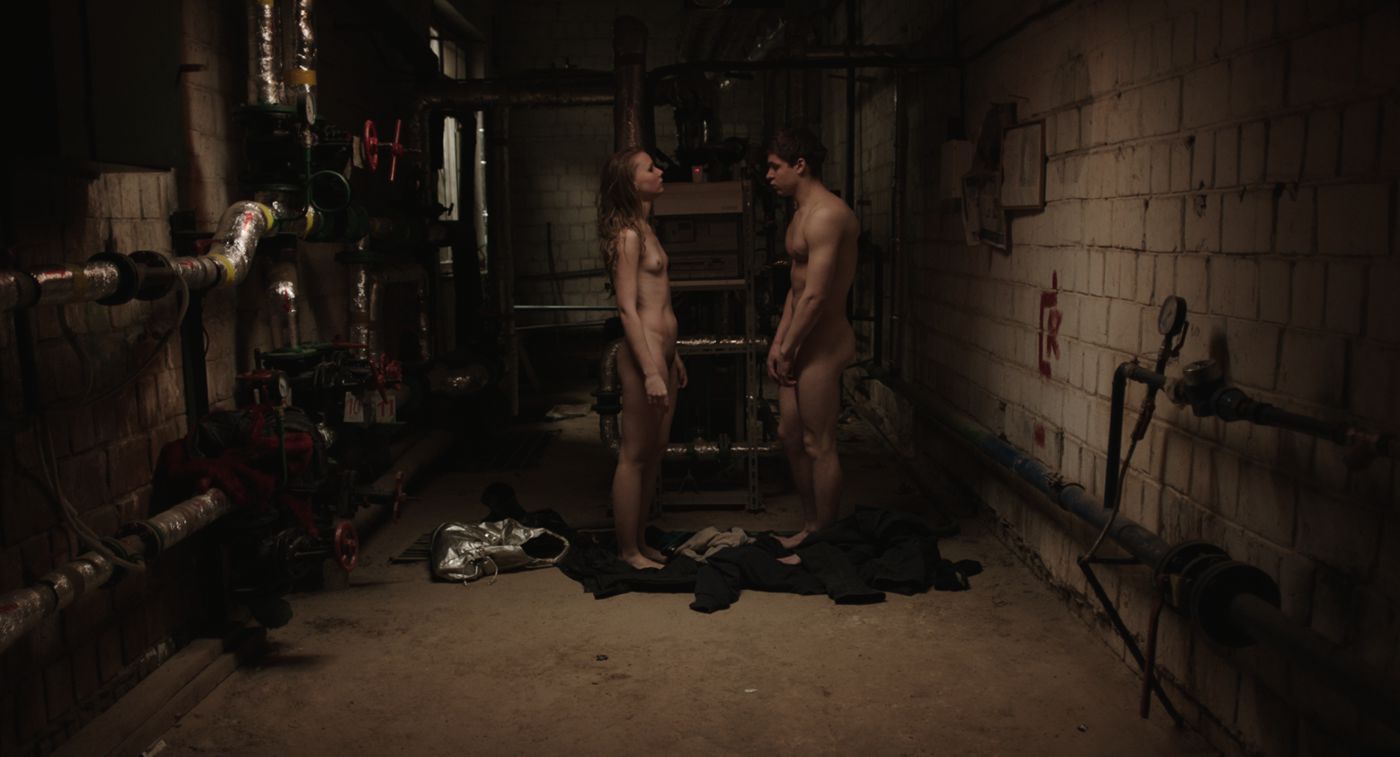
It’s a violent, gritty, sexually explicit film: the grim story of Sergey (Grigoriy Fesenko), a teenager at a boarding school for deaf-mute children. Said school is rife with gang violence and prostitution, and Sergey clambers his way to the top of the tree before risking it all by falling in love with the wrong girl. There’s little gloss here: the cast are all non-professionals, and UKL speakers, rather than hearing actors. Slaboshpytskiy made a short, and similarly brutal, film set in a boarding school like this one a few years back, a real-time drama called Deafness/Glukhota (2010) in which a police officer grills a deaf-mute teenager in his car – while suffocating him with a plastic bag.
The Tribe (Plemya, 2014)
The Tribe plays at the Toronto International Film Festival this week, before coming to London in October, and while we wait for reviews from that festival, this writeup for the TIFF programme by Dimitri Eipides sounds very promising:
Slaboshpytskiy constructs his film with no dialogue and no subtitles, allowing the story to be enlivened by the magnificent pantomimic acting of deaf-mute non-professionals, in a brilliant balance of clarity and ambiguity that puts hearing audiences in a fascinating, active position …
The Tribe peels away the tenderness of its protagonists, communicating in the purest cinematic forms the rawness hidden behind the fragility of youth.
I like that phrase abut the hearing audience being put in a “fascinating, active position”. Doesn’t that go straight to the heart of why we love silent cinema? In his review for Variety, Justin Chang expands on this idea, writing that:
Sans dialogue or translation, each interaction effectively becomes a puzzle to be solved, and Slaboshpytskiy is brilliant at using ambiguity to heighten rather than dull the viewer’s perceptions. Even when the meaning of a particular exchange eludes us, a greater sense of narrative comprehension begins to take hold.
The trailer for The Tribe is hugely intriguing too: I love the strict, square framing and its icily distant long takes. In the foreground of a shot of gang members signing vigorously to each other, one toughnut shoulder-shoves another – a gesture that is as clear as any dialogue. After a screeching hairpin camera-move, a young man’s confusion in the face of a semi-naked and angry young woman in a bedroom reminds us how much of teenage life is a struggle to negotiate a path between our own feelings and those of the people around us. And who could fail to be impressed by the stirring declaration that “for love and hatred you don’t need translation”.
The Tribe plays twice during the London Film Festival. It screens at 8.45pm, 15 October 2014 in NFT1, BFI Southbank and 8.30pm, 17 October 2014 at Screen 5, the Vue West End Cinema. Buy tickets here.
This is a guest post for Silent London by Duncan Carson, a film event producer who organises the Nobody Ordered Wolves screenings. You can follow Duncan on Twitter at @nowolvesplease
It would be easy enough to despair at our current cinema choices. Although film houses are more comfortable and technologically sophisticated than ever, what is actually on the screen is terrifyingly narrow. Even though almost every cinema in the land is now equipped for digital prints, opening up programmers to a cheap and vast library of films, this hasn’t broken the stranglehold of loud, ephemeral and repetitive Hollywood fare.
Standing as an antidote to this conservatism, Scalarama brings the weird, the underseen, the expanded and emboldened to the cinema and beyond. In its fourth year and now bolstered by BFI funding, Scalarama takes place across September and operates in a similar fashion to the Edinburgh festival fringe: the organisers take no cut of the profits, they only encourage a broadening of what is on offer. Originally created as a tribute to the freewheeling programming of the Scala Cinema in King’s Cross, it attempts to bolster film clubs, give cinemas the confidence to take on riskier programming and move cinema outside of its traditional homes.
Two films that are at the heart of Scalarama’s offering this year are of special interest to silent film lovers. The first will be familiar to all: Das Cabinet des Dr Caligari. The second is almost a ghost to all but a few dedicated film fans: Charles Lane’sSidewalk Stories.
Shot in 1989, Sidewalk Stories is a modern silent feature film. And it has an impressive progeny: Michael Hazanavicius, the director of the Oscar-winning behemoth The Artist, credits this neglected classic as the direct inspiration for his indie smash. Yet if this might lead you to expect a nostalgic recreation of cinema pre-1928, guess again. Lane’s setting and attitude is more Spike Lee than FW Murnau. Made the same year as Do the Right Thing, Sidewalk Stories is cut from the same cloth as other grimy pre-Giuliani New York city films like Taxi Driver, Serpico and The French Connection.
Sidewalk Stories (1989)
That said, the plot itself is pure Chaplin: the star (played by Lane himself) finds himself in loco parentis of a young girl when her father is killed. As with Chaplin’s The Kid, our hero’s hapless parenting is the centre of the story here. The dynamic between the two is heartwarming, no doubt because of their connection as real-life father and daughter. Having confessed to loathing silent cinema as an art student, Lane embraces the medium to tell a universal story about homelessness and desperation. It is a story of deep compassion and this is why it is being released in the UK in partnership with Open Cinema, a charity that provides opportunities to access culture and film skills for marginalised people. Londoners have two opportunities to catch the film: Nobody Ordered Wolves (AKA yours truly) will be showing the film at popup cinema Hollywood Spring with a live score by pianist Stephen Horne. Tickets here. Later in the month, Hotel Elephant will also be showing the film. To see where else in the UK this neglected gem is getting an outing, click here.
The Battles of Coronel and Falkland Islands (1927)
Name:The Battles of Coronel and Falkland Islands (1927).
Age: 87 years old. The clue’s in the number in brackets.
Appearance: Shiny and new.
Sorry, that doesn’t make sense – I thought you said it was 87 years old.The Battles of Coronel and Falkland Islands may be knocking on a bit, but it has been lovingly restored by the BFI and from what we gather, it’s looking pretty damn sharp. Just take a look at these stills.
Great, where can I see this beautiful old thing? At the Queen Elizabeth Hall on 16 October 2014 – it’s being shown at the London Film Festival as the Archive Gala. It will then be released in cinemas nationwide, and simultaneously on the BFIPlayer …
Blimey. And then it will be coming out on a BFI DVD.
Wonderful news, I’ll tell all my friends. Really?
No. I’ve never heard of it. Fair enough. You could have said that in the first place.
I was shy. Don’t worry, the BFI calls it a “virtually unknown film” on its website.
Phew. But you should have heard of the director, Walter Summers.
Rings a bell … He’s a Brit. Or he was, rather. And he was quite prolific, working in both the silent and sound eras. “I didn’t wait for inspiration,” he once said. “I was a workman, I worked on the story until it was finished. I had a time limit you see. We made picture after picture after picture.”
This is a guest post for Silent London by Tony Fletcher, film historian at the Cinema Museum, about director-actor Alf Collins. Some of Collins’ Gaumont films will be shown on 30 August at a special open-air screening on the site of the original studio in Camberwell, with musical accompaniment by Neil Brand.
Alfred Bromhead started the English agency for Gaumont in Britain in 1898. He distributed the films produced by the French arm of the company, which was run by Leon Gaumont, and he also attempted to produce a few films in Britain in 1899. He opened a small outdoor studio on a four-acre cricket field in Loughborough Junction in south-east London. The open-air stage measured 30ft x 15ft However, this venture was short-lived and lasted for only one summer.
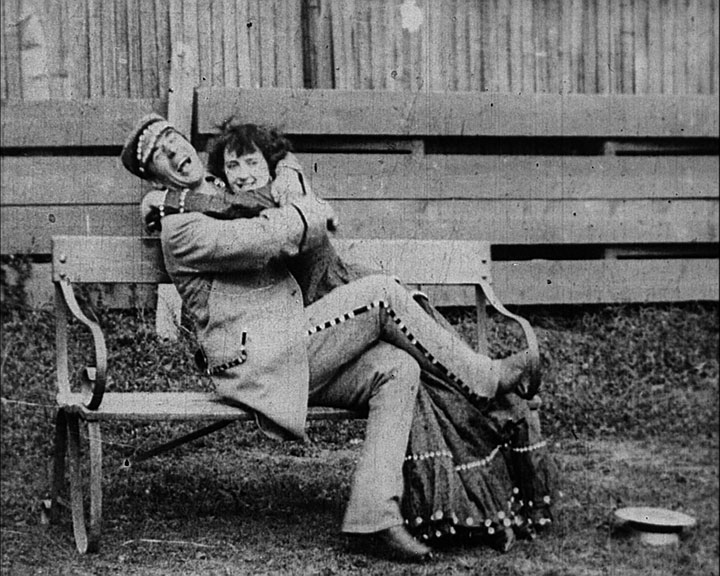
Alf and Maude Collins in Coster outfits in When Extremes Meet, 1905
In 1902, Bromhead decided to make another attempt at producing films. Alfred Collins came on board as stage manager, and Gaumont continued producing short films over the next seven to eight years. These were often shot in the streets of south-east London – pioneering chase comedies and dramas. Alf Collins had already had some film experience working with Robert Paul, as well as at the British Biograph Company. He had started performing at the Surrey Theatre under George Conquest, later joining the William Terris Company at the Lyceum Theatre. He also performed in Drury Lane Pantos playing The Copper in the Harlequinade. His full-time job between 1902 and 1932 was as the stage manager for the Kate Carney Company, which gave him opportunities to make films when they were appearing in London and the provinces.
During 1904, Bromhead moved studios from Loughborough Junction to a 14-acre site at Freeman’s cricket field, Champion Hill. Thomas Freeman was a local builder and decorator living at 127 Grove Lane. In 1891, he had acquired a site at the rear of Champion Hill House and Oakfield House (roughly where Sainsbury’s superstore and Dulwich Hamlet FC are now situated). Freeman built three wood and iron cricket pavilions which were hired out during the summer to the Champion Hill Cricket and Lawn Tennis Club and during the winter to Dulwich Hamlet FC. These appear in some of the films. Bromhead constructed an open-air stage to film interior shots as no artificial lights were available.
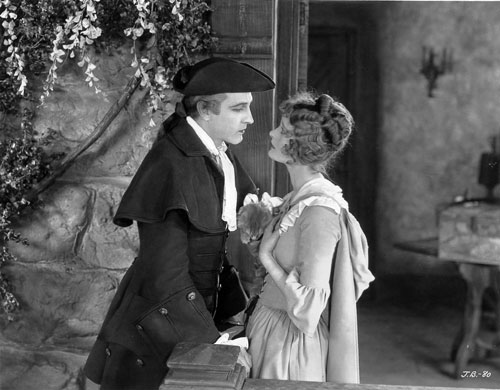
John Barrymore and Delores Costello in When a Man Loves (1927)
Have you booked your fights yet? The 33rd edition of the world’s most prestigious silent film festival in Pordenone, Italy is looming – it will take place from 4-11 October, and tantalisingly, a few details have already been released. There are a few screenings already listed on the official website, and a shiny new press release (written in Italian) too. With the help of Google translate, let me tell you what I learned on the internet.
I can tell you that there will be a gala screening on the last night of Chaplin‘s City Lights, with an orchestra playing the director’s original score, as reconstructed byTimothy Brock. Günter Buchwald will conduct. Elsewhere in the festival, four Chaplin shorts will screen with Benshi narration by Kenka Yasubei, who will also voice a classic Japanese film.
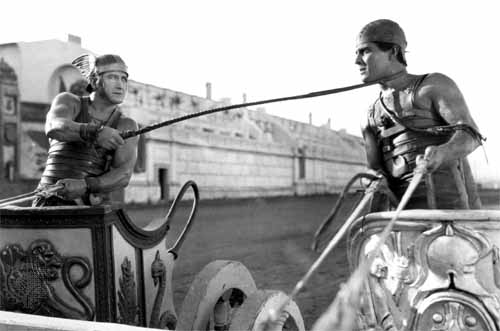
Ben-Hur (1925)
Did you know that this year marks the centenary of Technicolor? A dedicated strand at the Giornate will screen 30 full-length films and clips that showcase the pioneering colour technology. Watch out for The Black Pirate (1926) and Ben-Hur (1925).
Hollywood royalty will be celebrated at Pordenone with a showcase for the silent films made by the Barrymore acting dynasty, including Dr Jekyll and Mr Hyde (1920), The Copperhead (1919), The Beloved Rogue (1927) and Beau Brummel (1924) – plus the two surviving reels of The Eternal City (1922). Films starring John, Ethel and Lionel Barrymore will be shown across the week, with When a Man Loves (The Loves of Manon Lescaut), 1927, starring “the Great Profile” himself and Delores Costello opening the Giornate on 4 October. When a Man Loves will be presented with its original Vitaphone soundtrack, composed by Henry Kimball Hadley, and will be supported by a programme of Vitaphone shorts.
A section entitled Russian Laughter will present comedies directed by Yakov Protazanov, selected by Peter Bagrov of Gosfilmofond in Moscow.
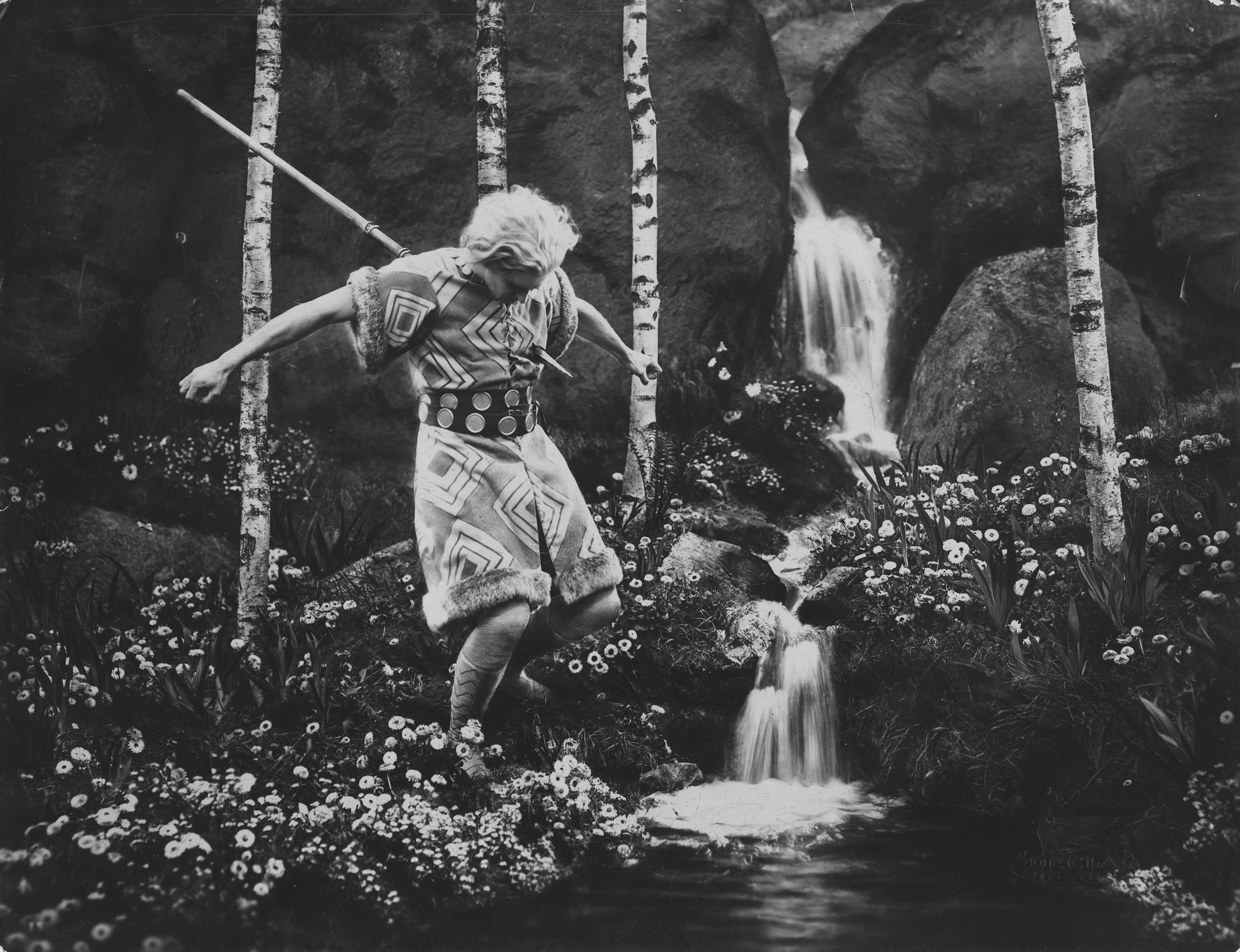
Die Nibelungen (1924)
The Canon Revisited, curated by Paolo Cherch Usai, is always popular and this year will feature Raoul Walsh’s gangster drama Regeneration (1915), both parts of Fritz Lang’s Die Nibelungen (1924) and Pudovkin’s epic Storm over Asia (1928). Also: GW Pabst’s Die Liebe der Jeanne Ney (1927) and Mauritz Stiller’s Herr Arnes Pengar (1919)
Hand-coloured films by George Méliès will be shown by AIRSC .
New discoveries and restorations at the festival this year will include Conrad Wiene’s adaptaion of Tolstoy’s The Power of Darkness (1924).
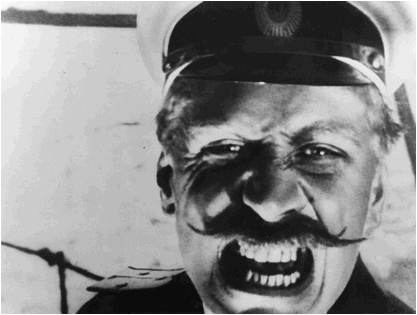
Battleship Potemkin (1925)
And finally … the sound version, yes sound version of Battleship Potemkin – a 1930 German release with a soundtrack recorded on disc.
Want more? This Nitrateville post from a few weeks ago contains a few extra titles – some of which are very exciting indeed. Premature? Out of date? Who knows? More fuel for the rumour mill, anyway.
Alfred Hitchcock was born in the far east of London, in Leytonstone. So far east in fact, that it was Essex then, I think. But Hitch is still one of London’s most famous film directors, and it is fitting that one of his most famous films to be both set and filmed in the capital will be screening in his home borough of Waltham Forest this summer. The Barbican are showing the silent version of Blackmail, with Neil Brand’s tremendous score played by the Forest Philharmonic, at the Assembly Hall in Walthamstow, London E17. Be there or find yourself kicking your heels in a West End Lyon’s Corner House, rejected and alone.
Blackmail is a classic crime thriller, laden with Hitchcock’s signature suspense tricks, about a nice young girl (Anny Ondra) who commits a violent act one night in dire circumstances, and has to live with the consequences. Famously shot as both a silent and sound film, Blackmail reveals Hitchcock as a confident director revelling in the themes of murder and guilt that would become his home turf. In classic Hitchcock style, Blackmail also climaxes with a setpiece at a famous landmark – one slightly closer to home than Mount Rushmore. Every film fan in London should see this film, and the best way to see it is like this, with an orchestra and Brand’s wonderful music.
This is a really fascinating idea, and a hugely entertaining hour and a half of anyone’s time. The BFI has compiled a typical “mixed” cinema programme from a century ago, and is releasing it theatrically this summer. It’s called, of course, A Night at the Cinema in 1914, and it comes out in August. Yes, you may be seated in an air-conditioned room with comfy seats and Dolby 5.1 sound, but you’ll be able to watch a variety bill of drama, actuality, comedy, serials and travelogues – just like your own great-grandparents in the Hippodromes of yore.
Charlie Chaplin in A Film Johnnie (1914)
Some of the titles in the bill will be familiar to you, but there are a few surprises too – and the cumulative experience of watching 15 films in one sitting is wholly refreshing. There’s Chaplin, Florence Turner and Pimple larking about, but also newsreel footage from the front, and from suffragette demonstrations in London, and Ernest Shackleton’s preparations for his Antarctic voyage. Of course, there’s a segment from The Perils of Pauline, and an opportunity for a singalong too. Music is provided by an expert – Stephen Horne has recorded an improvised score for the whole shebang.
Good news for the silent film hipsters of east London: the Hackney Attic goes from strength to strength as a silent film venue. The Filmphonics group regularly take over the top of the Hackney Picturehouse for an increasingly ambitious series of silent film screenings with live music.
The next date for your diary is a showing of one of our favourites: Lon Chaney in the gorgeously grotesque The Phantom of the Opera (1925). You owe it to yourself to see this classic on the big screen!
A mad, disfigured composer seeks love with a lovely young opera singer…. Far beneath the majesty and splendour of the Paris Opera House, hides the Phantom in a shadowy existence. Shamed by his physical appearance and feared by all, the love he holds for his beautiful protégée Christine Daaé is so strong that even her heart cannot resist.
And there’s more: this screening of The Phantom of the Opera will be accompanied live by the marvellous Costas Fotopoulos on piano.
Costas is based in London and works internationally as a concert and silent film pianist, and as a composer and arranger for film, the stage and the concert hall. He regularly provides live piano improvisations to silent films at BFI Southbank and he has also accompanied films at other major British venues such as the Barbican Centre and the Prince Charles Cinema, as well as in New York, Warsaw and Northern Italy.
The Phantom of the Opera
The great news is that you could get your hands on a free pair of tickets to this screening. Get in! To win a pair of tickets to see The Phantom of the Opera at Hackney Attic, just send the answer to this question to silentlondontickets@gmail.com by noon on Wednesday 16 July 2014. The winner will be chosen at random from the correct entries.
Lon Chaney was known as the Man of a Thousand … what?