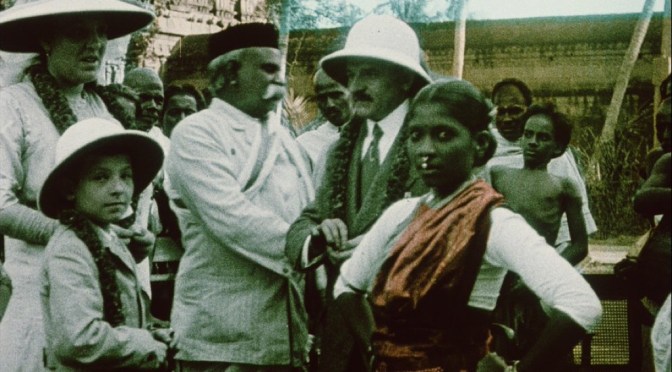
“You guys have a lot of excruciating RP in your archive.” Director Sandhya Suri is at BFI Southbank describing the joys and pains of making her fascinating new compilation film Around India with a Movie Camera. In a Q&A session after the premiere of the film, Suri explains that while the BFI offered her a selection from its stash of films of and about India up to 1947, she insisted on watching it all herself. That meant viewing more than 130 films, all of which had been digitised as part of the Unlocking Film Heritage project. At least, until the clipped, plummy accents became too much to bear.
Suri’s film is really remarkable, making use of some occasionally beautiful films to tell a complex story. Some of the most breathtaking silent footage features includes a lushly stencil-tinted film of Villenour or the famous 1899 Panorama of Calcutta, which, a caption tells us, was actually shot in Varanesi.
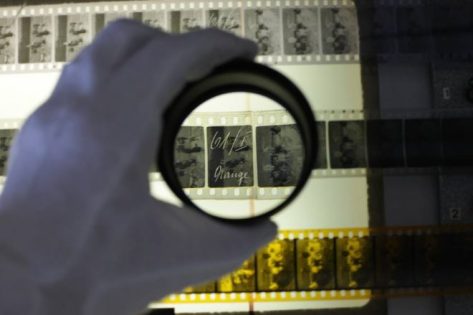
Good news for dyed-in-the-wool fans of colour film in all its multiple chemical, electronic, stencilled and washed forms. The Third International Conference, Colour in Film, will take place 19-21 March 2018. The first two days will be at BFI Southbank, and the third will be at Birkbeck College, University of London.
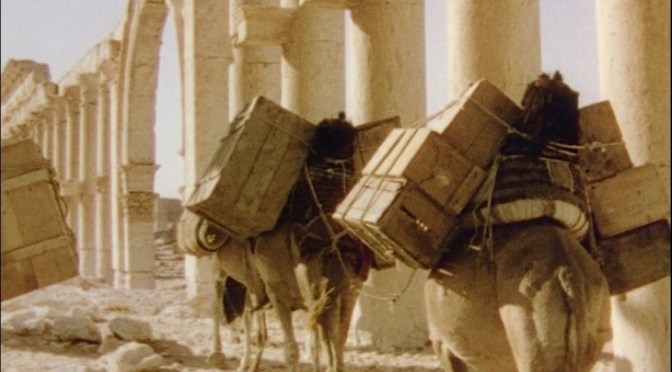
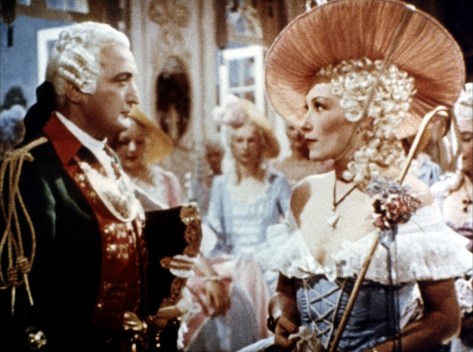
All films will be shown in NFT3, and included The Ruins of Palmyra and Baalbek (1938), This is Colour (1942) and Münchhausen (1943). Sessions devoted to early film include a presentation by Bryony Dixon on Applied Colour, one by Olivia Kristina Stutz on The Transparency of Early Film Colours and Eirik Frivold Hanssen on Polar Colours in Roald Amundsen’s Films, Photographs, and Writings.
To read the full programme, find out who else is attending, and book your place, visit the Colour in Film website.
It’s that time of year again, when we get to delve into the Hippfest programme. The Hippodrome Silent Film Festival in Bo’ness, Scotland, is the most welcoming event in the early cinema calendar, with one of the most glamorous venues. The lineup is always an enjoyable mix of the classic and obscure too, so I await this announcement with more interest than most.
You can read the full lineup and schedule on the Hippfest website, but here are some selected highlights – and yes, I am terribly, terribly biased.
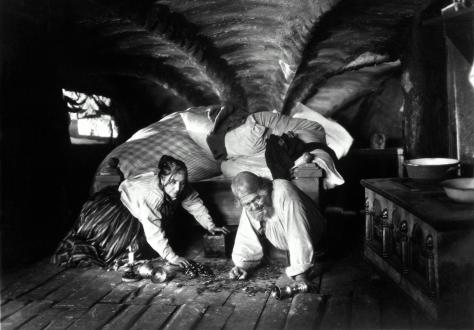
Der Schatz (1923)
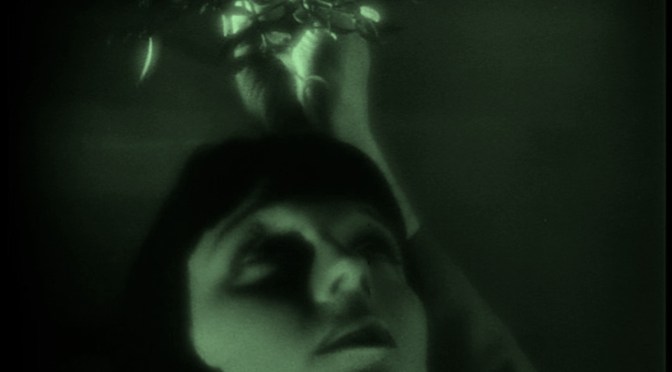
Pabst! So much Pabst around these days, which is great. The Hippfest is showing GW Pabst’s first film, the most traditionally expressionist of his career, Der Schätz, with live accompaniment written and performed by acclaimed German composer and musician Alois Kott.
More Pabst! On 22nd March, yours truly will be giving an illustrated “Cuppa Talk” lecture entitled Lost Girls and Goddesses, all about women in Pabst’s silent films. Brooks, Garbo, Nielsen, Helm … all will be in (virtual) attendance.
Galas! The opening night screening has already been announced as The Last of the Mohicans with live accompaniment from David Allison.
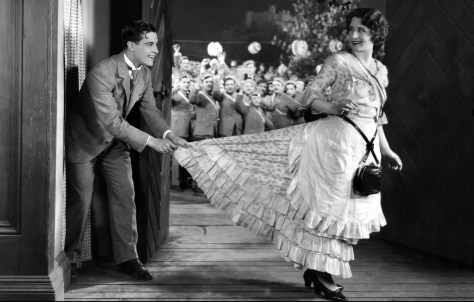
On the Friday night, get yourself glammed up for a date with The Student Prince in Old Heidelberg starring Ramon Novarro and Norma Shearer, with live music from the maestro Neil Brand. This silent comedy, directed by Ernst Lubitsch, is perfect in practically every way. And Brand, yeah he’s a bit of a legend too.
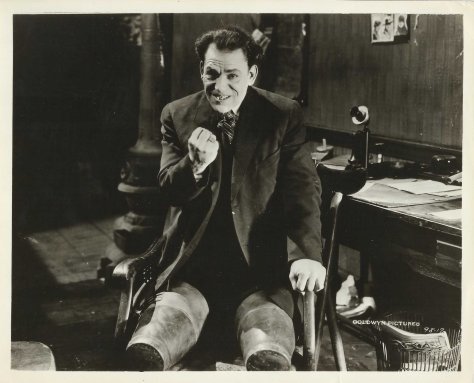
Lon Chaney in The Penalty
Lon Chaney swings by on Saturday night. You can watch him play “the master of the underworld” in The Penalty with a new score, commissioned by the festival, from Graeme Stephen and Pete Harvey on guitar and cello.
Stick around after The Penalty for an ideal late-night movie: Benjamin Christensen’s loopy Seven Footprints to Satan, with a live score from the always excellent Jane Gardner and Roddy Long. This film has to be seen to be believed!
Sunday night closes with two screening of recent BFI silent restorations. First, the sumptuous Indian romance Shiraz, accompanied by the wonderful John Sweeney, and then Anthony Asquith’s Underground, accompanied live by the dream team of Stephen Horne and Frank Bockius.
When I research the careers of women in early and silent film history, I often come to a dead end. Or rather their careers do. On top of any internal industry biases or lack of confidence, back in the day marriage and motherhood was a very efficient way to cut short the career of a talented actress or film-maker.
Things should be very different now, but those days don’t seem so remote. The legacy of an industry that has been male-dominated for too many decades is that film-makers are not expected to have parenting or caring duties to juggle with production work. The cost of childcare combined with inflexible work practices prohibits many parents and carers from continuing to make films.
So, if you’d like to prove that we have made some progress in the past century, I’d like you to consider supporting an initiative called Raising Films. This organisation supports and campaigns for parents and carers working in the film industry to access the childcare, representation, training and advice they need. This isn’t just about the work, but the films. Making room for parents and carers in the industry is important because caring about other people, and forming relationships with them, is a prerequisite to making great, humane art. It also means more women working in the industry, and seeing more women’s stories told on film.
Watch the video above, check out the Raising Films crowdfunder website and please consider making a donation or sharing the page with your friends.
Yes, this post is fairly “off-topic”, but this stuff is important. Please don’t make a future version of me have to research and write stories about careers cut short by family responsibilities in the early 21st century, too.
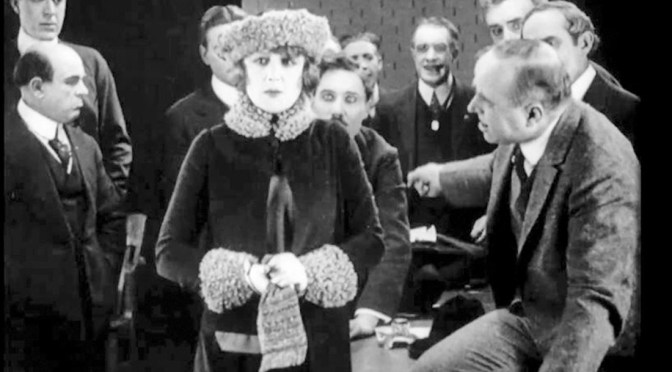
I am very excited to share this screening with you – The Woman Under Oath (John M Stahl, 1919) is a really special film that I was lucky enough to research last year, and it is showing on 35mm with live music in NFT1.
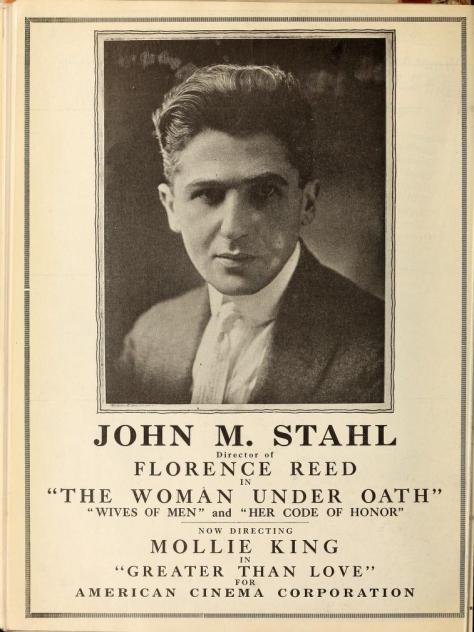
Most of you will be familiar with the work of John M Stahl – even though he is best known for a few films that were remade by more famous directors. Douglas Sirk remade both his The Magnificent Obsession and Imitation of Life, while Max Ophüls’ Letter from an Unknown Woman is based on the novella by Stefan Zwieg that seems also to have inspired Stahl’s 1933 Only Yesterday. Perhaps Stahl’s most famous film is 1944’s Leave Her to Heaven. If you have seen any of those titles, it won’t surprise you to learn that Stahl is celebrated as master of melodrama who directed films with strong, passionate heroines. If you’ve seen the last one, you’ll be excited to learn that The Woman Under Oath pivots on a trial.
Until last year, I had never seen any of Stahl’s silent films, which is partly because so few of them have survived (just nine features and various fragments) and even more so because they are very rarely screened. Stahl was born Jacob Morris Strelitsky in Baku, Azerbaijan, but moved to New York as a youngster. Taking the name John Malcolm Stahl, he made a series of movies in the teens and early twenties in New York, before signing with Louis B Mayer Pictures (which later became MGM) in Hollywood in 1924. He was a founding member of the Academy and briefly an executive at the Tiffany studio. He went on to make 20 sound films, however (all of which survive), including the ones mentioned above. His final picture, made in 1949, was the musical Oh, You Beautiful Doll.
Deadlines done? Laundry basket empty? Dinner in the oven? Sure? Then prepare to fritter away some time. The British Film Institute haslaunched a new collection on the BFI Player. Animated Britain presents more than 300 animated films from the UK. There are some nostalgic favourites from my own childhood here, and also a fine set of films from the infancy of cinema.
Browse the “Early Animation” set on the BFI Player (or the BFI YouTube channel) and you can watch, for free, gems such as WR Booth’s 1909 trick film Animated Cotton, or the Shakespeare spoof Oh’phelia: a Cartoon Burlesque, from 1909. You’ll build up a mental picture of Britain in the early 20th century while you you titter. There is plenty of Great War Propaganda here, lots of cricket-comedy and a couple of shorts produced on behalf of the Conservative Party.
I was especially taken with an episode featuring Giro the Germ, made for the Health and Cleanliness Council, a rather haunting warning about hygiene hazards. In this sinister short, germs hop on fly-taxis right out of dustbins and into the mucky homes of hapless Brits. It’s rather repulsive, but may well encourage you pass the duster around after you’ve had your cartoon break.
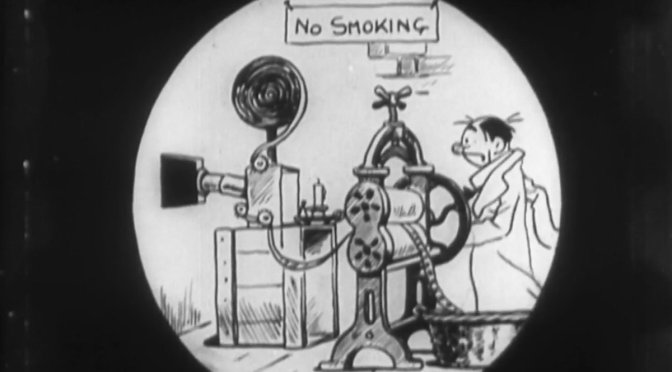
Best of all, though, is Running a Cinema (1921), which offers a few quirky insights into what a trip to the pictures was like nearly a century ago.
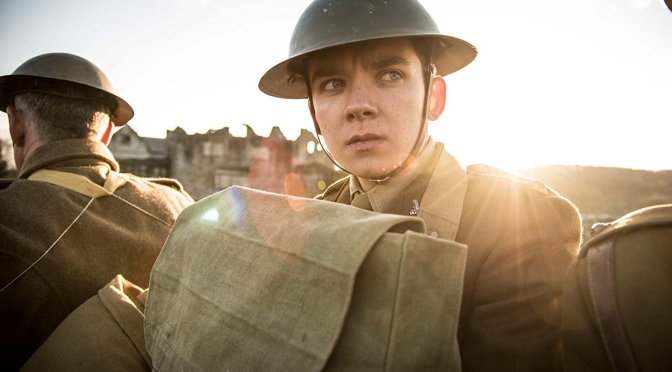
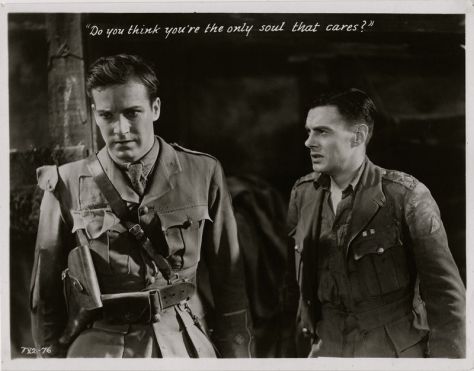
A century after the 1918 Spring Offensive, one of the best-loved First World War stories returns to the cinema. Director Saul Dibb has made a new film of RC Sherriff’s intense, claustrophobic play Journey’s End, and it’s a terrific movie, capped by a blistering performance by Sam Claflin as the disintegrating Captain Stanhope.
The story takes place during a week in which one battalion is posted at the frontline, just 60 yards from the enemy trenches. The story unfolds among the officers – especially paternal Osborne (Paul Bettany), green Raleigh (Asa Butterfield) and volatile Stanhope. While the soldiers must sit and wait for an expected, and horribly imminent, German attack, the higher-ups insists on a daylight raid into enemy territory.
Neccesarily, the play is almost all talk, and although it was written in 1928 it was not adapted for the screen in the silent era. James Whale’s 1930 epic talkie adaptation is was a big success, though, and the play remains popular, performed regularly in professional and amateur productions. There was even a German film, starring Conrad Veidt and directed by Heinz Paul in 1932, which was banned by the Nazis.
Journey’s End (1930)
The new Journey’s End doesn’t immediately seem to have any connections to the silent era, but when I saw it at a preview screening recently I thought otherwise. This powerful film is well worth watching for its own sake, but it also has some interesting resonances with silent cinema that I found fascinating.
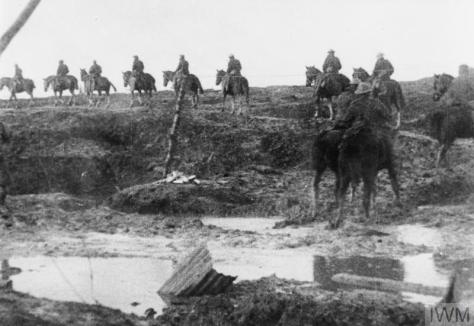
Dibb pointed out at a Q&A after the screening that Simon Reade’s wasn’t solely based on the play, but mostly on the later novelisation by Sherriff and Vernon Bartlett. This goes a long way to explain why the film is so effectively opened-out from the dugout contains the action in the stage version. Dibb further said that, although many of the cast were very familiar with the original, he hadn’t watched Whale’s film or read the play. In fact during his research, he chose not to watch any fictionalised accounts of the First World War at all. No Paths of Glory or Shoulder Arms. What he watched instead, and it shows, was archive footage of the war itself.
A little of what you fancy does you good. Right? I think so, and with that in mind I treated myself to a day of giggles at Bristol’s Slapstick Festival. My seventh visit, and suitably, I saw some heavenly sight gags.
Buster Keaton, who made his first appearance on film 100 years ago, was the special focus of the festival’s silent offering this year. So it’s no surprise that I had two dates with Mr Keaton in one day. First, an energetic, and thought-provoking lecture on the Great Stoneface’s masterpiece The General (1927), by Peter Kramer, author of the recent BFI Film Classic monograph on the film. I really liked what he had to say about the film’s depiction of the Old South, and the punishment meted out to Annabelle Lee as the film continues. Plenty to consider, and I think he’s exactly right about Lee. What’s great about her character is that she behaves badly, gets punished and then grows a little. A carefully drawn female character, capable of personal development, in a silent comedy? Cheers to that.
Dorothy Sebastian’s Trilby Drew in Keaton’s MGM silent Spite Marriage (1929) also faces a bruising punishment for her sins – hilariously so, in the sequence when Buster manhandles her passed-out body into bed – but I don’t buy into her transformation as much as I do Annabelle’s. Anyway, this film is frequently hilarious, while being more of a series of sketches forced into a feature than a narrative flick, and it was an excellent way to end my day at the festival. Not least because of sublime accompaniment from the European Silent Screen Virtuosi, AKA Gunter Buchwald, Romano Tadesco, and Frank Bockius, who made a late but welcome appearance after the film had begun. We were fed some line about Bockius being caught up in traffic, but I have read enough rock biogs to know what drummers get up to. Even Trilby Drew would blush, I’m sure.
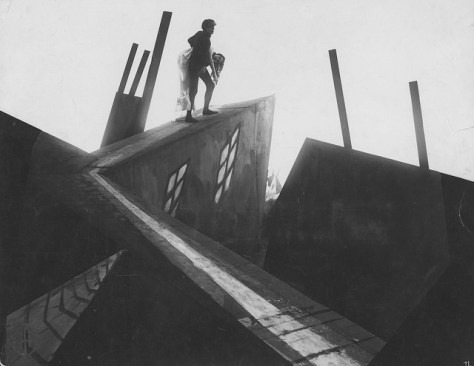
There are a handful of silent films that most cinephiles see first. Battleship Potemkin, Metropolis, Sunrise, The General and The Cabinet of Dr Caligari perhaps, give or take Nosferatu, a Hitchcock and a couple more Hollywood favourites. There is nothing dismaying about the establishment of these films as classics of the silent era, widely available on DVD and at festival screenings. However, this very select canon can offer a distorted picture of the period. At the very least, there is a risk that these isolated examples are heralded as rare triumphs from a primitive age.
Das Cabinet des Dr Caligari (1920)
This is where Lawrence Napper’s engaging guide to late silent film comes in. Silent Cinema: Before the Pictures Got Small offers a broader picture of film style and the film industry between the First World War and the coming of sound. The opening chapter begins with the audience, tracing the history of filmgoing in this period, using the depiction of cinemas in silent movies. Subsequent sections provide context for those film-club favourites, outlining the industry and aesthetics of the cinema in Germany, Russia and America.
Die Puppe (1919)
In these chapters, Napper revisits and challenges some fondly held views. Particularly, he stresses that there is far more to the national silent cinemas of Germany and Russia than Expressionism or Soviet montage respectively. He follows a detailed discussion of Caligari with the suggestion that the reader looks at Ernst Lubitsch comedies such as The Oyster Princess and The Doll to discover similar stylisation in both performance and design but applied in the name of pleasure and humour rather than the evocation of psychological trauma.
The divine Greta Garbo, queen of the close-up, is celebrated in a special event at the Royal Festival Hall in March. One of her full-length Hollywood features and the only remaining reel of another, will screen with orchestral accompaniment by the Philharmonia Orchestra . The really good news is that they will be playing scores by the maestro Carl Davis.
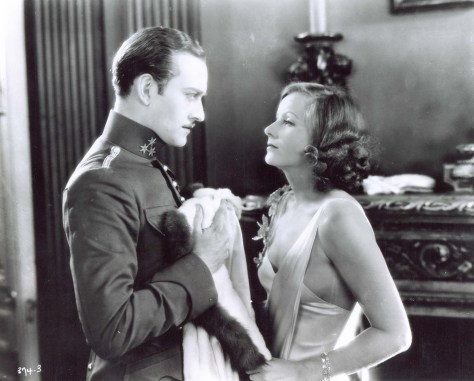
The Mysterious Lady (1928)
The feature film is The Mysterious Lady, in which Garbo stars as a Russian spy who falls in love with the man she is supposed to be stealing secrets from, a soldier played by Conrad Nagel. It’s one of my favourite Hollywood romance, filled with glamour, lavish sets and smouldering passion from the two sultry leads. This will be shown alongside the single recovered reel from The Divine Woman, a drama based loosely on the life of Sarah Bernhardt and directed by Victor Sjöstrom. Garbo’s co-star in this is Lars Hanson – you may remember their chemistry from Flesh and the Devil.
There ain’t no party like a Silent London Poll-Winners’ Party. Why? Partly because this is a virtual party, so you can join in the fun, and still stick to your Dry January #goals. Alternatively, take a shot every time you spot a typo and boy will this blogpost go with a swing. Not only that, but we politely declined Warren Beatty and Faye Dunaway’s offer to host this year, so fingers crossed, the prizes will go to their rightful winners, right away.
While I shuffle the envelopes and the guests sashay down the red carpet, a little announcement. Every year the poll gets more international (although obviously the British bias is strong). Plus, this year we had the most votes we had had in years. As you are free to nominate whatever you like (and you did!), the answers were pretty diverse. So in the 2017 poll, I am awarding Gold, Silver and Bronze awards for the very first time. At Silent London, we like to share the love!
So, as the sports commentators say, let’s find out who, and what, podiumed this year!
Best silent film DVD/Blu-ray release of 2017
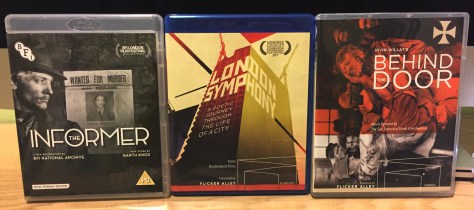
GOLD: You’re going to hear this name a lot tonight. The best silent film DVD/Blu-ray release of 2017 is London Symphony – out now in the US from Flicker Alley. Some of these votes may also have been anticipating the UK DVD release in February from New Wave.
BRONZE: It’s another Flicker Alley release at number three! The notorious Behind the Door, directed by Irvin V Willat, restored by the San Francisco Silent Film Festival, and once seen, never forgotten.
SILVER: Second place goes to Eureka’s theatrical release of Der Müde Tod – amazing to see one of Lang’s more obscure silents get this treatment. Brava!
BRONZE: The Informer places here too, for its theatrical run after the 2016 LFF Archive Gala.
Best modern silent of 2017
GOLD: Can you guess? It’s another gold medal for London Symphony!
SILVER: Lots of you voted for Bill Morrison’s magical documentary Dawson City: Frozen Time. And who can blame you? Not strictly a modern silent but I see exactly why you love it.
BRONZE:The Moonshiners takes third place. This Finnish short, directed by Juho Kuosmanen, is actually a remake of Finland’s first ever fiction film – the original is sadly now lost. You can read more about The Moonshiners in the February 2018 edition of Sight & Sound, too.
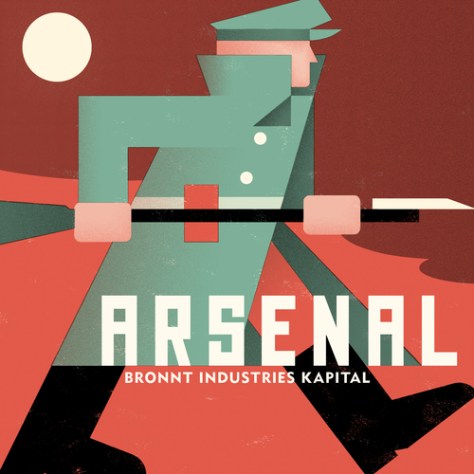
When I saw Dovzhenko’s Arsenal at the British Silent Film Festival in Leicester in 2015 I was blown away. Yes, it’s a great film, but I had seen it once or twice before. However, the score performed that evening by Bronnt Industries Kapital, AKA Guy Bartell, knocked my socks off. If I’m strictly honest, it made me appreciate the film itself, which had previously left me a little cold, far more. You may have heard the band’s excellent score for Turksib – this one is even better.
I said, “Bartell’s score is expertly judged – an echo chamber of horror for the film to resonate inside. I urge you to catch the film with this score whenever you can.”And I wasn’t the only viewer impressed. None other than John Sweeney, who knows whereof he speaks, said: “An extraordinary soundtrack for an extraordinary movie, Guy Bartell’s sound score for Arsenal plugs the viewer directly into the nervous system of this shattering film.”
So I am very chuffed to share with you the news that Bronnt is releasing this new score for Arsenal on CD, (green) vinyl and digital formats on 12 January 2018 via I Own You records. The score was commissioned by the Oleksandr Dovzhenko National Centre with the British Council to accompany the ODNC’s recently restored print. Which means …Yes, Bronnt is taking the music and the film on a little tour. Remember what I told you – catch it if you can.
Were you at the Barbican for the London Film Festival Archive Gala last year? It was a really special evening: the premiere of the BFI’s immaculate new restoration of Indian-Anglo-German romance Shiraz: A Romance of India with a stunning new score composed by Anoushka Shankar. I was there, and you can read my review here.
However, whether you missed out, or you just want to relive the magic, there is good news. Shiraz gets a theatrical release very soon – it lands in cinemas from 2 February 2018. If you want to take Shiraz home, you’ll be able to buy it on DVD/Blu-ray on 26 February too. You’ll also be able to watch Shiraz on the BFI Player, and BBC4 will broadcast a behind-the-scenes documentary on the recording of Shankar’s ambitious score at some point during the year.
Anoushka Shankar accompanies Shiraz: A Romance of India at the BFI London Film Festival Archive Gala. Credit: Darren Brade Photography
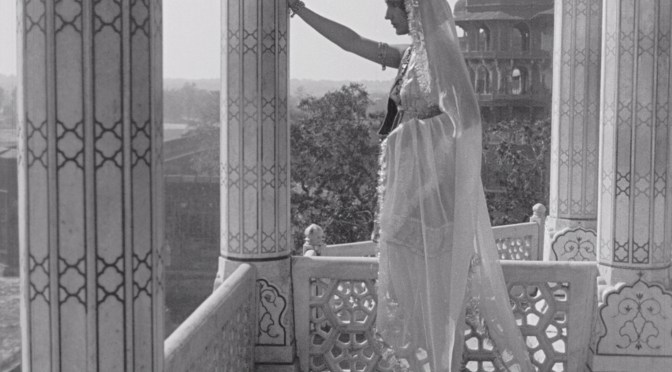
Last night I had a sneak preview of the DCP of Shiraz – the digital version that will be shown in cinemas and appear on disc, with the recorded score. A repeat viewing confirmed that this is an especially gorgeous film, with beautifully composed frames full of detail. The first time round I was distracted by the leading players, but on second viewing the landscapes in the background caught my eye, not to mention a donkey scratching his neck on a tentpole, a potter spinning his wheel. And sorry, Hollywood, but all your grandest designs can’t compete with the stunning architecture in this film. Shankar’s score, too, is full of surprises, bold decisions and graceful melodies. The range of instruments and styles in this piece of music is really breathtaking, and yet it’s always sensitive to the film – a really accomplished silent movie score.
Seeta Devi (Dalia) in Shiraz: A Romance of India (1928, BFI National Archive)
There may be more good news too – although you’ll have to cross your fingers. The BFI hopes to stage some more screenings of the film with the music played live, but we will just have to wait and see …
I often forget to check out the most-read pieces published on the site in any given year – but 2017 offers a particularly varied and cheery top 10. So here goes: the most-read (new) features on Silent London in 2017 were, in ascending order:
Shiraz: A Romance of India (1928, BFI National Archive)
Exciting news from the BFI today – especially for those of us about to break up for the holidays and looking forward to having some spare viewing time on our hands. The BFI has released more than 170 ‘orphan’ films on its YouTube channel – and they can be watched around the world as well as in the UK (unlike the BFI Player, where some of these films are also found). ‘Orphan’ films are those protected by copyright for which rights-holders are positively unknown or uncontactable. The films range from 1899 to 1985, but as you’d expect, there are several silent movies in the collection.
The first filmed version of Harold Brighouse’s Hobson’s Choice, this is from 1920, directed by Percy Nash and starring Joe Nightingale, Joan Ritz and ArthurPitt:
Hello! To celebrate the fact that my BFI Film Classic on Pandora’s Box is on sale in the US as of today (LINK) I have rounded up some links relating to the book. I’ve been out and about talking about the film IRL but also online, as you’ll see. I’ve included some of the nice things that people have said about the book, too. *blush*
Thomas Gladysz of the Louise Brooks Society interviewed me for Popmatters. “This is a book full of historical detail – but as much as it is scholarly, it’s also lots of fun. As Hutchinson wryly notes in her introduction: ‘Exploring the film entails a journey back and forth between Europe and America, and occasionally into the gutter.'”
The fantastic Paul Joyce gave the book a great writeup on his site Ithankyou. “Pamela writes with an expert eye, easy wit and steadfast concision; there is much attention to detail in the book but it is all explained with fluid precision. The research is thorough, with revelations both scandalous and surprising and this is one of the best of the BFI’s Film Classics series I’ve read, achieving its key objectives with ease. Pandora’s Box is engrossing, informative and entertaining … it made me experience the film in a completely different way”
Rick Burin was kind enough to write this about the book: “Pamela Hutchinson’s brilliant new study of Pandora’s Box (2017), in the BFI Film Classics series, is an extremely astute, readable reading of a fascinating film, explaining the enduring appeal and allure of both the picture and its heroine, the shimmering, sensual, black-helmeted Lulu: chauvinist avatar turned feminist icon.”
Don’t forget! You can see Pandora’s Box, on 35mm, with live music by Stephen Horne, and an introduction by me, at HOME in Manchester on 28 January. Book tickets here.
Not much more to say on this, except … except … look out for more from me* on GW Pabst in the new year. Fingers on lips for now.
UPDATED: Important news for clever clogses. The dates for the 2018 British Silent Film Festival Symposium are out, and the call for papers is copied below. The headline is that 19 and 20 April are the dates you need, and while the papers will be presented at King’s College London as usual, the the screening day will take place at the historic Phoenix Cinema in East Finchley.
The eagle-eyed among you will notice an addition to the rubric this year: “in Britain or the British Empire” … That should give you something to think about.
This is always an enjoyable event, which leaves me with plenty to ponder and lots more to explore. Last year, particularly, I thought there was a really strong selection of papers.
The BSFFS aims to showcase new research in any aspect of film-making and film-going culture in Britain or the British Empire before 1930. We invite proposals for 15-20 minute papers.
The event will include a day of screenings at the Phoenix Cinema East Finchley on 19 April and a day of papers at King’s College London’s Nash Lecture Theatre on 20 April .
Please submit abstracts of approx 300 words to Lawrence.1.Napper@kcl.ac.uk before 20th March 2018
With one week to go before the big day, the Silent London elves bring you a selection of festive gift recommendations. These are great ideas to buy for the sexy silent cinephiles in your life – or to spend your gift vouchers on in the sales.
I have mostly linked to UK Amazon for ease, but you should be able to find these elsewhere online, direct from the supplier or (hopefully) in a shop near you.
A silent symphony
London Symphony, Alex Barrett’s gorgeous, moving tribute to the capital city is out to buy on multiregion Blu-ray now from the good folks at Flicker Alley. Also included on the disc is a 1933 archive film London Medley, as well as an interview with Barrett and his short form Hungerford Bridge. It’s a brilliant, beautiful modern city symphony, with a cameo from yours truly, and possibly a couple of other faces you will recognise. Readers in the UK may want to wait until the UK DVD release in February from New Wave.
The perfect introduction
New to silent cinema? Or just want to read an intelligent, refreshing perspective on late teens and 1920s cinema? Lawrence Napper’s Silent Cinema: Before the pictures got small is a valuable, and highly readable guide to pre-sound film. I loved it. Regular readers of this site will especially enjoy the hurrah for British silent cinema: “thrillingly cosmopolitan”.
Film on the front line
The history buff in your life will be fascinated by the Imperial War Museum release of The Battle of the Ancre and Advance of the Tanks (1917) on Blu-ray and DVD. Geoffrey Malins’ followup to The Battle of the Somme (1916) is more tightly constructed and cinematically shot with a greater focus on the soldiers than strategy. It is presented here in a crisp, fresh restoration with a beautiful score by Laura Rossi, and a reconstruction of the recommended medley score from 1917, compiled by Stephen Horne.
It has been a very special year for this site, and I have been overwhelmed by your support and good cheer in 2017. So, here’s raising a bottle of gin to the festive season, and my very best wishes to you for 2018.
It’s the first day of December, which means two things. Number one, don’t forget to light the advent candle tonight. Two, it’s time to open the Silent London Poll.
The House of Mystery
You’ve got plenty of time to think about your choices this year – the poll will be open for the next three weeks. But remember that every vote counts.
Nell Shipman
Are you struggling to remember the festivals, films, and music that you loved the most in 2017? Well take a look back through the pages of Silent London, or the Silent Film Calendar or ithankyou, both of which sites kept up to date with silent happenings all year round.
Sensation Seekers (Lois Weber, 1927)
Remember also that I want to hear about home video releases and books as well as screenings and festivals. And modern silents too – the world didn’t end in 1927.
The Woman Men Yearn For (1929)
Leicester you forget, settle down to fill in the survey with a Hipp soundtrack, and perhaps glass of Italian wine, maybe a Shiraz, and try to remember the films and events that changed your appreciation of silent cinema this year. There were laughs. There were tears. There was even a hint of revolution in the air.
The Student Prince in Old Heidelberg
As is now traditional, I’m asking for your Silent Hero, and at the suggestion of Mr John Sweeney, I’ll be asking for your favourite intertitle of the year too – just one that made the biggest impression on you.
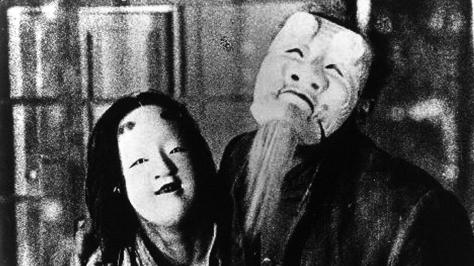
A Page of Madness (1926)
Don’t be afraid to lobby for your favourites, or to vote for events outside the UK. The poll is now a global affair and the more votes the merrier. Sharing is caring!

 To read the full programme, find out who else is attending, and book your place, visit the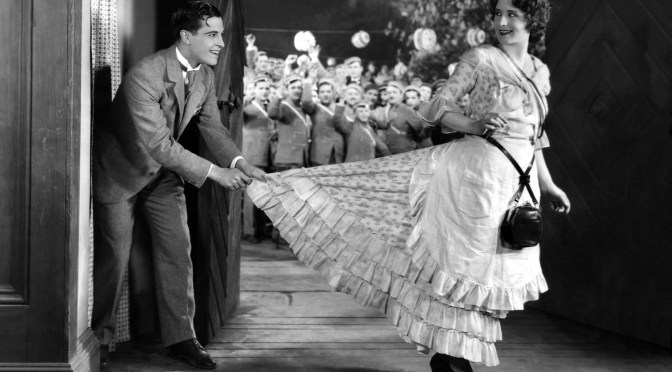











 Silent London