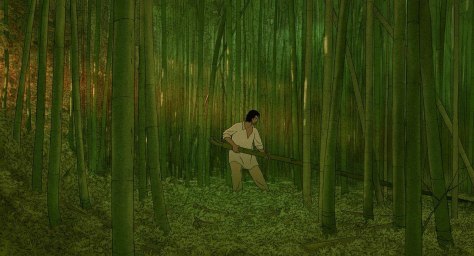
Shipwrecked and bewildered, a lone man washes up on an island that has lush, forest vegetation, fresh water, fruit, and everything a person needs to survive, except human company. His attempts to escape his isolation by raft are repeatedly scuppered by a mysterious, and gorgeous sea creature, with which he forms a lasting, and surprising relationship.
The Red Turtle, an animated feature film that was widely admired at Cannes, plays the London Film Festival next month. You may have heard of if because it represents a first in the world of animation – a Studio Ghibli co-production, being a collaboration between the well-known Japanese outfit and Dutchman Michaël Dudok de Wit. It is also that beast rarer than a giant red sea turtle: a new, and very accomplished feature-length film without dialogue.
The Red Turtle (2016)
The silence, washed over with a sophisticated sound mix of animal noises and ferocious waves, is supplemented by a gorgeous, rousing score that helps to elevate the castaway’s solitary struggles to edge-of-the-seat, blockbuster events. And it is in the first third that the film is its most successful, as the hero adjusts to his surroundings, carves himself an awkward niche in the island ecosystem, and valiantly attempts to sail away into the sunset and towards civilisation. One early sequence, in which he slips through a crevice and must use all his strength and courage to swim to safety, cranks the tension to its utmost. In these first scenes, we are privileged to share his fears and frustration, his dreams and his sickness, so that each time he tries to make a break for it, alone on his wobbly raft, the interference of the red turtle is a cold shock. This portion of the film is closest to a horror movie, the most obvious analogue being Jaws, with a silent, invisible terror lurking beneath the waves. Sometimes he screams, but of course there is no one to hear him. It is a masterful feat of sustained silent film narrative, engrossing and terrifying.
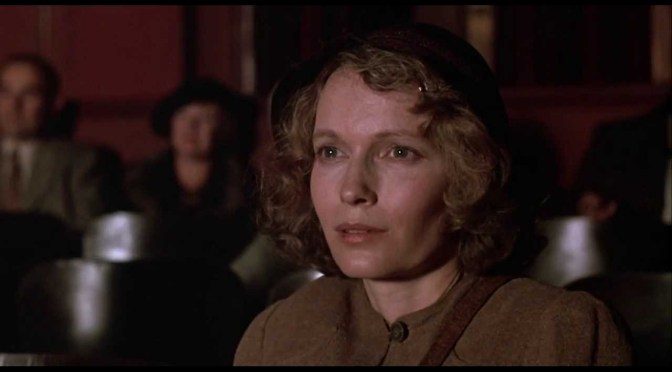
Cinema has always found itself delicious. Showing at the London Film Festival next month is a movie made out of movies in which people watch movies at the movies. There are movies within the movies within this movie, and it will leave you with an intense craving for popcorn – as well as celluloid.
Paul Anton Smith was one of Christian Marclay’s assistants on his tick-tock supercut The Clock. For his debut feature, he has dipped back into the archives to create Have You Seen my Movie? (2016) – a less ambitious film, but with a more romantic theme. Have You Seen my Movie?, which screens in the Experimenta strand, stitches together sequences from feature films in which characters watch films, mostly at the cinema, but occasionally in screening rooms or edit suites and in one very enjoyable sequence, at the drive-in. The movie is roughly chronological not by era, but by the stages of movie-going: beginning in the ticket queue, taking us through the whole feature presentation and ending only when the cinema has closed and the last customer has been booted out.
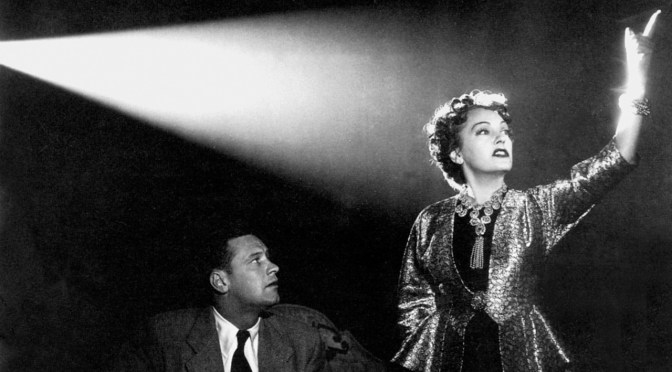
William Holden is drawn into the dysfunctional, secluded household of a fading Hollywood star, seduced and horrified by what he finds. In his familar crisp voice-over, he tells a sad story of Hollywood brutality. This beautiful screen siren, her heyday far behind her, has a terrible secret, but despite her advanced age, she remains fascinating, almost irresistible…
No, it’s not Sunset Boulevard, but Billy Wilder’s penultimate movie Fedora, which is released on Blu-ray and DVD by Masters of Cinema on Monday 26 September. Made in 1978, Fedora belongs to a different era than 1950’s Sunset Boulevard. “The kids with beards have taken over,” as Holden’s character laments, referring to those cinematic titans who were once movie brats: Coppola, Spielberg, Lucas, Scorsese. And Fedora is not a silent movie star either. She belongs especially to the 1930s and 1940s, when she made woman’s pictures, a genre that has gone out of date in 1978. But still, her career was suspiciously long.
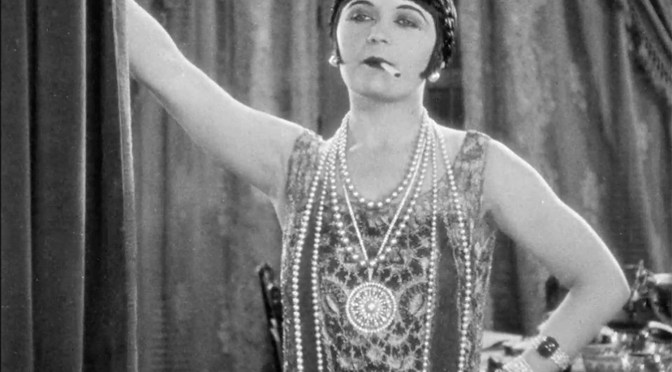
It’s said that Wilder may have modelled Fedora on Pola Negri – she is Polish, aristocratic and melodramatic, and she was one of the women approached to play Norma Desmond way back then, too. Negri also retired to live quietly with a lady companion, after a couple of brief comebacks in the 1940s and 1960s. But Negri’s latter years were spent in San Antonio, Texas, devoted to Catholicism. Fedora skulks in an island villa in Corfu, and her end is much less pleasant.Wilder refused to pin this character down though. “I have known Garbo, Swanson, Dietrich, Lombard, and Monroe,” he said. “Fedora is a fictitious combination of them all.”In the opening sequence, in fact, Fedora looks like a much earlier screen goddess, Musidora, as she sprints in a fluttering black cloak towards her fate.
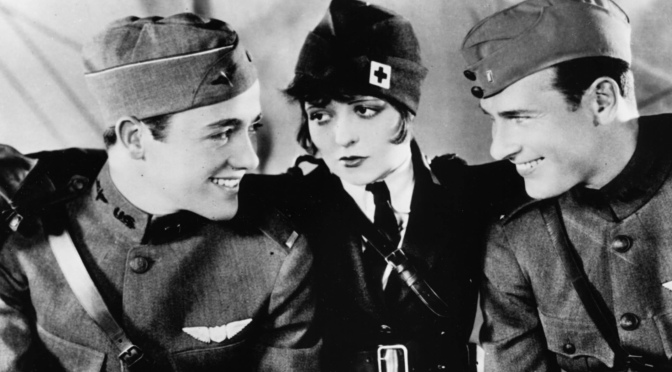
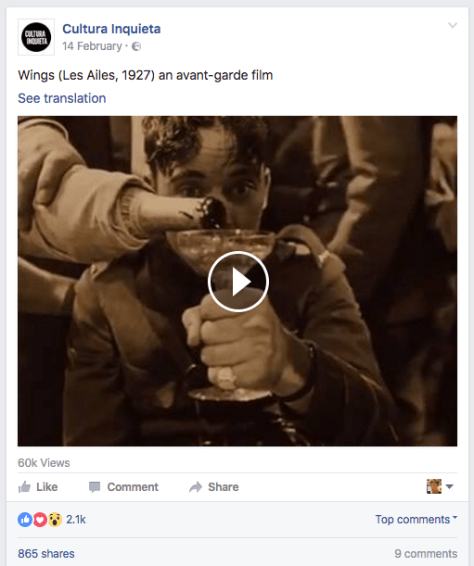
That was a bit harsh of me, I shouldn’t have been so blunt and I think I rained on his parade a little. Lots of people don’t think they like Hollywood films, especially the kind that win Oscars. Although lots more do, surely. And French avant-garde films are much cooler than Top Gun – I probably agree with that. I did wonder how many people thought that they were sharing an obscure example of le septième art rather than slick Hollywood film-making, when they pushed that nightclub tracking shot around Facebook.
Today, I saw the clip was back – transformed into a very smooth gif by the twitter account @silentmoviegifs and going great guns for shares and likes. This time it was more accurately credited. Wow, People really love Wings! Or at least this part of it.
This animated 2015 piece about the cinematography in Wings puts the tracking shot above the flying sequences, and this may be where the gif first took off. My clever colleague had read on Facebook that the smooth camera movement was achieved by splitting the tables in half as the camera moved forward. Now that is quite bizarre, although this shot was quite tricky to achieve. This YouTube video explains how it really worked:
What if all your silent cinema dreams came true? What if they found those missing reels of Greed, or a pristine print of 4 Devils, and you had to admit you were disappointed? Say it isn’t so. But consider this: if 80% of silent films are lost, does that mean that silent cinephiles, by definition, are hooked on the chase, the thrill of forbidden fruit? There are so many films we will never get to see, and others that we see only rarely or in incomplete versions – perhaps we’re all addicted to the legend.
It’s worth thinking about at least, and it was at the forefront of my mind as I sat down early this morning to watch a preview of the digital restoration of Abel Gance’s Napoléon. Yes, that Napoléon, the version heroically pieced together by Kevin Brownlow and magnificently scored by Carl Davis. I have been lucky enough to see it once before, at the Royal Festival Hall in 2013 – before that, I was too skint to stump up for a ticket. It was amazing, and I will never forget the frisson I felt as the film began and I thought: “Finally, finally I am going to watch this thing!”
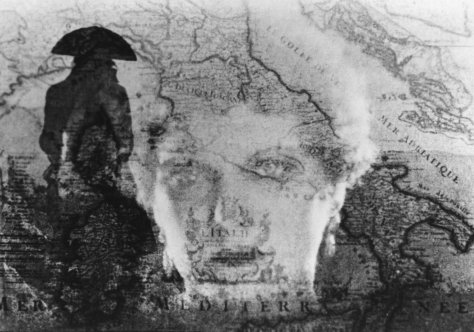
Napoléon (1927) Photograph: BFINow, something wonderful has happened. The film has been digitised, and the score has been recorded, so soon a digital, shareable, streamable Blu-rayable version of Napoléon will be out there – to play in a cinema, living room or desktop near you. So if you’ve never had the opportunity to see the gala presentation of this epic movie, with the full orchestra, glistening in 35mm, this digital version means that your luck could be about to turn.
However, if sitting down to watch Napoléon were just as simple as sitting down to watch Coronation Street – no dinner reservation, no train to London, no babysitter, no £40 ticket – would the thrill be the same? As I took my seat in NFT1 I began to worry that the sheen of Napoléon would have faded, but the truth is no, it has just shifted a little.
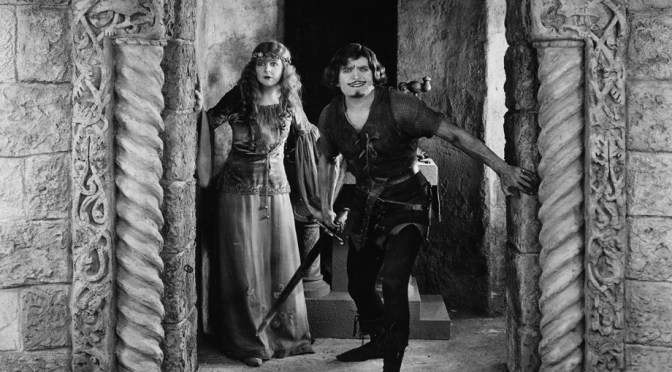
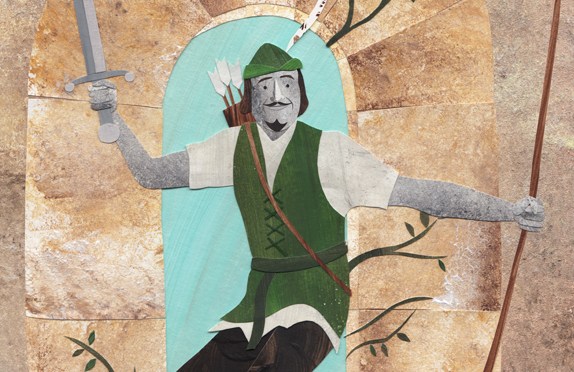
While the rest of us spent the summer wincing at the news and Instagramming our hot dog legs, Neil Brand has been in a better place. In a Hollywood vision of Sherwood Forest, to be specific, cooking up a new score for Allan Dwan’s 1922 blockbuster Robin Hood, starring the wonderful Douglas Fairbanks. The score will be performed by the BBC Symphony Orchestra, conducted by Timothy Brock, at a special screening of the movie in the Barbican Hall on 14 October.
So we already know that the Archive Gala will be the Irish-set thriller The Informer. And we already know that it is on the same day as Robin Hood. So that’s your first now-traditional schedule clash.* It’s also something of a shame that the Archive Gala will be at BFi Southbank, not the festival’s specially built 780-seat pop-up cinema in Victoria Embankment Gardens, where all the other galas will be held, although I assume that is to do with finding space for the band. Designers of these new-fangled cinemas always forget the orchestra pit.
However, here’s what the rest of the 60th London Film Festival has got planned for you, silents-wise. Erm, not quite as much as I would have hoped …
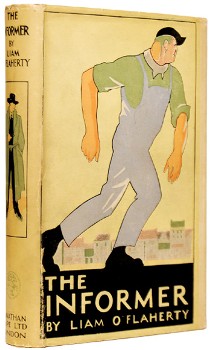
One of the most exciting annual announcements in the silent film calendar, at least for us Brits, is the London Film Festival Archive Gala. So start rolling those drums now. This year, the beneficiary of a digital restoration, a new score, a gala screening and and a Blu/DVD release is … Arthur Robison’s The Informer (1929).
This rare silent adaptation of Liam O’Flaherty’s famous novel is set among Dublin revolutionaries in the early days of the newly independent Irish Free State, formed in 1922. The Archive Gala will take place at BFI Southbank on Friday 14th October, 6.30pm in NFT1 and features a specially commissioned live score by Irish composer Garth Knox with a six piece ensemble.
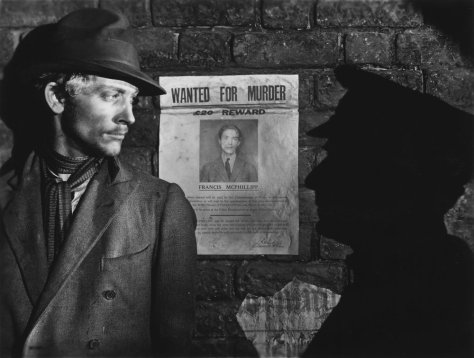
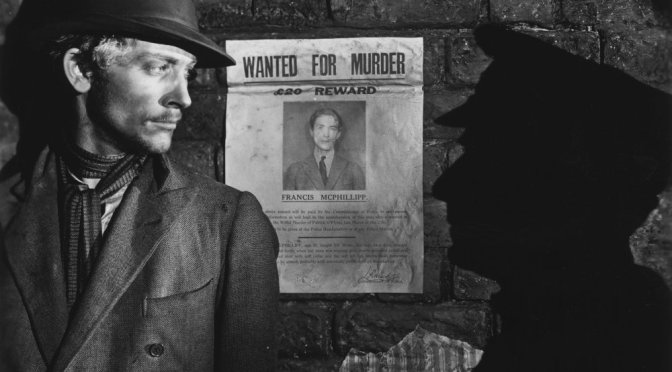
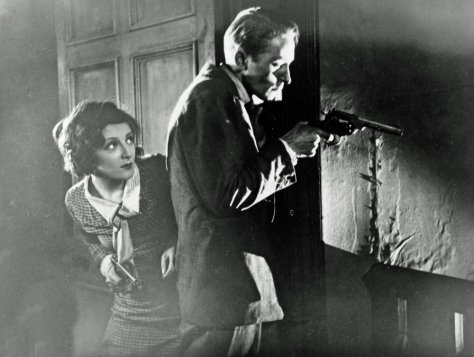
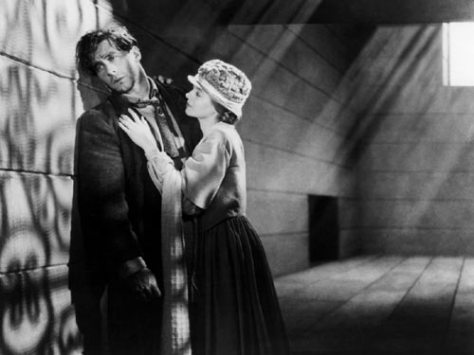
The silent Informer is a British-made movie, filmed at Elstree by British International Pictures, but has the flavour of an international co-production too, starring Englishman Carl Harbord, Swedish Lars Hanson, and Hungarian Lya de Putti (you may know her from Varieté). The story is set in early 1920s Dublin, during the first years of the Irish Free State and it is a tale of revolution and betrayal, with an underground cell of activists torn apart when one of their member accidentally kills a police officer.
According to novelist O’Flaherty, he wrote The Informer “based on the technique of the cinema,” as “a kind of high-brow detective story”. The BFI says that the film draws on this lead, with an expressionist vibe that looks forward to film noir. Robison’s studio-shot film is tense, and claustrophobic, reflecting the anxieties of the lead characters, almost exclusively shot in mid-shot or close-up.
The dense narrative develops in a short time heightening the intensity of emotional effect. Our sympathies are challenged to deal with the complexity of personal versus political loyalties, where no-one is entirely innocent and the implications of seemingly minor or impulsive decisions create inescapable moral dilemmas for all the protagonists.
The new score for the gala and Blu-ray release has been written by a composer from Ireland, Garth Knox. The music draws on his interest in medieval, baroque and traditional Celtic music, and uses some traditional Irish instruments as well as avant-garde composition styles. It will be performed by a six-piece ensemble including accordion, flute, Irish pipes and viola d’amore.
The Informer (1929)
The digital restoration has substantially cleaned up the film, which was made in both silent and talkie versions at the dawn of the sound era – and reintroduced the lavender tinting it would have enjoyed on its first release.
More to come on this for sure … Silent London will keep you informed.
The London Film Festival runs from 5- 16 October 2016
The Archive Gala screening of The Informer with Knox’s live score will take place on 14 October 2016
The newly restored version of The Informer will be released on DVD and Blu-ray by BFI DVD in February 2017
Ta-da! Silent London has had a bit of a makeover. Everything that used to be on the site is still there, but hopefully it is now easier to find. The social media is back on the front page, as a few people have requested, and some of the best stuff is displayed on a slider at the top too. All the usual menus and gizmos should be to hand as well.
Take a look around and let me know what you think. And today there is a new review on the site, of a fascinating new book by Matthew Dessem, all about a spectre of silent comedy history – Clyde Bruckman.
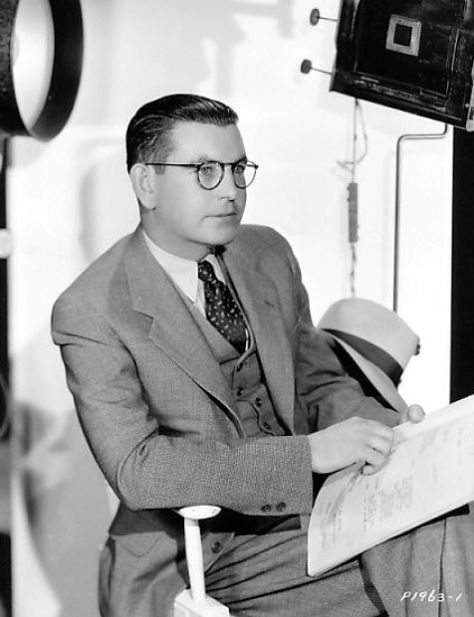
The consensus view on Clyde Bruckman was summed up by Tom Dardis, biographer of Harold Lloyd and Buster Keaton: “he was not very funny, and he drank too much”. Matthew Dessem’s The Gag Man, an entertaining and revelatory study of the writer-director, does little to erase that image, but does examine how he came to “direct” some of silent cinema’s greatest comedies, and tells one heck of a Hollywood yarn.
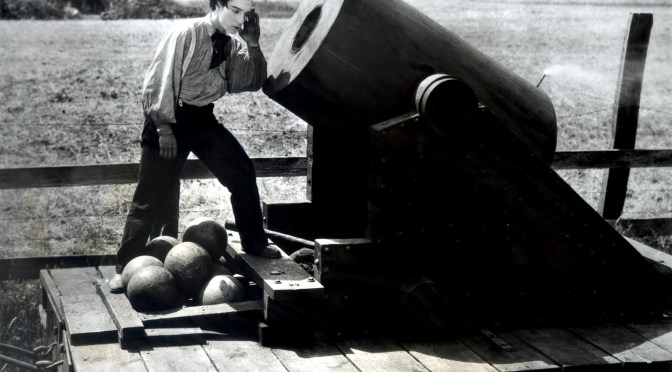
Bruckman was a journalist who entered the film industry as an intertitle writer, before becoming a “gagster”. The “gag men” would conceive visual jokes for silent comedies, working in groups, throwing ideas around, so it’s tricky to say who did what. However, Bruckman is credited with the brilliant concept for Buster Keaton’s The Playhouse (1921). The star had a broken ankle, which limited his usual acrobatic display. Bruckman sketched out an idea for creating laughs out of camera trickery instead of physical exertion. Thanks to deadly timing on behalf of cameraman and star, the multiple exposures work perfectly, including a triumphant sequence in which nine Keatons dance together.
Seduced and betrayed by a scoundrel, mother to a dead child, and cast out by an unfeeling employer, “frenzied – tortured” Anna Moore (Lillian Gish) stumbles out into a blizzard and, hearing the rush of the river, on to her certain death. The melodramatic climax of DW Griffith’s old-time tearjerker Way Down East (1920) is a violent assault on the audience’s emotional wellbeing. Anna collapses in the snow, and asleep on a sheet of ice, drifts downstream towards a waterfall. Her hair and her hands dip in the icy water, icicles collect on her eyelashes, snowflakes gather on her cheeks … and all the time, just too far behind her, a true-hearted gentleman in a fur coat (Richard Barthelmess) leaps from floe to floe in pursuit, hoping to save her from death, from his own father’s coldhearted cruelty, and from her moral disgrace.
Even in 1920, this was a bit much for most filmgoers to swallow. Griffith had spent thousands on acquiring the film rights to Lottie Blair Parker’s 19th-century stage play, a huge hit in the provinces but hopelessly dated: a hokey melodrama, hinging on unlikely events and leavened with rustic humour. Even the waif to end all waifs, wide-eyed Lillian Gish, was concerned about playing naïve country girl Anna Moore, who is tricked into a mock marriage by an unscrupulous womaniser. But if they were to recoup some of that money, the cast and crew were going to have to make the cinemagoing public believe in Way Down East. And for that, Griffith needed to show them something authentic.
Lowell Sherman and Lillian Gish in Way Down East (1920)
“Audiences want to see a real blizzard, not a sub-title with a two sentence description. If this film was going to work, the audiences wanted to see the real thing. Otherwise, whatever we did would be laughable,” worried Gish. And she was right to be concerned. At the opening night in New York, the audience howled with laughter – until the ice sequence, which is, despite the inserted footage of Niagara Falls and some canny editing, a triumph of endurance and performance rather than special effects. The sentimental appeal of Gish’s frozen tears, and the very real danger she is in during this scene would melt the hardest heart. It’s not just a nail-biting finale to a movie, it’s a spectacle of human courage – and it called for dedication above and beyond the call of cinematic duty.
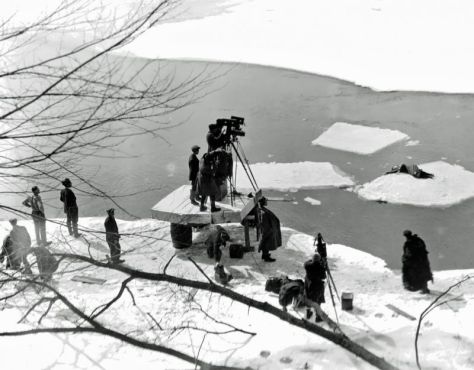
A fortnight spent filming in a real blizzard and a “ninety-mile-an-hour gale” in White River Junction, Vermont, took its toll on cast and crew both. The cameramen lay down on the ice to hold the camera still, but sheltered themselves from the wind, while Gish, in a simple dress and shawl, faced the gusts until her face turned blue. When ice crystals formed on her face, Griffith had his crew film a closeup before offering her a blanket and a cup of hot tea. While it was Gish’s idea to drape her hair and hands in the river, her director gladly agreed – to the cost of her frostbite-ravaged fingers.
It’s a stellar year for silent film screenings in London, big and small, but there is one particular show I have been looking forward to for months …
Allan Dwan’s captivating, super-sized adaptation of Robin Hood, starring the athletic, charming Douglas Fairbanks, is one of my all-time favourite family-friendly silents. It has wit, and spectacle and action and a true star to recommend it. And who doesn’t love Robin Hood?
But there is another reason to anticipate this screening. Robin Hood screens at the Barbican in October, with the BBC Symphony Orchestra playing a brand new score, by the one and only Neil Brand, a veritable swashbuckler among film composers. The Barbican promises us that Brand’s score transforms and further enlivens the classic silent, adding “a new richness and relatability to the film’s building tension and dark humour”. I think this is going to be very special.
Robin Hood set a very good example when he robbed from the rich to give to the poor. You could win a pair of tickets to experience the movie, and the new score, for yourself (and a friend).
It’s back, the perfect post-Pordenone pick-me-up: a weekend of giggles at the Cinema Museum curated by the inimitable David Wyatt. I heard great things about last year’s event, but this time you’ll have double the fun with a two-day festival. So ink 22 & 23 October 2016 into your diary and look out for tickets on sale in early September. Here’s what the Kennington Bioscope crew are promising for their second Silent Comedy Weekend:
Two days of (mostly) silent comedy – except for the audience laughter (judging from last year’s successful extravaganza) and live music from our world famous accompanists.
Feature films with Eddie Cantor and Clara Bow, Harold Lloyd, Max Linder, Monty Banks, Syd Chaplin, Harry Langdon and more. Rare showings of Lupino Lane’s LAMBETH WALK and Walter Forde’s first feature WAIT AND SEE – long–neglected British stars in need of re evaluation – plus some equally forgotten funny females, European shorts from the early years and Laurel & Hardy as you’ve never seen them before! Plus presentations on Mack Sennett and Lupino.
Guest speakers are hoped to include renowned authors David Robinson, Geoff Brown and Brent Walker, legendary film archivist Bob Gitt and of course, our own Kevin Brownlow.
Please not that the programme is ‘subject to change’ as films are still to be confirmed. Please see websites for updates.
Tickets will be available at the Kennington Bioscope website from early September.
In a very welcome turn of events, the BFI releases two archive DVDs this week, both with plenty to offer the early film enthusiast. The first is the dual-format edition of Play On!, an anthology of silent Shakespeare films with newly recorded music, of which more elsewhere. The second is Around China With a Movie Camera, a disc full of surprises.
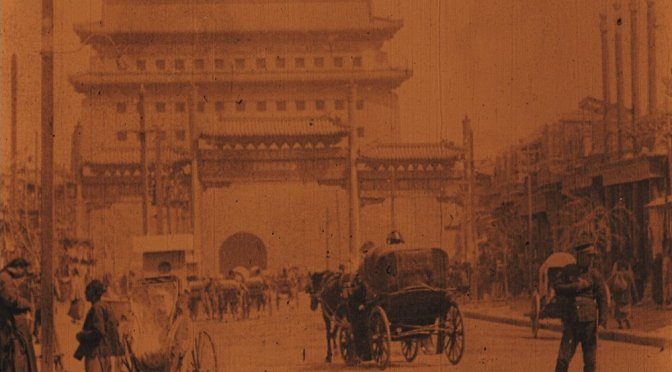
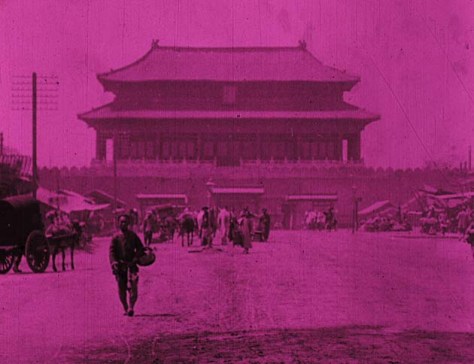
Around China With A Movie Camera is a compilation of archive film shot between 1900 and 1948, with shimmering, groovy music composed by Ruth Chan. I’ve never been to China, so I don’t bring any geographical expertise to this disc, but these are among the most bewitching early films I’ve ever seen. There are travelogues in the mix, but also newsreels, home movies, actualities, documentaries and footage shot by missionaries. Each frame is brimful of life and activity – the familiar and the unfamiliar mingled together. We begin in Beijing in 1910, with footage shot by an unknown cameraman on behalf of Charles Urban. The streets are thronged with people: workers, families, traders, drawing carts, alpacas, horses or rickshaws, carrying water or bundles of straw. The film is vividly tinted and between the blazing sunlight and the dusty road, the heat of the day burns up the screen. The locals smoke pipes, and shave each other’s heads.
A cut, and we see the same streets in 1925, the same crowds and rickshaws and market stalls. More industry here, if not quite high technology. Then, cut again, and it’s 1933. On and on, until we have travelled the country, and sped forward to 1948 and back again.
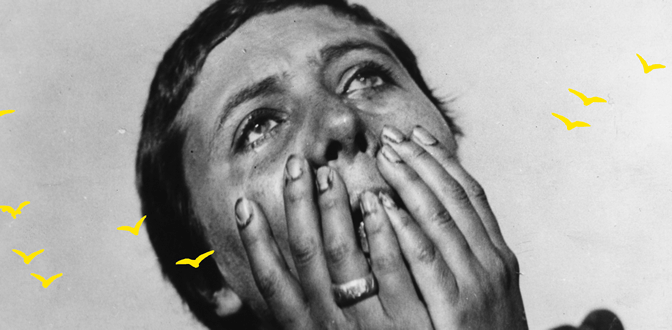
If you are reading this post and you have never seen The Passion of Joan of Arc, stop now. Skip to the end, click on the link to buy tickets and make your life better with just a few taps of the mouse. Then you can come back and read the rest of what I have to say. Passion is not just one of the very best films of all time, but one that has inspired some of the most exciting scores too – despite the director’s misgivings about it being accompanied by music at all. There have been many film adaptations of the story of Joan of Arc, but Falconetti’s haunting portrayal of the saint, in front of Dreyer’s unflinching camera, is unforgettably raw and moving.
In September, you can see Passion at one of London’s most fascinating venues, Shakespeare’s Globe, as part of a season of live music events called Wonder Women curated by Lauren Laverne and The Pool. The music for this screening is a very special score – it’s a mixture of choral singing, electric guitars, harp, horns and synthesisers, written by Adrian Utley (Portishead) and Will Gregory (Goldfrapp) and conducted by Charles Hazlewood. I’ve heard it, back in 2011 at the Queen Elizabeth Hall – and I really loved it. The ancient and modern elements suit this timeless film well. I reviewed that event for a now-defunct and much missed arts blog, so here it is, reprinted, if you like.
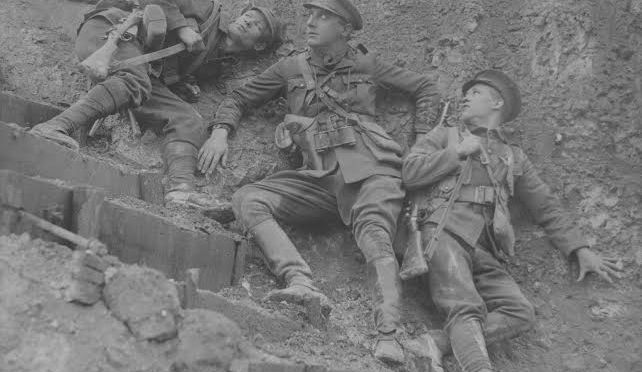
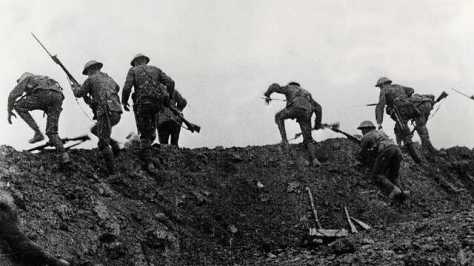
Anniversaries are bittersweet at the best of times, but this summer marks an especially painful date. It is 100 years since the Battle of the Somme, the largest battle of the first world war, in which more than a million men were killed or injured. The date was marked publicly in the UK this weekend with tributes across the country.
Many people who read this site will know that relatives of their lost their lives in the First World War – almost all of us will have heard family tales of hardship and resilience from those four bruising years. The power of cinema, even during the war when it was only around twenty years old, is that it can show us the small human stories of the home front, as well as the epic tales of the battlefield. In fact, it can tell us the intimate, personal incidents of the trenches, as well as the soothing narrative of stoicism and sentiment back in Blighty. And on the cinema screen, these experiences can be shared with a crowd, and something therapeutic happens when we face our fears together. This summer, you can see some of the contemporary films from WWI, back on the big screen, and at the bottom of this post you will find a two-for-one ticket offer too.
The Battle of the Somme (1916)
Back in 1916, millions of Britons flocked to the cinema to see The Battle of the Somme, a documentary that showed the families at home what their boys were facing on the front line. It’s haunting, sometimes terrifying, and always fascinating work – a letter home from the trenches to reassure and inform. A hundred years later, it has lost none of its power. If you want to know more about the film, I highly recommend Lawrence Napper’s article in the current issue of Sight & Sound, in which he calls it “one of the most extraordinary documents of our cinematic history”. Luke McKernan’s excellent Picturegoing site has also posted a contemporary review of the film, which says that it “shakes the kaleidoscope of war into a human reality”.
The Battle of the Somme is back in cinemas and concert halls across the world, to mark the centenary, with live orchestral performances of Laura Rossi’s wonderful score. You can read more about that, and find a screening near you, on the official website here. There will be 100 performances in the tour, so there is very likely to be one near you.
As regular readers of this blog have probably guessed, I dwell in splendid isolation in a Hollywood mansion. Occasionally I kidnap a passing blogger to help me refine a post or two, but normally the only people I see are my pet leopard and Georg Wilhelm the butler. So it makes a nice change to be leave the house and talk about silent cinema in the presence of the beautiful people of London. I am doing that twice in the near future – so read all about it.
The fabulous Phoenix Cinema in Finchley is hosting a silent cinema festival on the weekend of 15-17th July, which promises to be very special. On the Saturday they are showing Steamboat Bill Jr, in a special kids screening,with Neil Brand, and also Why Be Good? with the wonderful Colleen Moore and a “live flapper performance”. On the Sunday, Ian Christie introduces a selection of archive films of north London with music by John Sweeney, followed by a screening of the cockney silent East is East, with Lillian Henley at the piano and Gerry Turvey introducing. On Friday 15th July, Stephen Horne is accompanying one of the greatest films of all time, the magical Sunrise: A Song of Two Humans, and I will be on introduction duty. Expect much inarticulate swooning from me, and sumptuous music from Mr Horne.
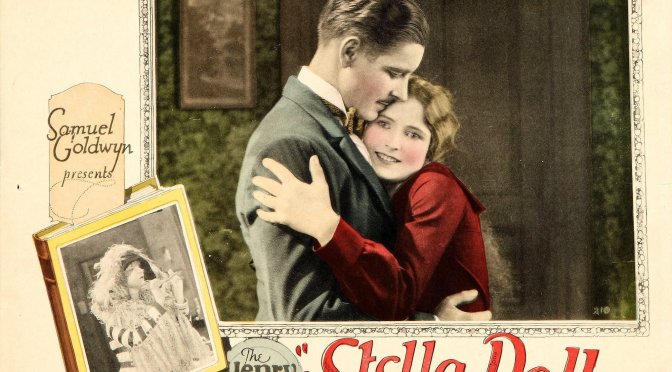
Olive Higgins Prouty’s 1923 novel Stella Dallas was destined to become a great movie. In fact, it has been adapted for the screen three times: in 1937 with Barbara Stanwyck in the lead role and in 1990 with Bette Midler, but before both of those in 1925 starring Belle Bennett as the unforgettable Stella.
Prouty’s novel is very cine-literate. It describes exactly the pleasure of a trip to the movies, but also the way that we can look at our real life as if it were a film. Sometimes we feel like an actor who is part of the spectacle, but at other times an onlooker, observing the action but not truly involved. Teenage Laurel, who is used to “standing on the outside” understands true love in real life because she has seen it in the movies: “Laurel had seen too many close-ups of faces not to recognize that look!”
The genius of this filmed Stella Dallas (Henry King, 1925) is that it captures the poignancy of watching life from the dark of the auditorium, but its emotional reach draws us in, even from the back of the balcony. The final scene of the film, in which Stella watches her daughter’s wedding through a lit window on the dark and rain-drenched street, is the perfect visual incarnation of Laurel’s horrified realisation, voiced early in the novel, that she had “become a part of the picture on the screen, while her mother was still in the audience, out there in the dark, looking on”.
Stella Dallas (1925)
On its release, the Manchester Guardian’s film critic CA Lejeune described the “painful beauty” of Stella Dallas, saying: “We are stirred into sympathy with all these people because we cannot help identifying ourselves with them … the whole picture is full of the half-tones of which ordinary life is composed.” In the New York Times, Mordaunt Hall praised one of the romantic scenes in the strongest terms: “It is all so natural, so sweet and genuine, so true to life, so fervent and sincere, so tender.”
Stella Dallas was made by Samuel Goldwyn in 1925, and the mogul was determined that it would be his masterpiece. He would end up spending $700,000 on the film – which was twice his line of credit.
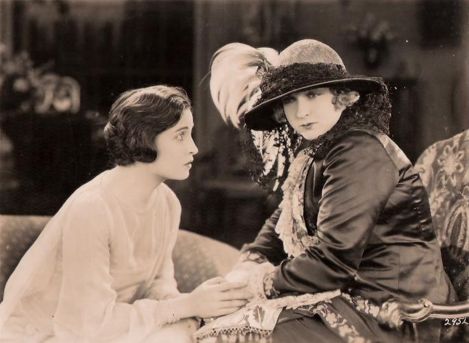
Stella Dallas (1925)
Key to the success of Stella Dallas is Frances Marion, the woman who wrote its sophisticated screenplay. Marion takes the events of the novel, which are jumbled by flashbacks to create the drama of suspense and revelation, and straightens them out into a flowing narrative that begins in a garden in spring and ends on a city street in the cold. She also takes a few discreet liberties, rearranging scenes and editing them slightly to emphasise the agonies that plague Stella and Laurel. Her screenplay for this silent adaptation became the basis for the subsequent sound film starring Stanwyck – making that film a true remake rather than a second adaptation. And the film is beautifully directed by Henry King, who tells the story visually, exploring the novel’s concern for appearances both contrived and mistaken, but who also coaxes excellent performances from his cast.
As if the prospect of Whit Stillman adapting Jane Austen for the screen wasn’t enough to tickle my fancy, a glimpse at Peter Bradshaw’s five-star review for Love and Friendship in the Guardian made it a must-see. Yes, he liked the film, a lot, and called it “hilariously self-aware”. More specifically, he mentioned “arch intertitles”, saying that Stillman uses them “as a kind of visual archaism, almost like a literary silent movie”. This had me scanning the room for the nearest couch to swoon on. I confess I first misread that as “visual anarchism”, which didn’t surprise me at all in relation to intertitles, but “visual archaism” is another concept that intrigues me. Likewise, a “literary silent movie”, which may have been intended as an oxymoron or a joke, is perfectly plausible, although it is a form that has confounded many a critic.
The question I want to raise is this: are intertitles archaic? They were introduced in early film and widely understood as a way to circumnavigate the “problem” of having no audible dialogue, so surely they must be. But I would argue that they didn’t die out with the coming of sound. In the silent era, intertitles provided exposition, character introduction, geographical and chronological markers – and ready laughs. They still do. First, the quick, compact wit found in intertitles transformed into the quickfire comic dialogue of comedies from the screwball era to the finest romcoms by Nora Ephron, Woody Allen, et al. There’s many a modern film that begins with a title card, too, the most famous and best-loved being the scrolling scene-setters in the Stars Wars films. And you’ll see practical intertitles of many kinds popping up in modern films, from captions to introduce characters in a freeze-frame (think Trainspotting and its many imitators) to a kind of punctuation, used either for a gag or to mark a shift in time and space (“New York, ten years later”, that sort of thing). Despite the expository potential of dialogue, modern films still rely on cards of sorts to impart all kinds of information. An excellent recent example is The Big Short.
Love and Friendship (2016)More intriguingly, modern technology means that intertitles, or the intertitle tradition, are having a renaissance. Honestly. It’s all to do with mobile phones, really. Many of us spend increasingly large portions of the day engrossed in long-running, silent conversations: from text messages and Whatsapp, to chat forums and Facebook threads. Text alerts interrupt our browsing to tell us about breaking news, or a “like” on Instagram or interaction on Twitter. I love all this, it means we live in a world of words and conversation. It doesn’t appear very cinematic, though. We look down, at a small gadget, instead of outward, and upright, facing the world. We’re a little like Love and Friendship‘s Frederica, constantly hunched over a book, with the firelight reflected on her face recalling the glow of a phone or tablet. Cleverly, film and TV makers have incorporated this trend and made it work on screen, from the floating text messages in BBC’s Sherlock to the grainy screen close-ups of Catfish. We now expect to see text on screen at the cinema again. And I hear there is a particularly spooky use of SMS in Olivier Assayas’s Personal Shopper, which debuted recently to excellent reviews at Cannes.











 Silent London