This is a guest post for Silent London by Kelly Robinson, and the first in a new series of posts bringing you very personal top 10s from silent cinema experts and enthusiasts.
From a programming point of view, it’s always good to have a few shorts up your sleeve: either to accompany a feature or to make up a shorts programme, which are always a good way to introduce new audiences to silent film. I’m trying to write short screenplays at the moment and I’m inspired by these film-makers, several of whom spent the majority of their careers working on shorts.
How to be an American Citizen (Alice Guy-Blaché, 1912)
Made in the US by Solax, film pioneer Alice Guy-Blaché’s production company, this is such a brilliant darkly anarchic comedy. View the version on the Retour de Flamme (06) disc by Lobster Films for one of the most inspired accompaniments to a silent film.
Ménilmontant (Dimitri Kirsanoff, 1926)
Breathtakingly stylish (talk about Eisenstein’s “kino fist”!) but also heartbreakingly moving, this is avant-garde cinema of the 1920s at its most profound. The scene on the bench is as poignant as anything by Chaplin or more recent master Krzysztof Kieslowski. Unforgettable.
Charlie Chaplin in Kid Auto Races (1914)
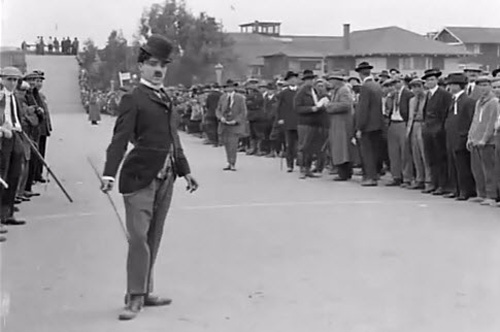
Kid Auto Races (Henry Lehrman, 1914)
Chaplin’s Keystone films are sometimes written off as unsophisticated fare, preceding a more nuanced approach to style and content at later studios. However, Chaplin’s performance here is pure clown, and shows why contemporary audiences immediately wanted more, more, more of “The Little Fellow”.
Leave ’em Laughing (1928)
Leave ’em Laughing (Clyde Bruckman, 1928)
I just have to think about the final sequence of the Laurel and Hardy classic and I start chuckling madly to myself.
Daisy Doodad’s Dial (Florence Turner, 1914)
“The Vitagraph Girl” pulls a face at being one of the first screen stars.
The funniest weekend of the year is back: Bristol’s own rib-tickling Slapstick Festival. This year marks not only the 10th year of the festival but, as you all very well know, the 100th anniversary of Chaplin’s iconic Little Tramp. The Slapstick Festival will be celebrating the tramp in fine style with an orchestral gala screening of the the wonderful City Lights (1931), recently voted into the Top 10 Silent Movies by the Guardian and Observer. The screening will be introduced by comedian Omid Djalili and music will be provided by the 39-piece Bristol Ensemble.
There’s a full weekend of funny films beyond the Chaplin too. Check the listings below for details. Notable screenings inlcude the Societ laugh-riot The Extraordinary Adventures of Mister West in the Land of the Bolsheviks (1924), the rarely shown Raymond Grifffith romp Hands Up! (1926) and a chance to see Constance Talmadge in Her Sister From Paris (1925). And don’t miss Harold’s Lloyd’s classic Safety Last! (1923) with Radio 4’s Colin Sell on the piano.
Max Davidson
More treasures are to be found in the talks and lecture events: David Robinson on the Tramp, Kevin Brownlow on Chaplin and the Great War, all three Goodies on Buster Keaton and Graeme Garden delving into the work of German Jewish comic Max Davidson.
There will be some modern work featured too: from Wallace & Gromit (naturally) to The Meaning of Life and Withnail & I. Yes, Tim Vine will be offering a tribute to Benny Hill too!
The 10th Slapstick Festival will be held at various venues across Bristol from 24-26 January 2014. Visit the website for more details, or read on for full listings and ticket information.
We’re all saddened by the idea of silent film heritage sites falling into decay and disrepair. So I thought you would like to know about this crowdfunding campaign to restore the historic Essanay Studios in Chicago. As if you don’t know, the Essanay Studio was a major player in the first years of the American movie industry. Stars associated with the studio in its infancy include Chaplin, Gloria Swanson, Wallace Beery, Ben Turpin, Francis X Bushman and, of course, Broncho Billy Anderson, who funded the company in 1907 with George Kirke Spoor.
The studio building is now a college, and is seeking help with funding for renovations, and to transform itself into an arts centre, with a studio, performance space and an area where people can come and learn some silent movie history.
Before there was Hollywood, there was Chicago. This initiative seeks to preserve and revitalize one of the world’s first and last remaining silent film studios and a unique piece of a great city’s history. The restoration and rebirth of the Essanay Film Studio Complex will provide an opportunity for people of all ages and backgrounds to learn and experience the magic and mystery of early film-making and Chicago’s unique role. It will also extend and expand the studio’s cultural legacy by providing a community space for the performing arts.
Alexa Chung is described as an “It Girl” so often that it is safe, with apologies to Clara Bow, to go ahead and call her that. Which means that when she appears on the cover of British Vogue, as she does this month, the fashionistas take note. The Vogue cover story in question is a couture fashion shoot styled by the magazine’s fashion director Lucinda Chambers and photographed by the legendary Patrick Demarchelier. Did I mention that it is inspired by and named after one of our very favourite silent films: Chaplin’s heartbreaking, hilarious The Kid?
According to the pages of Vogue, “Alexa Chung channels her inner Charlie Chaplin in the the season’s most magical designs”. The outfits featured combine couture gowns by houses including Chanel, Valentino (!) and Versace with vintage hats (something of a trademark for Chambers), and classic Chaplinesque touches – oversized boots, baggy pinstripe trousers and even a spindly bamboo cane. It’s a fashion shoot rather than a fancy-dress act, so the source material has been interpreted, not replicated: Chung wears a peaked cap that’s more Jackie Coogan than Little Tramp, for example. But it’s not entirely fast-and-loose. You could view those designer dresses, embellished with pearls and sequins, as a nod to Edna Purviance’s upper-class character in the same film – meaning that Chung encapsulates the whole family. More likely, the Chaplin look has been chosen to offset all that opulence and to capitalise on Chung’s gamine beauty. She has long been celebrated for a certain “street-urchin” look that’s pure The Kid. In fact, she told Glamour magazine in 2012 that Chaplin inspired her dress sense, captioning a selfie with the words: “This is my Charlie Chaplin look – black trousers with suspenders and an Yves Saint Laurent shirt. Putting weird pieces of clothing together is what I’m good at.”
Alexa Chung’s ‘Charlie Chaplin’ look in 2012 (Glamour.com)
If you think it strange to see a woman taking fashion tips from a fictional tramp, played by a bloke nearly 100 years ago … well that does sound odd when you say it loud. But it’s not so off-the-wall as all that. Chaplin’s early years were spent in London music halls – that’s where he first performed, and where his parents had worked too. Male impersonators were popular in the halls, and fashion historian Amber Jane Butchart writes here about the immaculately turned out Vesta Tilley. When Chaplin first picked out his Tramp outfit, he may well have been thinking of this female twist on a masculine suit. The Tramp is in a kind of drag himself – in clothes that don’t quite fit, an outfit with aristocratic pretensions undermined by ragged hems.
Charlie Chaplin’s Little Tramp costume at the V&A museum (aquamarinejo.wordpress.com)
According to Chaplin’s autobiography he created the Tramp’s outfit from deliberately contradictory elements: baggy pants, tight jacket, oversized shoes and small derby hat provided by fellow actors and whangee cane owned by himself. Accessories such as the high-collar shirt, check waistcoat and tie are not accounted for, but Chaplin claims to have added a moustache to make himself appear older. In this first manifestation, the Tramp is scruffier and less affecting than he became later. The cigarette adds to his louche appearance and the cane is a parody of gentleman’s attire. Chaplin gives a professional clown’s performance in the tradition of the North American Tramp/Hobo; his costume is based on a collage of mismatched pieces that appear to have been randomly collected from discarded clothing … While the dissonant parts of the Tramp’s outfit do not cohere into a sartorial whole, their recombination indicates the character’s aspirations to be a dandy.
The Tramp’s clothes draw attention to the social significance of dress as well as to his affectation, which Chaplin developed as a feature of his performance. The collage effect, deriving from popular forms such as the circus and street theatre, resonates with the aesthetic strategies of the Surrealists and others. The pastiche of styles portrays the character as a fabrication, a social type rather than a rounded individual. While the rudiments of psychological motivation are there in the costume’s ridicule of the Tramp’s desire to belong to a higher class, the emphasis on disguise focuses the viewer’s attention on Chaplin’s self-presentation as star performer … The Tramp and his costume become the spectacle.
For a woman to dress up as Chaplin may seem drab (the dark colours, the masculine cut) but that is far from the case. It’s a look that demands attention, and playfully blurs gender and class divisions, which is sexy and provocative in itself. In fact, aspects of the Chaplin look are hugely feminine and easy to wear: tight jackets and baggy trousers are flattering to many women’s body shapes. The tailoring can be softened by the casual fit, or even a buttonhole flower and lots of smudgy eyeliner. Just check out how many women on the fashion site Polyvore are channeling their own inner Chaplins. Female celebrities from Jessica Alba (when pregnant) to Brigitte Bardot have raided the costume box to pay homage to the star. And female Chaplin impersonations multiply on screen – including Gloria Swanson in Sunset Boulevard but going far beyond that. Remember Jeanne Moreau in Jules et Jim? And the ultimate in tomboy-chic, Diane Keaton in Annie Hall – her tennis-date outfit has Chaplin fan written all over it. More recently, Melanie Laurent’s character Anna, having lost her voice, adopts a Chaplinesque costume in the romantic film Beginners.
In 2011, Comme Des Garcons put female models in androgynous cut-up coats and jackets that reminded many onlookers of Chaplin’s Tramp. This spring, Vivienne Westwood called for a Climate Revolution in a sequined oversized bowler and Magic Marker moustache. Supermodel-of-the-moment Cara Delevingne, no less, also claims to be a Chaplin devotee – it must be the eyebrows.
Miss Chaplin by Rio Surya Prasetia for Amica Indonesia
So Chaplin is big news in the fashion world right now, but this look isn’t just for the ladies. In a recent, and typically eloquent, post for Mr Porter, fashion writer Colin McDowell reclaims the silent star as a style leader – offering a neat precis of his career and particular qualities as well as his appreciation for film costume and his fastidious off-duty fashion. From spring/summer 2011, John Galliano presented a menswear collection inspired by the slapstick greats, in particular the urban-industrial attire of the Little Tramp – the models sported silent-era Hollywood makeup reinvented as gothic facepaint, with overalls, boots, prison stripes, moustaches and shocks of dark curly hair.
So why Chaplin in 2013? Well, the extent of Chaplin’s fame means that he will never disappear as a cultural reference point. The fact that his image has been protected by the Chaplin association all these years means that the source of his signature style remains intact and undiluted, no matter how many fashion shoots, fancy-dress parties or street imitators get their hands on it – so he is always ripe for a speedy revival. I need not mention how The Artist nudged the silent era back into mainstream consciousness, nor that 2014 will mark the anniversary of the Little Tramp’s creation. The acting success of Chaplin’s granddaughter Oona Chaplin (who was also photographed by Patrick Demarchelier for a very slinky shoot in Vanity Fair last year) may have given him another boost in fashion circles.
But if you break the Tramp’s look down into its constituent parts, as Cook does in the extract printed above, you’ll see exactly why he resonates in a time of austerity measures, bank bailouts and Occupy camps. These days Chaplin’s bowler hat and pinstripe trousers signify something more specific than “gent” – the modern bogeyman, the City Banker. Just as Chaplin remixed the attire of the upper classes to cock a snook at their pretensions, we can dress up as his character today and thumb our nose at the financial institutions that so often determine our fate. To distort the armour of the City, with rags or sequins, with a smile and knowing wink, is to expose a chink in it. Chaplin would enjoy that, don’t you think?
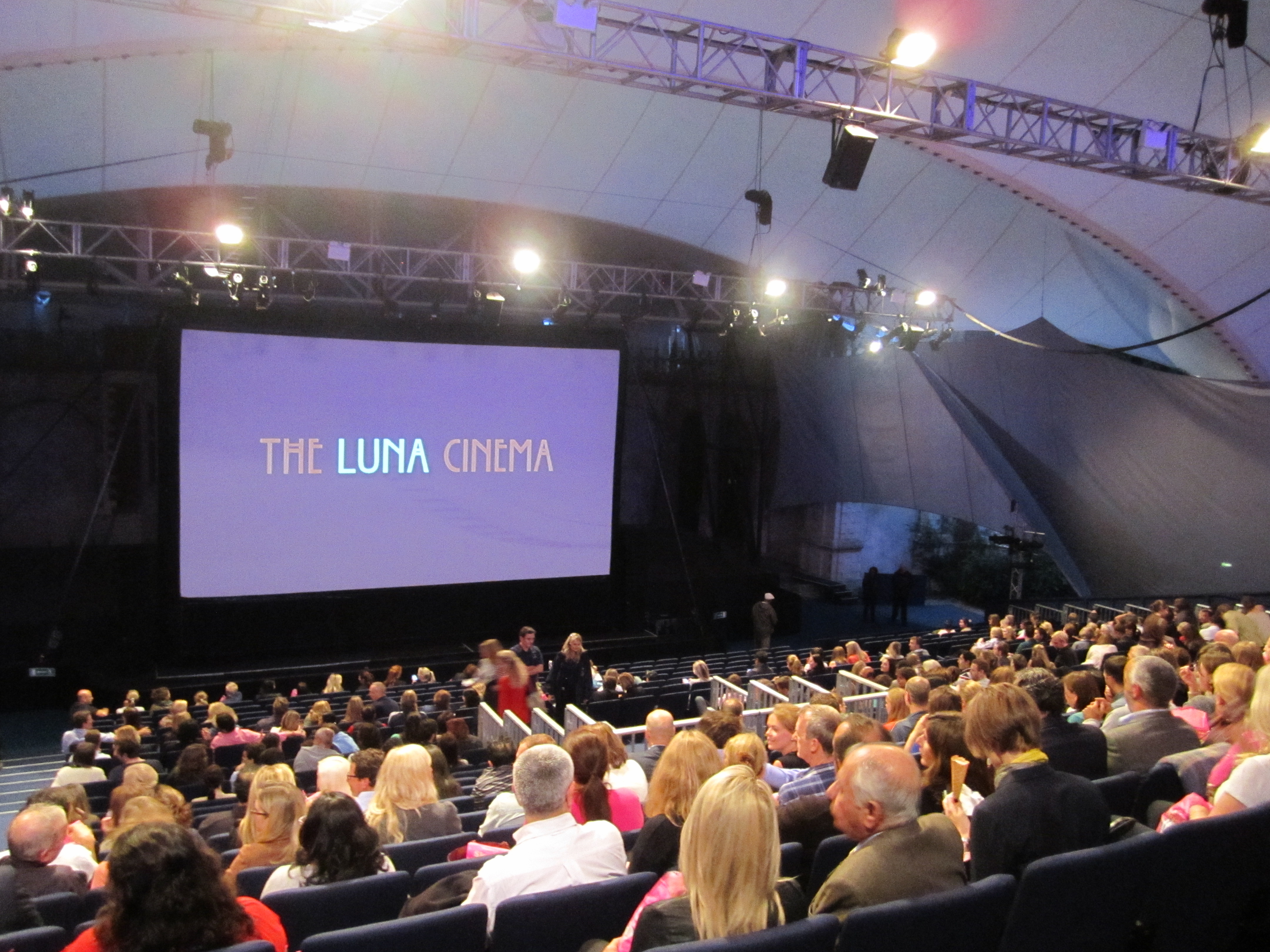
No I am not about to tell you to spend more of this glorious summer tucked away in a dark and musty cinema rather than out in the park. Holland Park’s Luna Cinema is hosting an evening of silent cinema at its open-air venue – which is what we call a win-win. It promises to be a great night, with classic films starring Charlie Chaplin and Laurel and Hardy on the big screen. You’ll be even more impressed when you hear that the musician and host for the evening is Neil Brand.
The Luna Cinema, the country’s leading producer of pop-up cinema, presents a night celebrating silent cinema to Opera Holland Park on the 11th August. The stunning summer theatre, in Holland Park, with its velvet seats, bars and beautiful canopy (in case of bad weather) will host the Luna’s giant screen for a very special night of classic silent films. We will have silent film expert Neil Brand hosting the evening and providing live musical accompaniment to an array of classic silent films including Charlie Chaplin’s most famous work, “The Immigrant” – it’s a rare opportunity to see this 1917 comedy showcasing Chaplin at his very best. Amongst other classic shorts we will also be screening “Liberty” – one of Laurel and Hardy’s most famous comedies and considered to be their greatest silent work before they moved to the “talkies”.
The Luna Cinema’s silent film night takes place at Opera Holland Park, London on Sunday 11 August. Tickets cost £9.50 – £19.50 and they are available through thelunacinema.com or by going straight to the Opera Holland Park box office (operahollandpark.com or 0300 999 1000).
Competition time again, Silent Londoners, and this time I am giving away tickets for a night of silent film and live music at one of our favourite venues, Hackney Attic. The lucky winner can look forward to an uproarious evening, featuring Buster Keaton, Charlie Chaplin, Laurel & Hardy (in their first film together) and even Felix the Cat – plus a surprise! This latest event in the Filmphonics series has been put on by the silent film fanatics at the Lucky Dog Picturehouse. Here’s what they have to say about it:
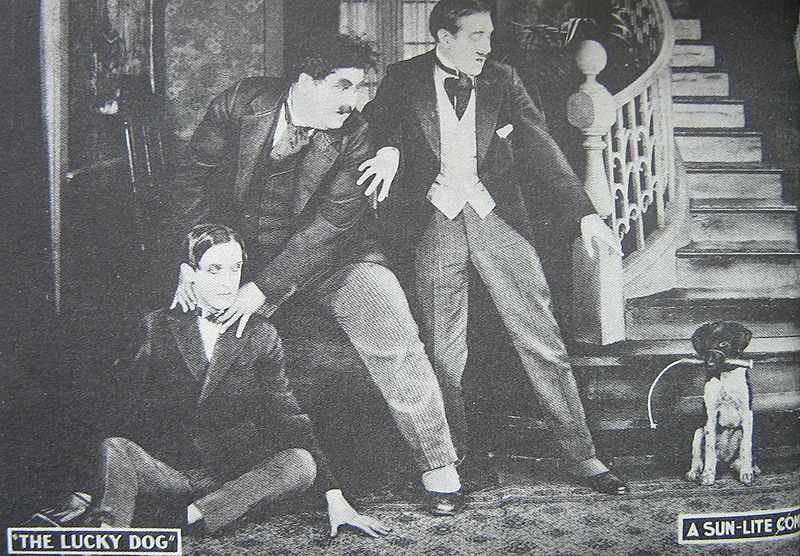
The Lucky Dog Picturehouse specialise in providing an authentic 1920’s silent film experience, with live piano soundtrack. Collecting together 5 of the best silent film shorts ever made by some of the world’s greatest silent stars. Buster Keaton attempts to build his new flat-pack home in the stunt-filled ‘One Week’. You’ll find a love-lorn Charlie Chaplin in ‘The Pawn Shop’. Laurel & Hardy team up for the first time ever in ‘The Lucky Dog’ (featuring a dog to rival Uggie from The Artist). To balance the dog ‘Felix the Cat’ makes a madcap appearance. And the final film is “TBC” but it might involve a certain “Trip to the Moon”. All of the films will be scored by live keyboard accompaniment. Just as they were supposed to be seen.
To win a pair of tickets to the Lucky Dog Picturehouse night, simply email the answer to this simple question to silentlondontickets@gmail.com with Lucky Dog in the subject header by noon on Friday 17 May 2013.
In which British town was Stan Laurel born?
The Lucky Dog Picturehouse night at Hackney Attic is on Sunday 19 May at 7.30pm. Tickets start at 7pm for members (with £2 off if you book for The Great Gatsby the same day). Click here to book and for more information.
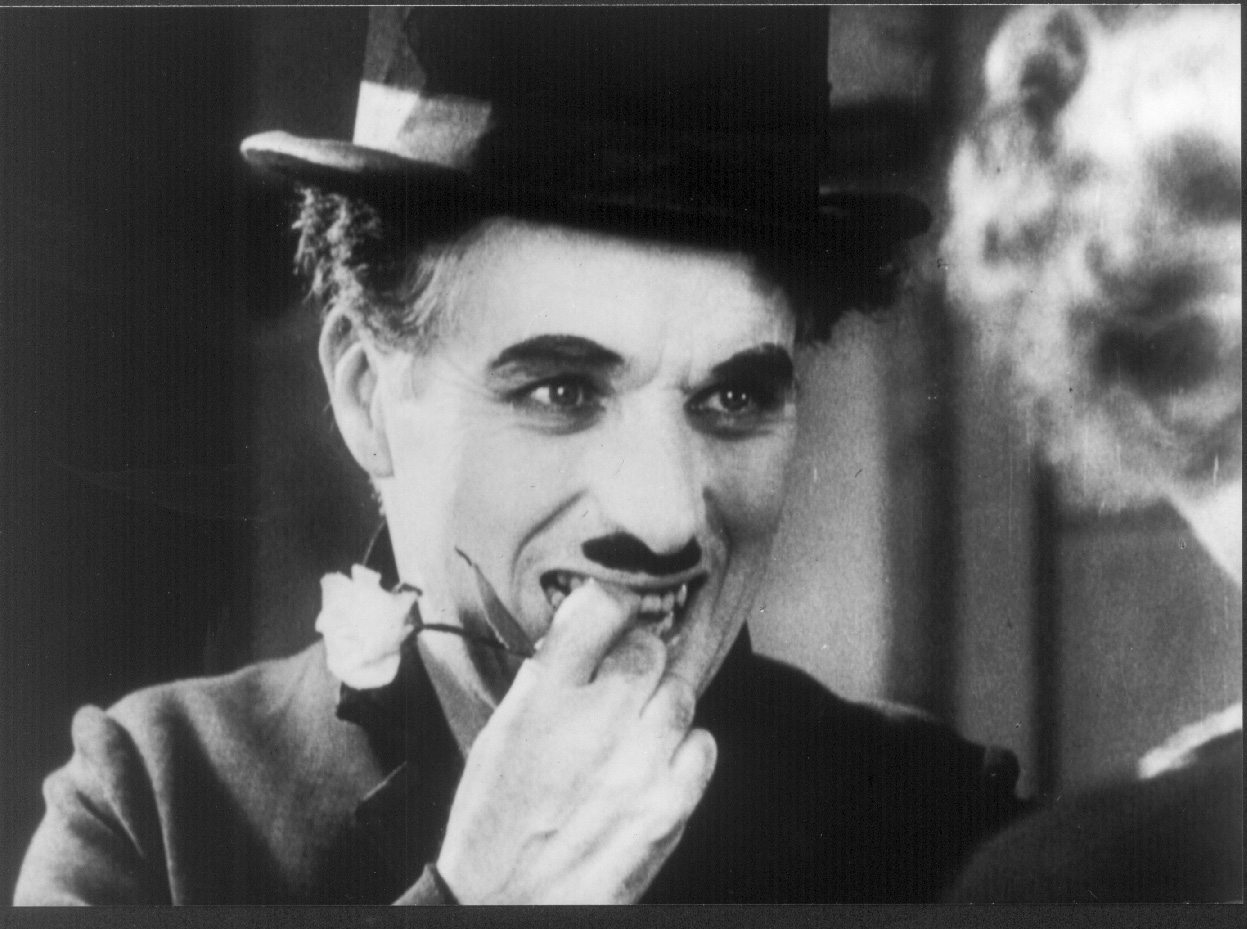
It’s podcast o’clock once more. This time I’m joined in the studio by the marvellous Pete Baran, and in the pub by Lucie Dutton, who tells us all about British silent film director Maurice Elvey. All that, plus a guest appearance by Otto Kylmälä, film-maker and festival organiser, praising the “subtle brilliance and mature beauty” of his favourite silent movie, Chaplin’s City Lights.
If you want to get in touch with us about anything you hear on the podcast tweet @silentlondon or leave a message on the Facebook page: facebook.com/silentlondon.
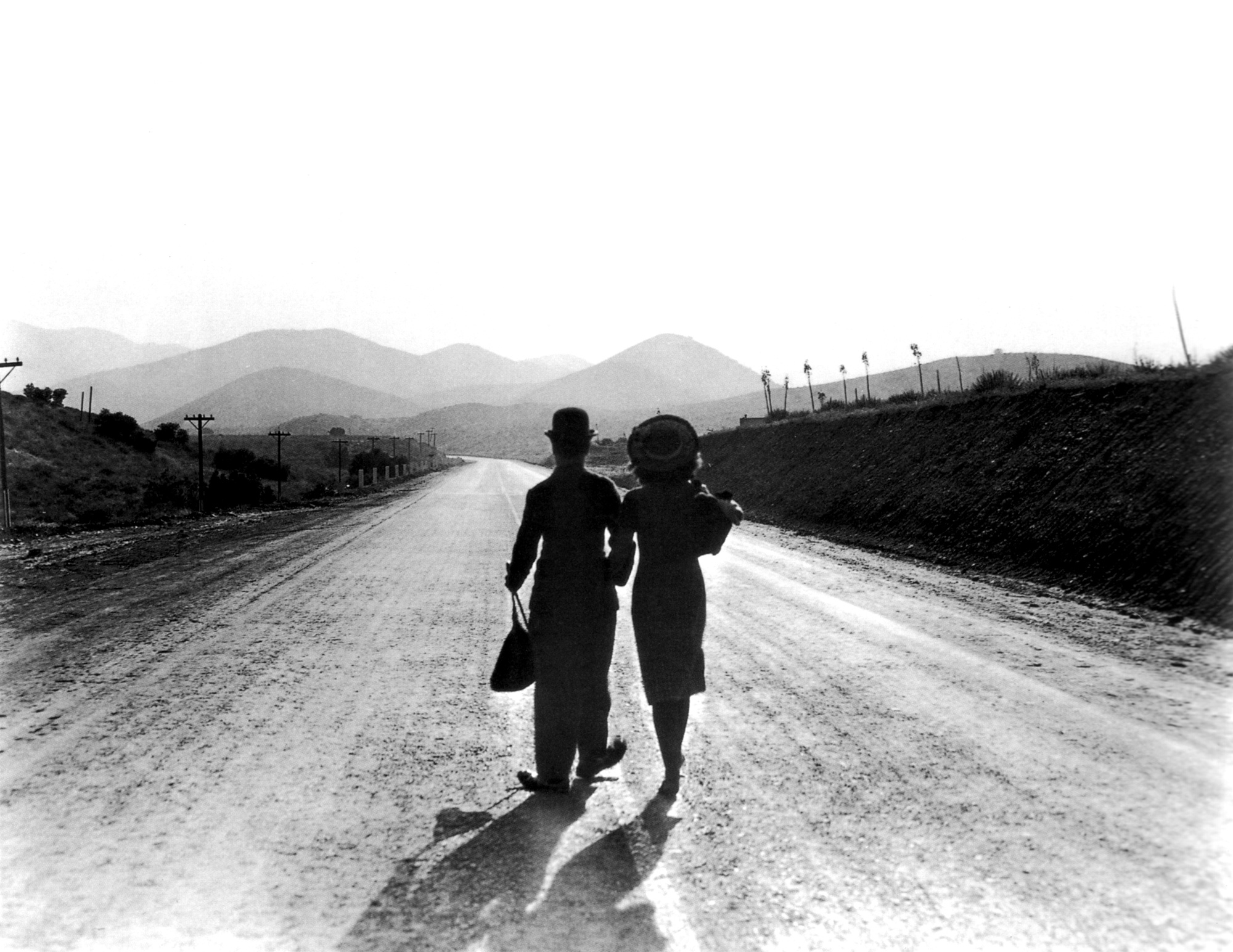
Charlie Chaplin and Paulette Goddard in Modern Times
This date should already be in your diaries. Charlie Chaplin’s wise and heartwarming not-so-silent silent film Modern Times screens at the Royal Festival Hall on the South Bank on 22 March, with the Philharmonia Orchestra conducted by Carl Davis. It’s a magnificent movie: a slyly hilarious portrait of Depression-era America, with a tremendous score written by Chaplin himself. There’s a lot to love about Modern Times – not least the final screen appearance of the Little Tramp and the debut of Chaplin’s song Smile.
If you’d like to see Modern Times, and who wouldn’t, you can take advantage of this special offer and get best available seats for just £10 if you quote FILM when booking online or by calling 0844 847 9910. Find out more and book online here.
This is the final Charlie’s London post by Ayşe Behçet for Silent London. Charlie’s London is now moving to its own site!
Welcome to the last edition of Charlie’s London on Silent London. I had been thinking for a while about what would be the best goodbye post for a site I hold so very dear. Without Silent London, Charlie’s London would not have an audience and I would not have had the platform to express my love for one of the greatest artists/comedians/directors/humanitarians the world has seen.
Chaplin means something different to everyone. To me he has somehow become part of my family history! From little William in that workhouse to seeing my very own godson fall in love with his films, I can honestly say Charlie never leaves me. Recently I was lucky enough to attend the Southbank showing of The Circus and as I sat in what really is Charlie’s London I felt very honoured and emotional. It was not just because it was a Chaplin film, but because my grandmother and I had watched this film many times when I was a child. I clearly remember her singing “swing little girl” to me on more than one occasion; I wish she had been able to sit in one of those deckchairs with me and enjoy it for herself.
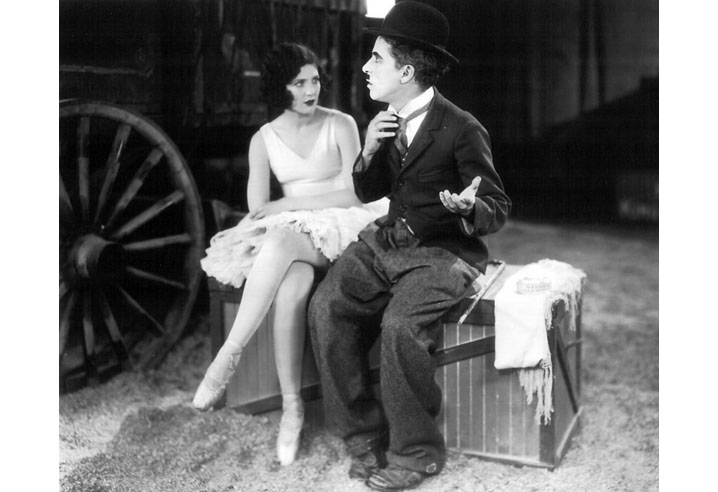
Charlie Chaplin in The Circus (1928)
There has been so much written about Chaplin the film-maker, the genius of cinema. There has been even more on Chaplin the man. What has interested me throughout my time writing this blog is Charlie the Londoner. It is true that most of his london no longer exists, but his presence still lingers those streets, even if people do not realise it. Poverty is still a massive problem in inner-city areas around the world, and South London is no different. Chaplin saw all this. For him it was a different age, a different life, but not a different London. You can see this in every one of this films: Easy Street, The Kid, Modern Times and right up until Limelight, Chaplin never forgot his roots.
This is a guest post by Ayşe Behçet for Silent London.
Today I am going to look at the importance of another figure in Charlie’s life, his brother Sydney, whom I feel should never be overlooked.
Until the groundbreaking biography by Dr Lisa K Stein (Syd Chaplin: a biography), Sydney’s story was only really told as a piece of the Charlie Chaplin jigsaw puzzle. She has completely changed this, showing Sydney as an individual who helped to create his brother’s career. Stein’s book allows us to see Sydney like never before. Her work is a testament to the extensive resources in the Chaplin archives in Bologna, as well as her own personal collection and enthusiasm for her subject. For me, it shows that the information is all very much still there for us to all see, it’s just a question of knowing where to look, having the guts to challenge what is already known, interpret it differently and give a new dimension to further Chaplin research.
Four years older than his famous brother, Sydney would look out for his younger brother for the rest of his life. Born in 16 March 1885 to the 19-year-old Hannah Hill, and originally known as Sidney John Hill, Syd become a Chaplin when he was a few months old upon the marriage between his mother and Charlie’s father. The bond these brothers or the rest of their lives was a powerful one. Their shared time in south London workhouses and poorhouses, while their mother suffered with mental illness, required great courage. These events would later shape the brothers’ outlook on their art and their lives – although in different ways. Sydney Chaplin junior, Charlie’s son by his second wife Lita Grey, would reportedly later joke that his father’s choice of name for him was very apt. Whereas Charlie lived and breathed his work until its completion, Sydney senior would adopt a much more laidback approach and enjoy the fruits of his labour. In my humble opinion, Sydney felt he worked hard so he could play hard, Charlie however felt he had to hold on to his tragedy, because it helped mould his comedy.
This is a guest post by Ayşe Behçet for Silent London.
Hi everyone. Welcome back to another edition of Charlie’s London.
As promised I will be looking at two more women who I believe shaped his life, both on screen and off. Last time I looked at Chaplin’s mother and Mabel Normand, this week I will look at Edna Purviance and Oona O’Neill. I have to confess, Normand never used to be a favourite of mine, even though I consider her contribution to be important and often overlooked. Now, I have to say, I’m really in her corner. People have often said that Chaplin and Normand hated each other. People have also often said Chaplin and Mary Pickford hated each other too, for me, these relationships are one and the same. Their relationships were creative ones: if they clashed, let’s call it artistic differences.
Normand not only directed Chaplin but also acted as his leading lady too: a role taken most often by Edna Purviance, who appeared in 33 of his pictures including extra parts in Monsieur Verdoux and Limelight. Purviance was first cast opposite Chaplin in 1915 after a chance meeting with one of his associates in a Tate’s Cafe in San Francisco – the director was looking for a new female lead for his Essanay comedy A Night Out. Even after her final film with Chaplin, A Woman Of Paris in 1923, Purviance stayed on the company payroll right up to her death in 1958.
Chaplin and Purviance were romantically linked for many years, and unfortunately this is how some film enthusiasts and historians seem to want to remember her. I completely disagree with this. Chaplin would never have another leading lady like Purviance – Paulette Goddard comes close, but they don’t have the same bond on screen.
The West London Trades Union Club in Acton, London W3 is a welcoming place for those who enjoy a well-kept ale and a natter, and a haven for left-leaning cinephiles too. The venue’s Saturday afternoon film club is friendly, and pleasingly broad-minded: recent seasons have taken a look at the work of film-makers ranging from Joseph Losey to Paul Robeson as well as giving club members the chance to show their own favourite titles, week by week.
Last year I spent four hugely enjoyable, chatty Saturday afternoons in west London showing silent films chosen in collaboration with members of the club. The discussions afterwards were well-informed, not to say boisterous, and one topic we often returned to was: what are you going to show next year?
So, the silent film club is back, with some much-longed for comedy, another British film, some Weimar glamour and French impressionism. Here’s what’s coming up this autumn in Acton:
Comedy double-bill: The General (1926) and The Circus (1928)
Two classic films from the two titans of silent comedy: Buster Keaton’s ingenious civil-war chase film The General and Chaplin’s poignant, hilarious The Circus. These two films offer an opportunity to marvel at the best of silent comedy, but also to compare and contrast the different styles of these two great film-makers. Buster Keaton’s deadpan mechanical inventiveness versus Chaplin’s sentimental appeal and graceful physicality – you decide. 8 September 2012, 4pm
Hindle Wakes (1927)
This adaptation of the much-loved northern melodrama was filmed by Maurice Elvey, a giant of British silent cinema, now sadly all but forgotten. Elvey was a trade unionist himself, and Hindle Wakes is the story of a clandestine romance between a factory worker and an industrialist’s son. It’s gorgeously filmed, with some fantastic “Wakes Week” sequences shot in Blackpool – and the heroine, played by Estelle Brody, is a refreshingly modern woman. Not to be missed. 20 October 2012, 4pm
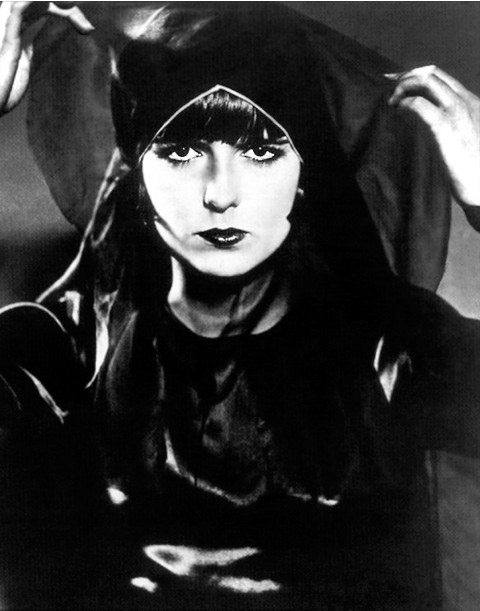
Louise Brooks in Pandora’s Box (1929)
Pandora’s Box (1929)
Another modern woman, and one of the most famous films of the silent era. Louise Brooks is truly iconic as the liberated, amoral Lulu breaking hearts in swinging Weimar Germany. Erotic, witty and ultimately tragic, Pandora’s Box is a classic that rewards repeated viewing and while coolly received at the time, has subsequently made an international star or its reckless leading lady – it now stands as the definitive portrait of a decadent society. 10 November 2012, 4pm
L’Argent (1928)
When Marcel Herbier announced his intention to adapt Zola’s L’Argent but to place it in the contemporary setting of the 1920s Paris stockmarket, many were horrified that he would take an acclaimed historical novel about ruthlessly greedy, over-reaching bankers out of its context. But Herbier’s passion, “to film at any cost, even (what a paradox) at great cost, a fierce denunciation of money”, proved as pertinent in pre-crash Europe as it does now, in the fallout of the global financial crisis. L’Argent is not just social commentary, it’s an ambitiously innovative film, a masterpiece of poetic impressionism. 15 December 2012, 4pm
Charlie Chaplin in The Circus (1928)
You don’t have to be a member of the club, or even of a trade union, to turn up and receive a warm welcome – and you will find the venue at 33 Acton High Street, London W3 6ND. It’s about five minutes walk from Acton Central train station, and on plenty of bus routes.
Charlie Chaplin and Paulette Goddard in Modern Times
This is a guest post by Ayşe Behçet for Silent London.
Welcome to another edition of Charlie’s London! For this segment and the next I’m going to look at some of the women in Chaplin’s life, showing how influential, important and ultimately empowering some of these women’s roles really were.
A lot has been written about Chaplin’s private life; he was a dashing and charismatic individual whose appeal extended beyond stage and screen. Recently I was talking to a fellow Chaplin fan and friend in Bologna. We both agreed that there was something so beautiful about Charlie, it was no surprise that his private life become front-page news, whether the stories were true or not. Putting the gossip aside, for me the women who shaped, moulded and even changed Chaplin were his mother Hannah, Mabel Normand, Edna Purviance and of course Oona O’Neill.
This subject will often be debated, with some enthusiasts and historians adding Hetty Kelly, Charlie’s first love, and even Paulette Goddard, his third wife and star of Modern Times and The Great Dictator, to that list. I hope with these two blogs I will explain why I have chosen this group. In this first instalment I will talk about Hannah Chaplin and Mabel Normand.
Hannah Chaplin
Hannah Hill, Chaplin’s mother, was arguably the most influential woman in his life. Her struggles in order to give Chaplin a decent upbringing, only to suffer such terrible mental health problems, no doubt haunted him for the rest of his days. I have spoken of Hannah before, and I am quite fond of her as a historical character, not only because she is the mother of my hero, but because I feel she is incredibly interesting. Historians have labelled Hannah as everything from a woman of ill repute to an undiscovered music hall genius whose renditions of the era’s classics would ignite her son’s thirst for the art.
The “fallen woman” analysis comes very much from psychologist Dr Stephen Weissman whose book Chaplin: A Life paints Hannah in a very unflattering light. His depiction of her affair with stage star Leo Dryden (the union that would produce Chaplin’s brother Wheeler) and his suggestion that syphilis was the cause of her madness (including references to her working as a prostitute) are seen as very controversial by other Chaplin enthusiasts and historians. David Robinson is quite rightly kinder to Hannah, noting the confirmed ancestral link to mental health dificulties within the Hill women as the roots of her tragic downfall, while also highlighting her faults such as her affair.
This is a guest post by Ayşe Behçet for Silent London.
Welcome back for another edition of Charlie’s London. This week I am going to be talking about my debut appearance on the Silent London Podcast, as well as my recent trip to the thoroughly mindblowing Il Cinema Ritrovato festival in Bologna, Italy
Being a Chaplin fan you are never short of on-screen comedy capers to keep you entertained, but when someone tells you you can visit the Charlie Chaplin Archive in Bologna, Italy should you be in the area, well you don’t really have to think twice. My partner Kieran and I took a 6am flight to Bologna so that I could visit the archive, but also so we could enjoy the Il Cinema Ritrovato festival too.
At the Cineteca in Bologna we registered for the archive and the festival. All around us everyone complained about the heat, but being half Turkish I didn’t really mind. No sooner had we sat down for a coffee, my phone began to ping, it was Jenny, a fellow festival-goer who had not only made the journey to Bologna but was also staying in the same hotel as us. Pretty soon we were all together, along with Mark, another friend and great supporter of Bristol Silents looking over the festival plan.
Ayse and Charlie
Initially I began to look over the schedule from Wednesday to Friday, because I was due to be in the archives Monday and Tuesday, but this turned out this was a pointless exercise. In the end, I was in the archive until Friday morning and in total saw only five films at the festival. The film that left the biggest impression on me was the new restoration of The Life and Death of Colonel Blimp. Mark had told me many times before that it was a film I would enjoy, not only because I have a soft spot for Technicolor but because I have spent a lot of time researching the first and second world wars. He wasn’t wrong! It was a feast of restored beauty, history and irony.
My biggest adventure came on Monday when I finally got to visit the Chaplin archives. Everything has been digitised to make viewing incredibly easy. The staff are so helpful and friendly, even with the busy festival under way in the grounds. Before I knew it I was engrossed, flicking through pages and pages of useful and exciting documents all relevant to a massive piece of research I am undertaking. Kate Guyonvarch, Kevin Brownlow and of course David Robinson all were there to give me a helping hand: their support was priceless. Imagine, as I have done, having read someone’s work since you were 11 years old, only to find them standing behind you in an archive and clarifying a sentence in one of their books that you want to quote in your research! That what David Robinson did, and he refreshed my memory on something I had a mental block on. After many cups of lovely Italian coffee and long chats I had more than 40 pages to take back to England: the tip of the iceberg had been scratched.
Bologna is a long way from South London! Charlie’s London had very much gone continental. Here is where my biggest conundrum lay – you can’t just take a bus to these archives. I knew I had so much I wanted to look at, but I was meant to be at a film festival, what was a girl to do? Luckily enough I have a very supportive partner who smiled and told me to book more time in the archives. So, what started as two days ended up being the whole week, and it was worth it! I discovered so much more about my hero.
Another podcast, and this time it’s all about the laughs in our comedy special. I’m joined in the studio by Phil Concannon of Philonfilm.net, Ayse Behçet, who writes the Charlie’s London series for Silent London, and podcast expert Pete Baran. Plus Chris Edwards of the wonderful Silent Volume blog also contributes a few well-chosen words on his favourite silent film: Exit Smiling, starring Beatrice Lillie.
We’ll be talking about our favourite silent comedies, and yours, and perhaps touching on a few films and film-makers you won’t expect. Plus we’ll be reviewing some recent silent film screenings, Ayse will be reporting back from the Cinema Ritrovato festival in Bologna and we’ll be taking a look at the calendar too.
There’s also a lot of business about trousers. And possibly the odd 90-year-old spoiler.
‘Humour and courage saved Lambeth’ … Charlie Chaplin
This is a guest post by Ayşe Behçet for Silent London.
Where can I start? First I want to talk to you about an exciting Charlie’s London adventure I am having in the next two weeks! From the 23rd to 30th June 2012 Il Cinema Ritrovato festival in Bologna, Italy will be showing some amazing silent film gems including a night of Chaplin’s Mutual films accompanied by new scores by Neil Brand, written especially for the festival. And I will be there! I squealed like a child after too much sweet consumption when I heard this, I can assure you.
For me this trip will be a very personal and important journey, one that I hope will enrich my knowledge of Chaplin. I will have the fantastic opportunity of visiting the Chaplin Archives there, a first for me and a very daunting and happy prospect too. Hopefully while I am there I can find some items of interest for all you lovely Charlie’s London readers.
In today’s instalment I want to talk to you about one of Charlie’s homes that I missed out a few episodes back and promised I would return to: No 3 Pownall Terrace, Kennington Road. Why is this house so important to the Chaplin story? It seems to be the one mentioned the most in all his works and definitely the one that seems to have had the most impact on him. Chaplin recounts in My Autobiography walking the “rickety stairs” to the rooms he shared with his mother and Sydney; how the rooms always smelt of slop and wet clothes; how from the windows he could see the glamour of the wealthy music hall acts, their finery and jewels. Their room was less than 12ft square and if poor Hannah’s mental health was failing then the room would suffer too, becoming cluttered with messy cups and plates. Often Chaplin would come home from school, empty the slop bucket and run along to his friend Wally, a son of a friend of his mother from her theatrical days. Wally seems to have made a happy playmate for Charlie while Sydney was away at sea, a period that seems to have added to his mother’s worries.
This is a guest post for Silent London by Ayşe Behçet
Hi everyone, again thank you for taking time out to read this instalment of Charlie’s London. This segment is going to look at the importance of family with the backdrop of the Lambeth Workhouse. Events that transpired behind the walls of that Victorian institution would change Charlie’s life; but it also holds some personal significance for me too.
I thought long and hard about how to start this piece. The answer to my prayers came in the form of my three-year-old godson Jayden, whose mannerisms and speech are so precociously adult-like you can imagine him starring in The Kid. Jayden is my cousin Em’s little boy, I was there when he was born and have never lived more than three doors away from his mother my entire life. Jay waltzed into my bedroom one afternoon after playing in our joint garden (Em’s parents live next door to us) and pointed at my wall.
“What’s that, Ayşe?” He was referring my two framed Chaplin film posters, one of The Kid and one of The Gold Rush. When I explained to him that they were posters from films made by a very funny man called Charlie Chaplin, Jayden was intrigued.
“Can we watch him?” Well! I don’t need an excuse, so I reached for one of my DVDs.
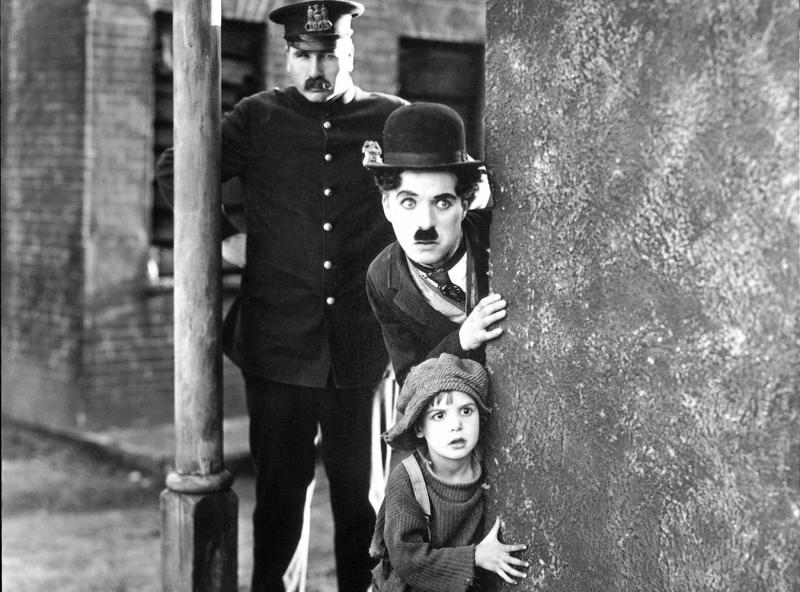
We snuggled up on the sofa to watch The Kid (I choose this one because I felt Jay could really identify with little Jackie Coogan, both cheeky and comical). I was right; Jayden loved it! He giggled and squealed at every comedy moment, until the scene when the Kid is ripped away from the Tramp. It disturbed him, you could see in his little face the terror and torment; the fear that someone could do that to him, and he would no longer see his mother and father. I have to confess, Coogan’s lips moving to the words “I want my daddy” always causes a lump in my throat. Of course, when the Tramp rescues the boy from the moving orphanage van and holds him the way only a father can, I assured Jay that all little boys have their parents in the end, if they are good little boys.
After he had gone home I sat thinking about the film. Jayden’s reaction had hit a nerve with me that I needed to explore.
Hannah Chaplin
Chaplin never hid the fact that he cared about human suffering, and it has been suggested the world over that his own poor upbringing left him with emotional scars. If my godson at three felt moved and distressed at he sight of this in a film, what must a young Chaplin have felt? His whole world, mother and Syd ripped apart from him by a system that was designed to protect but ultimately hindered the welfare of the poorer classes and their children. Initially, a frightened seven-year-old Chaplin, his mother Hannah and brother Sydney went of their own accord to the Lambeth workhouse, once known as the Newington Workhouse because of its location (just off Newington Butts in Lambeth). This was largely because of their mother, who struggled to cope with the financial difficulties the family had to endure. Once the family were admitted their clothes were removed and their heads were shaved; can you imagine the humiliation? I have to be honest: I think Hannah’s decision to admit her sons rather than show defeat actually showed love and strength. She admitted to herself they deserved better, what more can a mother who loves her sons do?
Hannah Chaplin’s breakdown and the family’s arrival at Lambeth Workhouse happened in 1896. By June that same year the two boys were removed from their mother, which caused Chaplin much distress, and sent to Central London District School at Hanwell in west London. The journey seemed like a holiday to the young brothers, who travelled to their new home by horse-drawn bakery van. However, when they arrived, they spent time in an “approbation” ward where Chaplin was separated from his beloved brother and placed in the infants section of the school. Chaplin remembered in his Autobiography many years later how the older girls would bathe the younger boys, recounting in particular the cold and wet all-over flannel wash he received from a fourteen-year-old.
If you have read these blogs before you will know I’ve mentioned my great-grandmother Nanny Harris before. Her daughter Esther, my nan’s sister whom I always lovingly referred to as Auntie Etty, was born in a Lambeth workhouse. My nan’s brother, my uncle Fred, was also born in one too. Family story leads us to believe my great-grandmother literally sat upon the steps of the workhouse each time her waters broke and told them to take her in: “Or I am going to have this bleeding baby in the street.”
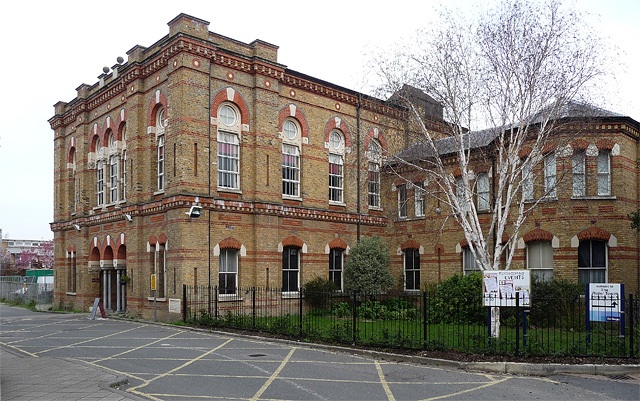
The Cinema Museum in south London (formerly Lambeth Workhouse)
What’s more, a family mystery could tie us directly to Chaplin – and we didn’t realise it for many years.
There is a famous picture of Chaplin, huddled against a group of small boys, his seven-year-old face looking at the camera with the same cheeky grin that would later make him a worldwide star. Two rows back is a small boy, his jawline is strong and his face familiar, this boy we believe is the brother of my great-grandmother, who, if records are to be believed was in the Lambeth Workhouse the same time as Chaplin. Unfortunately no other photo of him exists as an adult, no photos of my great-grandmother survive either, so it really is a family mystery that will never be solved. The family would again later return to this building but thankfully in better circumstances.
In the 1960s my mother volunteered at the building when it was still a hospital and institution within the borough, she probably stood in the chapel area, famously linked to the Chaplin family, and never realised the connection that her own daughter would later write about. Now, of course, the workhouse has become the Cinema Museum. Recently it was my turn to return there, to meet David Robinson, a hero I have been reading from the age of 11, for a fantastic presentation on Chaplin, my ultimate hero – I came full circle!
This is a guest post by Ayşe Behçet for Silent London.
Welcome back for the next instalment of Charlie’s London. In this segment I am looking at the Lambeth Workhouse, an institution that Chaplin spent some time as a youngster. But unlike in the previous chapters of this blog, which focus on either my connections with Charlie or the places our paths have crossed, I want to look at a fantastic event that really brought home to me the importance of keeping his memory alive.
I have always sworn by the events calendar Silent London offers its readers, and three months ago was no exception. While browsing, I came across a presentation by the much loved and highly accredited film expert and Chaplin scholar David Robinson. Robinson on Robinson, as it was called, promised to be a fascinating insight into a career spanning many years, with many stories. The event, on Saturday night, did not disappoint, with brilliant anecdotes and wonderful tales of the Hollywood elite, and Robinson’s own career as the backdrop. For me this experience meant so much more. The event was held at the Cinema Museum, which holds masses of film memorabilia and regularly hosts film screenings and lectures – and the Cinema Museum is housed in the building that was once the Lambeth Workhouse.
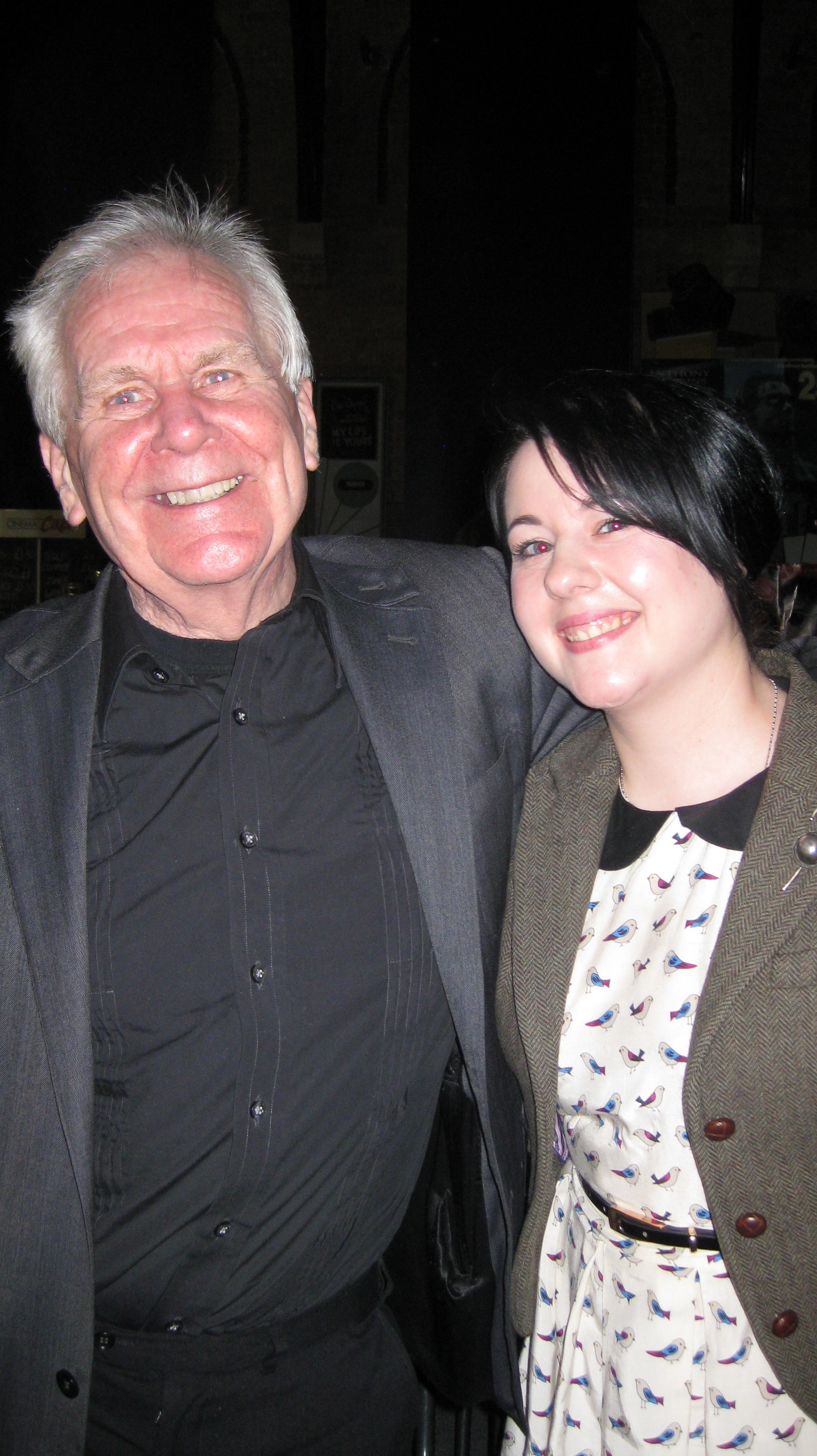
David Robinson with Ayşe Behçet
For me, who had grown up in South London, loving Chaplin, knowing this very building was the old Lambeth Workhouse and of course reading Robinson’s biography of Chaplin since I was 11 years old, this event was really the final piece in the jigsaw. I was 10 when I first saw the biopic Chaplin starring Robert Downey Jnr. I had wanted to read more about Chaplin’s life, and so ventured to the local library with my nan, where I uncovered Robinson’s book. I can remember sitting on a stool in the library stool while my nan browsed, my elbows rested on the table while my hands were placed firmly on my jaw line, head transfixed in the book. Everyone always tells me they know when my concentration level is at its highest: I swing my legs like a crazy person or bite my bottom lip as I read. Well, according to my nan this is exactly what I did.
I borrowed the book for two weeks and read the whole thing. I was hooked. For my birthday I asked for my own copy – Mum couldn’t quite understand why, especially as I had not long finished the library copy. I just knew, even at that age that I would want to read it over and over again. Now, 18 years later, it’s still sitting there on my shelf. I have used it for references, quotes, even to solve arguments – it has always been my true companion on my Chaplin journey. Of course, I understand the book very better now as a grown woman than I did as a child, with life comes greater understanding. Yet I will never forget asking my nan what certain words meant and if she had heard of the actors and actresses mentioned in the books. Did she remember any of the events and of course what was it like to actually see a Chaplin film in the cinema? Her stories always fascinated me!
The first time I met David Robinson was at the 2012 Slapstick Festival in Bristol. It was January and traditionally cold and miserable, but the festival cheered up every dreary day. Robinson gave two presentations that weekend, one on Chaplin’s life and one showing shorts and clips from some of his most memorable films. I watched in fascination at the first event, which I remember being 9am on the Saturday morning. It was everything I loved and adored about Chaplin, his London and how it affected him; his controversies and how he reacted to them. Well, after nearly 20 years and quite a bit of courage I finally got to talk to Robinson, and if I ever felt his book was an inspiration I can promise anyone who reads this that the man himself it so much more. Through him I have met some amazing and interesting people: I have continued a journey I started as a small child and I have felt very privileged in many ways. I wouldn’t have half the material I have in my blog without him, that’s for sure.
So this blog post has been rather sentimental, not that the others have really been anything else! And of course I have quoted Robinson and mentioned him before. But it is no exaggeration that you cannot possibly research Chaplin without having his biography constantly on hand. For me, being sat in the very room where Charlie and Sydney Chaplin spent such hard times, listening to David and remembering my roots, I truly felt I had come home. London never leaves you. Getting off the tube at the Elephant and walking down towards Renfrew Road; seeing the Imperial War Museum in the background; remembering the stories I grew up on – all these things remind me of the person I really am. Your home and your birth make up a large part of who you are. My nan always taught me that, and just as Robinson said in his reminiscence that Chaplin had always been in his life because of his father’s love of his films, so has he (and Robinson) very much always been in mine. I truly hope that this will always continue!
Thank you so much for taking time to read this blog spot, normal Chaplinesque service will be resumed in two weeks’ time when we will venture back to the workhouse once more to give some context to our hero and his life in London, as well as its use now as a fantastic gem of a museum.
This is a guest post by Ayşe Behçet for Silent London.
Thanks for returning for another instalment of Charlie’s London! This piece is going to look at the pubs in Chaplin’s life. It has always been my intention to show Chaplin’s emotional side, and also how there we can still see the South London of his youth around us. Chaplin appears not to have been much of a drinker, but two significant incidents in his life were connected to public houses that you can visit in London today.
First, we will look at the Three Stags just off the Kennington Road, opposite the fantastic Imperial War Museum. Then we will look at The Coal Hole on the Strand, a beautiful Victorian building.
“Chaplin’s corner”
As an undergraduate student who specialised in the Great War I would often find myself in the Imperial War Museum, studying its vast collection of military artifacts and hours of video footage. It was at this time I first discovered “Chaplin’s Corner”. Myself and three friends decided that, rather than hot chocolate and scones in the museum café we would cross the road to the Three Stags pub. The pub has that hint of Victorian decadence you imagine in the pages of Sir Arthur Conan Doyle’s Sherlock Holmes stories: dark, almost black interiors with perfectly preserved stained glass. Once we were seated inside, I looked over to my right and a sign caught my eye. It said “Chaplin’s Corner”. As I ventured over I could see a beautiful picture of Chaplin and Jackie Coogan from the 1921 movie The Kid and an explanation for the naming of this little area.
When Charlie was just 10 years old he happened to wander past the pub and for no reason poke his head through the open door. What he saw would go on to be an important moment in his young life. In his Autobiography he wrote:
The Three Stags in the Kennington Road was not a place my Father frequented, yet as I passed it one evening an urge prompted me to peek inside and there he was, sitting in the corner! I was about to leave, but his face lit up and he beckoned me to him. I was surprised at such a welcome, for he was never demonstrative. He looked very ill; his eyes were sunken, and his body had swollen to an enormous size. He rested one hand, Napoleon-like, in his waistcoat as if to ease his difficult breathing. That evening he was most solicitous, inquiring after Mother and Sydney, and before I left took me in his arms and for the first time kissed me. That was the last time I saw him alive. (Charlie Chaplin, My Autobiography, quote reprinted courtesy of the archives of Roy Export Company Establishment)
I then remembered reading this same passage and more in Chaplin’s My Autobiography, so that night I took my well-read and very battered copy from my bookshelf once more. If you have not read this book I really do recommend it. This book has often come under scrutiny from critics for being “overly Dickensian”. I cannot disagree with that enough! What makes this an interesting read is more looking at the man behind the words, why does he mention certain things and not others? Why does he speak of some quite obscure people and now well-known individuals such as Buster Keaton whom we know he had a good friendship with?
The Coal Hole on the Strand
It was then that I stumbled across another familiar place, a name I had seen before and could not place, The Coal Hole in the Strand. Well, if I felt the Three Stags screamed Victorian thriller then this pub most definitely howled its heritage from the rooftops. The beautiful glowing red sign above the door reminds you of gas lamps and empty gin beakers. Unlike the Three Stags, which no doubt held sad memories for Chaplin, the Coal Hole was the setting for a very touching moment in which he realised his brother Syd’s true affections for him. Chaplin wrote in his Autobiography:
I had been in the Provinces for six months. Meanwhile Sydney had had little success in getting a job in a theatre, so he was obliged to descend from his Thespian ambition and apply for a job as a bartender at The Coal Hole in the Strand. Out of one hundred and fifty applicants he got the job. But he had fallen ignominiously from his own graces as it were.
He wrote to me regularly and kept me posted of Mother, but I seldom answered his letters; for one reason, I could not spell very well. One letter touched me deeply and drew me very close to him; he reproached me for not answering his letter and recalled the misery we had endured together which should unite us even closer. “Since Mother’s illness,” wrote Sydney, “all we have in the world is each other. Do you must write regularly and let me know I have a brother.” His letter was so moving I replied immediately. Now I saw Sydney in another light. His letter cemented a brotherly love that has lasted throughout my life. (Charlie Chaplin, My Autobiography, quote reprinted courtesy of the archives of Roy Export Company Establishment)
It has always been a belief of mine that Syd gets overlooked when we talk about Chaplin. Well thanks to Lisa K Stein and her truly wonderful biography of Syd Chaplin we can now all see the full story. This book is another must-read, alongside David Robinson’s definitive biography of Chaplin, which I have also mentioned before in my little blog. If you can find My Trip Abroad by Chaplin himself, first published in 1922, I also highly recommend that as another look at this great Londoner’s feelings about his home town.
People often ask me why Chaplin never came back to England to live. Of course, I can’t answer that. Only the great man himself could explain and unfortunately we will never have his answer. That is also only one of the questions I get asked. Half the people I talk to about Chaplin don’t even realise he was English, which to me is extraordinary! The only thing I can say is that in my humble opinion Chaplin didn’t need to make constant pilgrimages to the place of his birth, it never really left him.
This is a guest post by Ayşe Behçet for Silent London.
Thanks again for returning to Charlie’s London with me. First, I want to wish Sir Charles Spencer Chaplin a very happy 123rd birthday! It really is a coincidence that my latest blogpost falls on the anniversary of his birthday, but hopefully it’s a very good blessing.
Today I’m going to be looking at some of the houses in and around Lambeth that Chaplin lived in, and some of those in the same area that my family have called home, too. Unfortunately I can’t say I have ever lived in a house that he graced, but who knows what may happen in the future?
Family was very important to Chaplin, just as it is to me. He entrusted much of his business to Sydney Chaplin, his half-brother who acted wisely on Charlie’s behalf. He was also incredibly close to his mother Hannah, whom he idolised. Contrary to popular belief, he even had a relationship with his father – when he was around. Chaplin spoke fondly of his first meeting with his father during that period in his autobiography.
“The prospect of living with Father was exciting. I had seen him only twice in my life, on stage, and once passing a house in Kennington Road, as he was coming down the path with a lady. I had paused and watched him, knowing instinctively he was my father. He beckoned me to him and asked my name. Sensing the drama of the situation, I had feigned innocence and said ‘Charlie Chaplin’. Then he glanced knowingly at the lady, felt his pocket and gave me half a crown, and without further ado I ran straight home and told Mother that I had met my father.” (Charlie Chaplin, My Autobiography, quote reprinted courtesy of the archives of Roy Export Company Establishment)
Family continued to be important to Chaplin throughout his life, and as you may have realised, I too am very devoted to my own family. The fond memories I have of my own grandmother will never leave me. This is why this personal journey, walking the streets of South London reminiscing, has been a wonderful and emotional experience for me. My grandmother Florence Boakes died on 12 May 1997, and from that time on, it became very painful for me to watch the great silent films, such as Chaplin’s, that we had enjoyed together. If the films were on television or I came across one of our old videos, it was too painful to watch without her there. I had bought her a Chaplin tile on a stand when I went to Hastings for a school trip, and that had to be kept out of sight too.
Ayşe and Kieran
So what brought me back to Chaplin? In short, my husband-to-be Kieran, and our first date almost 12 years later. We had agreed to meet in a Starbucks in Charing Cross and he was early, which is nothing new. When I arrived I was nervous as we had only met a handful of times before. As he was reading a book, that the topic of conversation we used to break the ice.
“It’s about Buster Keaton, I’m a big silent film fan,” he confessed. I smiled as he showed me the front cover and I handed it back to him.
“I grew up watching Chaplin, I was a Chaplin fan,” I answered. He smiled back.
“Silent films never leave you, you’re still a Chaplin fan.”
Of course, he was right. Our next date involved a bottle of wine, some very good food and The Kid, which at first I was worried about watching. For the first time in years I watched the Tramp and I smiled – then I realised my love affair with Chaplin was very much back on. In January 2011 I found myself watching The Gold Rush with Carl Davis conducting the London Philharmonia orchestra, a wonderful Christmas present from Kieran. And this year he took me to the Slapstick festival – anyone who knows me knows how that has changed my life!
Mum was really happy I’d found Chaplin again, so when I decided to start writing this blog the three of us spent a day wandering around, taking pictures of all the sights involved.
We walked from Waterloo towards the Imperial War Museum and down Lambeth Road, cutting down George Road to find West Square. Children were playing in a communal garden; it really is the most beautiful little piece of London. Mum told me my great uncle Fred had a friend who lived in West Square and they would also play around there as children. In his autobiography, Chaplin remembers the family’s time in West Square as being “moderately comfortable; we lived in three tastefully furnished rooms”. The square itself was built in 1791 and you can see it was considered a plush place to live.
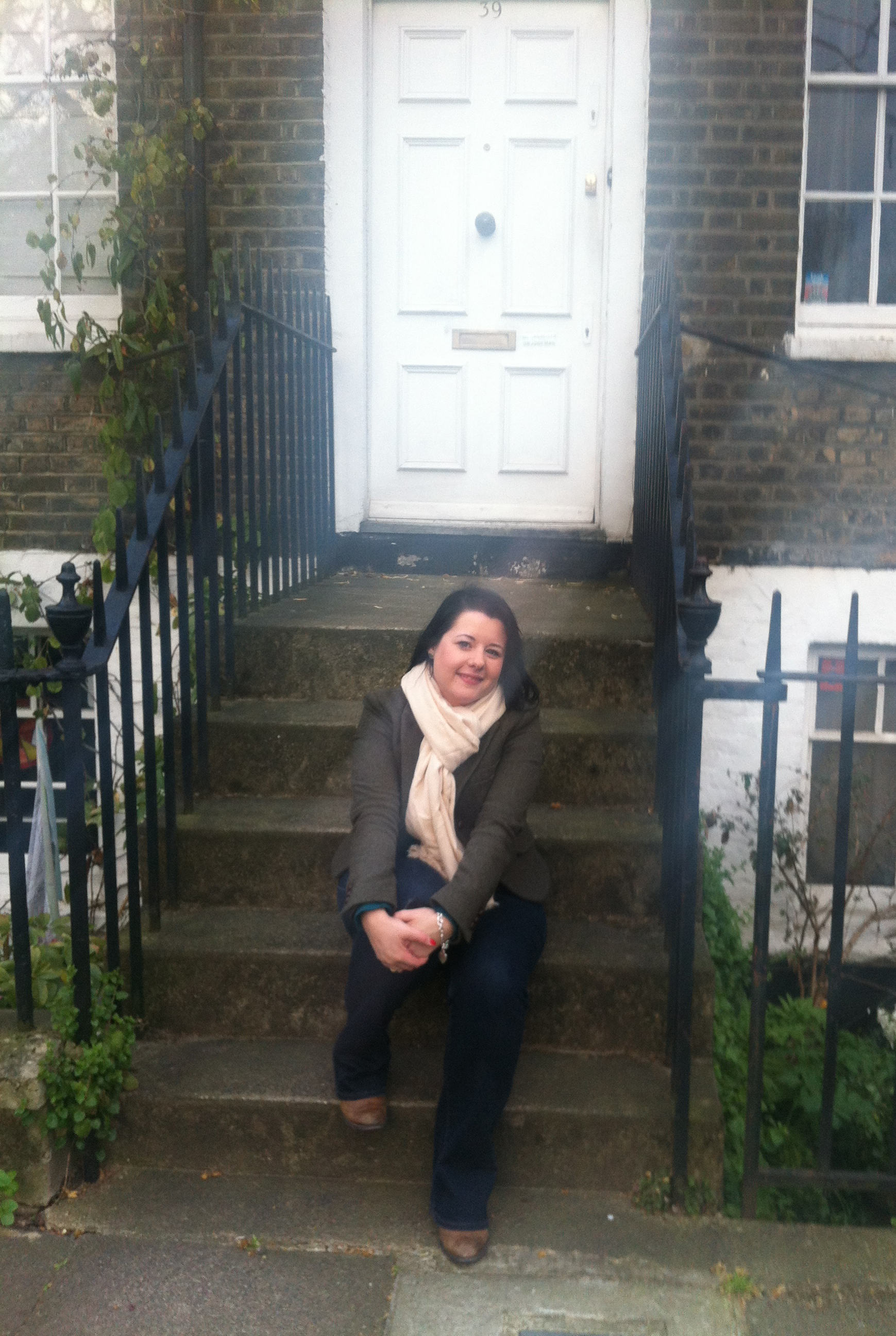
Ayşe at 39 West Square, where the Chaplins had ‘three tastefully furnished rooms’
Coming back towards the Imperial War Museum, cutting down Kennington Road, we found ourselves at 287 Kennington Road. This was the home Charlie and Syd shared with their father in 1898. Their mother Hannah was unable to support the family and was institutionalised in Cane Hill Asylum, so Charles Chaplin Senior had care of the two boys instead, along with his very reluctant mistress Louise. What a relief it must have been when their mother finally sent for them. Outside 287 Kennington Road now is a plaque, privately paid for and dedicated to Charlie, reminding passersby that he once lived here. Apparently, the door number is in itself under dispute and even the plaque unfortunately is incorrect. It says that Charlie died in 1978 when he actually died on Christmas Day 1977.
We decided to head back towards the Walworth Road. Getting off the tube at Elephant and Castle we walked to the Walworth Road and of course we couldn’t resist stopping for some pie and mash. I had double of everything and claimed it all as research! Crossing the road we headed down towards Methley Street, another residence for the young Chaplin. No 39 Methley Street was Chaplin’s home between 1898 and 1899. It might look nice now but back then it was a desperate residence with the surrounding area consisting of pickle factories and slaughterhouses.
Looking around this area it is easy to see where Chaplin’s inspirations for films such as The Kid actually came from. To this day, Lambeth is littered with old Victorian streets and houses only recently made fashionable and picturesque. There is a plaque on Methley Street dedicated to Charlie, this time with correct dates, also acknowledging that he was a Water Rat. A Water Rat was a name given to a member of an acting guild who, if in times of hardship could go to the Grand Order of the Water Rats and seek refuge and help. Stan Laurel was a Water Rat too. It is when they were living at Methley Street Hannah began to sew again and for a while they seem to have been quite happy, until her health took a turn for the worse again and she had to send her sewing machine and various garments to the pawnshop to make the rent. Without her sewing machine she could not work, which plunged the little family into further chaos. Charlie would later use a pawnbroker as the backdrop of one of his 1916 films The Pawnshop.
We headed home at this point, and yes, you’ll notice that I haven’t covered the famous Pownall Terrace, the most famous of Charlie’s homes in Lambeth. There is a reason for this, and all will be revealed in a future instalment!
Thanks for reading everyone, and I hope you’ll join me again for next instalment of Charlie’s London in two weeks’ time.














 Silent London