Just a short note to share some information about a conference I am looking forward to, so that you can also save the dates, and so that I can pass on the call for papers.
The twelfth Women and the Silent Screen conference will take place in Brussels and Antwerp next June. It will be hosted by Université libre de Bruxelles, University of Antwerp, and Cinematek, and will take place 11-14 June 2025. As Anke Brouwers, one of the organisers, Anke Brouwers, pointed out at the Women and Film History International meeting in Pordenone last week, just think of the waffles! And the chocolate, the beer, the frites…
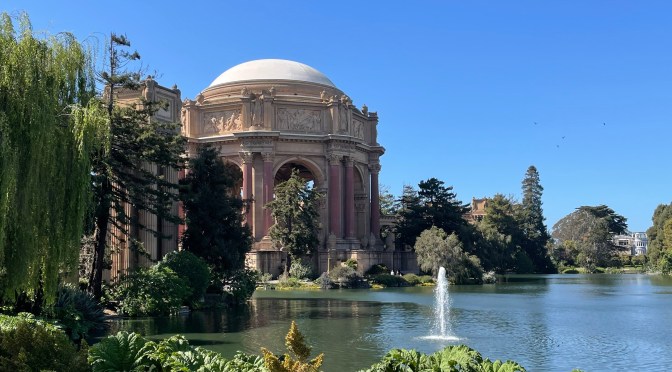
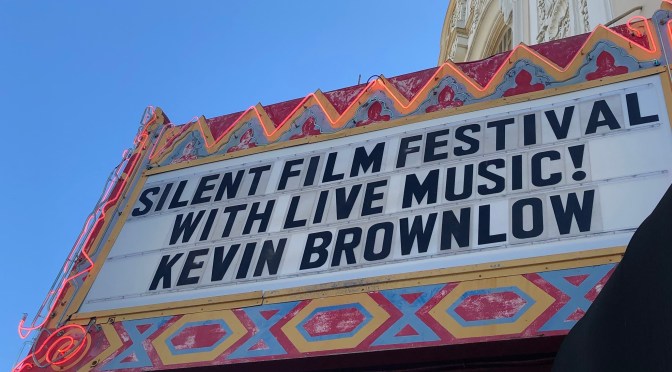
I was looking for Yoda when I bumped into Eadweard Muybridge. These are the circles film history moves in. This year’s San Francisco Silent Film Festival, the 27th, took place in the grandeur of the theatre of the Palace of Fine Arts, an elegant neo-classical folly of gigantic proportions, built as a temporary attraction for the 1915 Panama-Pacific Exposition and then rebuilt in more permanent form 50 years later. Here, time is a pretzel. Like the architecture, cinema becomes both ancient and the modern: live performances of century-old works.
Before the films began, I ventured just a few yards from the Palace for a guided tour of the LucasFilm building, home of some of the film industry’s most cutting-edge special effects and beloved animatronic characters. Case in point: our meeting point was at the Yoda Fountain, just in front of the of the offices, a thrilling rendez-vous for anyone’s inner child. That’s when my jet lag and a tendency to meander led me to take a wrong turn into the 19th century, and the statue of Muybridge, the photography pioneer who discovered the secrets of motion in a series of still frames – cinema in its simplest form. Born in Kingston, Surrey, Muybridge began his photography career in San Francisco, and the city is justifiably proud of his work and its legacy. Somehow, my sense of direction led me right back where I started from.
On a remote stretch of American railroad, a hard-working signal operator and his family are terrorised by a snarling villain. While his pretty young wife defends her virtue against the intruder’s threats, our hero engages in a thrilling race to the rescue to save a runaway train. It could easily be the plot of one of D.W. Griffith’s early short melodramas, but this is Clarence Brown’s The Signal Tower, a fully fledged feature film from 1924, adapted from a short story by Wadsworth Camp.
Lots to enjoy at the BFI Film on Film festival this summer (8-10 June) but now the lineup is out we can confirm that there are silents to be savoured among the banquet. British silents in fact: The First Born (Miles Mander, 1928), and two Manning Haynes films: Sam’s Boy (1922) and The Boatswain’s Mate (1924). All three films with be screened on vintage prints with live piano accompaniment, naturally. And I am also intrigued by a programme of dialogue-free “visual documentaries” dating from 1947-71 with live musical accompaniment.
Remember I told you about the fabulous resource that is WeimarCinema.org? This comprehensive website is also a journal, and the Spring 2023 edition has just been published. Contents include a dossier by Oksana Bulgakova on the difficult reception of Eisenstein’s Battleship Potemkin in Berlin in 1926, as well as essays by Tom Gunning, So Mayer, Tatjana Hramova, Leonard Quaresima, Michael Cowan and Anton Kaes. Oh, and, um, me on Pabst. I especially enjoyed reading Mayer on Queer Weimar Cinema Across Borders, ahead of tomorrow’s Gender Rebels event in Bristol.
I don’t want you to get the idea I am wanted by the authorities, but I tend to move around a lot. So for the second year in a row, I was only in town for the first half of Hippfest – or the early, funny stuff, as I like to think of it.
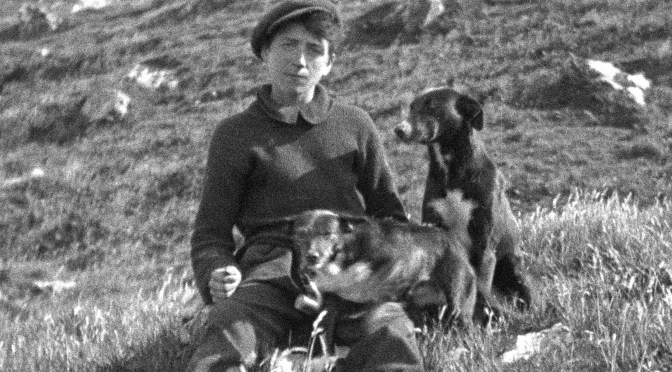
I’ve said before that the programming at Hippfest, now in its 13th year, is impressively eclectic. I’d say that with extra emphasis during the midweek portion of the event. Actualities, fantasy, action, adventure, comedy, and a sheepdog smoking a pipe. What is not to love?
Three little words of Italian you need to learn if you attend Il Cinema Ritrovato: Cento Anni Fa. This must-see strand of the festival, curated by Bologna’s silent cinema supremos Mariann Lewinsky and Karl Wratschko, dials back the programming clock by a century. The name means simply: a hundred years ago.
So it was that this week, in between blasts of restorative Italian sunshine and shots of iced coffee, I spent a week in the 1922 cinematic universe: a world of gorgeous location photography, penetrating psychodrama, impeccable slapstick and to generalise, a healthy number of female-led films (including a handful of nasty women). It was clearly a good year for the movies, so much so that even though I skipped some of the Cento Anni Fa screenings as they were already familiar to me (or outside my days at the festival), that left plenty of room to explore some less well-trod pathways through the year, one massive restoration project and at least one cult classic that I had been saving up for a big-screen viewing. Here are some of those highlights.
True confession: in 2019, I fell in love with some flipbooks. It was at the Castro Theatre in San Francisco, where so many good things happen, and the flipbooks in question were animated and projected on the big screen. I saw them many hundreds of times their real size, but perhaps that reflected their significance.
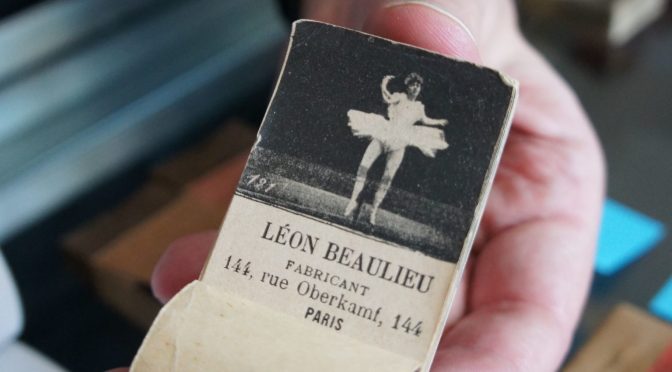
“My favorite restoration of the festival didn’t involve film at all, but some miniature ephemera, which were perhaps imperfect as moving images, but seductively tactile, and fragile, as artifacts. Festival president and film restorer Robert Byrne and French scholar Thierry Lecointe have been studying a collection of paper-and-card flip books from the late 1890s, produced by a man named Léon Beaulieu. Containing just a few brief seconds from a film, these are the unforeseen missing link between early cinema and modern GIFs. It seems that Parisian Beaulieu had a checkered life, finding himself frequently in trouble with the law, and these flip books may well be bootlegs of sorts, reproducing scenes from early films from the Gaumont and Edison companies, and some by Georges Méliès. Some of the films captured here in a few brief images are lost in any other form, and the process of identifying them all involved meticulous study of background décor and objects.”
The digitised, animated flipbooks I was watching were one outcome of an international film-history detective story. I 2013 Paris-based film scholar Thierry Lecointe began investigating a flipbook attributed to one Léon Beaulieu that might, just possibly, have been made from a few frames of a long-thought-lost Georges Méliès film…
The first rule of Blog Club is that you don’t talk about Blog Club. The second rule of Blog Club is that you don’t talk about Blog Club because Blog Club doesn’t exist. But if there were more rules, and indeed a club in the first place, round about number five I reckon would be this: “Don’t write a blogpost apologising for having not posted in a while.” Why? Because people have more important things to think about? Probably. But also because in this case it’s not hard to guess why I haven’t been Silent Londoning so much. We’re all in the same boat. But only I am in blog club. Because I made it up. And frankly even I haven’t paid my subs in a while.
This post, however, brings you NEWS. So let’s begin.
Japanese silents to come. The BFI’s new blockbuster season for 2020 was to be Japan: Over 100 Years of Japanese Cinema. And it still is. Instead of launching the season in cinemas and then transferring it over to the BFI Player, and Blu-rays etc, the BFI is flipping the model, shifting the paradigm and generally “doing a 2020”. So the season has begun in the digital realm, and while we are promised benshi screenings in the future (yay!), for now there is a feast of Japanese cinema to enjoy on the BFI Player, including one of Ozu’s best, the silent film I Was Born, But … (1932). To be fair, this one was already on there, but you need no excuse to watch it. It’s perfect. Treat yourself. And watch out for more to come. Also forthcoming are such archive treats., including gems from “the BFI National Archive’s significant collection of early films of Japan dating back to 1894, including travelogues, home movies and newsreels, offering audiences a rare chance to see how European and Japanese filmmakers captured life in Japan in the late 19th and early 20th centuries”. I’m intrigued!
Women Make Film. Next Monday sees the launch of Mark Cousins’s epic 14-hour documentary about female filmmakers, Women Make Film. It’s an alternative history of cinema, entirely peopled by brilliant, creative and often sadly forgotten women. If you’re a silent cinema fan (and just on a limb here, but I reckon you must be), this story may sound familiar, but Cousins and his researchers have gone deep, and there is plenty here that was new to me. Read Kate Muir’s great piece for the Guardian to get a flavour of what’s involved. Then sit back, stream and prepare to have your mind expanded. Refreshingly, it’s not chronological, so even silent film purists will find points of interest throughout: look out familiar names such as Germaine Dulac, Lois Weber, Alice Guy-Blaché, Paulette McDonagh and Olga Preobrazhenskaya. The whole thing is going up on the BFI Player in five blocks, starting on 18 May.
Silent cinema watch parties. They are everywhere. Ben Model’s Silent Comedy Watch Party has been enlivening Sunday afternoons (his time) and evenings (ours) for a few weeks now. And now the Kennington Bioscope has opened its YouTube channel and its first silent film and live music screening was a roaring success. Subscribe for more: their next screening is Wednesday at 7.30pm. The Netherlands Silent Film Festival event on Friday night was a blast too, making the most of the live-chat facility. Belgium’s Cinemathek is doing something on Thursday afternoons. Frankly I am astonished, heartened and tickled pink by the ingenuity, and the hard work that goes into these.
Cancellations and postponements. Not such happy news here. Sadly Hippfest has had to cancel its postponed October event, though San Francisco Silent Film Festival is still promising us a raincheck in November. Il Cinema Ritrovato says its festival is postponed (dates TBA) and Pordenone promises an announcement by the end of the month. Perhaps we have to come up with a snappy way to say it’s very sad, but we understand and we support the organisers in their new plans while appreciating how very difficult it is for them and everyone involved. Or just to say that, with proper pauses for breath, because we really mean it. Love to all our festival friends.
What have I been up to in lockdown? Lots of things, some of which I sadly can’t share with you yet, including a BIG EARLY FILM THING I can’t wait to share. But do sign up to Sight & Sound’s Weekly Film Bulletin, if you haven’t already. And the second edition of my Pandora’s Box BFI Film Classic comes out on 28 May, if the previous artwork had not persuaded you, perhaps. I have been on the radio a bit, recording from home, and this show was particularly good fun. You can find me on this box set talking about Jean Arthur too.
Silent London will always be free to all readers. If you enjoy checking in with the site, including reports from silent film festivals, features and reviews, please consider shouting me a coffee on my Ko-Fi page
Could there be a finer thought in a grey week such as this one than a burst of California sunshine? Maybe there’s one, the gilded interior of the Castro Theatre in the heart of San Francisco, which truly has to be seen to be believed.
What I’m driving at is the fact that Early Bird Passes for the San Francisco Silent Film Festival are on sale now, and it’s a very wonderful event indeed. If you’ve never been before, see below everything you need to know (that I know) about this welcoming, and rather glitzy, event in northern California.
Happy new decade Silent Londoners! Let’s kick off the Twenties with a party shall we? A Silent London Poll-Winners’ Party. You know the drill by now, these prizes go to the best of the past year in silent film, as voted for by YOU. With that said, I will starting handing out the gongs immediately
Best DVD/Blu-ray of 2019
This was a very popular winner – the Eureka/Masters of Cinema DVD/Blu release of the magnificent Der Golem was by far your favourite disc of the year. The package comprises a beautiful restoration of the movie, accompanied by a choice of great scores and a feast of insightful extras. An excellent choice. I reviewed this release in more detail in the January 2020 edition of Sight & Sound.
Honourable mention:Fragment of an Empire (Flicker Alley)
Best Theatrical Release of 2019
Go, Golem! The expressionist classic was your classic for the best theatrical release of the year, as this sumptuous restoration played several dates around the world. I saw it in NFT1 in the summer and I am not sure I have recovered yet.
Best Modern Silent of 2019
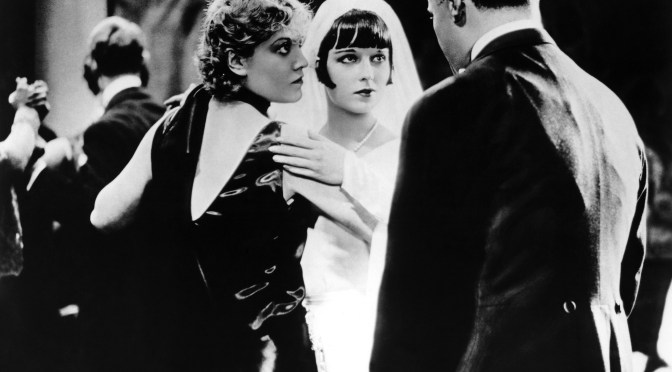
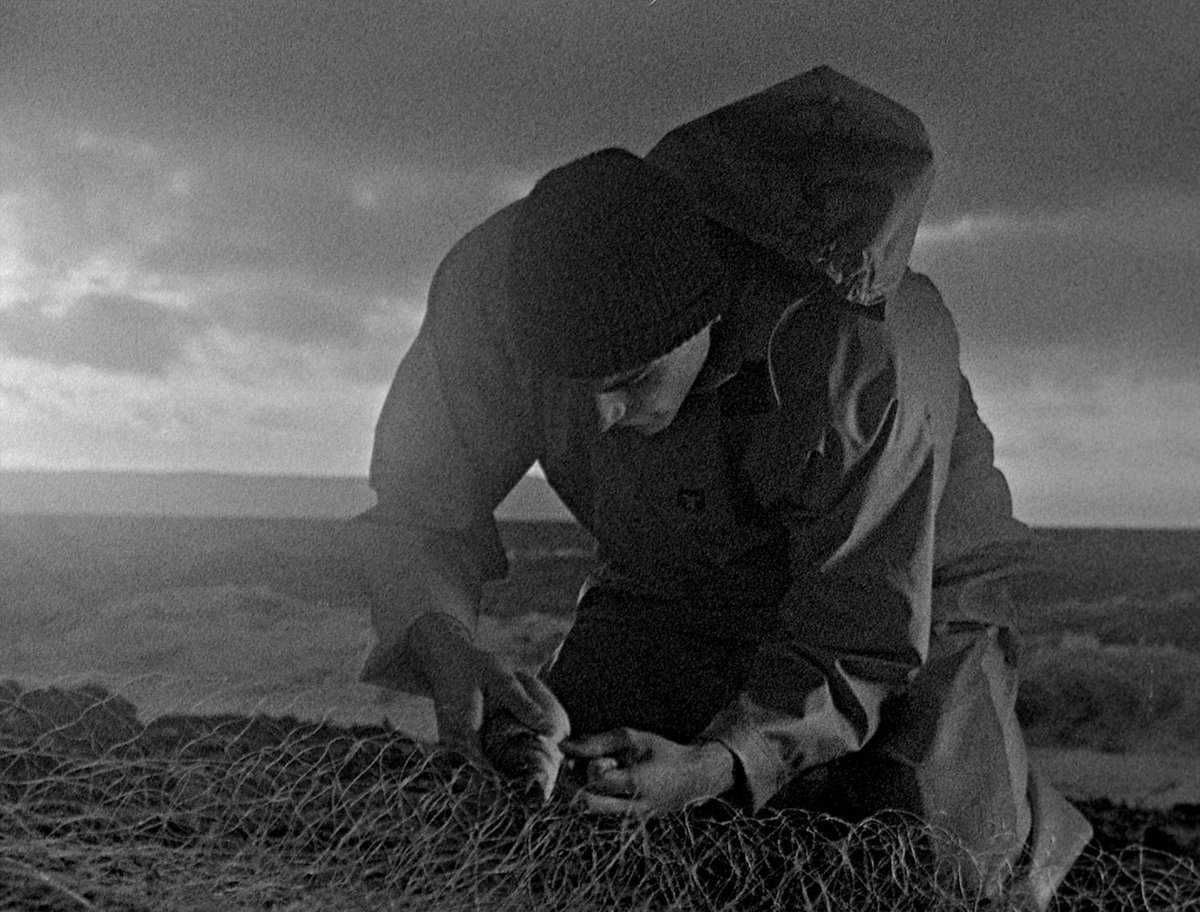
It may not BE silent but it WAS shot silent, as forthcoming screenings with live musical accompaniment are sure to emphasise – Mark Jenkin’s brilliant Cornish drama Bait was your favourite modern silent of the year.
This piece originally appeared in Sight & Sound magazine in 2016.
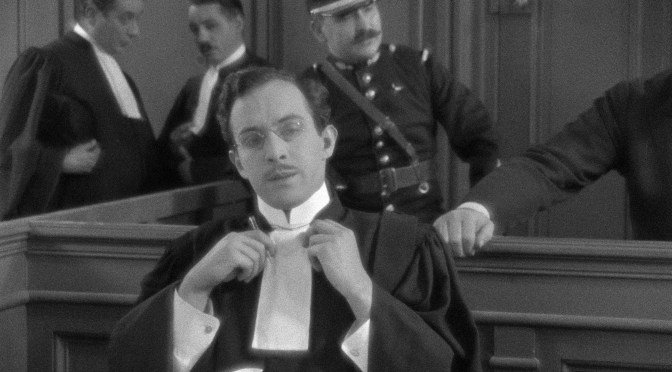
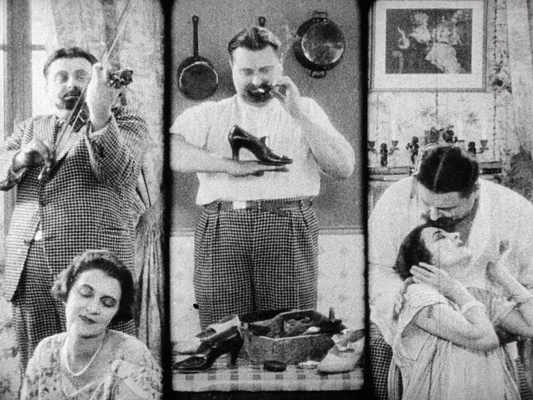
Among the treasures on display in Paris at Toute la Mémoire du Monde in February, one film seemed to justify the festival’s existence by itself. René Clair’s ingenious late silent Les Deux Timides/The Two Timid Ones (1928) harks back to an earlier age of film comedy, reworking the styles of Max Linder, Charlie Chaplin and Mack Sennett into something new and elegant. At the same time, the new restoration of this sublime farce reveals it as a silent classic in its own right – to be esteemed as highly as the films that inspired it. Thanks to a ravishing new restoration, it may be about to receive the credit it has long deserved.
By 1928, René Clair had moved on from his early art films, the science-fiction caper Paris qui dort (1923) and the cinéma pur of Entr’acte (1924) and joined Albatros, a French studio staffed mostly by Russian exiles. It was here that he made his best known silent, the beautifully elaborate farce Un chapeau de paille d’Italie/The Italian Straw Hat (1927). Clair’s 1930s triumphs Sous les toits de Paris (1930) and A nous la liberté (1931) were ahead of him, but Les Deux Timides is his silent masterpiece, folding the avant-garde and the comic into a delightful, expertly judged story of provincial romance and misapprehension.
Les Deux Timides (1928)
Les Deux Timides takes what could be a Linder scenario, of a young middle-class man overcoming obstacles in pursuit of a pretty girl, merges it with Chaplinesque outsider charm and punctuates it with Keystone-quality chaos. Clair’s film is as serious and silly as its predecessors at their best, a film that is so intensely funny it makes humour itself, and the business of film comedy, seem vitally important.
The San Francisco Silent Film Festival has just closed for another year. Four days of movies and music at the sumptuous Castro Theatre – and this time I was actually there! Pinch me, I still can’t believe it’s true. In this short podcast, I run through a few of my highlights of the weekend and try to give a flavour of this fantastic event. Enjoy!
London’s great, it really is, but sometimes a blogger has to seek wider horizons. So this year I will be packing up my laptop and getting my soy cappuccino to go. I’m hitting the road to report on the silent film festival circuit – more of which anon – and I may possibly be popping up in a cinema near you.
First, an exciting announcement! The British Silent Film Festival is back this year. We have dates and a venue confirmed – 14-17 September 2017, at the Phoenix in Leicester – but no more news yet. Barring flood or fire, I’ll be there, and I recommend that you attend also.
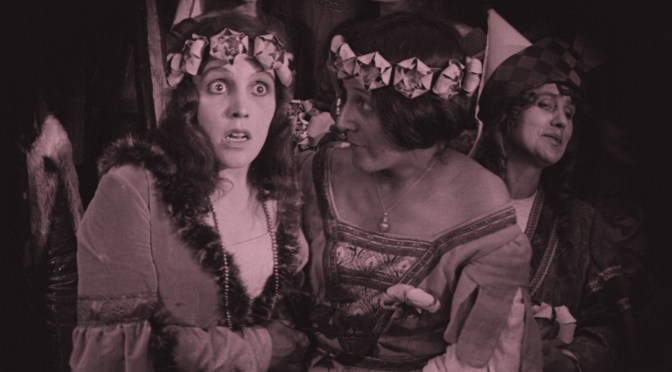
Shoes (1916)
Before that, however, I’ll be introducing two fantastic silent films by female directors at venues that couldn’t be much further from Leicester, and each other.









 Silent London