Forgive me if I’m wrong, but it feels like a long time since we saw a solid silent retrospective in this town. No need to bleat about it much longer though, eh, as the BFI has just the thing. DW Griffith – still arguably the most important American movie director of all time – will inhabit the BFI Southbank for most of June.
The season concentrates on the feature films up to and including Abraham Lincoln (1930), Griffith’s first talkie. Especial care is taken over Griffith’s best-known, and still-controversial, film Birth of a Nation (1915), in its centenary year. The movie will screen with introductions on both occasions, and a special roundtable event will bring together keynote speakers from UCL’s “In the Shadow of Birth of a Nation” conference to discuss the film. To provide further context, on 7 June the BFI will screen all three parts of Kevin Brownlow and David Gill’s DW Griffith: Father of Film documentary.
The Birth of a Nation (1915)
This is one of those events that should have every cinephile in the city licking their lips. And you don’t have to be a silent nerd or a completist to understand why. There’s far more to DW Griffith than the awful things he believed and the clever things he is credited with doing first. Watching the films, especially on the big screen, is the best way to appreciate his genius. And look at the cast list here too: the season features several turns from the wonderful Lillian Gish, as well as Richard Barthelmess, Lionel Barrymore, Douglas Fairbanks and Mae Marsh.
Well hello there, Elephant & Castle tube station. A few months back I wrote about the many wonders of the Kennington Bioscope – a regular silent screening event held at the Cinema Musesum, south London. Short version: it’s ace.
Now the Kennington Bioscope has gone one better than brightening up our Wednesday evenings. The Kennington Bioscope Weekender will take over the Cinema Museum for two days in the summer – 20 & 21 June – to screen a mouth-watering selection of silent films.
Two things to note straight away – first, the majority of these films will be shown on film, either 35mm or 16mm. The website makes it clear which is which. And second, the films have been chosen and will be introduced by an estimable group of film historians including Kevin Brownlow.
Alfred Hitchcock may be the only British director of the silent era we don’t automatically label “underappreciated”, or “little-studied”. From Leytonstone to Los Angeles his fame is global, his influence inescapable. After the films themselves, and the TV series, the books, the biopics, the magazine articles and yet more books, there isn’t a cinephile alive who can’t pronounce with some authority on the Master of Suspense.
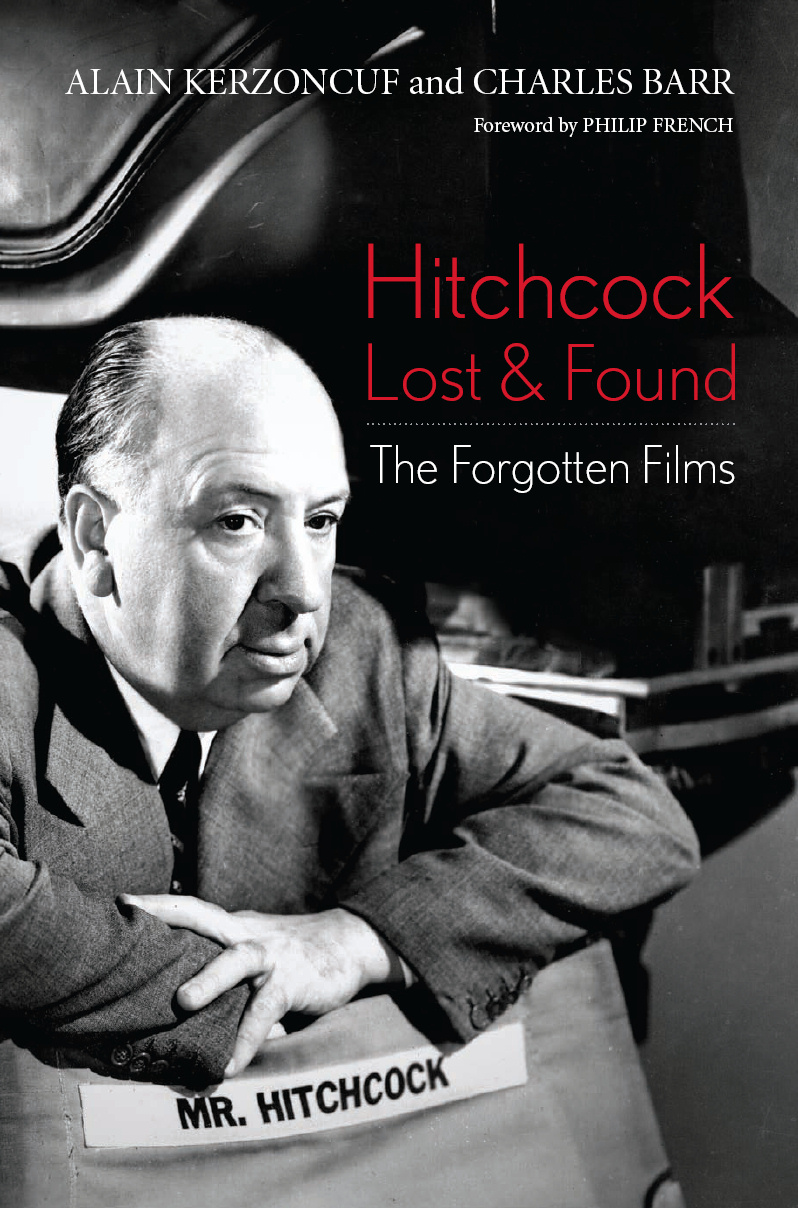
One subject that all Hitchcock “experts” can expand upon is the MacGuffin device – the pursuit of an elusive object that drives the narrative of a film forward, allowing the business proper to take place along the way. One way of looking at this new book by scholars Alain Kerzoncuf and Charles Barr would be that it is a magnificent MacGuffin hunt. Hitchcock Lost & Found: the Forgotten Films goes after the grey patches on Hitchcock’s CV, the abandoned, incomplete or a loosely connected works that linger largely unwatched and unappreciated.
As well as missing films, this book tracks down the films that Hitchcock scripted, or art-directed, or otherwise assisted on, or one where he jumped into the director’s chair halfway through shooting. The discovery of a few reels of The White Shadow (Graham Cutts, 1923) in 2011 proves that a film doesn’t to be Hitchcock through-and-through to raise the heart rate. And it’s surely not too much to hope that on the trail of these MacGuffins, a hardy Hitchophile could learn a thing or two about Psycho, Rear Window and the man who made them? Not to mention that impressive string of surviving silents running from The Pleasure Garden to Blackmail or Hitchcock’s famously “lost” film, The Mountain Eagle?
This is a guest post for Silent London by Carl Davis CBE to celebrate the 126th anniversary of Charlie Chaplin’s birth. Renowned as a composer, Davis is a conductor with the London Philharmonic Orchestra and also regularly conducts the Royal Liverpool Philharmonic Orchestra. He has written music for more than 100 television programmes, but is best known for creating music to accompany silent films – including his score for the Kevin Brownlow restoration of Abel Gance’s Napoléon.
In 2003 and 2004 the British Film Institute released, in two volumes, 12 comedy shorts by Charlie Chaplin, created by him at the contractual rate of one a month across the years 1916-1917. They are known today as “The Mutuals” after the company that produced them and, as in my case, they are often the first glimpse that people have into the art of Chaplin. My first adult look at this project occurred in 1983 while scoring the Thames Television three-part series Unknown Chaplin: virtually the entire first episode consisted of an analysis of Charlie’s working methods, brought to light after a hidden cache of Mutual out-takes had recently been discovered.
The next step forward occurred in 1989 after the successful experiment of transcribing the orchestral score and parts of the 1930 recorded soundtrack of City Lights for a live performance at London’s Dominion Theatre. The performance started a vogue, thriving today, of stripping the scores from the soundtracks of all manner of sound films and performing them live. After the London screening I found myself conducting City Lights around the world and subsequently I expanded my Chaplin repertoire with TheGold Rush and The Kid. Out of sheer enthusiasm I added the shorts The Immigrantand Easy Street to my list. But the real impetus to continue came in 2003 when I discovered that the BFI were planning to release the complete Mutuals. I declared my interest and our collaboration began.
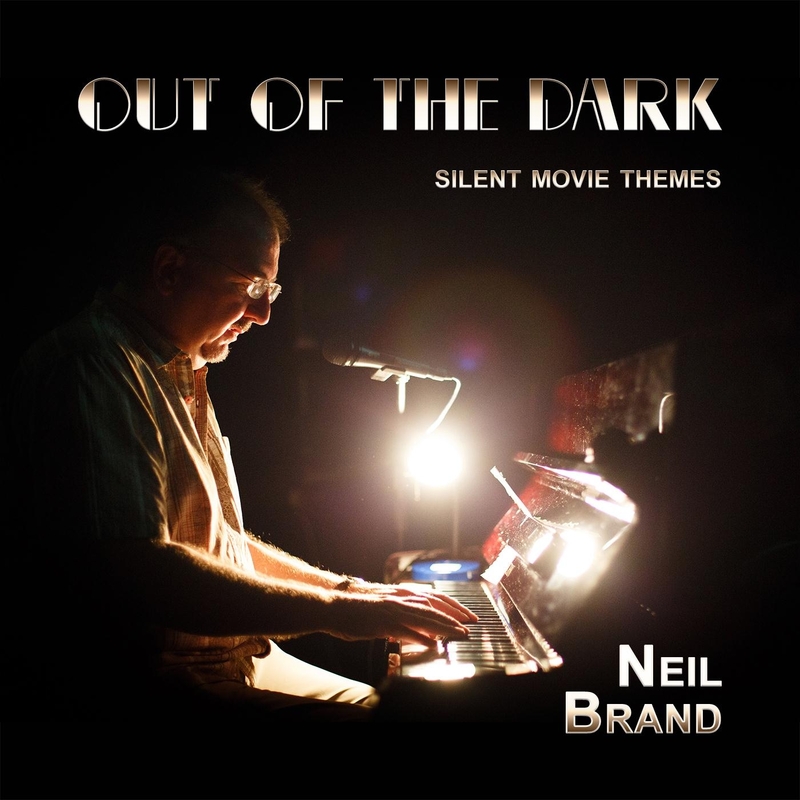
Out of the Dark: Silent Movie Themes, by Neil Brand.
If you attend the occasional silent movie screening, like I do, you’ll have experienced a particular bittersweet feeling. As much as you enjoyed the show, you fear you could never quite recreate the magic. You know the film is out there waiting for you to watch again (somehow), but nine times out of 10, the improvised music that accompanied it lives only in the corner of your memory.
The genius of improvisation is that the melodies, or that special combination of them, are conjured out of thin air, and disappear just as fast. Unless … someone, say Neil Brand, were to sit down at the piano and record some of those tunes for posterity.
So that is exactly what Brand has done – he has released an album of some of his favourite tunes to accompany classic silent films (from Pandora’s Box to Safety Last!). It’s a pleasure to listen to, and an enjoyably infuriating silent movie quiz too: the sleeve notes will tell you which film each track belongs to: can you guess without looking, and for an extra 10 points, can you pinpoint the scenes that inspired each excerpt?
Over to Brand’s notes to explain further:
In this album I have tried, for the first time, to give my improvised silent movie accompaniments a little life of their own away from the films, as piano pieces. They carry the essence of my musical thoughts on what these films are about, but you can listen to them without knowing the films, and let the pieces create your own pictures in your head.
Those sleeve notes also include a short intro by Brand to each film. So if you like what you hear, and you haven’t yet encountered the movie in question … well you couldn’t really ask for a better introduction.
Pandora’s Box (1929)
I’ve had a listen to the album, and it really is wonderful. What I didn’t expect, was to feel the same shivers down my spine that I would experience when watching Louise Brooks dance, or Murnau’s camera swooping through the morning mist. This is the most evocative of music – I felt that I was in the film as much as viewing it, whirling through the streets of Berlin (People on Sunday), Charlestoning with Clara Bow (It), marching in step with John Gilbert (The Big Parade) and dangling precariously with Harold Lloyd (Safety Last!).
“If a cinema could give you a hug, this is what it would feel like.” That’s how Bryony Dixon described the Hippodrome Festival of Silent Cinema in Sight & Sound last year, and as usual, she’s not wrong.
This year I returned for my second trip to the festival, now in its fifth year, and the welcome was warm, the music was fabulous, the films magnificent and the crowds enthusiastic.
It’s a tribute to Ali Strauss, Shona Thomson and all the team behind Hippfest that this small town in Scotland draws silent movie fans from across the country (and the globe) as well as introducing the locals to the delights of EA Dupont, Mikhail Kalatazov and Buster Keaton. I had a stonking time in Bo’ness this year, and would recommend the festival to anyone who loves movies, music and merriment.
Here’s what I took home from Hippfest this year:
A tan. Well, a vitamin D topup at least. I made all the usual wry comments about “sunny Scotland” in the runup to my trip, but Bo’ness was truly bonny this weekend, and my, the Firth of Forth looks stunning in the sunshine.
Synthetic Sin (1929)
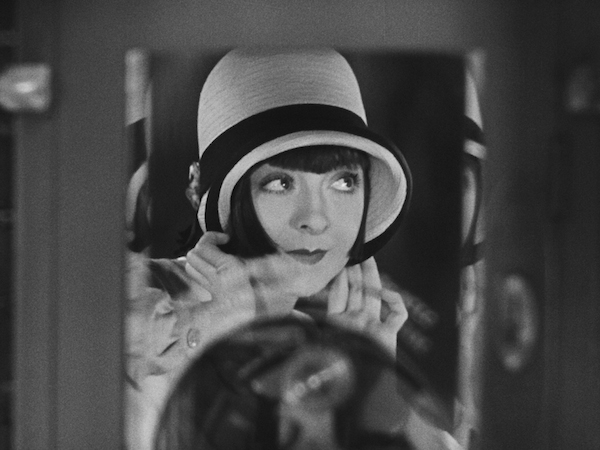
More recruits for the Colleen Moore fanclub. It was an absolute honour for me to introduce the Friday night gala screening of Synthetic Sin – and I just knew that Ms Moore would charm the spats off the assembled audience. It was a fantastic screening, with raucous laughter threatening to drown out Neil Brand’s spirited accompaniment at times. All the gala shows were sold out – well almost all of the events were – which I think goes to show that people are prepared to take a chance on films, and stars, that they haven’t heard of before. I’m not sure the Hippodrome crowd will forget Colleen in a hurry though.
The fear of God. Well, flippancy aside, I was looking forward hugely to the Thursday night screening of William S Hart western Hell’s Hinges, not least because it would be scored by those groovy cats the Dodge Brothers. But as the band struck up and immediately began crooning “Satan is real” a shiver ran down my spine. The movie provided fire and brimstone, and the Brothers gave it space to breathe and fan those flames. A massively atmospheric screening, and a wonderful opener to my festival. So few people get a chance to see a pre-1920s film on the big screen at all – let alone with so much added cool.
Trust me, I have never been ready for my close-up. But when I backed the new silent film project London Symphony, I recklessly ticked the box to say that yes, I’d be in the movie. I envisaged the back of my head in a crowd, perhaps. Something nice and anonymous.
But cometh the hour, cometh the poseur, and today I spent an hour or so shooting a snippet of a scene for London Symphony. Or sitting mostly still and doing what I was told while trying not to get the giggles. Here’s what I learned from my experiences on a silent movie “set”:
There’s a reason those silent-era directors had megaphones. We were filming on the Victoria line (yes, we had permission) and while no doubt director Alex Barrett was talking me through my big scene, I could barely hear a word he said.
There are a lot of angles to cover – two cameras, shooting front-on, overhead, from a distance, crammed next to my cheek … The London Symphony crew were using handheld digital cameras, of course, I can’t imagine how this would play out with a wooden-boxed hand-cranked job.
I didn’t realise how much structure dialogue gives to a scene. I’m not an actor, so of course I was going to feel a little self-conscious being photographed by those moving picture contraptions. But without anything to say, I really felt a little untethered. Anything could happen! Luckily Adam Hickey, the actor I was working with, was actually an actor and very professional.
Londoners are not in the least bit fazed by seeing people filming and playacting on the tube. We caused not a ruffle. Though Alex did tell me that amateur photographers often approach him in the street to chat about the gear. Mmmm, lenses.
Matt Lucas and Alex MacQueen in PompidouMatt Lucas is a bit of a comedy hero, from his hilarious cameos on Shooting Stars, to the taste- and boundary-pushing Little Britain, to the trenchant way he knocks down the idiots who try to step to him on social media. I may not like everything Lucas does, but he is one of the most original, and bravest, voices in TV comedy. Unafraid to go against fashion as ever, his new project is a “visual comedy” TV series, Pompidou, which debuts on BBC2 on Sunday 1 March.
So I'm delighted to tell you that my new series POMPIDOU begins on SUNDAY 1st MARCH AT 6:30PM ON BBC TWO!
Lucas has co-written the series with Julian Dutton, and he plays the title character: “an elderly oddball aristocrat who has fallen on hard times”. Alex MacQueen plays his long-suffering butler, Hove. And they have a canine companion, too: the elegant Marion, an Afghan hound.
New silent comedy on our screens is always a cause for joy and anticipation – so we’re very keen to see how this one pans out. There are six 30-minute episodes to come, and in each of them, we are promised, Pompidou and Hove face a new, bizarre, challenge. Continue reading Pompidou: Matt Lucas’s silent comedy comes to BBC2→
This is a guest post for Silent London by Rosie Taylor. An event producer and freelance film researcher and historian, Rosie is festival curator for Afrika Eye Festival, and assistant curator and head of digital media at the Slapstick Festival.
I’ve been eagerly awaiting the arrival of The Dawn of Technicolor since I first saw James Layton and David Pierce’s presentation in Pordenone in October 2014. And the immediate thing that struck me when I first lay eyes on this book is its sheer size. It is second in size only to an enormous old and out-of-print book I have on Paul Cézanne – I’m going to struggle to fit it on my bookshelves!
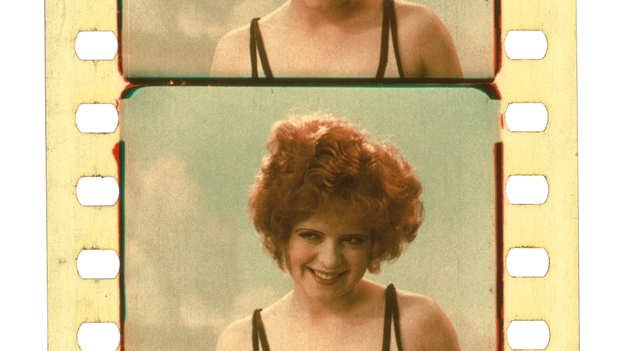
The reason for its size is immediately obvious from looking at the cover, which boasts a closeup of a strip of “35mm nitrate Technicolor cemented print” from Fig Leaves (1926). As you turn the pages you are not overwhelmed by images (as I was originally expecting, which slightly disappointed me at first), but instead the book is carefully laced with a variety of photographs, film strips, diagrams, and images of archival texts and diaries, giving a beautifully textured visual history, which complements the reading nicely. The quality of the illustrations “reproduced almost entirely from original artefacts”, is excellent, so if like me you enjoy having a good look at everything, it’s exciting.
However, as much as one likes to take a gander at the impressive pictures, a bit of reading is also important. And, if I am honest, I did find the size of the book a little daunting at first. However, once I started reading, I discovered that the language is very accessible, and though it is essentially a factual history, it is passionately written without being too personal. It takes you through the complex and multifaceted aspects of the company’s development, giving a great sense of the personal and professional aspirations, challenges, set-backs, and triumphs – all to the point that I was rooting for the Technicolor team!
Have you ever heard that phrase “pale, male and stale”? I don’t really like it myself, but it has its uses. It’s how us hardbitten hacks like to oh-so cynically refer to the Establishment with a capital E – the Etonians in our cabinet, the stuffy old geezers at the top of our legal system, the posh “luvvies” winning all the big arts prizes. It’s not that we don’t like old white men, it’s just that the world is bigger than that, right?
So, we want the people who represent, protect and entertain us today to reflect our own diversity – that’s a no-brainer. Sometimes it seems as if there is a long way to go, but we shouldn’t “whitewash” history either. There are a whole range of factors at play here, but the simple fact is that it’s too easy to forget to contribution made by women, people of colour and other minorities to our cultural past. Picture a silent movie set, and you’d be forgiven for visualising a sea of white faces, and a chap in riding trousers calling the shots. But the truth is more complicated, and more exciting, than that.
Oscar Micheaux
A new venture from Kino Lorber is intended to push that “pale, male and stale” image right out of our minds. The American label is collating a box set of movies from the earliest African-American film-makers – from Oscar Micheaux to Maria P Williams. If you didn’t know there were any – well, that’s understandable, but now you know that there were, you should be intrigued. And if you are intrigued, or if you are punching the air and shouting “Finally!”, there’s good and bad news to come.
The Trento Tunnel exhibition (tgcom24.mediaset.it)
This is a guest post for Silent London by Neil Brand, writer, composer, silent film accompanist and TV and radio presenter.
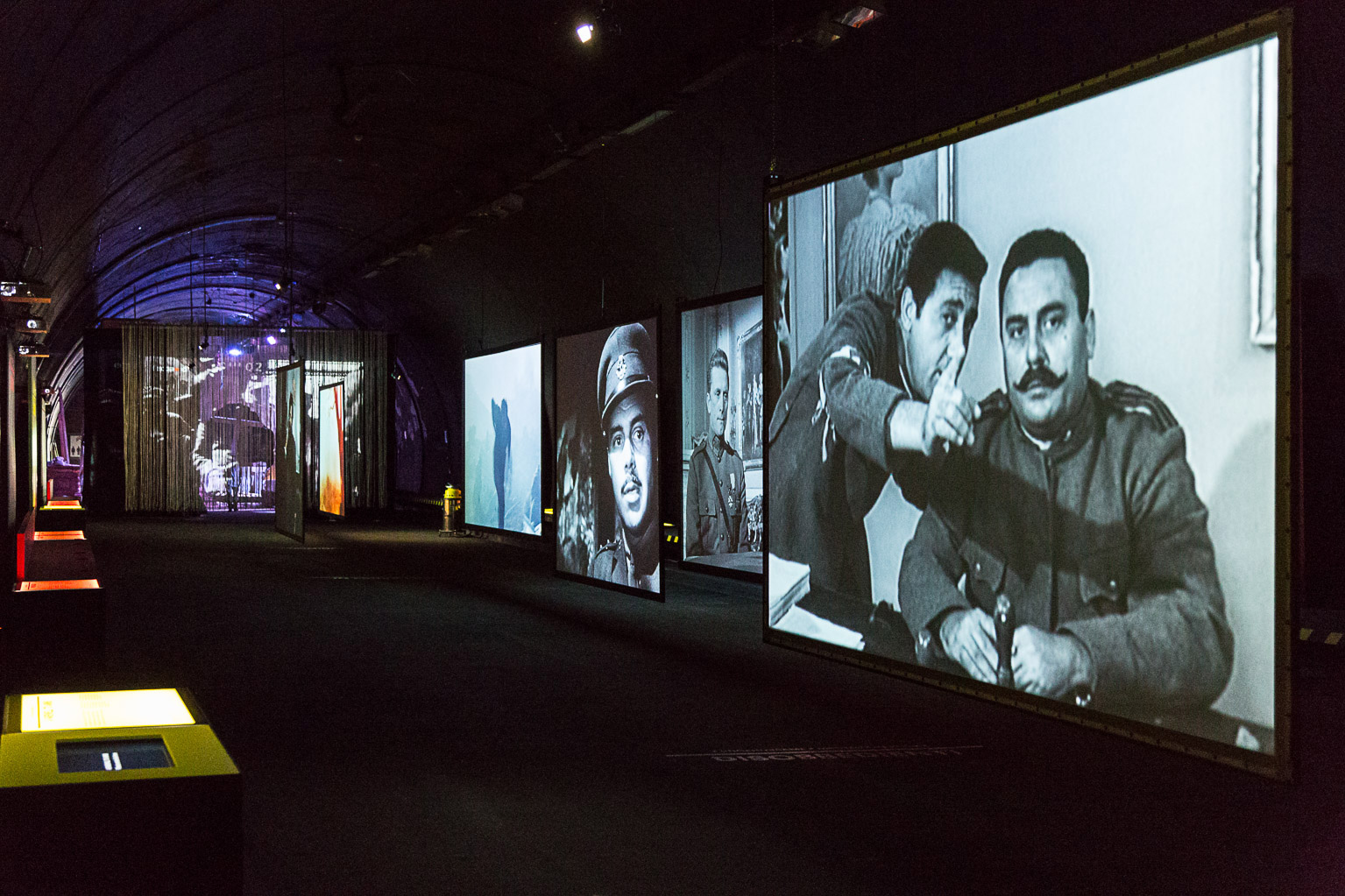
Deep beneath the mountains of the Trentino range of Italy and Austria’s Dolomites lies one of the most extraordinary exhibits, in one of the most extraordinary galleries, in the world. One walks into a gigantic road tunnel, through a curtain and into one of the most potent and gripping representations of WWI cinema anywhere on the planet. From the very first image (from the Imperial War Museum) as a real shell strikes a galloping troop of British field artillery, leaving dead horses and soldiers on the field as the smoke clears, we are in the binary world of WWI “reality” as seen by the cameras of the time and the imaginations of those who came after.
That this exhibition, by the Trentino History Museum, should be a chilling reminder of the inhumanity of Italy’s White War on the Austrian border is no surprise – what is utterly unexpected is that it should also be a clear meditation on the very notion of cinema as “point of view”, with our attention continually drawn to the voyeurs and showmen, the “victors” and “victims”, the selective nature of documentary and the over-exaggeration of the “real”.
The exhibition’s existence is the result of a fruitful collaboration between Fondazione Museo Storico del Trentino and Cineteca del Friuli (with the assistance of archives around the world) in which the Museum, which owns and programmes the tunnels, has turned to experts at the Cineteca (particularly Pordenone mentor Luca Giuliani), to trace the history of WWI on film all the way from the outbreak in 1915 to the most recent films on the subject.
All the classics are contextualised on the way: J’Accuse, All Quiet on the Western Front, La Grande Illusion, Paths of Glory. The result is 46 full-size academy screens, through which we walk, looking to left and right, for half-a-mile, taking in a century of imagery and cinematic treasures beautifully configured into intriguing sub-genres; wounds, adventure, heroism (Italian strong-man star Maciste fighting the Austrians), fiction, imperialism, and more. Three-quarters of the way up the tunnel we emerge into sound, via a soundproof screen and the “Control Room” which is almost the most fascinating part of the exhibition. There we are introduced to the magic behind the screens: the film-makers, their equipment, and ourselves as their intended audience.
The fifth instalment of Scotland’s only silent movie festival announces its programme today – and judging by previous years, you should start snapping up tickets straight away (tickets go on sale today, 10 February 2015, at noon). The Hippodrome Festival of Silent Cinema takes place in Bo’ness, a small town tucked away on the banks of the Firth of Forth in Falkirk, Scotland. Bo’ness has a stunning vintage cinema, the Hippodrome, which has been restored to its 1920s glory, and each year hosts of a celebration of the silent era that is as welcoming as it is wide-ranging.
HippFest celebrates its fifth birthday in style with three major World Premiere Festival Commissions, a pop-up cinema at Bo’ness & Kinneil Railway, the chance to discover forgotten stars Colleen Moore and Eric Campbell and get hands-on with a series of workshops and interactive events covering everything from beatboxing to Joan Crawford’s favourite dinner party recipes.
You can find all the information about the festival, and how to book tickets for the events, on the festival website here. You can also follow the festival on Facebook and Twitter. This year’s event runs from 18-22 March 2015 and below I have picked out some highlights from the programme. I have to say I am pretty excited.
Synthetic Sin (1929)
The Friday night gala screening will be the hilarious Synthetic Sin, starring Colleen Moore. There’s a dress code ladies and gents – flapper glamour! Neil Brand will accompany on piano and some silent movie blogger or other will be introducing the film …
“The Film Explainer” Andy Cannon will perform alongside extracts from Dr Jekyll and Mr Hyde, along with musicians Wendy Weatherby and Frank McLaughlin.
A weekend away … Estelle Brody and John Stuart in Hindle Wakes (1927)
According to the website of the Phoenix independent cinema in Leicester, the British Silent Film Festival is moving back northwards this year! The BSFF began in the East Midlands town back in 1998 and has subsequently been based at the Barbican and the Cinema Museum in London, in Cambridge and Nottingham. It will return to the Phoenix in Leicester from 10-13 September 2015, so mark it in your diaries now.
Here’s what the Phoenix has to say about the event.
Formed in 1998, the Festival fulfils an important role – presenting a wealth of treasures from the silent period to audiences who would not otherwise have access to their own film heritage and to the wealth of international silent cinema.
The Festival is curated, organised and presented by Laraine Porter, Bryony Dixon and Neil Brand and a team of UK experts and advisors in this field.
Open to all, the films are presented with live music from the world’s leading professional silent film accompanists (and we hope, local guest musicians) in a variety of entertaining and accessible ways.
Hat-tip to Jenny Stewart for the news – more details to follow as soon as they arrive.
Pola Negri in The Woman he Scorned (1929)
Meanwhile, back in the capital, the popular British Silent Film Festival Symposium will take place again this year at King’s College London. The one day event will be held on 24 April, and proposals for presentations should be sent to Lawrence Napper at King’s by 20 March 2015 – email Lawrence.1.Napper@kcl.ac.uk.
Drawing on the success of our previous events, we again seek to draw together scholars and enthusiasts of early British cinema. This one-day symposium is intended as a forum for the presentation of new research, scholarship and archival work into film culture in Britain and its Empire before 1930.
As such we would like to invite presentations from people working in all aspects of this field, including cinema in the wider context of theatrical, literary and popular cultures; cinema and World War I; cinema and technology, exhibition, reception and critique.
In the light of a recent AHRC award investigating the transition between silent and sound cinema in the UK (1927-1933), we would be particularly interested to include papers on this topic.
Excitingly, the day will be topped off with a screening of one of my very favourite British silent films: Paul Czinner’s The Woman he Scorned (1929), starring the wonderful Pola Negri.
Love is private, intimate. Speak its name aloud and the spell is broken. Share it and the magic is shattered. Except, except … in the 20th century popular culture crashed into the space between lovers, the gap between two pairs of moist lips, the air that thrummed to their heartbeats. Pop music ran away with love, spinning out each precious moment of desire or sorrow for three minutes of passion and repetitive heartbeats. But the movies, arguably, got straight to the dirty bits first. In the dark of a cinema, that is to say a tent or a grubby room, crammed next to a sweetheart or a maybe-sweetheart in the dark, we could watch actors (imagine!) play-act the the motions of love: smooches in train carriages, swoons on the hearth. Illicit affairs, happy marriages, flings, crushes … all the joy and misery of human existence on the screen. And in the cheap seats (they were all cheap), a fumble, a fondle, a kiss or maybe more. And did I mention it was dark? A private act in a public place – disapproval be damned.
Kim Longinotto knows exactly what goes on in the dusky darkness of the Odeon. Her new collage film Love is All (2014) is a super-cut of romance: sexy, sedate or seditious. It’s a full-tilt rush for the hormones, soundtracked by the grizzled, tender love songs of Sheffield music legend Richard Hawley. Not strictly a silent film, this, but one in which the few fragments of dialogue are incidental, another instrument in the orchestra. Hawley sings what is on our lovers’ minds – what they actually have to to say is rather beside the point.
Shaun the Sheep the Movie (2015)Animals fare far better in silents than talkies. The absence of dialogue puts them on an equal footing with their human co-stars, and what’s more, they’re cuter. The only place left in these synchronised days where feathered and furred characters can expect top billing is in animated movies – digitally rendered and belting out showtunes. While we have become accustomed to talking animals in children’s animations, ever since Mickey Mouse started to squeak, Aardman’s Shaun the Sheep is a gent from the old school, having stubbornly refused to articulate anything more complicated than a bleat for 20 years.
And now Shaun the Sheep, who like the most illustrious slapstick comedians, is both black-and-white and silent, has been given his very own feature film. And no bankable Hollywood name has been roped in to voice his inner monologue. While the advance publicity has not been playing up the silent angle, this is a dialogue-free delight, a champion of visual gags, physical comedy and unutterable joy. Following on from the 2007 series of short animations made for CBBC, Shaun and his fellows dwell in an almost wordless world, baa-ing and snorting and belching their feelings, just like their harrumphing two-legged companions. As in the shorts, the written word often appears as an incomprehensible squiggle – perfect for young children who would be challenged or bored by too many letters.
Shaun the Sheep the Movie (2015)But Shaun the Sheep has an adult audience too, who appreciated his seven-minute TV escapades not just as kid-friendly fun, but as throwbacks to the silent comedy greats. Aardman’s previous films have cheekily plundered the classics for plots and sly in-jokes – restaging The Great Escape in a hen coop for its feature debut, Chicken Run (2000). Shaun the Sheep the Movie is no exception. There’s barely a frame, or a foley effect here that isn’t a wink to Jacques Tati. And amid nods to Inception, Taxi Driver and The Terminator, there is a Hannibal Lecter-impersonating cat who wins the movie-reference game hands down. C’mon, you’d feel cheated without a mention of The Silence of the Lambs, wouldn’t you? There’s a tip of the titfer to classic British animation too. Shaun’s longing for a break from the farm’s daily grind of tedium and indignity accidentally results in a barnyard mutiny and more than a shade of Animal Farm.
Elusive films, we are always told, can turn up anywhere. And if you’ve read the Primal Screen column in this month’s issue of Sight & Sound, you’ll know the truth of that. Oliver Gaycken, an early cinema scholar at the University of Maryland, stumbled across (most of) a missing Charles Urban film, Cheese Mites (1903) on YouTube. He describes it as “a landmark of early cinema, one of the first film ever made for general audiences about a scientific topic.”
The uploader, not knowing anything about the 35mm nitrate strip he had picked up from an antiques shop, had found an ingenious lo-fi method of digitising the film, and posted it on the video site under a name of his own devising. Gaycken was sent a link by chance and recognised it immediately. Anyway, you can buy the magazine to read the full story, or indeed pre-order Gaycken’s book Devices of Curiosity: Early Cinema and Popular Science, forthcoming from Oxford University Press.
You can see Cheese Mites, properly restored and digitised, on the BFIplayer, or indeed on the institute’s own YouTube page. One thing that will strike you, as you watch those microscopic critters wriggling under the professor’s magnifying glass, is that Cheese Mites is more than a little bit repulsive. The tweedy professor (F Martin Duncan), turns his magnifying glass from his newspaper to his lunch, and uncovers a microscopic crowd of wriggly creepy-crawlies. In the still missing last scene, he chucks his cheese away in horror. You won’t see your humble cheddar-and-pickle sarnie in the same way again. And so, to celebrate this unlikely discovery, here are 10 totally gross moments in silent cinema. Hold on to your stomachs … this is not for the squeamish.
Un Chien Andalou (1929)
The eye-slashing in Un Chien Andalou
Yes, I now that Bunuel and Dali cut to a calf’s eye for the breathtaking “out, vile jelly” opening to this surreal classic. But come on, weren’t you fooled the first time you saw it? And there’s nothing particularly wholesome about a dead calf wearing mascara anyway. See also: the rocket crash-landing in the man in the moon’s eye in George Méliès’ Voyage Dans La Lune (1902) – so much more gory in full colour.
The maggots in Battleship Potemkin
Similarly, the first time one watches Eisenstein’s bombastic Potemkin, one might expect the maggots in the Men and Maggots title card to be metaphorical rather than literal. And certainly one wouldn’t expect to see them in a gruesome close-up, squirming under the doctor’s glasses. “This meat could crawl overboard on its own!” Upsettingly, the resulting stew is only the second most disgusting casserole in this list.
Alice Guy-Blaché’s modern surgery
George Mélies made a version of this a few years later, often titled Une Indigestion, but Guy-Blaché’s earlier film Chirurgie Fin de Siecle (1900) is more widely available. And it’s not one to watch the night before an operation. In this clinic, a sign pleads “On est prie de ne pas crier/Please do not cry”, and the doctors set about the patient with saws, cheerily hacking off limbs, and then slopping them into a bucket, all the while arguing ferociously with each other. They then reattach arms and legs from a bucket of “exchange pieces” (using glue) before re-animating their victim, I mean patient, with bellows.
This is a guest post for Silent London by Isabel Stevens, production editor of Sight & Sound. The Silents by Numbers strand celebrates some very personal top 10s by silent film enthusiasts and experts.
This slideshow requires JavaScript.
Just as films in the nascent years of cinema were characterised by their visual innovation, so too were their posters. Designers enjoyed far more freedom than most of their successors working in the sound era, who toiled in large publicity departments and had to comply with strict restrictions on the size and prominence of stars’ images and their names.
Designs for silent movie posters were also created using many different techniques – from hand-painting unique posters for local theatres to mass-produced lithographs or linocuts. The Stenberg brothers, whose designs alone could fill a list of 10 ground-breaking silent movie posters, even invented a special projector that paused a film frame so faces could be traced, the resulting image appearing somewhere between a painting and a photograph.
The designs collected here are for both masterpieces and little-known films alike, but all preference mood and visual daring, never just relying on tantalising narrative tit-bits to sell a movie. Many of them contain echoes of art movements of the time – Cubism, Art Deco, Constructivism, the Bauhaus and Expressionism – and were created in the 1920s, that decade of wild avant-garde experimentation.
The Green Spider, Vladimir Egorov, 1916 (Credit: The Silent Film Poster: Russia 1910-1930)
The Green Spider, Vladimir Egorov, 1916
Here is the original spiderwoman, accessorised delightfully with eight-legged earrings. It’s a surreal vision that proves that Russian film poster design in the 1910s could be just as imaginative and strange as that of the Soviet era. Little is known about this tale of lust, apart from that it was considered a cult movie at the time of its release and played in theatres in seedy parts of St Petersburg. The poster is the work of Moscow theatre designer Vladimir Egorov, sketched one presumes under the influence of the many arachnoids that featured in the drawings of Symbolist artists such as Odilon Redon and Alfred Kubin.
Safety Last!, Curt Peters,1923
Safety Last!, Curt Peters, 1923
Swedish film poster design was particularly adventurous in the 1920s, as exemplified by this vibrant design featuring stunt-mad comedian Harold Lloyd swinging into the frame and promising vertiginous laughs and spectacle galore. With his clothes billowing in the wind, his hair standing on end and a smile on his lips, he’s enjoying the ride as much as you will.
London is the best city in the world for silent cinema. OK, so maybe I should admit to a little bias, but really, between the BFI Southbank, the Barbican, the London Film Festival, the Phoenix cinema in Finchley, and the capital’s many film societies, rep cinemas, arthouse cinemas, orchestras, concert halls and festivals (including the many visits of the British Silent Film Festival, the Fashion in Film Festival and the recently departed Birds Eye View Film Festival) we are sitting pretty for silents. Whether it’s a symptom or a cause I don’t know, but we also have many of the world’s best silent film accompanists based right here in the Big Smoke.
It’s in this context that in the summer of 2013, two of London’s fabulous silent film musicians, John Sweeney and Cyrus Gabrysch, set up a “silent speakeasy” called the Kennington Bioscope: “a silent cinematic event dedicated to the rediscovery of forgotten masterpieces”. Since then, they have been creating silent cinema magic in South London on a regular basis. The Bioscope is cinephilia at its best – if you’ve been, you’ll know what I mean. If you haven’t been, you are missing out, and I am about to make you jealous. I can’t let another Bioscope go by without telling you all how amazing it is.
The KB (as I have never yet heard one person call it) is held once every three weeks at the Cinema Museum – a volunteer-staffed Aladdin’s Cave of cinematic memorabilia and ephemera. There are more than a few reasons why you voted this place as your favourite silent film venue of 2014. It’s a wee bit like a time machine, whisking you back to a more sedate era of cinemagoing. There’s always an interval, ushers may well be wearing natty uniforms, someone will undoubtedly strike a gong to prompt patrons to take their seats, and the adverts before the screening will remind those assembled of the proper etiquette required. Tickets, which cost just £3, are made of cardboard and ripped off a reel. Most important of all, the projection booth is staffed by an expert projectionist, showing films of all shapes and sizes as often as possible.
This is a guest post for Silent London by Peter Baran. You can follow Peter on Twitter at @pb14.
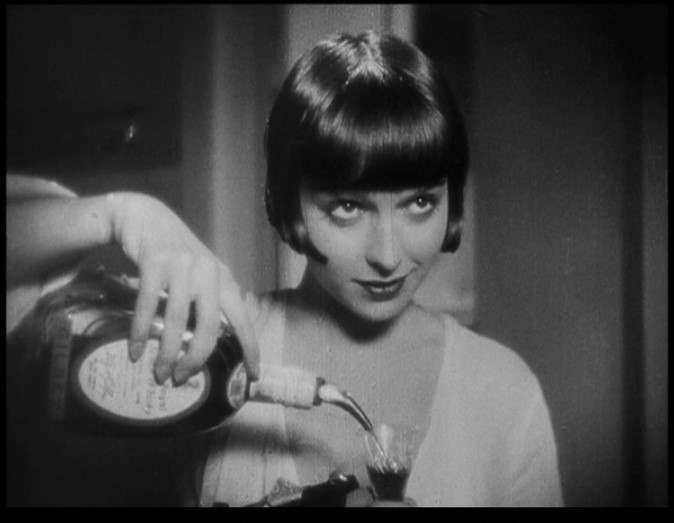
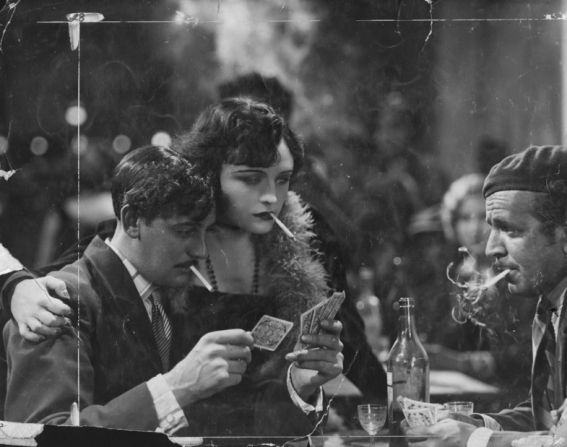
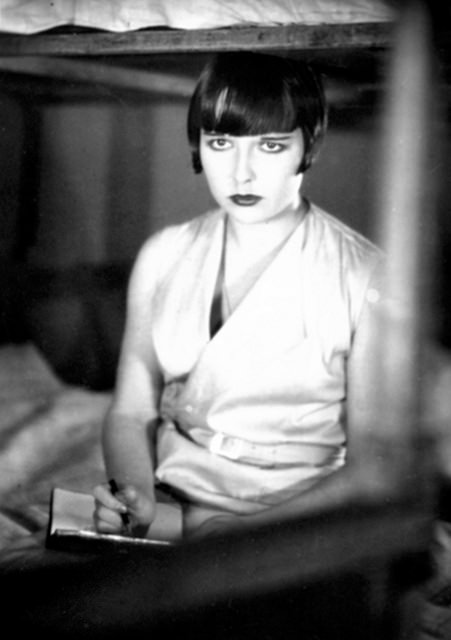
Louise Brooks and GW Pabst, an irresistible combination? Certainly Pandora’s Box (1929) caught lightning in a bottle, creating one of the most iconic female roles in all of silent cinema. In Pandora’s Box, Pabst and Brooks tease eroticism out of a certain ingenue naivety, whereas in her previous US films (A Girl In Every Port and Beggars of Life in particular) Brooks had offerede a slightly more world-weary sensuality. So it is no surprise that Pabst saw Brooks as the perfect person to play Thymian, the sheltered girl who will drop through the cracks of life via a workhouse for fallen women and prostitution.
This new Blu-Ray transfer of Diary of a Lost Girl (Tagebuch einer verlorenen, 1929) by Eureka’s Masters of Cinema label is a crisp and beautiful version of what is clearly an exploitation movie. As in Pandora’s Box, Pabst’s walks the tightrope of commenting on eroticism and sensuality; too often he falls off the tightrope into titillation. The film is set up for us to rue the difficult circumstances that lead to Thymian’s journey from a fine middle-class household down into poverty and eventually to selling her body. Except everything is still a bit clean. The reformatory is horrid, but only in comparison to her comfortable home – and its horridness is more due to a Miss Hanniganesque management rather than something inherent in the system. And there isn’t really too much criticism of Thymian’s shaming (AKA rape), and pregnancy. You get the sense that the original author (the film is based on a popular Margarete Böhme novel) and the film-makers are just following through the logical conclusion of these incidents. Instead, we end up with a somewhat warped fairytale, a slow-burn Snow White where the dwarves run a brothel full of happy hookers, or Cinderella with calisthenics.
Diary of a Lost Girl (1929)
There is a sensuality and rawness in Pandora’s Box, coming from Lulu’s naivity, which Thymian doesn’t share at all. At least by the time the film has put her through her paces as part of the reformatory’s physical education routine, she has no sense of wild abandon. It is a wholly more sinister erotic thrill, underlined (perhaps a bit too heavily) by the matron whipping her gong and clearly getting far too much pleasure out of the whole affair. This part of the film could be subtitled Reform School Girls do gym:
It’s the Silent London Poll of 2014 results – part two. Merry Christmas!
Yesterday I revealed what the poll results said about you – today we learn what the poll had to say about the films and performances that impressed you the most this year. You’re a discerning bunch, I already knew that, so I threw away the short lists and gave you free choice in all categories. The result is a picture that is tricky to summarise but fascinating all the same.
Disagree with these choices? May I direct you towards the comments section below?
Best DVD/Blu-ray release of 2014
So many to pick from – but there was a clear winner. Das Cabinet des Dr Caligari landed on DVD and Blu-ray (from Masters of Cinema) in its sparkling new restoration, on a beautifully presented disc. This was the release that many of us had awaited for this landmark movie. We reviewed the disc in the summer.
Runners-up: The BFI’s release of The Epic of Everest, wartime blockbuster Wings (Master of Cinema) and the tantalising, US-only Warner Archive release of Why Be Good? starring Colleen Moore.
Best theatrical re-release of 2014
Another runaway success for Caligari and his cabinet here. Congratulations to all concerned!
Runners-up: Two strong showings in the list: the BFI’s restoration and rescore of The Battles of Coronel and Falkland Islands and the re-release of The General. What a great year in the cinema.
Best orchestral film screening of 2014
The Battles of Coronel and Falkland Islands (1927)
Obviously, there’s a huge amount of variation in the responses when it comes to live shows. But clearly, you are seeing some fantastic live screenings around the world, and that is to be celebrated in itself!
We do have a winner though: the London Film Festival screening of The Battles of Coronel and Falkland Islands received the most nominations. This was truly a fantastic night, with the Royal Marines belting out Simon Dobson’s fantastic score. Great atmosphere too, with so many representatives of the Navy in attendance. I have never seen to many shiny brass buttons in one room.
Runner-up: The LFF came second too, with a clutch of nods for its spellbinding screening of The Goddess with the English Chamber Orchestra. Another very happy memory for me, that one.
















 Silent London