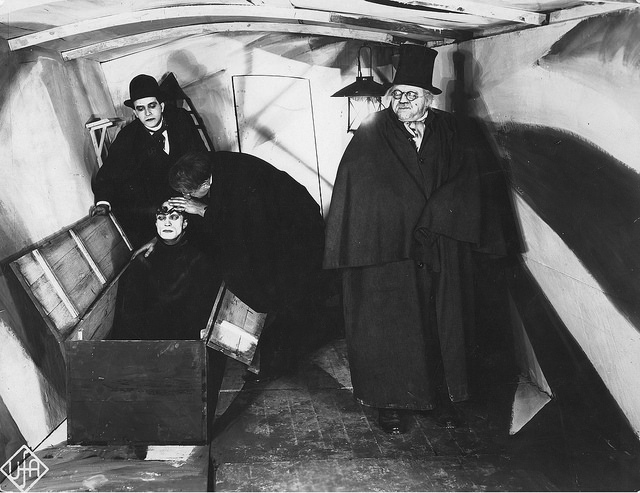
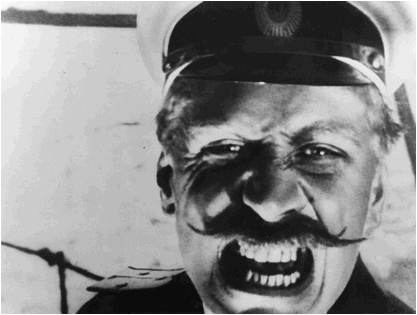
Just because a film has proved to be massively influential, it doesn’t follow that it will look modern. For evidence, I present Das Cabinet des Dr Caligari (1920) – without which, the movies that followed could look very different, but which barely cares to look like a movie at all. I’m exaggerating, which itself is very Caligari, of course, but watching the gamechanging new restoration of this cinematic titan, I am struck by how much of its power comes from the arts of set-painting and stage-blocking rather the magic of the moving pictures.
Although there are some eyeline cuts, irises, close ups and unsettlingly low-angled shots, Caligari heart belongs to its theatrical forebears. When I heard that this film had been restored, even when I saw the first YouTube clips of the work that had been done to bring crispness, brightness and vibrant, slick colour back to Caligari, I didn’t appreciate what all that labwork would reveal. This is Caligari the spectacle, a testament to design and showmanship – a world away from the current trend in horror cinema to ramp up the realism and immerse the audience in a grey and gruesome world.
Das Cabinet des Dr Caligari (1920)
Watching this Blu-ray, you can make out each brushstroke on the canvas backdrops, the clumps of white powder in the Doctor’s hair, Lil Dagover’s spidery painted-on eyelashes. Lean in, you might just be able to lick the greasepaint off the screen. The power of Caligari, of course, is that it’s no less terrifying for being artificial. In the same way that the framing story in the asylum, which was tacked on to make the film less scary, actually contains some of the film’s most disturbing scenes, Caligari‘s high-concept design strategy is so daunting as to be horrifying. There’s a lengthy, and very useful excerpt from Lotte H Eisner The Haunted Screen in the accompanying booklet and her summary of the power of Expressionism bears repeating:
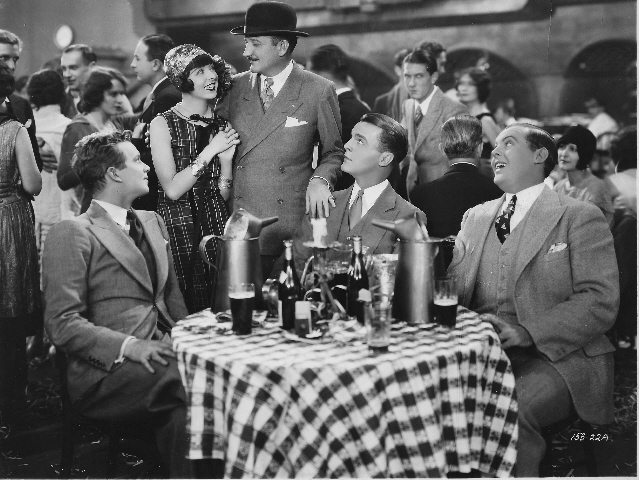
Jenny Hammerton and Nathalie Morris – our glamorous hostesses, with Betty Balfours in hand
If HG Wells could fix it for you to travel back to the silent era, you surely would, right? And while no doubt it would be enlightening to talk shop in the studios and editing rooms of 1920s Hollywood, it’s arguable that the real action would be in the nightclubs and hotel suites. Take it from me, the catering would be … interesting.
Many of you will know Jenny Hammerton and Nathalie Morris. Jenny Hammerton works as a film archivist, and runs the wonderful Silver Screen Suppers site on the side. She’s researching a forthcoming book of recipes from classic film stars, you see. Nathalie Morris works at the BFI as an archive curator, and also blogs about food: the Food on Film site recreates meals from movies. She is working with Jenny on a different book, along the same lines, but dedicated to the most important meal of the day – the cocktail hour.
Such a noble pursuit deserves all our support, of course, so myself and a few other selfless souls tripped up to Nathalie’s flat on the weekend to sample some cocktails and canapés. As the evening was undertaken in the name of research, not simple fun, here is what we learned.
We may remember Greta Garbo and Gloria Swanson as health freaks, but they let their hair down occasionally, culinary speaking. Garbo layered bacon over healthsome cottage cheese and rye bread to create a rather unwieldy canapé. Swanson deviated from the ways of brown rice for, what else, tempting bites topped with caviar.
Edith Roberts‘ sweetcorn fritters require a LOT of lard for deep-frying. Fear not, though, as our group couldn’t quite choose between the lighter veggie versions and the lardy originals in the final analysis.
Solid and unexciting to look at, they may have been, but Charles ‘Buddy’ Rogers’ potato and nut croquettes were seriously savoury – with a rich seam of nuts down the centre. Unexpectedly toothsome.
Zasu Pitts is an idiosyncratic one. We all loved her omelette with hot spanish sauce. But the Greed star cheated us of any actual spice in that sauce – hot in name only. And there was baking powder – yes, baking powder – in the omelette.
The parties thrown by Marion Davies may have gone down in Hollywood legend, but her cheese patties were unlikely to get anyone hot under the collar – tasty yes, but rather chunky and bland for a canapé. Perhaps they were just there to soak up the booze?
It’s remarkable what you can pick up in three minutes and 45 seconds. This short video by Gary Chapman, author of London’s Hollywood: the Gainsborough Studio in the Silent Years, is an excellent introduction to the British Famous Players-Lasky outpost.
This is the time and the place where Victor Saville and Michael Balcon began their ascent through the British movie industry, where Ivor Novello smouldered for Graham Cutts, and where Alfred met Alma, while making a film or two you may have heard of …
Pola Negri’s Madame Dubarry has it. You know exactly what I am talking about. Dubarry is living and loving in the heat of pre-revolutionary Paris, but she’s more than enough trouble for the aristos all by herself. “The woman who will ruin France” is first introduced as a breath of fresh air, whispering saucy jokes to the other girls in the seamstresses’ workroom – a ripple of fun in the stuffy atmosphere of the atelier. When she leaves the shop, Dubarry collects admirers with every step, like Clara Bow in a crinoline. Before long, of course, she’s the mistress of Louis XV, creating disarray in the court, just as she did in the shop.
Ernst Lubitsch is brilliant at capturing this, the sizzle of sex appeal so hot that it can turn a king’s head, transform a society ball into an orgy, or raise an angry mob at the palace gates. Madame Dubarry has the angst of a drama, but the vigour of a comedy, and Negri has exactly the attitude that the part demands. Dubarry isn’t a calculating seductress, just a natural-born pleasure-seeker: a minx who decides which lover to visit by pouting as she pulls at the bows on her bodice. And Negri commits fully to the role of a beautiful woman in ugly circumstances – those enormous eyes are flirting one moment and filled with anguish the next. Some people are allergic to Negri’s grand emoting, the head flung back, the flailing arms. But there’s plenty there’s naturalistic and light here: watch her face as Jannings trims her fingernails, revelling in pleasure and pain. And yes, there’s also an opportunity for Negri to rehearse her most notorious scene – hysterically throwing herself across her lover’s coffin.
This is a guest post by Henry K Miller for Silent London. Henry K Miller is the editor of The Essential Raymond Durgnat (Palgrave Macmillan, 2014). He is a regular contributor to Sight & Sound and has taught film at the University of Cambridge.
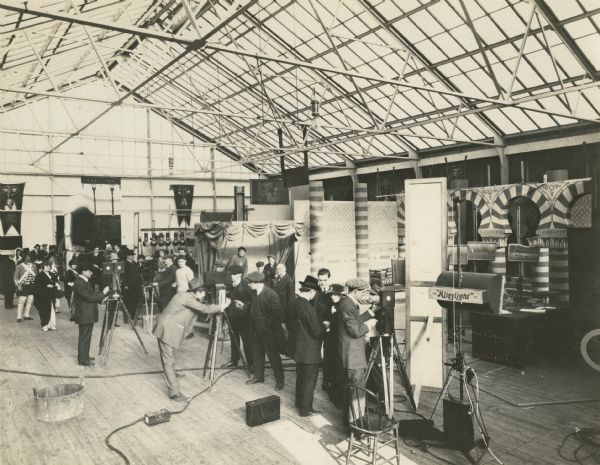
Though it was built by the grandest American film corporation, Famous Players-Lasky, no contemporary report of the film studio on the Regent’s Canal ever confused Shoreditch with Southern California. All were in agreement over its incongruous location, noting the contrast of imported glamour and native poverty – unscrubbed children, the smell of fried fish. There was less agreement, however, on what to call it, at least in the 1920s: sometimes “the Lasky studios”, sometimes “Islington” (the local telephone exchange was Clerkenwell; Hoxton is also arguable), often “Poole Street”. “Gainsborough” seems to have stuck only later, probably because of the famous Gainsborough melodramas, made towards the end of the studio’s life in the 1940s. Uncertain nomenclature notwithstanding, Gary Chapman is right to describe his subject as “a microcosm of the evolution of the British film industry during the silent era”.
FP-L established itself in what had been a power station soon after the Great War, apparently in order to exploit European locations and West End playwrights, and sent over some of its most talented staff; but the first films to emerge from N1 were poorly received, and by the time the reviews began to improve the plug had been pulled. Most of the Americans departed by the middle of 1922. They left behind the best-equipped studio in Britain – early difficulties with the London fog having been overcome – but its survival as a rental facility was not guaranteed. The practices of “blind” and “block” booking – mastered by Famous Players-Lasky itself – made it very difficult for British filmmakers to get a look-in, even in British cinemas, and production was in the middle of a five-year slump. As Chapman shows, the producers who took on the Islington studio in 1922–3 were the bravest of a new breed.
“In the early days of the cinema, there were several great City Symphonies – for Berlin, Paris, Rotterdam, but never for London. Alex Barrett is going to put that right, and his plans suggest a remarkable picture.” – Kevin Brownlow
A few months back, I promised you the chance to support the making of a new London City Symphony. Now the day has arrived, as the London Symphony team have launched their crowdfunding campaign. They need the help of Silent Londoners to turn their vision into a reality. They’re asking for your financial support, and offering you some chances to be involved in the making of the film too. If you can’t afford to help out yourself, they’d love you to spread the word about the project.
Alex Barrett, the film’s director (and Silent London contributor) explains why he wants to revive the City Symphony style for his new film: “We believe that by looking at the present through recourse to the past, we can learn something new about life today,” he says. “We won’t be parodying the style. We will be true to the spirit of the filmmakers that came before us, and we hope to capture the rhythm, the motion and the experimentation that made their films so wonderful, while simultaneously reimagining the City Symphony for the 21st Century”.
LONDON SYMPHONY is a poetic journey through the city of London, exploring its vast diversity of culture, religion and design via its various modes of transportation. It is both a cultural snapshot and a creative record of London as it stands today. The point is not only to immortalise the city, but also to celebrate its community and diversity.
Alongside making the film, the team will also be creating a new score – an original symphony – written by composer James McWilliam. Says James: “Music plays an important role in silent cinema, and our score will help take viewers on a journey through modern-day London”. The filmmakers plan to record the music with a live orchestra, but also have it performed live at special event screenings of the finished film. LONDON SYMPHONY reunites the team behind the short film HUNGERFORD: SYMPHONY OF A LONDON BRIDGE. A three-minute city symphony in its own right, the short film now serves as a pilot for the team’s intentions with the feature-length LONDON SYMPHONY.
You can visit the London Symphony crowdfunding page here. Check out the range of rewards and watch the video, in which the film-makers set our their plans for the movie.
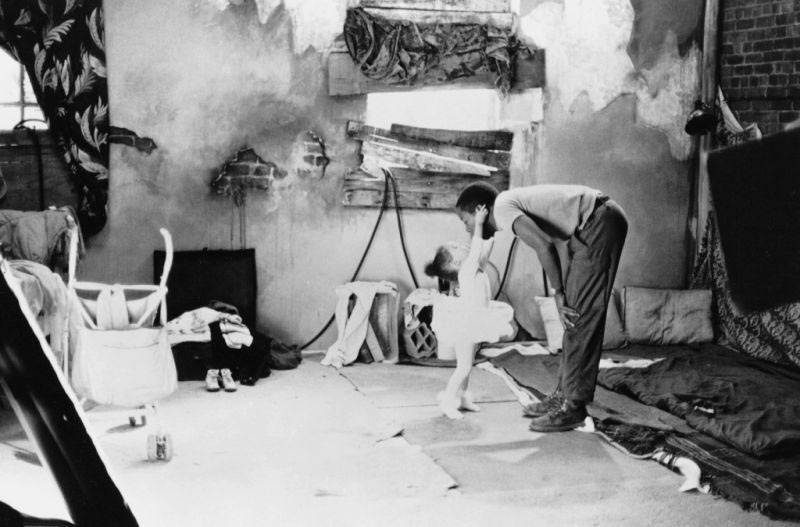
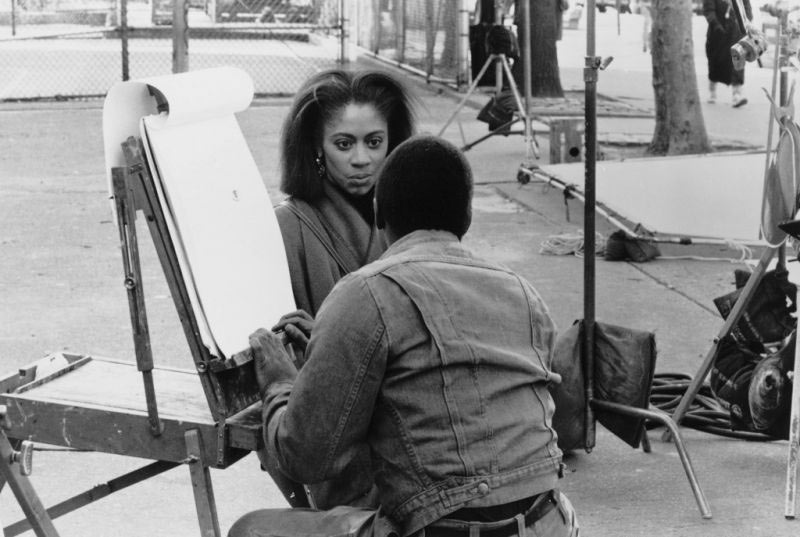
Sidewalk Stories (1989): Charles and Nicola Lane as the Artist and the Child. Photographer: Bill Dill
I barely knew a thing about Charles Lane this time last week. But since Saturday night I have been trying to find out as much as I can. Twenty five years ago, Lane directed a modern silent film of great style and bounteous charm, which was warmly received at the time, but has barely been heard from since. Like so much in the history of silent film, Sidewalk Stories (1989) is buried treasure, though from a rather more recent past. The good news is that the tail end of 2014 may finally be the time when Sidewalk Stories gets its due. The likelihood is that you will get a chance to see it soon, and I definitely recommend you take the opportunity when it arises.
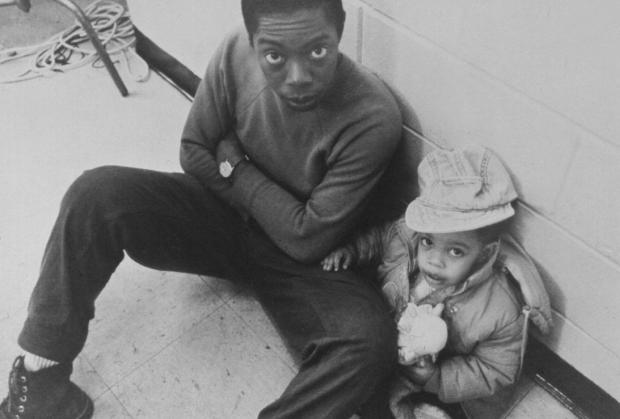
As a film student, Lane was apparently very sniffy about silents, but when a chum insisted that he catch a screening of The Gold Rush, he relented. Chaplin worked his magic, and Lane was hooked for life. The influence of Chaplin is powerfully strong in Sidewalk Stories, a silent black-and-white comedy shot on the streets of New York;Lane directs and stars in the film, which has more than a touch of The Kid about it. Lane plays a street artist, who sleeps rough in a derelict building in Greenwich Village (yes, you might say he was a tramp), but, through some convoluted circumstances finds himself in charge of a small child. No messing about: the Artist’s foldup easel looks uncannily like the window-repair kit Chaplin equips himself with in the earlier movie. It’s clear that Lane has an eye for the most devilish of details. Lane’s two-year-old daughter plays the Child, and although it seems strange to critique a toddler’s performance, she’s fantastic and of course, utterly adorable. Sandye Wilson, an elegant woman with a devastating smirk, plays the Artist’s bewildering and benevolent love interest. Lane’s character is a cheeky one, all right, and a dreamer too: a nonchalant riff on Chaplin’s Tramp, which retains the sweetness and the acrobatics of the original but with a pared-down ego. Lane’s Artist is a more of an everyman than a showstopping clown: a little guy in a zip-up denim shirt and cargo pants with neatly cropped hair. Perhaps it’s because the big city is just a wee bit more terrifying in the late 80s. The Manhattan of this movie is perniciously hostile: crushing Lane’s character, and maybe squashing his performance a little too.
Sidewalk Stories (1989)
No matter. Here’s why Sidewalk Stories is easily worth 97 minutes of your precious time. It’s funny, it’s touching, it’s very clever and it has a quite remarkable lightness of touch. There’s some virtuoso material here, including some fantastically choreographed fight scenes and (a first for a silent movie?) a fantasy slapstick sex nightmare. There’s not a single intertitle here either. Most impressive of all perhaps is a sustained tracking shot early on that takes us from one end of a street in the Village to another, from the panhandlers and street sleepers, to the Artist’s patch where he and his fellow dancers and magicians are busy making believe that they are anywhere but urban hell. There’s some comic business with a piece of string and two beds that is simultaneously hilarious and terribly sad. I also enjoyed the way that a laugh-out-loud, but silly, gag at the start of the movie with yuppies grappling over a yellow cab (it’s the 80s, I’m allowed to call them yuppies) was replayed later on with a more sinister meaning. I particularly liked the fact that the second time around the carfight takes place during a chase that’s straight out of Harold Lloyd’s Speedy – Lane was clearly in close touch with his New York silent forebears.
The Battles of Coronel and Falkland Islands (1927)
This a guest post for Silent London: an edited extract from Dr Lawrence Napper’s forthcoming book, a study of British film in the 1920s and its relation to the First World War, which is provisionally called ‘Before Journey’s End’: British Popular Cinema and the First World War, 1918-1930, and will be published by Palgrave Macmillan. This extract is taken from a longer chapter tracing the development of the British Instructional Films series of battle reconstructions from 1921 onwards. Dr Napper is a lecturer in Film Studies at King’s College London and the author of British Cinema and The Middlebrow in the Interwar Years (Exeter University Press, 2009).
This article contains spoilers, though as the films discussed deal with historical events, we hope no one will be too disappointed.
In 1927, as the flood of war-themed films identified by critic Caroline Lejeune the previous year developed into a torrent, two British companies were drawing on the legacy of British Instructional Films’ (BIF) war reconstruction series. Both The Battles of Coronel and Falkland Islands and The Somme (MA Wetherell) could claim to be legitimate heirs to the series. The former was directed by Walter Summers and produced by Harry Bruce Woolfe, while the latter shared a number of personnel with BIF’s other productions including its producer, E Gordon Craig.
In their release strategies, too, the two films followed the model of their predecessors – The Somme opened at the Marble Arch Pavilion on 5 September for an exclusive run, while The Battles of Coronel and Falklands Islands was screened privately for the royal family at Balmoral before opening at the New Gallery on 15 September. These openings were announced together in the press coverage, implying a parallel between the two films. Both films went on general release during Armistice week, where they competed with a number of other British films with war themes, including Remembrance (Bert Wynne, 1927) and Roses of Picardy (Maurice Elvey, 1927). In the premier London houses, they were succeeded by further exclusive runs of new war dramas, Blighty (Adrian Brunel, 1927) replacing The Somme at Marble Arch, and Land of Hope and Glory (Harley Knoles, 1927) in the Plaza, Regent Street.[1]
The Somme (1927) (Image: BFI)
Despite these similarities, it is nevertheless possible to identify divergent strategies in the two films. The self-conscious use of formal moments of remembrance evident in the 1925 Ypres (Walter Summers) was incorporated into a number of the fictional war dramas, including Remembrance, Blighty and Land of Hope and Glory. The balance of drama and documentary elements continued to shift, and both The Somme and Coronel and Falklands develop the more dramatic shooting structure evident in Mons (Walter Summers, 1926), although in different directions. Mindful of the criticisms of Mons, director MA Wetherell re-instated the diagram elements of earlier films in his explanation of the overall strategy of The Somme (a decision which earned him praise from a number of reviewers), while Summers took advantage of the relatively contained story of Coronel and Falklands to offer a film much more clearly driven by the narrative conventions of fiction film-making.[2] As part of this, the exploits of Victoria Cross (VC) winners – so consistent an element in all of the previous films – were dropped entirely from Coronel and Falklands, which offers instead a much clearer identification with motives and inner emotions of the captains of both the British and German ships, conveyed through classical editing.
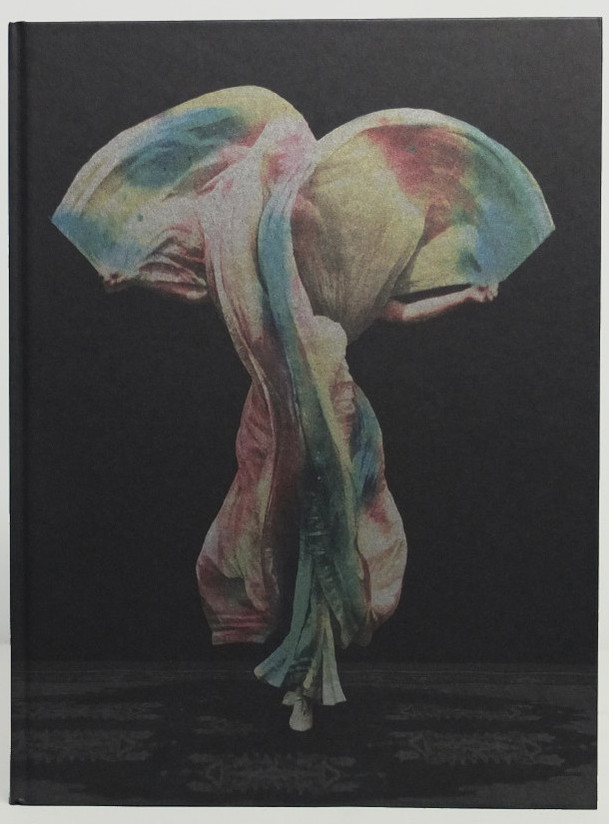
If a book absolutely, positively, had to be judged by its cover, then Birds of Paradise: Costume as Cinematic Spectacle would be just fine. This anthology of academic writing comes encased in black, and the cover features a shimmering Serpentine Dancer, her skirts twirling over her head and with her arms outstretched. We know this is a frame enlargement because the rainbow inks daubed on to the frame transform her rippling dress into the wings of a butterfly, or an exotic bird. She is framed by the darkness of the blank stage around her: a woman in a white dress, made into a spectacle by the twin arts of fashion and film. The cover is utterly appropriate and ravishingly gorgeous.
Before you even reach the title page, there are more dancers, swishing their skirts and pointing their toes, reproduced in silvered, coloured inks on matt-black paper. This is an academic book masquerading as a coffee-table tome. You could flick through it for hours (and I did) marvelling at these silver and full-colour illustrations, weighing the heavy paper in your fingers.
But at some point, one must stop flirting and dance with the one that brung you. That is to say, read the darned book. The good news is that that divine creation has been brought to us by the people behind the Fashion in Film Festival and as such it is comprises an intelligent and slightly idiosyncratic approach to its subject. This is not a simple skate through film-costume history. The several contributors are mostly academics and curators, in the fields of performance, design, fashion, literature and film, and their essays are arranged in three groups, relating to different eras.
When I checked out the silent films on offer at the London Film Festival this year, I missed The Tribe. Luckily for me, the sharp-eyed Neil Alcock noticed it and pointed me in the right direction. The Tribe/Plemya is a modern film, from Ukraine – the debut feature from Kiev-born director Myroslav Slaboshpytskiy – and it was heavily garlanded in the critics’ week at Cannes this year, so it’s definitely worth a look. And it’s definitely of interest to silent cinema fans.
It’s tricky to describe this as a silent film, though, seeing as it has diegetic sound – real diegetic sound, which was all recorded on set, not added in post-production. Nor can we classify it “dialogue-free” … there appears to be plenty of dialogue in The Tribe, but all of the words spoken are in Ukrainian sign language. There are, the trailer proudly proclaims, no subtitles or voiceover to soften that blow. I can’t find figures for how many people in the world speak Ukrainian Sign Language, although this site affirms it is in a healthy state, and two years ago, the Daily Mail reported that inventors in Ukraine had developed a “super glove” to turn UKL into audible speech via a smartphone app. The point is that I suspect none of the Cannes judges were fluent in it, and for them, and most of us, this film will play more like a silent than a talkie.
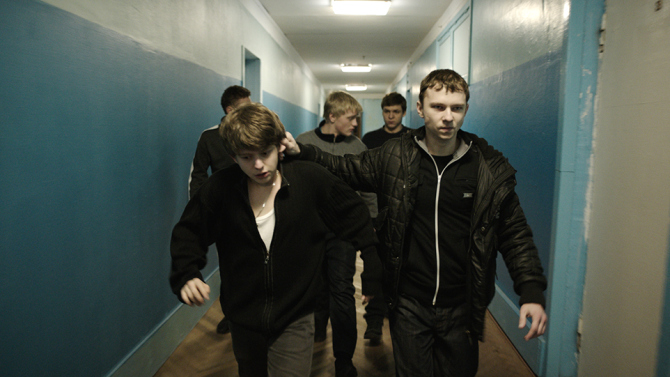
The Tribe (Plemya, 2014)
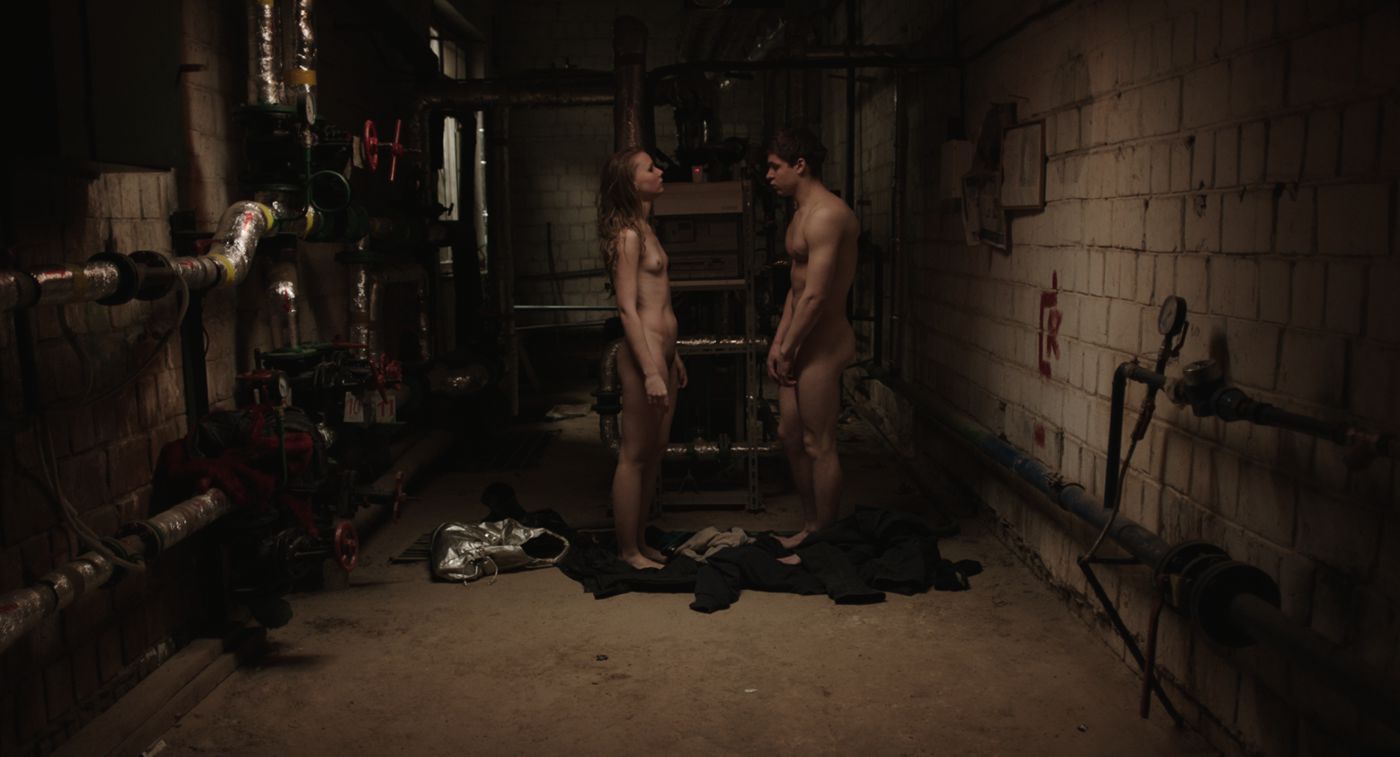
It’s a violent, gritty, sexually explicit film: the grim story of Sergey (Grigoriy Fesenko), a teenager at a boarding school for deaf-mute children. Said school is rife with gang violence and prostitution, and Sergey clambers his way to the top of the tree before risking it all by falling in love with the wrong girl. There’s little gloss here: the cast are all non-professionals, and UKL speakers, rather than hearing actors. Slaboshpytskiy made a short, and similarly brutal, film set in a boarding school like this one a few years back, a real-time drama called Deafness/Glukhota (2010) in which a police officer grills a deaf-mute teenager in his car – while suffocating him with a plastic bag.
The Tribe (Plemya, 2014)
The Tribe plays at the Toronto International Film Festival this week, before coming to London in October, and while we wait for reviews from that festival, this writeup for the TIFF programme by Dimitri Eipides sounds very promising:
Slaboshpytskiy constructs his film with no dialogue and no subtitles, allowing the story to be enlivened by the magnificent pantomimic acting of deaf-mute non-professionals, in a brilliant balance of clarity and ambiguity that puts hearing audiences in a fascinating, active position …
The Tribe peels away the tenderness of its protagonists, communicating in the purest cinematic forms the rawness hidden behind the fragility of youth.
I like that phrase abut the hearing audience being put in a “fascinating, active position”. Doesn’t that go straight to the heart of why we love silent cinema? In his review for Variety, Justin Chang expands on this idea, writing that:
Sans dialogue or translation, each interaction effectively becomes a puzzle to be solved, and Slaboshpytskiy is brilliant at using ambiguity to heighten rather than dull the viewer’s perceptions. Even when the meaning of a particular exchange eludes us, a greater sense of narrative comprehension begins to take hold.
The trailer for The Tribe is hugely intriguing too: I love the strict, square framing and its icily distant long takes. In the foreground of a shot of gang members signing vigorously to each other, one toughnut shoulder-shoves another – a gesture that is as clear as any dialogue. After a screeching hairpin camera-move, a young man’s confusion in the face of a semi-naked and angry young woman in a bedroom reminds us how much of teenage life is a struggle to negotiate a path between our own feelings and those of the people around us. And who could fail to be impressed by the stirring declaration that “for love and hatred you don’t need translation”.
The Tribe plays twice during the London Film Festival. It screens at 8.45pm, 15 October 2014 in NFT1, BFI Southbank and 8.30pm, 17 October 2014 at Screen 5, the Vue West End Cinema. Buy tickets here.
Click on any of the above images to view a slideshow of stills from Damn The War! (1914)
One of the highlights of the silent offering at this year’s London Film Festival, Alfred Machin’s Damn The War!/Maudite Soit la Guerre (1914) is not just a moving pacifist drama, it is an object of jewel-like beauty. As those who saw the restoration of this Belgian film at the Bologna this year attest, the secret is in the vibrant, expertly applied, stencil colour. Head Curator at the BFI Archive, Robin Baker, says:
The ravishingly beautiful restoration has returned a magical range of stencilled colours, evoking the nostalgia of tinted postcards and a world stained with the blood of war.
Stencil colouring was popular during the early film period, and through the silent era. It was a meticulous process, as Barbara Flueckiger explains on her Timeline of Historical Film Colors website:
Stencil coloring required the manual cutting, frame by frame, of the area which was to be tinted onto another identical print, one for each color. Usually the number of colors applied ranged from 3 to 6. Theprocess was highly improved by the introduction of a cutting machine. Thus the cutter could follow the outlines of the image areas on a magnified imagefrom a guide print projected onto a ground glass. Apantograph reduced the enlargement back to framesize. The machine performed the cutting on the stencil print with a needle. When cut-out manually, the gelatin had to be removed from the stenciled print to form a transparent strip. In the machine cutting process the stencil was cut into a blank film directly. For every color the stencil print was fed in register with the positive print into a printing machine where the acid dye was applied by a continuous velvet band.
At the time that Damn The War! was made, this painstaking work would have been done by large teams of female workers. Stencil colouring was part-mechanised, however, and as such was a sight easier than the hand-colouring techniques that preceded it. In fact, it’s the combination of soft pastel-coloured inks and machine-cut precision that creates such a beautiful painterly look. In Damn The War! a wash of vivid red ink is also used to dramatic effect, and masks are used to intensify the impact of the coloured scene.
Readers of this blog will note that in the year that this film was made, the Technicolor corporation was born, which would eventually create a whole new approach to colour film. Glorious though that could be, it’s hard not to think that a certain kind of cinematic gorgeousness was lost when the stencils were all packed away.
Watch Damn The War! (1914) at 6.30pm, 12 October 2014, NFT1, BFI Southbank, in the London Film Festival. Buy tickets here.
The launch of the London Film Festival programme is a cascade of A-list stars, esteemed auteurs, Oscar contenders, Hollywood blockbusters and world premieres. But enough of all that. Did someone mention Colleen Moore? Here’s our rundown of the silent cinema offering at the BFI London Film Festival this year.
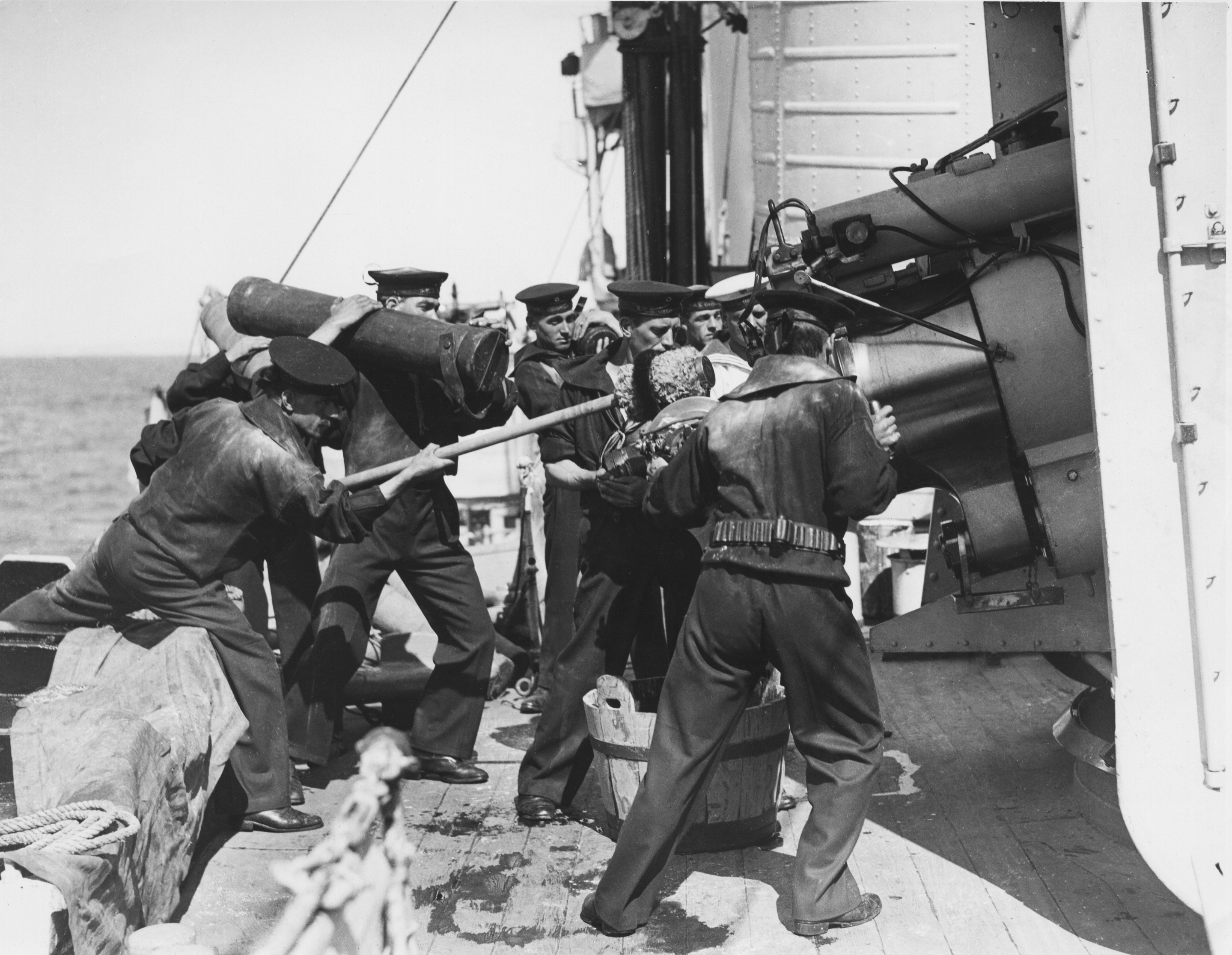
The Battles of Coronel and Falkland Islands (1927)
The Battles of Coronel and Falkland Islands (1927)
“Virtually unknown” it may be, but this fantastic British war film was a real genre game-changer. Walter Summers directs the noble tale of “a victory and a defeat almost as glorious as a victory”, which was a hit with audiences and critics both on its release. Unjustly neglected for years, TBOCAFI has been rescued from osbcurity via a gleaming new restoration and a modern brass score, which will be performed by members of the Royal Marine band at the LFF Archive Gala screening.
Screens: 7pm, 16 October 2014, at the Queen Elizabeth Hall. Buy tickets here.
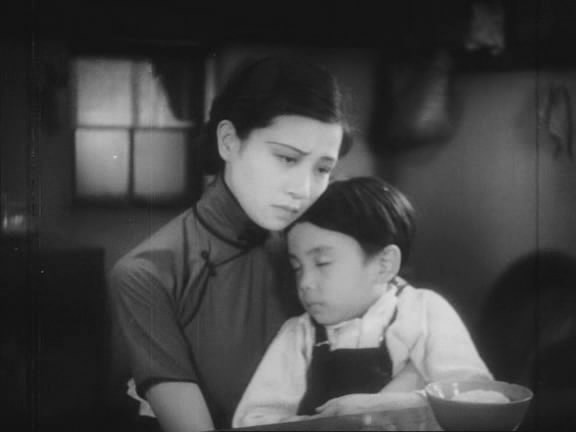
This sumptuous Chinese melodram stars Ruan Lingyu as “goddess” or sex worker, trying to care for her child, who is pushed into taking violent revenge on her pimp. Described on these pages by John Sweeney as: “Unsentimental and quite without melodrama, this is a great film.” The festival screening will be accompanied by the English Chamber orchestra, playing a new score by Chinese composer Zou Ye.
Screens: 7.30pm, 14 October 2014, at the Queen Elizabeth Hall. Buy tickets here.
This is a guest post for Silent London by Duncan Carson, a film event producer who organises the Nobody Ordered Wolves screenings. You can follow Duncan on Twitter at @nowolvesplease
It would be easy enough to despair at our current cinema choices. Although film houses are more comfortable and technologically sophisticated than ever, what is actually on the screen is terrifyingly narrow. Even though almost every cinema in the land is now equipped for digital prints, opening up programmers to a cheap and vast library of films, this hasn’t broken the stranglehold of loud, ephemeral and repetitive Hollywood fare.
Standing as an antidote to this conservatism, Scalarama brings the weird, the underseen, the expanded and emboldened to the cinema and beyond. In its fourth year and now bolstered by BFI funding, Scalarama takes place across September and operates in a similar fashion to the Edinburgh festival fringe: the organisers take no cut of the profits, they only encourage a broadening of what is on offer. Originally created as a tribute to the freewheeling programming of the Scala Cinema in King’s Cross, it attempts to bolster film clubs, give cinemas the confidence to take on riskier programming and move cinema outside of its traditional homes.
Two films that are at the heart of Scalarama’s offering this year are of special interest to silent film lovers. The first will be familiar to all: Das Cabinet des Dr Caligari. The second is almost a ghost to all but a few dedicated film fans: Charles Lane’sSidewalk Stories.
Shot in 1989, Sidewalk Stories is a modern silent feature film. And it has an impressive progeny: Michael Hazanavicius, the director of the Oscar-winning behemoth The Artist, credits this neglected classic as the direct inspiration for his indie smash. Yet if this might lead you to expect a nostalgic recreation of cinema pre-1928, guess again. Lane’s setting and attitude is more Spike Lee than FW Murnau. Made the same year as Do the Right Thing, Sidewalk Stories is cut from the same cloth as other grimy pre-Giuliani New York city films like Taxi Driver, Serpico and The French Connection.
Sidewalk Stories (1989)
That said, the plot itself is pure Chaplin: the star (played by Lane himself) finds himself in loco parentis of a young girl when her father is killed. As with Chaplin’s The Kid, our hero’s hapless parenting is the centre of the story here. The dynamic between the two is heartwarming, no doubt because of their connection as real-life father and daughter. Having confessed to loathing silent cinema as an art student, Lane embraces the medium to tell a universal story about homelessness and desperation. It is a story of deep compassion and this is why it is being released in the UK in partnership with Open Cinema, a charity that provides opportunities to access culture and film skills for marginalised people. Londoners have two opportunities to catch the film: Nobody Ordered Wolves (AKA yours truly) will be showing the film at popup cinema Hollywood Spring with a live score by pianist Stephen Horne. Tickets here. Later in the month, Hotel Elephant will also be showing the film. To see where else in the UK this neglected gem is getting an outing, click here.
This is a guest post for Silent London by Peter Baran. You can follow Peter on Twitter at @pb14.
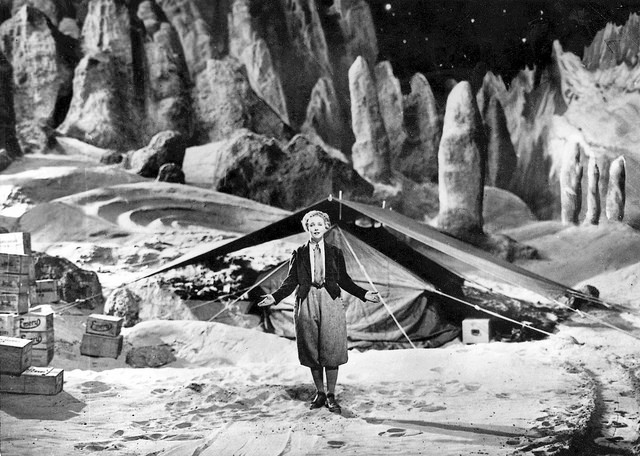
Frau Im Mond is one of the first silent movies I saw as an adult. And despite its audacious special effects I can honestly say Fritz Lang’s rocket opera was not my gateway drug to silent film. Instead I saw it to justify the décor of my recently redecorated flat. I wanted to hang an attractive film poster above my stairs; for quite some time it was going to be Metropolis, until I saw the poster for Frau Im Mond, and its iconic rocket. As a science-fiction fan, and a film buff, how could I resist this picture? However, it seemed like cheating to have a poster of a film I hadn’t seen hanging above my stairs. So that is why I saw Frau Im Mond six years ago, having bought the previous Masters Of Cinema DVD release.
Now it is back, re-released in dual format Blu-ray and DVD, and seven minutes of additional footage have been added to the film, which brings the running time up to a handsome two hours and 49 minutes. As with the recently reconstituted Metropolis, Lang takes his time but doesn’t waste a minute. It is just that for much of the film each minute could have been thirty seconds shorter, and the plotting gets in the way of what the film promises. While Frau Im Mond is a notable film in both Lang’s filmography and in the history of science-fiction cinema, it is also way too long and ponderous – considering its wonderful potential.
Written by Fritz Lang’s wife Thea Von Harbou, and based on her novel of the same name, Frau Im Mond is one part conspiracy thriller and one part science-fiction tale. And that almost equally splits the running time, with the first hour and 20 minutes being a convoluted runaround between a professor, venture capitalists, enemy agents, a fiancée and a sparky kid. The rocket from the poster – and the justification for this being the first “scientific” science-fiction film – finally appears at one hour 18 minutes and the film does pick up considerably at that point, if only to give us some effects and even better Aran jumpers.
The story of the Thanhouser Film Studio follows a rise-and-fall pattern familiar to all aficionados of early cinema: innovation, success, expansion, loss, obscurity. But there is a gratifying twist in the Thanhouser tale that marks it out among its fellows.
Edwin and Gertrude founded the studio in 1909 in New Rochelle, New York as an independent outfit. They were successful for many years and made more than 1,000 films, shown all over the world, including some truly fantastic early literary adaptations. The biggest star on their books was probably the wonderful Florence LaBadie, heroine of the serial Million Dollar Mystery. You may also be familiar with the precociously winsome Marie Eline, AKA “The Thanhouser Kid”. Sadly, after many profitable years, in 1917, the downturn in the movie industry forced Edwin Thanhouser to close the company for good.
The Thanhouser Studio in 1914
The story would end there, with Thanhouser another footnote in film history, were it not for the tireless efforts of Edwin and Gertrude’s grandson. Ned Thanhouser has spent the past three decades hunting down the movies that his grandparents made, as well as preserving and exhibiting them all over the world. Two-hundred-odd films later, Thanhouser is a name to conjure with, and the world is lot wiser about early American film-making. Just last year, a screening of Thanhouser films played to an appreciative crowd in London at the BFI Southbank.
But Ned has been working on another film project: a documentary about the family business.
This 50-minute documentary reconstructs the relatively unknown story of the studio and its founders, technicians, and stars as they entered the nascent motion picture industry to compete with Thomas Edison and the companies aligned with his Motion Pictures Patents Corporation (MPPC). Ned Thanhouser, grandson of studio founders Edwin and Gertrude Thanhouser, narrates this compelling tale, recounting a saga of bold entrepreneurship, financial successes, cinematic innovations, tragic events, launching of Hollywood careers, and the transition of the movie industry from the East Coast to the West and Hollywood. It will be of interest to scholars, archivists, early film historians, and everyone who loves the intriguing stories about the people who pioneered independent movie-making in America.
The Thanhouser Studio and the Birth of American Cinema had a little help over the finishing line from an Indiegogo crowdfunding campaign and it will be released next year. Excitingly for those of us Pordenone-bound in October, the film will have its premiere at this year’s Giornate del Cinema Muto. I’ll be there, will you?
Read more about studio, and the documentary on the Thanhouser site.
The Battles of Coronel and Falkland Islands (1927)
Name:The Battles of Coronel and Falkland Islands (1927).
Age: 87 years old. The clue’s in the number in brackets.
Appearance: Shiny and new.
Sorry, that doesn’t make sense – I thought you said it was 87 years old.The Battles of Coronel and Falkland Islands may be knocking on a bit, but it has been lovingly restored by the BFI and from what we gather, it’s looking pretty damn sharp. Just take a look at these stills.
Great, where can I see this beautiful old thing? At the Queen Elizabeth Hall on 16 October 2014 – it’s being shown at the London Film Festival as the Archive Gala. It will then be released in cinemas nationwide, and simultaneously on the BFIPlayer …
Blimey. And then it will be coming out on a BFI DVD.
Wonderful news, I’ll tell all my friends. Really?
No. I’ve never heard of it. Fair enough. You could have said that in the first place.
I was shy. Don’t worry, the BFI calls it a “virtually unknown film” on its website.
Phew. But you should have heard of the director, Walter Summers.
Rings a bell … He’s a Brit. Or he was, rather. And he was quite prolific, working in both the silent and sound eras. “I didn’t wait for inspiration,” he once said. “I was a workman, I worked on the story until it was finished. I had a time limit you see. We made picture after picture after picture.”
The news certainly caught my attention. Masters of Cinema has upgraded its DVD release of Murnau’s Faust: a German Folktale (1926) to a shiny new dual-format edition. All the beauty of Faust, but in high-definition Blu-ray glory: temptation itself. The even better news is that this is a very beautiful disc indeed.
Faust has always been a feast for the eyes, from the cutting-edge 1920s special effects to the gorgeously, painterly compositions, and the Blu-ray transfer here more than does the film justice. Compared to the DVD, this is just far, far more filmic. There are rich blacks and sumptuous detail, making the most of crowd scenes and shadowy landscapes. On a biggish screen, you’ll notice a texture of soft grain, not sharp pixels. As was familiar practice in the 1920s, Murnau shot Faust with two cameras – one each for the domestic and export versions of the film. His favourite takes remained in the German print, and that is what has been restored here (the grandly gothic German intertitles remain, so you’ll have to turn the subtitles on). This is the best Faust you can get – screening this at home is a seriously impressive movie experience.
This is a guest post for Silent London by Tony Fletcher, film historian at the Cinema Museum, about director-actor Alf Collins. Some of Collins’ Gaumont films will be shown on 30 August at a special open-air screening on the site of the original studio in Camberwell, with musical accompaniment by Neil Brand.
Alfred Bromhead started the English agency for Gaumont in Britain in 1898. He distributed the films produced by the French arm of the company, which was run by Leon Gaumont, and he also attempted to produce a few films in Britain in 1899. He opened a small outdoor studio on a four-acre cricket field in Loughborough Junction in south-east London. The open-air stage measured 30ft x 15ft However, this venture was short-lived and lasted for only one summer.
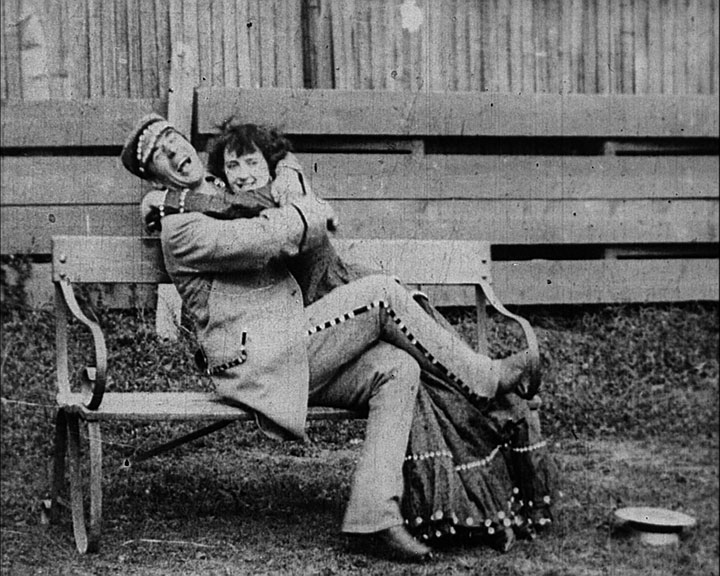
Alf and Maude Collins in Coster outfits in When Extremes Meet, 1905
In 1902, Bromhead decided to make another attempt at producing films. Alfred Collins came on board as stage manager, and Gaumont continued producing short films over the next seven to eight years. These were often shot in the streets of south-east London – pioneering chase comedies and dramas. Alf Collins had already had some film experience working with Robert Paul, as well as at the British Biograph Company. He had started performing at the Surrey Theatre under George Conquest, later joining the William Terris Company at the Lyceum Theatre. He also performed in Drury Lane Pantos playing The Copper in the Harlequinade. His full-time job between 1902 and 1932 was as the stage manager for the Kate Carney Company, which gave him opportunities to make films when they were appearing in London and the provinces.
During 1904, Bromhead moved studios from Loughborough Junction to a 14-acre site at Freeman’s cricket field, Champion Hill. Thomas Freeman was a local builder and decorator living at 127 Grove Lane. In 1891, he had acquired a site at the rear of Champion Hill House and Oakfield House (roughly where Sainsbury’s superstore and Dulwich Hamlet FC are now situated). Freeman built three wood and iron cricket pavilions which were hired out during the summer to the Champion Hill Cricket and Lawn Tennis Club and during the winter to Dulwich Hamlet FC. These appear in some of the films. Bromhead constructed an open-air stage to film interior shots as no artificial lights were available.
Man with a Movie Camera, dir. Dziga Vertov (USSR 1929)
Man with a Movie Camera, dir. Dziga Vertov (USSR 1929)
Man with a Movie Camera, dir. Dziga Vertov (USSR 1929)
Man with a Movie Camera, dir. Dziga Vertov (USSR 1929)
Man with a Movie Camera, dir. Dziga Vertov (USSR 1929)
Man with a Movie Camera, dir. Dziga Vertov (USSR 1929)
Two years ago, Dziga Vertov’s landmark art film Man With a Movie Camera crashlanded into the top 10 of the Sight & Sound Greatest Films of All Time poll. Today, I can jubilantly announce that this year Movie Camera tops another Sight & Sound poll – the hunt for the Greatest Documentary of all time. There’s another silent in the top 10 too – the wondrous, beautiful, and controversial Nanook of the North (Robert Flaherty, 1922).
1. Man with a Movie Camera, dir. Dziga Vertov (USSR 1929)
2. Shoah, dir. Claude Lanzmann (France 1985)
3. Sans soleil, dir. Chris Marker (France 1982)
4. Night and Fog, dir. Alain Resnais (France 1955)
5. The Thin Blue Line, dir. Errol Morris (USA 1989)
6. Chronicle of a Summer, dir. Jean Rouch & Edgar Morin (France 1961)
7. Nanook of the North, dir. Robert Flaherty (USA 1922)
8. The Gleaners and I, dir. Agnès Varda (France 2000)
9. Dont Look Back, dir. D.A. Pennebaker (USA 1967)
10. Grey Gardens, dirs. Albert and David Maysles, Ellen Hovde and Muffie Meyer (USA 1975)
Both of these films deserve endless discussion and analysis, it’s true – as do the others in the list, from Shoah (Claude Lanzmann, 1985) to Don’t Look Back (DA Pennebaker, 1967), but I want to linger on Vertov’s film for now. I think it’s rather special – but I am intrigued by its success in this poll. For me Man With a Movie Camera is really an art film, not a documentary, because it foregrounds technique and display above truth-telling and information-imparting. Not that it doesn’t do that too, but in the world of documentary film-making, City Symphonies have every right to push form over content, and Man With a Movie Camera is the most invigorating of all City Symphonies. This is a movie about the sheer joy and madness of film-making – stopmotion, superimposition, freeze-frame, split-screens, rewinds, acute angles and all. It exalts in the possibilities of photography and motion. From the opening scene in which the cinema seats slam down one by one, onwards, we are sure that this will be a movie about the movies, and all the more enjoyable for that. It’s as addictive as popcorn, as edifying as high art.
Is it worthy of comment that Man With a Movie Camera is in the ascendancy at a time when there is little good news coming out of Ukraine? I’m not sure – for most viewers, I suspect this film is lumped in with the less-specific categories labelled “Soviet”, “Silent” and “Arthouse”. But it always does us good to remember that far-away parts of the world are synonymous with more than the bad news that hits the headlines. This poll result reminds us that Ukrainian cinema, as showcased at last year’s Pordenone Silent Film Festival, shines in our global film heritage. There are, you’ll note, no British films in the top 10.
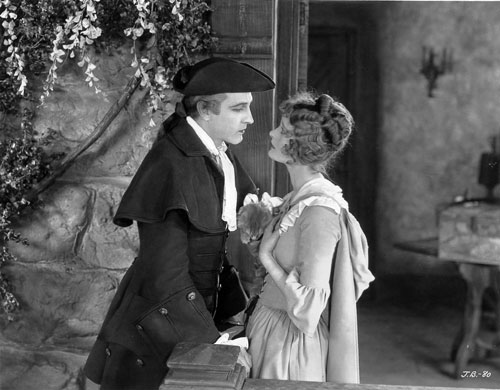
John Barrymore and Delores Costello in When a Man Loves (1927)
Have you booked your fights yet? The 33rd edition of the world’s most prestigious silent film festival in Pordenone, Italy is looming – it will take place from 4-11 October, and tantalisingly, a few details have already been released. There are a few screenings already listed on the official website, and a shiny new press release (written in Italian) too. With the help of Google translate, let me tell you what I learned on the internet.
I can tell you that there will be a gala screening on the last night of Chaplin‘s City Lights, with an orchestra playing the director’s original score, as reconstructed byTimothy Brock. Günter Buchwald will conduct. Elsewhere in the festival, four Chaplin shorts will screen with Benshi narration by Kenka Yasubei, who will also voice a classic Japanese film.
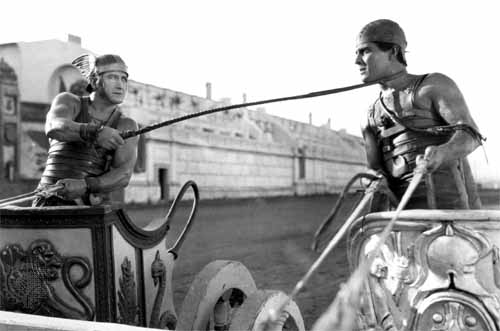
Ben-Hur (1925)
Did you know that this year marks the centenary of Technicolor? A dedicated strand at the Giornate will screen 30 full-length films and clips that showcase the pioneering colour technology. Watch out for The Black Pirate (1926) and Ben-Hur (1925).
Hollywood royalty will be celebrated at Pordenone with a showcase for the silent films made by the Barrymore acting dynasty, including Dr Jekyll and Mr Hyde (1920), The Copperhead (1919), The Beloved Rogue (1927) and Beau Brummel (1924) – plus the two surviving reels of The Eternal City (1922). Films starring John, Ethel and Lionel Barrymore will be shown across the week, with When a Man Loves (The Loves of Manon Lescaut), 1927, starring “the Great Profile” himself and Delores Costello opening the Giornate on 4 October. When a Man Loves will be presented with its original Vitaphone soundtrack, composed by Henry Kimball Hadley, and will be supported by a programme of Vitaphone shorts.
A section entitled Russian Laughter will present comedies directed by Yakov Protazanov, selected by Peter Bagrov of Gosfilmofond in Moscow.
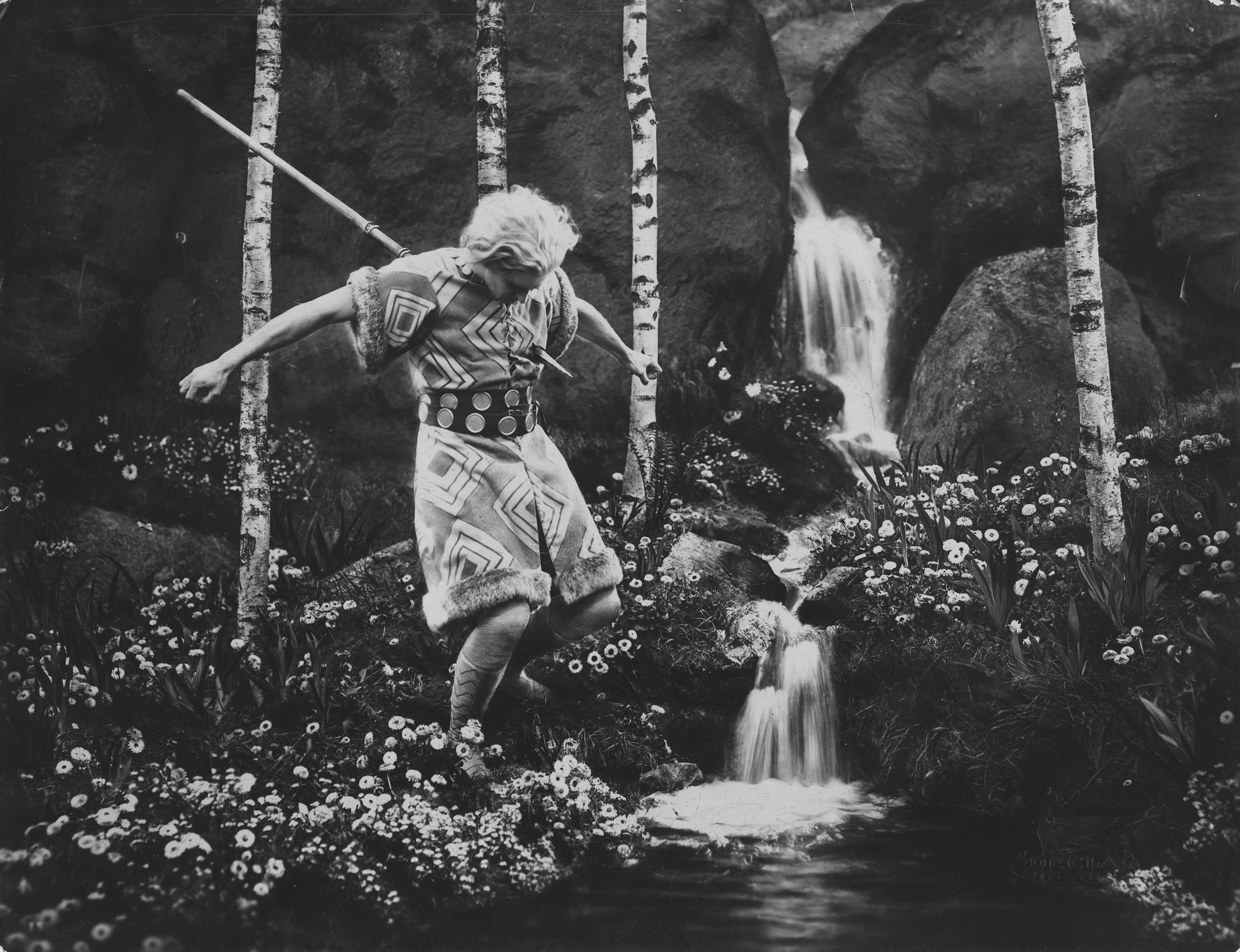
Die Nibelungen (1924)
The Canon Revisited, curated by Paolo Cherch Usai, is always popular and this year will feature Raoul Walsh’s gangster drama Regeneration (1915), both parts of Fritz Lang’s Die Nibelungen (1924) and Pudovkin’s epic Storm over Asia (1928). Also: GW Pabst’s Die Liebe der Jeanne Ney (1927) and Mauritz Stiller’s Herr Arnes Pengar (1919)
Hand-coloured films by George Méliès will be shown by AIRSC .
New discoveries and restorations at the festival this year will include Conrad Wiene’s adaptaion of Tolstoy’s The Power of Darkness (1924).
Battleship Potemkin (1925)
And finally … the sound version, yes sound version of Battleship Potemkin – a 1930 German release with a soundtrack recorded on disc.
Want more? This Nitrateville post from a few weeks ago contains a few extra titles – some of which are very exciting indeed. Premature? Out of date? Who knows? More fuel for the rumour mill, anyway.














 Silent London