Are you currently perched on a plump suitcase, train tickets in hand, perusing the Leicester Phoenix listings and counting the days on your fingers until the British Silent Film Festival begins on Thursday? Well why not?
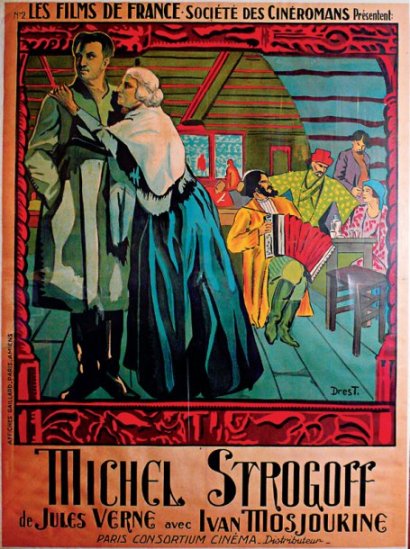
The four-day event is nearly upon us, and this is your friendly reminder to get your gorgeous selves to Leicester next weekend for some hot silent film action. This year the festival is back in the city of its birth, and most of the films will be shown at the Leicester Phoenix cinema and art centre. The schedule is out now, and the selection looks fantastic, with everything from rare historical footage of the sinking of the Lusitania to a programme devoted to Buster Keaton; the splendour of Michel Strogoff starring Ivan Mosjoukine and the antique charm of early screen advertising. If you read Charles Barr’s recent Hitchcock Lost and Found, you’ll no doubt be intrigued that a film the young Master of Suspense worked on that had previously been thought lost, Three Live Ghosts (1922) has been unearthed in a Russian archive and will play at this year’s festival.
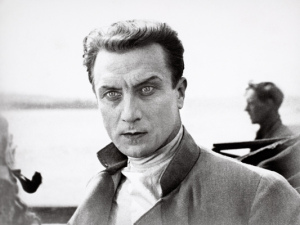
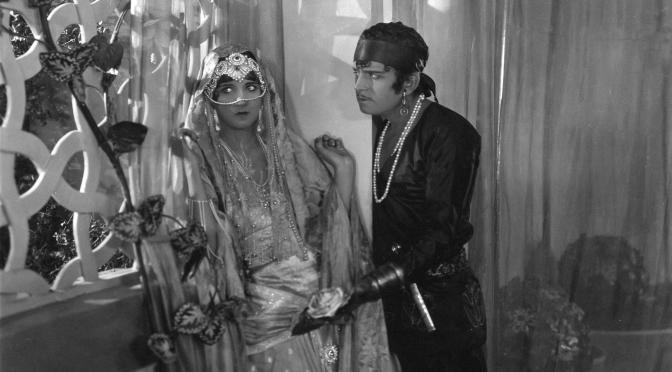
Michel Strogoff (1926)
There is a focus on the transition to sound in Britain, so there are some early talkies in the mix as well as the silents, and there are fancy-dan screenings in the evenings, with the chance to hear brand new scores by some of our favourite musicians.
Surprises can be fun, but maybe, when you’re stumping up for film festival tickets say, it’s good to get what you really wanted. The silent movies on offer at this year’s London Film Festival may not contain any unexpected treasures, but they do comprise some of the year’s most anticipated restorations, so let’s fill our boots. Our only reservation is that a few of these silent screenings do clash, so choose your tickets carefully.
Variety (1925)
Variety (1925)
Well don’t I feel a little less sick about missing this new restoration of EA Dupont’s romantic drama at Bologna? Emil Jannings, Lya De Putti, that woozy unleashed camera … you know this is going to be a treat. Variety is a highlight of Weimar cinema, and deserves to be seen at its shimmering best. It’s screening just once at the festival, in NFT1, so make sure you’re there. The word from those who have seen the new 2k resto already is: the print is gorgeous, but there is less enthusiasm for the new score, from the Tiger Lillies. No such worries for us cockney sparrows, who will have the pleasure of Stephen Horne’s assured accompaniment.
Stan and Ollie in The Battle of the Century (1927)
The Battle of the Century (1927)
You might have heard a whisper about this one. The rediscovered second reel of Laurel and Hardy’s The Battle of the Century makes the film almost entirely complete – and essential viewing for fans of Stan and Ollie. Enjoy it at the London Film Festival with three more L&H shorts for company and musical accompaniment from messrs John Sweeney or Stephen Horne, depending on which of the two screenings you attend. Bear in mind, if you’re not heading to Pordenone, that the first screening is a full 24 hours before it plays at the Giornate – could this be a world premiere of the restoration?
Benedict Cumberbatch is all very well (very well indeed if you ask me), but if any actor could lay claim to the “definitive” Holmes, it was William Gillette. And for many a long year, the film that committed his stage performance of the gentleman detective to celluloid was thought to have vanished in the night. An elementary mistake, Dr Watson – the film was rediscovered at the end of last yearand has been prepped for a Blu-ray release and a handful of festival screenings, including this one, in NFT1 on Sunday 18 October. There’s live music from Neil Brand, Günter Bichwald and Jeff Davenport and an irresistible accompanying short, A Canine Sherlock Holmes (1912).
When I am not watching silent movies, I’m often reading about them. Or writing about them. Or dancing in my kitchen to Taylor Swift, but that’s another matter entirely.
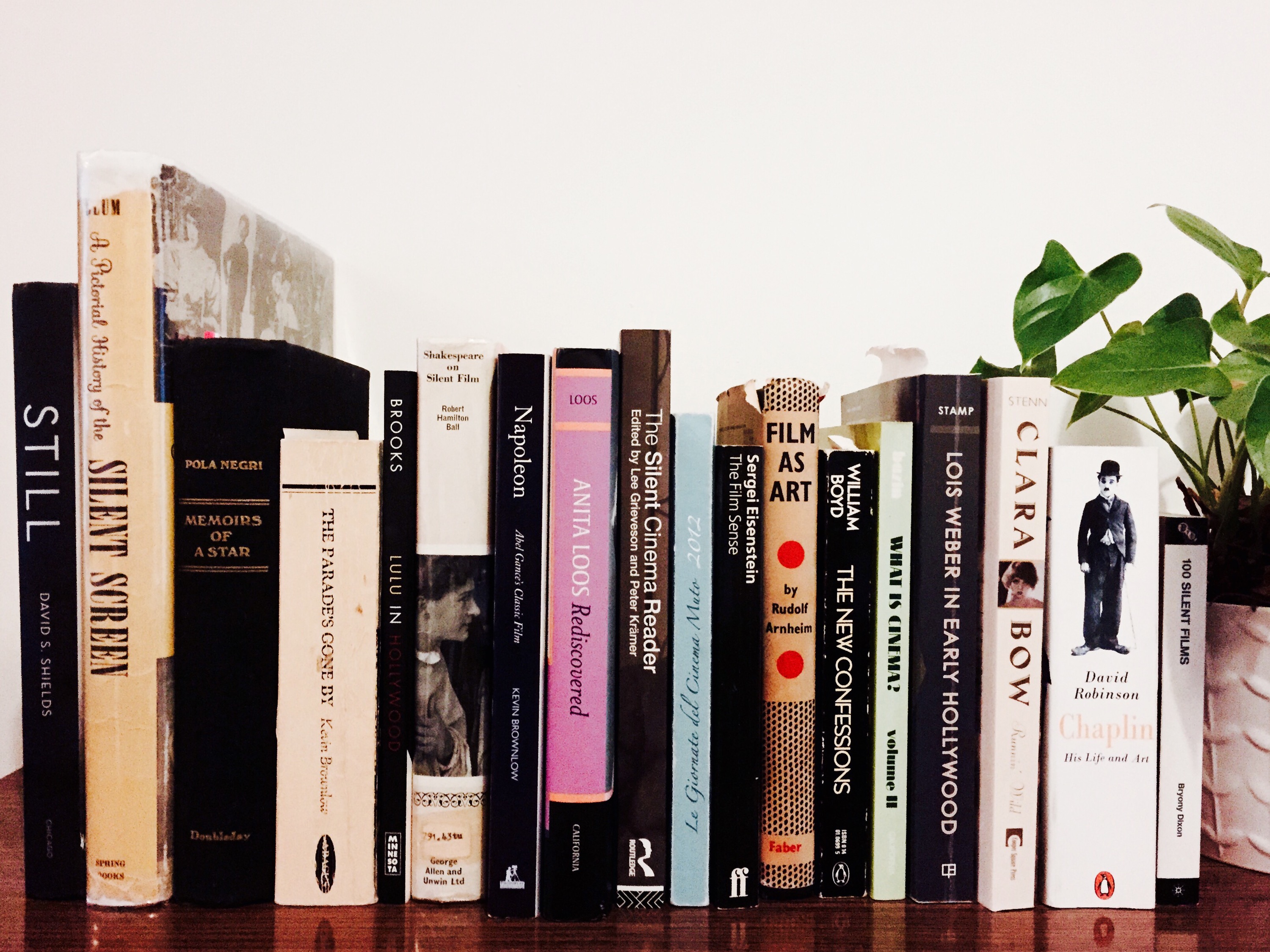
The point is that there are a lot of great and not-so great silent cinema books out there. And I have a few of both. Recently the frequently hilarious Movies Silently blog posted a list of silent film books perfect for beginners, and on the BFI website, Geoff Andrew listed the cinema books he truly loves. Inspired by both those posts, here is my silent cinema “shelfie”. It’s not my full collection, but an edit – a representative selection of the silent film books I have loved, or leaned on.
A couple of these are books I don’t entirely love (can you guess?), one infuriates me, and many of them I worship wholeheartedly. A few are highfalutin texts I used as a student – and still dip into now. Those are for theory, history and analysis – which are essential. Some satisfy my greed for gossip and glamour – ditto.
You’ll spot a classic picture book, and a new one too. There’s a novel in there, because silent cinema inspires fiction as well as fact, and a list book, although I claim to dislike lists. There’s an autobiography and two biographies, which are all more entertaining than any novel.
There are two books here by Kevin Brownlow. And the other obvious bias is towards writing by and about women. I wouldn’t have it any other way
The Giornate catalogue stands in for all its erudite siblings, of course. And there’s a recent favourite in there too – which I am evangelical about.
I love early cinema in all its wild and strange glory, but there is a special place in my heart for Shakespeare adaptations, especially those earliest examples from the 1900s and 1910s. The British Film Institute produced a video, many moons back, called Silent Shakespeare, featuring wonderful examples of films adapted from Shakespeare’s plays from around the world, dated between 1899 and 1911, with gorgeous scores by Laura Rossi. I loved it. The VHS tape was subsequently rereleased on DVD and is still available from the BFI shop, priced £19.99.
Now there is another way to watch these truly gorgeous films – they are streaming on the Globe Player, an online service from the people who run Shakespeare’s Globe on the South Bank in London – just a few yards away from the venue formerly known as the National Film Theatre, but several centuries away in spirit. You can rent the bundle of seven films for £5.99 or buy it outright for £9.99. Here’s the link.
The films in the Silent Shakespeare set are:
King John (GB 1899 2 min) the first Shakespeare film ever made, released both as a film in variety theatres and as a peepshow Mutoscope on the same day as Tree’s production of the play opened at the Her Majesty’s Theatre, London.
The Tempest (GB 1908 12 min)
A Midsummer Night’s Dream (USA 1909 12 min)
King Lear/Re Lear (Italy 1910 16 min)
Twelfth Night (USA 1910 12 min)
The Merchant of Venice/Il Mercante di Venezia (Italy 1910 10 min)
Richard III (GB 1911 23 min) a condensed version of one of the Stratford productions mounted by the F.R. Benson Company.
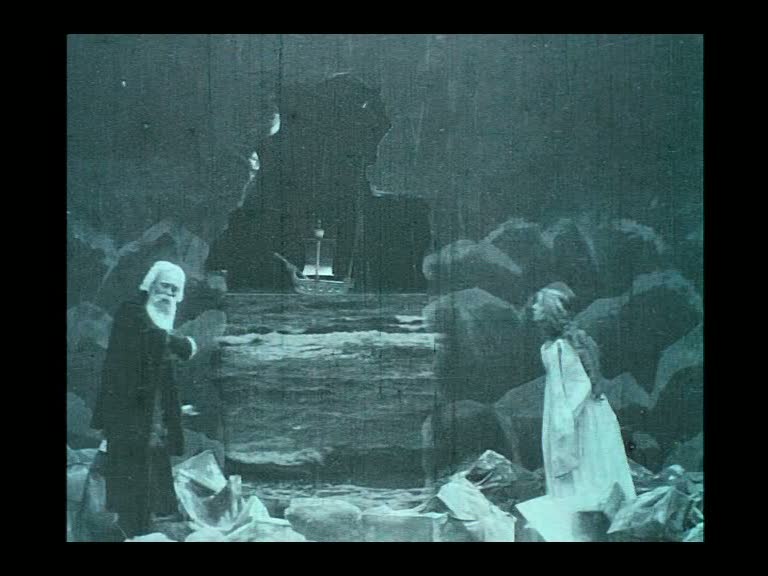
The Tempest (1908)
The glimpse of Herbert Beerbohm-Tree as King John is really something, and the hand-stencilled colours of Re Lear are sumptuous, but I must confess I do have a favourite: the charming, ingenious version of The Tempest, directed by Percy Stow for the Clarendon Company in 1908. It’s just sublime – and Michael Brooke calls it “comfortably the most visually imaginative and cinematically adventurous silent British Shakespeare film”, so I am in good company. Try another of my favourites, the 1911 Richard III on for size.
Frank Benson had been playing Richard III for decades at this point, and his ease in the role really shows, especially during these haunting scenes from Bosworth field.
There’s nothing I enjoy more than updating my pals at the Guardian on the movie news of 100 years ago. So today, excitingly, sees the first instalment in a new regular series I will be writing for the Guardian on silent, early and just plain old movies.
The series goes by the jovial name of Silent but deadly! and will appear once a fortnight. The first episode is all about the pivotal cinematic year of 1915, including five recommendations of fantastic centenarian films to watch. You can read it here.
You can keep up to date with the non-Silent London pieces I write, should you care to do so, over here.
Back to the studio for a full-length edition of the Silent London Podcast. I’m joined by Pete Baran to talk about the festival scene, discuss the first silents we ever watched and catch up on the news. We’re joined by London Symphony director Alex Barrett, who tells us about his favourite silent film, The Passion of Joan of Arc, and we preview the British Silent Film Festival as well as reviewing the great Hollywood silent Flesh and the Devil.
We also make inappropriate comments about Greta Garbo, and I get a little bit over-excited about Pordenone. Just another day in the office really.
Did you guess this one? I must confess I had an inkling. After the BFI’s rightly acclaimed restorations of Anthony Asquith’s other silent features A Cottage on Dartmoor and Underground, his directorial debut Shooting Stars (1928) is about to take its turn in the key light, at the London Film Festival Archive Gala. On 16 October 2015, in the Odeon Leicester Square, a sparkling new print of this important British silent will screen with a new jazzy score by John Altman. We’ve waited a long time to hear this good news, so now all we have to do is enjoy the anticipation, book some tickets, and cross our fingers that, following previous form, Shooting Stars will also make its way to a theatrical and Blu-ray release before long.
Shooting Stars (1928)
Shooting Stars, which Asquith wrote and officially co-directed with AV Bramble, is, much like his two other silents, a romantic drama in which a love triangle precipitates violence. But this is far more glamorous than the others: it’s a peek behind the scenes of the film biz. That’s a hint of how audacious young Asquith was – his first time in the director’s chair and he was already turning the camera around in the opposite direction. It’s also a clue to how experienced he already was – he had spent time in Hollywood, as a guest of the Pickford-Fairbanks household no less, and toured German film studios as well. He was a leading light of the London Film Society, and had been working at British Instructional Films since the early 1920s. When the infamous “quota” was brought in with the Cinematograph Films Act of 1927, BIF turned to fiction film-making – Asquith, and Shooting Stars, were up first.
Brian Aherne in Shooting Stars (1928)
The film’s director isn’t the only name worth noting. Shooting Stars’ cast includes some notable talent from the British silent cinema: Brian Aherne (High Treason, Underground), Annette Benson (Downhill) and Donald Calthrop (Blackmail) for starters. And if you have never had a chance to see slinky Chili Bouchier do her thing, well aren’t you in for a treat?
Shooting Stars (1928)
Here’s what the BFI has to say about it:
Shooting Stars is a dazzling debut which boasts a boldly expressionist shooting style, dramatic lighting and great performances from its leads. Annette Benson (Mae Feather) and Brian Aherne (Julian Gordon) play two mis-matched, married stars and Donald Calthrop (Andy Wilkes) a Chaplin-esque star at the same studio, with whom Mae becomes romantically involved. Chili Bouchier, Britain’s first sex symbol of the silent era, plays a key role as an actress/bathing beauty, an attractive foil to the comic antics of the comedian. The film manages to operate as a sophisticated, modern morality tale, while it’s also both an affectionate critique of the film industry and a celebration of its possibilities. It teases the audience with its revelations of how the illusions of the world of film-making conceal ironic and hidden truths
Despite the director credit going to veteran director A.V. Bramble, this is demonstrably the original work of rising talent Anthony Asquith, exhibiting all the attention-grabbing bravado of a young filmmaker with everything to prove. His original story offers sardonic insight into the shallowness of film stardom and Hollywood formulas by use of ironic counterpoint. He flaunts his dynamic cinematographic style and upgrades design and lighting by bringing in professionals.
There’s a little information about the score too. John Altman says that his score is “inspired by dance band sounds and Duke Ellington in 1927”, taking its cue from a piece of music that features in the film itself – the popular song ‘Ain’t She Sweet’.
UPDATE: I updated this post on 6 September 2015 once the programme for the Silent Laughter festival had been finalised.
Our favourite south Londoners are at it again. Fresh from staging a triumphant weekend-long event in June, the Kennington Bioscope team promise a full day of chuckles with a comedy festival in October. Tell us all about it, Ken!
Programmes include shorts with Charley Chase, Lupino Lane, Laurel & Hardy and others; rare features with Raymond Griffith and Walter Forde (Britain’s best silent comedian) concluding with Harold Lloyd’s classic GIRL SHY.
Plus special presentations – Kevin Brownlow on his Buster Keaton Thames TV series ‘A Hard Act to Follow’, David Robinson on Laurel & Hardy (whom he interviewed in 1954), including some new discoveries, guests Tony Slide (historian, author, founder of ‘The Silent Picture’) and Matthew Ross (editor of ‘Movie Night’, Britain’s only magazine devoted to silent & vintage comedy).
Here is the final programme – the Raymond Griffiths films is Paths to Paradise (1925) and the Walter Forde title is You’d be Surprised (1930). And I have heard, from the most delightful little bird, that the vegetarian cafe next door will be open for food again, possibly with a special offer for festivalgoers.
Sounds great. The perfect cure for the post-Pordenone blues, Silent Laughter is a one-day event taking place at the Cinema Museum on Saturday 24 October, from 10am-10pm. Tickets will be available from 1 September so bookmark this page now.
Wait a minute, wait a minute …
Yes, you ain’t heard nothin’ yet. The Kennington Bioscope is branching out even further, into the realm of early sound cinema, with a little something they are calling Kennington Talkies. What?
Would you like to discover the truth – messy, inconclusive and unflattering as it might be? Or would you rather be vindicated by discovering not only were you right all along, but the answer lay close to home, a triumph you could take personal pride in? For any rigorous film historian, there’s clearly a right and a wrong answer to that question. But wouldn’t we all veer a little to the latter option? And might, perhaps, the second denouement make a better movie?
Film producer and former actor David Nicholas Wilkinson would definitely choose the second path. His documentary The First Film records not a search for the origins of cinema, but his quest to prove that Louis Le Prince was its key progenitor. Wilkinson, a proud and dogged Yorkshireman, is on a mission to put Leeds on the early cinema map, by asserting that the Frenchman shot the first authentic moving images in that fair city. Step aside, Messrs Lumiére, Edison and Friese-Greene …
What follows is a meandering, engaging, often bizarre but definitely over-long tribute to two men and their obsessions: Le Prince and his determination to crack the problem of the moving image, and Wilkinson’s devotion to boosting Le Prince.
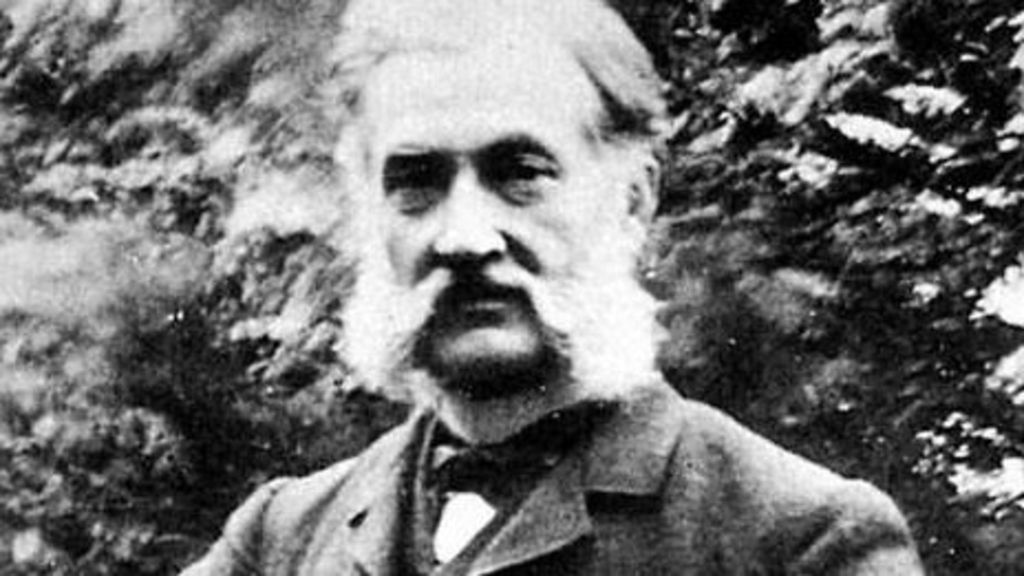
It’s a noble quest, and I applaud Wilkinson for taking it on. Inventor Louis Aimé Augustin Le Prince was born in Metz, France in 1841 but moved to Leeds in 1869 to work in a factory there. After several camera experiments, including a model with 16 lenses, in 1888, he succeeded in creating a moving image. He shot two short scenes, using a single-lens camera on paper film: a view of Leeds Bridge and a gorgeous domestic snippet called Roundhay Garden Scene. As such, he may well have been the first movie-maker, the “Father of Film”, the chap who beat all the rest to the punch. And it happened right here in the UK. We should be proud, and also outraged that other people have taken the credit. Wilkinson already is, more than enough for the rest of us.
I had to share this news as soon as it landed: booking is now open for the British Silent Film Festival, which takes place from 10-13 September this year at the Leicester Phoenix. See you there!
The 18th British Silent Film Festival features some stunning highlights, re-discoveries and rareties gleaned from the BFI Archive and international collections. Highlights include the British premiere of Stephen Horne’s new musical score for The Guns of Loos (1928) and Laura Rossi performing her new score to British cinema’s first epic Jane Shore (1915) at Leicester Cathedral which recently saw the reinternment of Richard III who features in the film as a key protagonist.
A missing-believed-lost early Hitchcock collaboration, the comedic Three Live Ghosts (1922) will be featured after recently being re-discovered in the Russian film archive. We’ll also have the British premiere of a brilliant new score by Bronnt Industries Kapital for the Soviet classic Arsenal (1929)
Michel Strogoff (1926)
Our theme of ‘heroes and villains’ will be explored in stunning masterpieces of European cinema including Michel Strogoff, (1926) featuring the charismatic Russian star,
Stan and Ollie in The Battle of the Century (1927)
Following the rediscovery in June of the missing reel of Laurel and Hardy’s classic comedy short, featuring the pie-fight to end all pie-fights, I can bring you even more good news. A near-complete restoration of The Battle of the Century (1927), by Lobster Films, will screen at the 34th Giornate del Cinema Muto in Pordenone, Italy this October.
The festival will open with a gala screening of the newly restored Italian film Maciste Alpino (1916), a first world war epic written by Giovanni Pastrone, and the closing gala will be The Phantom of the Opera (1925), starring the amazing Lon Chaney, with Carl Davis’s score performed live by Orchestra San Marco di Pordenone.
The midweek feast will be Henri Fescourt’s epic 1925 adaptation of Les Misérables, in four sittings – it’s six and a half hours long, after all. I am already preparing for that one.
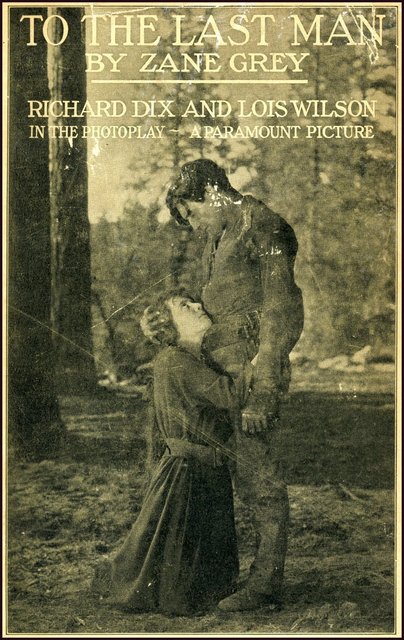
To the Last Man (1923)
Other anticipated highlights include a celebration of black performers on screen, including 100 Years in Post-Production, a reconstruction of the rushes of Lime Kiln Club Field Day (1913), a never-completed comedy starring African American stage star Bert Williams among its all-black cast. I am very keen to see the new restoration of Daisuke Ito’s Diary of Shuji’s Travels (1927) accompanied by a benshi as well as live music, and the recently discovered western To the Last Man (1923).
That last title leads one of the programme’s most exciting strands: a retrospective of the silent films of Victor Fleming. It also ties in neatly with a very promising strand devoted to the beginnings of the western in the silent era.
Two modern silents, at least, will feature: a short Iranian animation inspired by Tim Burton, Junk Girl, and a feature-length experimental film, Picture, conceived by Paolo Cherchi Usai. Judging by his past form, you may want to grab the chance to see that one when you can.
Not a modern silent, but a modern silent cinema mockumentary, Love Among the Ruins is “a faux documentary about the miraculous discovery and restoration of a long-lost Italian silent film”, featuring music by none other than Donald Sosin. It will be interesting to see how this one goes down at Pordenone.
Italian “strong men” Albertini and Aldini made dramatic “thrill” films in Germany in the 1920s, and the Giornate will screen a selection of these. I don’t know too much about these chaps – but I have been browsing these postcards …
From other sources, but not, so far, the festival itself, I hear that we will seen the freshly restored 1916 Sherlock Holmes starring the role-defining William Gillette also. Very exciting.
Early cinema is represented by more German Tonbilder films, selections from the Spanish archive the Sagarminaga collection, and a retrospective ofLeopoldo Fregoli.
We’re promised lots besides, including “alternative city symphonies”, more Russian Laughter (this strand was brilliant last year) Mexican films including El Automovil Grisand El Tren Fantasma.
And finally, I don’t have 100% confirmation on this, but it is likely that the Vitaphone Project’s restoration of the Alice White film Show Girl in Hollywood (1930) will get a runout at the Giornate this year … watch this space
The Bank of England doesn’t usually let the public have a say in its decisions, but there is a first time for everything. Having decided to boot Adam Smith’s profile off the £20 banknote, the Bank asked the public to help them choose a replacement – although the institution itself has the final say. Those of us who spend rather than print the money were invited to nominate a visual artist for the bank to select from. An astonishing 29,701 bids came in, resulting in a longlist of 592 British visual artists that someone out there deems worthy of having their face on folding money. The Bank will draw up a shortlist from these names for the Governor to examine, and they will announce the chosen face in early 2016, with the new £20 note finally coming into circulation in 2020.
This is the selection criteria for the new face of the score note:
Through its depiction of historic characters on its banknotes the Bank seeks to celebrate individuals that have shaped British thought, innovation, leadership, values and society. We do this by representing a person or small groups of individuals whose accomplishments or contributions have been recognised widely at the time, or judged subsequently to have been of lasting benefit to the United Kingdom and, in some cases, beyond.
In choosing the character or characters to appear on a specific note, the Bank takes account of its past decisions. This is because the Bank intends to celebrate achievement and contribution across a wide range of skills and fields and aims, through time, to depict characters with varied personal characteristics, such that our choices cumulatively reflect the diverse nature of British society.
Did you vote? I suspect some of you might have done, because the longlist is a fascinating read: so many esteemed, and not so highly esteemed, artists appear,including film-makers from Carol Reed to Stanley Kubrick. And there are definitely a few cinematic stars who fulfil that note about “a wide range of skills and fields”, as well as “characters with varied personal characteristics”, although not perhaps reflecting the “diverse nature of British society”. More specifically, I was heartened to see some key figures from the silent era there: from the expected nods to Alfred Hitchcock and Charlie Chaplin, to more leftfield choices such as Maurice Elvey and Louis Le Prince.
If there was ever a week to emphasise the power of archive film, this is it. On the weekend, the Sun on Sunday released what appeared to be home movie footage from the early 1930s of Edward VIII apparently teaching the young Princess Elizabeth, and the Queen Mother to make Nazi salutes. Not surprisingly, those few frames of film have caused a media storm – with debates raging over whether Edward was not the only Nazi sympathiser in the family, or the footage should have been released at all. It seems to me that the princess is more interested in showing off her Scottish dancing moves than practising the salute – she is on holiday at Balmoral after all. And her young sister Margaret really isn’t in the least bit involved. But what do I know? This is home movie footage, of course, not intended to be scrutinised by the public, even if it may after all hint at some disturbing information in the public interest.
The fact remains, however, that this film is owned and still guarded, privately. If there is context to this clip, we are denied it, because all that has been released is a silent, heavily watermarked 17-second snatch on the Sun website. In the era of FOI requests (the Freedom of Information Act is 10 years old this year), post-WikiLeaks and Edward Snowden, after MPs’ expenses and the Prince Charles letters, full disclosure and open access is where it’s at.
And it is in this climate of free access to information that the Associated Press and British Movietone have decided to release a monumental slice of their archive on to YouTube today, where it can be seen, shared and embedded by the public. There are two news YouTube channels as of today: one for the AP Archive and one for British Movietone. More than a million minutes of newsreel footage has been digitised and uploaded, creating what the archive call “a view-on-demand visual encyclopedia, offering a unique perspective on the most significant moments of modern history”.
The YouTube channels will comprise a collection of more than 550,000 video stories dating from 1895 to the present day. For example, viewers can see video from the San Francisco earthquake in 1906, exclusive footage of the bombing of Pearl Harbor in 1941, Marilyn Monroe captured on film in London in the 1950s and Twiggy modelling the fashions of the 1960s
For silent enthusiasts, the fact that this upload includes the Henderson collection of news footage will be particularly welcome. In effect, this is not a release of footage (many of these films were always available to watch on the AP Archive site), but a way of liberating it.
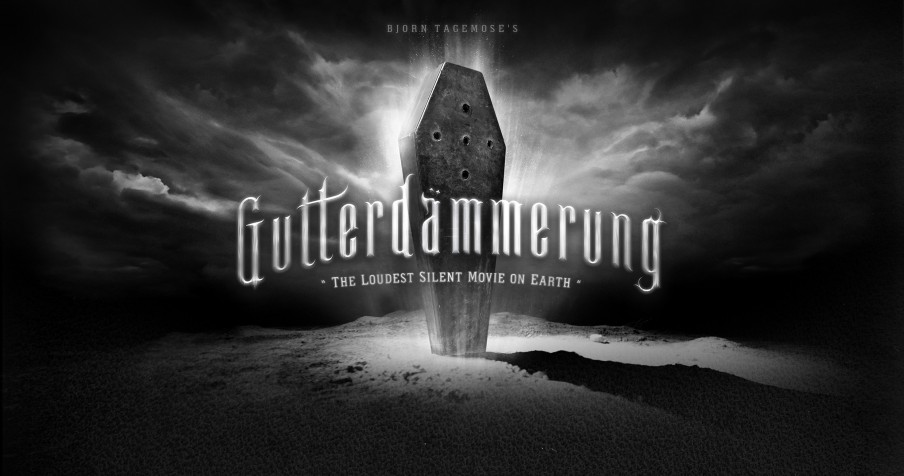
The self-proclaimed “loudest silent movie on earth” may just sound like fingernails down a blackboard to more sensitive readers. Gutterdämmerung (“It’s not like you know who fucking Wagner is, anyway”) is a heavy metal silent film of sorts, which has announced itself this week with an elaborate social media campaign. I say “of sorts”, because actually, don’t you know, this is “a new rock ‘n’ roll / film / gig concept from the mind of Belgian-Swedish visual artist Bjorn Tagemose” rather than a boring old movie.
Gutterdämmerung, proud owner of a heävy mëtal ümlaut, has been featured mostly in rock magazines so far, but is already proving to be a bit of a tease, releasing its cast list of rock icons one at a time, and even offering prizes for anyone who can guess the lineup in advance. There’s no trailer, just a launch video in which director Tagemose and two of his stars, Henry Rollins and Jesse Hughes from Eagles of Death Metal, chat about the film. They introduce some of the movie’s “icons” in this vid, Iggy Pop and Grace Jones, as well as rock bassist and adult film actress Tuesday Cross and the star Olivia Vinall, whom the Independent recently called a “National Theatre darling”. But you’ll have to wait for the rest …
Hello, this is an updated version of a post I wrote in time for last year’s festival – there are a few new tips for 2016 and other updates.
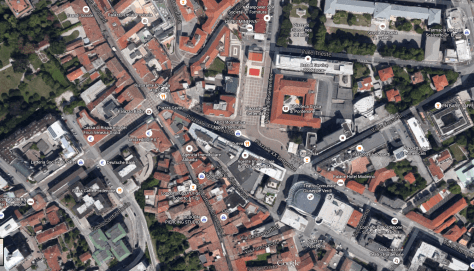
Pordenone: the circular building is the Teatro Verdi, and you can see the Cafe Bar Posta and the library (Bibloteca) nearby. (Google Maps)
Do you know the way to Pordenone? It’s about 80km north-east of Venice, but that’s not important right now. When I say Pordenone, I mean Le Giornate del Cinema Muto: the world’s most prestigious silent film festival, which takes place in the town every October. This year will see the 35th instalment of the Pordenone Silent Film Festival, a veritable institution, which showcases the best (and some of the rest) of silent cinema, accompanied by the world’s leading musicians. It’s eight full days of silent cinema, and a chance to meet the most knowledgeable early film enthusiasts around.
Never been? I think I understand why. Something about the words “prestigious” and ”institution” can be a little daunting. For years I thought Pordenone was not the place for me – it was for the real experts. I was intimidated too by the website, which is actually phenomenally useful, but a little hard to navigate and very text-heavy in two languages.
But as soon as I arrived for my first Giornate in 2012, I knew I had been a fool to stay away. Pordenone isn’t intimidating at all. And if you love silent cinema, which I know you do, it’s an essential indulgence. You can call that the Pordenone paradox.
So here’s a short guide to planning and enjoying your trip to Pordenone for this year’s festival. If you have any more tips – please share them below:
Attention amateur historians and nostalgic souls. The BFI has launched its Britain on Film project on the BFIPlayer, comprising around 2,5000 pieces of archive footage. It’s an incredibly easy way to lose an entire afternoon, or more of your life. But fascinating too. Simply type in a location, a decade or a subject, and the BFIplayer will throw some digitised (and contextualised) film right back at you.
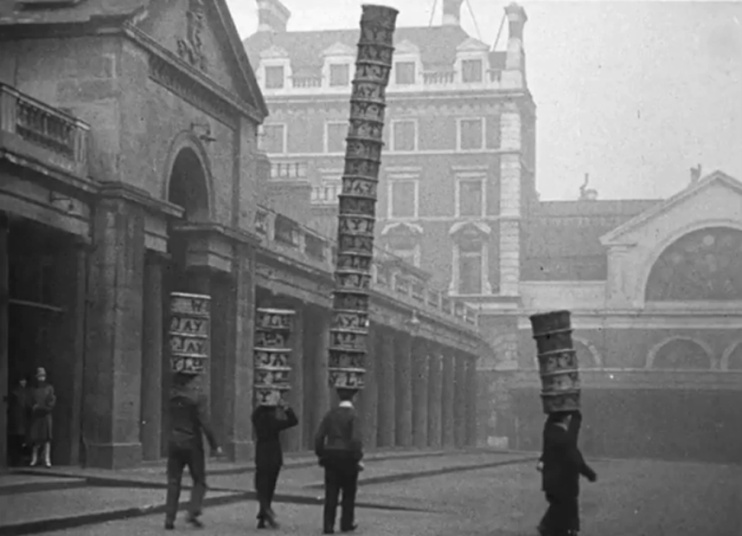
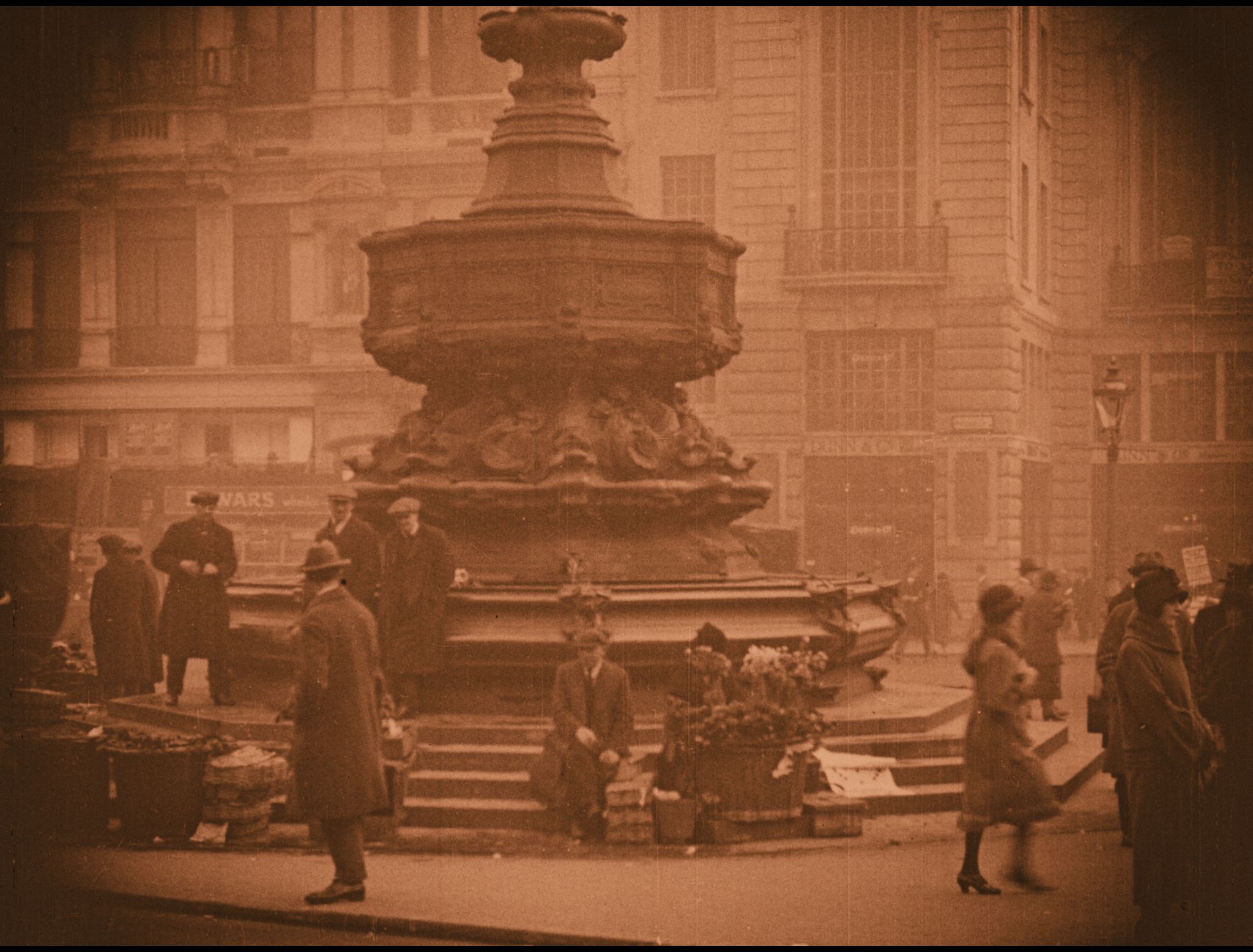
So what of “Silent London”? At this link, you can find all the footage labelled “London” from 1890-1930 in the Britain on Film archive. That comes to 232 films, ranging in length from a few seconds up, but still more than a mouthful, even for someone as greedy as me.
But I did have a poke around, and I do already have a few favourites. Here are ten to try:
Charlie Chaplin and Buster Keaton – the Beatles and the Rolling Stones of silent comedy. They say you have to pick one to love, but there is nothing to stop you admiring both. If you’re a Keaton devotee, though, you may have watched the progress of the Cineteca di Bologna’s Chaplin Project with green eyes. Though of course your expression will have been too deadpan to reveal your true feelings.
Over several years and many gala screenings, the Cineteca and the L’Immagine Ritrovata lab, working in collaboration with archives, labs and historians across the world, restored all of Chaplin’s works to the utmost technical standards. You can see the results of these labours in releases such as the recent Chaplin Mutuals Blu-ray, which really is worth adding to your Christmas list. Now it’s Buster’s turn. Using material from the Cohen Film Collection, the Keaton Project will set about buffing and shining all the silent shorts and features made by the Great Stoneface. It’s a mammoth task for the ladies and gents in the lab, but a massive treat for those of us who get to watch the finished films.
Stan and Ollie in The Battle of the Century (1927)
A cream-filled pie landing – splash – in the face of an adversary is a popular trope of silent slapstick comedy, along with bumbling Keystone Kops and strategically placed banana peel. And now we hear that one of the classic piefights of all time has been rediscovered – the all-out epic splatterfest that crowns Laurel and Hardy’s silent film TheBattle of the Century (1927).
That street brawl, involving a van full of pies and a cast of dozens, is gleeful, gore-free carnage – a classic movie moment in its own right. But until now, the fight, and the film it belongs to, have been truncated. TheBattle of the Century was formed of two reels, and much of it has been missing since the silent era. The fight itself, or at least most of it, had been preserved, but the rest was not to be found. The first reel was discovered in the late 1970s, but the second reel, which contains the piefight, has been unseen for decades longer.
Just a quick note to let you know about a season coming up at BFI Southbank, which promises to contain a few silent treasures. London on Film: The Changing Face of London runs from 1 July to 9 October 2015. I’m taken by the idea of a film programme devoted to our favourite city, and hoping that the BFI will make the most of the opportunity to show some great silent dramas, and actuality footage.
Here’s the official blurb:
The BFI present a three month season which celebrates London’s stories through a century of extraordinary film making from archive clips to more modern cinematic adventure. the programme will include over 200 films, from classic features to home movies, shot in London over the last 120 years. For Londoners this season will show the city they know and love, as they may never have known it before.
Already slated are screenings of Anthony Asquith’s Underground and A Night in Victorian and Edwardian London with Bryony Dixon. At the latter event, the BFI’s silent film supremo will introduce archive clips of the capital dated 1881 (!) to 1910. The evening will also include a screening of Joseph Ernst’s captivating short film inspired by Mitchell & Kenyon, Londoners.
Cosmopolitan London (1924)
UPDATE: Over on Facebook, BFI head curator Robin Baker tells us we can expect films including: “Passmore family films from 1902 (part of London Home Movie Night), The Right to Live (1921), London Old and New (1924), Cosmopolitan London (1924), The Fugitive Futurist (1924), The Marriage of Miss Rose Carmel to Mr Solly Gerschcowit (1925) and Piccadilly (1929)”. Plus, the sound version of High Treason (1929)
So, yesterday I spent the afternoon in the cinema watching 18 movies. Jealous, right? I was lucky enough to be part of the judging panel for the Walthamstow International Film Festival and we were watching the shortlisted works in order to hand out some prizes. It’s a fun job, and a great local festival that I am chuffed to be a tiny part of. All the entries are around five minutes or less, and while the festival encourages local film-makers, particularly young people, it is open to all, and this year we saw films from as far away as Australia, Argentina and Hong Kong. Our overall winner was the fantastically moving, and intriguing, Speed by Jessica Bishop – a film that interrogates the grieving process by counterpointing family photos and voices. A worthy winner indeed.





 Silent London