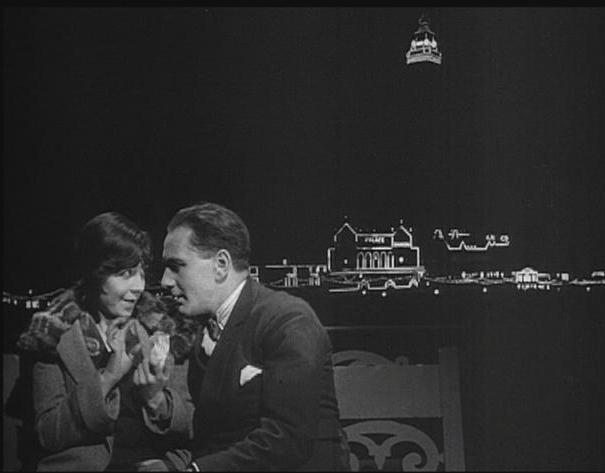
Trust me, I have never been ready for my close-up. But when I backed the new silent film project London Symphony, I recklessly ticked the box to say that yes, I’d be in the movie. I envisaged the back of my head in a crowd, perhaps. Something nice and anonymous.
But cometh the hour, cometh the poseur, and today I spent an hour or so shooting a snippet of a scene for London Symphony. Or sitting mostly still and doing what I was told while trying not to get the giggles. Here’s what I learned from my experiences on a silent movie “set”:
There’s a reason those silent-era directors had megaphones. We were filming on the Victoria line (yes, we had permission) and while no doubt director Alex Barrett was talking me through my big scene, I could barely hear a word he said.
There are a lot of angles to cover – two cameras, shooting front-on, overhead, from a distance, crammed next to my cheek … The London Symphony crew were using handheld digital cameras, of course, I can’t imagine how this would play out with a wooden-boxed hand-cranked job.
I didn’t realise how much structure dialogue gives to a scene. I’m not an actor, so of course I was going to feel a little self-conscious being photographed by those moving picture contraptions. But without anything to say, I really felt a little untethered. Anything could happen! Luckily Adam Hickey, the actor I was working with, was actually an actor and very professional.
Londoners are not in the least bit fazed by seeing people filming and playacting on the tube. We caused not a ruffle. Though Alex did tell me that amateur photographers often approach him in the street to chat about the gear. Mmmm, lenses.
Matt Lucas and Alex MacQueen in PompidouMatt Lucas is a bit of a comedy hero, from his hilarious cameos on Shooting Stars, to the taste- and boundary-pushing Little Britain, to the trenchant way he knocks down the idiots who try to step to him on social media. I may not like everything Lucas does, but he is one of the most original, and bravest, voices in TV comedy. Unafraid to go against fashion as ever, his new project is a “visual comedy” TV series, Pompidou, which debuts on BBC2 on Sunday 1 March.
So I'm delighted to tell you that my new series POMPIDOU begins on SUNDAY 1st MARCH AT 6:30PM ON BBC TWO!
Lucas has co-written the series with Julian Dutton, and he plays the title character: “an elderly oddball aristocrat who has fallen on hard times”. Alex MacQueen plays his long-suffering butler, Hove. And they have a canine companion, too: the elegant Marion, an Afghan hound.
New silent comedy on our screens is always a cause for joy and anticipation – so we’re very keen to see how this one pans out. There are six 30-minute episodes to come, and in each of them, we are promised, Pompidou and Hove face a new, bizarre, challenge. Continue reading Pompidou: Matt Lucas’s silent comedy comes to BBC2→
Have you ever heard that phrase “pale, male and stale”? I don’t really like it myself, but it has its uses. It’s how us hardbitten hacks like to oh-so cynically refer to the Establishment with a capital E – the Etonians in our cabinet, the stuffy old geezers at the top of our legal system, the posh “luvvies” winning all the big arts prizes. It’s not that we don’t like old white men, it’s just that the world is bigger than that, right?
So, we want the people who represent, protect and entertain us today to reflect our own diversity – that’s a no-brainer. Sometimes it seems as if there is a long way to go, but we shouldn’t “whitewash” history either. There are a whole range of factors at play here, but the simple fact is that it’s too easy to forget to contribution made by women, people of colour and other minorities to our cultural past. Picture a silent movie set, and you’d be forgiven for visualising a sea of white faces, and a chap in riding trousers calling the shots. But the truth is more complicated, and more exciting, than that.
Oscar Micheaux
A new venture from Kino Lorber is intended to push that “pale, male and stale” image right out of our minds. The American label is collating a box set of movies from the earliest African-American film-makers – from Oscar Micheaux to Maria P Williams. If you didn’t know there were any – well, that’s understandable, but now you know that there were, you should be intrigued. And if you are intrigued, or if you are punching the air and shouting “Finally!”, there’s good and bad news to come.
The Trento Tunnel exhibition (tgcom24.mediaset.it)
This is a guest post for Silent London by Neil Brand, writer, composer, silent film accompanist and TV and radio presenter.
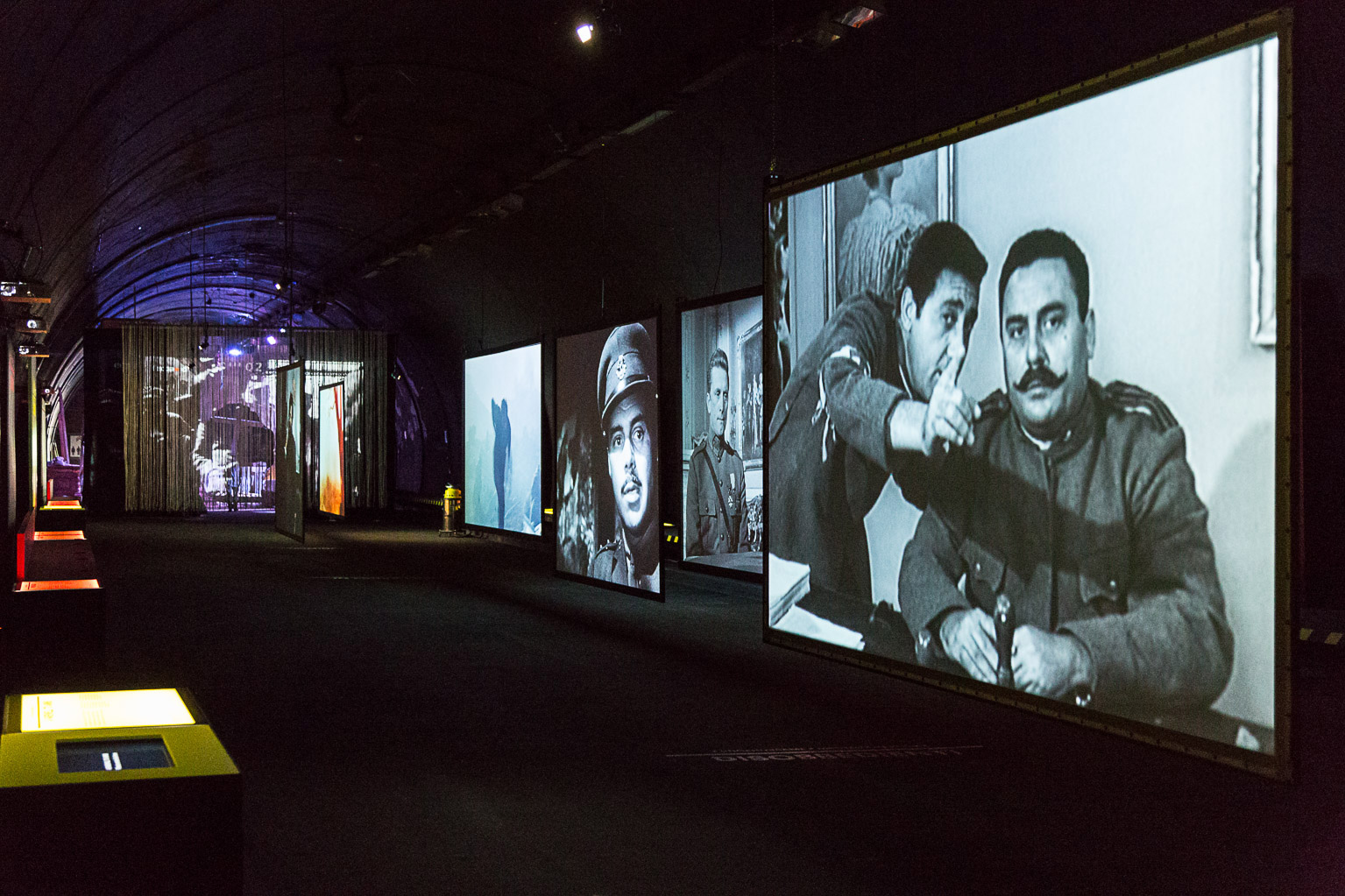
Deep beneath the mountains of the Trentino range of Italy and Austria’s Dolomites lies one of the most extraordinary exhibits, in one of the most extraordinary galleries, in the world. One walks into a gigantic road tunnel, through a curtain and into one of the most potent and gripping representations of WWI cinema anywhere on the planet. From the very first image (from the Imperial War Museum) as a real shell strikes a galloping troop of British field artillery, leaving dead horses and soldiers on the field as the smoke clears, we are in the binary world of WWI “reality” as seen by the cameras of the time and the imaginations of those who came after.
That this exhibition, by the Trentino History Museum, should be a chilling reminder of the inhumanity of Italy’s White War on the Austrian border is no surprise – what is utterly unexpected is that it should also be a clear meditation on the very notion of cinema as “point of view”, with our attention continually drawn to the voyeurs and showmen, the “victors” and “victims”, the selective nature of documentary and the over-exaggeration of the “real”.
The exhibition’s existence is the result of a fruitful collaboration between Fondazione Museo Storico del Trentino and Cineteca del Friuli (with the assistance of archives around the world) in which the Museum, which owns and programmes the tunnels, has turned to experts at the Cineteca (particularly Pordenone mentor Luca Giuliani), to trace the history of WWI on film all the way from the outbreak in 1915 to the most recent films on the subject.
All the classics are contextualised on the way: J’Accuse, All Quiet on the Western Front, La Grande Illusion, Paths of Glory. The result is 46 full-size academy screens, through which we walk, looking to left and right, for half-a-mile, taking in a century of imagery and cinematic treasures beautifully configured into intriguing sub-genres; wounds, adventure, heroism (Italian strong-man star Maciste fighting the Austrians), fiction, imperialism, and more. Three-quarters of the way up the tunnel we emerge into sound, via a soundproof screen and the “Control Room” which is almost the most fascinating part of the exhibition. There we are introduced to the magic behind the screens: the film-makers, their equipment, and ourselves as their intended audience.
The fifth instalment of Scotland’s only silent movie festival announces its programme today – and judging by previous years, you should start snapping up tickets straight away (tickets go on sale today, 10 February 2015, at noon). The Hippodrome Festival of Silent Cinema takes place in Bo’ness, a small town tucked away on the banks of the Firth of Forth in Falkirk, Scotland. Bo’ness has a stunning vintage cinema, the Hippodrome, which has been restored to its 1920s glory, and each year hosts of a celebration of the silent era that is as welcoming as it is wide-ranging.
HippFest celebrates its fifth birthday in style with three major World Premiere Festival Commissions, a pop-up cinema at Bo’ness & Kinneil Railway, the chance to discover forgotten stars Colleen Moore and Eric Campbell and get hands-on with a series of workshops and interactive events covering everything from beatboxing to Joan Crawford’s favourite dinner party recipes.
You can find all the information about the festival, and how to book tickets for the events, on the festival website here. You can also follow the festival on Facebook and Twitter. This year’s event runs from 18-22 March 2015 and below I have picked out some highlights from the programme. I have to say I am pretty excited.
Synthetic Sin (1929)
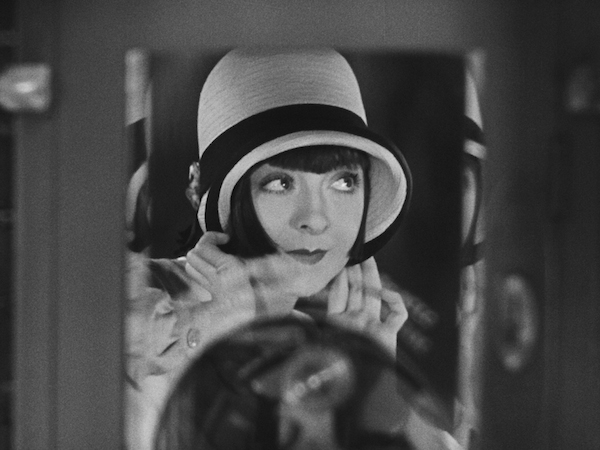
The Friday night gala screening will be the hilarious Synthetic Sin, starring Colleen Moore. There’s a dress code ladies and gents – flapper glamour! Neil Brand will accompany on piano and some silent movie blogger or other will be introducing the film …
“The Film Explainer” Andy Cannon will perform alongside extracts from Dr Jekyll and Mr Hyde, along with musicians Wendy Weatherby and Frank McLaughlin.
A weekend away … Estelle Brody and John Stuart in Hindle Wakes (1927)
According to the website of the Phoenix independent cinema in Leicester, the British Silent Film Festival is moving back northwards this year! The BSFF began in the East Midlands town back in 1998 and has subsequently been based at the Barbican and the Cinema Museum in London, in Cambridge and Nottingham. It will return to the Phoenix in Leicester from 10-13 September 2015, so mark it in your diaries now.
Here’s what the Phoenix has to say about the event.
Formed in 1998, the Festival fulfils an important role – presenting a wealth of treasures from the silent period to audiences who would not otherwise have access to their own film heritage and to the wealth of international silent cinema.
The Festival is curated, organised and presented by Laraine Porter, Bryony Dixon and Neil Brand and a team of UK experts and advisors in this field.
Open to all, the films are presented with live music from the world’s leading professional silent film accompanists (and we hope, local guest musicians) in a variety of entertaining and accessible ways.
Hat-tip to Jenny Stewart for the news – more details to follow as soon as they arrive.
Pola Negri in The Woman he Scorned (1929)
Meanwhile, back in the capital, the popular British Silent Film Festival Symposium will take place again this year at King’s College London. The one day event will be held on 24 April, and proposals for presentations should be sent to Lawrence Napper at King’s by 20 March 2015 – email Lawrence.1.Napper@kcl.ac.uk.
Drawing on the success of our previous events, we again seek to draw together scholars and enthusiasts of early British cinema. This one-day symposium is intended as a forum for the presentation of new research, scholarship and archival work into film culture in Britain and its Empire before 1930.
As such we would like to invite presentations from people working in all aspects of this field, including cinema in the wider context of theatrical, literary and popular cultures; cinema and World War I; cinema and technology, exhibition, reception and critique.
In the light of a recent AHRC award investigating the transition between silent and sound cinema in the UK (1927-1933), we would be particularly interested to include papers on this topic.
Excitingly, the day will be topped off with a screening of one of my very favourite British silent films: Paul Czinner’s The Woman he Scorned (1929), starring the wonderful Pola Negri.
Love is private, intimate. Speak its name aloud and the spell is broken. Share it and the magic is shattered. Except, except … in the 20th century popular culture crashed into the space between lovers, the gap between two pairs of moist lips, the air that thrummed to their heartbeats. Pop music ran away with love, spinning out each precious moment of desire or sorrow for three minutes of passion and repetitive heartbeats. But the movies, arguably, got straight to the dirty bits first. In the dark of a cinema, that is to say a tent or a grubby room, crammed next to a sweetheart or a maybe-sweetheart in the dark, we could watch actors (imagine!) play-act the the motions of love: smooches in train carriages, swoons on the hearth. Illicit affairs, happy marriages, flings, crushes … all the joy and misery of human existence on the screen. And in the cheap seats (they were all cheap), a fumble, a fondle, a kiss or maybe more. And did I mention it was dark? A private act in a public place – disapproval be damned.
Kim Longinotto knows exactly what goes on in the dusky darkness of the Odeon. Her new collage film Love is All (2014) is a super-cut of romance: sexy, sedate or seditious. It’s a full-tilt rush for the hormones, soundtracked by the grizzled, tender love songs of Sheffield music legend Richard Hawley. Not strictly a silent film, this, but one in which the few fragments of dialogue are incidental, another instrument in the orchestra. Hawley sings what is on our lovers’ minds – what they actually have to to say is rather beside the point.
Elusive films, we are always told, can turn up anywhere. And if you’ve read the Primal Screen column in this month’s issue of Sight & Sound, you’ll know the truth of that. Oliver Gaycken, an early cinema scholar at the University of Maryland, stumbled across (most of) a missing Charles Urban film, Cheese Mites (1903) on YouTube. He describes it as “a landmark of early cinema, one of the first film ever made for general audiences about a scientific topic.”
The uploader, not knowing anything about the 35mm nitrate strip he had picked up from an antiques shop, had found an ingenious lo-fi method of digitising the film, and posted it on the video site under a name of his own devising. Gaycken was sent a link by chance and recognised it immediately. Anyway, you can buy the magazine to read the full story, or indeed pre-order Gaycken’s book Devices of Curiosity: Early Cinema and Popular Science, forthcoming from Oxford University Press.
You can see Cheese Mites, properly restored and digitised, on the BFIplayer, or indeed on the institute’s own YouTube page. One thing that will strike you, as you watch those microscopic critters wriggling under the professor’s magnifying glass, is that Cheese Mites is more than a little bit repulsive. The tweedy professor (F Martin Duncan), turns his magnifying glass from his newspaper to his lunch, and uncovers a microscopic crowd of wriggly creepy-crawlies. In the still missing last scene, he chucks his cheese away in horror. You won’t see your humble cheddar-and-pickle sarnie in the same way again. And so, to celebrate this unlikely discovery, here are 10 totally gross moments in silent cinema. Hold on to your stomachs … this is not for the squeamish.
Un Chien Andalou (1929)
The eye-slashing in Un Chien Andalou
Yes, I now that Bunuel and Dali cut to a calf’s eye for the breathtaking “out, vile jelly” opening to this surreal classic. But come on, weren’t you fooled the first time you saw it? And there’s nothing particularly wholesome about a dead calf wearing mascara anyway. See also: the rocket crash-landing in the man in the moon’s eye in George Méliès’ Voyage Dans La Lune (1902) – so much more gory in full colour.
The maggots in Battleship Potemkin
Similarly, the first time one watches Eisenstein’s bombastic Potemkin, one might expect the maggots in the Men and Maggots title card to be metaphorical rather than literal. And certainly one wouldn’t expect to see them in a gruesome close-up, squirming under the doctor’s glasses. “This meat could crawl overboard on its own!” Upsettingly, the resulting stew is only the second most disgusting casserole in this list.
Alice Guy-Blaché’s modern surgery
George Mélies made a version of this a few years later, often titled Une Indigestion, but Guy-Blaché’s earlier film Chirurgie Fin de Siecle (1900) is more widely available. And it’s not one to watch the night before an operation. In this clinic, a sign pleads “On est prie de ne pas crier/Please do not cry”, and the doctors set about the patient with saws, cheerily hacking off limbs, and then slopping them into a bucket, all the while arguing ferociously with each other. They then reattach arms and legs from a bucket of “exchange pieces” (using glue) before re-animating their victim, I mean patient, with bellows.
This is a guest post for Silent London by Isabel Stevens, production editor of Sight & Sound. The Silents by Numbers strand celebrates some very personal top 10s by silent film enthusiasts and experts.
This slideshow requires JavaScript.
Just as films in the nascent years of cinema were characterised by their visual innovation, so too were their posters. Designers enjoyed far more freedom than most of their successors working in the sound era, who toiled in large publicity departments and had to comply with strict restrictions on the size and prominence of stars’ images and their names.
Designs for silent movie posters were also created using many different techniques – from hand-painting unique posters for local theatres to mass-produced lithographs or linocuts. The Stenberg brothers, whose designs alone could fill a list of 10 ground-breaking silent movie posters, even invented a special projector that paused a film frame so faces could be traced, the resulting image appearing somewhere between a painting and a photograph.
The designs collected here are for both masterpieces and little-known films alike, but all preference mood and visual daring, never just relying on tantalising narrative tit-bits to sell a movie. Many of them contain echoes of art movements of the time – Cubism, Art Deco, Constructivism, the Bauhaus and Expressionism – and were created in the 1920s, that decade of wild avant-garde experimentation.
The Green Spider, Vladimir Egorov, 1916 (Credit: The Silent Film Poster: Russia 1910-1930)
The Green Spider, Vladimir Egorov, 1916
Here is the original spiderwoman, accessorised delightfully with eight-legged earrings. It’s a surreal vision that proves that Russian film poster design in the 1910s could be just as imaginative and strange as that of the Soviet era. Little is known about this tale of lust, apart from that it was considered a cult movie at the time of its release and played in theatres in seedy parts of St Petersburg. The poster is the work of Moscow theatre designer Vladimir Egorov, sketched one presumes under the influence of the many arachnoids that featured in the drawings of Symbolist artists such as Odilon Redon and Alfred Kubin.
Safety Last!, Curt Peters,1923
Safety Last!, Curt Peters, 1923
Swedish film poster design was particularly adventurous in the 1920s, as exemplified by this vibrant design featuring stunt-mad comedian Harold Lloyd swinging into the frame and promising vertiginous laughs and spectacle galore. With his clothes billowing in the wind, his hair standing on end and a smile on his lips, he’s enjoying the ride as much as you will.
London is the best city in the world for silent cinema. OK, so maybe I should admit to a little bias, but really, between the BFI Southbank, the Barbican, the London Film Festival, the Phoenix cinema in Finchley, and the capital’s many film societies, rep cinemas, arthouse cinemas, orchestras, concert halls and festivals (including the many visits of the British Silent Film Festival, the Fashion in Film Festival and the recently departed Birds Eye View Film Festival) we are sitting pretty for silents. Whether it’s a symptom or a cause I don’t know, but we also have many of the world’s best silent film accompanists based right here in the Big Smoke.
It’s in this context that in the summer of 2013, two of London’s fabulous silent film musicians, John Sweeney and Cyrus Gabrysch, set up a “silent speakeasy” called the Kennington Bioscope: “a silent cinematic event dedicated to the rediscovery of forgotten masterpieces”. Since then, they have been creating silent cinema magic in South London on a regular basis. The Bioscope is cinephilia at its best – if you’ve been, you’ll know what I mean. If you haven’t been, you are missing out, and I am about to make you jealous. I can’t let another Bioscope go by without telling you all how amazing it is.
The KB (as I have never yet heard one person call it) is held once every three weeks at the Cinema Museum – a volunteer-staffed Aladdin’s Cave of cinematic memorabilia and ephemera. There are more than a few reasons why you voted this place as your favourite silent film venue of 2014. It’s a wee bit like a time machine, whisking you back to a more sedate era of cinemagoing. There’s always an interval, ushers may well be wearing natty uniforms, someone will undoubtedly strike a gong to prompt patrons to take their seats, and the adverts before the screening will remind those assembled of the proper etiquette required. Tickets, which cost just £3, are made of cardboard and ripped off a reel. Most important of all, the projection booth is staffed by an expert projectionist, showing films of all shapes and sizes as often as possible.
It’s the Silent London Poll of 2014 results – part two. Merry Christmas!
Yesterday I revealed what the poll results said about you – today we learn what the poll had to say about the films and performances that impressed you the most this year. You’re a discerning bunch, I already knew that, so I threw away the short lists and gave you free choice in all categories. The result is a picture that is tricky to summarise but fascinating all the same.
Disagree with these choices? May I direct you towards the comments section below?
Best DVD/Blu-ray release of 2014
So many to pick from – but there was a clear winner. Das Cabinet des Dr Caligari landed on DVD and Blu-ray (from Masters of Cinema) in its sparkling new restoration, on a beautifully presented disc. This was the release that many of us had awaited for this landmark movie. We reviewed the disc in the summer.
Runners-up: The BFI’s release of The Epic of Everest, wartime blockbuster Wings (Master of Cinema) and the tantalising, US-only Warner Archive release of Why Be Good? starring Colleen Moore.
Best theatrical re-release of 2014
Another runaway success for Caligari and his cabinet here. Congratulations to all concerned!
Runners-up: Two strong showings in the list: the BFI’s restoration and rescore of The Battles of Coronel and Falkland Islands and the re-release of The General. What a great year in the cinema.
Best orchestral film screening of 2014
The Battles of Coronel and Falkland Islands (1927)
Obviously, there’s a huge amount of variation in the responses when it comes to live shows. But clearly, you are seeing some fantastic live screenings around the world, and that is to be celebrated in itself!
We do have a winner though: the London Film Festival screening of The Battles of Coronel and Falkland Islands received the most nominations. This was truly a fantastic night, with the Royal Marines belting out Simon Dobson’s fantastic score. Great atmosphere too, with so many representatives of the Navy in attendance. I have never seen to many shiny brass buttons in one room.
Runner-up: The LFF came second too, with a clutch of nods for its spellbinding screening of The Goddess with the English Chamber Orchestra. Another very happy memory for me, that one.
A wholly gratuitous, but festive, picture of Louise Brooks
Last month, I asked you beautiful people to fill in the Silent London survey – it was a little longer and more involved than usual, but with more free choice options, so thanks all for your time, care and patience.
The results are now in, and I now know a little more about you, your silent movie watching habits and what most impressed and entertained you this year. First I want you to meet the readers. Hello you, this is you:
Where you are
Most of you are in London understandably, around 39%. But the rest of you are more likely to be found in the rest of the world (36%) than the UK (25%) Global reach!
What you watch, how and where
Most of you, 40%, watch silents once or twice a month. Hats off to the seven percent of you who watch ’em more often than once or twice a week! The rest of you more or less evenly were divided between occasional viewers and the impressive group of you sitting down to a silent film once or twice a week.
UPDATE July 2015 : Cartoon Carnival is now looking for completion funds. Support the film here.
Well, this looks like an interesting investment. Andrew Smith, one of the brains behind the critically acclaimed Gerry Anderson documentary Filmed in Supermarionation, wants to make a new documentary about a less well-known era of animation – the silent years. He has turned to Kickstarter to fund his film, so if you like his idea, you can back Cartoon Carnival yourself. For those who pledge £1 or more, Smith is promising “a virtual hug”. Some of the other rewards are even more enticing!
To many, the history of American animated cartoons begins with the story of Walt Disney and Mickey Mouse. Before the mouse, however, Disney was simply one of many who attempted to make their name in animated cartoons. From the earliest experiments with moving drawings, to the technical and artistic triumphs that arrived just prior to the introduction to synchronized sound, men like Winsor McCay, John R. Bray, and Max Fleischer pushed to make each cartoon better than the last. To our mind, their names deserve to be as venerated as their counterparts in the live-action film industry.
Beyond their historic significance, it it worth stressing that many of the animated films produced during the silent period are wildly entertaining and often down right weird and wonderful. In the days before film censorship or the misconception that cartoons were only for children, anything went. The result is a valuable canon of films which firmly reflects American society of the time.
Four years ago today, this site was just a twinkle in my web browser, and now, Silent London has 500-odd posts, 5,000 followers on Twitter and I’ve had a whole heap of fun.
This is just a self-indulgent post to commemorate the blog’s birthday and say thanks to you for reading, posting, commenting, contributing and generally being fabulous. Enjoy this lovely clip of a four-year-old Baby Peggy while you’re here – she’s a little steadier on her feet than this site, and cuter too, but it’s something to aim for, right?
Spies are cool. Spy films are really cool. Spione, Fritz Lang’s epic high-octane espionage thriller from 1928, is exceedingly cool. This a sexy, dreamlike movie, heavy on the action and light on logic, which both anticipates and outpaces such noir favourites as The Big Sleep (1946). In fact, if you watch all two-and-a-half hours of this film without getting regular memory jolts of Hawks, Welles, Hitchcock and the whole pantheon of Lang’s future colleagues, I’d be hugely surprised.
But let’s not get ahead of ourselves. This is German Lang, not Hollywood Lang – and Spione is all the richer, and stranger, for it. Spione mashes up pulp fiction and lurid newspaper headlines with early film serials and adds in a twist of the fantastic and a dash of technolust. It’s a powerful brew.
Spione (1928)
“Throughout the world, strange events transpire …” runs the opening intertitle and that’s all the backstory you’ll get, folks. In a nameless country, a mysterious kingpin dispatches mercenaries and thugs to steal documents and sabotage treaty negotiations. The disruptive villain, Haghi, is played by Rudolf Klein-Rogge, fresh from a similar role in Dr Mabuse, Der Spieler (1922), as a dangerously fascinating, if chilly, creature. It’s typical of this grand, sprawling movie that he’s not just a criminal mastermind but a banker too (boo-hiss) and a clown (say what?). Just go with it. And there’s no doubt whose side we want to be on, though, despite the best counter-espionage efforts of our upright-but-anonymous leading man Willy Fritsch, who goes by the digits No 326. The link between the two men is Sonja, a lethally blonde femme fatale, an employee of Haghi’s who falls for Mr 326: a seductive, dishevelled performance by Gerda Maurus.
Just in time for Christmas, Masters of Cinema is rereleasing some more of its silent back catalogue, in gorgeous new dual-format DVD/Blu-ray editions. This is a Good Thing no doubt, and if there is one title especially suited for the pantomime season it’s The Thief of Bagdad (1924) – a middle eastern romp starring Douglas Fairbanks as Ahmed, a light-fingered adventurer, beautifully photographed and bulging with the last word in 1920s special effects.
Forget the effects for a minute though, forget Raoul Walsh behind the camera, Anna May Wong slinking around the corners, and William Cameron Menzies’s towering sets, and settle in for the Douglas Fairbanks show. This is Fairbanks at his very best: fortysomething, athletic, beaming, stripped to the waist and bouncing in and out of giant pots, swashbuckling and soaring through the air and under the sea. If you want to understand why Fairbanks was the King of Hollywood, this is a key text. He burns up the screen here, forcing you to smile, to chuckle, to gasp in awe at his latest trickery or feat of physical prowess, daring you to remain unmoved. It would take a heart of stone not to relent – it’s his ambition as producer that lends this film its grand scale, and his radiant personality that wins the audience’s affection as well as its awe.
The Thief of Bagdad (1924)
But you will have to possess a mind as gymnastic as Fairbanks’ buff body not to be troubled by the fact that this movie is pure orientalist claptrap. It can be done – Fairbanks on a magic carpet with his princess Julanne Johnston by his side is a sight beauteous enough to tempt you into a little light doublethinking duty. Just like Ahmed, you’ll have to earn your happiness here. It’s not a nasty film, but it is an ignorant one. If it weren’t for the gloss of that stunning production design and the stardust sprinkled by its leading man, that would be all we had to write about. As it is, we can take heart from the fact that the guff that underpins this movie is mostly well-intentioned but misguided romanticism. Rather this, you could argue, than yet another flick where the only middle eastern characters are bloodthirsty terrorists.
The Battles of Coronel and Falkland Islands (1927)
If you missed the London Film Festival gala screening of The Battles of Coronel and Falkland Islands last month, and it isn’t showing at a cinema near you, and you can’t wait for the home video release in February 2015 … well all is not lost. Walter Summers’ naval epic is avilable on the BFIplayer, in the comfort of your own computer, and you can rent it for just £10, or £8.50 for BFI members.
But what is more, from 11.02am on Tuesday 11 November 2014, for 24 hours, streaming The Battles of Coronel and Falkland Islands is totally, delightfully free.
There are several more British silent films on the BFIplayer, as you might expect, in glistening high-definition. Here’s a quick Silent London top 10, in no particular order:
The Goddess | Why Be Good? | On With The Dance | The Battles of Coronel and Falkland Islands | Damn the War! | Experimental cinema | The Tribe
Silent film screenings aren’t like other movie screenings. For one, there’s no shuffling out, or chatting during the credits. In fact, there is a distinct order to proceedings: the final card indicates “The End”; the music stops; there is a brief hush; and then, applause. But at the screening of Chinese classic The Goddess (1934) during this year’s London Film Festival, one member of the audience broke ranks. While everyone else in the Queen Elizabeth Hall caught their breath, in that precious pause between the lush orchestral music and the thunder of appreciation, a gentleman behind me forgot himself, and punctured the silence. “Wow,” he gasped. And who can blame him?
The Goddess (Shen Nu) was, is, a masterpiece, a terrible tale told with great humanity and capped by a staggeringly powerful performance from tragic star Ruan Lingyu. She plays a prostitute, a “goddess” in Chinese slang of the time, who does what she does because she has another mouth to feed at home, her cherished infant son. The scenes in which we see Ruan at work, soliciting, are obliquely shot (shadows, feet, meet at sharp angles), but still somehow bold. Perhaps that is because we are shown her as a mother, a neighbour first, and the reality of her job is a touch too tough to comprehend. And at the beginning of the film, it’s clear that she keeps her work separate from her home life. But one day a venal gambler (Zhizhi Zhang) moves in to her house, and lays his hands on her earnings. And then the gossips begin gossiping and it becomes horribly obvious that the Goddess’s plans to give her son a better life are in jeopardy. Ruan’s beauty is almost more than the film can handle at times, but her performance is deftly nuanced and terribly soulful. The joy on her face when she sees her son succeed at school, her horror when she realises the trap she has fallen into: I am haunted by both of them.
While I know I am not the first to acclaim The Goddess, audience opinion was divided on the new score written by Chinese composer Zou Ye. It was undoubtedly beautiful, in fact for some it was too lyrical, but it drifted away from the film at times, missing the cues and shifts in tone that it should have been more alert to. When Ruan skips home with a brand new toy for her son, happy to be free at last, the music expresses her joy and liberation wonderfully. But that same tune continued over the heart-in-stomach lurch when she spots a hat on the table, and the whip pan that reveals the Gambler standing triumphant in her new flat.
Nothing to quibble about with the restoration though: the film looks gorgeous, clean and bright. I want, need, to see it again.
Why Be Good? (1929)
And I would happily snap up a ticket to see Why Be Good?(1929) once more, especially as Colleen Moore’s life story, and this film, offer such a fine balance to the tragedy of Ruan Lingyu and The Goddess. Moore was quite the perkiest creation ever to appear on screen (her character’s name in this confection is aptly, if bazarrely, Pert Kelly). With her sharp bob and expert comic charm, she was the flappiest of flappers and a huge silent star. And while her career may not have prospered in the sound era, her finances did. She is a happy example of a silent star who invested wisely and lived comfortably until a ripe old age, hanging around long enough to appear in Kevin Brownlow’s Hollywood TV series for example.
Sadly, however, the films she left for safekeeping in the studio archive were not so well cared for, so the chances to see her work are few and far between. Why Be Good? is a happy recent discovery and restoration courtesy of the Vitaphone Project and the Bologna labs. All of the Vitaphone discs for Why Be Good? were salvaged, so this silent film has continual sound: music mostly. I confess I was a little wary of the prospect of a running soundtrack of jazz tunes, but I was wrong to worry. The songs are carefully chosen and as well as some mundane sound effects (clattering dance steps, bells and whistles), there are some nifty sound-design jokes, including a comic scene in which two drunken sots “sing” and pound on a car horn.
As to the movie itself, Why Be Good? is a far more likeable rendition of Synthetic Sin, which showed at Pordenone this month. Colleen is a dance-loving shop assistant, who likes to ham it up as a fast-living flapper when really she’s a good girl through and through. When she falls for the boss’s son (a rather deramy Neil Hamilton) he can sense this instantly, but once their respective fathers start meddling the scene is set for hilarious and heartbreaking misunderstandings. Featherlight fun, with a feminist twist (no, really) and Moore is as sweet and smart as the jazz age scene-setting is seductive. Apparently Jean Harlow is in there among the extras. I well believe it, everything in this film looked too gorgeous for words.
Speaking of which, Why Be Good? was preceded by a delightful colour short called On With the Dance (1927) in which Josephine Baker herself and many lesser-known, un-named chorus girls take to the stage. Baker’s dance is labelled the Plantation – after the club, and no doubt the other thing too. She’s wonderful, but it’s a little uncomfortable to watch her dancing in dungarees and rags. Anyway, a real treasure from the archive this, and the following scenes of chorus lines spinning through dances ranging from the sublime to the ridiculous are notable for their splendid colour and kooky camera angles. The closeup of a bewildered punter, his sweating face superimposed with a kaleidoscope of high-kicking legs, was hilarious. Very The Pleasure Garden … And of course, this sort of thing is always better with John Sweeney on the keyboard, so we were very much in luck.
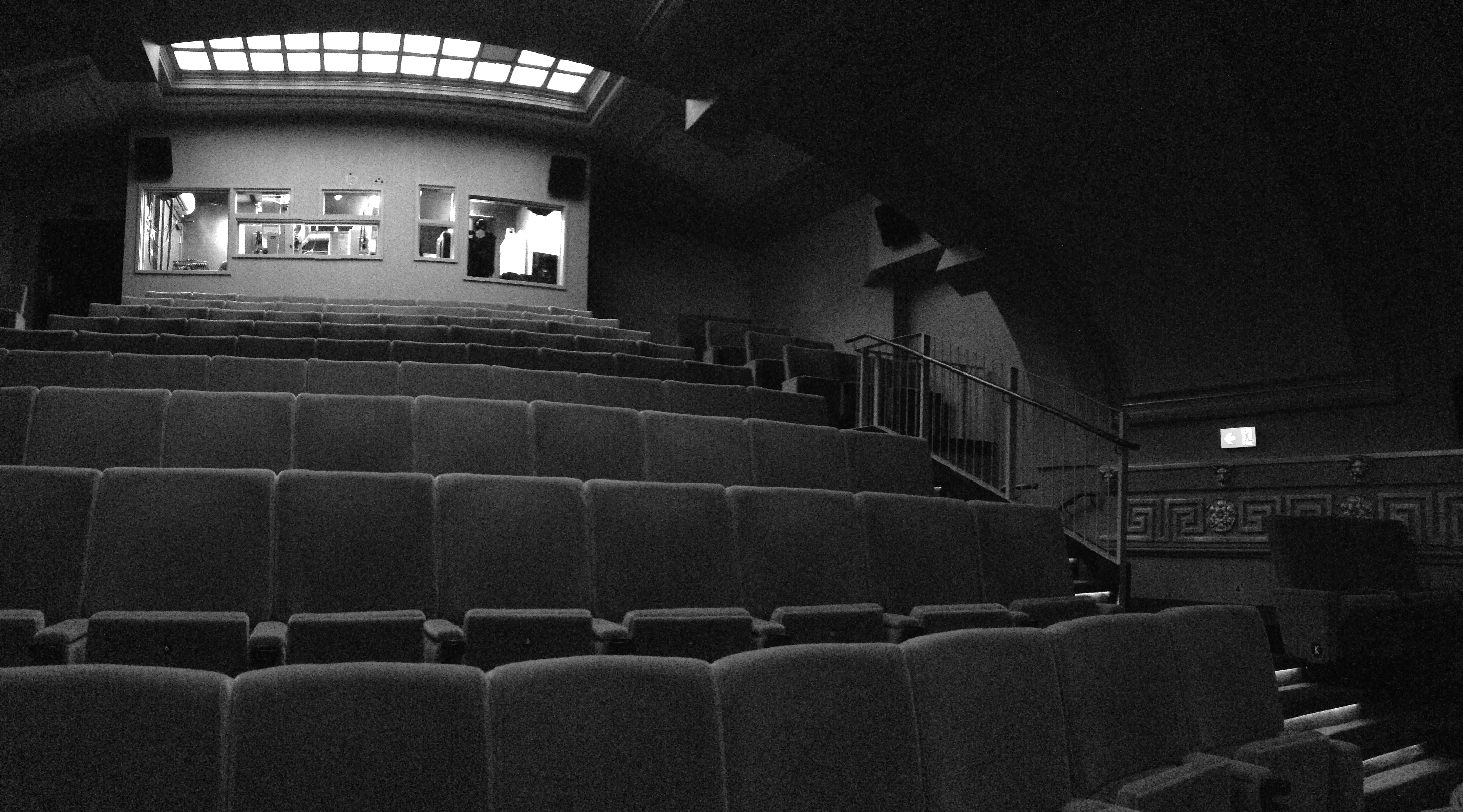
The cinema interior – mid-restoration (flickr.com/regentstcinema)
When you become a silent movie blogger no one tells you that you will need a hard hat. Nor that you will occasionally be handed a free glass of fizz. But those of those things happened on Wednesday afternoon when I travelled “up west” to the University of Westminster to see the venue where the first public motion picture screening in the UK took place.
On 21 February, 1896, the Lumière Brothers demonstrated their cinematograph to a paying public (admission: one shilling) in the theatre of the Polytechnic Institution on Regent Street in London. The theatre had been used for lots of things before the Lumières arrived, including very popular magic lantern shows. Subsequently, it was made into a bona fide cinema, in use until 1980. And the Polytechnic changed too, eventually becoming the University of Westminster, but notably in 1970, as the Polytechnic of Central London, it was one of the first institutions to offer an undergraduate degree in Film Studies.
As for the Lumière brothers and their cinematograph, that is another story …
Now, the University of Westminster is restoring the theatre to some of its former glories: reinstating and repairing the 1926 art deco cinema fittings, and the organ, which was a later addition. There will also be a cafe-bar in the foyer, the capacity to project DCPs as well as film (should that be the other way around?) and all manner of schools programmes and tie-ins with neighbouring bodies.
Unsilent Movies has been touring silent film and live music events for a couple of years now. This month, they are bringing their score for The Phantom of the Opera (1925) to venues across the UK. Percussionist Ric Elsworth tells you a little more about the project in this short video:
And here are those tour dates:
26th October – Leicester Phoenix Cinema
28th October – Shrewsbury Theatre Severn
29th October – Newcastle Tyneside Cinema
30th October – Oxford Ultimate Picture Palace
31st October – London St. James Studio