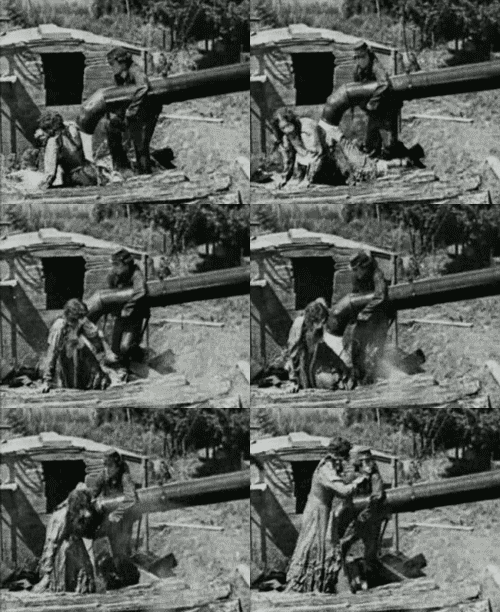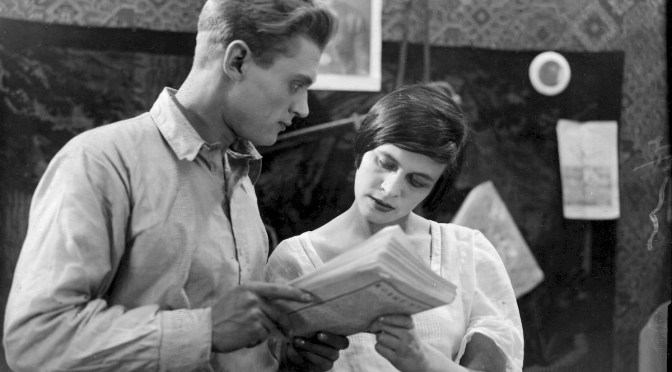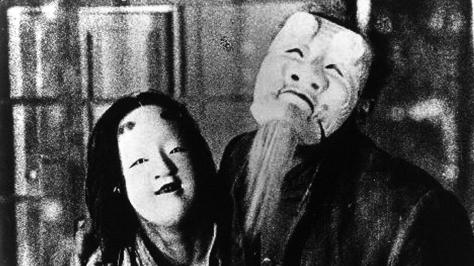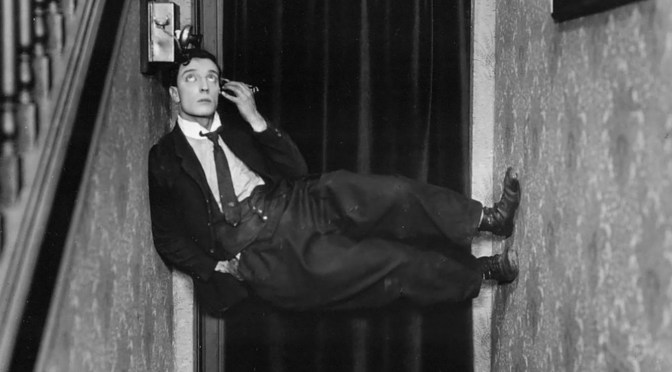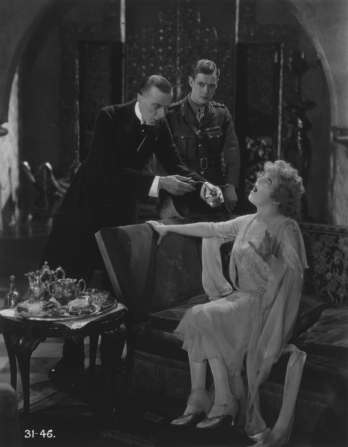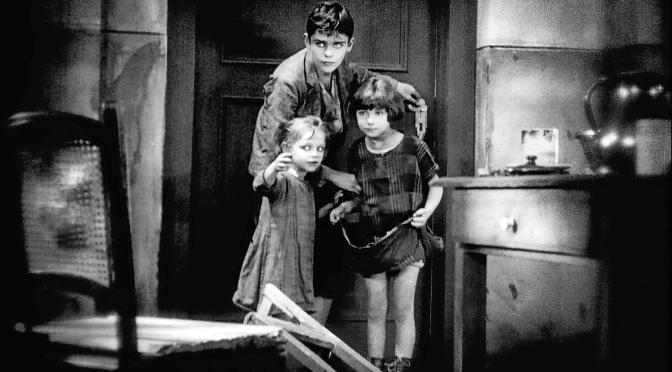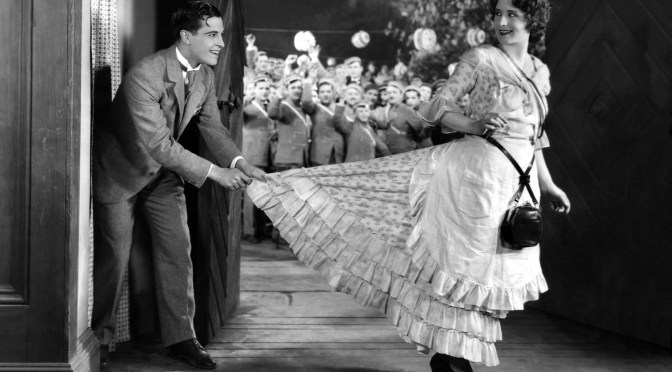

Continue reading Buster, Denny and Dutch: all in a day at the Slapstick Festival


Continue reading Buster, Denny and Dutch: all in a day at the Slapstick Festival
There are a handful of silent films that most cinephiles see first. Battleship Potemkin, Metropolis, Sunrise, The General and The Cabinet of Dr Caligari perhaps, give or take Nosferatu, a Hitchcock and a couple more Hollywood favourites. There is nothing dismaying about the establishment of these films as classics of the silent era, widely available on DVD and at festival screenings. However, this very select canon can offer a distorted picture of the period. At the very least, there is a risk that these isolated examples are heralded as rare triumphs from a primitive age.

This is where Lawrence Napper’s engaging guide to late silent film comes in. Silent Cinema: Before the Pictures Got Small offers a broader picture of film style and the film industry between the First World War and the coming of sound. The opening chapter begins with the audience, tracing the history of filmgoing in this period, using the depiction of cinemas in silent movies. Subsequent sections provide context for those film-club favourites, outlining the industry and aesthetics of the cinema in Germany, Russia and America.

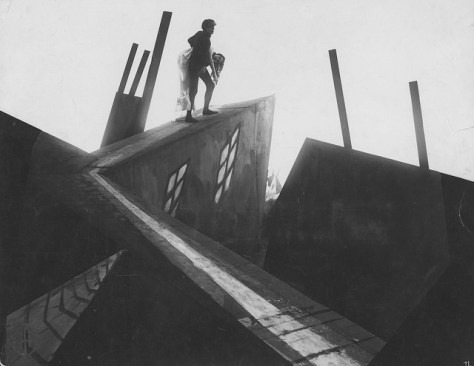
In these chapters, Napper revisits and challenges some fondly held views. Particularly, he stresses that there is far more to the national silent cinemas of Germany and Russia than Expressionism or Soviet montage respectively. He follows a detailed discussion of Caligari with the suggestion that the reader looks at Ernst Lubitsch comedies such as The Oyster Princess and The Doll to discover similar stylisation in both performance and design but applied in the name of pleasure and humour rather than the evocation of psychological trauma.
Continue reading Silent Cinema: Before the Pictures Got Small review – revisiting the canon
The divine Greta Garbo, queen of the close-up, is celebrated in a special event at the Royal Festival Hall in March. One of her full-length Hollywood features and the only remaining reel of another, will screen with orchestral accompaniment by the Philharmonia Orchestra . The really good news is that they will be playing scores by the maestro Carl Davis.

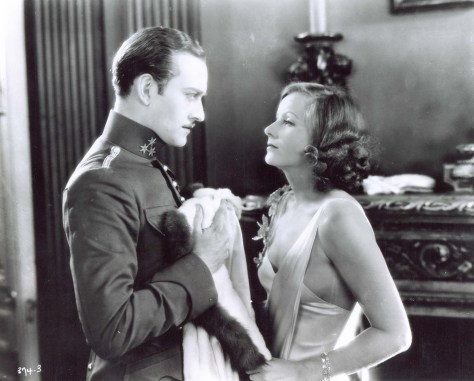
The feature film is The Mysterious Lady, in which Garbo stars as a Russian spy who falls in love with the man she is supposed to be stealing secrets from, a soldier played by Conrad Nagel. It’s one of my favourite Hollywood romance, filled with glamour, lavish sets and smouldering passion from the two sultry leads. This will be shown alongside the single recovered reel from The Divine Woman, a drama based loosely on the life of Sarah Bernhardt and directed by Victor Sjöstrom. Garbo’s co-star in this is Lars Hanson – you may remember their chemistry from Flesh and the Devil.
There ain’t no party like a Silent London Poll-Winners’ Party. Why? Partly because this is a virtual party, so you can join in the fun, and still stick to your Dry January #goals. Alternatively, take a shot every time you spot a typo and boy will this blogpost go with a swing. Not only that, but we politely declined Warren Beatty and Faye Dunaway’s offer to host this year, so fingers crossed, the prizes will go to their rightful winners, right away.
While I shuffle the envelopes and the guests sashay down the red carpet, a little announcement. Every year the poll gets more international (although obviously the British bias is strong). Plus, this year we had the most votes we had had in years. As you are free to nominate whatever you like (and you did!), the answers were pretty diverse. So in the 2017 poll, I am awarding Gold, Silver and Bronze awards for the very first time. At Silent London, we like to share the love!
So, as the sports commentators say, let’s find out who, and what, podiumed this year!

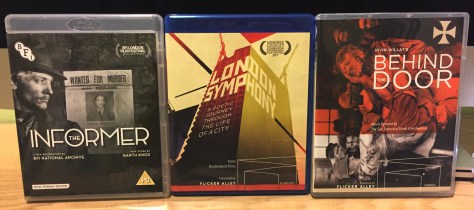
GOLD: You’re going to hear this name a lot tonight. The best silent film DVD/Blu-ray release of 2017 is London Symphony – out now in the US from Flicker Alley. Some of these votes may also have been anticipating the UK DVD release in February from New Wave.
SILVER: Another British film gets a medal, though it’s more international than most. Second prize goes to the BFI’s Dual Format DVD/Blu release of Arthur Robison’s The Informer.
BRONZE: It’s another Flicker Alley release at number three! The notorious Behind the Door, directed by Irvin V Willat, restored by the San Francisco Silent Film Festival, and once seen, never forgotten.

GOLD: It’s a second gold medal for London Symphony, which went on an ambitious tour of UK venues in 2017 – and is still going!
SILVER: Second place goes to Eureka’s theatrical release of Der Müde Tod – amazing to see one of Lang’s more obscure silents get this treatment. Brava!
BRONZE: The Informer places here too, for its theatrical run after the 2016 LFF Archive Gala.
GOLD: Can you guess? It’s another gold medal for London Symphony!
SILVER: Lots of you voted for Bill Morrison’s magical documentary Dawson City: Frozen Time. And who can blame you? Not strictly a modern silent but I see exactly why you love it.
BRONZE: The Moonshiners takes third place. This Finnish short, directed by Juho Kuosmanen, is actually a remake of Finland’s first ever fiction film – the original is sadly now lost. You can read more about The Moonshiners in the February 2018 edition of Sight & Sound, too.
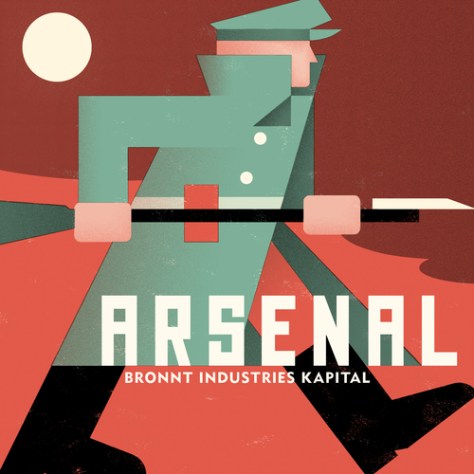
When I saw Dovzhenko’s Arsenal at the British Silent Film Festival in Leicester in 2015 I was blown away. Yes, it’s a great film, but I had seen it once or twice before. However, the score performed that evening by Bronnt Industries Kapital, AKA Guy Bartell, knocked my socks off. If I’m strictly honest, it made me appreciate the film itself, which had previously left me a little cold, far more. You may have heard the band’s excellent score for Turksib – this one is even better.
I said, “Bartell’s score is expertly judged – an echo chamber of horror for the film to resonate inside. I urge you to catch the film with this score whenever you can.” And I wasn’t the only viewer impressed. None other than John Sweeney, who knows whereof he speaks, said: “An extraordinary soundtrack for an extraordinary movie, Guy Bartell’s sound score for Arsenal plugs the viewer directly into the nervous system of this shattering film.”

So I am very chuffed to share with you the news that Bronnt is releasing this new score for Arsenal on CD, (green) vinyl and digital formats on 12 January 2018 via I Own You records. The score was commissioned by the Oleksandr Dovzhenko National Centre with the British Council to accompany the ODNC’s recently restored print. Which means …Yes, Bronnt is taking the music and the film on a little tour. Remember what I told you – catch it if you can.
Additional dates to be announced soon.
Were you at the Barbican for the London Film Festival Archive Gala last year? It was a really special evening: the premiere of the BFI’s immaculate new restoration of Indian-Anglo-German romance Shiraz: A Romance of India with a stunning new score composed by Anoushka Shankar. I was there, and you can read my review here.
However, whether you missed out, or you just want to relive the magic, there is good news. Shiraz gets a theatrical release very soon – it lands in cinemas from 2 February 2018. If you want to take Shiraz home, you’ll be able to buy it on DVD/Blu-ray on 26 February too. You’ll also be able to watch Shiraz on the BFI Player, and BBC4 will broadcast a behind-the-scenes documentary on the recording of Shankar’s ambitious score at some point during the year.

Last night I had a sneak preview of the DCP of Shiraz – the digital version that will be shown in cinemas and appear on disc, with the recorded score. A repeat viewing confirmed that this is an especially gorgeous film, with beautifully composed frames full of detail. The first time round I was distracted by the leading players, but on second viewing the landscapes in the background caught my eye, not to mention a donkey scratching his neck on a tentpole, a potter spinning his wheel. And sorry, Hollywood, but all your grandest designs can’t compete with the stunning architecture in this film. Shankar’s score, too, is full of surprises, bold decisions and graceful melodies. The range of instruments and styles in this piece of music is really breathtaking, and yet it’s always sensitive to the film – a really accomplished silent movie score.

There may be more good news too – although you’ll have to cross your fingers. The BFI hopes to stage some more screenings of the film with the music played live, but we will just have to wait and see …
I often forget to check out the most-read pieces published on the site in any given year – but 2017 offers a particularly varied and cheery top 10. So here goes: the most-read (new) features on Silent London in 2017 were, in ascending order:

I reviewed the London Film Festival archive gala, with a head full of festival flu. Cracking night, though.

A reprint of something I wrote for a magazine, on the amazing ending (or is it?) of a classic film.

I presented this as a paper at the 2017 British Silent Film Festival Symposium. It’s long, and a bit grubby, but interesting, I promise.
Continue reading Top of the blogs: the 10 most popular posts on Silent London in 2017
Exciting news from the BFI today – especially for those of us about to break up for the holidays and looking forward to having some spare viewing time on our hands. The BFI has released more than 170 ‘orphan’ films on its YouTube channel – and they can be watched around the world as well as in the UK (unlike the BFI Player, where some of these films are also found). ‘Orphan’ films are those protected by copyright for which rights-holders are positively unknown or uncontactable. The films range from 1899 to 1985, but as you’d expect, there are several silent movies in the collection.
Here’s a short selection of some highlights, although you can see the full playlist here.
The first filmed version of Harold Brighouse’s Hobson’s Choice, this is from 1920, directed by Percy Nash and starring Joe Nightingale, Joan Ritz and Arthur Pitt:
The Fisher Girl’s Folly (1914), a glimpse of an early two-reel drama directed by George Pearson: Continue reading A festive free-for-all: BFI releases silent ‘orphans’ on YouTube
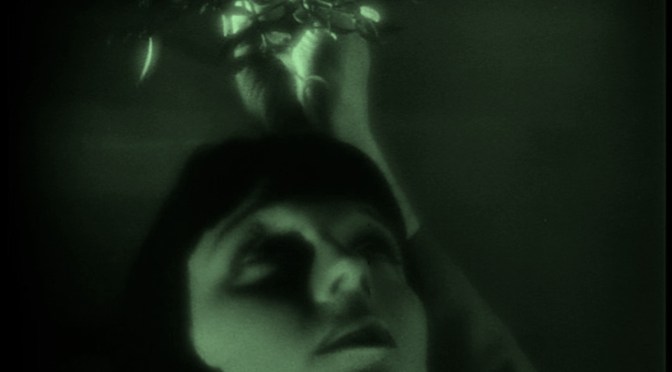
Hello! To celebrate the fact that my BFI Film Classic on Pandora’s Box is on sale in the US as of today (LINK) I have rounded up some links relating to the book. I’ve been out and about talking about the film IRL but also online, as you’ll see. I’ve included some of the nice things that people have said about the book, too. *blush*
Not much more to say on this, except … except … look out for more from me* on GW Pabst in the new year. Fingers on lips for now.
*No, not a book.
UPDATED: Important news for clever clogses. The dates for the 2018 British Silent Film Festival Symposium are out, and the call for papers is copied below. The headline is that 19 and 20 April are the dates you need, and while the papers will be presented at King’s College London as usual, the the screening day will take place at the historic Phoenix Cinema in East Finchley.
The eagle-eyed among you will notice an addition to the rubric this year: “in Britain or the British Empire” … That should give you something to think about.
This is always an enjoyable event, which leaves me with plenty to ponder and lots more to explore. Last year, particularly, I thought there was a really strong selection of papers.
The BSFFS aims to showcase new research in any aspect of film-making and film-going culture in Britain or the British Empire before 1930. We invite proposals for 15-20 minute papers.
The event will include a day of screenings at the Phoenix Cinema East Finchley on 19 April and a day of papers at King’s College London’s Nash Lecture Theatre on 20 April .
Please submit abstracts of approx 300 words to Lawrence.1.Napper@kcl.ac.uk before 20th March 2018
Do register your interest on Facebook too. See you there. I’ll be loitering by the biscuits.
With one week to go before the big day, the Silent London elves bring you a selection of festive gift recommendations. These are great ideas to buy for the sexy silent cinephiles in your life – or to spend your gift vouchers on in the sales.
I have mostly linked to UK Amazon for ease, but you should be able to find these elsewhere online, direct from the supplier or (hopefully) in a shop near you.

London Symphony, Alex Barrett’s gorgeous, moving tribute to the capital city is out to buy on multiregion Blu-ray now from the good folks at Flicker Alley. Also included on the disc is a 1933 archive film London Medley, as well as an interview with Barrett and his short form Hungerford Bridge. It’s a brilliant, beautiful modern city symphony, with a cameo from yours truly, and possibly a couple of other faces you will recognise. Readers in the UK may want to wait until the UK DVD release in February from New Wave.

New to silent cinema? Or just want to read an intelligent, refreshing perspective on late teens and 1920s cinema? Lawrence Napper’s Silent Cinema: Before the pictures got small is a valuable, and highly readable guide to pre-sound film. I loved it. Regular readers of this site will especially enjoy the hurrah for British silent cinema: “thrillingly cosmopolitan”.

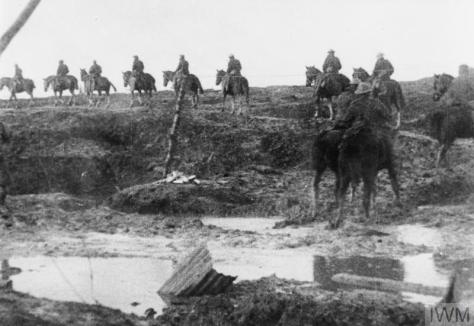
The history buff in your life will be fascinated by the Imperial War Museum release of The Battle of the Ancre and Advance of the Tanks (1917) on Blu-ray and DVD. Geoffrey Malins’ followup to The Battle of the Somme (1916) is more tightly constructed and cinematically shot with a greater focus on the soldiers than strategy. It is presented here in a crisp, fresh restoration with a beautiful score by Laura Rossi, and a reconstruction of the recommended medley score from 1917, compiled by Stephen Horne.
Continue reading Silent Santa: classics for your Christmas list
It has been a very special year for this site, and I have been overwhelmed by your support and good cheer in 2017. So, here’s raising a bottle of gin to the festive season, and my very best wishes to you for 2018.

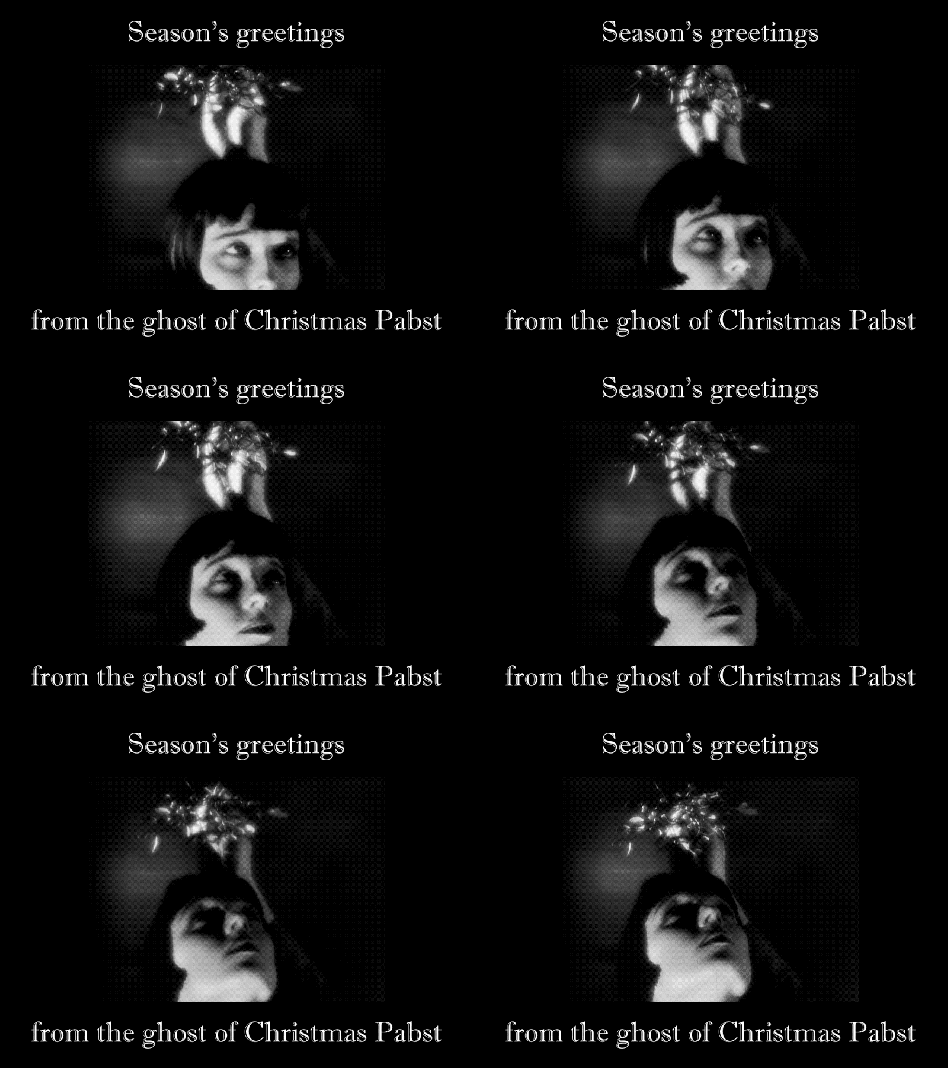
Lulu would also like to remind you to vote in the Silent London Poll!
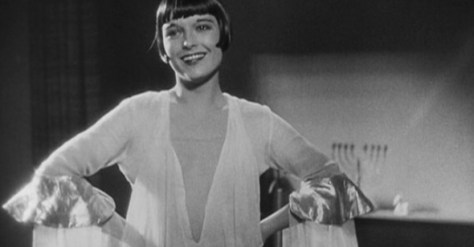
And to have a happy Chanukah!

It’s the first day of December, which means two things. Number one, don’t forget to light the advent candle tonight. Two, it’s time to open the Silent London Poll.

You’ve got plenty of time to think about your choices this year – the poll will be open for the next three weeks. But remember that every vote counts.

Are you struggling to remember the festivals, films, and music that you loved the most in 2017? Well take a look back through the pages of Silent London, or the Silent Film Calendar or ithankyou, both of which sites kept up to date with silent happenings all year round.

Remember also that I want to hear about home video releases and books as well as screenings and festivals. And modern silents too – the world didn’t end in 1927.

Leicester you forget, settle down to fill in the survey with a Hipp soundtrack, and perhaps glass of Italian wine, maybe a Shiraz, and try to remember the films and events that changed your appreciation of silent cinema this year. There were laughs. There were tears. There was even a hint of revolution in the air.

As is now traditional, I’m asking for your Silent Hero, and at the suggestion of Mr John Sweeney, I’ll be asking for your favourite intertitle of the year too – just one that made the biggest impression on you.

Don’t be afraid to lobby for your favourites, or to vote for events outside the UK. The poll is now a global affair and the more votes the merrier. Sharing is caring!
Follow this link to fill in the survey – or scroll down and get started straight away.
https://silentlondon.polldaddy.com/s/silent-london-poll-of-2017
More silent film goodness to look forward to in 2018, and this time a little closer to home.
The 2018 edition of Bristol’s Slapstick festival takes place at venues across the city centre from 25-28 January and tickets are on sale now. If you’re not familiar with this event let me tell you how it breaks down. Funny films. Funny people. That’s it, really. The Slapstick Festival celebrates the tradition of visual comedy on screen, beginning in the silent era. And it invites famous comedians to present and share their favourites, as well as a host of experts and the best silent movie musicians in the business.
So next year, silent comedy fans can look forward to:


Continue reading Buster and beyond: silent comedy at the 2018 Slapstick Festival
An early Christmas present for silent film fans in the form of some excellent news from the non-archive festival circuit. The retrospective strand at next year’s Berlin Film Festival will be devoted to Weimar Cinema – one of the most exciting, attractive periods in film history. Not only that but we can expect a sweep of some lesser-known titles, including new restorations.
According to the director of the retrospective strand, Rainer Rother: “Now, with this thematic look back, it’s time to turn our attention to the films that are not necessarily part of the inner canon.
“The diversity of the Weimar film landscape is best grasped via the works of filmmakers who are not usually counted among the great and prominent directors of the era. The variety of the films, by directors as varied as Franz Seitz, Sr. (Der Favorit der Königin, 1922), Hermann Kosterlitz (The Adventure of Thea Roland, 1932), and Erich Waschneck (Docks of Hamburg, 1928), is evident in the abundance of not only differing subject matter, stories, and characters, but also aesthetic approach. Looking at this legendary epoch in German film history from a new perspective reinforces its artistic reputation.”
This guest post is an edited version of an article on the origins of the early British thriller by Bryony Dixon, curator at the British Film Institute. The full article appears in the BFI’s new compendium on the thriller, Who Can you Trust?, now available in the BFI shop.
Next month’s Sunday Silent at the BFI Southbank is a rare chance to see a rare early film version of Edgar Wallace’s first great success, The Four Just Men. Released in 1921 by the Stoll Company, it was adapted by its director George Ridgewell, who worked on many of the Sherlock Holmes episodes for the same company. It’s a well-made film – nothing fancy but surprisingly competent for its year – from a well written novel, in fact a novel that is noticeably cinematic.

Try this passage from the opening of the original novel:
A NEWSPAPER STORY
On the fourteenth day of August, 19—, a tiny paragraph appeared at the foot of an unimportant page in London’s most sober journal to the effect that the secretary of state for foreign affairs had been much annoyed by the receipt of a number of threatening letters, and was prepared to pay a reward of fifty pounds to any person who would give such information as would lead to the apprehension and conviction of the person or persons, etc. The few people who read London’s most sober journal thought, in their ponderous Athænaeum Club way, that it was a remarkable thing that a Minister of State should be annoyed at anything; more remarkable that he should advertise his annoyance, and most remarkable of all that he could imagine for one minute that the offer of a reward would put a stop to the annoyance.
News editors of less sober but larger circulated newspapers, wearily scanning the dull columns of Old Sobriety, read the paragraph with a newly acquired interest.
“Hullo, what’s this?” asked Smiles of the Comet, and cut out the paragraph with huge shears, pasted it upon a sheet of copy-paper and headed it:
“Who is Sir Philip’s Correspondent?” As an afterthought—the Comet being in Opposition—he prefixed an introductory paragraph, humorously suggesting that the letters were from an intelligent electorate grown tired of the shilly-shallying methods of the Government.
The news editor of the Evening World – a white-haired gentleman of deliberate movement – read the paragraph twice, cut it out carefully, read it again and, placing it under a paper-weight, very soon forgot all about it.
The news editor of the Megaphone, which is a very bright newspaper indeed, cut the paragraph as he read it, rang a bell, called a reporter, all in a breath, so to speak, and issued a few terse instructions.
“Go down to Portland Place, try to see Sir Philip Ramon, secure the story of that paragraph—why he is threatened, what he is threatened with; get a copy of one of the letters if you can. If you cannot see Ramon, get hold of a secretary.”
And the obedient reporter went forth.
He returned in an hour in that state of mysterious agitation peculiar to the reporter who has got a “beat.” The news editor duly reported to the editor-in-chief, and that great man said, “That’s very good, that’s very good indeed” – which was praise of the highest order.
What was “very good indeed” about the reporter’s story may be gathered from the half-column that appeared in the Megaphone on the following day:
Cabinet Minister in Danger
Threats to Murder the Foreign Secretary
“The Four Just Men”
Plot to Arrest the Passage of the Aliens
Extradition Bill
EXTRAORDINARY REVELATIONS

It reads like a screenplay. The ramping up in stages of tension from the total under-reaction of the old codgers of the Athenaeum, to the more informed curiosity of the Comet, to the instant action of the Megaphone creates a mental image very reminiscent of the condensed montage-opening of the standard film thriller of the 1930s and 40s. To us the vision of whirling presses and scurry of the newspaper boys may be a cliché from the opening scenes of a thousand crime films, but it was a relatively new thing in 1921, when the story was first filmed, and certainly in 1905 when it was written.
For 1905 it was, when one of the best known British thriller novels was penned by a man who would come to be known as the ‘King of Thrillers’. Edgar Wallace was a Londoner of humble origins, who overcame a modest education to become a journalist and then an astonishingly prolific writer of ingenious thrillers, plays and film scripts. His lowbrow (his word) thrillers were written to be easily readable, were hugely popular and eminently adaptable for the screen. His works spawned some 200 films and television programmes, including famously at the end of his life, the first script for King Kong (1933). He died of a chill contracted while in Hollywood working on the film for Merian Cooper.
Continue reading The Four Just Men and the early British thriller
One-hundred-and-eleven years ago, the actress, writer and icon Louise Brooks was born in Cherryvale, Kansas. She danced, she inspired a comic strip, she scandalised people, she acted, she starred, she disappeared … then she came back and told us all about it, in a series of wise and candid essays and some revelatory interviews. Her famous cool look, with those sharp features, glittering eyes and that slick haircut, represent the essence of 1920s chic. Her fame and popularity seem to grow every year. In short, Louise Brooks is hot stuff, even now.
To celebrate the anniversary of Louise Brooks’s birth I want to share with you the first look at my new book on her greatest film, Pandora’s Box (1929). Thanks for all your support along the way to writing this book. It has meant so much to me.

You can order the book here, but if you want to celebrate Louise Brooks’s birthday in style, come along to the official launch event and screening at BFI Southbank on Sunday 19 November 2017. I’ll be there to introduce the film, and to sign copies of the book afterwards. The film will screen on 35mm film, with live accompaniment from the wonderful John Sweeney. PLUS, you can buy the book then and there in the BFI shop, a few days before its official release, with a 10% discount. Just present your film ticket in the shop to get the offer.
There are a series of other screenings planned around the country to support the launch of the book. You can read about them here, in a post which I will update as new events are announced.
The lovely people at South West Silents interviewed me about Pandora’s Box, ahead of the screening I am introducing at the Cube Cinema in Bristol on 24 November.
Pandora’s Box (1929), Cube Cinema, Bristol / 8:00pm + Live Music + Special Intro
We strongly recommend that you keep the evening of Friday 24th November free in your diaries! Why?! As we are offering, for our second silent film event at the Cube Cinema, Bristol, a very rare treat indeed. As not only do you have a chance to see G. W. Pabst’s masterpiece that is Pandora’s Box (1929), starring the incredible Louise Brooks on the big screen (on 35mm film from the BFI Archives we should add). But this rare treat will also give us a chance to welcome back to very good friends of South West Silents.
Pianist John Sweeney will be playing live for us and returns to the Cube after our highly successful screening of Il Fuoco (1916; The Fire) which took place back in March.
While Pamela Hutchinson (Silent London) is…
View original post 1,195 more words
Saturday night’s London Film Festival Archive Gala was an extraordinary experience. Regularly a highlight of the silent film year, previous galas have showcased glistening restorations of old and faded movies paired with fresh scores of mostly excellent quality. This year’s event was an exercise in enchanted restoration – with makeover and music transforming a simple film into something entirely wonderful.

Shiraz: A Romance of India was an Indian/British/German co-production from the late silent era. You might know two more films by the director Franz Osten: A Throw of Dice and Light of Asia. Shiraz is a shamelessly romantic and fairly romanticised, telling of the love affair honoured by one the most beautiful mausoleum in the world, the Taj Mahal in Agra.

Shiraz (Himansu Rai, who also produced the film) is a humble, but exceptionally talented potter, who has a deep love for his adopted sister Selima. When Selima (Enakshi Rama Rau) grows up, she is sold as a slave into the royal court and they are separated. What’s more, a love affair slowly begins to spark between Selima and Prince Khurram (Charu Roy) … Meanwhile, general’s daughter Dalia (Seeta Devi) is plotting to get her own hands on the prince.

The story may seem paper-thin, but it has a beautiful surface. The romantic leads are very sweet, with the halting love story between Selima and the Prince always believable and Devi delightfully minxy. The location backdrops of the mountains and palaces are ravishing – a testament to the art direction of Promode Nath and cinematography by Henry Harris and Emil Schünemann that makes the most of natural light.
Continue reading LFF review: Shiraz: A Romance of India (1928) with Anoushka Shankar
This is a guest post for Silent London by John Leman Riley, a writer and editor, specialising in Eastern European culture, and film sound.
Film theory is usually visually driven, and the Soviet kind – with its emphasis on editing – especially so. And since the theorisers were often directors, they are better known than the men (and, inevitably, they were almost always men) who argued about the music. So much so that the best-known Soviet film-sound-theory text is 1928’s A Statement by Eisenstein, Pudovkin and Alexandrov (“on Sound” is often added to translations to clarify the subject). With its dream of asynchronous, anti-realistic sound, it was an idealistic text, and its ideas would never be fully followed through.
But beyond that is a huge bibliography of articles, pamphlets and books about the aesthetics of film music, and the competing technologies being developed for synchronised sound. The critical tracts were often written by properly trained musicians with practical experience in the cinema but their writings are rarely translated, and remain largely unknown outside Russia.

What were these competing theories about film music? Nowadays, we tend to look at the degree to which the music reflects and reinforces the images but, as A Statement argues, it could counter them. And there was a third option: the music could go its own way, fitting the film where it touched. This approach was taken by a Kiev cinema whose 60-piece orchestra simply played Tchaikovsky symphonies regardless of what was on screen, which must have made for some bizarre audiovisual moments! How successful these approaches were depended to some degree on whether the film was being accompanied by a composed score, a selection from albums or improvisation (what composer-critic Leonid Sabaneyev – a regular film-music critic – called “tasteless vamping”).
But today we’re discussing October, so we’ll go back to Eisenstein. His writings are polymathic: I opened a random page to find references to and quotes from Gounod, Bach, Tolstoy’s War and Peace, Dickens’ Hard Times, Pushkin’s The Bronze Horseman and The Little House at Kolomna, and Dumas père in a discussion of structure, movement and the visualisation of non-visual phenomena. Unsurprising then, that he put some thought to film music (or rather, as A Statement showed, film sound). Indeed, the audiovisual was a topic with which he had long been obsessed.