The cinema interior – mid-restoration (flickr.com/regentstcinema)
When you become a silent movie blogger no one tells you that you will need a hard hat. Nor that you will occasionally be handed a free glass of fizz. But those of those things happened on Wednesday afternoon when I travelled “up west” to the University of Westminster to see the venue where the first public motion picture screening in the UK took place.
On 21 February, 1896, the Lumière Brothers demonstrated their cinematograph to a paying public (admission: one shilling) in the theatre of the Polytechnic Institution on Regent Street in London. The theatre had been used for lots of things before the Lumières arrived, including very popular magic lantern shows. Subsequently, it was made into a bona fide cinema, in use until 1980. And the Polytechnic changed too, eventually becoming the University of Westminster, but notably in 1970, as the Polytechnic of Central London, it was one of the first institutions to offer an undergraduate degree in Film Studies.
As for the Lumière brothers and their cinematograph, that is another story …
Now, the University of Westminster is restoring the theatre to some of its former glories: reinstating and repairing the 1926 art deco cinema fittings, and the organ, which was a later addition. There will also be a cafe-bar in the foyer, the capacity to project DCPs as well as film (should that be the other way around?) and all manner of schools programmes and tie-ins with neighbouring bodies.
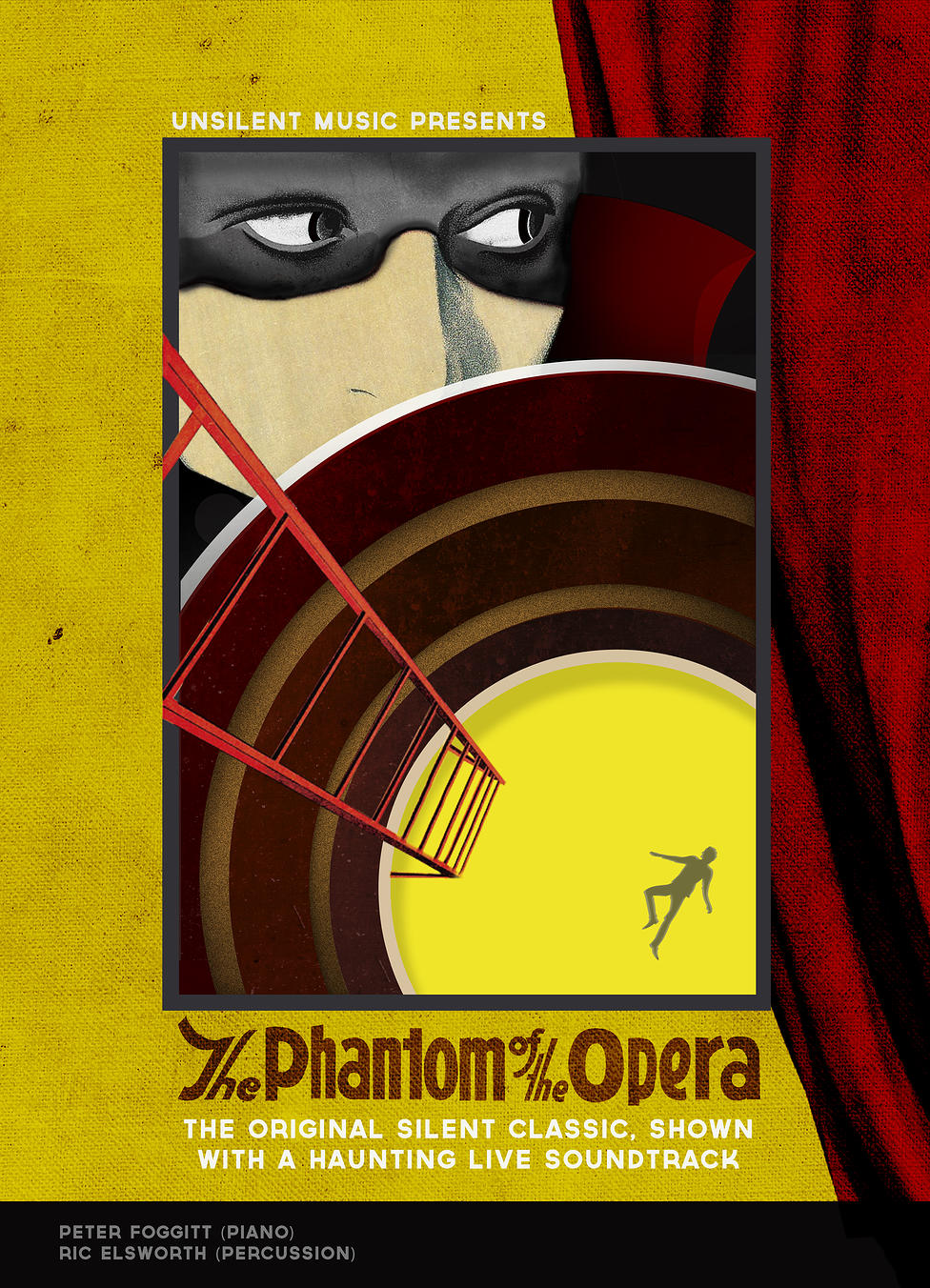
Unsilent Movies has been touring silent film and live music events for a couple of years now. This month, they are bringing their score for The Phantom of the Opera (1925) to venues across the UK. Percussionist Ric Elsworth tells you a little more about the project in this short video:
And here are those tour dates:
26th October – Leicester Phoenix Cinema
28th October – Shrewsbury Theatre Severn
29th October – Newcastle Tyneside Cinema
30th October – Oxford Ultimate Picture Palace
31st October – London St. James Studio
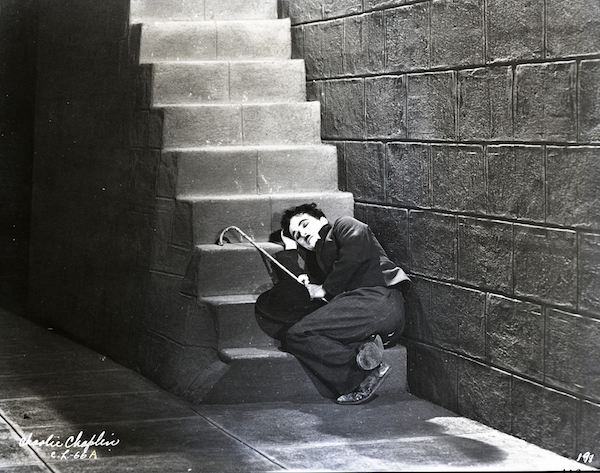
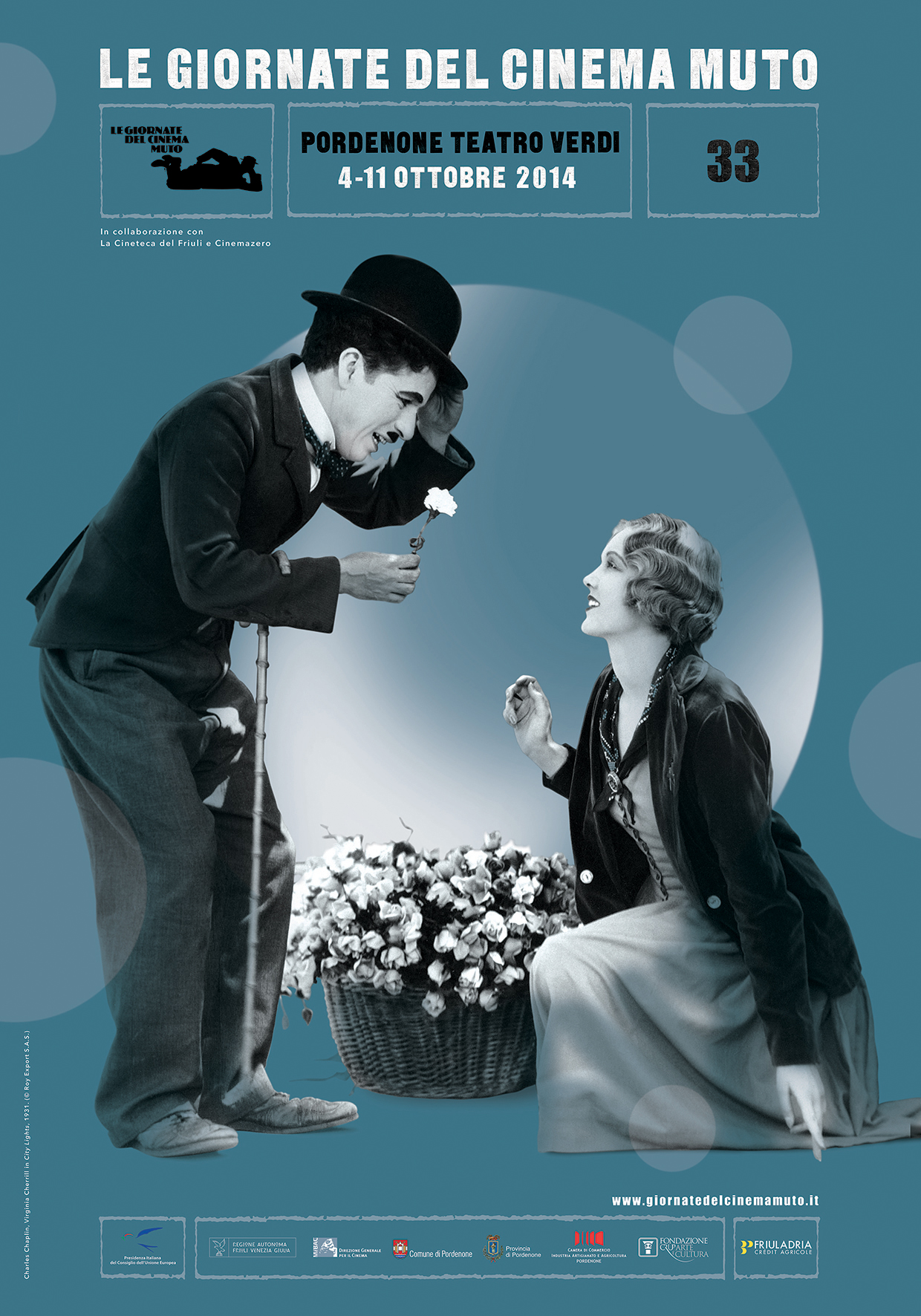
By now, I think we agree that the global capital of silent cinema is Pordenone, and Charlie Chaplin is its patron saint. It was surely fitting that our last glimpse of the Giornate, on the capacious screen of the Teatro Verdi, was the little feller himself, in extreme close-up, at high risk of having his heart broken, smiling to the end. City Lights, our gala screening tonight, is not my favourite Chaplin feature but that doesn’t mean it didn’t have power enough to sweeten the end-of-the-festival blues. Rumours that certain of the delegates are likely to be found curled up in Piazza XX Septembre like the Tramp himself come Sunday’s dawning were unsubstantiated as we went to press …
The Last Edition (1925)
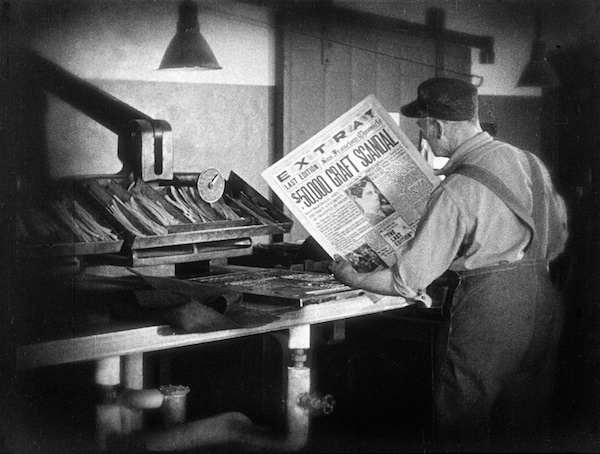
Speaking of which! I can’t wait a moment longer to to tell you about my most hotly anticipated movie of the Giornate. We all have our foibles, and as a newspaper journalist of increasingly long years, I do like a flick about the inkies. The Last Edition (Emory Johnson, 1925), freshly restored by EYE and the San Francisco Silent Film Festival, promised much joy for the unbridled newspaper geek. Shot on location at the offices of the San Francisco Chronicle, and with its full collaboration, this hotheaded movie is actually a rather clear portrait of the newspaper production process – from commissioning desk to printing press. Mostly the printing press. I was a bit bemused by the moment when the printer turns the masthead and headline upside-down on a plate that has already been made, just by turning a handle. Huh? But I loved the “rush the extra” sequence (“We’ve got eighteen minutes to change the story. C’mon boys!”), which follows the process of swapping in new copy at the last minute from the reporter filing to the copy desk, the typesetters and on to print. I’ve been there myself, with slightly different technology, but the same adrenaline, many a time. Although, needless to say, there were no female journalists in The Last Edition. All stonking if rather rough and ready and a fantastic picture of San Francisco in the 1920s too. I have no earthly idea why they needed to jazz up all this fascinating typesetting material with a plot involving gangsters, corruption and a massive fire at the newspaper office, but I may be slightly biased.
I should mention that The Last Edition was preceded by a 1912 Thanhouser short The Star of the Side Show, about a young “midget”, who refuses to marry the neighbours’ boy, also short-statured, so gets signed up for the carnival instead. It is described in the catalogue as “a prototype for Tod Browning’s Freaks, only more endearing”. That about sums it up. A tricky film to love but another fabulously expressive performance from Marie Eline, the Thanhouser Kid in the lead role. No, in case you’re wondering, she was just a little girl …
You know it’s Pordenone when you’re still having a conversation about melodrama, cliché and the difference between parody and sendup as you turn the key in the lock of your door at midnight. Or maybe that’s just me and the people I choose to hang out with. Still, I think it’s telling, because the penultimate day of the Giornate had plenty for us to chew on, get lost in and provoke the temper too.
But first, let me lay the scene: a medium-sized town in northern Italy, it’s Friday, spitting with rain. Interior: a bell rings, it’s nine am in the auditorium and it is clear that quite a few people in attendance have that Friday feeling. You know, the one was manifests itself in a splitting headache and grey circles under the eyes? But if there is one thing that we have learned this week, it is that Yakov Pratazanov is worth getting out of bed for.
Chiny I Liudi (1929)
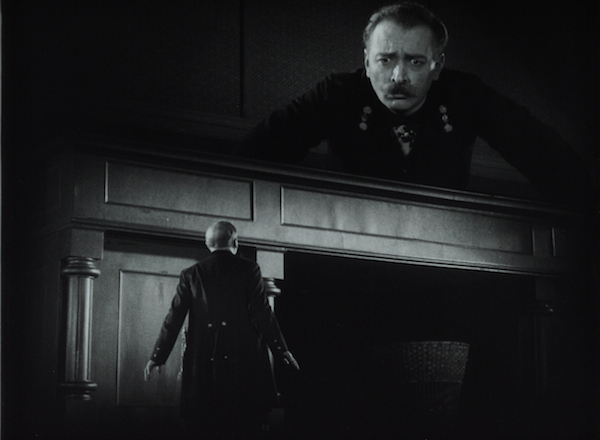
And Chiny I Liudi (Ranks and People, 1929), a portmanteau film comprising adaptations of three Chekhov short stories, was another great “serious comedy”, leading me to kick myself that I missed last night’s Don Diego I Pelageya (1928). Each story deals with the problems of living in a rigorously stratified society: a clerk fears he has offended a high-up and apologises to death; an officer is caught between asserting his authority and sycophancy to a general; a poor woman marries a heartless rich man, but has her head turned when she experiences high society. It was all beautifully done, as witty as it was tenderly heartbreaking. A false perspective frame of the clerk approaching his senior’s desk, and a high-angled shot pretty Anna admiring herself in her finery were particularly memorable. I’m more keen than ever to see tomorrow morning’s sound-era Pratazanov. Another 9am Soviet film, just how I like it.
Knocked for six by the German dubbed/scored version of Potemkin. From gruff mutterings to blood curdling screams on the Odessa steps #GCM33
Russian cinema, but not as we know it, before the midday break without a curio from Germany: Panzerkreuzer Potemkin (1930). This is the “talkie” adaptation of Eisenstein’s classic, of course, featuring the Meisel score (in his own arrangement) and a lot of dubbed dialogue. All the intertitles apart from act breaks have been removed from the body of the film and historical explanations tacked on either end, read out in a thumping German voiceover. So it runs shorter than the original, but for me slightly less smoothly, which I freely admit may simply be due to my familiarity with the rhythms of the silent original. It seems strange to hear the men mutter their complaints rather than seeming to rise instinctively to a collective understanding of their circumstances. And because the film was conceived without so much dialogue, a lot of what we hear in this version is simply redundant. There’s an interesting, unintentional effect whenever dialogue runs over a montage cut, actually, as when an officer shakes a sailor awake or another sailor throws that fateful plate. But anyway, it would be very hard to kill the majesty of this movie – the images speak so eloquently that even if Stephen Horne were to reprise his kazoo routine from yesterday, the audience would still be moved. And of course, for a native German speaker, this may be the Potemkin they have always imagined. See what you think (please excuse the “Verdi tidemark”):
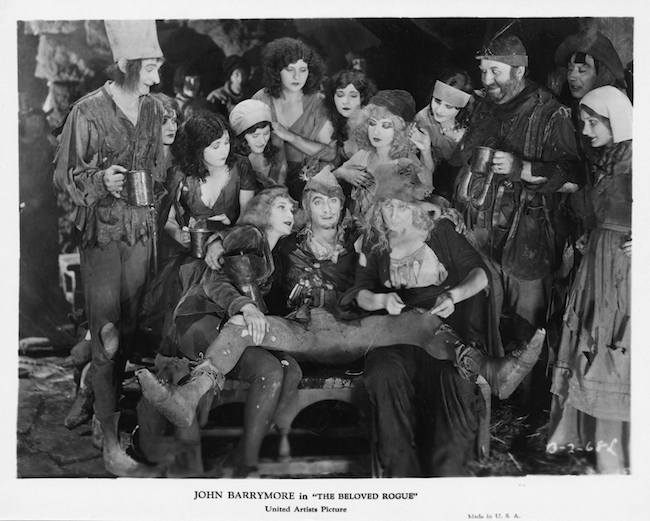
Today was a tale of two Fairbankses, both of them Douglas Sr, and of two Barrymores, both of them John, whom I think we can all agree was a bit of a beloved rogue. In the film of the same title, which came first today, he plays a gadabout poet in a 15th-century Paris so smothered in snow that it looks like a Christmas card. And this is Barrymore a la Fairbanks, just to confuse you, leaping from rooftop to rooftop with a goblet of wine in his hand and a jaunty feather in his cap. You just know that he is going to save France (despite the best efforts of feeble-minded King Louis XI, played creepily by Conrad Veidt with a finger up his nose), win the heart of a fair lady (Marceline Day as a poetry-loving aristo), complete some audacious stunts and compose lots of jaunty (terrible) verse on the spot. There is also a completely gratuitous loincloth scene, for the keener Barrymore fans among us. The Beloved Rogue (Alan Crosland, 1927) is total bunkum, but much more fun than, say When a Man Loves. The only way to enjoy this sort of thing is to commit totally to it, and we were helped along by sparkling accompaniment from not one musician but four: a harmonious grouping of Donald Sosin, Elizabeth-Jane Baldry, Frank Bockius and Romano Todesco.
Beau Brummel (1924)
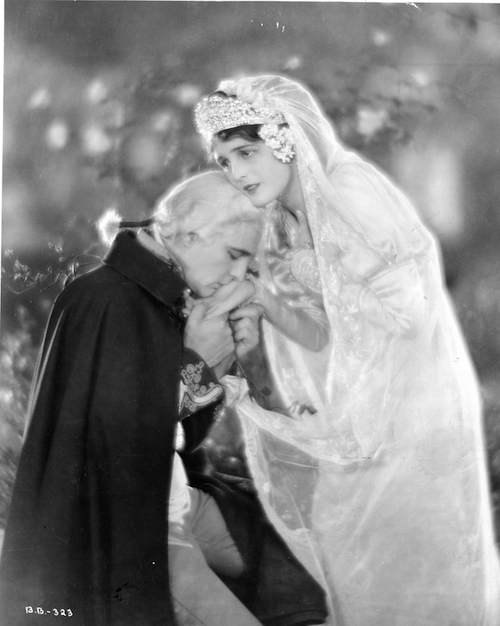
But John won’t win my heart that way: I crave romance, and splendour, and something beautiful to soothe my fevered brow. Beau Brummel (Harry Beaumont, 1924) will do the trick nicely thank you. It’s gentler, and more tender than the other JB films we’ve seen this week, even if equally as preposterous. Barrymore is the foppish captain deemed too lowly to marry his lady-love (an excellent, if teenaged, Mary Astor), who therefore plots to take obscure revenge on “society” by insinuating himself into the Prince Regent’s inner circle and fighting the system from within, yeah. But dear me, he does it in style. Skinny britches, umpteen rows of frogging, diamond buttons on his frock coat and a powdered wig – and still all you can concentrate on are those flashing eyes and his wicked comic timing. Preening in front of the mirror, practising his poses, or repeating the same lines to another pretty woman until he almost believes them himself … ah he’s a belov-able rogue here too all right. And in the end, it’s very touching, if both overdone and overlong. Stephen Horne was there for the duration (the Giornate showed the fullest print possible, of course), with a light touch on piano, flute and accordion bringing out the best of the comedy and plucking on our collective heartstrings. Good for the soul.
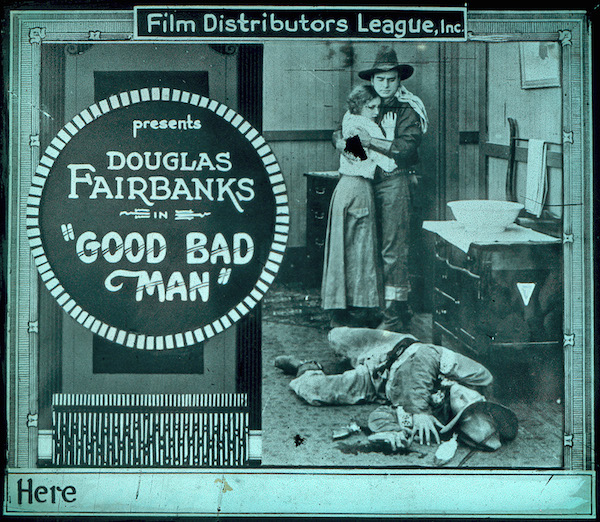
The Good Bad Man (1916)
Douglas Fairbanks is just as reliable a star as JB, if a simpler proposition all round. We were lucky enough to see The Good Bad Man (Allan Dwan, 1916) today, a western that went about its business as swift and straight as an arrow. Fairbanks is a Robin Hood cowboy, stealing from the rich-ish and giving to illegitimate children. Is there a dark secret in his past? Will he discover it, have his vengeance and live to make eyes at Bessie Love another day? I thought he just might – but was I right, kids? Kudos to London-based musician David Gray who accompanied the movie with verve and accuracy – he has been partaking in the Giornate’s musical masterclasses all week and this show marked his graduation.
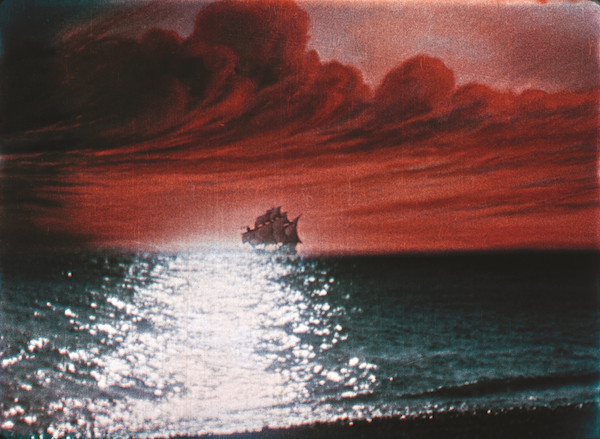
Our second sighting of Dougie was far more epic. The evening show brought another eye-popping collection of two-strip Technicolor treats, including a bizarre set of out-takes from The Gaucho (1927): a reel of attempts to shoot Mary Pickford as a vision of the Virgin Mary on a rockface. Shimmering loveliness its very self until an assistant hovers into view with a clapperboard. Fairbanks showed his face, and his biceps for the main feature, the unstoppable force that is The Black Pirate (Albert Parker, 1926): as gruesome as it is gorgeous and grand, this is a hard film to take against. If only because that dagger-down-the-main-sail makes you catch your breath each time. And in case you were wondering, John Sweeney can even make a sea shanty sound elegant. Classy stuff.
Almost time to turn in, and Whoozit (Harold L Muller, 1914) was our first bedtime story. Now, if a whole Charley Bowers movie makes very little sense at all, then I think it’s fair to say a single rediscovered reel will be a puzzler indeed. Great larks though: oysters with eyes humping across the bathroom floor, a teddy bear growing a beard, magic spectacles and an ogre sharpening a giant razor. Deeply enjoyable, brilliantly surreal.
One last thing before we go. The return of Sidney Drew, paired up here with Clara Kimball Young, to prove that the silent movies were spoofing silent movies long before pesky 21st-century scamps thought to do so. I thought Goodness Gracious; Or Movies as They Shouldn’t Be (1928) was ragged, but good clean fun, with hapless Gwendoline careering through loopy scenarios while chomping on her chicklit and waiting for her “brave youth” Cornelius to rescue her from another poorly framed misadventure. Undercranked and overegged and mad as a box of oysters. But a wiser soul than I caught up with me and raised a valid question: if this is the parody what is the original? Especially bearing in mind that this was made in 1928. Hmmm …
Corpse of the day: Bessie Love’s dear old pa in The Good Bad Man, God love him. Flat out on his front porch and breathing like a freshly landed fish.
Absurd romantic metaphor of the day: Home is where the hearth is for John Barrymore and Marceline Day in The Beloved Rogue – “Your eyes have swept my heart clean and kindled a fire there that will outlast me.”
Tiny things I love about Pordenone No 36: When the logo appears before a film and a group of dedicated colleagues cheer their own archive. Adore it.
My blog from the first day of the Giornate is here.
My blog from the second day of the Giornate is here.
My blog from the third day of the Giornate is here.
My blog from the fourth day of the Giornate is here.
My blog from the fifth day of the Giornate is here.
My blog from the sixth day of the Giornate is here.
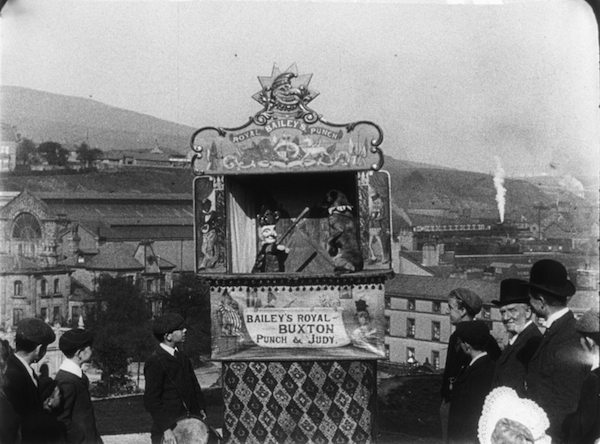
Bailey’s Royal Punch & Judy show in Halifax (1901)
Two Barrymores today, two appearances from Little Tich and too much, as usual, to recount here. But like the hard-working Cupid in La Rose Bleue (Léonce Perret, 1911), I’m going to give it my best shot. So if you’re sitting comfortably …
Today's highlight easily @professorvaness' brill Edwardian Entertainment program. Color fireworks, M&K, palmistry, clowns, fairs etc #GCM33
In a move designed to cure, or provoke, homesickness in weary British bloggers, this morning we were treated to 90 minutes of Edwardian Entertainment courtesy of Bryony Dixon and Vanessa Toulmin. Accompanying the 40-odd shorts and fragments on piano, percussion voice and everything in between were Stephen Horne and Frank Bockius on stellar form (Horne’s witty use of a kazoo, yes kazoo, in a telephone sketch was priceless). This was a peek at England in its Sunday best and some more outlandish costumes. It was all fun, fun, fun with trips to the seaside, the Punch and Judy show, fireworks, the cinematograph, barrel jumping, the fun fair, the panto and many wonderful processions showcasing our forefathers and mothers’ considerable talent in the fields of costume design and formation dancing – and not just Morris troupes and maypoles. It’s enough to make one crave a stick of rock and a trip to the illuminations. Certainly my northwestern heart leapt at a panorama of Blackpool. And who could resist the sight of a row of Mutoscopes on Morecambe beach with the sign “Look at this and get a laugh”. The perfect solution for those of us who want to watch the flicks all day without depriving ourselves of vitamin D.
If you really want sunshine at this time of year, a trip to Greece is in order, and Oi Peripeteiai Tou Villar (The Adventures of Villar, 1924), the oldest film ever restored by the Greek Film Archive, was a sketchy comic caper, doubling as a sun-dappled tour of Athens. Larky nonsense, but great shots of the Acropolis etc. And now I can say I have seen a Greek silent movie, which is sure to wow the folks down at the Rose and Crown on my return.
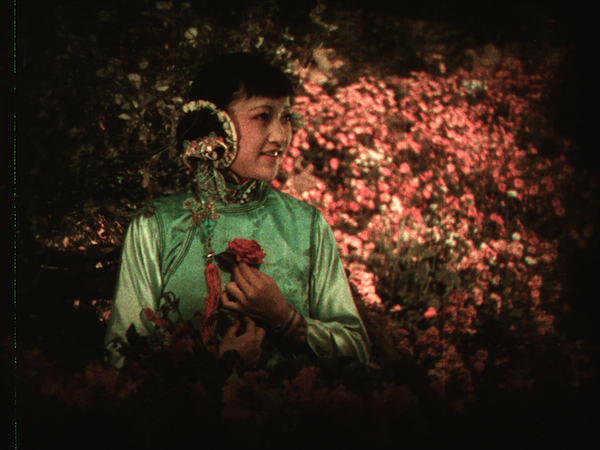
The Toll of the Sea (1922)
But if you want something really gorgeous … the second Dawn of Technicolor compilation had many diverting treats inside, culminating in The Toll of the Sea (1922). This was an exceedingly picturesque melodrama, a reboot of Madame Butterfly in which Anna May Wong plays a young Chinese woman in love with an American. But the bond of love and “marriage” is held more sacred by her than him … Oh and it all ends in sadness and sacrifice and another word beginning with S. Not before Wong’s sumptuous wardrobe and elegant garden (complete with peacock!) have been given the full Technicolor treatment, though. The sweetest of sorrow and the sugariest of eye candy.
We have passed the halfway point of the Giornate now, but some would argue we have taken the long route round. Because Wednesday night was epic, you’d have to agree. Tonight we witnessed all five hours of Fritz Lang’s towering, geometric monument to mythic nationalism, Die Nibelungen (1924). And arguably, grandeur was the order of the day: from a spot of early morning swashbuckling to mist-covered mountains and a trip to the opera.
Waking to grey skies and a slick of drizzle on the pavements can only mean one thing here in balmy Pordenone. To merrie Englande! To Ye Olde London Towne, in truth, for The Glorious Adventure (J Stuart Blackton, 1922) – and I have a feeling that the cleansing flames that purged in the spider cave in Tuesday night’s Pansidong are about to smite these half-timbered streets. Do I spy Nell Gwyn and Samuel Pepys in yon King Charles II’s court, as well as carriages and banquets and taverns and bodices aplenty? Of course I do, but while this film’s only concession to realism may have been to cast a real-life aristo (Lady Diana Manners) in the lead role of Lady Beatrice Fair, it’s really far better than it sounds. Of course, the reason that The Glorious Adventure is on the schedule, and the reason it is notable, is that it was shot in Prizma Color – it’s a full-colour silent, of sorts. And while the colour work does have its flaws (mostly “fringing” on movement) the skin tones are realistic, and despite the limited spectrum the shades of dresses, fruit and foliage are mostly rich and clearly defined.
The Glorious Adventure (1922)
It’s a touch hokey in plot, with an earl hiding his true identity from his childhood sweetheart due to “an excess of chivalry” and such like. But the fight scenes are strong, particularly a clash of swords in The White Horse early on, and Victor McLaglen makes a memorable villain as heavy Bulfinch – more memorable than the real villain Roderick (Cecil Humphreys) for sure. And when the fire comes, the Great Fire of London that is, it’s really quite something: with pools of molten lead around St Paul’s Cathedral, and silhouetted timbers framing the rich reds and yellows that signal destruction. Sarah Street points out in her notes for the film in the Giornate catalogue that the fringing may actually enhance the effect of the flames – the perfect marriage of content and form. A veritable British triumph then, so can we have the Italian weather back now?
Midweek #GCM33. What with a late night Chinese 'spirit' film and early morning Prizmacolor feature I have now upgraded to 'doppio' espresso.
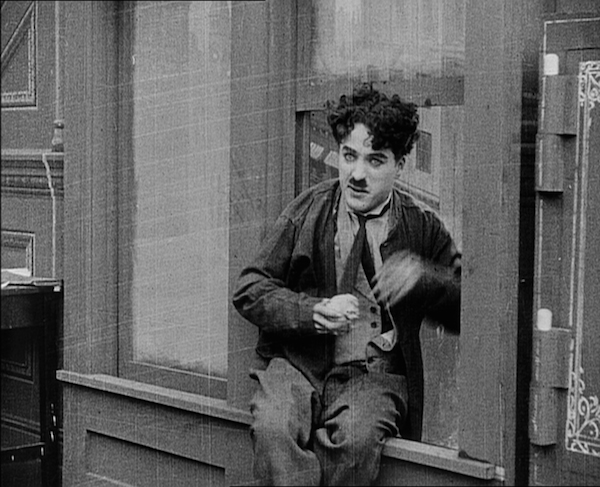
Charlie Chaplin is in the house. Naturally, this being his centenary year and all. Naturally, also, he is speaking Japanese. Because all the characters in Charlie Chaplin films speak Japanese – to a Japanese-speaking audience that is. And also to us lucky types in Pordenone tonight who saw a programme of Chaplin shorts with the accompaniment of Benshi Ichiro Kataoka along with Gunter Büchwald and Frank Bockius. Clearly they had all been in cahoots and the riotous combination of voice and music was expertly judged. A little Benshi can go a long way with me, but that’s how it’s meant to be I think: exuberance squared. The Japanese movie fragment that preceded the Chaplins, Kenka Yasubei (Hot-Tempered Yasubei, 1928) was an inspired choice – all the brawling and boozing of three or four Keystones packed into a frenetic half hour.
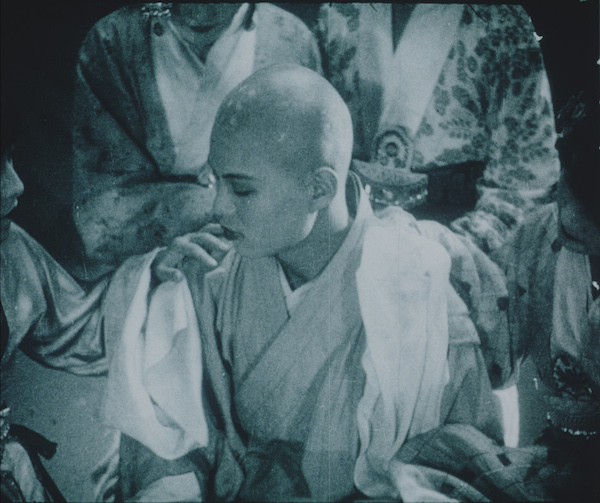
Pansidong (1927)
There was yet more exuberance to come at the end of the evening with Pansidong (The Spider Cave, Darwin Dan, 1927). This Chinese silent, once thought lost but recently rediscovered in Oslo, was introduced charmingly by the director’s grandson, who was seeing it for the first time tonight. I hope he enjoyed as much as I did: it was a silken concoction laced with surprises in which a glamorous girl gang of “spider-women” entrap a monk in their cave, among the spirits. There’s magic, and swordfighting, and some very witty subtitles. Mie Yanashita accompanied tightly on the piano and percussion, including a clattering cymbal that made many of us jump – right on the nose of that wedding-night moment.
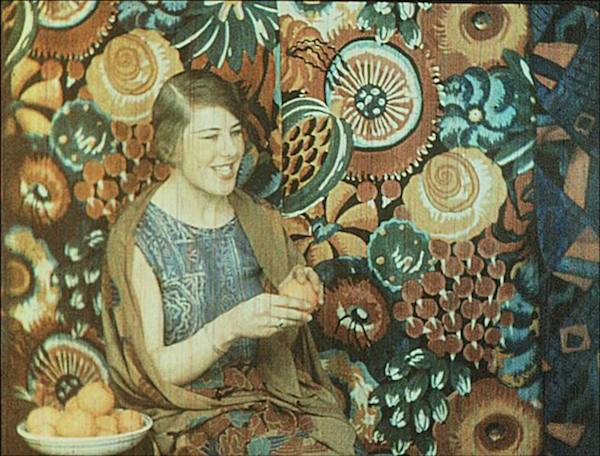
Keller-Dorian: Film Gaufré: Sonia Delaunay (1925)
But it’s not time for bed quite yet. Here’s what else happened today. The short version: lots. I’m going to begin with something really quite beautiful. Several things in fact.
The mountain footage in 'Colored Views from the Entire World' with musical accompaniment by Stephen Horne was particularly magical. #GCM33
The leopard-skin trim on a Paul Poiret evening coat, scarlet fireworks in a sea-green night sky, vicious yellow flames engulfing a city tenement, a bowl of fresh oranges amid Sonia Delaunay’s sumptuous Orphist designs, gold sequins twinkling on a chorus line and a freshly dyed sugar-pink frock: the first shorts programme in the Dawn of Technicolor strand was a many-splendoured thing. Many different colour processes were on display from Kelley Colour to hand colouring to Natural Color to … far too many to name here. But this was as entertaining as it was instructional, and all beautifully and kaleidoscopically accompanied by Stephen Horne on piano, flute, accordion, and xylophone … at least. Married in Hollywood, the parting shot, was a Multicolor finale from a lost black-and-white sound feature. It must have been an impressive technical achievement, but it was also incredibly cheesy. Quattro formaggi.
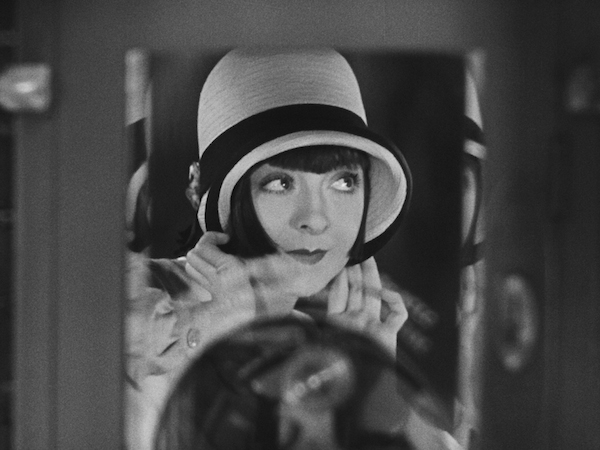
Colleen Moore, first among flappers, is so universally adored among the silent cinema crowd that she can get away with anything. Case in point: today’s screening of the irrepressible Synthetic Sin (1929), in which La Moore plays an aspiring actress whose talents lie further towards comedy than tragedy. So much so that she interrupts a dance show to perform a wigglesome, gigglesome routine of her own … in blackface. She wins the crowd in the movie, and perhaps a little more guardedly she repeated the trick in Teatro Verdi today. You can’t edit the past, and you can’t deny the crowd-pulling power of Colleen Moore.
Synthetic Sin was a winner today, a restoration courtesy of the Vitaphone project; this film has been primped back to its best, and even comes with a snippet of its original sound-on-disc score. That blackface moment wasn’t only thing that was “of its time” about the movie, but Moore’s personality, and charm, and sheer comic talent brook no obstacles. An early scene in which she mimics “Paderewski playing Rachmaninoff’s Prelude” was far funnier than such a skit had any right to be. A thunderous round of applause ensued, from a live audience 85 years too late to catch the real thing.
The Tailor from Torzhok (1925)
But Moore only arrived four screenings into the day. We’re calling this a Manic Monday, with three heavyweight movies in the morning alone: two Barrymores (Ethel and Lionel) and a treat from the Russian Laughter strand: Zakroischchik iz Torzhka (The Tailor from Torzhok, Yakov Protazanov, 1925).
Yes, the name of the Russian Laughter strand has raised some sniggers in the hotel corridors and café terraces of Pordenone already, but we don’t listen to haters here at Silent London. And we’re right, as usual, because The Tailor from Torzhok was a hoot. This is Soviet cinema’s first feature-length comedy, and it’s definitely western-style in its reliance on physical stunts and romance. It was intended to promote the state lottery, but enjoyably not a single likable character gives two figs for the lotto – the government bond is sold on, rejected, crumpled and, ahem, fixed to the wall with nasal mucus. Ick. Great comic work from Igor Illiinsky in the lead role, whether pratfalling or winningly rubbing shoulders with his pretty miss.
How much excitement can one person handle on a Sunday morning? For myself, the opportunity to see – finally – Raoul Walsh’s classic crime drama Regeneration (1915) and on 35mm no less, with music by John Sweeney, was more than reason enough to get out of bed. That it was preceded by a film packed with vice and violence (and fabulous clothes), made this a far-from gentle Sunday morning. But the biggest surprise of the day was to come later in the afternoon. Call that a cliffhanger, if you will.
To the vice and violence first, with Hans Steinhoff’s Das Frauenhaus von Rio (1927), a German crime saga adapted from a novel by Norbert Jacques. That the film is set mostly in Hamburg rather than Rio, and barely in the “Frauenhaus” (a particular kind of lady, a particular kind of house, if you get my meaning) at all, is hardly false advertising. Concerned with what was called the white slave trade in those days, and also that silent-movie staple, international jewel theft, Frauenhaus was florid, schlocky and tremendously good fun – and very niftily directed. French actress Suzy Vernon made a winning heroine, although Ernst Deutsch as a puckish chancer and Vivian Gibson as a tigress of a villain stole the show.
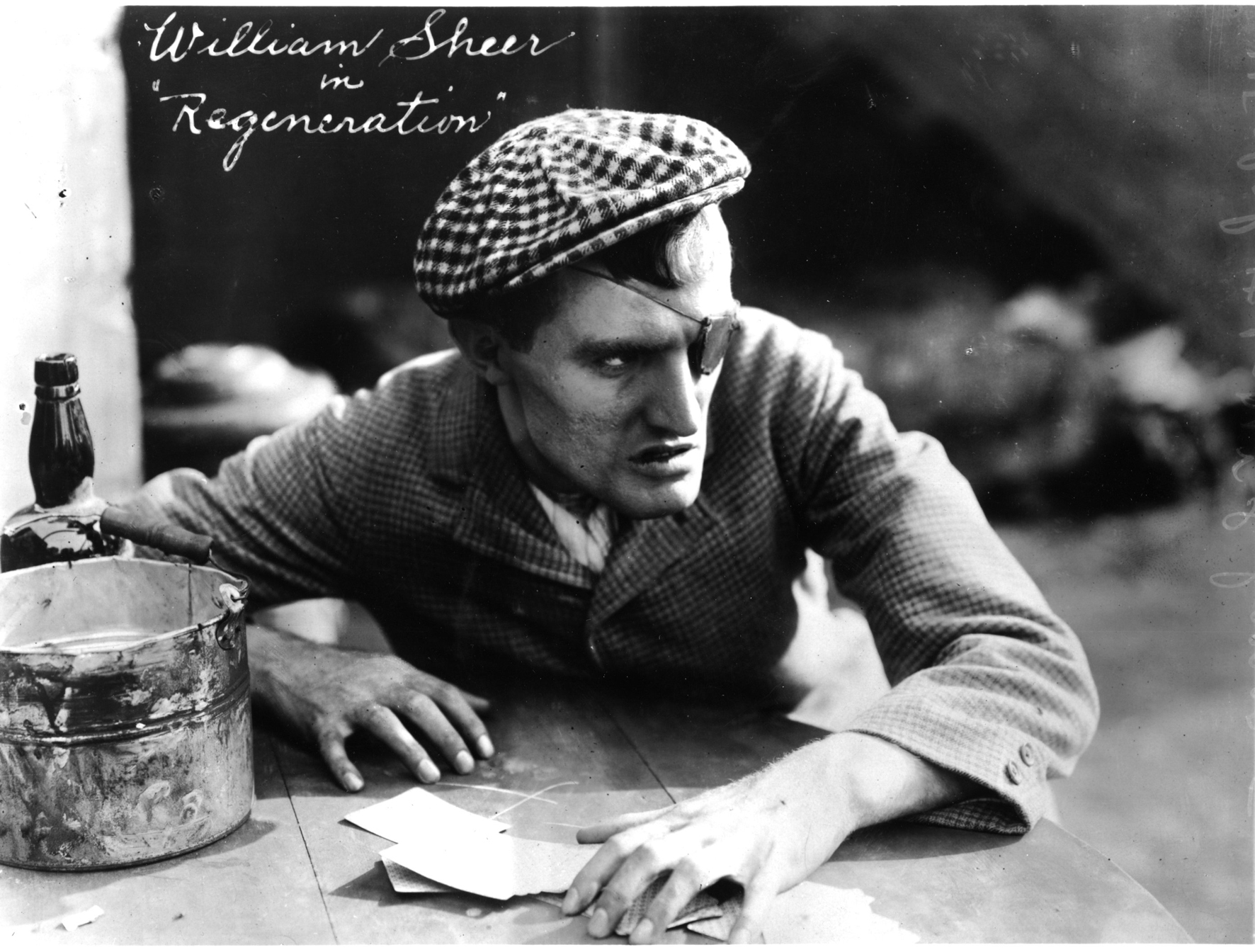
Regeneration (1915)
But Regeneration was the main event of the morning, and it did not disappoint. This story of a tenement toughie reformed by a guilt-stricken socialite soars past your cynicism, because it is so exquisitely, tenderly photographed. It’s realism, but editorialised. And those performances! Rockliffe Fellowes has the best name in showbiz, hands down, and is reminiscent of a young Brando here as the angsty hero. Anna Q Nillsson (yes, a “waxwork” from Sunset Boulevard) puts in a heartfelt turn as his goodhearted ladyfriend. And oh, the photography, those truncated tracking shots and oh, the ensemble cast of characterful and possibly threatening faces. Everything Scorsese ever did is here, and it’s compelling, enthralling to watch.
This season the colour to be seen in is a mid-blue, almost teal, with accents of lime green. The autumn collection also features motifs of a certain scruffy character with a square ’tache, and a charming floral detail. Hemlines are low, and hats are definitely “in” … Milan fashion week was so last month sweetie, I am reporting to you direct from the catwalks of Pordenone, instead, where the 33rd Giornate del Cinema Muto has begun, in fine style.
The stars of this year’s Giornate are yet to be decided, but the wise money goes on the Barrymores, an acting dynasty of stage and screen and recipients of their own retrospective at the festival this year. So starstruck are we all by the (virtual) presence of John, Ethel, Lionel et al that for Pordenone’s opening night, that we attempted an almighty feat – travelling through time and space (and the march of feminism) to New York, February 1927. But more of that adventure anon. Here’s how the first day unravelled.
The Feudists (1913) – Sidney Drew, far left
In anticipation of the Gala, the first session of the Giornate was devoted to The Drews, that is mostly Sidney Drew (uncle of John, Ethel and Lionel Barrymore), but often accompanied by his lady wife, in a series of mostly slight domestic comedies (and one roughly sketched drama about an elderly painter, his pretty niece and his young apprentice). Antiquated and inconsequential they might be, but don’t say that like it’s a bad thing. Of the films here directed by Drew himself, some parlayed familiar gags, as in Her Anniversaries (1917), a wordy skit in which a husband fails to remember the “special” days when his wife chooses to celebrate their relationship. But there were some enjoyably bizarre elements. Drew’s flexible features were stretched in A Case of Eugenics (1915) when his babyish husband outdoes the brattish, oversized child his wife is “sitting” for infantile antics.
In the strangest of the lot, Boobley’s Baby (1915), Drew is a harassed commuter, sick of giving up his trolley seat for parents of small children – so he totes around a doll, which unfortunately causes him problems with the ladies. The whole endeavour was just the right side of distasteful – for the most part. Kudos as ever, to expert accompanist and Barrymore/Drew expert Dr Philip Carli for some smart, witty playing for this selection – I particularly enjoyed the rock’n’roll diversion during a badly damaged segment of Boobley’s Baby.
As the night drew in, we snuggled up with a love letter to film archivism, film archivists and Pordenone itself. The Soviet silent animated cartoon Pochta or Post (1929) was shown at the Giornate last year and delightful it was too. This year, a two-part documentary, Searching for “Pochta”, explored the search for its sound 1930 remake, long thought lost. Richly detailed, and not afraid to scurry down rabbit-holes, but accessible and witty, this was a tribute to the stuff that film discoveries are really made of: diligence, chance, persistence and collaboration. You can order those however you think fit.
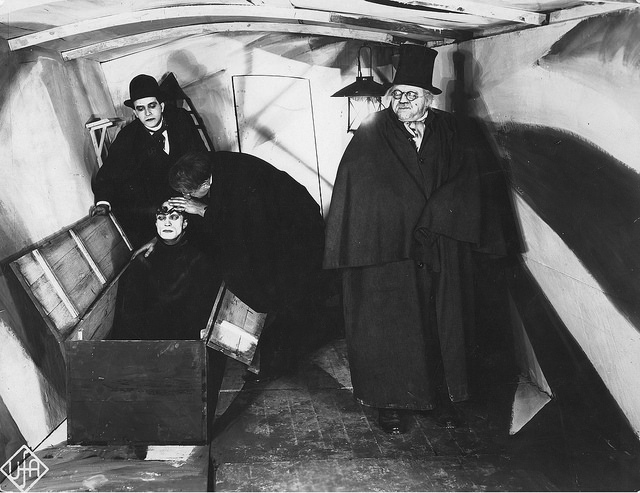
Just because a film has proved to be massively influential, it doesn’t follow that it will look modern. For evidence, I present Das Cabinet des Dr Caligari (1920) – without which, the movies that followed could look very different, but which barely cares to look like a movie at all. I’m exaggerating, which itself is very Caligari, of course, but watching the gamechanging new restoration of this cinematic titan, I am struck by how much of its power comes from the arts of set-painting and stage-blocking rather the magic of the moving pictures.
Although there are some eyeline cuts, irises, close ups and unsettlingly low-angled shots, Caligari heart belongs to its theatrical forebears. When I heard that this film had been restored, even when I saw the first YouTube clips of the work that had been done to bring crispness, brightness and vibrant, slick colour back to Caligari, I didn’t appreciate what all that labwork would reveal. This is Caligari the spectacle, a testament to design and showmanship – a world away from the current trend in horror cinema to ramp up the realism and immerse the audience in a grey and gruesome world.
Das Cabinet des Dr Caligari (1920)
Watching this Blu-ray, you can make out each brushstroke on the canvas backdrops, the clumps of white powder in the Doctor’s hair, Lil Dagover’s spidery painted-on eyelashes. Lean in, you might just be able to lick the greasepaint off the screen. The power of Caligari, of course, is that it’s no less terrifying for being artificial. In the same way that the framing story in the asylum, which was tacked on to make the film less scary, actually contains some of the film’s most disturbing scenes, Caligari‘s high-concept design strategy is so daunting as to be horrifying. There’s a lengthy, and very useful excerpt from Lotte H Eisner The Haunted Screen in the accompanying booklet and her summary of the power of Expressionism bears repeating:
Jenny Hammerton and Nathalie Morris – our glamorous hostesses, with Betty Balfours in hand
If HG Wells could fix it for you to travel back to the silent era, you surely would, right? And while no doubt it would be enlightening to talk shop in the studios and editing rooms of 1920s Hollywood, it’s arguable that the real action would be in the nightclubs and hotel suites. Take it from me, the catering would be … interesting.
Many of you will know Jenny Hammerton and Nathalie Morris. Jenny Hammerton works as a film archivist, and runs the wonderful Silver Screen Suppers site on the side. She’s researching a forthcoming book of recipes from classic film stars, you see. Nathalie Morris works at the BFI as an archive curator, and also blogs about food: the Food on Film site recreates meals from movies. She is working with Jenny on a different book, along the same lines, but dedicated to the most important meal of the day – the cocktail hour.
Such a noble pursuit deserves all our support, of course, so myself and a few other selfless souls tripped up to Nathalie’s flat on the weekend to sample some cocktails and canapés. As the evening was undertaken in the name of research, not simple fun, here is what we learned.
We may remember Greta Garbo and Gloria Swanson as health freaks, but they let their hair down occasionally, culinary speaking. Garbo layered bacon over healthsome cottage cheese and rye bread to create a rather unwieldy canapé. Swanson deviated from the ways of brown rice for, what else, tempting bites topped with caviar.
Edith Roberts‘ sweetcorn fritters require a LOT of lard for deep-frying. Fear not, though, as our group couldn’t quite choose between the lighter veggie versions and the lardy originals in the final analysis.
Solid and unexciting to look at, they may have been, but Charles ‘Buddy’ Rogers’ potato and nut croquettes were seriously savoury – with a rich seam of nuts down the centre. Unexpectedly toothsome.
Zasu Pitts is an idiosyncratic one. We all loved her omelette with hot spanish sauce. But the Greed star cheated us of any actual spice in that sauce – hot in name only. And there was baking powder – yes, baking powder – in the omelette.
The parties thrown by Marion Davies may have gone down in Hollywood legend, but her cheese patties were unlikely to get anyone hot under the collar – tasty yes, but rather chunky and bland for a canapé. Perhaps they were just there to soak up the booze?
It’s remarkable what you can pick up in three minutes and 45 seconds. This short video by Gary Chapman, author of London’s Hollywood: the Gainsborough Studio in the Silent Years, is an excellent introduction to the British Famous Players-Lasky outpost.
This is the time and the place where Victor Saville and Michael Balcon began their ascent through the British movie industry, where Ivor Novello smouldered for Graham Cutts, and where Alfred met Alma, while making a film or two you may have heard of …
Pola Negri’s Madame Dubarry has it. You know exactly what I am talking about. Dubarry is living and loving in the heat of pre-revolutionary Paris, but she’s more than enough trouble for the aristos all by herself. “The woman who will ruin France” is first introduced as a breath of fresh air, whispering saucy jokes to the other girls in the seamstresses’ workroom – a ripple of fun in the stuffy atmosphere of the atelier. When she leaves the shop, Dubarry collects admirers with every step, like Clara Bow in a crinoline. Before long, of course, she’s the mistress of Louis XV, creating disarray in the court, just as she did in the shop.
Ernst Lubitsch is brilliant at capturing this, the sizzle of sex appeal so hot that it can turn a king’s head, transform a society ball into an orgy, or raise an angry mob at the palace gates. Madame Dubarry has the angst of a drama, but the vigour of a comedy, and Negri has exactly the attitude that the part demands. Dubarry isn’t a calculating seductress, just a natural-born pleasure-seeker: a minx who decides which lover to visit by pouting as she pulls at the bows on her bodice. And Negri commits fully to the role of a beautiful woman in ugly circumstances – those enormous eyes are flirting one moment and filled with anguish the next. Some people are allergic to Negri’s grand emoting, the head flung back, the flailing arms. But there’s plenty there’s naturalistic and light here: watch her face as Jannings trims her fingernails, revelling in pleasure and pain. And yes, there’s also an opportunity for Negri to rehearse her most notorious scene – hysterically throwing herself across her lover’s coffin.
This is a guest post by Henry K Miller for Silent London. Henry K Miller is the editor of The Essential Raymond Durgnat (Palgrave Macmillan, 2014). He is a regular contributor to Sight & Sound and has taught film at the University of Cambridge.
Though it was built by the grandest American film corporation, Famous Players-Lasky, no contemporary report of the film studio on the Regent’s Canal ever confused Shoreditch with Southern California. All were in agreement over its incongruous location, noting the contrast of imported glamour and native poverty – unscrubbed children, the smell of fried fish. There was less agreement, however, on what to call it, at least in the 1920s: sometimes “the Lasky studios”, sometimes “Islington” (the local telephone exchange was Clerkenwell; Hoxton is also arguable), often “Poole Street”. “Gainsborough” seems to have stuck only later, probably because of the famous Gainsborough melodramas, made towards the end of the studio’s life in the 1940s. Uncertain nomenclature notwithstanding, Gary Chapman is right to describe his subject as “a microcosm of the evolution of the British film industry during the silent era”.
FP-L established itself in what had been a power station soon after the Great War, apparently in order to exploit European locations and West End playwrights, and sent over some of its most talented staff; but the first films to emerge from N1 were poorly received, and by the time the reviews began to improve the plug had been pulled. Most of the Americans departed by the middle of 1922. They left behind the best-equipped studio in Britain – early difficulties with the London fog having been overcome – but its survival as a rental facility was not guaranteed. The practices of “blind” and “block” booking – mastered by Famous Players-Lasky itself – made it very difficult for British filmmakers to get a look-in, even in British cinemas, and production was in the middle of a five-year slump. As Chapman shows, the producers who took on the Islington studio in 1922–3 were the bravest of a new breed.
“In the early days of the cinema, there were several great City Symphonies – for Berlin, Paris, Rotterdam, but never for London. Alex Barrett is going to put that right, and his plans suggest a remarkable picture.” – Kevin Brownlow
A few months back, I promised you the chance to support the making of a new London City Symphony. Now the day has arrived, as the London Symphony team have launched their crowdfunding campaign. They need the help of Silent Londoners to turn their vision into a reality. They’re asking for your financial support, and offering you some chances to be involved in the making of the film too. If you can’t afford to help out yourself, they’d love you to spread the word about the project.
Alex Barrett, the film’s director (and Silent London contributor) explains why he wants to revive the City Symphony style for his new film: “We believe that by looking at the present through recourse to the past, we can learn something new about life today,” he says. “We won’t be parodying the style. We will be true to the spirit of the filmmakers that came before us, and we hope to capture the rhythm, the motion and the experimentation that made their films so wonderful, while simultaneously reimagining the City Symphony for the 21st Century”.
LONDON SYMPHONY is a poetic journey through the city of London, exploring its vast diversity of culture, religion and design via its various modes of transportation. It is both a cultural snapshot and a creative record of London as it stands today. The point is not only to immortalise the city, but also to celebrate its community and diversity.
Alongside making the film, the team will also be creating a new score – an original symphony – written by composer James McWilliam. Says James: “Music plays an important role in silent cinema, and our score will help take viewers on a journey through modern-day London”. The filmmakers plan to record the music with a live orchestra, but also have it performed live at special event screenings of the finished film. LONDON SYMPHONY reunites the team behind the short film HUNGERFORD: SYMPHONY OF A LONDON BRIDGE. A three-minute city symphony in its own right, the short film now serves as a pilot for the team’s intentions with the feature-length LONDON SYMPHONY.
You can visit the London Symphony crowdfunding page here. Check out the range of rewards and watch the video, in which the film-makers set our their plans for the movie.
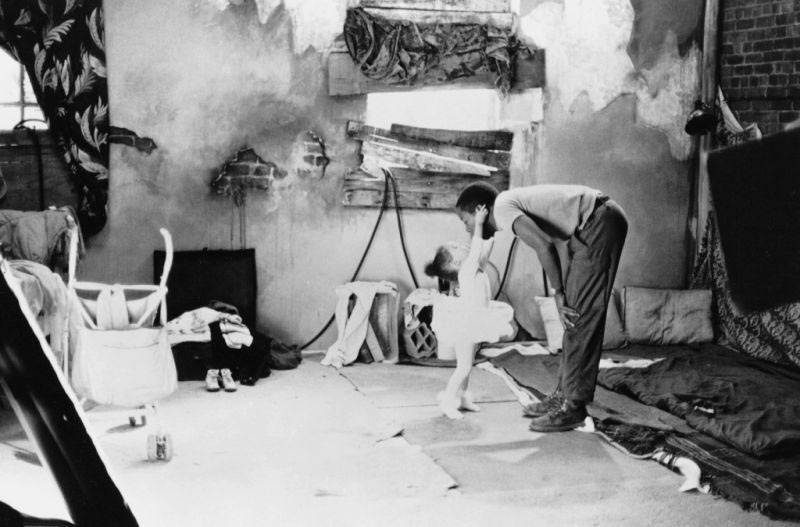
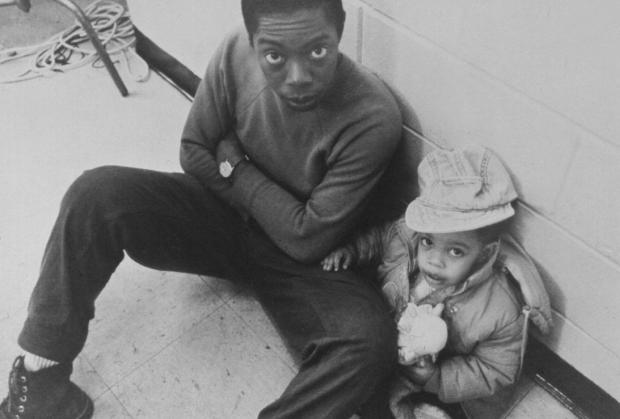
Sidewalk Stories (1989): Charles and Nicola Lane as the Artist and the Child. Photographer: Bill Dill
I barely knew a thing about Charles Lane this time last week. But since Saturday night I have been trying to find out as much as I can. Twenty five years ago, Lane directed a modern silent film of great style and bounteous charm, which was warmly received at the time, but has barely been heard from since. Like so much in the history of silent film, Sidewalk Stories (1989) is buried treasure, though from a rather more recent past. The good news is that the tail end of 2014 may finally be the time when Sidewalk Stories gets its due. The likelihood is that you will get a chance to see it soon, and I definitely recommend you take the opportunity when it arises.
As a film student, Lane was apparently very sniffy about silents, but when a chum insisted that he catch a screening of The Gold Rush, he relented. Chaplin worked his magic, and Lane was hooked for life. The influence of Chaplin is powerfully strong in Sidewalk Stories, a silent black-and-white comedy shot on the streets of New York;Lane directs and stars in the film, which has more than a touch of The Kid about it. Lane plays a street artist, who sleeps rough in a derelict building in Greenwich Village (yes, you might say he was a tramp), but, through some convoluted circumstances finds himself in charge of a small child. No messing about: the Artist’s foldup easel looks uncannily like the window-repair kit Chaplin equips himself with in the earlier movie. It’s clear that Lane has an eye for the most devilish of details. Lane’s two-year-old daughter plays the Child, and although it seems strange to critique a toddler’s performance, she’s fantastic and of course, utterly adorable. Sandye Wilson, an elegant woman with a devastating smirk, plays the Artist’s bewildering and benevolent love interest. Lane’s character is a cheeky one, all right, and a dreamer too: a nonchalant riff on Chaplin’s Tramp, which retains the sweetness and the acrobatics of the original but with a pared-down ego. Lane’s Artist is a more of an everyman than a showstopping clown: a little guy in a zip-up denim shirt and cargo pants with neatly cropped hair. Perhaps it’s because the big city is just a wee bit more terrifying in the late 80s. The Manhattan of this movie is perniciously hostile: crushing Lane’s character, and maybe squashing his performance a little too.
Sidewalk Stories (1989)
No matter. Here’s why Sidewalk Stories is easily worth 97 minutes of your precious time. It’s funny, it’s touching, it’s very clever and it has a quite remarkable lightness of touch. There’s some virtuoso material here, including some fantastically choreographed fight scenes and (a first for a silent movie?) a fantasy slapstick sex nightmare. There’s not a single intertitle here either. Most impressive of all perhaps is a sustained tracking shot early on that takes us from one end of a street in the Village to another, from the panhandlers and street sleepers, to the Artist’s patch where he and his fellow dancers and magicians are busy making believe that they are anywhere but urban hell. There’s some comic business with a piece of string and two beds that is simultaneously hilarious and terribly sad. I also enjoyed the way that a laugh-out-loud, but silly, gag at the start of the movie with yuppies grappling over a yellow cab (it’s the 80s, I’m allowed to call them yuppies) was replayed later on with a more sinister meaning. I particularly liked the fact that the second time around the carfight takes place during a chase that’s straight out of Harold Lloyd’s Speedy – Lane was clearly in close touch with his New York silent forebears.
The Battles of Coronel and Falkland Islands (1927)
This a guest post for Silent London: an edited extract from Dr Lawrence Napper’s forthcoming book, a study of British film in the 1920s and its relation to the First World War, which is provisionally called ‘Before Journey’s End’: British Popular Cinema and the First World War, 1918-1930, and will be published by Palgrave Macmillan. This extract is taken from a longer chapter tracing the development of the British Instructional Films series of battle reconstructions from 1921 onwards. Dr Napper is a lecturer in Film Studies at King’s College London and the author of British Cinema and The Middlebrow in the Interwar Years (Exeter University Press, 2009).
This article contains spoilers, though as the films discussed deal with historical events, we hope no one will be too disappointed.
In 1927, as the flood of war-themed films identified by critic Caroline Lejeune the previous year developed into a torrent, two British companies were drawing on the legacy of British Instructional Films’ (BIF) war reconstruction series. Both The Battles of Coronel and Falkland Islands and The Somme (MA Wetherell) could claim to be legitimate heirs to the series. The former was directed by Walter Summers and produced by Harry Bruce Woolfe, while the latter shared a number of personnel with BIF’s other productions including its producer, E Gordon Craig.
In their release strategies, too, the two films followed the model of their predecessors – The Somme opened at the Marble Arch Pavilion on 5 September for an exclusive run, while The Battles of Coronel and Falklands Islands was screened privately for the royal family at Balmoral before opening at the New Gallery on 15 September. These openings were announced together in the press coverage, implying a parallel between the two films. Both films went on general release during Armistice week, where they competed with a number of other British films with war themes, including Remembrance (Bert Wynne, 1927) and Roses of Picardy (Maurice Elvey, 1927). In the premier London houses, they were succeeded by further exclusive runs of new war dramas, Blighty (Adrian Brunel, 1927) replacing The Somme at Marble Arch, and Land of Hope and Glory (Harley Knoles, 1927) in the Plaza, Regent Street.[1]
The Somme (1927) (Image: BFI)
Despite these similarities, it is nevertheless possible to identify divergent strategies in the two films. The self-conscious use of formal moments of remembrance evident in the 1925 Ypres (Walter Summers) was incorporated into a number of the fictional war dramas, including Remembrance, Blighty and Land of Hope and Glory. The balance of drama and documentary elements continued to shift, and both The Somme and Coronel and Falklands develop the more dramatic shooting structure evident in Mons (Walter Summers, 1926), although in different directions. Mindful of the criticisms of Mons, director MA Wetherell re-instated the diagram elements of earlier films in his explanation of the overall strategy of The Somme (a decision which earned him praise from a number of reviewers), while Summers took advantage of the relatively contained story of Coronel and Falklands to offer a film much more clearly driven by the narrative conventions of fiction film-making.[2] As part of this, the exploits of Victoria Cross (VC) winners – so consistent an element in all of the previous films – were dropped entirely from Coronel and Falklands, which offers instead a much clearer identification with motives and inner emotions of the captains of both the British and German ships, conveyed through classical editing.
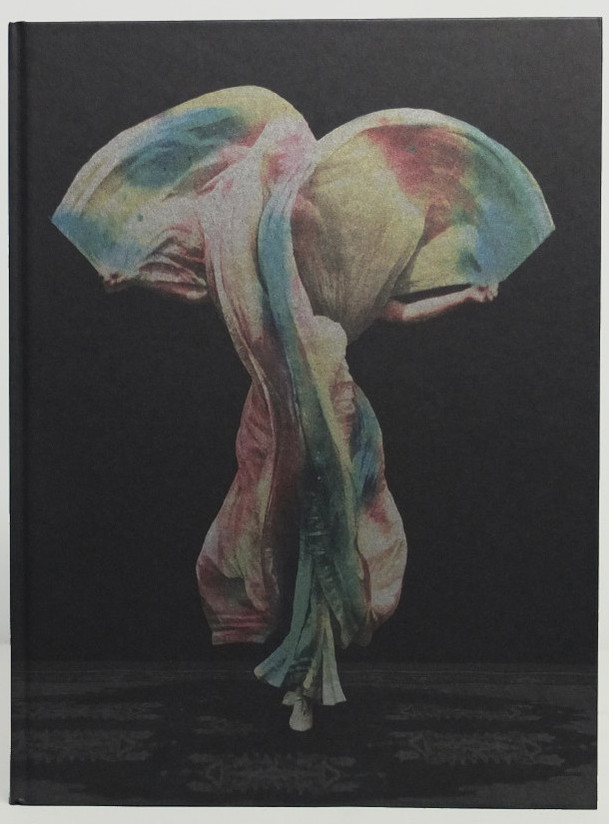
If a book absolutely, positively, had to be judged by its cover, then Birds of Paradise: Costume as Cinematic Spectacle would be just fine. This anthology of academic writing comes encased in black, and the cover features a shimmering Serpentine Dancer, her skirts twirling over her head and with her arms outstretched. We know this is a frame enlargement because the rainbow inks daubed on to the frame transform her rippling dress into the wings of a butterfly, or an exotic bird. She is framed by the darkness of the blank stage around her: a woman in a white dress, made into a spectacle by the twin arts of fashion and film. The cover is utterly appropriate and ravishingly gorgeous.
Before you even reach the title page, there are more dancers, swishing their skirts and pointing their toes, reproduced in silvered, coloured inks on matt-black paper. This is an academic book masquerading as a coffee-table tome. You could flick through it for hours (and I did) marvelling at these silver and full-colour illustrations, weighing the heavy paper in your fingers.
But at some point, one must stop flirting and dance with the one that brung you. That is to say, read the darned book. The good news is that that divine creation has been brought to us by the people behind the Fashion in Film Festival and as such it is comprises an intelligent and slightly idiosyncratic approach to its subject. This is not a simple skate through film-costume history. The several contributors are mostly academics and curators, in the fields of performance, design, fashion, literature and film, and their essays are arranged in three groups, relating to different eras.
When I checked out the silent films on offer at the London Film Festival this year, I missed The Tribe. Luckily for me, the sharp-eyed Neil Alcock noticed it and pointed me in the right direction. The Tribe/Plemya is a modern film, from Ukraine – the debut feature from Kiev-born director Myroslav Slaboshpytskiy – and it was heavily garlanded in the critics’ week at Cannes this year, so it’s definitely worth a look. And it’s definitely of interest to silent cinema fans.
It’s tricky to describe this as a silent film, though, seeing as it has diegetic sound – real diegetic sound, which was all recorded on set, not added in post-production. Nor can we classify it “dialogue-free” … there appears to be plenty of dialogue in The Tribe, but all of the words spoken are in Ukrainian sign language. There are, the trailer proudly proclaims, no subtitles or voiceover to soften that blow. I can’t find figures for how many people in the world speak Ukrainian Sign Language, although this site affirms it is in a healthy state, and two years ago, the Daily Mail reported that inventors in Ukraine had developed a “super glove” to turn UKL into audible speech via a smartphone app. The point is that I suspect none of the Cannes judges were fluent in it, and for them, and most of us, this film will play more like a silent than a talkie.
The Tribe (Plemya, 2014)
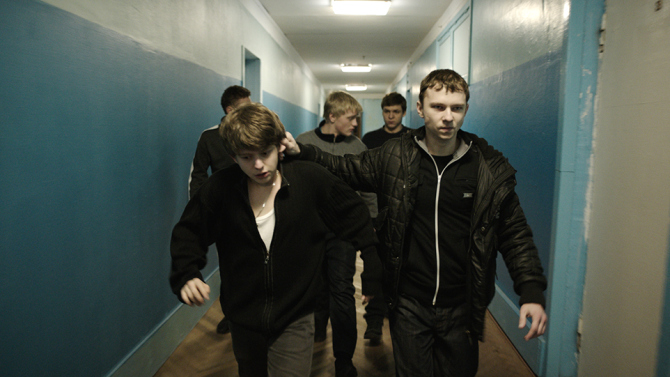
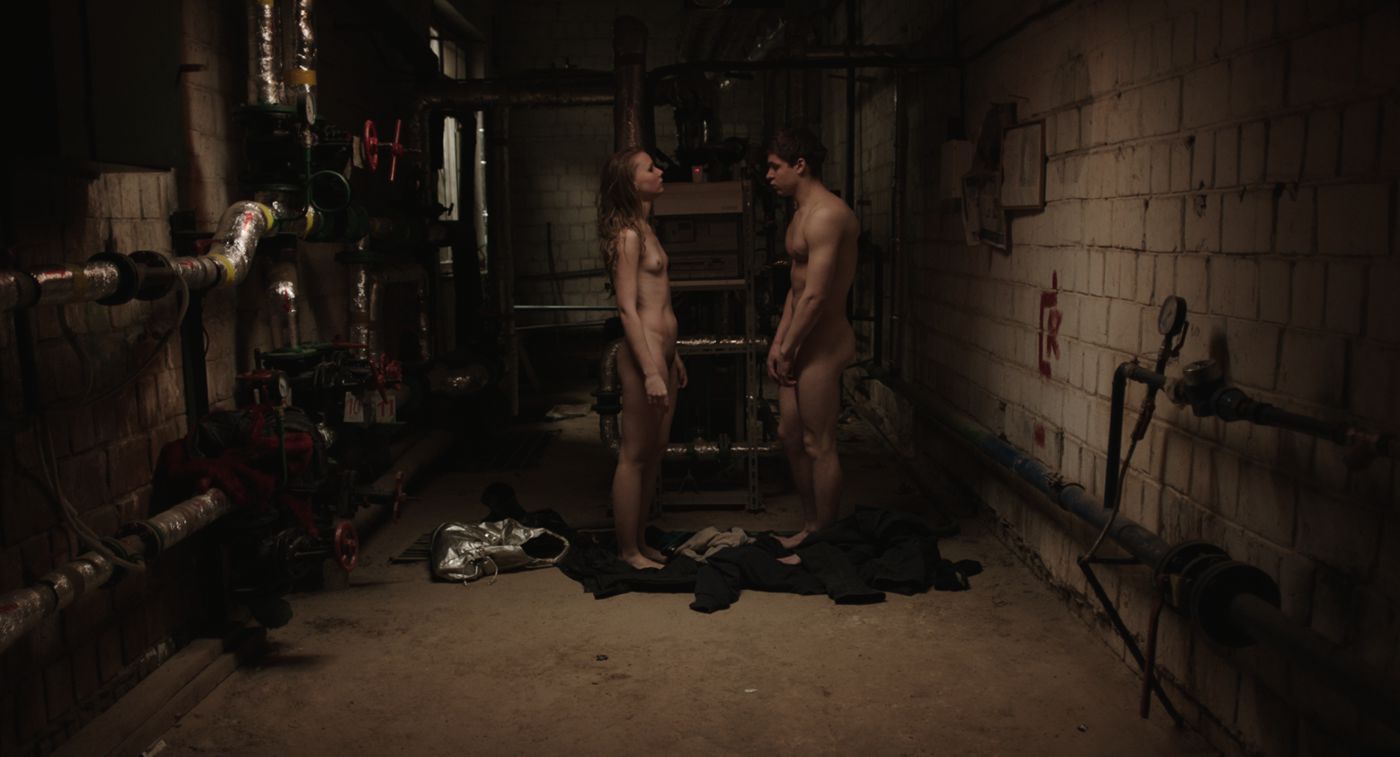
It’s a violent, gritty, sexually explicit film: the grim story of Sergey (Grigoriy Fesenko), a teenager at a boarding school for deaf-mute children. Said school is rife with gang violence and prostitution, and Sergey clambers his way to the top of the tree before risking it all by falling in love with the wrong girl. There’s little gloss here: the cast are all non-professionals, and UKL speakers, rather than hearing actors. Slaboshpytskiy made a short, and similarly brutal, film set in a boarding school like this one a few years back, a real-time drama called Deafness/Glukhota (2010) in which a police officer grills a deaf-mute teenager in his car – while suffocating him with a plastic bag.
The Tribe (Plemya, 2014)
The Tribe plays at the Toronto International Film Festival this week, before coming to London in October, and while we wait for reviews from that festival, this writeup for the TIFF programme by Dimitri Eipides sounds very promising:
Slaboshpytskiy constructs his film with no dialogue and no subtitles, allowing the story to be enlivened by the magnificent pantomimic acting of deaf-mute non-professionals, in a brilliant balance of clarity and ambiguity that puts hearing audiences in a fascinating, active position …
The Tribe peels away the tenderness of its protagonists, communicating in the purest cinematic forms the rawness hidden behind the fragility of youth.
I like that phrase abut the hearing audience being put in a “fascinating, active position”. Doesn’t that go straight to the heart of why we love silent cinema? In his review for Variety, Justin Chang expands on this idea, writing that:
Sans dialogue or translation, each interaction effectively becomes a puzzle to be solved, and Slaboshpytskiy is brilliant at using ambiguity to heighten rather than dull the viewer’s perceptions. Even when the meaning of a particular exchange eludes us, a greater sense of narrative comprehension begins to take hold.
The trailer for The Tribe is hugely intriguing too: I love the strict, square framing and its icily distant long takes. In the foreground of a shot of gang members signing vigorously to each other, one toughnut shoulder-shoves another – a gesture that is as clear as any dialogue. After a screeching hairpin camera-move, a young man’s confusion in the face of a semi-naked and angry young woman in a bedroom reminds us how much of teenage life is a struggle to negotiate a path between our own feelings and those of the people around us. And who could fail to be impressed by the stirring declaration that “for love and hatred you don’t need translation”.
The Tribe plays twice during the London Film Festival. It screens at 8.45pm, 15 October 2014 in NFT1, BFI Southbank and 8.30pm, 17 October 2014 at Screen 5, the Vue West End Cinema. Buy tickets here.











 Silent London