Today at the Giornate was dominated by the early evening show – the premiere of Orson Welles’s lost-and found experiment Too Much Johnson (1938). So much so that it gets its own post to itself. For everything else from day five at Pordenone, read on …
My Wednesday began, as Tuesday had ended, on the street corners of Weimar Berlin, with Gerhard Lamprecht. Die Verrufenen (The Slums of Berlin/The Fifth Estate, 1925) was not as immaculate as Unter der Laterne, which I adored, but it was close. It’s another social problem film – the issue here being the struggles faced by prisoners on release. Our hero is a middle-class engineer emerging from a short sentence for perjury: dumped, disowned and unemployed, he finds himself suddenly among the “outcasts” in the slum districts. You may raise a cynical eyebrow and suggest that the posh boy lands on his feet and does rather better for himself than his fellow down-and-outs. Your assumptions would be correct. A (mostly) vividly drawn cast of characters, some poignant confrontations and yet more wonderful child performances tugged at my heartstrings and overcame my scepticism, though. Excellent, excellent stuff.
Too Much Johnson (1938) George Eastman House/Cinemazero/La Cineteca del Friuli
I have just attended the world premiere of an Orson Welles movie.
The above statement is almost true. What we saw tonight in Pordenone was the restoration of a work print, not even a rough cut, of a theatrical device. The scenes Welles filmed in New York in 1938 were to be shown as part of a Mercury Theatre production of the 1894 play Too Much Johnson. It’s an elegant solution: replacing pages of expository dialogue with silent prologues, shot slapstick-style to suit the on-stage farce and add a wash of nostalgic charm. Welles never completed editing the prologues, and in any case, the theatre the play first appeared in could not accommodate the projector. In fact, Too Much Johnson folded due to bad reviews before it ever came to New York and these 10 reels were abandoned for decades.
And yet, Too Much Johnson is not just a curio from theatre history. These reels are not quite a film, but something far more than fragments. The experience of watching them on a big screen, projected from 35mm, with expert piano accompaniment from Philip Carli, and commentary from Paolo Cherchi Usai, was dream-like, exhilarating and occasionally laugh-out-loud hilarious. Because we don’t have a final cut of Too Much Johnson, the footage includes retakes, gaps and mistakes. The extant material is a hint of what might have been – but also the heights that Welles was to achieve later in his career.
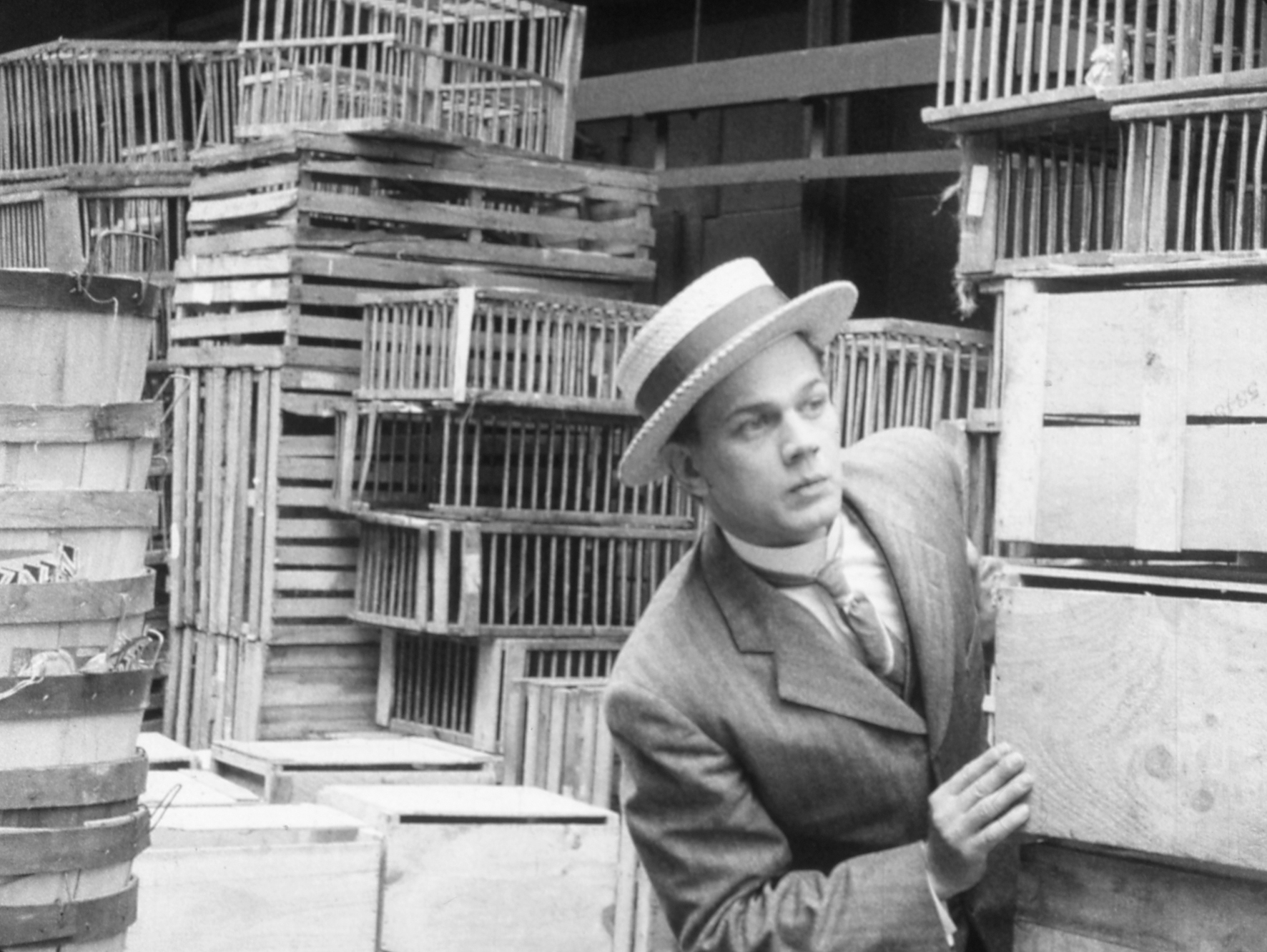
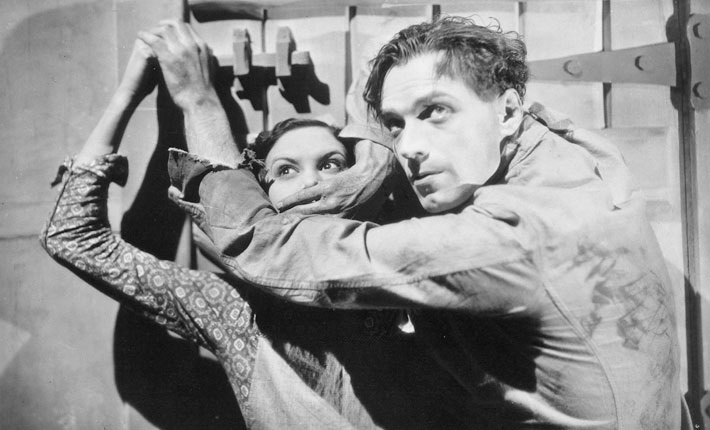
Joseph Cotten in Too Much Johnson (1938) George Eastman House/Cinemazero/La Cineteca del Friuli
This is slapstick, ostensibly of the rowdy Keystone school, but from the off it is enlivened by some decidedly arty touches: this is a very good-looking piece of work. All the footage was shot undercranked to create that Keystone feel, a blanket measure that creates some queasy side-effects. An early argument scene is edited so frenetically, with so many extreme closeups, that it is more Eisenstein with Mack Sennett. An anarchic running gag in those first interior scenes has pot plants bursting into the frame, not least in what I can only describe as an arthouse comedy sex scene, an ultra-high-speed bedroom farce. And as Joseph Cotten (our reckless hero) and Edgar Barrier (the outraged husband of his lover) pursue each other up and down fire escapes and across rooftops, the camera records it all from the acute Expressionist angles Welles was so well known for. A scene of Barrier patrolling Manhattan knocking men’s hats off their heads is shot from high overhead – as Barrier attacks the crowds and the crowds form into mobs to attack back, the effect is of a musical dance sequence, a street ballet. And the sight of the ground after his spree littered with discarded bowlers and boaters is almost surreal, surprisingly poignant. In fact, Barrier’s leering, moustache-twirling closeups, which may be intended to evoke melodramatic early cinema villains, are unsettlingly camp. The scenes set in Cuba (actually a quarry in Tomkins Cove, New York) are exercises in economy – and its limits. With a few rented (and comically precarious) palm trees dotted across the rocky ground, Welles shoots from low angles to transform the quarry slopes into cliff-faces, with his actors tiny stick men brawling on the skyline.
A Day With John Burroughs (1919) George Eastman House Motion Picture Department Collection
It was another strong day, and an emotional one too, not least because we were saying our first farewells to the Corrick Collection. There’s just one more batch of these strange and vivid early films to go (on Saturday) before they depart the Giornate schedule for good.
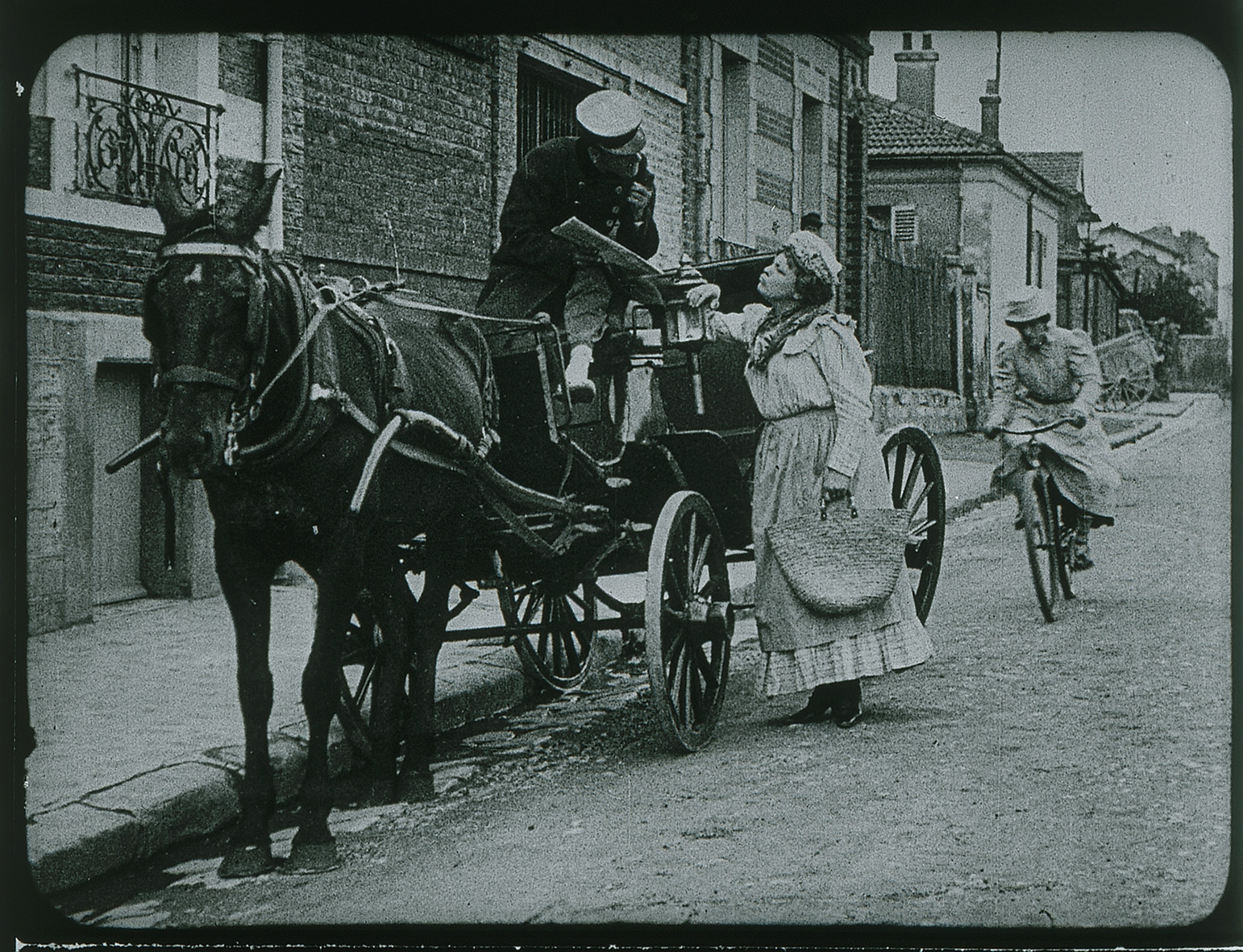
Première Sortie d’une Cycliste (1907) National Film & Sound Archive, Canberra
Today’s selection brought us an increasingly rare moment of comedy in the form of the three-minute romp Première Sortie d’une Cycliste (1907), fascinating early 1900s street scenes from China and Japan, a stencil-tinted biblical drama by Louis Feuillade (Aux Lions les Chrétiens, 1911) and some outrageous examples of animal cruelty, from quail-fighting to a brutal twist on archery in Distraction et Sport à Batavia (1911)
Shock of the day was short of Javanese 'sport' where they used a live duck as an static archery target. One right in the neck, yeesh. #GCM32
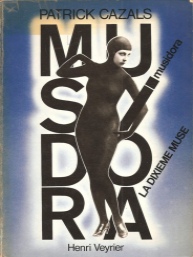
There was more early cinema to savour in Patrick Cazals’ documentary portrait of French star and film-maker Musidora. There was far more to her career than Les Vampires and Judex. She was a prolific writer (of letters, poems and scripts); a painter; a director; a film historian at the Cinématheque; a feminist icon; and yes, a muse to many. Where Musidora, la Dixieme Muse (2013) succeeded best was in interviewing her relatives – who could speak to her personality as well as her polymathic achievements. An affectionate hour. A recording of the woman herself included in the doc captured her opining that films should be produced like good books, with images worth revisiting 20 years after they are made. As the Verdi crowd watched, rapt, as clips of Musidora in her first screen appearance (Le Misères de l’Aiguille, 1913) played, we can fault her only on the scale of her ambition.
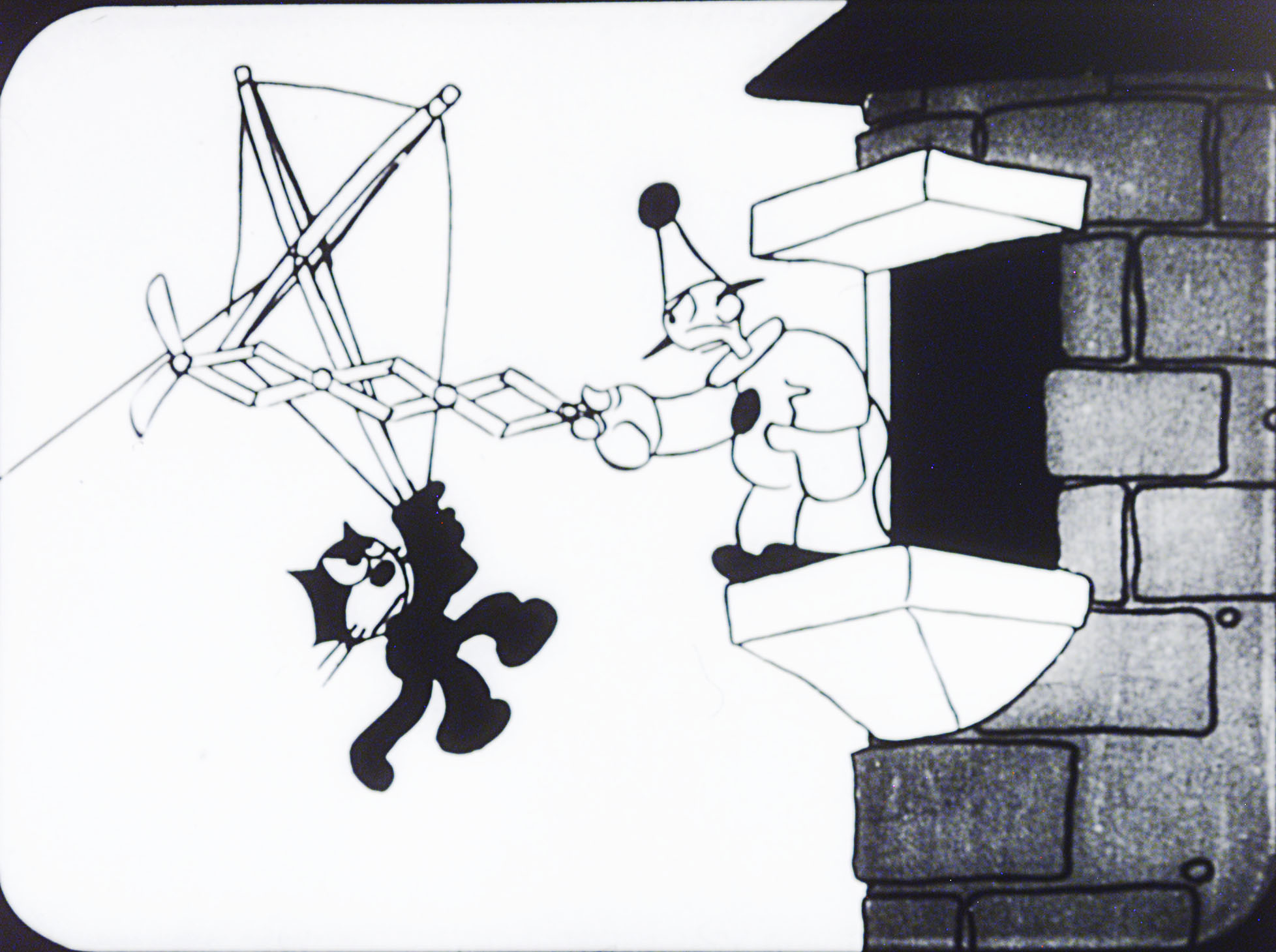
An outstanding day at the Giornate: a varied programme of astonishing films, and excellent musical accompaniment. So while it was drizzly and grey outside, inside the Teatro Verdi all looked bright, even if most of the films tended towards bleakness. After the delightfully sugary surrealism of Felix Trips Thru Toyland (1925) for breakfast, the Giornate hit us with some heavy emotional dramas today – and I relished them.
Felix Trips Thru Toyland (1925)
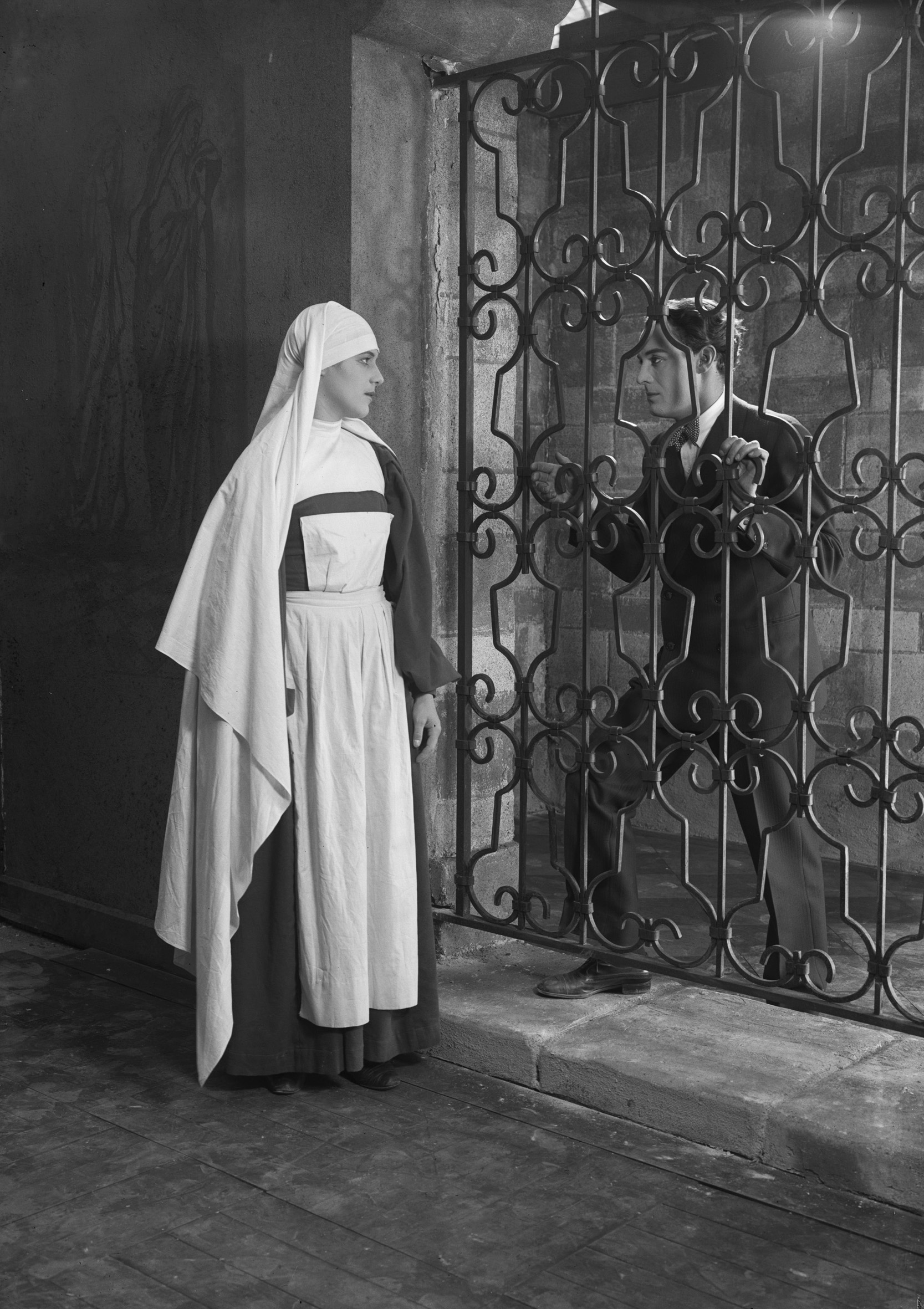
The slow but seductive tearjerker Förseglade läppar (Sealed Lips, 1927) is the title track of the Swedish strand and it was a real beauty, directed by Gustaf Molander. Karin Swanström, director-star of Flickan i Frack pops up again (all too briefly as a jealous wife) in this Italian-set romance between a convent schoolgirl and a married English painter. Misunderstandings, emotional repression and heartbreak reverberated against a backdrop of stunning scenery, and with a nuanced, textured score by Stephen Horne too. All I spoke to agreed that the show was stolen by Stina Berg (also seen in Polis Paulus Paskasmäll) as the snuff-snorting nun Sister Scolastica – at her best when engaged in a comedy double-cat with a recalcitrant donkey. The opening sequence, in which Scolastica attempts to take her young charge to the train station was a beautifully simple idea, warmly and expertly played out.
Förseglade läppar (Sealed Lips, 1927)
The second Swedish title of the day came with a warning attached: it starts slow, cautioned the Giornate programme, but soon warms up. Did it ever. In Den Starkaste (The Strongest, 1929) two sailors compete for the hand of the skipper’s daughter, and despite her clear preference for one, and via many complications, they take their macho competitive streaks out into the Arctic Ocean where they are hunting on rival vessels. Blood is spilt on the glaciers, most of it belonging to seals – and in the staggering last reel, polar bears. Polar bears! The Arctic photography is crisp and gorgeous (especially when soundtracked by John Sweeney on the piano), and comes courtesy of expert Swedish cinematographer Axel Lindblom – who is also said to have photographed A Cottage on Dartmoor, more of which tomorrow.
They say the world is divided between night owls and early-rising larks. Here at the Giornate, we split in two similar camps: are you up and at ’em first thing for Felix the Cat, who opens each day of the festival, or up all night with curtain-closer Koko the Clown? Your humble correspondent, it seems, is very much a cat person.
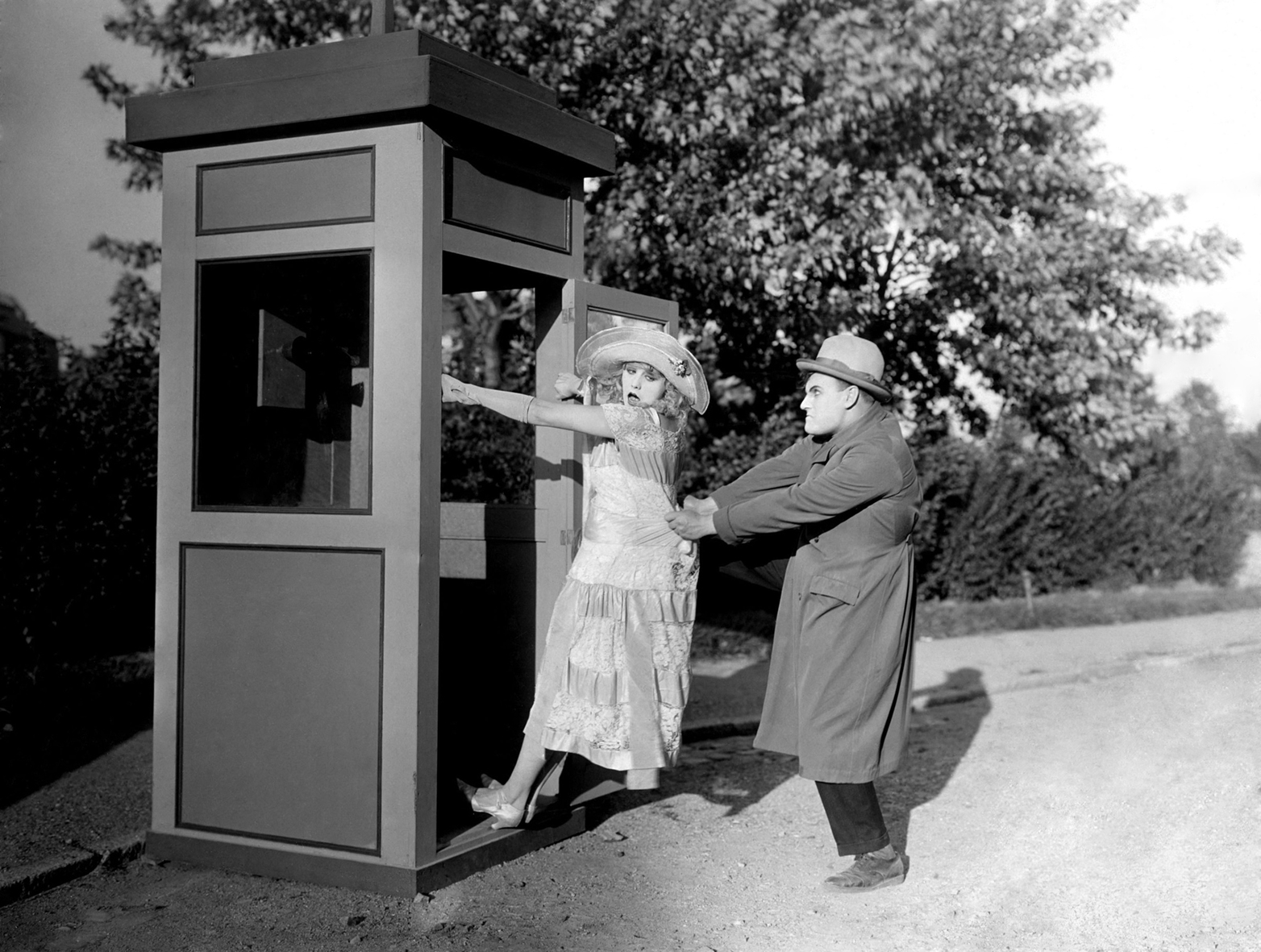
And by lunchtime today I was longing for the narrative simplicity of our lovable early morning Felix cartoon (Felix Loses Out, 1924). There was much to enjoy in the morning screenings, but either my mind was especially feeble or the plotting in some of the comedies was needlessly complex. First up, we had a Czech Anny Ondra double-bill. Chytÿte ho! (1925) was a romp and a half – Ondra plays a young lady whose guardian was a chronic gambler. There is a charming but dissolute artist, a gang of robbers and all kinds of shenanigans involving a stolen dowry. Ondra is all impish charm when in front of the camera, but most of the running time was taken up by male lead Karel Lamac undertaking a series of increasingly inventive comic stunts – the only shame was that the execution fell short of the imagination. Still lively stuff, and for me, preferable to the following film, Dáma S Malou Nozkou (The Lady with the Small Foot, 1920). A couple of amateur sleuths, one wily, one scrappy and dwarfish, attempt to recover a case of stolen money. It’s a strange film, made stranger by a missing length of film that renders one subplot barely intelligible. Strange too, in that it resists the expected narrative resolution. As it says in an intertitle, it’s a “comical piece about a detective, who discovered nothing, but found his true love”. Anny Ondra appears briefly as a young lady who has feet that are small, shapely and completely irrelevant to the plot. Anny, meet the “MacGuffin”, your friend Alfred will tell you more later …
Polis Paulus’ påskasmäll (1925) Filmografinr: 1925/11
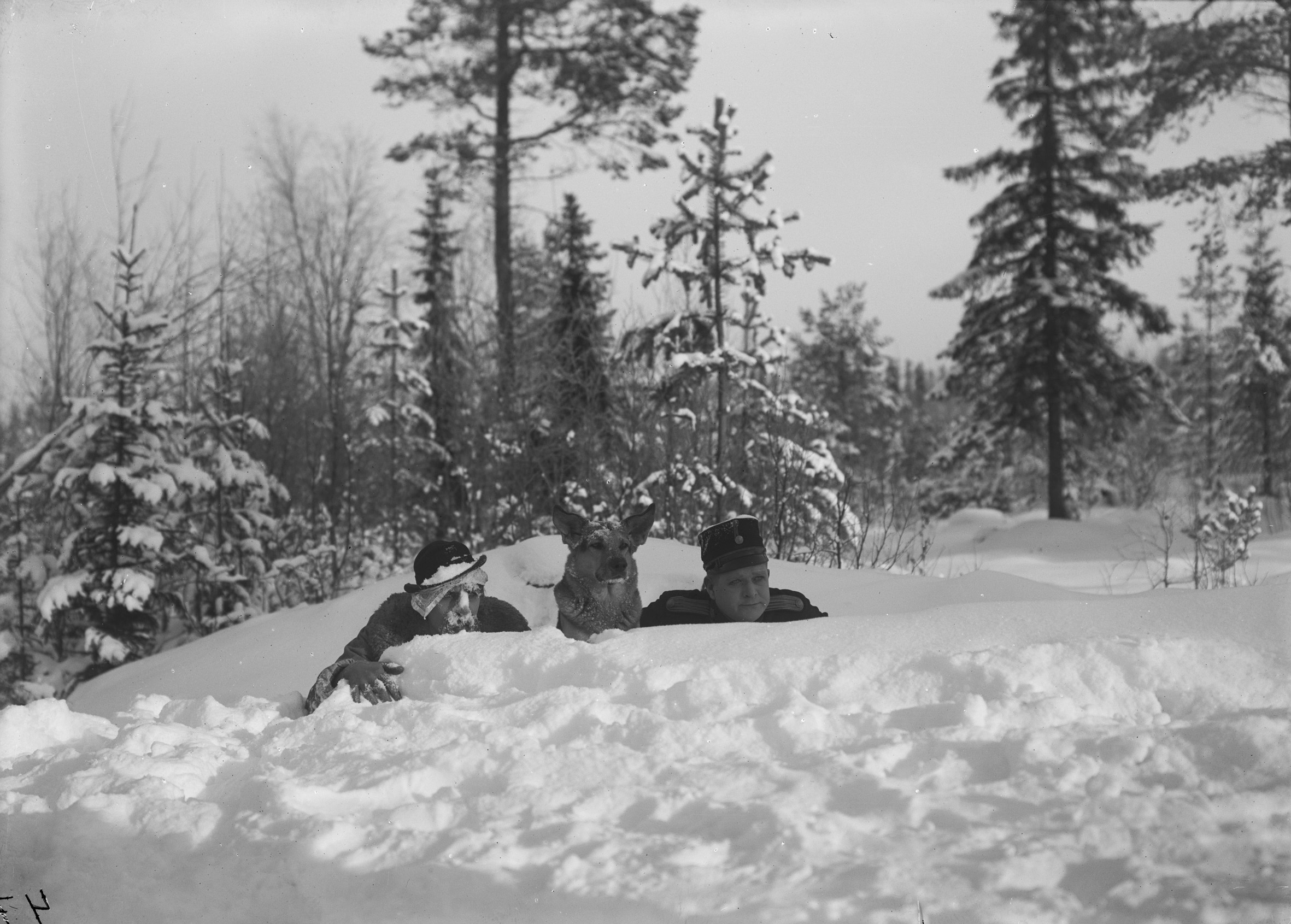
I had little time for Polis Paulus Paskasmäll (The Smugglers, 1925) in the Swedish strand, though others heartily enjoyed it. Its stars were a famous comic duo in Denmark, though as far as I could tell their humour was based on the fact that one was shorter and fatter than the other, who in turn had a ridiculous moustache. Bucketloads of plot here, too, as love affairs, criminal schemes and old rivalries cause havoc among the residents and staff of a ski hotel. There was some excellent slapstick here (a sequence in which the taller comedian dressed himself in a bearskin rub, notably) but though you may call me shallow for it, my favourite thing in this film was leading lady Lili Lani’s chic winter wardrobe.
Hello. Has it really been a whole year since this? Hold on to your bonnets, because we are back in Pordenone and it’s Saturday night. It’s time. To face. The silents.
Which is another way of saying the the 32nd Giornate del Cinema Muto has begun, and just a few hours in, we have have had a sampler of diverse treats to come.
Flickan i frack (1926)
My highlight of the first day comes from Sealed Lips, the Swedish strand of the programme that I had big hopes for. Flickan i Frack (The Girl in Tails, 1926) is essentially a teen rom-com, but one saturated in enough intersectional goodness for a PhD dissertation or two. The population of a small provincial town get themselves into terrible muddles by going about various kinds of drag – dressing up or down socially, mostly, but there is also moral posturing, intellectual pretension and, crucially, some audacious transvestism in the mix. Despite such a heavy burden of subtext and inference, Flickan i Frack is light on its feet, witty and winningly romantic. It was directed by Karin Swanström, better known perhaps as an actress – and it is very much a female-oriented film, from its bright heroine who attends her graduation ball in a man’s dress suit (just to make a point, with seemingly no fear that her boyfriend might dislike it, and looking utterly fabulous) to the malevolent matriarch upon whom her future happiness depends (played brilliant by Swanström) and the “wild herd of learned women” who loiter ambiguously in the background.
Gilly poprv v Praze (1920)
But I am getting ahead of myself. My first glimpse of the festival, as I scurried in late to the first session, was of Anny Ondra, plonked on a hay cart and throwing a fit. The minutes I caught of Gilly Poprvé v Praze (1920) were a lively, rowdy introduction to the Giornate’s Ondra retrospective. It was also far shorter and sweeter than the following feature. Setrele Písmo (The Missing Letters, 1921), was a messy, rather over-extended and patchy film about (bear with me) two sculptors (one morally lax and successful, the other upstanding and impoverished) the former’s two models (one vengeful and brunette, one blonde and rather dull), a couple of palimpsests, some hidden treasure, the construction industry and public arts funding. Nice funicular sequence. Ondra, in an early and atypical role as the second model, was called on to do little more than pose on a pedestal, play with a puppy and pout prettily. To be fair to the film, as we must, it was the product of a garbled production process, incorporating footage from an earlier movie. No wonder its plot had as many layers as one of those palimpsests.
You hate bad dialogue, I hate bad dialogue. And clunky, needless expository dialogue is the worst: the most heinous crime in sound cinema. A good rule of thumb for screenwriters would be to look at each line they want their actors to spout and say: “Would this be an absolutely essential intertitle?” Without all those words, actors have to tell the story physically, by acting, rather than describing: they say a picture tells a thousand words after all. With 24 frames a second, who needs text, by that logic?
This is clearly a pet hate of mine – I rarely see a new movie without wanted to take a red pen to the script here and there. So thank heavens for All is Lost, the tremendous new film from JC Chandor (Margin Call), starring Robert Redford as a sailor lost in the middle of the Indian Ocean. Redford is the only actor in the film – it’s just him, the boat, the water and a series of catastrophes until the bitter end. And he’s fantastic in it – his nicely grizzled features reacting moment by moment to his impending doom. It’s a physical role for sure, as he tackles the high winds and rolling waves – but for the full Ancient Mariner angst, he needs to capture our sympathies too, and let us know what’s going on behind those famous blue eyes.
You’ll have guessed the twist: as Redford helms the movie solo, there’s no real dialogue at all. I don’t want to spoiler the film, but he speaks a few words; wouldn’t you curse a little, in his deck shoes? For most of the film’s 106-minute running time, however, all you’ll hear is the roar of the ocean, the clattering and cracking of his boat and a hell of a lot of weather. The score, by Alex Ebert, appears only sporadically, and there’s no intrusive internal monologue to break the tension either. So with all that space in which to act, and such a simple story, Redford is free to give an indelible, immense performance that’s a pleasure to watch. Or it would be, if one weren’t so terrified for him.
All is Lost wouldn’t qualify as a silent movie, I know that. In fact its stunning sound design is as Oscar-worthy as Redford’s star turn. But it is a rare sound film that has learned the extraordinary power of silents – and it’s really very special indeed.
Alexa Chung is described as an “It Girl” so often that it is safe, with apologies to Clara Bow, to go ahead and call her that. Which means that when she appears on the cover of British Vogue, as she does this month, the fashionistas take note. The Vogue cover story in question is a couture fashion shoot styled by the magazine’s fashion director Lucinda Chambers and photographed by the legendary Patrick Demarchelier. Did I mention that it is inspired by and named after one of our very favourite silent films: Chaplin’s heartbreaking, hilarious The Kid?
According to the pages of Vogue, “Alexa Chung channels her inner Charlie Chaplin in the the season’s most magical designs”. The outfits featured combine couture gowns by houses including Chanel, Valentino (!) and Versace with vintage hats (something of a trademark for Chambers), and classic Chaplinesque touches – oversized boots, baggy pinstripe trousers and even a spindly bamboo cane. It’s a fashion shoot rather than a fancy-dress act, so the source material has been interpreted, not replicated: Chung wears a peaked cap that’s more Jackie Coogan than Little Tramp, for example. But it’s not entirely fast-and-loose. You could view those designer dresses, embellished with pearls and sequins, as a nod to Edna Purviance’s upper-class character in the same film – meaning that Chung encapsulates the whole family. More likely, the Chaplin look has been chosen to offset all that opulence and to capitalise on Chung’s gamine beauty. She has long been celebrated for a certain “street-urchin” look that’s pure The Kid. In fact, she told Glamour magazine in 2012 that Chaplin inspired her dress sense, captioning a selfie with the words: “This is my Charlie Chaplin look – black trousers with suspenders and an Yves Saint Laurent shirt. Putting weird pieces of clothing together is what I’m good at.”
Alexa Chung’s ‘Charlie Chaplin’ look in 2012 (Glamour.com)
If you think it strange to see a woman taking fashion tips from a fictional tramp, played by a bloke nearly 100 years ago … well that does sound odd when you say it loud. But it’s not so off-the-wall as all that. Chaplin’s early years were spent in London music halls – that’s where he first performed, and where his parents had worked too. Male impersonators were popular in the halls, and fashion historian Amber Jane Butchart writes here about the immaculately turned out Vesta Tilley. When Chaplin first picked out his Tramp outfit, he may well have been thinking of this female twist on a masculine suit. The Tramp is in a kind of drag himself – in clothes that don’t quite fit, an outfit with aristocratic pretensions undermined by ragged hems.
Charlie Chaplin’s Little Tramp costume at the V&A museum (aquamarinejo.wordpress.com)
According to Chaplin’s autobiography he created the Tramp’s outfit from deliberately contradictory elements: baggy pants, tight jacket, oversized shoes and small derby hat provided by fellow actors and whangee cane owned by himself. Accessories such as the high-collar shirt, check waistcoat and tie are not accounted for, but Chaplin claims to have added a moustache to make himself appear older. In this first manifestation, the Tramp is scruffier and less affecting than he became later. The cigarette adds to his louche appearance and the cane is a parody of gentleman’s attire. Chaplin gives a professional clown’s performance in the tradition of the North American Tramp/Hobo; his costume is based on a collage of mismatched pieces that appear to have been randomly collected from discarded clothing … While the dissonant parts of the Tramp’s outfit do not cohere into a sartorial whole, their recombination indicates the character’s aspirations to be a dandy.
The Tramp’s clothes draw attention to the social significance of dress as well as to his affectation, which Chaplin developed as a feature of his performance. The collage effect, deriving from popular forms such as the circus and street theatre, resonates with the aesthetic strategies of the Surrealists and others. The pastiche of styles portrays the character as a fabrication, a social type rather than a rounded individual. While the rudiments of psychological motivation are there in the costume’s ridicule of the Tramp’s desire to belong to a higher class, the emphasis on disguise focuses the viewer’s attention on Chaplin’s self-presentation as star performer … The Tramp and his costume become the spectacle.
For a woman to dress up as Chaplin may seem drab (the dark colours, the masculine cut) but that is far from the case. It’s a look that demands attention, and playfully blurs gender and class divisions, which is sexy and provocative in itself. In fact, aspects of the Chaplin look are hugely feminine and easy to wear: tight jackets and baggy trousers are flattering to many women’s body shapes. The tailoring can be softened by the casual fit, or even a buttonhole flower and lots of smudgy eyeliner. Just check out how many women on the fashion site Polyvore are channeling their own inner Chaplins. Female celebrities from Jessica Alba (when pregnant) to Brigitte Bardot have raided the costume box to pay homage to the star. And female Chaplin impersonations multiply on screen – including Gloria Swanson in Sunset Boulevard but going far beyond that. Remember Jeanne Moreau in Jules et Jim? And the ultimate in tomboy-chic, Diane Keaton in Annie Hall – her tennis-date outfit has Chaplin fan written all over it. More recently, Melanie Laurent’s character Anna, having lost her voice, adopts a Chaplinesque costume in the romantic film Beginners.
In 2011, Comme Des Garcons put female models in androgynous cut-up coats and jackets that reminded many onlookers of Chaplin’s Tramp. This spring, Vivienne Westwood called for a Climate Revolution in a sequined oversized bowler and Magic Marker moustache. Supermodel-of-the-moment Cara Delevingne, no less, also claims to be a Chaplin devotee – it must be the eyebrows.
Miss Chaplin by Rio Surya Prasetia for Amica Indonesia
So Chaplin is big news in the fashion world right now, but this look isn’t just for the ladies. In a recent, and typically eloquent, post for Mr Porter, fashion writer Colin McDowell reclaims the silent star as a style leader – offering a neat precis of his career and particular qualities as well as his appreciation for film costume and his fastidious off-duty fashion. From spring/summer 2011, John Galliano presented a menswear collection inspired by the slapstick greats, in particular the urban-industrial attire of the Little Tramp – the models sported silent-era Hollywood makeup reinvented as gothic facepaint, with overalls, boots, prison stripes, moustaches and shocks of dark curly hair.
So why Chaplin in 2013? Well, the extent of Chaplin’s fame means that he will never disappear as a cultural reference point. The fact that his image has been protected by the Chaplin association all these years means that the source of his signature style remains intact and undiluted, no matter how many fashion shoots, fancy-dress parties or street imitators get their hands on it – so he is always ripe for a speedy revival. I need not mention how The Artist nudged the silent era back into mainstream consciousness, nor that 2014 will mark the anniversary of the Little Tramp’s creation. The acting success of Chaplin’s granddaughter Oona Chaplin (who was also photographed by Patrick Demarchelier for a very slinky shoot in Vanity Fair last year) may have given him another boost in fashion circles.
But if you break the Tramp’s look down into its constituent parts, as Cook does in the extract printed above, you’ll see exactly why he resonates in a time of austerity measures, bank bailouts and Occupy camps. These days Chaplin’s bowler hat and pinstripe trousers signify something more specific than “gent” – the modern bogeyman, the City Banker. Just as Chaplin remixed the attire of the upper classes to cock a snook at their pretensions, we can dress up as his character today and thumb our nose at the financial institutions that so often determine our fate. To distort the armour of the City, with rags or sequins, with a smile and knowing wink, is to expose a chink in it. Chaplin would enjoy that, don’t you think?
Jonathan Croall would like to introduce you to his father, his father’s friends and their neglected, but fascinating, glory days. Readers of this blog will recognise Croall’s father as John Stuart, the dashing star of many a British silent movie, including The Pleasure Garden, Roses of Picardy and Hindle Wakes, plus many more talkies besides. Stuart worked right until the late 70s. His last big-screen role was as a Kryptonian elder in 1978’s Superman.
This lovingly written and hugely informative book, Forgotten Stars: My Father and the British Silent Film World, is concerned with Stuart’s heyday, however, and his cohorts in Britain’s silent movie industry. As Croall tells his father’s story, he loops in the tales of the actors, writers, producers and directors he worked with: there’s Maurice Elvey and Alfred Hitchcock; Lillian Hall-Davis and Estelle Brody; the Film Society and the coming of sound. It’s a distinctive methodology – a chapter on a wider topic will suddenly focus on anecdotes from Stuart’s career alone, and then usher in two more dramatis personae. Under the chapter heading Fans and Fan Clubs, say, one reads several paragraphs on the publicity industry surrounding silent movie stars. Beneath the subheading A Star Under Siege we encounter a story about Stuart being mobbed by fans at the Film Artists’ Fair, which leads to a discussion of his fans, his fan club, his gruelling schedule of personal appearances and the speeches he made. (These sections that dwell solely on Stuart’s career are flagged with his smiling portrait.) This is then followed by two profiles of British silent cinema’s two biggest stars: Betty Balfour and Ivor Novello.
You may notice the widget on the righthand side of this page, ticking down the days until this blog dispatches itself to Italy, to report from Le Giornate del Cinema Muto in Pordenone. We have many reasons to get excited about the arrival of the world’s most prestigious silent film festival. There’s the debut of the lost-and-found Orson Welles short Too Much Johnson, the premiere of a new restoration of The Freshman with a score by Carl Davis, Italy’s first glimpse of Blancanieves, an Anny Ondra retrospective, a programme of Swedish silents, more treasures from the Corrick collection, Ukrainian classics, Mexican rarities, a strand devoted to Gerhard Lamprecht and much more.
I had a smile on my face this morning, however, when I learned that a documentary co-directed by none other than a fellow classic/silent film blogger – the marvellous David Cairns of Shadowplay – will be showing at the Giornate. Natan takes a look at the controversial life of French film-maker Bernard Natan, and the various scandalous assaults on his name. Natan was a Jewish French-Romanian film produced, who was at one time the head of the Pathé studio. Financial troubles, antisemitism and allegations that he was a pornographer degraded his reputation in the industry. His story ends on an even darker note – he died in 1942, in Auschwitz.
Bernard Natan used to sign his films — literally, his producer credit was an animated signature inscribing itself on the screen. And then, as Natan’s reputation was destroyed and his company taken away from him, a lot of his films were shorn of their signatures. When the movies got re-released, it was considered embarrassing for their executive producer’s name to be seen. And during the Occupation, many Jewish filmmakers were quietly erased from title sequences.
Since then, Natan’s name has been restored to some of his films, and a few historians have attempted to restore his reputation. That’s the effort Paul and I hope to contribute to with our film, which should tell a dramatic and tragic story, shine a light upon some neglected corners of cinema history — but also help give Bernard Natan his good name back ~
Musidora: la dixieme muse
The film has already shown at several festivals, including Edinburgh and Telluride – and it plays at Cambridge film festival this week. The Pordenone festival will also be screening a documentary about another French cinema legend: Musidora: la Dixieme Muse. The documentary, by writer and filmmaker Patrick Cazals, promises to trace the actress’s career right form the early days of Vampires and Judex, to her work in later life as a producer and director as well as at Henri Langlois’ Cinematheque, positioning her as a cornerstone of French cinema as much as a legend.
So that’s a nicely themed double-bill at Pordenone for us to savour, but French cinema pioneers are in vogue right now – you can’t have failed to miss the successful Kickstarter campaign for the Jodie Foster-narrated Alice Guy-Blaché documentary. It has been a massive campaign, conducted enthusiastically and cannily across social media. The line they have been using is that Guy-Blaché’s name is forgotten now because she has been written out of history by her male colleagues and successors. That may be true for many film fans, but just like Musidora, her name is already well-known in silent cinema circles – if Be Natural is to redeem her reputation, it must spread her fame to a far wider audience. While certainly impressive, Be Natural‘s 3,840 Kickstarter backers represent a drop in the ocean. The movie looks like it could be great though – and it’s the popularity of the documentary, rather than the worthiness of its intentions, that will return Guy-Blaché’s name to global renown.
Catch Natan at Cambridge if you can, or if you have already seen it or Musidora, do let me know your thoughts below. There’s a Variety review here. You can also like Natan on Facebook. I have to say, I am looking forward to all three of these films.
PS: I think Lady Gaga, for one, has been mugging up on her early French film – spot the Méliès refs and Musidora costumes in her latest video, Applause
Last night’s Jazz on 3 celebrated the art of live accompaniment to silent film, as part of the BBC’s marvellous Sound of Cinema season. The show, presented by Jez Nelson, features jazz and improvising musicians creating live scores for silent films. Listen again here, or catch up with the sessions by watching these gorgeous clips, with music from the live session by Alison Blunt (violin), Viv Corringham (vocals), John Bisset (guitar) and David Leahy (double bass). Here, they are accompanying an experimental film by Louise Curham called Pararaha, Ruapehu, Mt Clear.
The much-loved 1925 German film A Trip to the Planets was also among the films chosen for the session.
Another modern silent here, Composted Memorial by Sally Golding, an installation and performance artist know for her cine-sculptures. She desecribes the film, which is constructed from vintage 9.5mm home-movie fragments as: “A wonky filmic resurrection, as a cine-essay dissolving in destructive magic.”
It’s an unbelievable discovery, “stranger than fiction” as Paolo Cherchi Usai of the George Eastman House told me. Orson Welles’s 1938 silent movie Too Much Johnson, believed to be lost, destroyed in a fire, has finally turned up. Not only that, the film, which is admittedly just a work print, was discovered in a warehouse in Pordenone, home of the prestigious Giornate del Cinema Muto.
Rejoice, if you are going to Pordenone this year, because Too Much Johnson will have its premiere at the festival, on 9 October 2013, before screening at the George Eastman House (where the film was restored) in the US the following week. Cast your eyes on this lovely video preview of the film – and then click here to read a short piece I wrote for the Guardian about the film and its rediscovery. In it, Cherchi Usai tells me that the Welles film this lost-and-found work reminds him most of … is none other than Citizan Kane.
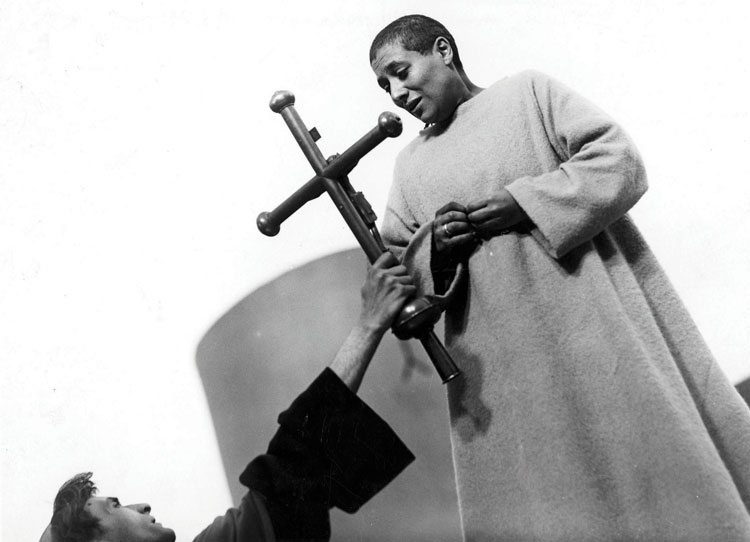
Scalarama is a far-reaching kind of film festival – one that covers the whole country, and virtually any manifestation of cinema you can think of. It’s dedicated to the spirit of the old Scala screenings in King’s Cross, London in the 80s and now in its third year, has a diverse and fascinating programme, fuelled by the passion of movie fans championing their own, often obscure, favourites. I am delighted to report that silent cinema is very much part of the month-long festival, with several screenings of Dreyer’s masterpiece, The Passion of Joan of Arc lined up, from Leicester to Canterbury. And it’s the gorgeous new Eureka print they’re screening too.
The Scalarama organisers asked me to share some thoughts about why I love silents, and why you (yes, you) should go to see The Passion of Joan of Arc, for the first in their series of podcasts supporting the festival. So listen up. I have listed the screenings below – Visit the Scalarama website for more details and links.
There is no beating about the bush here. The 57th London Film Festival’s approach to silent cinema is definitely quality over quantity. Here’s what you can look forward to this year.
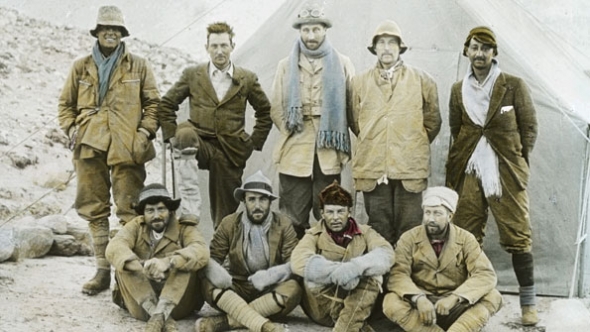
The Epic of Everest (1924)
The Epic of Everest (1924)
This year’s Archive Gala, also going on nationwide release, is this unforgettable expedition film of Mallory and Irvine’s doomed attempt to climb Mount Everest in 1924. Gorgeous photography, a heart-stopping story and another great, surprising score from Simon Fisher Turner. Read our full review here. The gala screening will feature the score played live, which is sure to be fantastic.
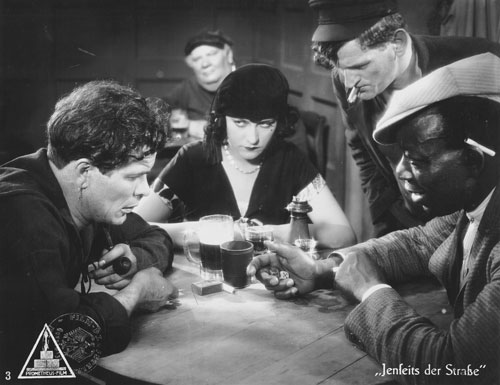
I saw this last year at Pordenone, and I loved it. Harbour Drift/Jenseits des Strasse is a moody, romantic melodrama, directed by Leo Mittler – the kind of film that gives even the grubbiest events a touch of magic. The screening at the London Film Festival will also be accompanied by Stephen Horne, making it a must-see. Here’s what I had to say about it in 2012.
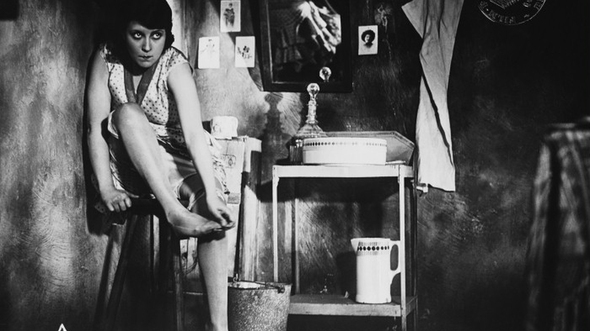
My highlight was a lyrical German film that came between them, called Jenseits der Strasse or Harbor Drift (Leo Mittler, 1929). A beggar nabs a pearl necklace from a puddle, and promises to share the profits on its sale with a new-found drifter pal, all the while a prostitute plans to take it, and sell it herself … Impressionistic, oddly noirish, tragic and ultimately dark-hearted, this is a real find. The film has been championed for a few years now by Stephen Horne, who accompanied it beautifully on piano, flute, accordion and zither. The recent discovery of the film’s previously missing reel makes this gem ripe for restoration, and a wider audience.
As of 2013, 3,500 people have reached the summit of Mount Everest. In 1924, that figure stood at zero. Which means that when George Mallory, Andrew Irvine, their fellow explorers, their many Sherpa porters and film-maker Captain John Noel took their first steps on the ascent, the world’s tallest mountain was far taller than it is today.
The Epic of Everest (1924)
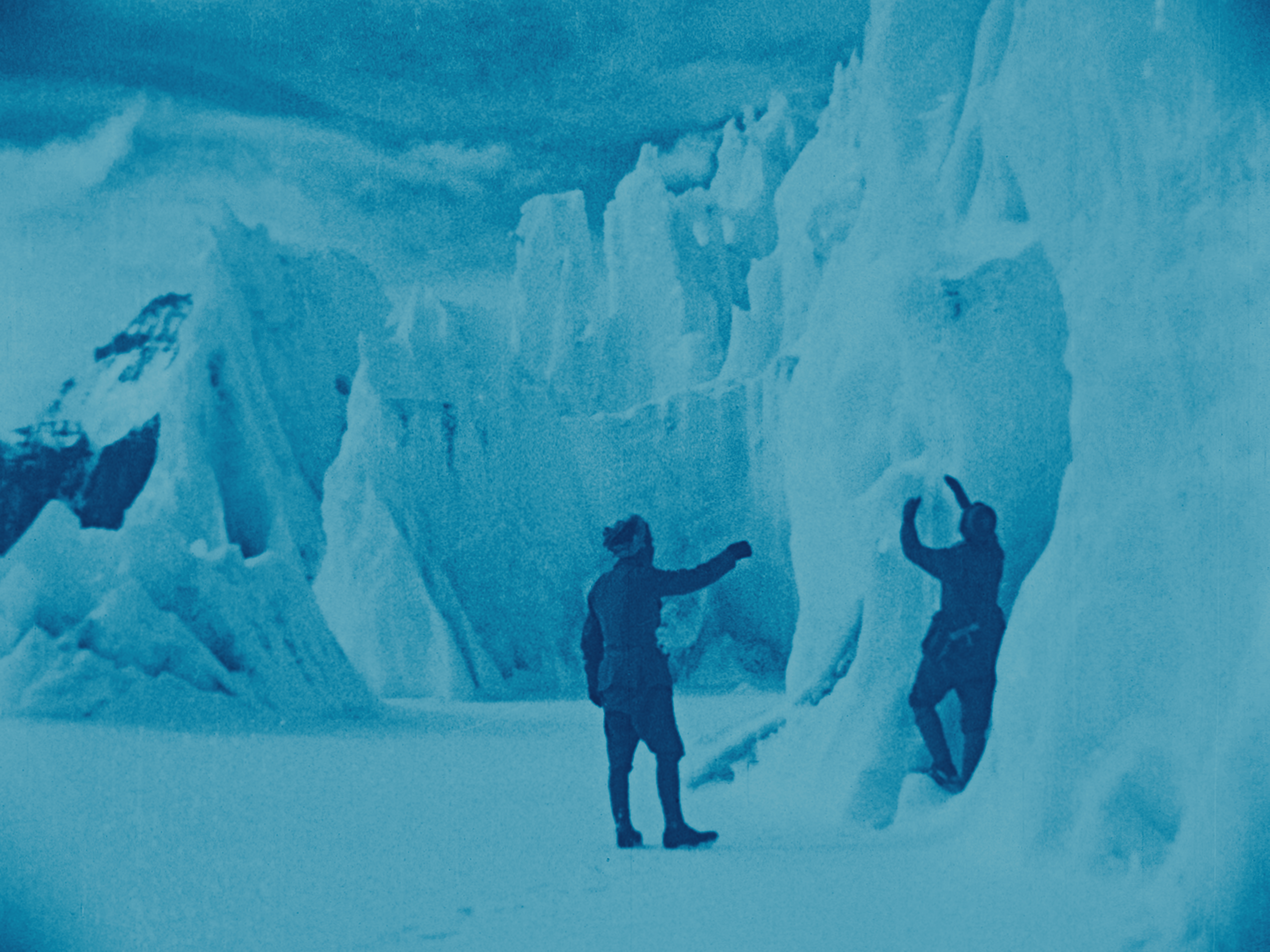
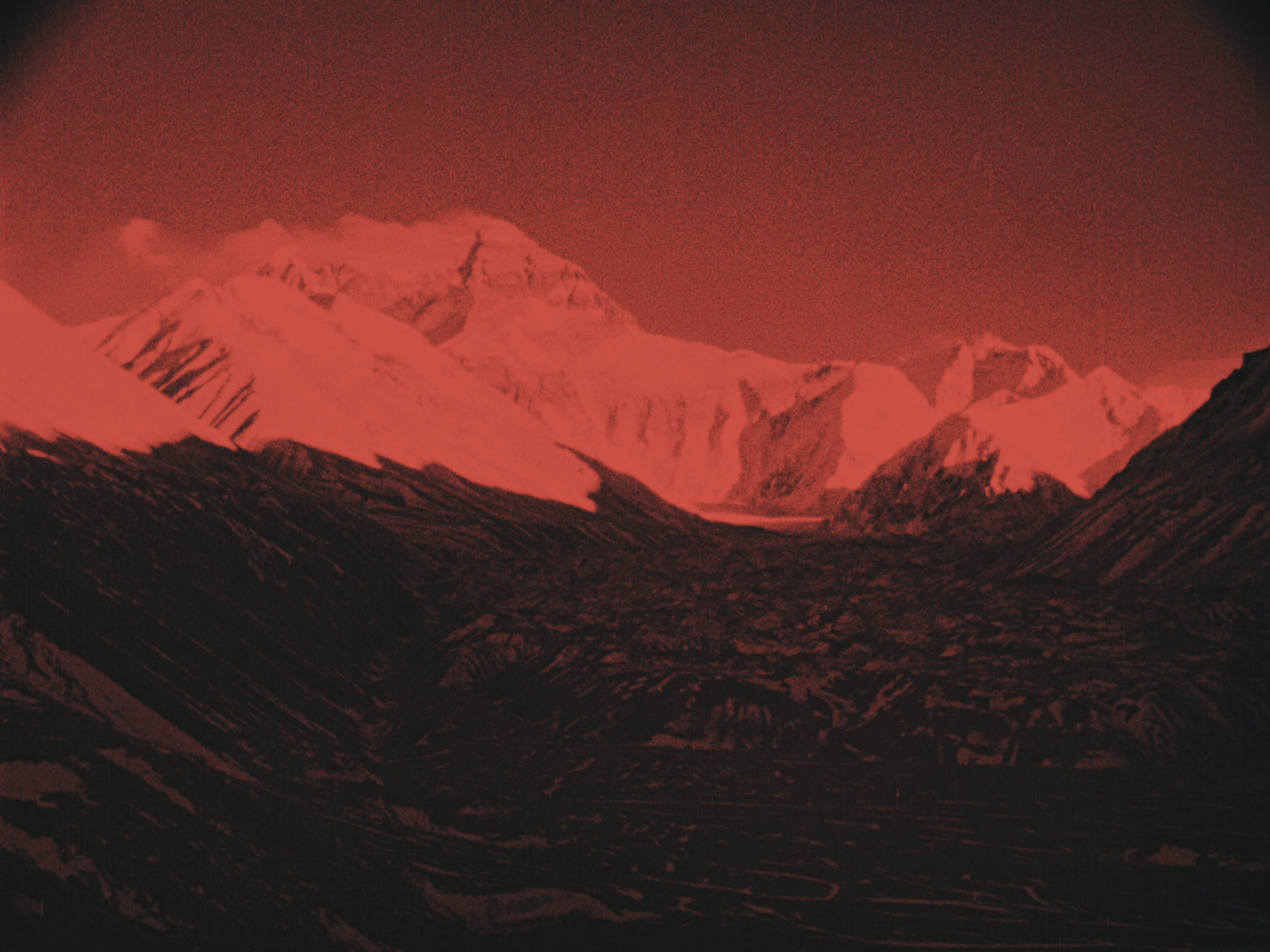
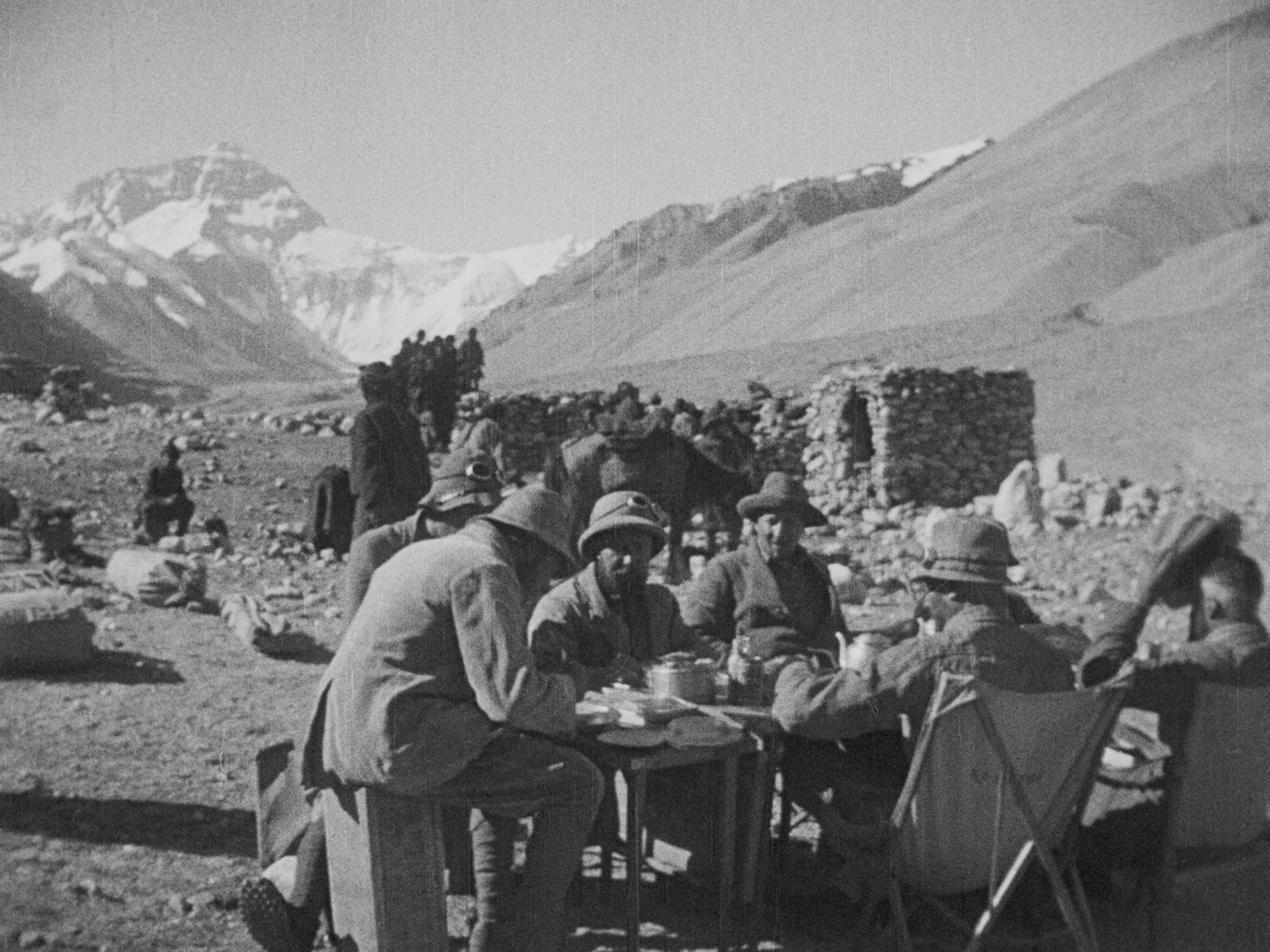
The Epic of Everest, Noel’s film of that ill-fated expedition, captures the mountain at its most mysterious – and its most alluring. A massive success when it was shown back home in London at the Scala, The Epic of Everest may well have been responsible for many a traveller’s resolve to climb the unclimbable mountain. While Noel’s film praises the “supermen” of the expedition, their heroics pale in comparison with the majesty of the landscape that defeats them and claims four of their lives. The explorers, tiny black silhouettes against the sheets of snow and ice that surround them, are noble fools at best – Everest is king. The intertitles, smug in colonial superiority, condescend to the Tibetan locals at first, detailing their quaint customs, expressing horror at their hygiene standards. By the end of the movie, that same voice is rueful, fearing that the mountain has actually been cursed, or rather protected, by the lamas – that the summit the locals call Chomolungma or “Goddess Mother of the World” is never to be claimed by an interloper.
The Epic of Everest (1924)
Despite its grand conclusions, The Epic of Everest doesn’t feel as epic as you might expect. The poignancy here is that the expedition is over, and so finally, terribly over, so soon after it began. Two of the team die of frostbite and exposure at an early base camp when the weather changes. 37-year-old George Mallory and 22-year-old Andrew Irvine die on or near the summit. They are spied by Noel’s new-fangled telephoto lens beginning the final push, and by a colleague’s telescope just 800ft from the top. Were they on their way, or down? With no bodies recovered and the rest of the expedition making the sorrowful descent without them, it matters little.
The Epic of Everest (1924)
Despite the lengthy intertitles and the meticulous detail of altitudes and temperatures, it’s actually easier to watch this as an art film as opposed to a documentary. This movie is all about the awe-inspiring visuals, mist rolling off the mountain top, glaciers twinkling in the evening light – and the crowning glory is the blue-tinted Fairyland of Ice sequence. Everest almost-pristine, with our hardy faithful tiptoeing around doing some genuine, light-touch exploring, snapping off icicles and dwarfed by the glaciers. The BFI restoration, combining the best shots from the two best prints in its archive, replicating the tints straight from the nitrate originals, plays right up to that gorgeousness. Feast your eyes, even as you weep.
The finishing touch is one that you may expect to find a little familiar. Simon Fisher Turner’s score for The Great White Silence combined unexpected noises, a beautiful hymn, dark electronica and some surprising archival found sounds to create an unforgettable, not to say controversial, soundtrack. His score for The Epic of Everest is just as richly textured, but more melodic and with fewer attention-grabbing tricks. Motorcycles, typewriters and some original recordings from 1924 – of lamas at that London premiere – are plaited neatly into the music. Where the film can be cool, almost brutal in its straightforwardness, the music supplies drama, sentiment, and a note of pizzazz.
The Epic of Everest (1924)
The Epic of Everest will have world premiere as the Archive Gala at the 57th BFI London Film Festival on 18 October 2013 with Simon Fisher Turner’s score performed live. It will go on simultaneous theatrical release and in time, will be released on Blu-Ray by the BFI. Read more here.
UPDATE: This review followed a press showing in the BFI basement screening room. I subsequently saw The Epic of Everest at a London Film Festival press screening in NFT1 at BFI Southbank – with a much bigger screen, and louder speakers, the film was even more magnificent. The score, particularly, made much more of an impression the second time around. So my advice is: see this film on the biggest, best screen you can.
We’re back! For the third year running, I will be presenting a series of screenings at the West London Trades Union Club in Acton, London W3. Silent film fans of west London, come one, come all. And if you’re new to silent movies, you should definitely pop us in your diary: the autumn/winter collection for 2013 contains some stone-cold classics.
The Trades club on Acton High Street offers well-kept, reasonably priced ale and friendly conversation between left-leaning movie fans too. We show films on Saturday afternoons at 4pm, with no entrance charge, a short introduction courtesy of your favourite London-based silent movie blogger* and generally a good free-for-all chinwag afterwards.
This year’s lineup includes a jaw-dropping tale of British exploration, a high-tension thriller, an Expressionist masterpiece and the divine Clara Bow. Interested?
The Great White Silence (1924)
You’ve seen films about Scott of the Antarctic before – but not like this one. Herbert Ponting took his camera (almost) every step of the way on Scott’s final, fatal expedition. It’s an intimate portrait of Scott’s team at work, and a staggering vision of the unspoiled Antarctic landscape. All this, plus a gleaming restoration from the BFI and an unforgettable score by Simon Fisher Turner, incorporating some surprising found sounds. And penguins. Watch this now as the perfect preparation for viewing the BFI’s new restoration of The Epic of Everest in October. 14 September, 4pm
A Cottage on Dartmoor (1929)
A Cottage on Dartmoor (1929)
Did you see Underground when it was released earlier this year? That is just one of Anthony Asquith’s two great silent thrillers. A Cottage on Dartmoor is darker, edgier, artier and altogether murkier than Underground – it’s all about jealousy, frustration and razor blades. There’s even a subplot about the coming of sound. Horrific. A Cottage on Dartmoor deserves to be seen on the big screen, and will be shown at the WLTUC with Stephen Horne’s fantastic score too. 26 October 2013, 4pm
Metropolis (1927)
You may think you’ve seen Metropolis, but think again. If you haven’t seen the new version of Metropolis with rediscovered footage, you haven’t seen it at all. No WLTUC screening of Lang’s sci-fi masterpiece would be complete without a discussion of the labour politics at the heart of the film, it’s true. But equally, you can gaze upon the gothic futurist splendour of it all – and remind yourself where all those other, more recent, sic-fi movies stole all their best ideas. 16 November 2013, 4pm
It (1927)
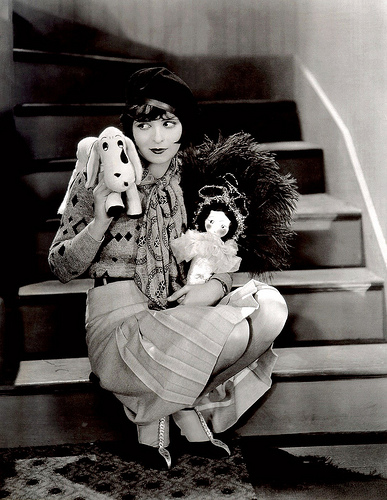
Clara Bow in It (1927)
Clara Bow, Elinor Glyn declared, had ‘it’. And you don’t need me to explain what ‘it’ is do you? In the greatest flapper movie of them all, Bow plays a determined, perky working-class girl in pursuit of her dream guy. A delicious pre-Christmas treat, It will immerse you in the bustle and swing of 1920s New York, and remind you why Bow is still such a revered fashion icon. Watch out for a cameo by Glyn, and an early appearance by Gary Cooper, whom many say was the great love of Bow’s tragic life. 14 December 2013, 4pm
You don’t have to be a member of the club, or even of a trade union, to turn up and receive a warm welcome – and you will find the venue at 33 Acton High Street, London W3 6ND. It’s about five minutes walk from Acton Central train station, and on plenty of bus routes. Visit the club’s website here, or join the Facebook group.
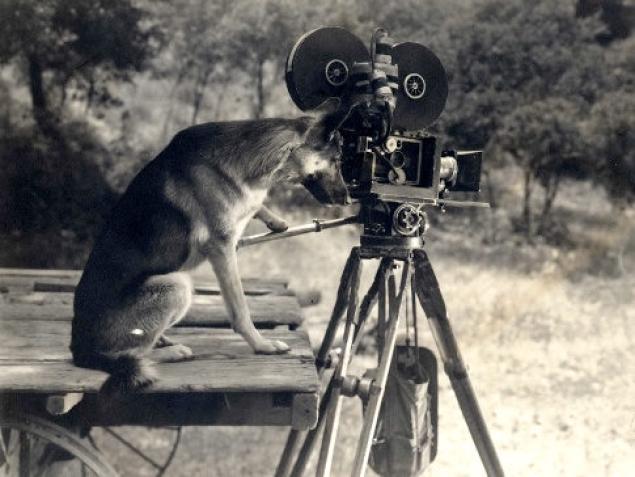
The post rate sure has slowed down around here. Blame the summer. Blame the day job. But that doesn’t mean that there are fewer silent movies being shown in London. Not at all. So this is just a gentle reminder that if you want to keep up to date with what is being shown where and when, take matters into your own hands, like Rin Tin Tin, here, and bookmark the Silent London Calendar page.
Check back regularly and you will find something new each time, we promise. Take next week: Landmark horror-doc Häxan is showing in Peckham, Neil Brand is accompanying a comedy double-bill and there is something mysterious occurring in Kennington – follow the link and all will be revealed.
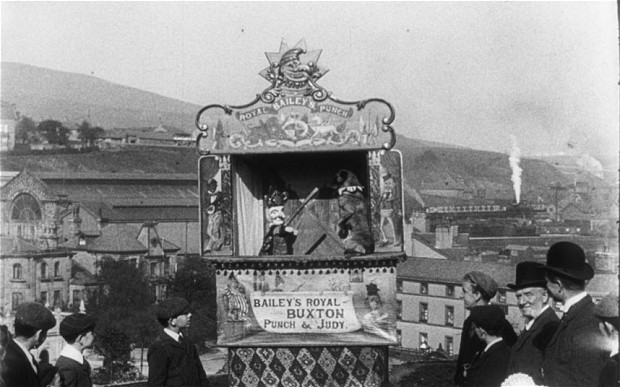
A still from Mitchell and Kenyon’s Punch & Judy Show in Halifax (1901). Copyright: BFI National Archive
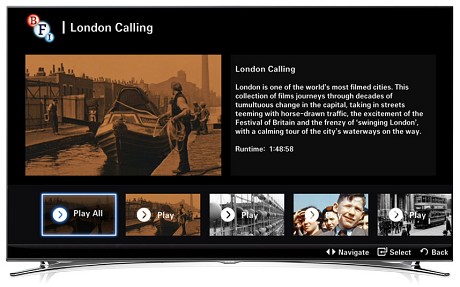
So, last week, I found myself watching some early films in the BFI Southbank. Same old, same old, you might think. But these early films were being shown on massive MTV Cribs-style tellies in the BFI foyer. And while many of them were from the Mitchell and Kenyon archive we know and love, they were unseen treasures, having been gazed upon only by archivists during the past century.
This unexpected alliance of Edwardian content and 21st-century technology has come about via the BFI’s new app, developed as part of the Film Forever project. It’s an app for Samsung Smart TV and Smart Hubs, and it allows viewers access to a treasure chest of film-related content, including a free Film of the Week (kicking off with A Zed and Two Noughts), interviews with film-makers, documentaries, and a whole heap of archival delights, including the M&K films. There will also be footage of events and interviews from the London Film Festival appearing when that all kicks off in October.
The archive goodies are separated into a variety of strands: London Calling and Cabinet of Curiosities, among them. There are silents across most of the ranges – many you’ll be familiar with, such as Daisy Doodad’s Dial or Wonderful London. It’s the Mitchell & Kenyon films that stand out though – they’re in a rather lovely collection called Edwardian Summer. There’s an hour and a half of footage here, a good hour of which is unseen. Robin Baker, the head of the BFI archive, calls these films: “Cinematic gold – you couldn’t get much more important.” What’s so vital about these short films, he explained, is that the “humanise the past”. They certainly captivated the crowd at the BFI.
You can see Blackpool in May 1904, with formally dressed holidaymakers parading on the pier or riding trams. There’s a Punch and Judy show, captured in Halifax in 1901 – your eye may be caught by the frisky puppy getting rather too close to the puppets, but don’t miss the plume of smoke that reveals a train station in the rolling hills behind the main event. A man in drag falls off a donkey (twice) in Hipperholme, West Yorkshire in 1901; Preston celebrates its Whit Fair in 1906. Delightfully, footage of the Chester Regatta delivers shots of boats gliding elegantly down the River Dee in the long hot summer of 1901. Watch a little further and you’ll discover a few courting couples doing what courting couples do in those very boats.
BFI’s Samsung Smart TV app
There’s silent London on show too – elsewhere in the package you can watch street scenes of Hoxton approximately 80 years before it became cool , for example.
I think it’s all gorgeous – I would like to sit down and watch all of the M&K treats in full, and there are some non-silent delights both sublime and ridiculous available too, including a Dufaycolor screen test featuring Audrey Hepburn and a public information film from the 70s starring Keith Chegwin. So this is wonderful news for those of you have, or are thinking of buying, a Samsung Smart TV, Hub or Blu-Ray player. It’s also good news for the rest of us. We may have to be a little patient, but as more of the BFI’s wonderful archive is digitised we can look forward to their films being made available in more ways. BFI apps for everyone please: not just on smart TVs, but on smartphones and tablets, perhaps?
Back by popular demand, Hitchcock’s silent movies take over the BFI Southbank for a second summer in a row: all of them freshly restored by the BFI experts and all either with live musical accompaniment or a range of very classy recorded scores. You can read more about each film on Silent London here. These are the first feature films Hitchcock ever made, and from the expressionist thriller The Lodger to the rustic comedy of The Farmer’s Wife they are clearly the work of an extremely talented and versatile director. In fact, they were recently inducted into the Unesco Memory of the World register.
All of which Hitchcock fandom is a preamble to saying that I have three pairs of tickets, to a silent Hitchcock screening of your choice, to give away. Hurry, because the season has already started, and I will be choosing the winner on Monday morning. Email the correct answer to this question to silentlondontickets@gmail.com with “Hitchcock” in the subject line by midnight on Sunday 11 August 2013 for your chance to win.
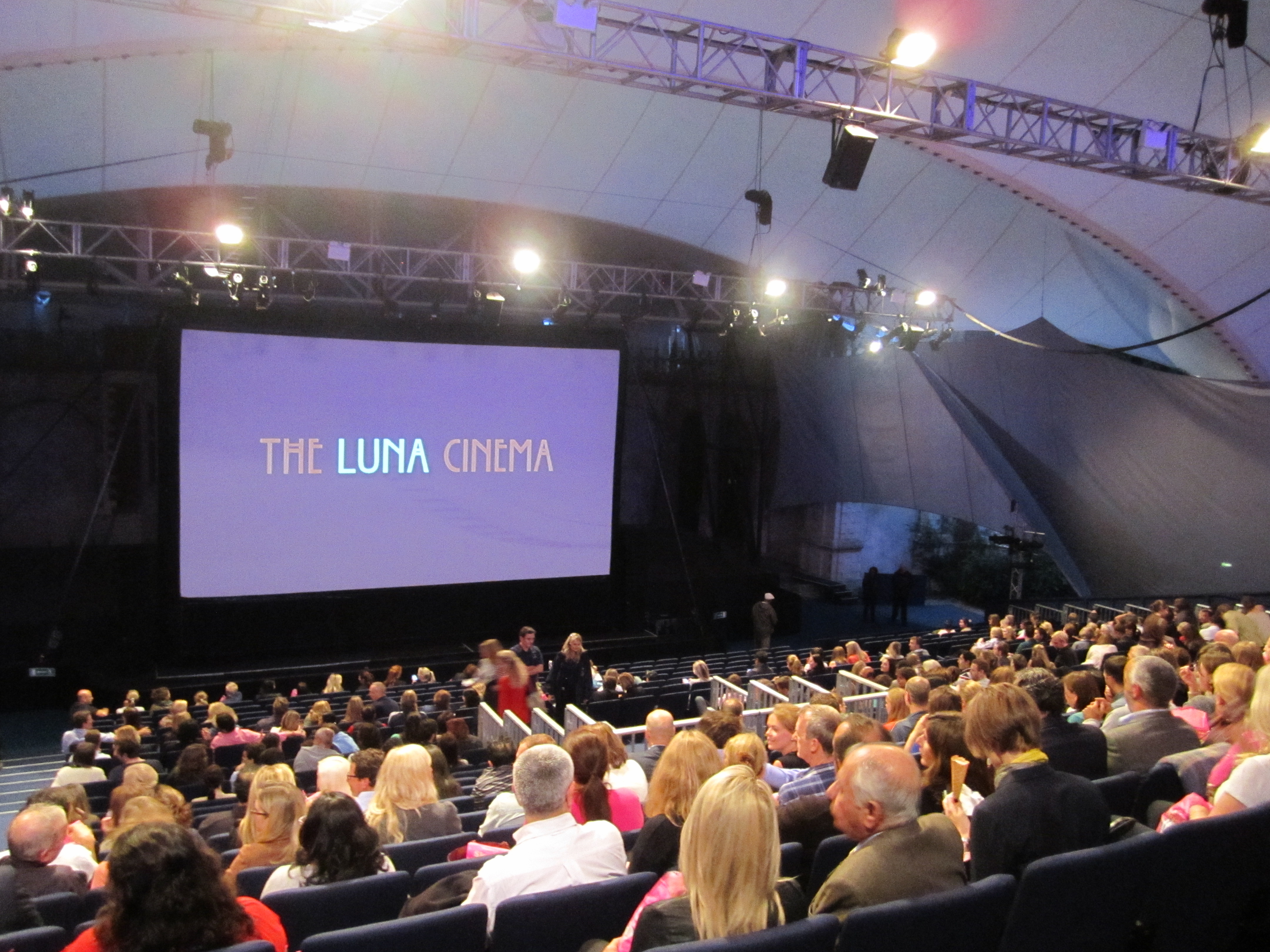
No I am not about to tell you to spend more of this glorious summer tucked away in a dark and musty cinema rather than out in the park. Holland Park’s Luna Cinema is hosting an evening of silent cinema at its open-air venue – which is what we call a win-win. It promises to be a great night, with classic films starring Charlie Chaplin and Laurel and Hardy on the big screen. You’ll be even more impressed when you hear that the musician and host for the evening is Neil Brand.
The Luna Cinema, the country’s leading producer of pop-up cinema, presents a night celebrating silent cinema to Opera Holland Park on the 11th August. The stunning summer theatre, in Holland Park, with its velvet seats, bars and beautiful canopy (in case of bad weather) will host the Luna’s giant screen for a very special night of classic silent films. We will have silent film expert Neil Brand hosting the evening and providing live musical accompaniment to an array of classic silent films including Charlie Chaplin’s most famous work, “The Immigrant” – it’s a rare opportunity to see this 1917 comedy showcasing Chaplin at his very best. Amongst other classic shorts we will also be screening “Liberty” – one of Laurel and Hardy’s most famous comedies and considered to be their greatest silent work before they moved to the “talkies”.
The Luna Cinema’s silent film night takes place at Opera Holland Park, London on Sunday 11 August. Tickets cost £9.50 – £19.50 and they are available through thelunacinema.com or by going straight to the Opera Holland Park box office (operahollandpark.com or 0300 999 1000).











 Silent London