Happy holiday Silent Londoners! They say that if you remember 2025, then you weren’t watching enough silent movies. How much do you recall?
For myself I sure watched a lot of silent films, clocking up several festivals and individual screenings. Pordenone and Bologna, Zurich, Hippfest, Slapstick, Cinema Rediscovered, Women and the Silent Screen in Belgium, plus The Gold Rush centenary, Anna May Wong, Gosta Berlings Saga, Stella Dallas, Lillian Gish, Lois Weber, Film on Film and more at the Southbank. Did you catch Bonn, San Franciscso, the non-stop action at the Kennington Bioscope, or any of the many, many silent screenings all around the world? How about Sherlock Holmes?
Thank you for bearing wth me during a few several technical glitches related to this year’s poll. Relax, enjoy your glass of wine-flavoured carbonated beverage, and welcome to our glittering award ceremony. I have counted the votes, and I am ready to announce the winners of the Silent London Poll of 2024!
Congratulations to all the people mentioned below – as ever, these categories were bursting at the seams with excellent, worthy nominations and a great reminder of how exciting the global silent film scene is. Thank you for all your votes, and your comments, especially.
Without further ado, let me open this giant stack of golden envelopes. Here are your winners.
1. Best orchestral silent film screening of 2024
Your winner: The Winning of Barbara Worth (Henry King, 1926), with a score composed by Neil Brand, arranged by George Morton, conducted by Ben Palmer, performed live by the Orchestra da Camera di Pordneone, at Giornate del Cinema Muto, Pordenone
I said:“t’s a big, big movie, with the youthful star trio of Ronald Colman (on $1,750 a week), Vilma Banky (on $1,000 a week) and Gary Cooper (on $50 a week!) in a desert love triangle, and a tremendously terrifying climax, as the townsfolk run for their lives when the river bursts its manmade bounds. Plus we were to enjoy the world premiere of a wondrous new score composed by Neil Brand, arranged by George Morton, conducted by Ben Palmer, and performed live tonight by the Orchestra da Camera di Pordenone. If you know the film you will know that it is celebrated for its scale, but also that this is a Frances Marion script, with a touch of melodrama (Vilma overhearing Ronald’s confession that he won’t propose to her, but not the reason why), her pet subject of adopted children, and her love of a grand theme – here the pioneers’ battle for mastery over the elements, and capitalism’s battle for mastery over the populace. You’ll also know that between the big action scenes there are several more sedate moments, discussions of policy and payroll. As, quite frankly, we have come to expect, Brand’s score was buoyant and nimble, keeping the film on its toes, teasing out the romance and flooding (yes, I went there) the auditorium with sound during those blockbuster setpieces, starting with a sandstorm in the first reel and the deluge in the last. Timed to a T, so that image and sound met in perfect harmony, and just a joy to listen to – for what it’s worth, I think it’s a winner. Geddit?”
Lillian Gish in The Wind (1928)
2. Best silent film screening with a solo musician or small ensemble of 2024
Season’s greetings Silent Londoners. It has been a whirlwind of a year. How much do you remember?
Personally, I watched silent movies on three different continents this year, so I have some great cinema memories from 2024. Pordenone and Bologna, San Francisco, Istanbul, Locarno… and back home, Hippfest, Bristol, Sherlock Holmes at Alexandra Palace, Dorothy Arzner and more at the Southbank, non-stop action at the Kennington Bioscope. We celebrated some major anniversaries. Plus there was a lot of love for Anna May Wong, and Sessue Hayakawa.
I may be a humble blogger typing at my desk, but just imagine I am a glamorous celebrity cracking first-rate jokes while wearing a designer ballgown. I have counted the votes, and I am ready to announce the winners of the Silent London Poll of 2023!
Congratulations to all the people mentioned below – as ever, these categories were bursting with great nominations. Thank you for all your votes, and your comments, which remind us all of the passion for silent film out there.
Without further ado, let me open this giant stack of golden envelopes. Here are your winners.
1. Best orchestral silent film screening of 2023
Your winner: Stella Dallas (Henry King, 1925), with a score composed by Stephen Horne, orchestrated by Ben Palmer and performed by Orchestra del Teatro Comunale directed by Timothy Brock, in the Piazza Maggiore Bologna, as part of Il Cinema Ritrovato
I said: “Before Monday night’s screening of the original 1925 adaptation of Olive Higgins Prouty’s weepie, some people in Bologna were still dropping the names of Barbara Stanwyck and King Vidor. After Monday, the talk of the town was only Belle Bennett, Henry King and Stephen Horne, whose marvellous score, alongside Bennett’s impeccable performance, left the piazza awash with tears. Horne has long championed this film, as have I, and the new restoration from MOMA is a very welcome, and beautiful thing. I really hope more people get to see this wonderful film now. Silent melodrama really can be the very finest melodrama.”
Honourable mention:Lady Windermere’s Fan (Ernst Lubitsch, 1925), at the same festival, with Timothy Brock’s new orchestral score.
The Crowd (King Vidor, 1928)
2. Best silent film screening with a solo musician or small ensemble of 2023
Season’s greetings Silent Londoners. It’s that time of year when we like to look back at the year, and especially at all the great silent movies we watched.
2023 was a busy year. We had in-person and online film festivals, seasons, screenings and conferences, some fabulous new restorations, discs and some big anniversaries. We had new books and DVDs to enjoy. I was a little distracted, but the silent film scene was booming.
Very welcome news from Eureka Entertainment! The good people of Eureka, who have brought us so many beautiful silent film Blu-rays, in the past are releasing Pandora’s Box (GW Pabst, 1929) on Blu-ray on 30 October this year. This is the film’s debut on Blu-ray in the UK.
Season’s greetings Silent Londoners. It’s that time of year when we like to look back at the year, and especially at all the great silent movies we watched.
Who knows what normal is any more? But this year we had in-person film festivals, seasons, screenings and conferences a-plenty. We had new books and DVDs to enjoy. New websites too! And honestly, silent cinema seems to be more popular than ever.
How are you doing? You can be honest here, you’re among pals. It’s a bit difficult out there these days isn’t it? Whether you’re out on the front line (thank you, THANK YOU), out-of-work, homeworking or home-schooling, life is stressful at the moment. Apparently we’re all either filling our time or switching off at night by streaming more than ever. Why not? There are some great resources out there for watching silents online (and more from me on this anon), but streaming is not the only fruit.
If you still have some pennies to spare in the age of lockdown, don’t forget that physical media is your best friend. Silents on Blu-ray (or DVD) won’t disappear at the whim of the rights-holder, or glitch or go lo-res every time your bandwidth gets overloaded by your flatmate’s Zoom cocktails or your kids’ homework chats. Not only that, but the best discs coming out these days are packed with commentaries and extras that celebrate the film and will expand your knowledge in the most entertaining way. Continue reading Buster Keaton: 3 Films review: discs the doctors would order→
Happy new decade Silent Londoners! Let’s kick off the Twenties with a party shall we? A Silent London Poll-Winners’ Party. You know the drill by now, these prizes go to the best of the past year in silent film, as voted for by YOU. With that said, I will starting handing out the gongs immediately
Best DVD/Blu-ray of 2019
This was a very popular winner – the Eureka/Masters of Cinema DVD/Blu release of the magnificent Der Golem was by far your favourite disc of the year. The package comprises a beautiful restoration of the movie, accompanied by a choice of great scores and a feast of insightful extras. An excellent choice. I reviewed this release in more detail in the January 2020 edition of Sight & Sound.
Honourable mention:Fragment of an Empire (Flicker Alley)
Best Theatrical Release of 2019
Go, Golem! The expressionist classic was your classic for the best theatrical release of the year, as this sumptuous restoration played several dates around the world. I saw it in NFT1 in the summer and I am not sure I have recovered yet.
Best Modern Silent of 2019
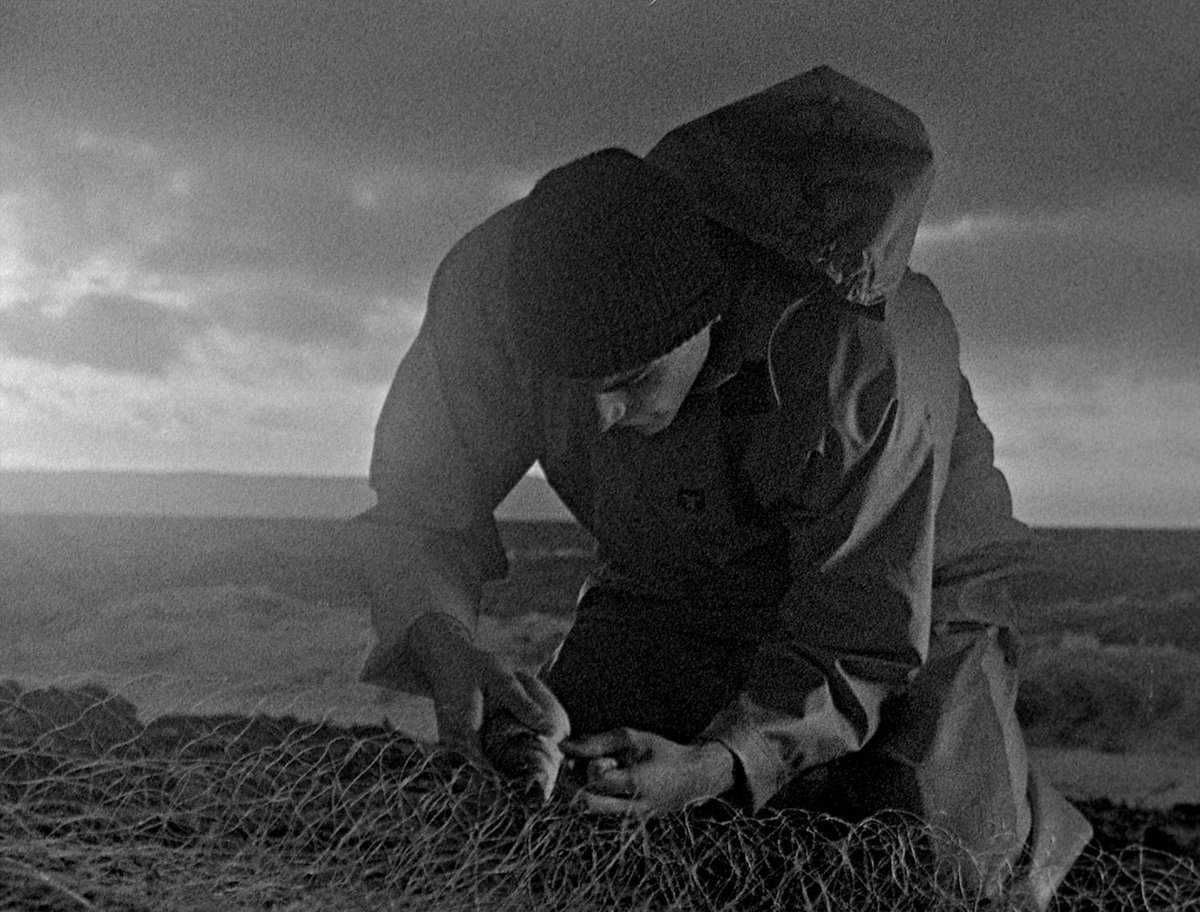
It may not BE silent but it WAS shot silent, as forthcoming screenings with live musical accompaniment are sure to emphasise – Mark Jenkin’s brilliant Cornish drama Bait was your favourite modern silent of the year.
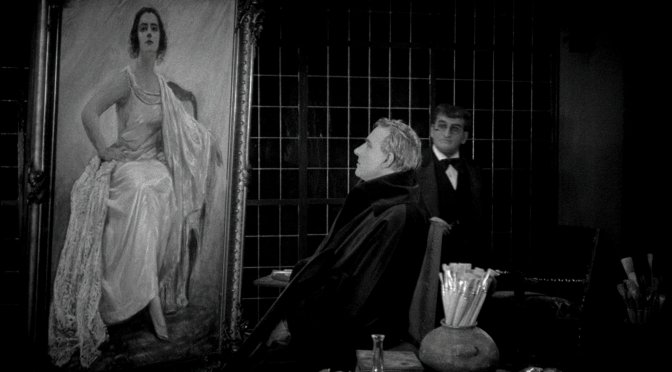
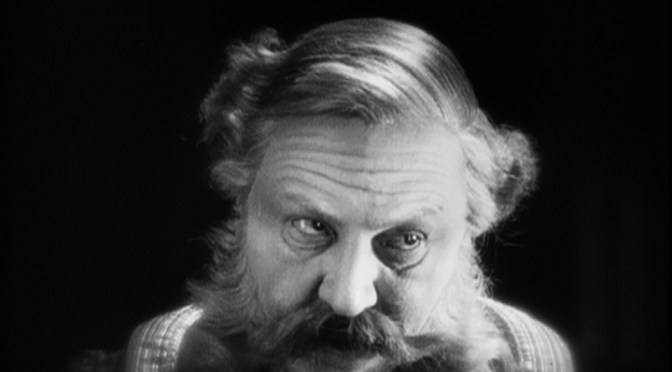
One of the strands running through Carl Th Dreyer’s beautiful drama Michael (1924) is the idea that art can only be truly great when it is animated by love. The artist protagonist Claude Zoret (Benjamin Christensen) struggles to finish a commissioned portrait of a rich countess – his passion project takes his young protégée Michael (a youthful, handsome Walter Slezak) as its model instead. When Michael finishes the portrait for his master, the quality of his work betrays the fact that his own affection has been transferred to the model.
The film’s famous line, “Now I may die content, for I have seen great love” carries this lesson over to the art of living itself. Better to have loved and lost, as the saying goes. It’s a conclusion that recalls the moving speech that caps off last year’s Call Me by Your Name. Far less explicitly than that film, Michael also takes gay love as its subject – a topic dealt with more openly in certain German films of the era (Sex in Chains, Different from the Others). It’s unmistakably a gay story, seen in the 21st century. Perhaps in 1924, some members of the audience might have missed it – although not in the US, where the film was released as The Invert, and not if they were familiar with the author of the film’s source novel Herman Bang, a gay writer who wrote heartfelt stories, largely, it seems, about lonely and unfulfilled women.
The concept of “Early Murnau” is a little bittersweet. The German director had such a short career that the films in this new collection from Masters of Cinema take us up to just six years before he died. And while his most famous film was made during the period (1921-25) covered by this box set, that work, Nosferatu, is not included. The set ends just one year before his hypnotic Faust was made, and two before his Hollywood masterpiece Sunrise.
This is technically middle Murnau, then, or “the Murnau you may have missed if you only knew Nosferatu and the surviving Hollywood work”. All the same, this is a gorgeous collection of distinctive, spectacular films, well worth adding to your shelf. All of the films in the set have been made available on DVD from Masters of Cinema previously, but here together, on Blu-ray, they represent a far better bargain.
Schloss Vogelöd (1921)
The journey through Murnau’s lesser-sung German work begins in 1921 with Schloss Vogelöd, a country-house mystery rendered mysterious and dreamlike at the director’s touch, and climaxes with the bracing and inventive Molière adaptation Tartuffe (1925), which introduces an especially noxious virtue-signalling hypocrite and hangs him out to dry. In between we delve into the romantic and financial misery of a poetically minded clerk in Phantom (1922), and the related entanglements of an aristocrat in Die Finanzen de Grossherzogs (1924). Indisputably, the highlight of the collection is the low-key masterpiece Die Letzte Mann (1924) starring Emil Jannings as the hotel doorman whose life hits a downward spiral when he is demoted to a toilet attendant.
As the many extra features and essays included with the set attest, Murnau’s oeuvre is hugely varied, swinging from genre to genre and rarely settling in one place for long. Stylistically, though, he is mistakably himself at all times. You can see the walls of the city bend down to oppress the heroes of both Phantom and Die Letzte Mann, for example. And you may already have noticed that the films above share a set of preoccupations with money and social position, with impossible aspirations and with toxic pride.
So is this like Buster Keaton’s The Cameraman? Well yes a little, but mostly, very much no.
Not a comedy then? Not American either, it’s a Soviet documentary, a City Symphony in fact.
I know about those – which city does it portray? Erm. Moscow, Kharkov and Kiev. And Odessa. But you’re not always sure which is which.
A fake then? No, it’s art.
Which means it’s not a factual film at all? Well that is a tricky question. A group of Sight & Sound critics recently voted it the greatest documentary of all time. So that’s that, but I’d argue it isn’t really a documentary at all. As is often the case, I agree with David Cairns, who calls it a “Non-fiction Film Thing” in a new video essay.
That is not so catchy. How about just “Film” then? The stated intent of Man With a Movie Camera was to make a film that owed nothing to the other arts, literature, theatre, painting. Check out the opening intertitle. “This new experimentation work by Kino-Eye is directed towards the creation of an authentically international absolute language of cinema – ABSOLUTE KINOGRAPHY.”
Man With a Movie Camera (1929)
That sounds amazing. It is, full of astonishing cinematic tricks and playful philosophizing and passion. It is the most filmic of films and you should watch it, which is kinda the point of this conversation.
You always have an ulterior motive. Yes, I am sneaky that way. Man With A Movie Camera, my forgetful friend, was released last year in the cinema and on Blu-ray – my review is here.
I’ll read that later, I’m really busy. Asking silly questions must take up a good deal of your time. The TL;DR version of that review is that the cinema release of the movie was great, a gleaming restoration with a dazzling score by the Alloy Orchestra, but the Blu-ray release was not quite up to the same standard (although fans of the Michael Nyman score might overlook that).
I’ve missed my chance then. No. There is a new Blu-ray of Man With a Movie Camera in the shops – and it is the theatrical version that knocked my socks off last year. Put simply I recommend that you buy this version, from Masters of Cinema, forthwith, without delay.
Anything else to sweeten the deal before payday? LOTS. The aforementioned video essay by Davis Cairns and Timo Langer, and the not insubstantial matter of four of Vertov’s other important works (Kino-Eye, Kino-Pravda #21, Enthusiasm, Three Songs about Lenin). Plus an audio commentary by Adrian Martin, an interview with Ian Christie, a booklet crammed with treats from the archives. And a very nice box.
You can read more about the Masters of Cinema release here and buy it from lots of places including here.
This is a guest post for Silent London by Peter Baran. You can follow Peter on Twitter at @pb14.
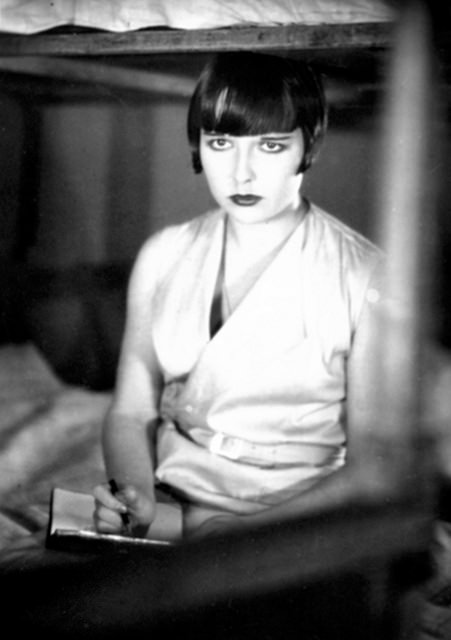
Louise Brooks and GW Pabst, an irresistible combination? Certainly Pandora’s Box (1929) caught lightning in a bottle, creating one of the most iconic female roles in all of silent cinema. In Pandora’s Box, Pabst and Brooks tease eroticism out of a certain ingenue naivety, whereas in her previous US films (A Girl In Every Port and Beggars of Life in particular) Brooks had offerede a slightly more world-weary sensuality. So it is no surprise that Pabst saw Brooks as the perfect person to play Thymian, the sheltered girl who will drop through the cracks of life via a workhouse for fallen women and prostitution.
This new Blu-Ray transfer of Diary of a Lost Girl (Tagebuch einer verlorenen, 1929) by Eureka’s Masters of Cinema label is a crisp and beautiful version of what is clearly an exploitation movie. As in Pandora’s Box, Pabst’s walks the tightrope of commenting on eroticism and sensuality; too often he falls off the tightrope into titillation. The film is set up for us to rue the difficult circumstances that lead to Thymian’s journey from a fine middle-class household down into poverty and eventually to selling her body. Except everything is still a bit clean. The reformatory is horrid, but only in comparison to her comfortable home – and its horridness is more due to a Miss Hanniganesque management rather than something inherent in the system. And there isn’t really too much criticism of Thymian’s shaming (AKA rape), and pregnancy. You get the sense that the original author (the film is based on a popular Margarete Böhme novel) and the film-makers are just following through the logical conclusion of these incidents. Instead, we end up with a somewhat warped fairytale, a slow-burn Snow White where the dwarves run a brothel full of happy hookers, or Cinderella with calisthenics.
Diary of a Lost Girl (1929)
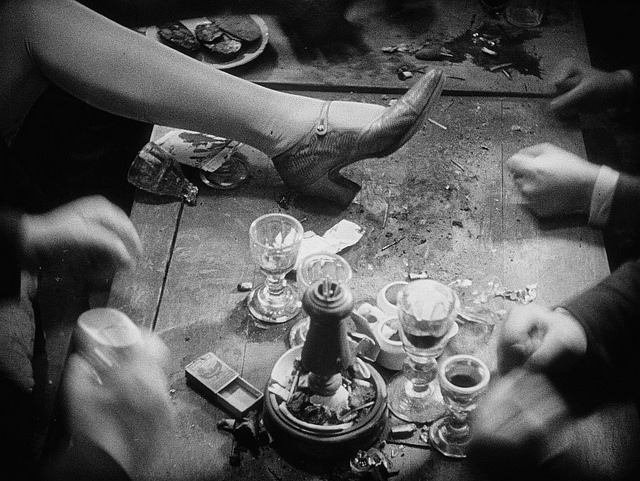
There is a sensuality and rawness in Pandora’s Box, coming from Lulu’s naivity, which Thymian doesn’t share at all. At least by the time the film has put her through her paces as part of the reformatory’s physical education routine, she has no sense of wild abandon. It is a wholly more sinister erotic thrill, underlined (perhaps a bit too heavily) by the matron whipping her gong and clearly getting far too much pleasure out of the whole affair. This part of the film could be subtitled Reform School Girls do gym:
Spies are cool. Spy films are really cool. Spione, Fritz Lang’s epic high-octane espionage thriller from 1928, is exceedingly cool. This a sexy, dreamlike movie, heavy on the action and light on logic, which both anticipates and outpaces such noir favourites as The Big Sleep (1946). In fact, if you watch all two-and-a-half hours of this film without getting regular memory jolts of Hawks, Welles, Hitchcock and the whole pantheon of Lang’s future colleagues, I’d be hugely surprised.
But let’s not get ahead of ourselves. This is German Lang, not Hollywood Lang – and Spione is all the richer, and stranger, for it. Spione mashes up pulp fiction and lurid newspaper headlines with early film serials and adds in a twist of the fantastic and a dash of technolust. It’s a powerful brew.
Spione (1928)
“Throughout the world, strange events transpire …” runs the opening intertitle and that’s all the backstory you’ll get, folks. In a nameless country, a mysterious kingpin dispatches mercenaries and thugs to steal documents and sabotage treaty negotiations. The disruptive villain, Haghi, is played by Rudolf Klein-Rogge, fresh from a similar role in Dr Mabuse, Der Spieler (1922), as a dangerously fascinating, if chilly, creature. It’s typical of this grand, sprawling movie that he’s not just a criminal mastermind but a banker too (boo-hiss) and a clown (say what?). Just go with it. And there’s no doubt whose side we want to be on, though, despite the best counter-espionage efforts of our upright-but-anonymous leading man Willy Fritsch, who goes by the digits No 326. The link between the two men is Sonja, a lethally blonde femme fatale, an employee of Haghi’s who falls for Mr 326: a seductive, dishevelled performance by Gerda Maurus.
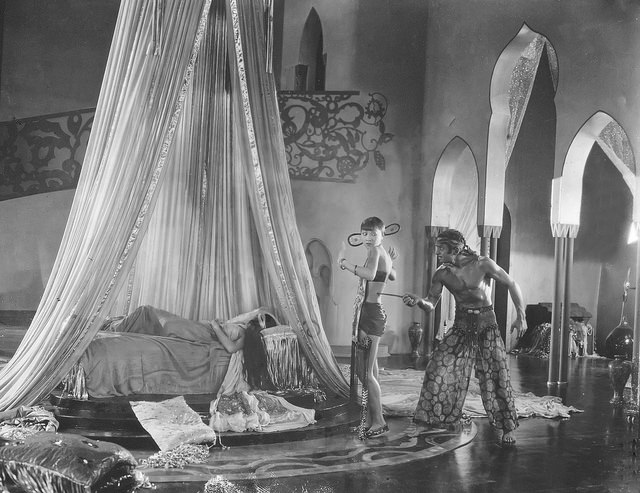
Just in time for Christmas, Masters of Cinema is rereleasing some more of its silent back catalogue, in gorgeous new dual-format DVD/Blu-ray editions. This is a Good Thing no doubt, and if there is one title especially suited for the pantomime season it’s The Thief of Bagdad (1924) – a middle eastern romp starring Douglas Fairbanks as Ahmed, a light-fingered adventurer, beautifully photographed and bulging with the last word in 1920s special effects.
Forget the effects for a minute though, forget Raoul Walsh behind the camera, Anna May Wong slinking around the corners, and William Cameron Menzies’s towering sets, and settle in for the Douglas Fairbanks show. This is Fairbanks at his very best: fortysomething, athletic, beaming, stripped to the waist and bouncing in and out of giant pots, swashbuckling and soaring through the air and under the sea. If you want to understand why Fairbanks was the King of Hollywood, this is a key text. He burns up the screen here, forcing you to smile, to chuckle, to gasp in awe at his latest trickery or feat of physical prowess, daring you to remain unmoved. It would take a heart of stone not to relent – it’s his ambition as producer that lends this film its grand scale, and his radiant personality that wins the audience’s affection as well as its awe.
The Thief of Bagdad (1924)
But you will have to possess a mind as gymnastic as Fairbanks’ buff body not to be troubled by the fact that this movie is pure orientalist claptrap. It can be done – Fairbanks on a magic carpet with his princess Julanne Johnston by his side is a sight beauteous enough to tempt you into a little light doublethinking duty. Just like Ahmed, you’ll have to earn your happiness here. It’s not a nasty film, but it is an ignorant one. If it weren’t for the gloss of that stunning production design and the stardust sprinkled by its leading man, that would be all we had to write about. As it is, we can take heart from the fact that the guff that underpins this movie is mostly well-intentioned but misguided romanticism. Rather this, you could argue, than yet another flick where the only middle eastern characters are bloodthirsty terrorists.
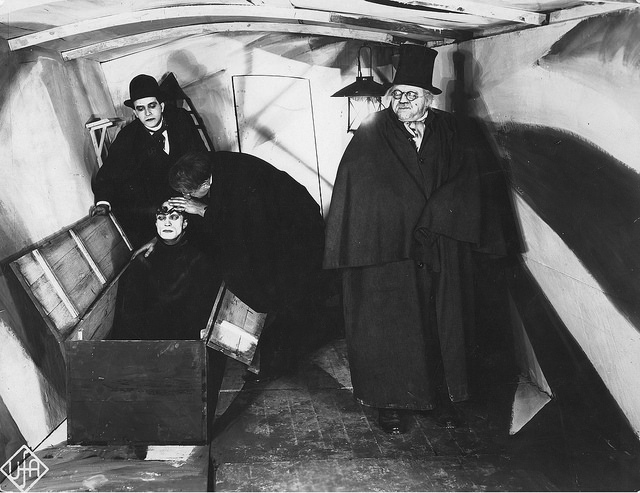
Just because a film has proved to be massively influential, it doesn’t follow that it will look modern. For evidence, I present Das Cabinet des Dr Caligari (1920) – without which, the movies that followed could look very different, but which barely cares to look like a movie at all. I’m exaggerating, which itself is very Caligari, of course, but watching the gamechanging new restoration of this cinematic titan, I am struck by how much of its power comes from the arts of set-painting and stage-blocking rather the magic of the moving pictures.
Although there are some eyeline cuts, irises, close ups and unsettlingly low-angled shots, Caligari heart belongs to its theatrical forebears. When I heard that this film had been restored, even when I saw the first YouTube clips of the work that had been done to bring crispness, brightness and vibrant, slick colour back to Caligari, I didn’t appreciate what all that labwork would reveal. This is Caligari the spectacle, a testament to design and showmanship – a world away from the current trend in horror cinema to ramp up the realism and immerse the audience in a grey and gruesome world.
Das Cabinet des Dr Caligari (1920)
Watching this Blu-ray, you can make out each brushstroke on the canvas backdrops, the clumps of white powder in the Doctor’s hair, Lil Dagover’s spidery painted-on eyelashes. Lean in, you might just be able to lick the greasepaint off the screen. The power of Caligari, of course, is that it’s no less terrifying for being artificial. In the same way that the framing story in the asylum, which was tacked on to make the film less scary, actually contains some of the film’s most disturbing scenes, Caligari‘s high-concept design strategy is so daunting as to be horrifying. There’s a lengthy, and very useful excerpt from Lotte H Eisner The Haunted Screen in the accompanying booklet and her summary of the power of Expressionism bears repeating:
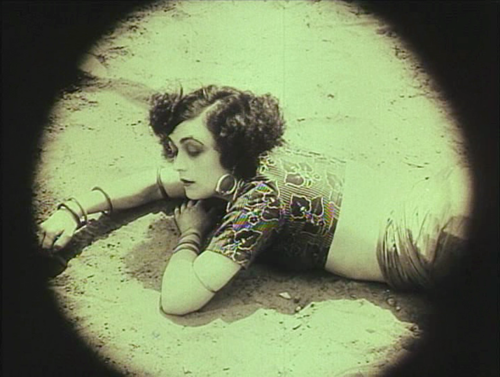
Pola Negri’s Madame Dubarry has it. You know exactly what I am talking about. Dubarry is living and loving in the heat of pre-revolutionary Paris, but she’s more than enough trouble for the aristos all by herself. “The woman who will ruin France” is first introduced as a breath of fresh air, whispering saucy jokes to the other girls in the seamstresses’ workroom – a ripple of fun in the stuffy atmosphere of the atelier. When she leaves the shop, Dubarry collects admirers with every step, like Clara Bow in a crinoline. Before long, of course, she’s the mistress of Louis XV, creating disarray in the court, just as she did in the shop.
Ernst Lubitsch is brilliant at capturing this, the sizzle of sex appeal so hot that it can turn a king’s head, transform a society ball into an orgy, or raise an angry mob at the palace gates. Madame Dubarry has the angst of a drama, but the vigour of a comedy, and Negri has exactly the attitude that the part demands. Dubarry isn’t a calculating seductress, just a natural-born pleasure-seeker: a minx who decides which lover to visit by pouting as she pulls at the bows on her bodice. And Negri commits fully to the role of a beautiful woman in ugly circumstances – those enormous eyes are flirting one moment and filled with anguish the next. Some people are allergic to Negri’s grand emoting, the head flung back, the flailing arms. But there’s plenty there’s naturalistic and light here: watch her face as Jannings trims her fingernails, revelling in pleasure and pain. And yes, there’s also an opportunity for Negri to rehearse her most notorious scene – hysterically throwing herself across her lover’s coffin.
This is a guest post for Silent London by Peter Baran. You can follow Peter on Twitter at @pb14.
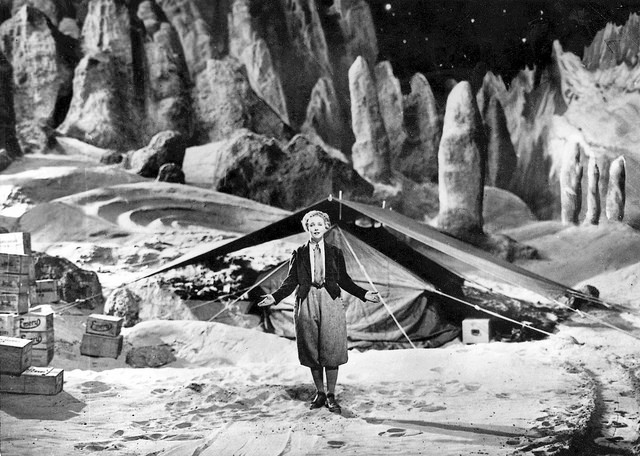
Frau Im Mond is one of the first silent movies I saw as an adult. And despite its audacious special effects I can honestly say Fritz Lang’s rocket opera was not my gateway drug to silent film. Instead I saw it to justify the décor of my recently redecorated flat. I wanted to hang an attractive film poster above my stairs; for quite some time it was going to be Metropolis, until I saw the poster for Frau Im Mond, and its iconic rocket. As a science-fiction fan, and a film buff, how could I resist this picture? However, it seemed like cheating to have a poster of a film I hadn’t seen hanging above my stairs. So that is why I saw Frau Im Mond six years ago, having bought the previous Masters Of Cinema DVD release.
Now it is back, re-released in dual format Blu-ray and DVD, and seven minutes of additional footage have been added to the film, which brings the running time up to a handsome two hours and 49 minutes. As with the recently reconstituted Metropolis, Lang takes his time but doesn’t waste a minute. It is just that for much of the film each minute could have been thirty seconds shorter, and the plotting gets in the way of what the film promises. While Frau Im Mond is a notable film in both Lang’s filmography and in the history of science-fiction cinema, it is also way too long and ponderous – considering its wonderful potential.
Written by Fritz Lang’s wife Thea Von Harbou, and based on her novel of the same name, Frau Im Mond is one part conspiracy thriller and one part science-fiction tale. And that almost equally splits the running time, with the first hour and 20 minutes being a convoluted runaround between a professor, venture capitalists, enemy agents, a fiancée and a sparky kid. The rocket from the poster – and the justification for this being the first “scientific” science-fiction film – finally appears at one hour 18 minutes and the film does pick up considerably at that point, if only to give us some effects and even better Aran jumpers.
The news certainly caught my attention. Masters of Cinema has upgraded its DVD release of Murnau’s Faust: a German Folktale (1926) to a shiny new dual-format edition. All the beauty of Faust, but in high-definition Blu-ray glory: temptation itself. The even better news is that this is a very beautiful disc indeed.
Faust has always been a feast for the eyes, from the cutting-edge 1920s special effects to the gorgeously, painterly compositions, and the Blu-ray transfer here more than does the film justice. Compared to the DVD, this is just far, far more filmic. There are rich blacks and sumptuous detail, making the most of crowd scenes and shadowy landscapes. On a biggish screen, you’ll notice a texture of soft grain, not sharp pixels. As was familiar practice in the 1920s, Murnau shot Faust with two cameras – one each for the domestic and export versions of the film. His favourite takes remained in the German print, and that is what has been restored here (the grandly gothic German intertitles remain, so you’ll have to turn the subtitles on). This is the best Faust you can get – screening this at home is a seriously impressive movie experience.
We’re an excitable bunch here at Silent London, which you have probably noticed by now. But a quiet announcement by Masters of Cinema recently caused even more whooping and merriment than usual. The classic movie imprint is releasing its gorgeous Lubitsch in Berlin box set, which had inexplicably fallen out of print. We’re big fans, big, big fans of this set, and so in a collective declaration of box set love, a group of us gathered together to review every movie in the box, one by one …
There are six films in the set, all made by the legendary Ernst Lubitsch in the earliest stages of his movie career, after he had been lured out of Max Reinhardt’s theatre company to the UFA studio. If these films are deemed less sophisticated than his later Hollywood work, then that is mostly because his subject matter is often more fanciful, his characters border on feral, and his sense of humour, at this time, in uninhibitedly mischievous. Or perhaps, because people are fools. The elusive “Lubitsch touch”, and his mastery of character, space and comedy is very much in evidence here – The Oyster Princess and Die Puppe in particular are perfectly pitched comic pantomimes. Three films in this box star the irrepressible German comic actress Ossi Oswalda – perpare to fall head over heels – a further two feature the wonderful Pola Negri and Emil Jannings makes an appearance too.
One of the films in this set, Anna Boleyn, was partially responsible for Lubitsch’s move west: it and Madame Du Barry (not in this set) found US distribution, and became unsettlingly successful on those shores. Lubitsch would bc the first established Hollywood talent to be snapped up by a Hollywood studio. Pola Negri would follow shortly after – they called it, sardonically, the “German Invasion”.
As well as the following six films, the set contains a feature-length documentary (Ernst Lubitsch in Berlin: From Schönhauser Allee to Hollywood) and some very sharply written essays. Don’t miss out.
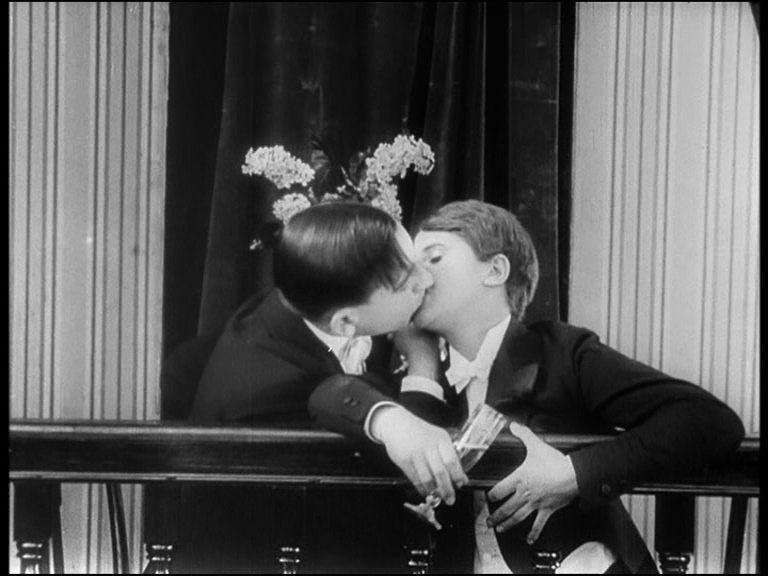
The exclamatory title of this 40-minute adventure is a lesson hard won for its heroine. One might add, she hardly wants to be a woman either – at least not her fretful elders’ idea of how a young lady in her teens, and the century’s, should be. Delightfully, other people’s ideas hardly get a look in. I Don’t Want to be a Man is a taboo-thumping caper that plots its own course through conventional ideas about gender and romance. It was early days for Weimar Berlin when this film was made, but even in this short comedy, there is lechery, bisexuality, drunkenness and decadence in abundance. And when it comes to rebellious on-screen teens, Ossi Oswalda’s flirtatious, gender-bending minx feels decidedly modern.
Ossi is a smirking teenage nightmare, a spoilt brat who smokes and plays poker with men much older than her. Banished to her room, the flirting continues through her window as her suitors contort themselves on the pavement below. When he is called away overseas, her uncle hires a new, supposedly strict, young guardian to take her firmly in hand. That the appointed dragon is a handsome young man may seem to spell trouble, but Ossi’s next move takes the story to a whole new level of larkiness.
Outraged at being grounded, Ossi decides the only possible way to enjoy a night on the tiles is in drag, so she has herself fitted for top-hat-and-tails and sneaks out of the house. I won’t give away what happens in the nightclub, and the morning after, but suffice to say that lust and confusion bloom in equal measure.
A running gag here is that as a woman, Ossi can handle herself and manipulate the men who throng her, expertly. As a man she is clueless and not a little afraid. At the tailor’s, in feminine dress, she parcels her body out to the adoring assistants who clamour to measure her up: a left arm for one, the waist for another. In the club, she is near toppled over by the women who want to dance with her. Whether Lubitsch is saying that when it comes to sex women have the upper hand, or just poking fun at the whole business of romantic chivalry matters little. That Ossi finds herself a partner who likes her both in drag, and out of it, is the happy ending that even the most “retrosexual” audience could crave.
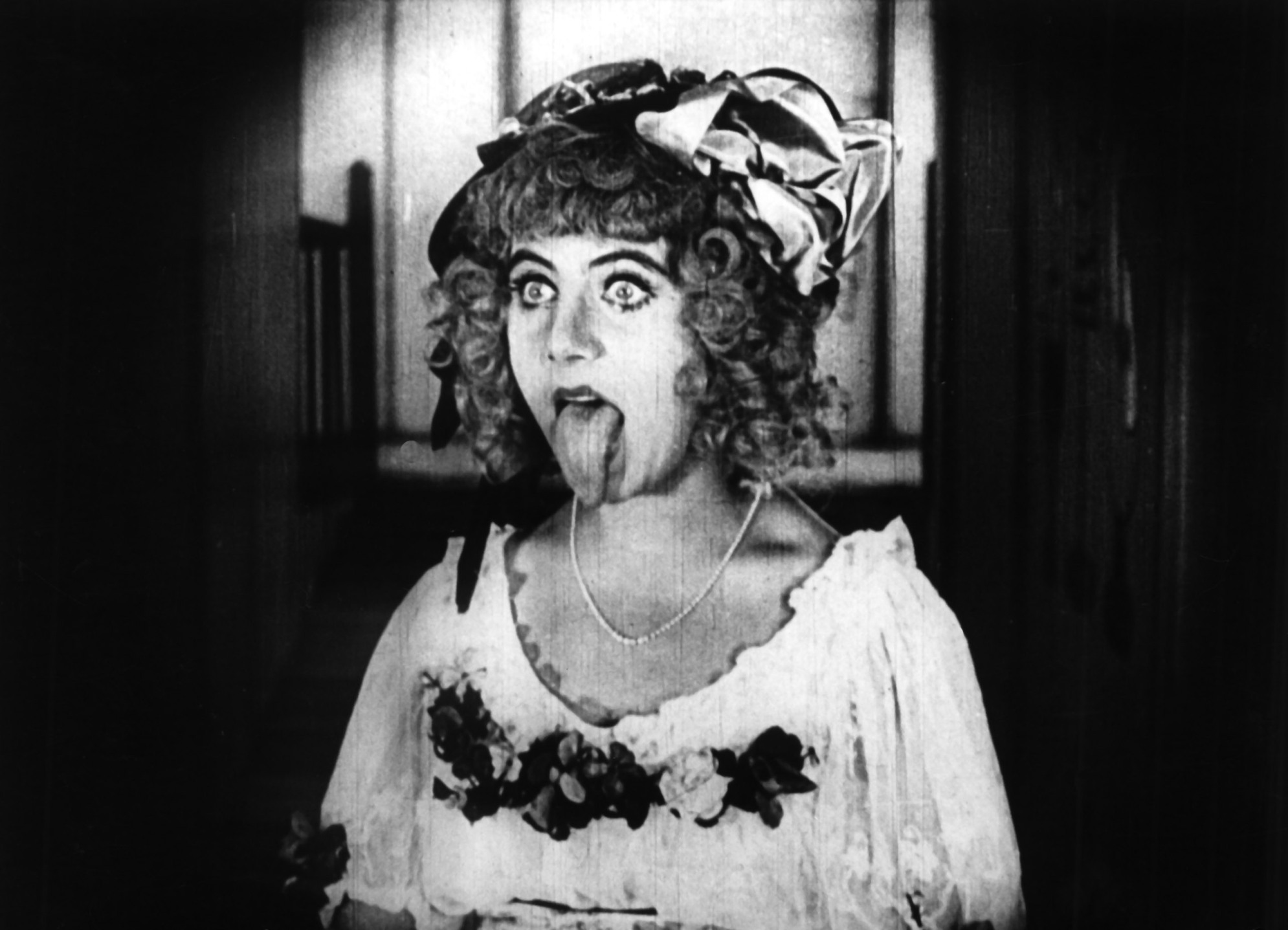
If it’s well-known that silent cinema is littered with heavily stylised classics, it’s perhaps also true that Die Puppe remains one of its most overlooked gems – a pre-Caligari classicof German artifice. Used here for comedic (rather than psychological) ends, the stylisation is no doubt employed in part to help make believable the film’s central premise: when a wealthy baron decides his nephew must marry, the local monks talk the nephew into marrying a lifelike doll so he can donate his dowry to their abbey. But what the nephew fails to realise is that the dollmaker’s puckish apprentice has broken the doll, and that his bride-to-be is in fact the dollmaker’s daughter herself, and not her mechanical counterpart …
If that all sounds rather silly … well, it is. But the nephew’s response to his uncle questioning the doll’s (literal) stiffness (“She’s from an old patrician family. They’re all very formal”) reminds us that this is as much social commentary as social comedy. The film is at its most pointed when representing the hypocrisy and greed of the monks, who gorge themselves on food and wine while claiming poverty (their response to the news of the 300,000 francs dowry: “Do you know how many pork knuckles you could eat for that!”).
The film was a vehicle for then-popular German actress Ossi Oswalda, who excels here in the dual role of the doll and the dollmaker’s daughter. But the film itself undoubtedly belongs to Lubitsch; he appears first onscreen, unpacking what is to become the scenery of the film’s opening scene. The film is subtitled “Four amusing acts from a toy chest”, and if the four acts never quite emerge in the print presented here, the rest of that description seems particularly accurate. Moving beyond stylisation-for-the-sake-of-it, Lubitsch seems to be delighting in the very medium of cinema and the possibilities inherent in the art form (lest the film’s exuberance make us forget, Die Puppe was made in 1919). Lubitsch is director as conjurer, and the film’s reflexive and playful edge exhibits all the purest joys of the silent era – a time in which cinematic conventions were yet to come along and ruin the experimental, stylised fun.
Alex Barrett is an independent filmmaker and critic. He is currently in development with his new film, London Symphony, a silent city symphony. You can follow the project’s progress on Facebook and Twitter.
Die Austernprinzessin (1919)
Reviewed by Ewan Munro
One of the wonderful things about silent cinema is that film techniques and technologies we nowadays take for granted were still evolving. This occasionally means we get stagy affairs with huge melodramatic emotions matched to over-the-top gestural acting and a sense of decorum a hundred years removed from our own sensibilities. Yet for every ten of those there’s a film like Die Austernprinzessin: constantly inventive, filled with laughs, and with a satirical sense that doesn’t feel hugely out of step with anything being made today. The director is Ernst Lubitsch, who at this point was still making his name. He even had a brand of sorts, the “Lubitsch touch”. Whatever that may be, he certainly does have a way with a film, no less in this early effort than in many of his “mature” works.
At the heart of The Oyster Princess is a pretty full-blooded critique of capitalism; there’s certainly no pulling punches here. The “oyster king”, Mr Quaker (Victor Janson), lives in a vast mansion attended by numerous servants and has a spoilt daughter, Ossi (Ossi Oswalda). Until the very end, all that either seems to care about is this privileged life they live. Quaker’s catchphrase, delivered at the end of each of the movie’s four acts, is “that doesn’t impress me”. Ossi, meanwhile, who kicks off the plot with her demand to marry a prince, susbequently pays only scant attention to either the man or the relationship. Hers is an entitled world of passing whims, and she soon decides that this prince she’s been given isn’t one she likes very much after all.
But this is a comedy of manners, and part of the joke is that Prince Nucki (Harry Liedtke) has fallen on hard times, and so has sent his valet Josef (Julius Falkenstein) to check out Mr Quaker’s offer. This somewhat inevitably leads to him being confused with the prince, and given the frivolous way the Quakers live, perhaps that’s little surprise. The opening shot shows Mr Quaker smoking an unreasonably large cigar, attended by a phalanx of obsequious black servants, while his every word is hung upon by an array of secretaries. This obscene overkill – Quaker doesn’t need so many women to transcribe his dictation, nor so many handservants, as most of them have nothing to do – quickly becomes a running joke. There are serried ranks of servants to help Ossi into and out of her bath, and serving a meal is like a military drill. This is obscenely gluttonous excess for its own sake – and for our amusement.
Although the technical limitations of the period mean the camera is still largely fixed, it’s hardly noticeable thanks to a lightness of touch in orchestrating the action. Characters move around incessantly. So vast is Quaker’s mansion that he, attended by his many servants, jogs from room to room. His daughter meanwhile is a whirligig of emotion, throwing everything around petulantly. At one point there’s even a dance sequence – “a foxtrot epidemic breaks out!” – allowing for various groupings around the mansion until eventually everyone, right down to the kitchen servants, is seen dancing.
It may not be surprising to devotees of Lubitsch’s work, but for one new to his cinema, what’s astonishing is that almost every moment in the film’s concise hour-long running time is filled with inventiveness and comic inspiration. Shots that just prosaically bridge a gap between two scenes are not for Lubitsch, and (as mentioned above) even moving between rooms is done with a humorous touch. The performances are also uniformly delightful, particularly Oswalda’s cheeky impishness and Janson’s amusingly affected stoicism.
Once again, this is another excellent Masters of Cinema release, with an exemplary transfer to DVD and a rather jaunty score perfectly matched to the action on screen. This isn’t just an excellent primer to Lubitsch’s cinema, or to silent screen comedy. It’s a marvel of a film and a joy to watch.
Of the silent genres which seem to have dissipated when sound came, the Sheikh & Sex desert romances can seem the most alien to us now. Not just for their broadly orientalist strokes, any silent film aficionado has to swallow to some degree the racial and jingoistic views of the time, but there is often a degree of exotic ethnography going on, from Valentino’s tea-towel headgear to the huge harems on display. In depicting a non-Christian world view, film companies could have their cake and eat it, tell highly sexualised stories without condoning them.
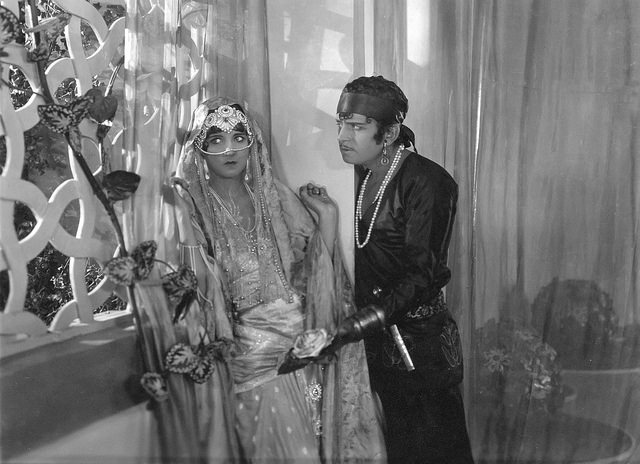
Sumurun, with all of its high melodrama, probably sits closer to Lubitsch’s sex comedies such as The Oyster Princess, but its source material and setting means that narratively at least there is a sense that the story is the most important thing. Whilst the film is invested in the capricious evil of its sheikh, and definitely leaning on the fetishisation of the harem and exotic dancing, Lubitsch does not seem to be moralising here. Instead he is using his setting as an alien world, building a blockbuster that throws all the spectacle it can muster on to the screen whilst trying to display humanity in all its characters.
This means that tonally, Sumurun is a bit of a mess. It lurches from slapstick to scenes of murder and ends with some high tragedy. This doesn’t really matter though, as the narrative thread is strong and like any blockbuster there is barely a moment where Lubitsch doesn’t put something funny, novel or just plain beautiful at the screen. Pola Negri is appropriately captivating as the travelling dancer who instigates the ruckus, but Jenny Hasselqvist’s Sumurun is suitably empathic in the title role as the seemingly doomed courtesan. The film, however, belongs to Lubitsch the actor, whose Hunchback both observes and drives the story but also holds the most significant emotional beats (and some of the broadest comedy). He does a lot of eyebrow acting, and is extremely watchable in the role. That said, by the time people are locked in trunks, and are being chased around the elaborate set like a Hanna-Barbera cartoon, the hand of Lubitsch the director is clearly more prominent.
Much like its source material, Sumurun is invested in entertaining a wide audience in the broadest way. It has a Shakespearean sweep in its tragedy, but is at its heart a comedy – and quite a silly one in places. That it works is due to Lubitsch taking rather broad archetypes, particularly his own, and breathing life into them, transforming them from comedy to tragedy. It feels apt that the last shot of the film is Lubitsch himself, in his final acting role, mournfully strumming a lute; he will go on to entertain behind the camera, but he gives himself a pretty meaty final role.
For the star of a story about a sexy tempter lady, Anne Boleyn (Henny Porten) doesn’t get to do a lot of tempting. The queens on either side of her have much more fun: her predecessor Catherine of Aragon (Hedwig Pauly-Winterstein) gets some spectacular eye rolls and glares in, and successor Jane Seymour (Aud Egede-Nissen) interestingly takes up the traditional “Anne Boleyn” role of the ambitious, flirtatious younger woman who lures away Henry VIII (Emil Jannings). Porten’s Anne is very Good and Virtuous and Tragic. Far from scheming to get Henry and the crown, she is pressured into the marriage by the king and her uncle Norfolk (Ludwig Hartau). The best shot of the film is of the two men exchanging glances over her head, then talking rapidly at her from both sides as she slips into a half-swoon between them.
The three leads are introduced with very successful contrasts: Anne’s energy as she runs across a courtyard to greet her fiancé Henry Norris (Paul Hartmann); Henry’s joie de vivre as he licks his fingers and drinks from a tankard bigger than his head; and Catherine’s ritual, stultified staging of monarchy in the court.
Lubitsch frames Anne in playful boxes throughout the film. The opening scene sees her in a rocking cabin on the sea from France, she kisses Norris over a half-door and meets Henry VIII when the train of her dress is caught in a door. The set traps her but the camera dangles the possibility of escape. After she is sentenced to death, she begins to stride toward the camera, nearly faces us head-on, but chickens out and ducks away down a side corridor.
As a little bonus, the new score has a few jokes for early modern music fans, as “Pastimes with good company” – a tune Henry VIII wrote himself – is heard at key moments: at the king’s introduction, sitting at a Round Table (do you see) with his knights, at a May fair and later in a minor key as things start to go wrong for Anne.
I suspect it’s a bit long and worthy for those who know Lubitsch for his comedies, but as a historical costume drama Anna Boleyn is a lot quicker and wittier than most contemporaneous films of that genre, and frankly most modern ones too.
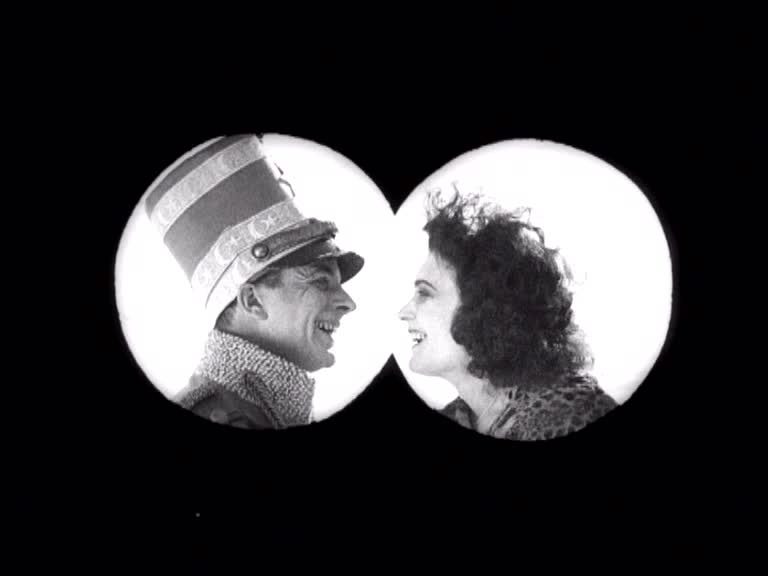
Ernst Lubitsch has referred to Die Bergkatze as his own personal favourite, and it’s easy to see why. This picture – which proudly proclaims itself as “A grotesque in four acts” – marks the peak of his silent era creativity. The film’s production design recalls The Cabinet of Dr Caligari with its spiral staircases and unusual angles, but filtered through the fantastic storybook style of Lubitsch’s Die Puppe, which he pushes to extremes here. We see the story unfold through a series of bizarre irises, from conventional circles to oblongs and squiggly outlines. Sometimes scenes are framed by an iris that suggests we’re viewing the action through a hole torn hastily in a sheet. It’s a suitably wild approach for the raucous tale Lubitsch wants to tell.
Die Bergkatze is the story of a soldier (Paul Heidemann) who finds himself caught between two women, one a captain’s eligible daughter (Edith Meller) and the other a gypsy girl – the “wildcat” of the title – who lives in the mountains with a gang of bandits. Her name is Rischka and she is played by Pola Negri, whose performance here almost matches the unrestrained exuberance of Ossi Oswalda in her collaborations with Lubitsch. Negri is lively and tough, manhandling and whipping the men around her into submission and stealing the leading man’s trousers within minutes of meeting him. While she takes steps towards a more feminine demeanour throughout the film, memorably trying on dresses and dousing herself in perfume, her more abrasive edges are never smoothed away – I loved the way she slapped away a proffered champagne glass before swigging straight from the bottle.
Lubitsch keeps undercutting convention in this manner. When we first see a crowd form to see off Heidemann’s Lieutenant Alexis, we might assume that it consists of people awed by his heroism in battle, but then we see that the throng is populated entirely by tearful women who want to thank “Alexis the Seducer” for the good times. Die Bergkatze is a gleefully entertaining romantic farce, with all of the wit and sauciness that characterises Lubitsch’s most distinctive comedies, but he also finds room for some unexpectedly touching interludes. A dream sequence that sees Rischka’s ghostly presence cavorting with Alexis is one of the loveliest scenes the director ever filmed.















 Silent London