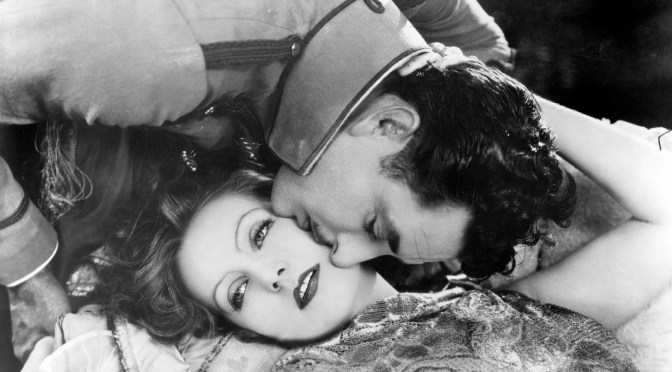
Is it a little hot in here… or is it just me? Outside the weather is turning autumnal, inside here I am contemplating the sizzling lineup for HippFest’s Taste of Silents season, which opens next month. Complete with Greta Garbo and John Gilbert sharing a cigarette, and much more, in Flesh and the Devil (Clarence Brown, 1926).
Stephen Horne will accompany Flesh and the Devil on piano and flute at the beautiful Hippodrome Cinema in Bo’ness, Falkirk on 20 September. This event will open the programme, which has been curated by the Hippodrome Silent Film Festival’s Young Programmers: an educational programme to support future cinema programmers and film exhibitors.
Thank you for bearing wth me during a few several technical glitches related to this year’s poll. Relax, enjoy your glass of wine-flavoured carbonated beverage, and welcome to our glittering award ceremony. I have counted the votes, and I am ready to announce the winners of the Silent London Poll of 2024!
Congratulations to all the people mentioned below – as ever, these categories were bursting at the seams with excellent, worthy nominations and a great reminder of how exciting the global silent film scene is. Thank you for all your votes, and your comments, especially.
Without further ado, let me open this giant stack of golden envelopes. Here are your winners.
1. Best orchestral silent film screening of 2024
Your winner: The Winning of Barbara Worth (Henry King, 1926), with a score composed by Neil Brand, arranged by George Morton, conducted by Ben Palmer, performed live by the Orchestra da Camera di Pordneone, at Giornate del Cinema Muto, Pordenone
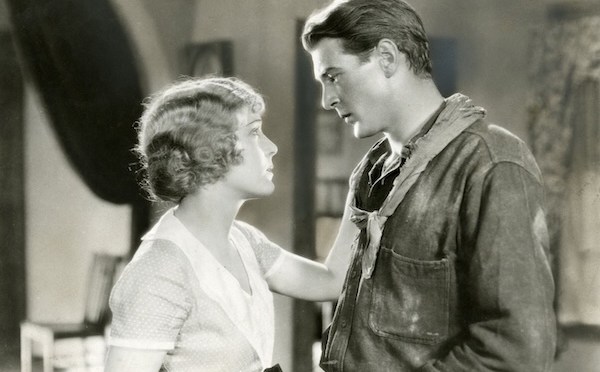
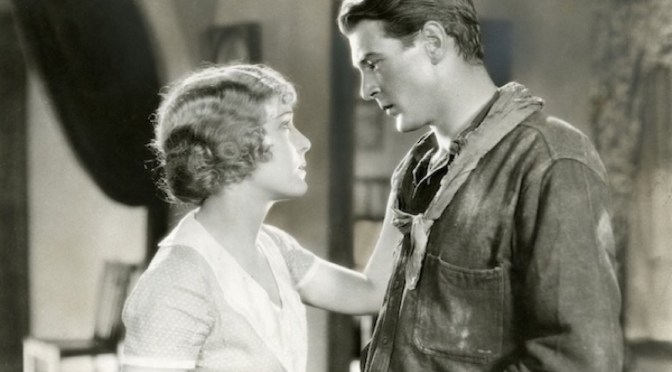
I said:“t’s a big, big movie, with the youthful star trio of Ronald Colman (on $1,750 a week), Vilma Banky (on $1,000 a week) and Gary Cooper (on $50 a week!) in a desert love triangle, and a tremendously terrifying climax, as the townsfolk run for their lives when the river bursts its manmade bounds. Plus we were to enjoy the world premiere of a wondrous new score composed by Neil Brand, arranged by George Morton, conducted by Ben Palmer, and performed live tonight by the Orchestra da Camera di Pordenone. If you know the film you will know that it is celebrated for its scale, but also that this is a Frances Marion script, with a touch of melodrama (Vilma overhearing Ronald’s confession that he won’t propose to her, but not the reason why), her pet subject of adopted children, and her love of a grand theme – here the pioneers’ battle for mastery over the elements, and capitalism’s battle for mastery over the populace. You’ll also know that between the big action scenes there are several more sedate moments, discussions of policy and payroll. As, quite frankly, we have come to expect, Brand’s score was buoyant and nimble, keeping the film on its toes, teasing out the romance and flooding (yes, I went there) the auditorium with sound during those blockbuster setpieces, starting with a sandstorm in the first reel and the deluge in the last. Timed to a T, so that image and sound met in perfect harmony, and just a joy to listen to – for what it’s worth, I think it’s a winner. Geddit?”
Lillian Gish in The Wind (1928)
2. Best silent film screening with a solo musician or small ensemble of 2024
Stand outside Alexandra Palace on a clear evening with a full moon, as I did last night, and you can take in the whole city. London may be as silent as it gets from this vantage point, but the landscape is loud in its own way. The glittering towers that dominate the skyline were all built in the last 50, probably 20 years. The red lights dotted in among them are all cranes, standing by to change the shape of the city once again. Scan the horizon, and you’ll be reassured perhaps to see the dome of St Paul’s – a symbol of continuity, a connection between modern times and the age of Christopher Wren, going back to 1710.
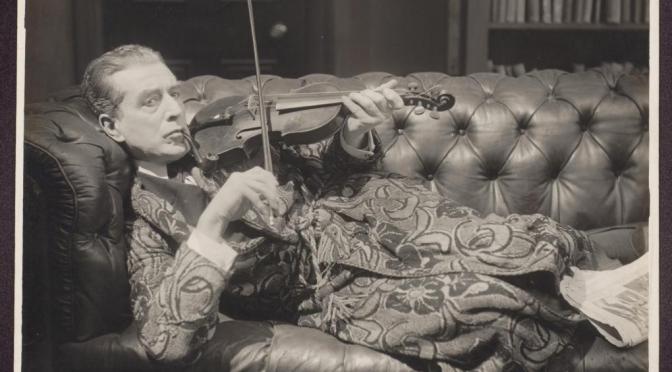
Swivel on your heel, and pivot to 1873 or thereabouts, when Ally Pally itself, the “People’s Palace” first opened. I had a date to keep at the theatre, recently restored to what the owners call a state of “arrested decay” and reopened to the public. We were there to travel back to a fuzzy combination of the 1880s and the 1920s, to revel in the BFI London Film Festival’s latest archive presentation: Silent Sherlock.
A confession. I was conspiring over breakfast, and reader, this was a two-cappuccino problem. The upshot? I was a little late in getting started with the screenings today. But I certainly knew that I was going to be up late, with the gala… and the end-of-festival celebrations!
My sunny morning stroll to Cinemazero was rewarded with a simply terrific film from Uzbekistan. In Her Right (Grigorii Cherniak, 1930), a group of workers from the collective farm are sent to the factory to boost the workforce there, and to learn those valuable Soviet methods. One woman from the village defies her husband and sheds her burqa to join them. It’s a life-changing experience and not only does she gain independence through work, but she inspires others to do the same, through a filmed speech, that the workers clamour to watch, even after he enraged husband slashes the screen. Even with her “throat” cut, in a silent film, she continues to speak her truth. So you have noted already that this is once again pro-Soviet, anti-Islam propaganda in intent, but this is also a remarkable film in style and action. Our Hollywood friends would applaud the excellent, and indeed poignant, action sequence in which our heroine runs to jump on the train to the factory, is repeatedly shoved away by male guards and then, when it seems she has finally found a helping female hand, her husband leaps – for a second we think he has dragged her form the moving train, but no, he only has her coat in his hands. Nail-biting stuff. And the scene in which they watch the film is also very strong. Günter Buchwald at the keys for this one, keeping the energy at exactly the right pace.
Sometimes the old songs are the best, right? Familiarity can breed contentment. And nowhere will you find more consensus on that than here in Pordenone. So today I was happy to rewatch a couple of silent films I love, spend a little time with one of my all-time favourite silent stars. And then see something entirely new to me!
First, the old friends. This morning, we ventured back into the imaginations of Maurice Tourneur, and Ben Carré, with the 1918 adaptation of Maurice Maeterlinck’s The Blue Bird. Such a strange and beautiful, terrifying and wholesome journey into the shadow world of dreams, where bread and sugar and water have souls, the dogs and cats can talk, lost grandparents always have the table set for supper and babies wait impatiently to be born. If you have not seen this, you possibly can’t imagine quite how weirdly pretty it is. Variety’s critic wrote: “It is quite safe to assert that nothing quite like Director Tourneur’s work has ever been shown on the screen.” So hats off to Tourneur and Carré, and doubly so to Neil Brand and Elizabeth-Jane Baldry, who transported us to an enchanted realm with their music. I wrote about the film in more detail here, should you be interested.
Back to school time! Here’s a roundup of the silent movie news I really want to share with you as summer turns into autumn. Just think how many of these forthcoming delights you could enjoy for less than the cost of a dynamically priced Oasis ticket.
Screenings and festivals
I missed StummFilmTage Bonn this year again – both in person and online. But Paul Joyce and Paul Cuff both kept us up to date with their fabulous blogs.
The fashionable set is always the first to name a trend. So if you know you know, but if you don’t know you need to know that 2024 is the year of Coquette Core, a prettified aesthetic that can be boiled down to: put a bow on it. That’s technically a beribboned bow with a lower-case b, not a Clara Capital-B-Bow, but the difference is only nominal. At this year’s Hippodrome Silent Film Festival we celebrated the age of the flapper, with all things frilly, feminine and flirtatious.
If you wanted to keep up with the new womenswear trends in the 1920s and 1930s, the cinemagazine Eve’s Film Review would have been your bible, and one of my favourite events at this year’s Hippfest was Jenny Hammerton’s presentation on these witty and inventive female-interest dispatches. Here, every cinemagoer could truly learn how to be “a modern”, and more specifically, how to save your stockings from mud-spatters, advice that all of us in Bo’ness could truly use.
Excuse me while I push at an open door. Who here would like to see one of the world’s finest silent film experts and accompanists host a show dedicated to the comic brilliance of Laurel and Hardy? Ah, that’s all of you. Well good news, friends, as Neil Brand is taking his An Evening with Laurel and Hardy show on the road across Britain. And I mean across Britain.
Brand, his piano, and his encyclopaedic knowledge of Stan and Ollie, will set you up for a side-splitting dive into Hollywood’s golden age of slapstick. You may just learn something, but laughs are guaranteed.
“Join Neil Brand, composer, writer, broadcaster, musician who is a world expert on silent film & silent comedy with his all-new show about the immortal comedy duo. Fully illustrated with stills, clips & Neil’s superlative piano accompaniment, this show promises gales of laughter throughout. “
You don’t have to be superstitious to notice when the date is Friday the 13th, and conduct yourself cautiously as a result. And of course I am not superstitious – unless you count the fact that I am convinced I willed this evening’s gala into existence by the power of my mind. But that’s a story for later on…
This August, silent film fans in search of a summer holiday should take trip to sunny West Sussex, and the Chichester International Film Festival. The festival is now in its 31st year, and in 2023 Roger Gibson steps down as Artistic Director and Programmer of the festival, a post he has held for many years. It’s no coincidence that there are a few of his favourite films in the programme, including some of the silent classics.
In fact, there is an especially strong lineup of silent cinema with live music at the festival this year, which runs 4-27 August. The silent film programme comprises Neil Brand’s acclaimed Laurel and Hardy show, John Sweeney playing for Gibson’s choice The Italian Straw Hat, Ben Hall accompanying The Phantom of the Opera on the St John’s Chapel organ, and the Buster Plays Buster show featuring Steamboat Bill, Jr. There’s also a screening of Harold Lloyd’s jaw-dropping stunt comedy Safety Last!.
The Phantom of the Opera
Here is the full silent lineup, and links for booking tickets, which will be on sale on Friday 21 July.
13 & 26 AugustSafety Last!, New Park Cinema, Chichester – book here.
15 August The Italian Straw Hat with John Sweeney, Guildhall, Priory Park, Chichester – book here.
16 August Buster Plays Buster, Guildhall, Priory Park, Chichester – book here.
22 August Neil Brand Presents Laurel and Hardy, New Park Cinema, Chichester – book here.
25 AugustThe Phantom of the Opera, St John’s Chapel, Chichester – book here.
I am also giving a talk at the festival, on the career of Cate Blanchett, who is the subject of a retrospective strand, and strikes permitting, Roger and I will be leading a Q&A with the actress after a screening of the fabulous Tár. Both of these events are on 21 August.
Silent London will always be free to all readers. If you enjoy checking in with the site, including reports from silent film festivals, features and reviews, please consider shouting me a coffee on my Ko-Fi page.
It’s time to make a full confession. The title of this blog is a terrible deflection from the truth. I am, indeed, a northerner. Please forgive the vagueness. I am from Merseyside, but my family have lived in various places upwards from the middle of England, going back generations. So our accents may wander, but our vowels are consistently flatter than a Yorkshireman’s cap.
All of which means that Echoes of the North: Four Chapters in Time, a new archival film from the Yorkshire Silent Film Festival, is sweeter to me than a barm cake stuffed with hot chips and a mug of strong tea. The film is a stirring collage of silent film footage of northern England, bolstered with a charismatic brass-band score composed by Neil Brand (a southerner, but don’t hold it against him). The score is played expertly by the legendary Brighouse and Rastrick Band, conducted by Ben Palmer. Echoes of the North is produced by YSFF’s Jonny Best and edited by Andy Burns from more than 100 pieces of film. Best of all, it is free to watch on YouTube.
You know how much I love the Bo’ness bonanza that is the Hippodrome Silent Film Festival. So this week I was honoured to appear with José Arroyo and Richard Hayne on their fantastic podcast Thinking Aloud About Film for a special episode dedicated to all things Hippfest 2022.
Hippfest returns! You don’t know how happy it makes me to think about watching silent films with live music at the stunning Hippodrome in Bo’Ness.
The festival is held from Wednesday 16 to Sunday 20 March and the full toothsome lineup just dropped, as they say. Here are a few highlights, some of which have been postponed from the sadly cancelled 2020 edition. I am so ready.
The Dodge Brothers accompany FW Murnau’s City Girl on Saturday night – this is the Scottish premiere of their brilliant score for this incredible, jaw-dropping Hollywood silent.
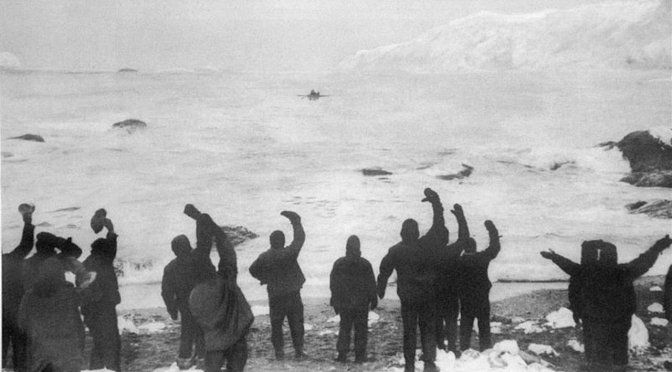
Wonderful news from a true friend of Silent London. Musician, broadcaster, writer and man of many talents Neil Brand has composed a new orchestral score for a truly staggering British silent film, South (1919) – the gripping document of Ernest Shackleton’s journey to the Antarctic, with stunning photography by Frank Hurley. It is the highlight of a BFI Southbank celebration of British explorers and the films that captured their endeavours. Here’s more about the season.
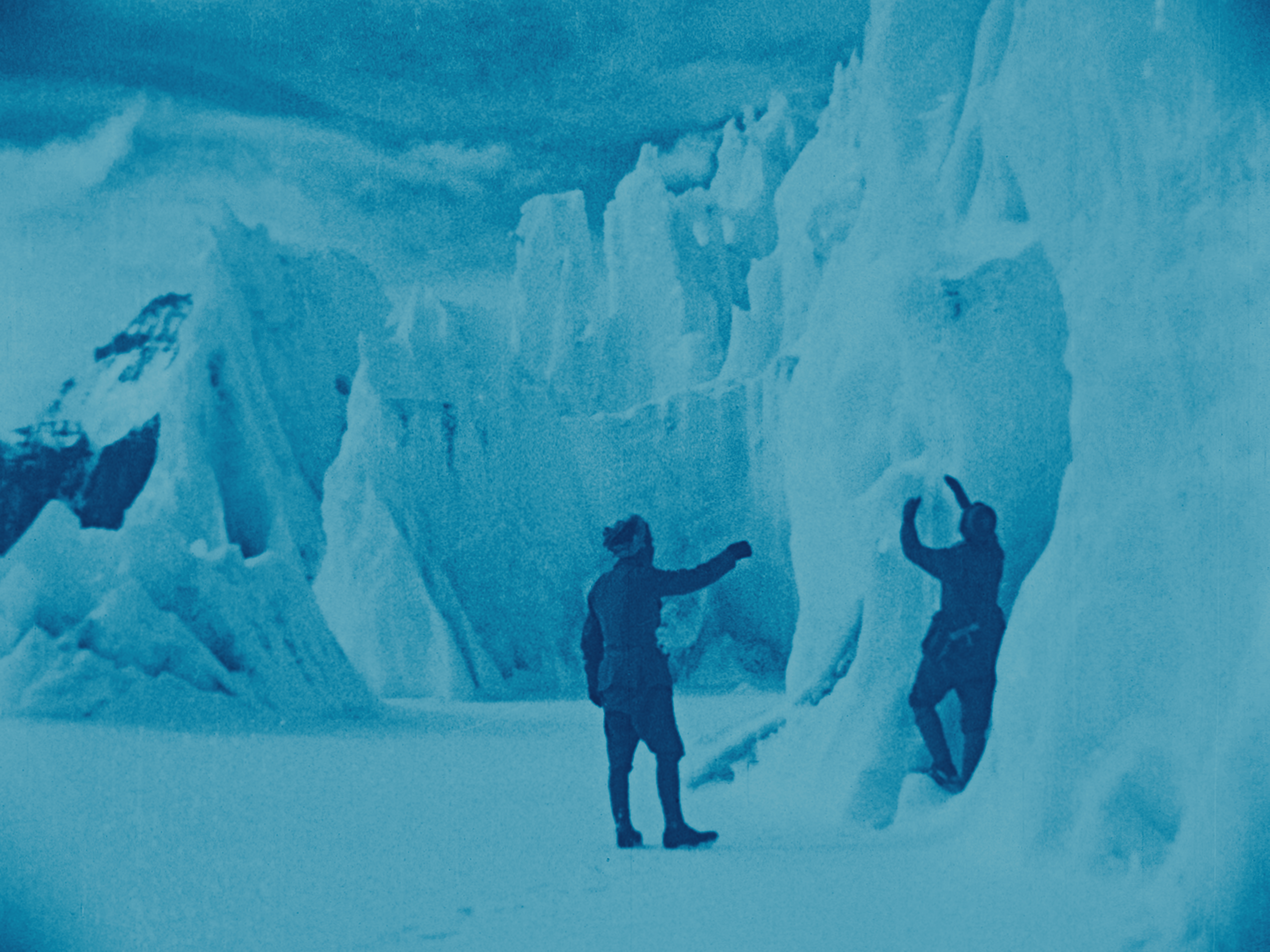
On 5 January 1922, the ‘heroic age’ of Antarctic exploration drew to a symbolic close with the death of Anglo-Irish explorer Sir Ernest Shackleton. Marking both this centenary, and that of Britain’s first attempt to reach the summit of Mount Everest, the BFI presents TO THE ENDS OF THE EARTH: EXPLORATION AND ENDURANCE ON FILM, a season at BFI Southbank throughout January, with associated film releases in cinemas and for home entertainment. There will be themed collections on BFI Player (available from 5 January) and in the BFI Mediatheque.
The Epic of Everest (1924)
And yes, there will be plenty of silent film in the season:
In the 35 years that I have been a silent film accompanist, I have been privileged to have a front-row seat for all the major discoveries of early cinema during that time. I have seen films come and go, attitudes shift, and loyalties become challenged, and never more so than at Le Giornate del Cinema Muto, Pordenone, the spiritual home and trade show of our industry. There and elsewhere, I have tried never to stop learning, hearing from people vastly more experienced than me about films I thought I would never get to see, and, from time to time, films I should avoid.
This is my tenth Giornate, which means I have graduated from newbie, all the way to novice, but also that I have been present for a quarter of the festival’s history. This is the 40th Pordenone Silent Film Festival – an annual celebration of silent cinema that began with a short retrospective of Max Linder films at Cinemazero in 1982, viewed by around eight people. Tonight in the Verdi, it seemed like every other seat was taken for a rendez-vous with Linder.
The last night of Pordenone is always bittersweet – the fun is over for another year. There are bags to be packed and it’s time to make one’s journey home, marathons and rail strikes permitting.
The same melancholy accompanied the closing of the 39th Limited Edition, but there’s a note of triumph too. The online version snatched victory from the jaws of defeat, you might say. Fewer films, of course, and none of the bonhomie that brews in the Verdi and the Posta, but something else. A celebration of the global silent film community.
The Giornate welcomed twice as many accredited delegates as usual this year. Many of those will be people who can’t usually travel to Italy, but perhaps there are some among them who might visit for the first time in person next year – the dates are 2-9 October 2021 people, mark it in your diaries. The Limited Edition has been a great advertisement for the real deal.
Day Eight
Three things I can’t resist: a film about a ballerina, a Nordisk romantic drama from the early teens, and accompaniment by John Sweeney. So although I had an elsewhere to be on Saturday, I raced home to catch up with Balletten Datter (Holger-Madsen, 1913). German dancer Rita Sacchetto, known for her Tanzbilder dance interpretations of famous works of art, plays Odette, a feted ballerina who gives up the stage to marry a count. But the footlights are calling, and jealousy is festering between her titled husband and her dance director …
The absolute highlight was a solo scene in which Sacchetto plays dressup in her old stage gear in front of the mirror. A joyous diva moment, thrilling acted and deftly staged of course. This was, I fear, a silly film. But I loved it and the Danish Film Archive is to be credited for its recent swath of first-rate digital restorations, and for making them so accessible in this of all years. Sweeney, of course, did us proud with a film that swung between on and off-stage sequences – he made it all feel like a dance.
Now remind me, did I mention already that I was in Athens recently? Yes, Athens, the cradle of western civilisation. Well I was. And today I returned there via the magic of silent cinema …
Day Five
But first, an audience with the maestro. I was lucky enough to catch the masterclass today and so I spent a happy hour listening to Mr Neil Brand discussing his career and approach to silent cinema accompaniment. His explanation of how to read a scene backs up my theory that the musicians have all the best critical insights when it comes to silent cinema. It’s all about close reading, and rolling with the narrative punches. Still, catch up with this for yourself if you can – Neil has far more interesting things to say than I do.
I am delighted to share some very welcome news. Personally, I was really sorry that Hippfest had to be cancelled this year – a week or two earlier and it would have been fine. It’s no secret that it’s one of my favourite festivals, so I am already excited about returning to Bo’ness in 2021.
So I am chuffed to my boots to let you know that on Saturday 4 July, at 8pm (BST) Hippfest will be screening a classic silent horror movie with live accompaniment by the maestro Neil Brand on YouTube. That’s what I call a Saturday night. Continue reading Hippfest at home: horribly good news→
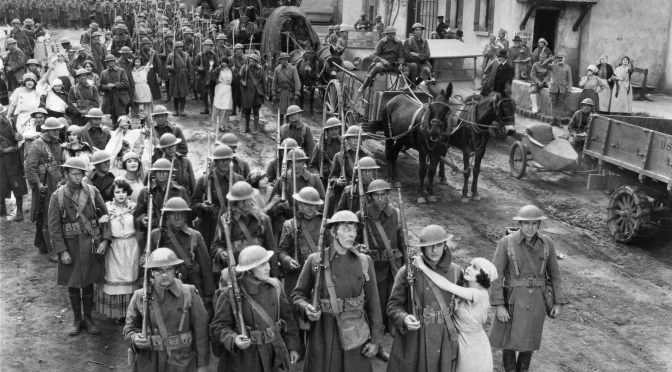
This is a guest post for Silent London by Neil Brand, writer, composer, silent film accompanist and TV and radio presenter. The Big Parade screens at BFI Southbank on 2 February 2020 with musical accompaniment by Neil Brand and an introduction by author Michael Hammond.
In 2006 my wife and I experienced a very personal, very deep loss. Happy events since have well overtaken the pain it involved, but it occurred just as I was about to leave to play for the Giornate del Cinema Muto in Sacile and I had to delay my arrival there until the Monday. Two days later I played The Big Parade. It was last thing on a midweek night, I had asked for the gig and nobody, least of all me, was expecting anything special.
The morning after, as I looked back in horror at what I can only describe as a traumatic experience, I felt that I had to write a document that could be given to the audience at that screening, explaining a few things. With the permission and profound support of my pianist colleagues, and particularly Giornate director David Robinson, I wrote this… Continue reading ‘Hopeless destruction’: Neil Brand looks back on The Big Parade→




 Silent London