Tag Archives: Pordenone

The Silent London Poll of 2024: And the winners are …

Thank you for bearing wth me during a few several technical glitches related to this year’s poll. Relax, enjoy your glass of wine-flavoured carbonated beverage, and welcome to our glittering award ceremony. I have counted the votes, and I am ready to announce the winners of the Silent London Poll of 2024!

Congratulations to all the people mentioned below – as ever, these categories were bursting at the seams with excellent, worthy nominations and a great reminder of how exciting the global silent film scene is. Thank you for all your votes, and your comments, especially.

Without further ado, let me open this giant stack of golden envelopes. Here are your winners.

1. Best orchestral silent film screening of 2024

Your winner: The Winning of Barbara Worth (Henry King, 1926), with a score composed by Neil Brand, arranged by George Morton, conducted by Ben Palmer,  performed live by the Orchestra da Camera di Pordneone, at Giornate del Cinema Muto, Pordenone

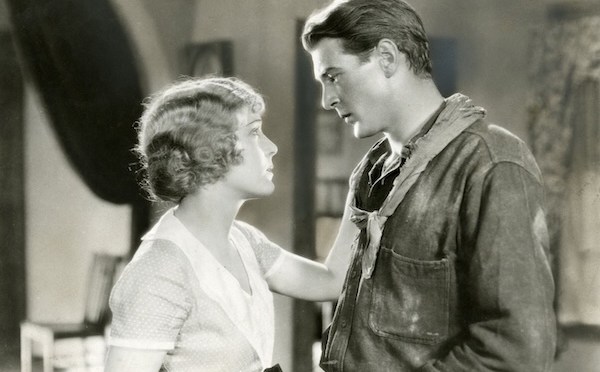
I said: “t’s a big, big movie, with the youthful star trio of Ronald Colman (on $1,750 a week), Vilma Banky (on $1,000 a week) and Gary Cooper (on $50 a week!) in a desert love triangle, and a tremendously terrifying climax, as the townsfolk run for their lives when the river bursts its manmade bounds. Plus we were to enjoy the world premiere of a wondrous new score composed by Neil Brand, arranged by George Morton, conducted by Ben Palmer, and performed live tonight by the Orchestra da Camera di Pordenone. If you know the film you will know that it is celebrated for its scale, but also that this is a Frances Marion script, with a touch of melodrama (Vilma overhearing Ronald’s confession that he won’t propose to her, but not the reason why), her pet subject of adopted children, and her love of a grand theme – here the pioneers’ battle for mastery over the elements, and capitalism’s battle for mastery over the populace. You’ll also know that between the big action scenes there are several more sedate moments, discussions of policy and payroll. As, quite frankly, we have come to expect, Brand’s score was buoyant and nimble, keeping the film on its toes, teasing out the romance and flooding (yes, I went there) the auditorium with sound during those blockbuster setpieces, starting with a sandstorm in the first reel and the deluge in the last. Timed to a T, so that image and sound met in perfect harmony, and just a joy to listen to – for what it’s worth, I think it’s a winner. Geddit?”

Lillian Gish in The Wind (1928)

2. Best silent film screening with a solo musician or small ensemble of 2024

Continue reading The Silent London Poll of 2024: And the winners are …

Sine Nomine: Unseen and unidentified silent films at Pordenone 2024

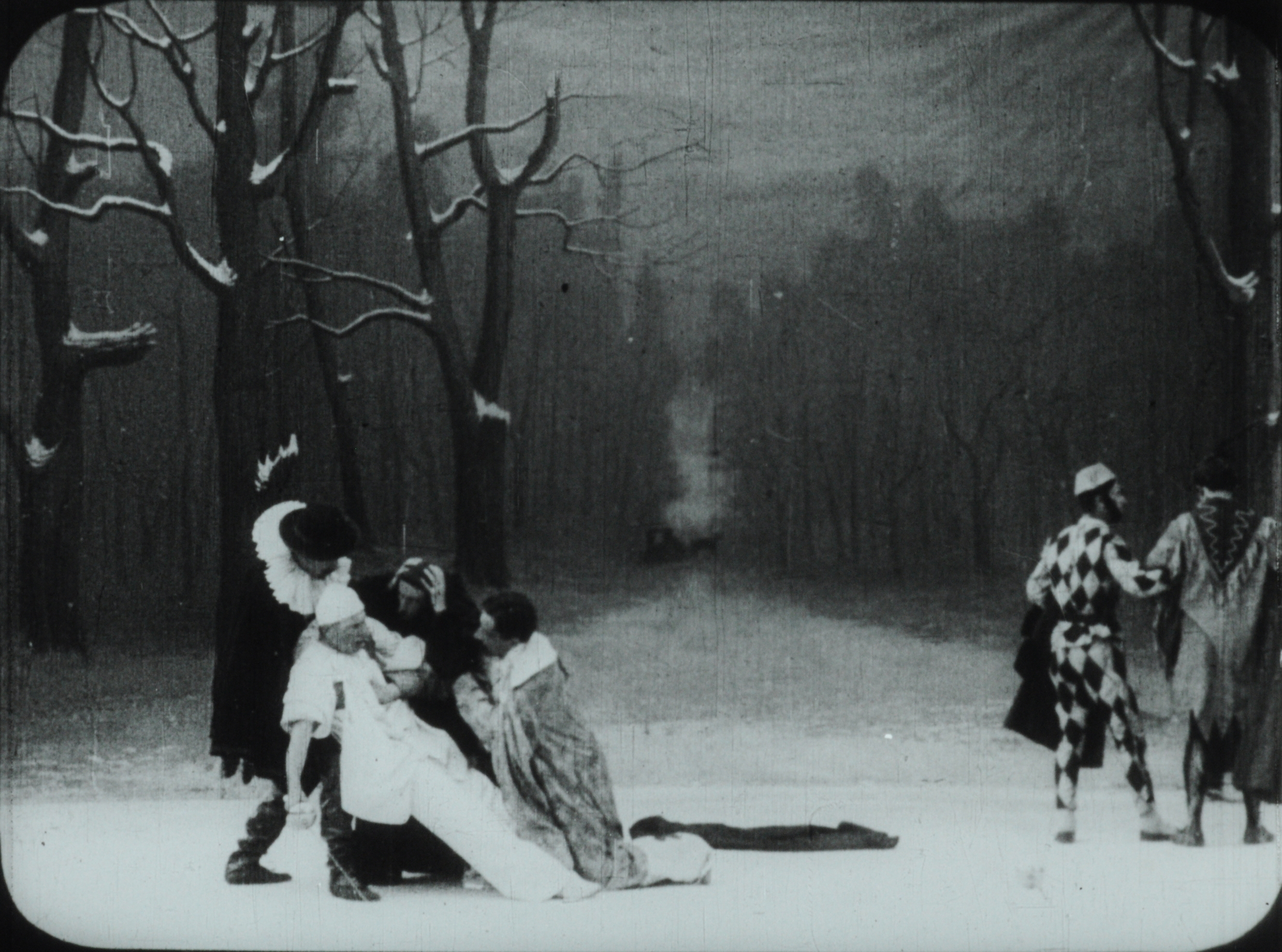
Can YOU help put names to 14 unidentified films screening at this year’s Giornate del Cinema Muto? The festival is asking for your contribution to a very exciting project. Elif Rongen-Kaynakçi explains more.

The story goes that in the early days of the Giornate del Cinema Muto, a small group of film historians sat in a theatre, watched films arriving from different archives from around the world, and identified them by shouting out the names of the actors and actresses appearing on the screen. Whether true or somewhat apocryphal, this is still an appealing idea for film historians and archivists alike. Surely, there are still many unidentified films in the archives, and what better resource in the world than the combined brainpower of the Pordenone crowd would be able to identify them? Following on the trail of exciting, successful, and fun initiatives like the LostFilms.eu portal and various archival YouTube channels, a couple of try-out sessions held by Eye Filmmuseum, and hugely inspired by the “Mostly Lost” Workshops held at the Library of Congress Conservation Center in Virginia from 2012 to 2019, we are launching a film identification thread at this year’s Giornate.

This year 14 films, sourced from 6 archives, each individually numbered, will be screened as shorts before features scattered through the week. The catalogue notes about them have been written by the archivists concerned, providing as much information as possible about the material, its provenance, and any contextual information that might be helpful for identification. Still images are provided as memory aids where possible. We encourage you to make your suggestions in various ways; whether in discussions during lunch or dinner, but also on the white board at the festival hospitality office, here on this Silent London page, or the “Pordenone People” Facebook group. Please provide evidence when you can, whether to support your suggestions or to prove a theory wrong. Please explain why you think in a certain direction, or why you’d rule out some options. And don’t forget to share with us the sources you are using to support your theory.

Continue reading Sine Nomine: Unseen and unidentified silent films at Pordenone 2024

Stephen Horne’s score for The Manxman: album news

As you should know by now, this blog does indeed play favourites. And Stephen Horne’s score for Hitchcock’s The Manxman (Alfred Hitchcock, 1928) is one of my all-time favourites. I loved it at the London Film Festival in 2012, and again with the orchestra in Pordenone inn 2022. Beautiful music, flavoured with folk and nourished by emotion. The film’s not bad, either.

So I am thrilled, honestly, that this wonderful score by the award-winning Stephen Horne is going to be released as an album, via Ulysses Arts. The digital version (which may include a few extras) will be released on 10 January 2025, so bookmark this link to find out full details about digital downloads, including advance singles and pre-orders.

However, for us physical-media fans, limited copies of the CD version are available now. Rumour has it that Horne may have a few of said CDs to sell in Pordenone next week. So if you’re lucky, you can stop him and buy one.

Also next week, the first digital single will be released. I listened to it while writing this post, which is probably why there are tears on my keyboard. I have no higher recommendation…

Silent bulletin: news for September 2024

Back to school time! Here’s a roundup of the silent movie news I really want to share with you as summer turns into autumn. Just think how many of these forthcoming delights you could enjoy for less than the cost of a dynamically priced Oasis ticket.

Screenings and festivals

  • I missed StummFilmTage Bonn this year again – both in person and online. But Paul Joyce and Paul Cuff both kept us up to date with their fabulous blogs.
Continue reading Silent bulletin: news for September 2024

The Silent London Poll of 2023: And the winners are …

I may be a humble blogger typing at my desk, but just imagine I am a glamorous celebrity cracking first-rate jokes while wearing a designer ballgown. I have counted the votes, and I am ready to announce the winners of the Silent London Poll of 2023!

Congratulations to all the people mentioned below – as ever, these categories were bursting with great nominations. Thank you for all your votes, and your comments, which remind us all of the passion for silent film out there.

Without further ado, let me open this giant stack of golden envelopes. Here are your winners.

1. Best orchestral silent film screening of 2023

Your winner: Stella Dallas (Henry King, 1925), with a score composed by Stephen Horne, orchestrated by Ben Palmer and performed by Orchestra del Teatro Comunale directed by Timothy Brock, in the Piazza Maggiore Bologna, as part of Il Cinema Ritrovato

I said: “Before Monday night’s screening of the original 1925 adaptation of Olive Higgins Prouty’s weepie, some people in Bologna were still dropping the names of Barbara Stanwyck and King Vidor. After Monday, the talk of the town was only Belle Bennett, Henry King and Stephen Horne, whose marvellous score, alongside Bennett’s impeccable performance, left the piazza awash with tears. Horne has long championed this film, as have I, and the new restoration from MOMA is a very welcome, and beautiful thing. I really hope more people get to see this wonderful film now. Silent melodrama really can be the very finest melodrama.”

Honourable mention: Lady Windermere’s Fan (Ernst Lubitsch, 1925), at the same festival, with Timothy Brock’s new orchestral score.

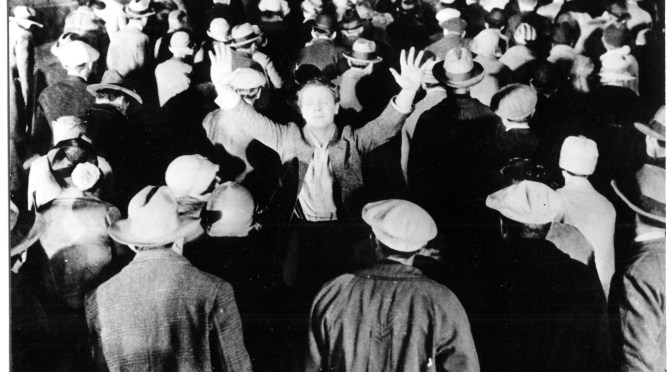
The Crowd (King Vidor, 1928)

2. Best silent film screening with a solo musician or small ensemble of 2023

Continue reading The Silent London Poll of 2023: And the winners are …

Pordenone season

Fall vibes. It’s giving pumpkin spice lattes, mellow fruitfulness, Luke Danes in a flannel shirt and the scent of a freshly sharpened pencil. This autumnal atmosphere can only mean one thing. Pack your bags, gang, we’re going to Pordenone.

The Pordenone Silent Film Festival hasn’t begun yet, it runs 7-14 October, but today the programme was announced, so let’s take a look and enjoy some shivers of anticipation. Shivers? Best put a cardigan on, it’s October.

Continue reading Pordenone season

The Silent London Poll of 2022: And the winners are …

Well done everyone! The Silent London Poll of 2022 had a record-breaking number of votes, and the winners reflect a thriving, international silent film scene. Congratulations to all the people mentioned below, some of these categories were bursting with great nominations. Thank you for all your votes. And for making me blub a little when I was typing this up.

Without further ado, let me open this giant stack of golden envelopes. Here are your winners!

The Manxman (Alfred Hitchcock, 1929)

1. Best orchestral silent film screening of 2022

Your winner: The Manxman (Alfred Hitchcock, 1929), with a score composed by Stephen Horne, orchestrated and conducted by Ben Palmer and played by Orchestra San Marco di Pordenone, with soloists Louise Hayter and Jeff Moore, at Le Giornate del Cinema Muto, Pordenone.

I said: “Horne’s music is as deft as Hitch’s camera: always gorgeous, but sometimes delicate and other times thick with portents of doom… Needless to say, Hitch and Horne brought the Verdi to its feet once more.

Honorable mention: The Unknown (Tod Browning, 1927) with a score conducted and composed by José María Serralde Ruiz, performed by Orchestra San Marco di Pordenone, , at Le Giornate del Cinema Muto, Pordenone.

La Dixième symphonie (Abel Gance, 1918)

2. Best silent film screening with a solo musician or small ensemble of 2022

Continue reading The Silent London Poll of 2022: And the winners are …

Pordenone calling: Collegium 2022

Are you under 30 and obsessed with silent film? Even a little? Would you like to spend a week at the world’s best silent film festival talking to the best people in the field about early and silent film? And would you like to win a prize?

If that sounds like you, you will probably be interested in applying for the Pordenone Silent Film Festival Collegium in 2022. It’s a fantastic opportunity for young people who are studying cinema (in any form) to meet, learn and expand their cinematic horizons. Succcessful applicants will be hosted by the festival and have access to the full week of screenings and events as well as the special Collegium “dialogues”.

Continue reading Pordenone calling: Collegium 2022

The Silent London Poll of 2021: And the winners are …

It may already feel like a long time ago, but 2021 was one heck of a year. We were online, we were in-venue, sometimes we were both. But we were all grateful for the films, and the music. Below, it gives me great pleasure to reveal your chosen favourites, and a selection of your insightful and amusing comments too.

Thank you for your votes. Here are your winners!

  1. Best real-world silent film screening of 2021

Your winner: Casanova (1927), accompanied by the Orchestra San Marco, conducted by Günter Buchwald, playing his new orchestral score

You said:

Casanova at Teatro Verdi, by Gunther Buchwald. But I also want to mention: Shoes at the Frankfurt Schauspiele with Maud Nelissen trio and also Bett und Sofa at open-air Beykoz Kundura Istanbul with Korhan Futaci and his band.”

“I only saw one (down from pre-pandemic 30 or 40 a year). So that one wins! It was a goodie though. Pandora’s Box, 35mm, Hebden Bridge, with Darius Battiwalla. Well worth the terrifying road trip over icy moors!”

2. Best online silent film screening of 2021

Prix de Beauté (Augusto Genina, 1930)
Continue reading The Silent London Poll of 2021: And the winners are …

A feast of festival news: London, Bristol and Pordenone

Greetings from Cinema Rediscovered in Bristol – the fabulous west country weekend inspired by a certain Bolognese festival of archive cinema. I am here to work a little and watch a lot – or that’s the plan. If you haven’t made it to this annual event (and this is the third instalment, so why not?) do try to rectify that next year. Bristol is a lovely place to be at the end of July and it’s a warm and wide-ranging festival too, based mostly at the fantastic Watershed cinema on the harbourside.

While I am here, I really must share some more festival news with you, because I have lots. First, because we’re in Bristol, but also last, as it is not until next year, I have Slapstick news. The Slapstick Festival is going ahead for 2019, but as the Colston Hall is closed for refurbishments, a few changes have been made to the setup. The festival will go ahead as usual 18-20 January at the Watershed and the Bristol Old Vic. The Gala screening of Modern Times will become a standalone event and take place at the beautiful Hippodrome Theatre on 10 February instead. Here are the details:

Hosting the event will be stand-up, TV and radio show panellist, writer, satirist and actor Marcus Brigstocke. Its centrepiece will be a complete screening of the Charlie Chaplin masterpiece Modern Times (1936), showing on a super-sized HD screen and accompanied live by the 40-piece Bristol Ensemble playing Chaplin’s own score for the film and conducted by Guenter A Buchwald.

In addition, there will be pre-show entertainment by students of the Circomedia circus-theatre school; screenings, with music, of Bacon Grabbers (1929), starring Laurel & Hardy, and Buster Keaton’s The Scarecrow (1924) and comedy magic from John Archer – the first act on Jonathan Ross’s Penn and Teller: More Fool Us series to perform a trick which left the duo baffled and a regular on the BAFTA-winning CBBC series Help! My Supply Teacher’s Magic.

You can book your seat for the Modern Times gala now on the Slapstick website. And keep your eye on that site too, as the full programme for the festival should be announced in October.

Continue reading A feast of festival news: London, Bristol and Pordenone

Le Giornate del Cinema Muto 2017: Pordenone post No 8

Can you believe it? It seems like only a week ago I’d never seen a French western or become intimately acquainted with The Island Girl. Our “week of miracles” is over, but the last programme delivered a fitting send-off.

When it’s the final day of the festival, the Teatro Verdi is required for orchestra rehearsals, so the Pordenauts have a change of scenery – we troop a scant 10 minutes up the road to the local arthouse cinema, Cinemazero. Little did I know, this morning, that it would be a journey to the dark side, and also from (not quite) sublime to the ridiculous.

ANNA-LIISA (FI 1922) Credit:  National Audiovisual Institute, Finland
ANNA-LIISA (FI 1922) Credit: National Audiovisual Institute, Finland

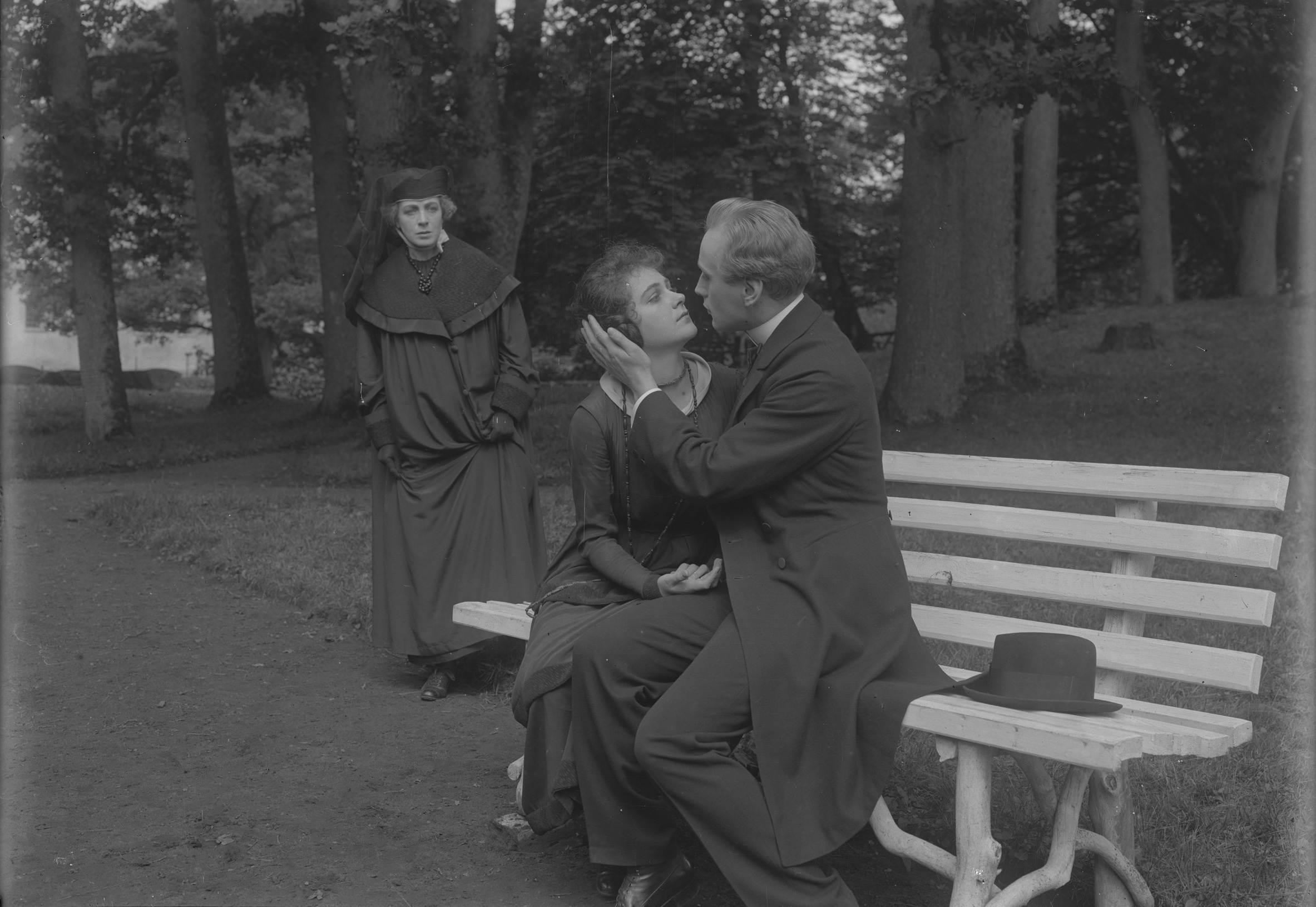
The Finnish film in the Scandinavian strand today was Anna-Liisa (1922), a rather harrowing adaptation of a stage play. The subject was infanticide, and by implication, rape. “Quiet and timid” Anna-Liisa is engaged to sweet Johannes and about to make it official – she’s spinning the thread for her wedding dress, he wants to publish the banns – but the mother of local boy Mikko is having none of that. She remembers helping Anna-Liisa to dispose of the evidence of the “bond” that exists between the girl and her son. Very, very not pleasant, and somehow not quite as dramatic as one might expect from the material, but nicely done, if occasionally awkwardly staged, and gorgeously accompanied by Gabriel Thibaudeau.

SEVEN FOOTPRINTS TO SATAN (US 1929) Credit: Cineteca Italiana, Milano

Daan ven den Hurk was at the keys for the next film, which was an entirely different kettle of flying fish: Benjamin Christensen’s Seven Footprints to Satan (1929) was a surreal hoot from start to finish, populated by dwarves, monkey men, heavily browed housekeepers and an escaped gorilla. All of them simply having a James Whale of a time. It is best summed up here by the estimable Mark Fuller:

Think Thelma Todd and Creighton Hale in a house of horrors, beset on all sides by the henchmen and handmaidens of Satan and the fruit of the feverish imaginations of all concerned. This was a grab-bag of characters and tropes from several different horror movies, most of which had not been made yet.

Continue reading Le Giornate del Cinema Muto 2017: Pordenone post No 8

Le Giornate del Cinema Muto 2017: Pordenone post No 7

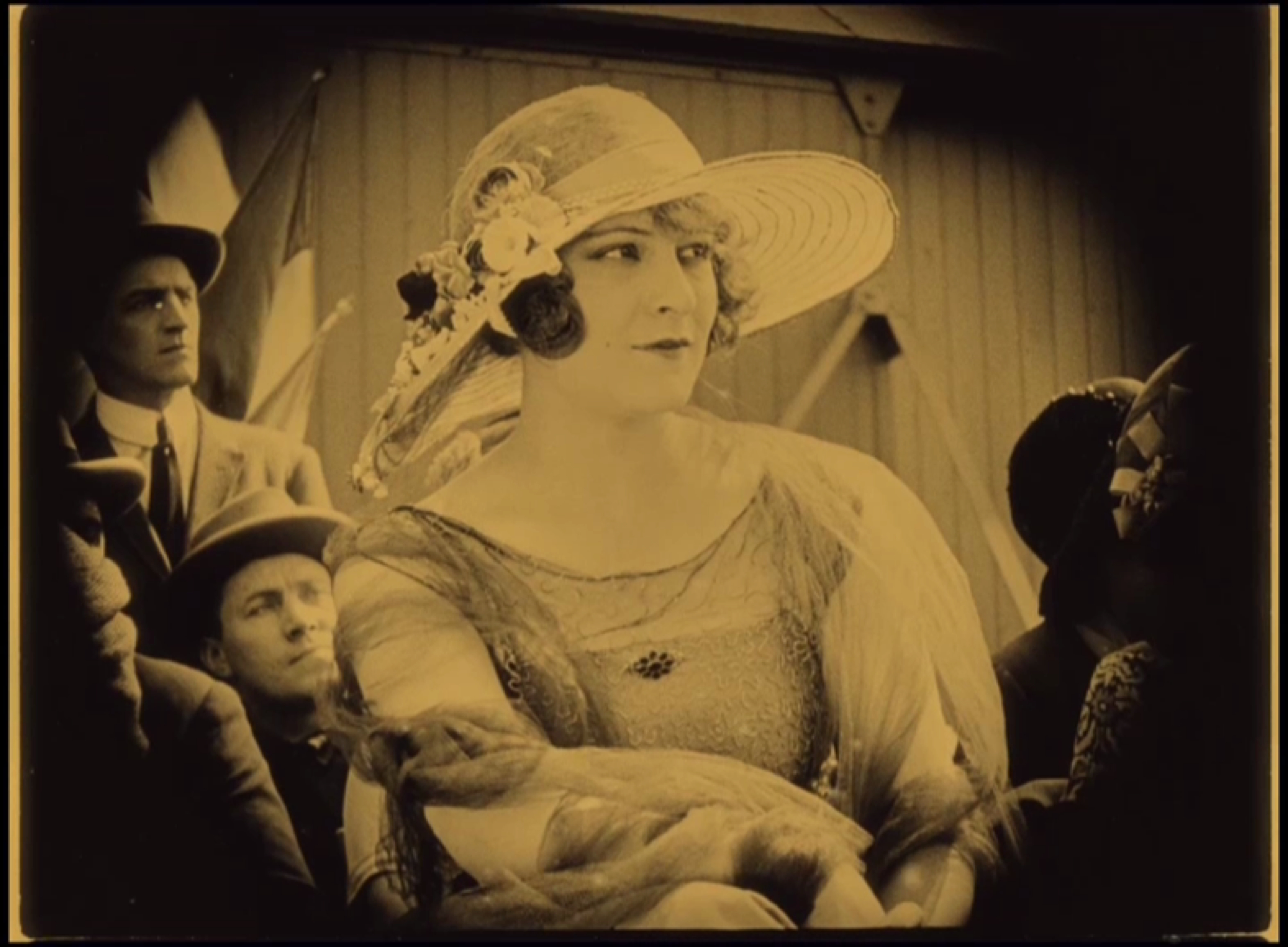
“Why are your thoughts in America when you tell me your heart is in Italy?” Well, Theda Bara, since you ask, it’s because the Giornate showed a mid-period silent American classic on Friday night. A Fool There Was (1915), or as I prefer to call it, The Cabinet of Dr Libido, is a bizarre film, by turns prosaic and ethereal. The plot is slight, but the imagery is immense, with Bara as an especially vampirish vamp, her long dark hair framing a milk-white face in the most demonic way. She can bat away a revolver with a rose and drive a man to distraction with a glimpse of ankle or shoulder – these are superpowers, not seduction techniques. No wonder the image of Fox’s foxy lady endures even when so many of her films are lost, burned up in the heat of her own fiery screen presence. And as silents go, A Fool There Was has great words, not least in the recurring appearance of Kipling’s ‘The Vampire’, but in a few killer lines of dialogue, one of you which you already know is going to appear below. And speaking to the film as well as for it, tonight, we had a brilliant new score written by Philip Carli and played by a quintet, which kept pace with the film’s many twists and dramatic moments and also added some much-needed nuance, as in the heartbreaking scene in New York traffic when Schuyler ignores his own daughter’s pleas, so engrossed is he in his new paramour’s charms.
A FOOL THERE WAS (US 1915) Credit: The Museum of Modern Art, New York

After Theda Bara, Hollywood turned to Pola Negri for a more authentically exotic vamp, although a more romantic one too. So it was fitting that one of her early German films, Mania (1918) closed the evening’s viewing. I’ve written about that one before, a couple of times, so I skipped it tonight.

THORA VAN DEKEN (SE 1920) Credit: Svenska Filminstitutet, Stockholm

But it was a great day for strong leading women, from a selection of cheeky Nasty Women shorts (I loved Lea causing havoc in an office full of besotted men) and beyond. We had the rich, psychological drama Thora Van Dekan (John W Brunius, 1920), for example – a story of a woman trying to protect her daughter’s inheritance from her wayward ex-husband, in the face of opposition and judgment in her village. Pauline Brunius is hypnotic in the lead role as a spiky, often unlikeable, singleminded and clearly emotionally brutalised woman trying to do her best by her child. This was a sombre piece, all the more so with Maud Nelissen’s downbeat improvisation, and just the sort of thing that nestles into your brain cavities and makes itself at home for days.

Continue reading Le Giornate del Cinema Muto 2017: Pordenone post No 7

Le Giornate del Cinema Muto 2017: Pordenone post No 6

It was auteur day at Pordenone, with works by three silent master-directors scattered nonchalantly through the programme: Ozu, Murnau and Dreyer. But auteurism is anachronistic to silent cinema and anathema to many early film aficionados, so fittingly some of my favourite screenings today fell far from the canon.

UN DUEL APRÈS LE BAL (FR 1902) Credit: Gosfilmofond of Russia, Moscow 
UN DUEL APRÈS LE BAL (FR 1902) Credit: Gosfilmofond of Russia, Moscow

One of the best things I saw all week was Valentine Robert’s presentation of Tableaux Vivants in the early cinema strand. This was something very special indeed – like a video essay, but more expansive. The idea was simple: popular paintings were projected on screen before early films that mimicked their compositions. The effect was spectacular though, and very illuminating about narrative and visual culture in the early film period. As this presentation made clear, many narrative films at this time were also adaptations of images associated with historical, literary and biblical narratives, rather than the story themselves. Or both, at least. Erotic films too, as you might imagine, took their cues from paintings and sculptures. The care and detail in this presentation was very impressive and all served the argument beautifully. All this as well as Stephen Horne’s gorgeous accompaniment for a long, and very varied presentation, comprising 30-plus films and many more art works.

The double-bill of German films this afternoon featured some very familiar names. First there was Der Golem. No, not the 1920 one, but the 1915 original, long thought almost entirely lost. The bad news is that it is still lost, but some more fragments have been discovered and spliced together with titles to form something that is not really a film, but rather a suggestion of one. In this kinda prequel Paul Wegener’s clay man comes to life brilliantly and with just the most tender and slender of movements. Other scenes reinforce the sense that James Whale’s Frankenstein would be nothing without this silent-era antecedent. Utterly fascinating.

Continue reading Le Giornate del Cinema Muto 2017: Pordenone post No 6

Le Giornate del Cinema Muto 2017: Pordenone post No 5

To reverse the usual order of proceedings, let’s start with the music, not the movies. This morning, in a Pordenone first for me, I attended one of the masterclasses AKA a crash course in silent film accompaniment, from the professionals, for the benefit of the Giornate audience and two very talented students. This was a fun session, led by Neil Brand and Gabriel Thibaudeau (with a little light heckling from Philip Carli and John Sweeney), who put Richard Siedhoff and Bryson Kemp through their paces with the help of some carefully chosen film clips.

Their instructions were wise, inspired, and stricter than I expected. Also quite bizarre. At one point a student was required to play to The General in the style of Wagner, and then with an added Bossanova rhythm. Another was asked to score the same film just on one bass note, and then to perform a “one-fingered love song”. Don’t google that last one, I fear you might end up somewhere untoward. From the secrets of playing ice, say, or heroism, but with fear, or without patriotism, to the use and abuse of musical cliché and the “toolbox” with which an accompanist can suddenly summons bells, trains, or even China, this was invaluable advice. Brand’s exercise in reading a film, guessing where the narrative and the characters will go next (Beggars of Life was the chosen example), was useful for us critics and punters too.

SAMMELT KNOCHEN! (DE 1918) Credit: Lobster Films, Paris

Continue reading Le Giornate del Cinema Muto 2017: Pordenone post No 5

Le Giornate del Cinema Muto 2017: Pordenone post No 4

If you are the kind of fool who thinks a programme of Soviet travelogues sounds a bit dry, then you are the same kind of fool as I am. However – as I once advised on this site, when you’re at Pordenone watch one thing that scares you everyday. So I was in the Verdi for the 9am travelogues and boy was I smug about it afterwards. Pamir. Krishna Mira (The Roof of the World, Vladimir Yerofeyev, 1927) was an absolutely fascinating journey through remote mountainous Kyrgyzstan, with just the right balance of intriguing domestic minutiae and awe-inspiring geographical grandeur. One series of intertitles pithily explained: “The women do all the chores … the men mostly do nothing … Occasionally they go hunting.” Actually, there was more to it than that. The men also whittle, weave, smoke opium, traverse perilous mountain passes and even perform very watchable partner dances in costume: the horse and the rider, the old man and the young girl, the fox and the marmot.

SOV_3_PAM
Photographed in regions where the air is so thin that water boils at 86 degrees Celsius or so cold that film itself can freeze, this can’t have been an easy documentary to shoot, but if offers a vision of another world, and now, I would guess, one that is almost entirely lost. I am sure that Günter Buchwald’s meticulous accompaniment on piano and violin was key to the success of this screening, providing a silk thread through the film’s essentially episodic structure.

From raw ethnography to dream-factory fantasy, with another parcel of early Euro westerns. These are rather slight things, but the devil, or rather the joy, is in the detail. Le Railway de la Mort (Jean Durand, 1912) was a kind of compact Greed – no, really, with a not dissimilar ending, augmented by a ferocious, red-tinted explosion. And before that, a series of train stunts that Hollywood, in any era, would have been proud of. In Italian western Nel Paese dell’Oro (1914) the star was not a gunslinger, but Toby the faithful dog, who helped to build barricades, did his level best to throttle the villain, and even rescued a lost tot from kidnappers and cold water, Rescued by Rover style. A canine who can.

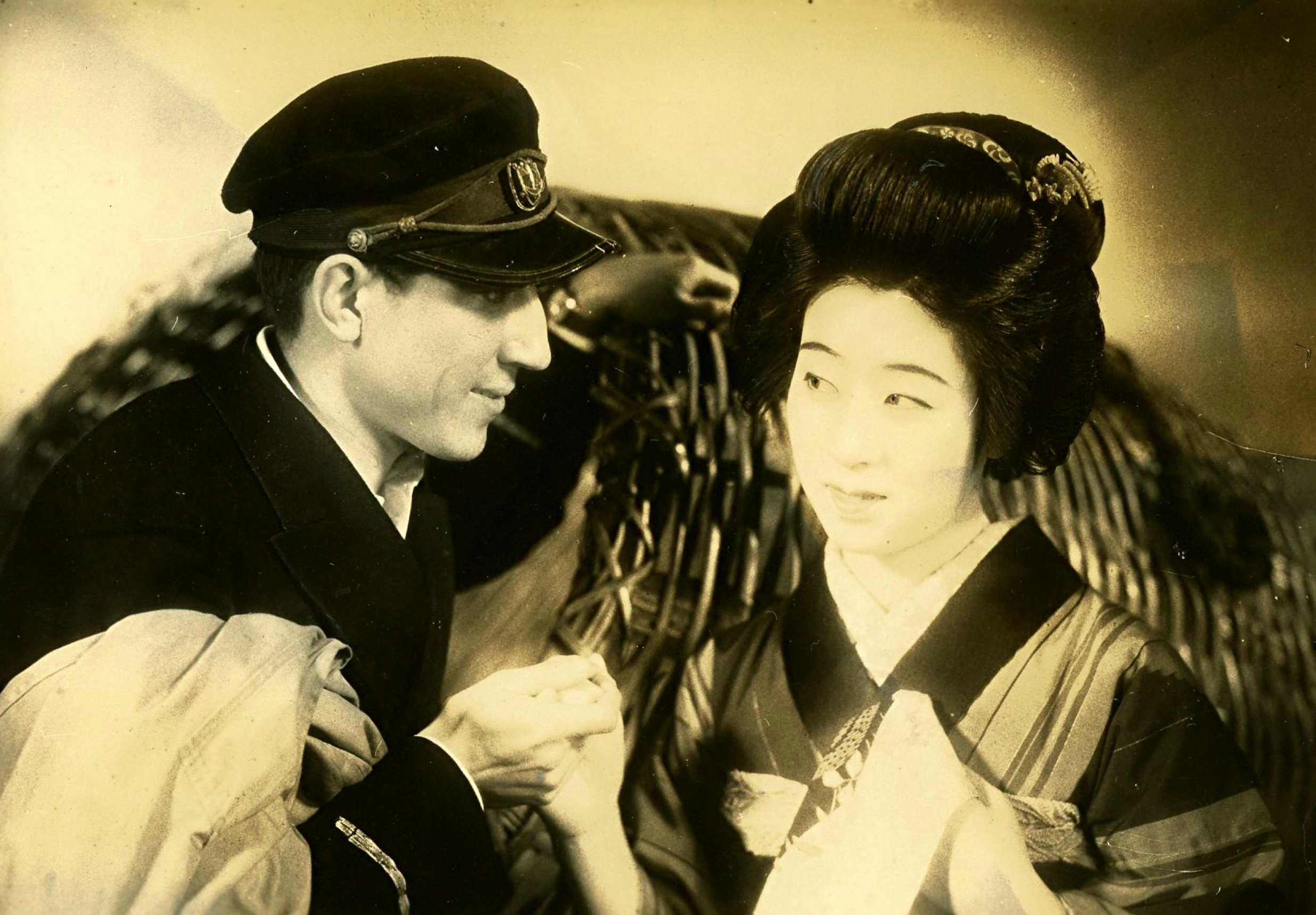
SHIMA NO MUSUME (JP 1933) Credit: National Film Center, Tokyo / Shochiku

Happily, I had the chance to return to Shima No Musume this lunchtime and what a pleasure it was. This melancholic drama is a little like a Japanese Borzage movie, with an unrepentantly sorrowful conclusion. Suffering is a woman’s lot, so just tough it out for the sake of your loved ones, be they living or dead. Sensitive performances, sharp dialogue, nuanced photography … such a surprise that it was one of four films rushed out to capitalise on a surprise hit single, and such a shame that the director, Hotei Nomura, a Japanese film pioneer, died a year later.

Continue reading Le Giornate del Cinema Muto 2017: Pordenone post No 4

Le Giornate del Cinema Muto 2017: Pordenone post No 3

Louise Brooks is everywhere this year, not least here at the Giornate, where she adorns tote bags, mugs, programmes, T-shirts and even the festival office. The reason for the Louise love-in is that the Verdi welcomed a snippet of previously thought lost Brooks footage tonight – a few minutes of the Raymond Hatton-Wallace Beery comedy Now We’re in the Air, featuring Brooks as twins. I saw this footage at San Francisco earlier in the year. There is little to it, and Hatton and Beery are as unfunny a comic pairing as you may have already heard, but Brooks is beyond elegant, despite the material. And perhaps I did find it a little sparkier second time round.

It’s frustrating to see those two clutzes hogging the screentime while Brooksie stands idly by. At one point she is giving it her best pout-and-shout, basically rehearsing her Lulu as she rebels against her dodgy boss, but the scene is so poorly blocked she is hardly visible behind the villain in a top hat and cape. A certain kid of person would take this as a cue to rant about the limited opportunities for women in Hollywood both now and 90 years ago. I am that kind of person, but I’ll spare you.

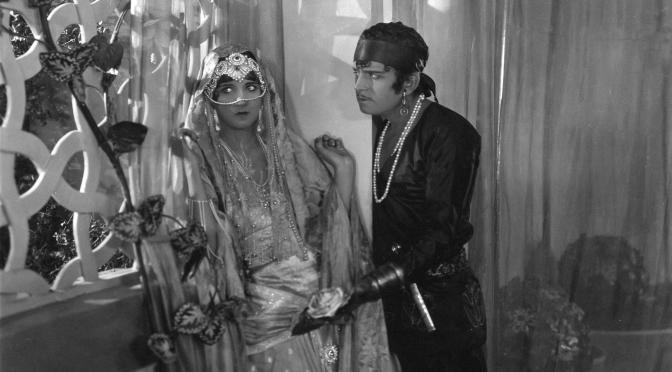
However, if you’re familiar with Pandora’s Box, you may get a little thrill from her appearance in this film. A publicity still of Brooks in costume for this film is used in the scene where the Egyptian bids for Lulu in the casino boat. Far more wholesome in this context, but some would say about as funny.

THE RECKLESS AGE (US 1924) Credit: Bison Archives/Marc Wanamaker

Continue reading Le Giornate del Cinema Muto 2017: Pordenone post No 3

Le Giornate del Cinema Muto 2017: Pordenone post No 2

Any day that closes with a Pola Negri film is a good day, and Sunday was a very good day. La Negri, my personal favourite silent movie star and the owner of the best peepers in the pictures, bar none, features in three films in the official Giornate programme this year (plus a schools matinee of The Wildcat). I knew artistic director Jay Weissberg was a fan, but well, consider me chuffed.

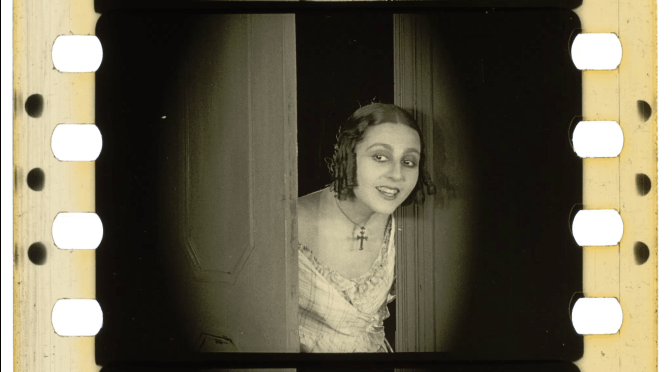
Tonight’s Negri film was Der Gelbe Schein (1918), often known as The Yellow Ticket. Negri plays a young medical student with a melodramatically plotted backstory that slowly unfurls as the film progresses. Suffice it to say that aside from some nice location shooting in Warsaw and the very striking image of a champagne glass full of coins in a brothel scene, this film lives and dies by Negri’s mesmeric performance. She radiates emotion, from those incredible eyes to her fluid posture, and even this early in her career she has the “star quality” that divides actors from icons. We saw the film tonight with a klezmer-tinged folky score from Alicia Svigals that worked very well, giving he melodrama enough room to breathe and softening the edges of a film in which structure runs the risk of overwhelming character.

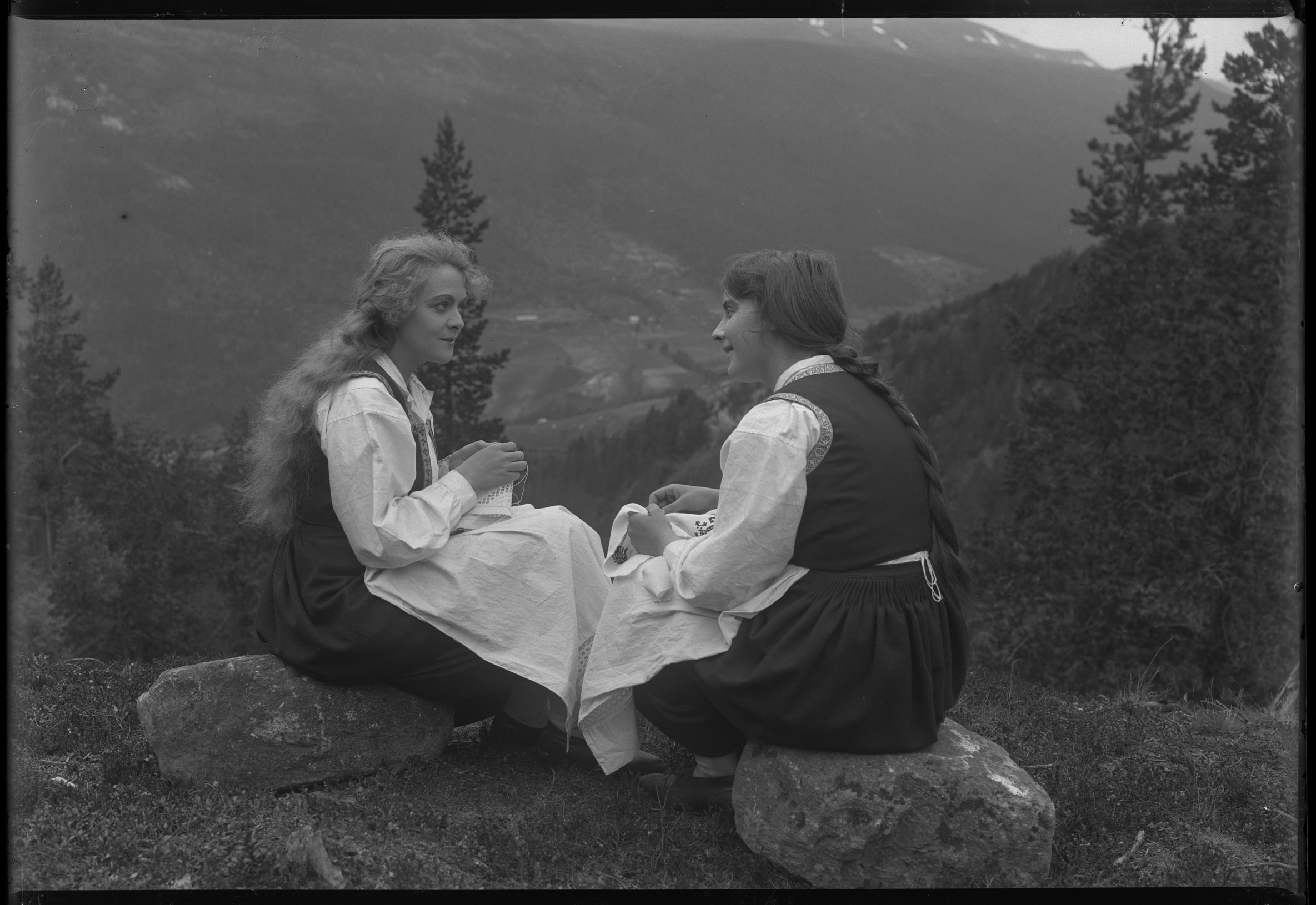
Back to the beginning, though, and there is nothing like breathing fresh mountain air first thing in the morning. While Pordenone may not be as rural as all that, we were in the hills today, with A Norway Lass (1919), part of the Swedish Challenge strand. No one I spoke to denied that this film proceeded at a sedate, almost glacial pace, but all agreed also that it was astonishingly beautiful, romantic, inventive, charming and felt far more advanced than many 1919 movies. Two youngsters on neighbouring farms fall in love, but he, Thorgbjorn (Lars Hanson) is a hothead and so she, Synnöve (Karin Molander) must wait for him to grow and earn her love. Although, he’s clearly a good guy from the start, and sometimes it seemed as if the more passionate relationship was that between Synnöve and Thorgbjorn’s sister Ingrid (see below), especially when they danced in the high pasture. An excellent portrayal here of a slow-burning romance set in a place torn between puritanism and paganism, with contrasting Midsummer rituals. Also, a rather mischievous, gargoyle-faced young farmhand was busy persuading Thorgbjorn of the existence of a troll family in the valley (cue excellent inserted troll feasts) when he was the only goblin in sight and all too human at that.

SYNNÖVE SOLBAKKEN (SE 1919) Credit: Svenska Filminstitutet, Stockholm

Continue reading Le Giornate del Cinema Muto 2017: Pordenone post No 2

Le Giornate del Cinema Muto 2017: Pordenone post No 1

The Brits are coming! Where have I heard that before? Hmmm… Anyway, it seems there is a UK invasion of Pordenone this year, with what looks like a bigger than usual home crowd in attendance already. And a British movie on the first day! After a journey that involved a plane, a train, an automobile, and a bus, I am part of that merry band. Jubilations, I even made it into the Verdi for the first film of the festival, which doesn’t always happen.

And that film was … 3 Days to Live (Tom Gibson, 1924). This was a pacey, if hokey melodrama, hinging on some awful foreign types manipulating the stock market in San Francisco and driving good men to suicide. Yes, it was not very 2017. It was more like 1917, or earlier, racial politics wise (see 1915’s The Cheat, for example), and definitely not a classic, though it had effective moments. A series of three closeups of a woman’s tapping feet, twisting hands and mobile face when she was waiting for her boyfriend to ask her father that question, was one. Another was a set of dissolves between empty rooms in an abandoned house. In such highlights we might detect the hand of youthful assistant director, editor and title writer Frank Capra. Or perhaps not – will we ever know?

I had to miss most of a package of early French Westerns. Yes, French Westerns. Just when you think you have seen it all … I did see Le Revolver Matrimonial (Jean Durand, 1912) thought. This was sweet ersatz Americana trifle in which Arizona Bill woos wealthy Maud (un homme in drag) and must lasso a sympathetic pastor to seal the union. There’s romance for you.

The Scapegrace (Edwin J Collins, 1913) finished the set. This was a British two-reeler though, and I expected Brian Aherne on his hobby horse a la Shooting Stars, but realism prevailed, to a point. This was a sprightly if slightly directionless drama in which black sheep Jack flees to the Yukon to escape his gambling debts and mend his ways. He finds, gold, a girl and forgiveness from his father so all’s well that ends, you know. And The Scapegrace was a Cricks studio production so that makes Croydon the wild frontier … I guess.

L’AUTRE AILE (FR 1924).jpg
L’Autre Aile (1924) Credit: Cinématheque Française, Paris

Continue reading Le Giornate del Cinema Muto 2017: Pordenone post No 1

Silent London hits the road


London’s great, it really is, but sometimes a blogger has to seek wider horizons. So this year I will be packing up my laptop and getting my soy cappuccino to go. I’m hitting the road to report on the silent film festival circuit – more of which anon – and I may possibly be popping up in a cinema near you.

First, an exciting announcement! The British Silent Film Festival is back this year. We have dates and a venue confirmed – 14-17 September 2017, at the Phoenix in Leicester – but no more news yet. Barring flood or fire, I’ll be there, and I recommend that you attend also.

Shoes (1916)
Shoes (1916)

Before that, however, I’ll be introducing two fantastic silent films by female directors at venues that couldn’t be much further from Leicester, and each other.

Continue reading Silent London hits the road

Le Giornate del Cinema Muto 2016: Pordenone post No 8

The parade’s gone by for another year. The projector is empty, the Verdi is empty, even the Posta is empty. Yet again I can say watched a ridiculous number of films, but still missed many I wished I had seen. The Giornate was full to the brim with silent spectacles this year. And while it may be too early to speculate about Key Trends of the Weissberg Era, we can say the festival is in safe, and loving, hands. It was a vibrant schedule, crammed with exciting films. I had an especially good Giornate. How about you?

Today was always going to be bittersweet, but I offset that sharp tang of sadness with some great films and some enjoyably ludicrous ones, too. If we are going to remember this year as the year of big, beautiful movies (and I am at least), I enjoyed a fitting final day.

First question of the day: Who’s Guilty? Me, because I missed the final instalment in this diverting series, but I did arrive at Cinemazero in time for some Al Christie funnies. My eye was caught by a cross-dressing romp called Grandpa’s Girl (1924), but that wasn’t what I had stepped out for this morning.

I was Born, But … (1932)

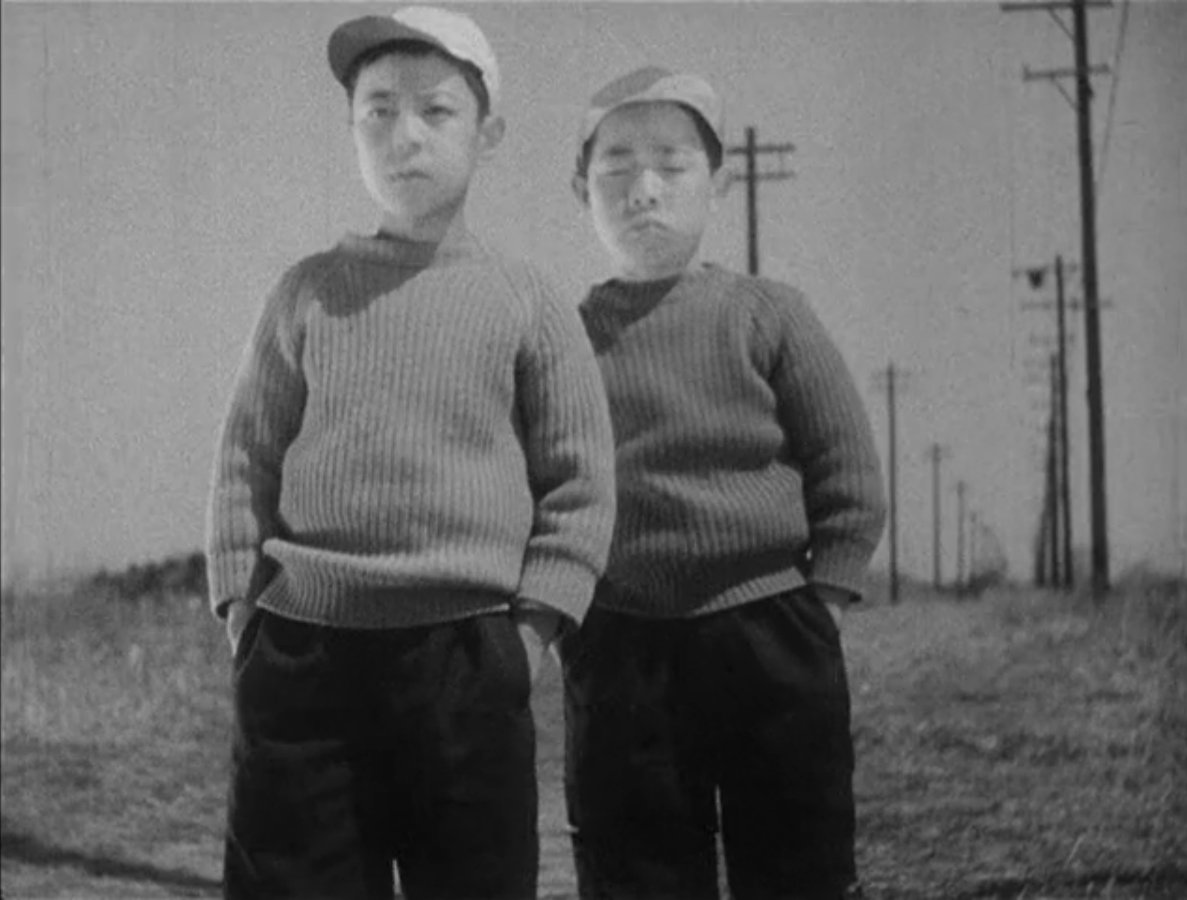
I had a date with cinematic greatness, in the form of Ozu’s I was Born, But … (1932), the most sensitive and character-led of comedy dramas, shown in the Canon Revisited strand. Wonderful to see this projected, with Maud Nelissen’s ambitious and sensitive accompaniment. As a smart companion said: it’s a film about children but it’s really about all of us, at any age, at any time, in any place. This film is funny and wise and always beautiful: even when the camera is focused on the scruffy and mundane stuff of our scruffy and mundane lives, there is harmony and freshness. And oh, just make sure you never miss the chance to watch (and rewatch) this one. Promise? And the perky Momataro cartoon beforehand was a treat too.

Continue reading Le Giornate del Cinema Muto 2016: Pordenone post No 8