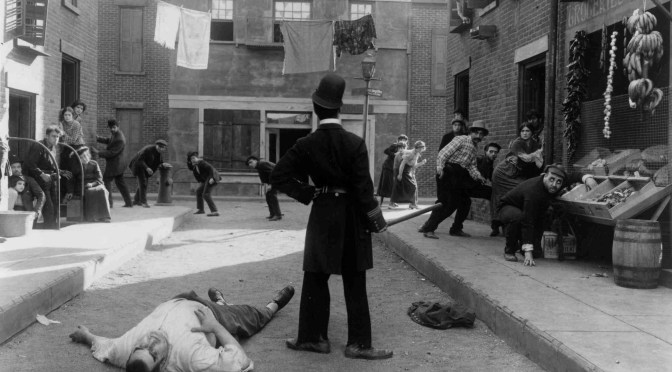
In 1914, Mack Sennett attempted to persuade Chaplin to renew his contract at Keystone. Chaplin demurred, declaring that he had no need of the Keystone facilities when all he needed to make a comedy was “a park, a policeman and a pretty girl”. And so, Chaplin turned his back on the “fun factory” and signed with the Chicago-based Essanay outfit, for a head-turning $1,250 a week and a frankly astonishing $10,000 handshake.
Despite the generous financial rewards on offer at Essanay (which itself took some time to materialise), Chaplin was largely unimpressed with the bare-bones setup. Still, he discovered a few great comic foils among the Essanay troupe including the rawboned, cross-eyed Ben Turpin. And while working at Essanay’s San Francisco studio, Chaplin first met Edna Purviance, a beautiful, funny young actor who enlivens both his Essanay films and many later works too.
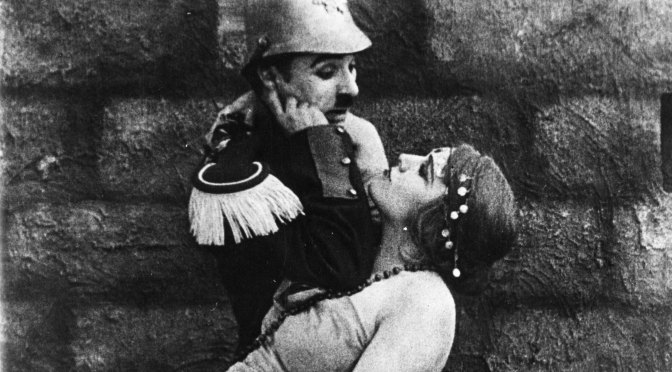
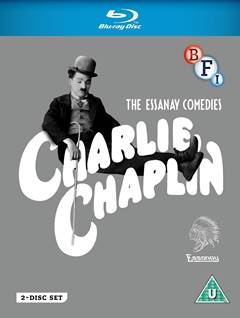
So the 14 films that Chaplin made at Essanay, which are collected on this BFI box set after being restored by Lobster Films and Cineteca di Bologna (a revamp of last year’s Flicker Alley release), are something more than rough diamonds. Chaplin gleams, whatever the setting, although many camera setups and the scenarios betray the fact that these movies were made in less-than-ideal circumstances. Or perhaps they were ideal – much here adheres to the classic “park, policeman, pretty girl” model after all. Chaplin’s earliest films at the studio, free-for-all slapstick parties such as ‘His New Job’ or ‘In the Park’, return to the barely controlled chaos of the Keystone mode, but with a central performance that elevates them to a kind of poetry.
Chaplin is magnetic, whether practising tiny bits of stage business such as flicking a single speck from a grubby jacket (‘Work’), or bouncing around a gymnasium in ornate setpiece gags that anticipate the boxing scenes in City Lights (‘The Champion’). The perfectionism of his stage training (best displayed in the theatre shtick of ‘A Night in the Show’) combine with his graceful movements and his way of spearing the camera lens with a winningly impish look to create an effect that is unmistakably cinematic.
This just in on the pony express. The dudes at the Kennington Bioscope are celebrating the Silent Western with an all-day event of screenings on Saturday 11 March 2017 – hosted by Silent London’s hero of 2016, Kevin Brownlow. Now then, didn’t we tell you this was going to be a good year?
‘Hitch up your wagon, fasten on your gun belt, saddle your horse and prepare to ride the range with the Kennington Bioscope as we explore the silent Western in the company of such Western heroes as Broncho Billy Anderson, William S. Hart, Tom Mix and – not forgetting our pistol packin’ frontier gals – Texas ‘Queen of the West’ Guinan.
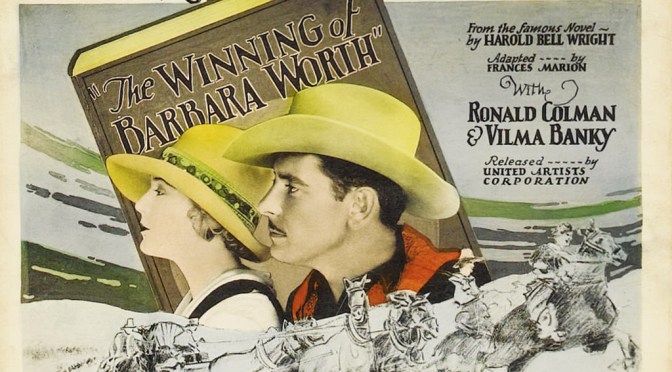
Highlights will include Fred Thomson in THUNDERING HOOFS (1924) and Hart’s THE NARROW TRAIL (1917) – and will you dare ride THE DEVIL HORSE (1926)? – with the main evening event being a screening of Henry King’s classic rip roaring contemporary Western THE WINNING OF BARBARA WORTH (1926), with the popular romantic pairing of Ronald Colman and Vilma Banky, together with Gary Cooper in his first major screen role.’
Hey silent cinephiles. This is a quick note to tell you about the treasures to be found in the BFI Player’s freshly launched collection 1917 on Film. The footage collected here paints a striking portrait of a world at war and a nation doing its best to stay strong, conserve resources, fight its foes and keep the country on track. From celebrity philanthropy to citizen volunteers helping to work the land and feed the country; reports from the grim events in continental Europe to morale boosting cartoons and celebrations. I’d love to talk you through the lot, but I lost a few crucial hours watching the films myself. So why not explore for yourself?
Seriously, this is great stuff, and I have had the teeniest, tiniest involvement in putting it together so I felt a burst of pride to see it online and ready to stream. Silent London is a big fan of the BFI Player – a truly fantastic historical resource and the most diverting use of a rainy day lunchbreak I can imagine. So dive in to 1917 – and watch out for future additions to the site. Don’t tell anyone, but there are good things ahead .
Picture the scene: a vast, gilded theatre in the West End, where the beautiful people of the silent film world are taking their seats, taking care that their rented diamonds, and their profiles, are displayed to their best advantage. The orchestra strikes up a tune, the lights are dimmed, and the audience is tipsy but expectant as I, your dear hostess, take to the stage in a floor-length pink satin gown, with a young Charles Farrell on my arm. After a few witty remarks, I turn my attention to a stack of golden envelopes on the lectern. Ladies and gentlemen, child stars and Rin Tin Tin, it’s time to announce the winners of the Silent London Poll of 2016, as voted for by the readers of this humble blog. Sorry you didn’t get an invite to the ceremony, or the bacchanalian after-party, but perhaps this roundup will do instead…
Best silent film DVD/Blu-ray release of 2016
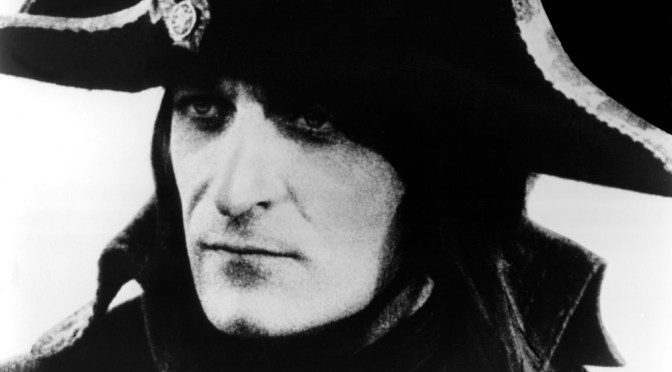
If I were betting woman, I might have profited from this result. The winner of our first category is the BFI’s sumptuous release of Napoléon (1927), Abel Gance’s epic biopic. Honourable mention goes to the Kino/BFI Pioneers of African-American Cinema set, which many of you placed in the top spot.
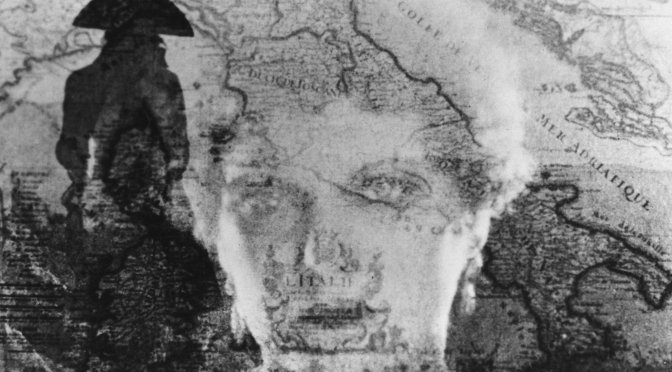
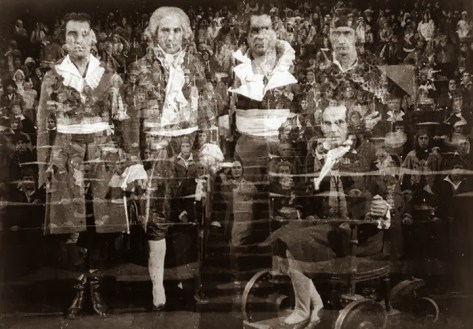
Napoléon (1927)
Best silent film theatrical release of 2016
Quelle surprise! Napoléon romped home in this category too. A worthy winner, and I blow a kiss to those of you who gave up the best part of a day to experience this astonishing film – and to the friends and partners you coerced into joining you.
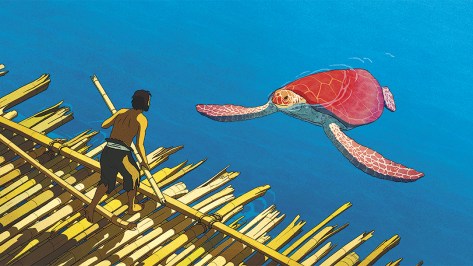
The Red Turtle (2016)
Best modern silent of 2016
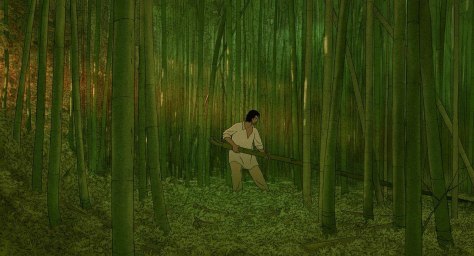
Slim pickings for this category, but we have a winner, just about, in the form of The Red Turtle, Studio Ghibli’s desert island tale, which impressed a few of you on the festival circuit this year. It really is a very fine film, and the good news is that it will be released “proper” in UK cinemas in May 2017. You can read our London Film Festival review here.
From Rudolph and from me – very best wishes for the festive season and may you all have a Silent Night tonight, a very merry Christmas tomorrow and a happy, healthy and prosperous 2017!
Christmas is a time for happy endings. And box sets too, to be honest. Last year I posted about an ambitious new project from Kino Lorber – a box set of early work by African-American film pioneers. Films that were funded, produced, written, directed by and starring people of colour. These were films we have had precious few chances to see, or less than that, and they were going to be restored, and where appropriate, rescored. Not easy.
The first happy ending is that Kino pulled it off – and if you supported the project on Kickstarter, you may well have received a parcel this summer containing a shiny set of discs and a thick booklet of essays by Paul D Miller (DJ Spooky), Charles Musser, Jacqueline Najuma Stewart, Rhea L Combs and Mary N Elliott.
For those who didn’t have the cash to pledge at the time, or who can’t play imported discs, the BFI has stepped in to create another happy ending. This Christmas, the BFI has released its own matching version of the box set for the UK– and this isn’t so much a review as a recommendation.
This collection, The Pioneers of African-American Cinema, comprises five discs, with more than 20 hours of material, ranging from 1915-1946, with archive interviews from much later. There are feature-length musicals, war movies, evangelical films, anthropological footage shot by writer Zora Neale Hurston, amateur actualities by an Oklahoma Reverend, several works by Oscar Micheaux, and much more on these discs.
Watching these films is revelatory. In fact, just browsing the list of titles is an education. These films represent an obscured history of African-American filmmaking, an alternative film industry that existed largely separate to but alongside Hollywood, and a survey of African-American culture in the first half of the century. Many of these films directly address social issues, or comment slyly on Hollywood whitewashing. And many of them deal directly with faith and religion, from full-on cinematic sermons to the posturing preachers that so often appear in Micheaux’s films. As James Bell writes in his comprehensive review of the set in this month’s Sight & Sound: “Its significance for expanding a wider understanding of American cinema history can hardly be overstated.”
Are you making New Year’s resolutions this year? I am a big fan of them – I made one last year, and although it wasn’t easy I definitely followed through on it (BTW did I mention that I am freelance now? Commission me!). The best are those that combine self-improvement with a little pleasure and entertainment (in fond remembrance of the Great Theatre Binge of Early 2012). Here’s one for you – how about you go to see more silent movies in 2017?
Reckon you already clock up quite a few silent screenings? Hmmm. How about something a little different?
For example, there’s a silent film screening with a twist at the ICA in January. You should come along! The event is part of the London Short Film Festival and takes place on 10 January. The screening takes its title from a Victor Hugo quote, “What matters deafness of the ear when the mind hears?”, and will explore the relationship between silent cinema and hearing impairment. To that end, all the films screened will play without musical accompaniment, and the programme is “designed to be accessible to people with hearing impairments as well as hearing audiences, creating a shared and uniquely immersive experience of silent film”.
Ben Model, silent film historian, accompanist and film-maker, has been championing early cinema for years. One of his most interesting projects is the Accidentally Preserved series of DVDs, which collect rare silent comedies that have only been saved from the ravages of time because they were put out on early home-movie formats. This way, he has been rescuing the reputations of many once-beloved silent comedians and sharing many, many laughs.
The 2017 Slapstick Festival, which takes place in Bristol from 19-22 January, will feature a programme of Model’s Accidentally Preserved comedy shorts in an event hosted by Bill Oddie and Robin Ince, with music by Günter Buchwald. That event is on 22 January and you can buy tickets here.
Ben Model was kind enough to answer some questions about the event and his silent comedy sleuthing …
Ben ModelWhere did you discover the films that will be showing at Slapstick Festival?
Most of the films on the programme are 16mm prints that I won on eBay. If you have your radar tuned the right way, and sometimes if the sellers mislabel or mis-identify something, it’s possible to win something fun and obscure for a decent price. A Bathtub Elopement, on the other hand, was something Rob Stone from the Library of Congress (USA), Steve Massa and I turned up in a large collection of old rental prints from the 1930s at the LOC. It was a film we knew was lost, and which was of significant interest for us – especially for Steve, who has spearheaded the rediscovery of Marcel Perez’s films. I included it on the Marcel Perez Collection DVD, which I released last year on my Undercrank Productions label and which won an award at the Cinema Ritrovato festival in Italy.
Will this Slapstick screening be the films’ first showing in the UK?
It’s hard to say without doing deep research in trade papers from England as to whether or not these films were shown there during the silent era. A Citrate Special was never shown anywhere theatrically, and clearly was a prank film made internally at a studio and intended only for private use. No one has been able to find any information about where it was made or how it wound up being made available in 16mm. There are no listings in home movie catalogues from the 1940s – when my print was made – or later for this title. We screened it at the annual Mostly Lost film identification workshop at the Library of Congress a couple years ago and none of the 125 or so experts in the audience could figure out anything more about the film. I may post it on YouTube channel for the global hive mind, as sometimes that helps yield information like this.
December is here, so it’s time to look back at the year. 2016 may not have been the happiest of times for many of us, but at least some of the movies were good. We’d love it if you would take a few minutes to share your silent cinema highlights of the year with the readers of Silent London.
This year, in addition to the usual questions about live shows and DVDs, I am also asking you to nominate your silent film book of the year. What’s the standout on your shelf? And as is now traditional, I want to know your silent hero of the year also.
This is a guest post for Silent London by the Lumière Sisters, a collective of writers who hang out over at the Chiseler.
Celluloid preserves the dead better than any embalming fluid. Like amber preserved holograms, they flit in and out of its parameters, reciting their own epitaphs in pantomime; revenant moths trapped in perpetual motion. Film is bona fide illumination – as opposed to religion’s metaphorical kind – representing the supremacy of alchemy and necromancy over sackcloth and ashes. The inmates, emboldened under the spell of Klieg lights, were not only running the asylum, but re-shaping the world in its image, and the blunt instruments of church and state proved impotent against the anarchy of this freshly liberated ghetto.
The censors were on to something, even if they could never fully articulate what precise blasphemies were being committed. God, as a vague and unseen deity died the precise moment cinema was born, and was replaced by a new celestial order. Saints and prophets made poor film characters, always carrying the feeling of having stepped out of a stained glass window, flat, Day-Glo icons uncomfortable in motion in three-dimensional space. Movies rejoiced in dirt and rags, texture and imperfection, so that the most lacklustre clown easily outperformed all the mock messiahs. At 45 minutes, Fernand Zecca’s The Life and Passion of Christ (1903) is one of the earliest feature films, but compared to the same filmmaker’s less ambitious, more playful shorts, it’s a beautiful snooze. Another execution climaxes his Story of a Crime (1901), in which we get to see, by brutal jump cut, a guillotine decapitation before our very eyes. This, as Maxim Gorky prophesied, is what the public wants.
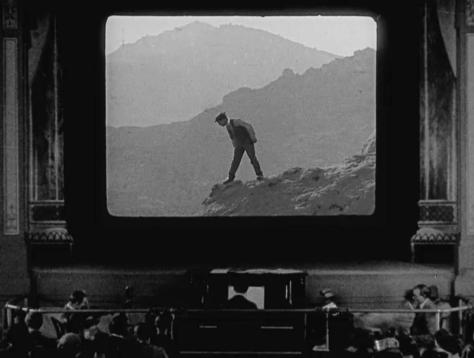
Sherlock, Jr (1924)
Or maybe “the public” could suddenly define itself in ways heretofore unthinkable – the telescope, once a divining rod for mapping heaven, became the ontological instrument of a terrestrial-based voyeur. And cinema blessed mere mortals with evidence of something greater than mere “being”: empirical evidence of a shape-shifting, perception-based self, free of original sin and free to indulge in all that remained. For one glorious second, or two, the audience was regent and the watchword was Chaos.
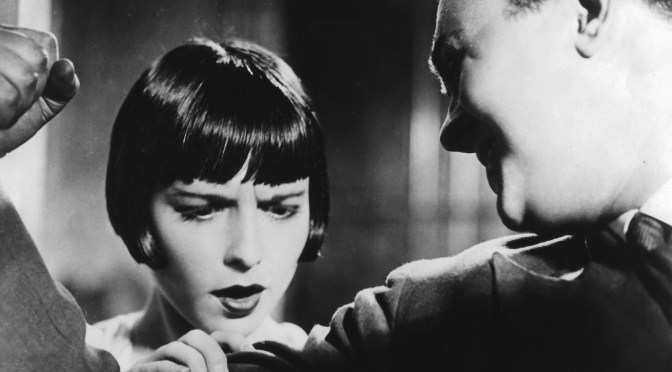
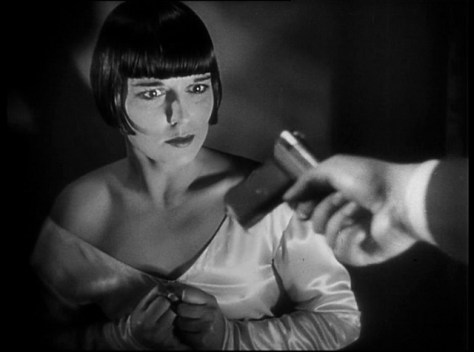
I can’t believe I have been keeping this one to myself. As part of the process of writing a book on Pandora’s Box, I took a chance and wrote to a woman who I admire hugely, and who I know is a serious Louise Brooks aficionado. The novelist Ali Smith kindly agreed to answer a few hastily gathered questions on Brooks. Her answers were so eloquent, and inspirational, that I wanted to share them in full with you here …
Ali Smith
It’s very common, since the 1960s, to talk about films belonging to directors. One hardly ever hears those auteurist labels on Brooks’s European films. I wondered if you felt these films mean something different when labelled as the work of their star rather than their director?
I kind of don’t care, and have never been much interested in labels. They’re always simplifications. But labels definitely preserve things over time, so thank god for that, and for the little flags they erect on the surface of knowledge so that people can see where to go to dig down deeper. I do despair, though, of the way our individual and common knowledge, both, get so lost so fast. Brooks, lost after the silent masterpiece years, till she died, was reclaimed in the 70s and 80s. I saw Pandora’s Box on TV in, I think, 1981. My mother, who wasn’t one for idle speculation or idle interests in things on TV, or idle anything, and who always went off to bed early, stayed up till 1am watching the film with me, till she couldn’t stay up any later, and in the morning the first thing she asked me was what happened at the end of that film?
Thirty years later, we have to do it all again – I heard your piece on Woman’s Hour, and sensed Jenni Murray’s astonishment at encountering Brooks for the first time. I was amazed – how could people not know Brooks? How could such a central cultural commentator not have her in her bones? (Unless she was simply being a kind introducer of Brooks to a listening audience who might bot know her.)* Where does that knowledge go? Here you are, doing that vital task.
Ahead of the orchestral screening, cinema release and Blu-ray/DVD of Napoléon I am revisiting some old interviews I did at the time of the 2013 event at the Royal Festival Hall. Yesterday I published the edited transcript of my chat with Carl Davis about Roman orgies, perverting Beethoven and the pitfalls of watching Napoléon on a 1980s TV. Today, we have restorer Kevin Brownlow on his own epic Napoléon journey:
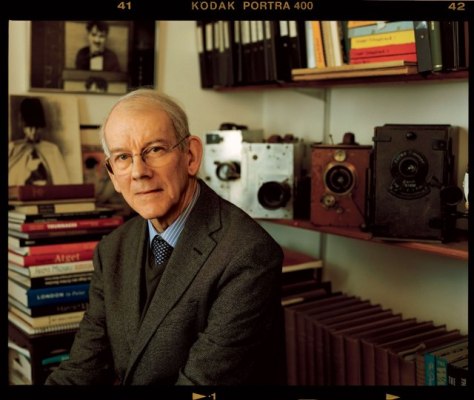
Kevin Brownlow (Vanityfair.com)It began with my 9.5mm film collection when I was a teenager. I had a film, another French silent film, funnily enough, by one of the pets of the French intellectuals at the time, Jean Epstein, which I thought was awful. And when I’ve got an awful film I can’t bear to have it around so I rang the library I got it from, which was in Bromley in Kent, and asked them if they had got anything else, and they said they had two reels of a thing called Napoléon Bonaparte and the French Revolution. So I said very knowledgeably: “Oh that will just be a classroom film, full of engravings and titles and all very static.” They said: “Well, it’s all we’ve got.” So I said “All right I’ll send this back if you’ll send that”, and meanwhile I rang up the British Film Institute and asked them for a review. And they said: “Well the only film that comes close is this 1927 French film but do you want me to read the review?” and I said “yes, go ahead” and I can still remember that it said: “The man playing plating Napoléon struts around with all the futile bombast of a turkey cock.” So I thought: “Oh my god, I’ve got another dud.”
I was at home, and suffering from flu or something. I wasn’t at school. And this parcel arrived and I made a miraculous recovery. I got my parents in the front room and we ran it on the wall, and I had never seen cinema like this. This is what I thought the cinema ought to be, but it never was. I realised that what I had got was two reels of a six-reel version put out for home cinema use in the 20s. My mother said: “ That’s the most beautiful film you’ve got.” And so I started advertising in the Exchange and Mart until, I got the rest of it. And then people started coming to see it. I remember David Robinson was brought by Derek Hill, who was the assistant editor of Amateur Cine World, and he’s coming again 60 years later on the 30th [the 2013 screening]. He now runs the Pordenone Silent Film Festival [Robinson actually stepped down this year, and the new artistic director is Jay Weissberg].
Abel GanceAt the very latest I saw it in 1954, but I think it was 1953. I can’t remember precisely but it is 60 years ago, since I first saw it, virtually 60 years ago since I saw it on the screen on my projector. And then I wrote a letter to Gance. I couldn’t believe what I’d seen. I wrote a letter, it must have been care of the Cinématheque Francaise and he actually got it, and even answered it, which was very, very unusual for celebrities. And I started asking people about him and the reaction was not very strong or even interested, except one journalist, Francis Koval, and he was very enthusiastic, remembered the picture and had actually interviewed Gance, in the 50s, just before I met him I think.
There are silent movies and then there is Napoléon (1927). Abel Gance’s legendary biopic is ambitious in scope, style, technique, length and even breadth. And while there are competing scores and restorations, for us only the Napoléon recreated by Kevin and Brownlow and Carl Davis will do. You can see this version of Napoléon at the Royal Festival Hall this November, with the Philharmonia orchestra playing Davis’s monumental music, and in a cinema (probably) near you too. Plus, you will be able to take the film home too. This wonderful film is finally coming to DVD and Blu-ray this year – a release from the BFI, which promises to come laden with lots of tempting extras.
Ahead of the Napoléon-fest that awaits us, I wanted to share something rather special with you. Last time Napoléon played in London, I interviewed Brownlow and Davis for the Guardian. Necessarily, the conversation was truncated and edited for publication, but I still have the transcripts. So here, only a little tidied-up, is Davis and Brownlow on Napoléon, full-width.
The film flies by, when I am conducting. Conducting the score requires a lot of concentration, so you forget the time. It is very long but I’m getting better at it, because when this was proposed and we did it in 1980, no one was doing this, this was something that was dead by about 1929. It was all over, so there was no one to turn to say: “How do you do it? How do you organise yourself to do it? How do you create a score that’s going to run for five hours? What should its structure be?” I had to reinvent the process for myself and Napoléon was the first. Fortunately, a whole career and a whole library followed, so now I have a very defined technique for how to create the score, which I did not have in 1980. The difficulties stop when you know how to do it, and then I didn’t know how to do it at all. I just threw things together.
There is a prehistory to Napoléon and a very important collaboration with Kevin Brownlow before Napoléon: a Thames television series called Hollywood, which was based on a book of Kevin’s called The Parade’s Gone By. My relationship with him and the whole question of silent film started in the mid 1970s, around 1976. I then had the opportunity to meet survivors of the silent period. There still were people, y’know, very old then, but who were young at the time. The two really key people I met were still working. They were still playing for silent film but mostly on the big organ in LA and the most interesting person was a lovely little woman who lived in a house just behind the Hollywood sign. And I asked her: “How do you build up a long score for a film, for your own performances on the organ?” Her name was Ann Leaf and she was known as the last organist of the Paramount Theater in New York, the last cinema organist.
Anyway, she still did shows, you see, so she went to a big cupboard she had, which was full of music, and she would start pulling pieces out. She would say: “You know this is very good for chase sequences, and here’s this piece by Grieg, this is very scary music and this is a very, very nice piece to play for a love scene and this is Roman orgies.” I remember the Roman orgy moment! They felt that world music was absolutely at their disposal. You went very, very far. And the film companies established music publishers who would provide mood music, There’s a vast amount of rather anonymous pieces written specifically for different moods you see. And every cinema musician of that period would have a big library to draw on, depending on what kind of film it was.
So that conversation was really very, very critical. One could be very broad in one’s thinking. And then we came to Napoléon, Kevin and I and a man named David Gill. When we came to the end of the series and the series was broadcast in 1980 and was a very successful and well-thought-of and sold like mad around the world, I said very loudly at a celebration party: “Now that I’ve written about 300 clips, why don’t we try to do a whole film?” And then Kevin and David came up with Napoléon – probably the longest film ever made and that ever will be made, and that was never finished anyway. It keeps growing as more of it keeps being found. The original performance, which I think was just under five, is now five and a half hours, it’s grown by half an hour. And you have to revise the score, open out the score. Because it wasn’t as if, “Oh, we’ve found this one scene,” it was “Well we’ve found this little bit and that little bit.” And that shot and that whatever. So I’m in terror, you know, that as archives open, y’know, and as people find things in attics, forgotten drawers that suddenly …
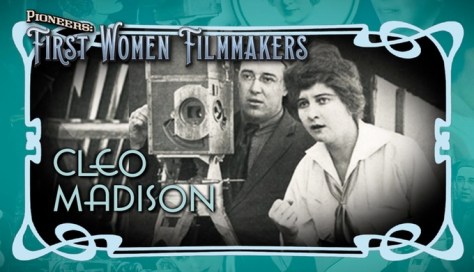
This is a topic close to my heart, and hopefully yours too. After a successful campaign to produce the handsome Pioneers of African-American Cinema box set, Kino Lorber are back on Kickstarter with another project that makes film history a bigger, more inclusive, and more representative space. This time, Kino Lorber is coming for the women, with a set called Pioneers: First Women Filmmakers.
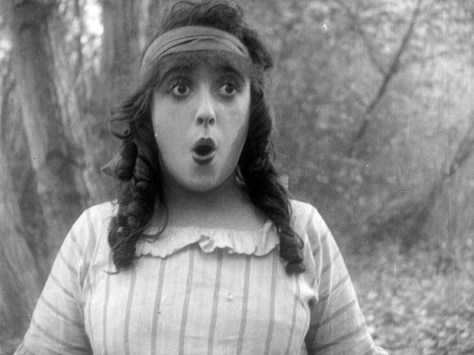
Mabel Normand in Won in a Cupboard (1914) National Film Preservation Foundation
Has someone reminded you recently that more women worked in creative roles in the film industry during the silent era than do today? It’s a boggling fact, but it’s true. And keep repeating it, please. On the one hand, that titbit should spur today’s business into some serious equality action, now. On the other, it means we have a lot (I mean a LOT) of great but neglected work by female directors, screenwriters and producers to look over.
When was the last time you enjoyed a moment of silence? Not a pause in conversation, a burst of concentration at your desk, or a moment of peace when your guests have gone, but a real, deep, out-in the-wilderness hour or two of pure aural emptiness?
You’ll rarely experience silence at the cinema – even the films this blog celebrates are mostly shown with music either live or recorded washing over them. But if you are very lucky, a trip to the cinema means a good hour and a half when you and your companions will hold your tongue, and instead of making noise, will enter a new sonic world, constructed on the screen.
In Pursuit of Silence (2015)
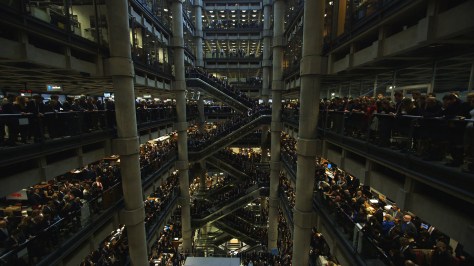
That’s what makes the reflective new documentary In Pursuit of Silence so powerful. In between experts discussing the value of escaping the distractions and hums of modern living, there are scenes of dialogue-free calm, from a rippling green field in Iowa to a Remembrance Day silence in the offices of Lloyd’s of London. These scenes are shot with fixed cameras, meaning there is no “visual noise” of pans or zooms to disturb the serenity, perfectly illustrating the meaning of quiet stillness. The peace is both beguiling and refreshing, offering space for the film’s argument to seep in: the idea that by seeking out silence, we will find greater intellectual capacity, better health, philosophical wisdom, a fuller awareness of our surroundings, even equality and an end to conflict.
The parade’s gone by for another year. The projector is empty, the Verdi is empty, even the Posta is empty. Yet again I can say watched a ridiculous number of films, but still missed many I wished I had seen. The Giornate was full to the brim with silent spectacles this year. And while it may be too early to speculate about Key Trends of the Weissberg Era, we can say the festival is in safe, and loving, hands. It was a vibrant schedule, crammed with exciting films. I had an especially good Giornate. How about you?
Today was always going to be bittersweet, but I offset that sharp tang of sadness with some great films and some enjoyably ludicrous ones, too. If we are going to remember this year as the year of big, beautiful movies (and I am at least), I enjoyed a fitting final day.
First question of the day: Who’s Guilty? Me, because I missed the final instalment in this diverting series, but I did arrive at Cinemazero in time for some Al Christie funnies. My eye was caught by a cross-dressing romp called Grandpa’s Girl (1924), but that wasn’t what I had stepped out for this morning.
I was Born, But … (1932)
I had a date with cinematic greatness, in the form of Ozu’s I was Born, But … (1932), the most sensitive and character-led of comedy dramas, shown in the Canon Revisited strand. Wonderful to see this projected, with Maud Nelissen’s ambitious and sensitive accompaniment. As a smart companion said: it’s a film about children but it’s really about all of us, at any age, at any time, in any place. This film is funny and wise and always beautiful: even when the camera is focused on the scruffy and mundane stuff of our scruffy and mundane lives, there is harmony and freshness. And oh, just make sure you never miss the chance to watch (and rewatch) this one. Promise? And the perky Momataro cartoon beforehand was a treat too.
Most people come to Pordenone in October for the silent films. Many come for the networking. Others for the music. Or the gelato, or the Aperol Spritz. But when those attractions pall, they say, you can also hop on a train and go to Venice. The idea horrifies me. Sure you could see St Mark’s Square, and meet a handsome gondolier. But think of the early cinema you would miss.
Still, even if you don’t take such a hard line as I do, Friday presented an innovative solution. Why leave town at all, when Venice can come to the Teatro Verdi? In honour of 120 years of cinema in Venice, a short programme of Lumière shorts offered us a leisurely drift down the canals. Then Max Reinhardt’s Eine Venezianische Nacht (1913) offered Commedia characters and whimsical comedy, as a nerd spends the night in the floating city and becomes infatuated with an ethereal bride, although sadly the narrative did not flow as smoothly as the canals. I really enjoyed the dream sequences, especially a neat setup whereby the local characters danced around the scholar’s bed, thanks to the magic of double exposure. But in this case the music, from a Trieste ensemble, didn’t seem to help.
And we deserved a little light sightseeing, after an emotional day, which began with a melodramatic double-bill. First, our customary voyage to the dark side of human nature in a Who’s Guilty? short featuring Anna Q as a jealous wife. Very little mystery in this one, but there was a novelty for the audience, as the Giornate’s two masterclass students took to the piano to share accompaniment duties. Jonathan Best and Meg Morley both did the drama proud, and we are very lucky to have both of these talented musicians playing in the UK.
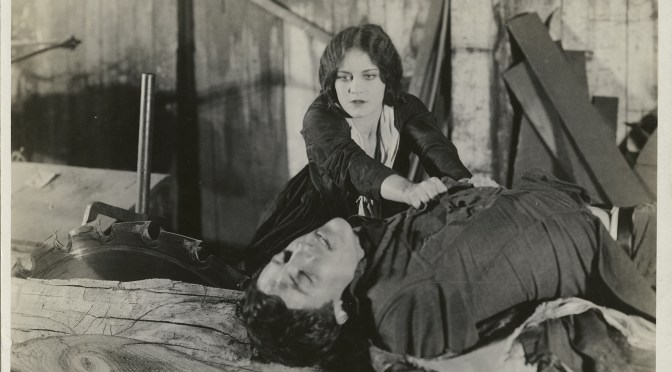
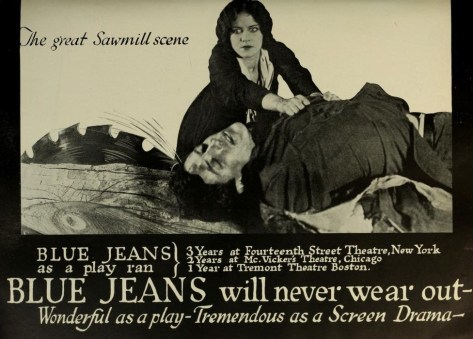
Then one of my most highly anticipated screenings of the festival: the well-known stage drama Blue Jeans (1917), rendered for the screen by John H Collins and starring the wondrous Viola Dana as a tomboyish orphan caught up in a complex small-town intrigue. There was a lot of plot and back story to pack into the 84-minute running time. It is really the kind of film where you might draw a diagram on your ticket stub in the café afterwards to make head or tail of the marriages and feuds etc. Disturbing to some of us also, that in the local elections, our hero stood for the Conservatives and the villain for the Liberals – but of course the baddie won that battle. Anyhoo, this one is well worth seeking out, if only for the famous climax at the saw mill when said hero narrowly escapes a haircut. Viola Dana to the rescue! And Donald Sosin’s music was just right, with a recording of Joanna Seaton singing a song inspired by the play adding another layer of nuanced dramatic Americana to the screening.
The rest of the morning was a delightful patchwork, the kind the Giornate excels in. A programme of French comic shorts directed by Emile Cohl, accompanied by Stephen Horne in suitably bonkers fashion on a plethora of instruments, included some wild animation, and surreal live-action comedy. Hugely inventive and almost impossible to describe in this space, but do take the chance to see these charming oddities when you can. Hopefully with Mr Horne and his bag of tricks.
The Dove (1927), Directed by Roland West, Shown from left: Gilbert Roland, Norma Talmadge United Artists/Photofest
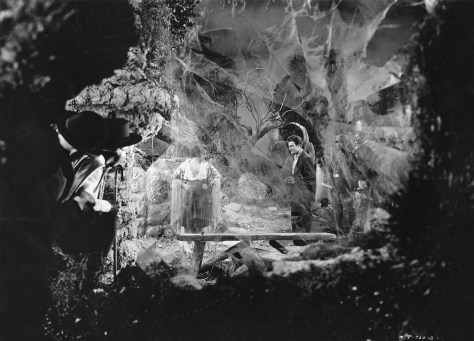
The final slot of the morning was crowned with two curios from the William Cameron Menzies strand. An early sound film, The Wizard’s Apprentice (1930) was a trick-photographed forerunner to the more famous Walt Disney version with matchstick brooms sloshing tiny tin buckets. And the four reels remaining of The Dove (1927) were hot-blooded comedy drama, with the gorgeous duo of Norma Talmadge and Gilbert Roland offset by the leering machinations of Noah Beery as the self-aggrandising local Caballero. Before both of those, we met our friend Momotaro the peach boy from yesterday, this time on an underwater adventure to assassinate a shark. Brilliant fun.
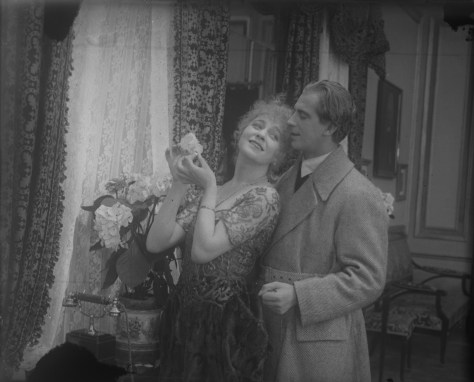
The evening’s show promised great things. Erotikon? Erotic con more like. Yes, this Mauritz Stiller comedy could happily have been about 20% funnier, and no, there were not erotic thrills to be had on screen. Not by 2016 standards, at least. The main disappointment for me was realising that I had actually seen it years ago and what I thought was a me-premiere was in fact a retread. But it is a fine film, after all. A professor of entomology and his flirty wife seem to be headed for the skids because of her “infidelity”, but perhaps missus is not as bad as she has been painted? Maybe she is in love? Maybe the doddery professor has moved his fancy piece into their homestead under her nose and on false pretences? This Swedish sex comedy is lightly sparkled like the local prosecco and and was pleasingly open-ended. I was silently screaming at the end “C’MON, what is the real deal with that niece?” at the end. A grownup comedy, if not a totally hilarious one, and we were delighted to have John Sweeney’s witty accompaniment for this tale of crossed wires and mistaken glances.
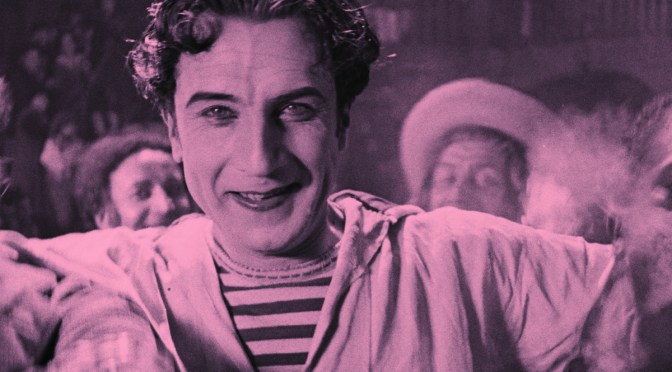
Was this the perfect Pordenone day? Very likely. Sunshine, coffee and great films in abundance. Plus, not one but two appearances from Ivan Mosjoukine. Giornate excellence achieved.
First things flipping first. Best. Who’s Guilty?. Ever. Anna and Tom are in love, a bit. Anna considers marriage but doesn’t come close. And the backdrop is a factory, which soon becomes embroiled in a workers’ dispute. Yes there is a strike! Much broader, bolder drama here, with nice location shooting and some sharply composed long shots. if Eisenstein had made potboilers. Maybe. And before the morning’s main event, a now-obligatory trip to an ersatz pre-revolutionary Russia with Ivan Mosjoukine in Der Adjutant des Zaren, a charming Japanese animation about a boy grown from a peach who became gentle and strong – but mostly badass enough to slay a shedload of ogres.
This morning also featured a quartet of City Symphonies to delight the eyes. I especially liked a very elegantly shot look at the reconstruction of Tokyo in 1929 (I know!), Fukko Teito Shinfoni and a zoom up Chicago’s main drag in Halsted Street (1934). A tour of Belgrade was pretty enough but lacked direction and so outstayed its welcome. I am very fond of these films though, and look forward to more. Continue reading Le Giornate del Cinema Muto 2016: Pordenone post No 6→
“It’s Christie Cristo day,” quoth a witty fellow Pordenaut today. And that was true – we were expecting more Al Christie comedies and Henri Fescourt’s lavish Monte-Cristo (1929) too. It also neatly encompasses the range of material one can expect from 14-odd hours in the Verdi. Slapstick comedy to prestige literary adaptations – plus today we had drama, poetry, newsreels, satire, political advertising and more … But it’s all that obscure niche they call silent cinema, right?
MONTE-CRISTO (FR 1929) ZZ Productions, ParisThen again, my day began, and ended, with the Napoleonic era. Tonight’s epic screening, a marathon treat we have come to expect on a Wednesday in Pordenone, was the aforementioned adaptation of The Count of Monte-Cristo, running at almost four hours, and as lavish as you please. It was, as Lenny Borger promised, “the full Monte”. Comparisons were inevitable with last year’s Les Misérables event – this film was less picturesque, less self-consciously serious, but just as vivid and awe-inspiring, with greater pace and suspense. The restoration was nicely done, but Monte-Cristo was not the living oil-painting we saw in 2015 – this was dynamic monochrome, boosted with a few tints, with a handful of showy camera movements, deep and pointed shadows, wicked interior lighting effects and some truly monumental sets. A feast for the eyes, but in a more classically cinematic way.
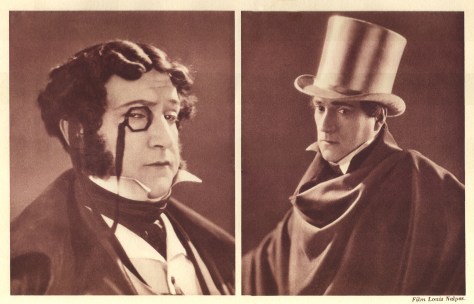
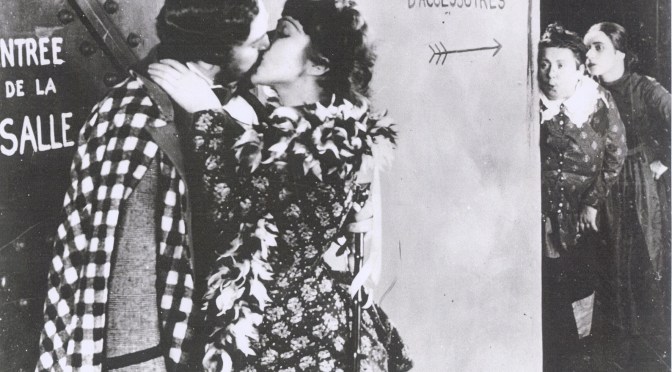
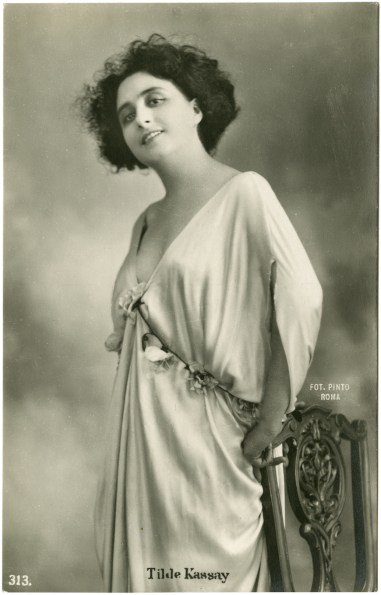
Did anyone ever tell you to beware of loose women in tight corsets? Tuesday at the Giornate was a tale of two Nanas: Jean Renoir’s acclaimed 1926 adaptation of the Emile Zola novel played in the afternoon, but in the morning we saw a recently rediscovered Italian version, starring noted diva Tilde Kassay. The Verdi audience are accustomed to beautiful temptresses by this point, so we were well judged to decided who wore it best…
First, here’s what I didn’t see. One British-Soviet curio, Three Live Ghosts, which I saw last year in Leicester and wrote about here. I also ducked out of The Guns of Loos, having seen it on the same occasion, and then a few weeks back at the BFI too. I wimped out of the morning’s western marathon too, after a couple of films. Early westerns don’t always thrill me, but in this case I had some work to do instead. And it seems that I missed out on a very impressive rattlesnake. Ah well, snakes and ladders. I have a less impressive reason for missing the last film of the day, but I stand by it: good wine, good company, great gossip.
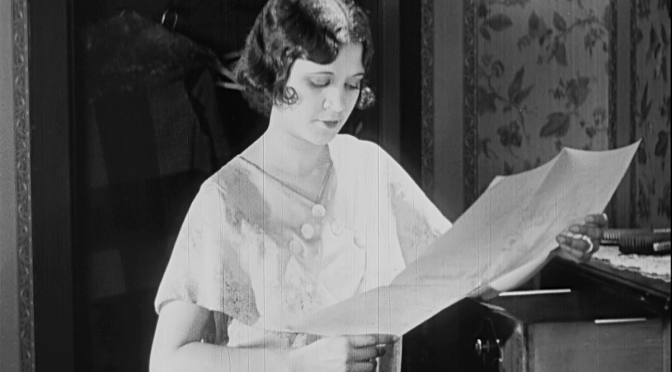
However, nothing can tear me away from my Who’s Guilty? morning treats, which have me more hooked than any soap opera. Yet again Anna Q Nilsson got married in haste (to the always-appealing, imp-faced Tom Moore, the son of the newspaper editor investigating her senator father’s corrupt affairs) and repented in haste too, as a lawsuit for abduction revealed a harsh truth about her childhood that led her straight to the brink. The brink of the lake that is. Thanks A Trial of Souls (1916) for that early morning anguish. Continue reading Le Giornate del Cinema Muto 2016: Pordenone post No 4→









 However, nothing can tear me away from my Who’s Guilty? morning treats, which have me more hooked than any soap opera. Yet again Anna Q Nilsson got married in haste (to the always-appealing, imp-faced Tom Moore, the son of the newspaper editor investigating her senator father’s corrupt affairs) and repented in haste too, as a lawsuit for abduction revealed a harsh truth about her childhood that led her straight to the brink. The brink of the lake that is. Thanks A Trial of Souls (1916) for that early morning anguish.
