“Is this really what you want to learn from the past?”
– Breaking Plates (Karen Pearlman, 2025)
Let the train take the strain they say, and so I did, curating my own idiosyncratic, mostly silent, tour of female film history this week – and all by rail. Please rest assured that no leading ladies were lashed to the tracks in the making of this movie. Nor is this post sponsored by Eurostar. I should be so lucky.
This cute preamble has simply delayed me telling you that I took the choo-choo to Brussels, birthplace of such 20th-century film icons as Audrey Hepburn, Agnès Varda (foreshadowing) and Chantal Akerman. So my first stop, naturally, was a pilgrimage to one of the most famous addresses in cinema history, 23 Quai de Commerce, 1080 Bruxelles, to pay homage to Akerman, Delphine Seyrig, and Jeanne Dielman herself by posing outside the door of the heroine’s apartment building wielding a potato peeler. Important feminist film praxis, and in the estimable company of Maggie Hennefeld to boot. All joking aside, there is a frisson to be felt standing on this spot, where Akerman filmed the exteriors for her 1975 masterpiece, and it is in a very pleasant corner of the city. Do visit, with or without kitchen implements. Don’t miss the Marguerite Duras quotes that pave the nearby park, and the gorgeous, watercolour-style mural of Dielman at her kitchen table by Spanish muralist Alba Fabre Sacristan. I recommend checking out her portfolio on Instagram: the subject matter of the majority of her work throws a different light on this apparently demure picture of a middle-aged woman in her housecoat.
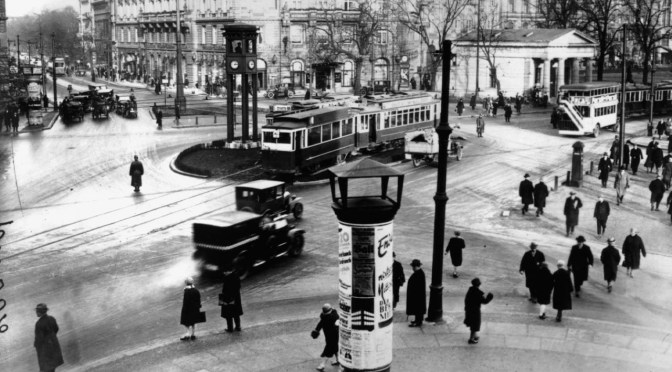
I may live in the 21st century on the south coast of England, but here on my desk it often looks like I am somewhere else entirely. Weimar-era Berlin, to be precise. It is the epicentre of some truly great silent filmmaking, such as the works I often share on this blog, it is the setting and source for the first film book I wrote (Pandora’s Box, as you asked), and it is here that we find the origins of much of the Golden Age of Hollywood cinema that I write about elsewhere.
It also sometimes looks this way when I am reading the news, but that, perhaps, is another matter.
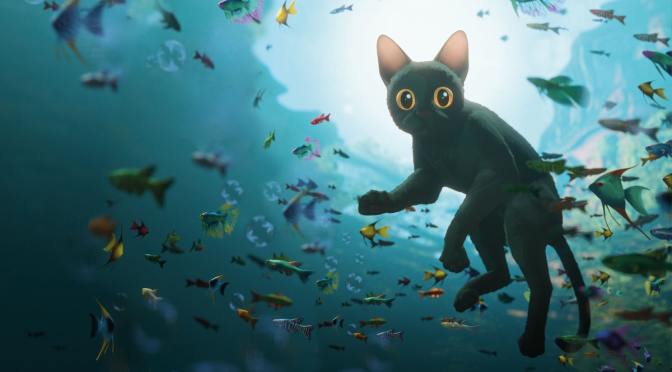
Last night, the fantasy adventure Flow (Gints Zilbalodis, 2024) won the Academy Award for Best Animated Feature. This dialogue-free drama follows a cat, forced to travel far from home in unfamiliar company when an ecological disaster submerges the earth in flood waters.
Just when I thought I was out, they pull me back in!
At the start of the film it appears that the cat lives with a besotted artist who pays tribute to the feline with sculptures of diverse sizes. But even this ailurophile human has abandoned the home, and their pet. As the waters rise and rise, our formerly cosseted hero must learn to survive and make common cause with a ragtag crew comprising a capybara, a secretary bird, a dog and a ring-tailed lemur. Against the odds, the animals have to save themselves from a manmade catastrophe.
Robert Eggers has remade Nosferatu. Finally, after long promising to do so. His new take on the FW Murnau classic from 1922 is in UK cinemas on 1 January 2025.
To be completely honest with you, I haven’t seen it yet, but I have some very good, and some slightly more mixed reports.
I hope the new Nosferatu lives up to its influences, though I know those are big shadows to fill.
However, if you are looking for a new horror movie that does something fruitful with the silent movie aesthetic, I can recommend Magnus von Horn’s child-killer drama The Girl with the Needle. Owing to its subject matter, it is not for the weak-hearted, but it is beautiful, and does contain a pertinent glimpse of Asta Nielsen. It is out on 10 January 2025 from Mubi.
Silent London will always be free to all readers. If you enjoy checking in with the site, including reports from silent film festivals, features and reviews, please consider shouting me a coffee on my Ko-Fi page.
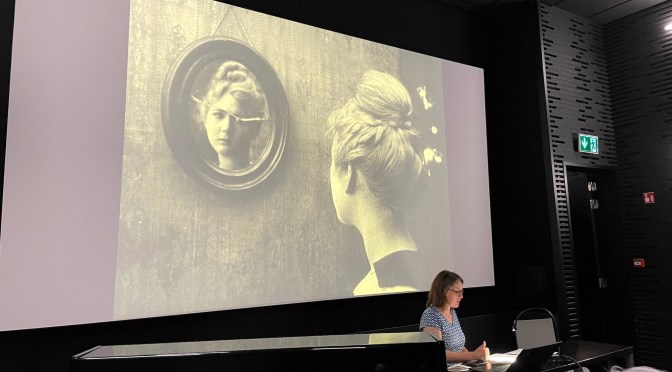
This is an extended and adapted version of a contribution I made at the 2024 Domitor conference in Vienna. I spoke as part of a roundtable on Curating Early Cinema Today, chaired by Maggie Hennefeld. Full details of the roundtable are at the end of this post.
————-
Media history is doomed to repeat itself, first as travesty, then as art. I’m kidding, but only a little. Here are some thoughts on why early cinema is trending in the 21st century, why I am writing this blog, and perhaps, why you are reading it.
Since the digital transformation of the film industry at the turn of the 21st century brought with it a new surge of creativity and of anxiety, through the rise of audiovisual social media, from YouTube to TikTok and to the dawn of AI, we are living in an age of constant new-media excitement, and panic. These mew forms of communication belong to youth; to older eyes they appear baffling, and probably dangerous. In this state of anxiety and attraction, we have much in common with the spectators of early cinema in the years following the turn of the previous century. Our new platforms, expressly suited for exhibiting the “cinema of attractions”, have created their own stars, and genres. And just like our ancestors sharing in global astonishment at Charlie Chaplin, Asta Nielsen, or Max Linder, we experience anew the enhanced possibilities of mass communication, best expressed by the world-shrinking concept that is “going viral”.
Caroline Golum’s excellent article ‘Cinema Year Zero: Tik Tok and the Grammar of Silent Film’ (Mubi Notebook, 25 February 2021) aligns the fixed-camera, stop-and-start-editing and subject matter of TikTok with the mechanic and style of early cinema. I think her analysis is sharp, and I highly recommend the piece. It strikes me, though, that the best way to describe TikTok, or any new-media platform, from Medium to BlueSky, is to be alert to its specificities as much as to its similarities with other media.
Therefore we should say that while TikTok has much in common with early filmmaking, it is defined by its Chinese ownership, by the portrait-phone aspect-ratio, the placement of screen furniture, the captioning and comments functions, the use of memes and lip-sync comedy, the proliferation of shared music clips and the technique of stitching, an extension of the repost or quote function on other platforms. That it has become a natural home for both infuencers and brand promotion, so has a prominent place in the history of advertising media in particular. We can say that very much unlike early film it is tailored to a single spectator, handheld close to the eyes like a book, not aloft like a projection, and that the scrolling process, with its minimal interaction for maximum content, has more in common with the disaffected channel-hopping of the over-stimulated TV viewer than with cinema exhibition. That the algorithm that fuels the For You Page is similar to social feeds on eg Facebook, but has its own, sometimes, mysterious and ruthless methods[1]. That TikTok is TikTok, and also a collation of concepts from other media. Just as early film has its roots in optical toys, photography and the magic lantern, among other “pre-cinema” objects, and is also its own, glorious invention.
TikTok’s likeness to early film may not persist. Already it is facilitating longer videos, live streams and more complex editing. Time is ticking. And as is already apparent, these new-media platforms tend to drift from sanctuaries for short-form content to incentivising longer formats with advertising revenue. The most talked-about video on YouTube right now is a four-hour vlog about the ill-fated Star Wars hotel (currently on eight million views). At first populated by singular entrepreneurs and creative amateurs, the platforms tend to become colonised by companies who capitalise on the new media and align it with corporate structures. The new platform’s heyday is fleeting, the audience adjusts or moves on, and the cycle begins again.
Asta Nielsen in Hamlet (Svend Gade, Heinz Schall, 1921)
Which brings us here. In 2010, after the first social media revolution had taken place, I founded this website, a blog called Silent London. Its stated purpose was to collate listings for silent film screenings in London, its broader intent was to share the love of silent cinema, though this, it soon became apparent, was pushing at an open door. The modus operandi was not to copy out texts from history books, but to acknowledge that there is an audience for silent cinema right now, who may be new to the subject, whose reason for viewing is not research or scholarship, and may not be motivated by a film’s place within the canon, nor its relationship to canonical filmmakers. They enjoy early and silent cinema for its own sake. Silent cinema is, among many other things, an evening’s entertainment. Its importance does not only reside in its centrality to film studies textbooks.
The readers of Silent London, I have learned over the past decade and a half, encompass scholars, archivists, filmmakers and other practitioners in related fields. But primarily, this blog speaks to cinephiles: moving-image hedonists, who enjoy silent cinema as part of a varied filmic diet. Which is not to say that silent film screenings are not special. The collective frisson of silent cinema spectatorship, an audience’s imaginative leap towards the screen, the dynamic energy and emotional emphasis of live accompaniment – Silent London readers revel in these pleasures. While we respect the work of the archivists and scholars who facilitate these screenings, Silent London exists within the space of contemporary film culture. And so, increasingly, does silent cinema itself. More and more, we recognise the aesthetics and technique of early and silent film bleeding from the archive into freshly minted contemporary cinema. The connections between films of all eras crackle in our minds and in the imaginations of the filmmakers we love.
So I try to erase the time distance. I write about early films not because they are old, but because they are so young. I don’t talk about old movies, but young cinema, those films that were made when the medium was new and its possibilities had not been fully mapped out. Young films do not yet have histories, but are bursting with faith in the future of the medium[2]. They have this in common with the best of contemporary cinema.
I take this approach when writing elsewhere on early and silent film, and as a critic I am also witness to the prevalence of silent cinema aesthetics in new films. Increasingly this phenomenon is my pet subject, especially in my monthly column for Sight and Sound (The Long Take), and on the tab on this site labelled “At the Talkies”. Related but not quite the same: for a while, Pete Baran and I hosted The Sound Barrier, a podcast devoted to finding connections between new releases and the silent archive – it was vastly enjoyable to record.
Tabu (Miguel Gomes, 2012)
Visual storytelling abounds in cinema, but sometimes the references are more specific, the commitment to ditching dialogue firmer. You can take any one of a number of examples, from the Oscar-winning faux-silent The Artist (Michel Hazanavicius, 2011) to dialogue-free animations The Red Turtle (Michaël Dudok de Wit, 2016) and Robot Dreams (Pablo Berger, 2023), the elevated pastiches of Guy Maddin and the hands-on archival adventures of Bill Morrison, who takes silent cinema’s materiality as his central subject, to the traces of silent cinema style in the arthouse films of say, Miguel Gomes (Tabu, 2012, Grand Tour, 2024) and Alice Rohrwacher (Le Chimera, especially). Next week at Il Cinema Ritrovato in Bologna, Rohrwacher will be in dialogue with Juho Kuosmanen on the subject of The Future of Cinema (Silent) – and naturally, I have a ticket for that conversation. The best film of last year, Jonathan Glazer’s The Zone of Interest, was essentially a silent film and a sound film, playing at the same time. The director has said as much himself, and that he has harboured aspirations to make a full silent film. The Fall (2019), covered on this site, was one short-form venture into the form. Or something like it.
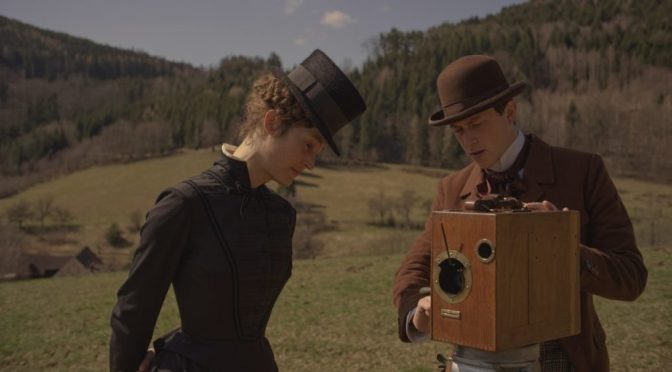
But is it really a silent film, quiz the sceptics? This question is mostly beside the point. The postmodern magpie impulse leads us away from purism and into remix culture. We recently welcomed the re-emergence of Musidora via the revival of Irma Vep on TV with Alicia Vikander, following Olivier Assayas’s 1996 film of the same name starring Maggie Cheung[3]. I would love to your draw your oversubscribed attention to the mischievous appearance of Louis Le Prince as a supporting character in Marie Kreutzer’s Corsage (2022, pictured above) – improbably wielding a reel of celluloid and giving the young Empress Sissi an opportunity to express herself in a medium of self-portraiture far removed from the formality of a court painting in oils. The mechanics of an early film apparatus in the service of the imperial selfie. Young cinema references live again in gleefully anachronistic contexts.
Irma Vep (Olivier Assayas, 1996)
As has been remarked before, this is happening alongside an explosion in the availability of early and silent film on DVD and Blu-ray, even on streaming platforms, and the growth in archive cinema festivals. These things are clearly related. We might trace this “silent film revival” back to the centenary of cinema celebrations in 1995, which reminded us all over again of cinema’s youth, the compelling beauty and strangeness of early film – the century looping back on itself like a reel.
So there are intellectual and practical reasons for the persistence of silent cinema style. But I would argue that there is also an emotional pull, drawing us back to the first decades of filmmaking. This is counter intuitive. When Billy Wilder made Sunset Boulevard (1950), and Stanley Donen made Singin’ in the Rain (1952), the memories of the silent era, and the fraught transition to sound, were still relatively fresh, barely a generation away. The filmmakers were excavating their own youth, their own back catalogues. Conversely, no one living today feels genuine nostalgia for the early film period. We don’t remember that far back.
However, I think there is a connection. We yearn for the new media excitement of ten or twenty years ago or more – the same sense of a moment captured in time emerges when we look at both. Whether the form in question is MySpace or Vine or YouTube vlogs, Facebook pokes, gifs, hashtags or Boomerangs. Ah, the days of landscape-oriented video. Or that particular format, the music video, corralled into an immersive exhibition practice called MTV and genuinely ubiquitous, now still as glamorous and sometimes expansively produced, but streamed singly online, or relegated to a “background screen” in a bar or hotel foyer. Who remembers renting a VHS, home-taping a movie off-air, or covertly watching a “video nasty”[4]? Laser discs, even. Or simply broadcast TV, in a choice of three or four channels. We have always been watching, and experiencing newness and loss.
Decasia (Bill Morrison, 2002)
Remember how we discovered, studied and adapted to the new forms, found ways to use them for our own amusement, our own conversations? We have become adept at learning to love and then learning to move on, from new media. The Artist, just like Sunset Boulevard, takes the loneliness of standing still while the world turns to a new novelty, as its central theme. Decasia, with its once carefully crafted images engulfed by decay, expresses this bereavement without saying a word. Sometimes, rarely, we find a form and stick to it, in defiance of fashion. Why is this blog still a blog, and a WordPress-hosted blog at that, when my peers have migrated to Substack, or pivoted to video? I must be old-fashioned, I guess, or simply nostalgic. Hands up if you remember when this site began, perversely on Tumblr? Or when Twitter – a platform that persists even now, but under a new name, with dangerous new rules, and diminished engagement – was integral to its growth?
When we look at early film we recall the ephemerality of once-new media: so many young cinemas, and one powerful pang. The joy of novelty and movement, experimentation and awkwardness, of discovery and reorientation and then the inevitable shock of absence. We understand the connection between our modern screen culture, and the early film period – but more importantly we feel it too. New media forms demand and swallow our attention, but their content is easily lost, and their existences short. This emotional link, as well as the artistic expressions that it provokes, is a rebuke to the idea of linear history. This is fine, because cinema time is always instantaneous. And cinema will always find a way to stay young. For a multitude of reasons, we are living in the silent film revival, and I find myself racing to document it.
Early cinema is trending in the 21st century, but how are we going to make the most of it?
Why “early cinema” in the twenty-first century? Over the past several decades, there has been a global revival of silent film culture—from international festivals and archival research collectives to popular podcasts, blogs, and social media fandoms. Passionate communities of students, scholars, archivists, curators, artists, and musicians have rallied around the resurrection of movies made over a century ago. But what is the specific appeal of “early” cinema—as an aesthetic form, experimental impulse, and historiographic gambit—toward bringing silent film culture into contact with the possibilities and crises of the present? New media pose irresistible parallels with early film exhibition practices, epitomized by the recurrence of viral temporal loops and attraction-based spectacles. Yet there are logistical challenges to curating early films (which are often very short) as opposed to feature-length works. Beyond material considerations, how do the uneven politics of visibility and representation in early filmmaking (its radicality and racism, for example) speak to feminist, queer, decolonial, anti-racist, and other social justice movements today? Digitization has made the early film archive widely accessible—but unmanageably plentiful. Its contents encompass 4k nitrate scans, physical media collections, curated streaming databases, and the unmoderated recesses of YouTube and TikTok. How best to give method to early cinema’s madness by concocting playful, new conceptual categories for thematic and speculative curating? Most importantly, who are the audiences for early cinema today (beyond the usual suspects) and how can we (early film evangelists) work together to identify, curate, and contextualize an evocative range of programming and syllabi that will bring new publics into the fold?
Silent London will always be free to all readers. If you enjoy checking in with the site, including reports from silent film festivals, features and reviews, please consider shouting me a coffee on my Ko-Fi page.
[1] For a commentary on the capitalist realities behind the apparently hobbyist jollity of TikTok comedians, see Maggie Hennefeld, Death by Laughter: Female Hysteria and Early Cinema (Columbia UP, 2024)
[3] This excellent film was my gateway into a lifetime of silent film fascination
[4] Film such as Prano Bailey-Bond’s Censor (2021) appeal to this nostalgic itch, just as clearly as The Artist appeals to those who admire the aesthetics of silent Hollywood.
“Just a little note” is so often code for “here comes some shameless self-promotion”. So, here goes.
Just a little note to say that today is publication day for my second BFI Film Classic. As I posted earlier in the year it is on The Red Shoes (Michael Powell and Emeric Pressburger, 1948), a film with several connections to silent cinema and to the Roaring Twenties – but strictly speaking, off-topic for this website. Still, I hope that if you love the film, you like the book.
The BFI has just launched its Cinema Unbound epic celebration of Powell and Pressburger and The Red Shoes will be re-released on 8 December. So I will be speaking at lots of screenings of the film across the country. To find out where I will be and when, follow me on Twitter/X or Blue Sky or check back here every so often.
The book is available from all good bookshops, and the publisher’s page is here. I am delighted to have had some press mentions already, but all reviews on Amazon and Goodreads are very, very gratefully received. Thanks so much for reading!
Spoiler alert: this post is mostly about the very end of the new Mission: Impossible film, Dead Reckoning: Part one. Don’t read on until you have seen that, or you will be very angry with me.
I have written here before about how the stunt movie and the art of silent slapstick intersect – the inspiration that time was John Wick, with its old-school fight choreography. New in the cinemas this week is the latest film in the Mission: Impossible franchise, starring Tom Cruise, a man who has long insisted that he does all his own stunts, just like a latterday silent star.
“My memory goes back to the very first films. My ambition goes far ahead of today.”
Michael Powell, on the ballet sequence of The Red Shoes
Let me just tap this microphone a couple of times. Cough once. Thumbs up. We’re good to go? I have a little announcement to make and it is a wee bit off-topic.
Something utterly radical has happened to the Sight and Sound Greatest Films of All Time poll. This year, around 1,600 critics voted, more than ever before, and the winner of the poll was for the first time a film directed by a woman. A feminist art film from 1975 is now the greatest film of all time, according to the only poll that “most serious movie people take seriously” (Roger Ebert). That film is Chantal Akerman’s Jeanne Dielman, 23 quai du Commerce, 1080 Bruxelles.
Only three other films have won before. Bicycle Thieves in 1952, and then for the next five polls, which take place every decade, Citizen Kane held the top spot. In 2012, Hitchcock knocked Welles off his perch with Vertigo.
“At the Cinémathèque I discovered a world which nobody had spoken to me about. They’d told us about Goethe, but not Dreyer… We watched silent films in the era of talkies. We dreamed about film. We were like Christians in the catacombs.”
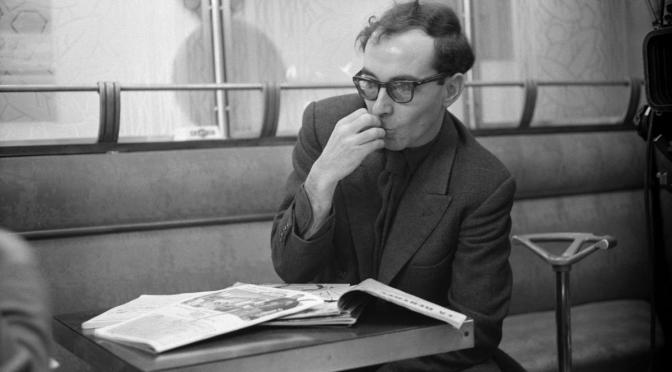
Jean-Luc Godard, 3 December 1930 – 13 September 2022
Sad to say, another short video tribute post on the site this week. Jean-Luc Godard, a towering figure in the Nouvelle Vague and international film culture, has died aged 91. As a writer, director, critic and cinephile, Godard’s ideas about film have shaped the cinematic imaginations of several generations. And he adored silent cinema.
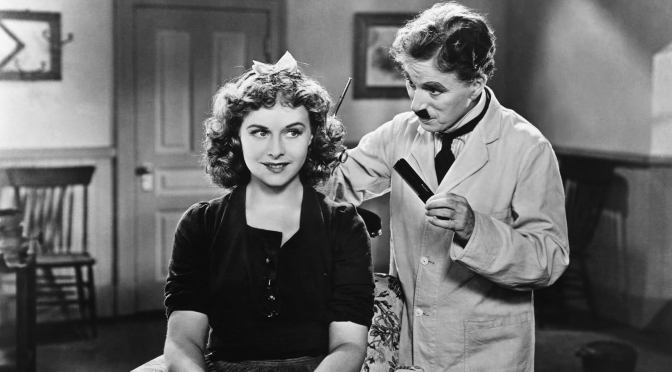
The greatest political speech in film history is delivered by cinema’s most famous silent clown in 1940’s The Great Dictator. In this comic masterpiece, Charlie Chaplin writes, directs and stars as both a Jewish barber and the Fascist tyrant Adenoid Hynkel – any resemblance to a living person, in particular the leader of the Third Reich, was entirely intentional.
It is a timeless comedy of resistance and compassion in the face of evil, which uses physical comedy to puncture political megalomania. In short, a film worth breaking a vow of silence for.
It has been said by many a wise soul that every Hollywood silent is essentially Pre-code. That sentence itself is my entire justification for sharing this with you. The fabulous Christina Newland and I have collaborated on a Pre-code Hollywood project to make this hot summer sizzle with a little more steam. But yes, it’s all talkies.
We have curated five films from Park Circus and Warner Bros’s new collection of sharp remasters of Pre-code classics, and we will be showing and discussing them at the fantastic Cinema Rediscovered festival next week in Bristol. After this launch, the films will be available to book by cinemas across UK and Ireland and you may even find Christina or I popping up to introduce them.
I am spending most of this summer locked in archives or chained to my computer to hit some book deadlines, but you never know… maybe I will see you at the movies!
• Silent London will always be free to all readers. If you enjoy checking in with the site, including reports from silent film festivals, features and reviews, please consider shouting me a coffee on my Ko-Fi page.
I couldn’t let 2020 go by without talking to you about Away, a truly remarkable animated feature, and a modern silent too. This deceptively simple quest film has zero dialogue, and was all, every frame, the work of one man, Latvian filmmaker animator Gints Zilbalodis. He wrote, directed, scored and yes animated this award-winning film over the course of three and a half years.
He admits that that he concocted the screenplay on the fly, but that it soon came to feel that that film’s story was a metaphor for his struggles to complete the film. That’s why I say deceptively simple: beneath Away’s bright, almost cute surface there’s something deeper at work.
Can a fictional film damage a real person’s reputation? William Randolph Hearst certainly thought so, as he mobilised to stop the screenplay of Citizen Kane being turned into a movie. Charles Foster Kane was modelled, blatantly and pointedly, on Hearst himself, and within its fiction, Citizen Kane contained some painful, and subversive truths. That’s a moment captured in David Fincher’s fascinating new film Mank, which dramatises the process by which Herman J. Mankiewicz, holed up in a desert ranch with a collection of broken bones, wrote that incendiary movie script. And also, how his words were received in San Simeon, Hearst’s famous Californian castle.
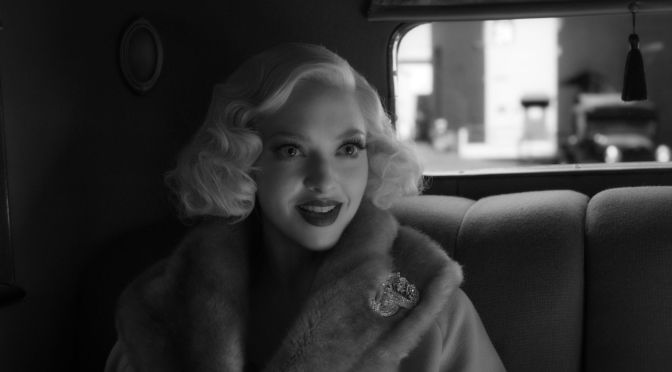
Naturally, the film unfolds via a series of flashbacks, Kane-style, including a fun scene in which the MGM writing room pitches a remake of Caligari to Irving Thalberg, off-the-cuff. The central dramatic tension here is not between Mankiewicz (played here by Gary Oldman) and Tom Burke’s Orson Welles (although there was plenty of aggro there), but Mank’s previous encounters with Hearst (Charles Dance), and Louis B Mayer (Arliss Howard). There’s more than studio politics at stake, but actual politics too – here we see the genesis of Citizen Kane, which is here explicitly Mankiewicz’s revenge on Hearst. But while there no love lost between the men at the table, Mank does have a soft spot for Hearst’s mistress, Marion Davies, played here radiantly by Amanda Seyfried.
This is a platonic, playful friendship, and among Mank’s cast of fulminating and frustrated men in suits, Marion’s scenes leap off the screen. Marion and Mank chat while admiring the San Simeon elephants, while sipping from a flask hidden in one of the terraces’ stone benches – what’s not to love? Mank and Marion are great pals, who enjoy each other’s company and see the best in each other. Seyfried’s performance is every bit as captivating as Oldman’s, bursting through the heavy makeup she wears as Marion. Their dialogues are wonderful, but there is one devastating scene in which Marion sits silently horrified while Mank delivers a bitter, drunken monologue to her and Hearst’s guests at San Simeon. Seyfried proves an excellent silent actress, which is just as well, because she doesn’t have any lines.
Amanda Seyfried as Marion Davies in Mank (2020)
Which brings us to an uncomfortable problem with Citizen Kane. Why did Mankiewicz expose his enemy Hearst by writing the undignified truth about him, but also humiliate his friend Davies by distorting her image with untruths? To summarise, a little bluntly: in the movie, Kane’s mistress and second wife is a talentless and lonely alcoholic with naïve dreams of being a great opera singer. Davies was a talented comic actress, whose films were very profitable. She was also an extremely popular person, whose career was stymied only because of Hearst’s insistence that she play prestige dramatic roles. Welles ferociously denied there was any connection between Davies and the fictional character of Susan Alexander Kane:
“That Susan was Kane’s wife and Marion was Hearst’s mistress is a difference more important than might be guessed in today’s changed climate of opinion. The wife was a puppet and a prisoner; the mistress was never less than a princess. … The mistress was never one of Hearst’s possessions: he was always her suitor, and she was the precious treasure of his heart for more than 30 years, until his last breath of life. Theirs is truly a love story. Love is not the subject of Citizen Kane.”
And yet Hearst read the script as an insult to Davies and many people fear that the mud, as it were, has stuck. Mank explains in full why Mankiewicz wanted to attack Hearst, but offers only one reason why his screenplay diminished his friend Davies. Some people, Mank asserts are headliners, and others are merely secondary characters. That’s a dramatist’s distinction, not the words of a friend.
Marion Davies
What makes Davies a secondary character though? I can’t possibly imagine. Mank tantalises the audience by giving us a glimpse of Davies’s brilliance, and then pushing her back to the sidelines. Because … she’s a secondary character, a distraction from the wranglings of men over their own legacies. Davies has a legacy worth protecting too, as anyone who has seen The Patsy or Show People, or any number of her other films, can tell you.
If you want to discover the truth about Marion Davies, you can read the many testimonies of her Hollywood friends in their own memoirs, you can even read her own autobiography of sorts (The Times We Had: Life with William Randolph Hearst) if you can find it. But I recommend you wait a little, until 2022, and the publication of Lara Fowler’s impressively researched biography, Captain of Her Soul: The Life of Marion Davies (University of California Press).It’s bound to be worth a read, because the work Fowler has done already is exemplary, and because Davies deserves to be more than just a secondary character in someone else’s life story – whether that story belongs to Hearst, or Mankiewicz or anybody else.
Citizen Kane is available to watch on BBC iPlayer.
I programmed a film season! Marlene Dietrich: Falling in Love Again plays at BFI Southbank in December and includes the wonderful silent film she starred in: The Three Lovers/The Woman Men Yearn For (Curtis Bernhardt, 1929)
Silent London will always be free to all readers. If you enjoy checking in with the site, including reports from silent film festivals, features and reviews, please consider shouting me a coffee on my Ko-Fi page.
I think this blogpost contains spoilers, but it’s very hard to tell.
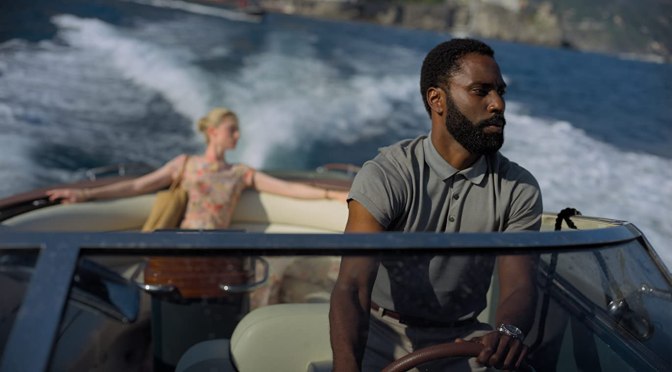
Christopher Nolan’s new film is notoriously complex, or perhaps just convoluted. I say that because although I wasn’t always ready to answer probing questions on either the plot or the physics that propelled it, I was fascinated by Tenet’s central use of the simplest, and most effective weapon in the filmmaker’s arsenal: the rewind.
Film is a time-based medium, which is always played forwards but can be recorded backwards. And at the heart of Tenet, this is all there is: film moving backwards and forwards. This being a Nolan blockbuster, we know it was actually shot on film, which makes it extra satisfying. Tenet calls the rewind “negative entropy” and so would you if you were making a multimillion-dollar movie.
This post is humbly submitted to the Shadowplay Project Fear Blogathon. Happy Halloween!
“Fantasy abandoned by reason produces impossible monsters: united with her (reason), she (fantasy) is the mother of the arts and the origin of their marvels.”
That’s the motto attached to Francisco Goya’s etching The Sleep of Reason Produces Monsters, which is also one of the inspirations for an utterly disturbing new dialogue-free film. Jonathan Glazer’s The Fall (2019) screened on BBC2 on 10pm on Sunday, unannounced in the listings, and at a selection of cinemas across the country. It’s a scant seven minutes of unnamed horror – a mob, a victim, an escape attempt – soundtracked by an eerie score from Mica Levi.
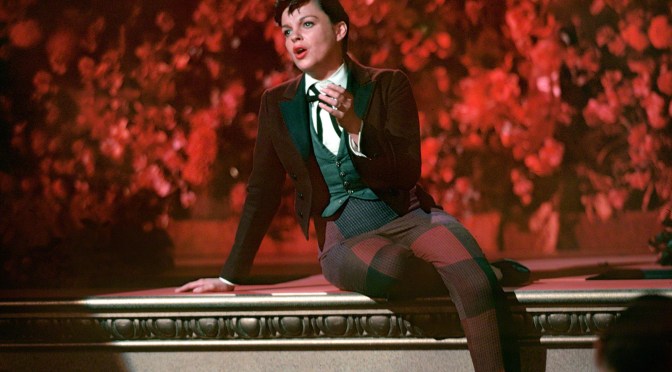
I wrote this piece for Drugstore Culture last September, when Bradley Cooper’s A Star is Born was released. Now that that site has shuttered, and Judy Garland is back in the cinema in the form of Rupert Goold’s late-life biopic Judy, starring Renée Zellweger, I have republished it here. There is not much to do with silent cinema here, but it’s all film history, so why not?
According to the website of the Harvard-Smithsonian Center for Astrophysics, the birth of a star is a ten-stage process. To paraphrase from this already simplified version: first, clouds of gas accumulate in galaxies – and then trouble strikes. ‘Random turbulent processes lead to regions dense enough to collapse under their own weight,’ reads stage three, ‘in spite of a hostile environment.’ The star begins to form at the centre of all this collapsed matter, which the website calls a ‘blob’. The protostar achieves bona fide status as the result of fusion and, in the process, creates a lot of rubbish. By the end of the tenth stage, the new star is fully formed, along with a few collateral planets, and all that unwanted debris.
Stormy weather and a hostile environment leading to a collapse and a union, leaving us with one shining star and a heap of has-beens. As in the heavens, so in show business. Just ask Bradley Cooper. For his directorial debut, which received its UK premiere last night, the actor has just revived the Hollywood myth A Star is Born as a heady, emotional rock musical, and it is a worthy, self-aware successor to the other films bearing that name. It’s a simple story, which explains its enduring appeal. Two talented people fall in love and get married: one is a gleaming new star, and the other a falling meteor, soon to become so much showbiz detritus.
Cooper also appears as the veteran rocker on the slide who takes Lady Gaga’s ingénue on a bumpy ride to the top. It’s an old, old story, but Cooper and Gaga tell it exceedingly well. Theirs is the fourth feature to be made with the name A Star is Born since 1937, although the story began a little earlier than that. A Star is Born cropped up roughly every 20 years for a while. After 1937, there was 1954, and 1976 – which means the latest instalment is long overdue. Cooper and Gaga’s antecedents are Janet Gaynor and Fredric March, directed by William Wellman; Judy Garland and James Mason, directed by George Cukor; and Barbra Streisand and Kris Kristofferson, directed by Frank Pierson. In the nineties and noughties, there were whispers of new chapters: for a while we expected to see Clint Eastwood directing Beyoncé, with perhaps Will Smith or Leo DiCaprio as the male lead, in a script that was apparently inspired by Kurt Cobain. Perhaps we should be grateful that never happened. Continue reading A Star is Born again and again→
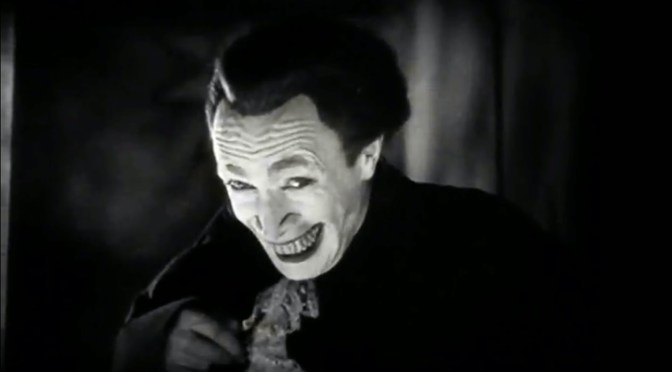
You may have noticed, due to the onslaught of thinkpieces and angry debate, that Todd Phillips’s Joker is released this weekend. This controversial film, starring Joaquin Phoenix, is a kind of origin story for the Batman villain of the same name.
Regular readers of this site, or anyone who has seen the trailer, may be aware that there is a little nod to silent cinema in this movie. So in honour of Joker and his famous grin, let’s count down the 10 most sinister smiles in silent cinema. Please don’t have nightmares.
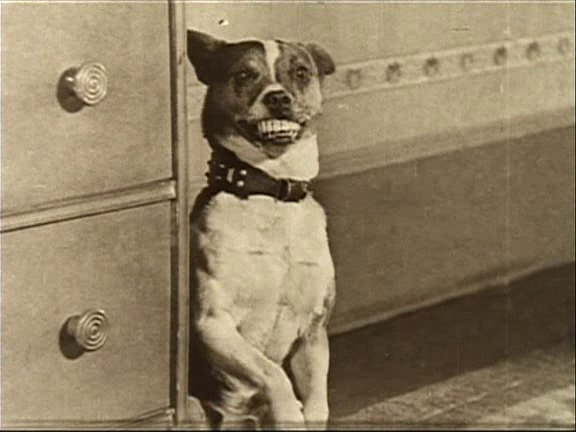
Mighty Like a Moose (1926)
The dog in Mighty Like a Moose
This shouldn’t really be so creepy but it most certainly is. Charley Chase’s plastic surgery comedy Mighty Like a Moose imagines what a dog would look like wearing false teeth. Dear lord above this image is not for the faint-hearted.
Blackmail (1929)
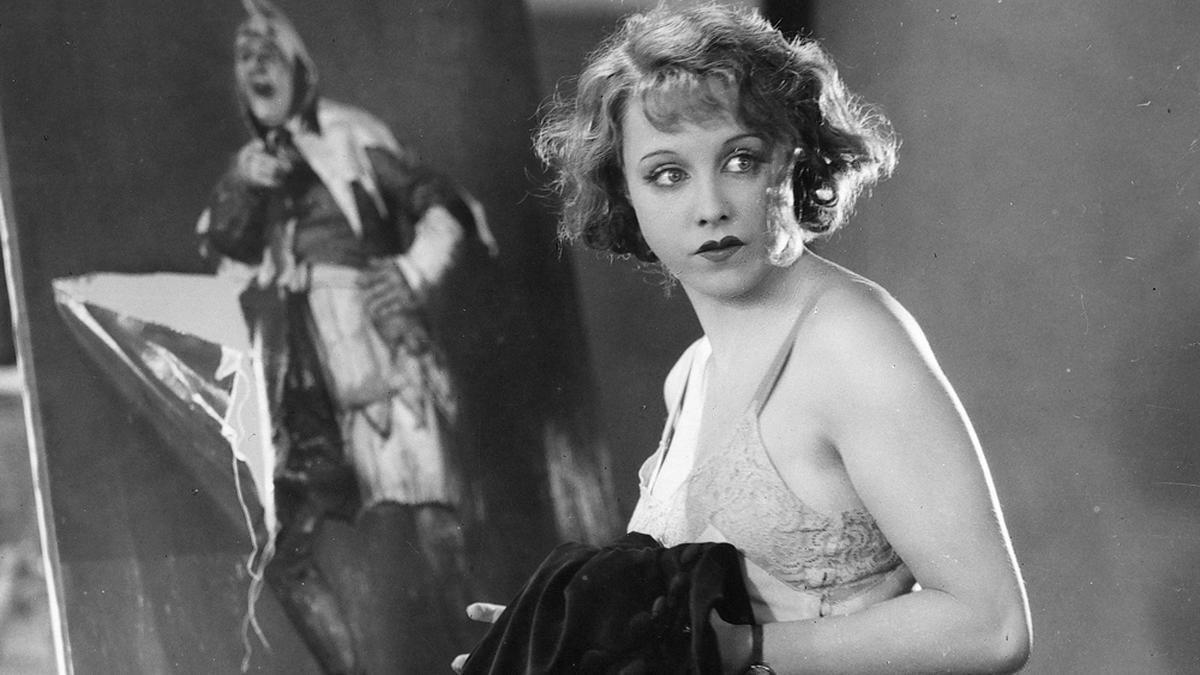
The Laughing Jester in Blackmail
Hitchcock transfers culpability back and forth in this late silent’s tale of rape, revenge and retribution. But who’s bearing witness to all this human misery? The scoundrel artist’s icky painting of a court clown yucking it up – and pointing the finger of guilt. Continue reading No Joker: 10 sinister smiles in silent cinema→
It’s a great week for new British cinema. I don’t get to type that very often. But this week, as the heatwave cools, you can spend your cinema money on two fascinating and brilliant new movies by young British filmmakers: Joanna Hogg’s finely polished dissection of a troubled romance, The Souvenir, and Mark Jenkin’s Bait. I highly recommend both*, but it’s Bait I want to talk to you about today.
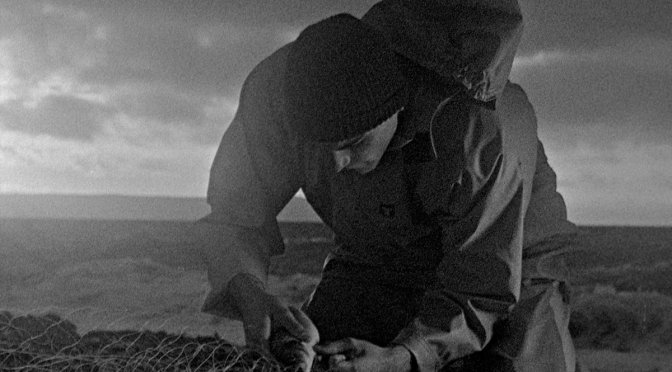
Bait is Jenkin’s debut feature and it continues the themes and techniques he has explored in his short work. He’s a Cornish filmmaker, and in shorts such as Bronco’s House (2015), he has tackled subjects very close to his own home, the dissolution of the local way of life due to housing shortages exacerbated by unchecked tourism and the loss of traditional crafts and livelihoods. Those themes surface again in Bait, a portrait of a belligerent, bereaved young man called Martin (Edward Rowe) who lives in Newlyn, once a busy fishing port. Martin’s family home has been bought by a middle-class London family who have decked it out with tacky nautical accessories and use it only for holidays and Airbnb income, and his job as a fisherman has also dwindled to a shadow of itself. He no longer has his own boat, and relies on what he can catch from hand-cast nets instead. His brother has a boat, but adding insult to injury, uses it for pleasure cruises rather than the family business. It’s important, not to say simply refreshing, to see British filmmakers bringing regional issues to light in this way. Too many commercial films portray the British countryside as a moneyed idyll or a folksy home for cute eccentrics. Bait doesn’t do that. Continue reading Bait review: Silent landscapes, angry voices→









 Silent London