Here at Silent London we are big, BIG, fans of the Slapstick Festival in Bristol. It is a friendly, wide-ranging event, run by beautiful people, in a great city – and it always tickles our funnybone.
If you’ve ever been lucky enugh to attend you’ll know that it is a pretty special special festival, which doesn’t cut corners. Top-quality prints are shown accompanied by first-rate musicians and introduced by people who are experts or celebrities – or sometimes both.
And that’s not easy in these tricky times, so this year the Slapstickers are asking for a little help, from you. The Slapstick festival crew have launched a Kickstarter appeal to cover some of their costs, and they would love it if you could support them. The money will go to very good causes including more live music and affordable tickets for kiddies. As it’s a Kickstarter your assistance will be rewarded by some fabulous gifts, from kazoos to custard pies to the chance to meet a VIP – even Morph himself!
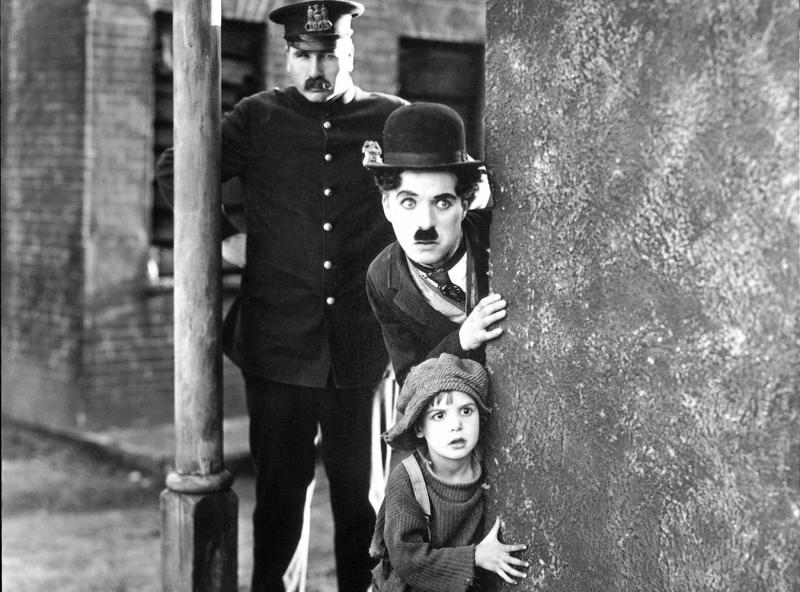
The Kid (1921)As for the more tradtional way of showing your support, tickets are now on sale for the festival gala, which will feature Chaplin’s wonderful The Kid among other treats.
This is a guest blog for Silent London by Maria Wyke, professor of Latin at University College London.
Few people realise how important and innovative a role early cinema played in shaping modern knowledge of ancient Greece and Rome. In the vaults of film archives scattered across the world, a large number of entertaining, provoking and often quite beautiful films survive that are set in the classical world. Through their enticing use of gesture and look, exotic sets and extravagant costumes, colour, music and movement, these films still offer their spectators the opportunity to enter into the history or myth of antiquity, and to experience a distant past where life is lived differently or to an extreme.
Antiquity is also one of early cinema’s most important means for bringing the past into the present, making it accessible to mass audiences across national boundaries, offering it up as a past that binds audiences to each other, and utilising it to legitimate cinema as a new and global art form. Yet early cinema’s use of the ancient world is little known or understood.
For a few years now, I have been involved in a research project with Pantelis Michelakis of the University of Bristol. Both of us are classicists, with my specialism being Rome and his Greece. Together, and with the help of film archivists, and historians of film and of cultural studies, we have been trying to understand this close relationship between cinema and Classics (we published an edited collection on the subject in 2013 with CUP, The Ancient World in Silent Cinema).
We see film screenings as an integral (and very enjoyable) part of our project – an opportunity for audiences to participate and help open up new routes for our research. So on 21st November 2015, at the fabulous Cinema Museum in East London, and as part of the Being Human Festival of humanities research, Pantelis and I will be screening a number of early “antiquity” films. If it interests you, do register for your ticket here and come along.
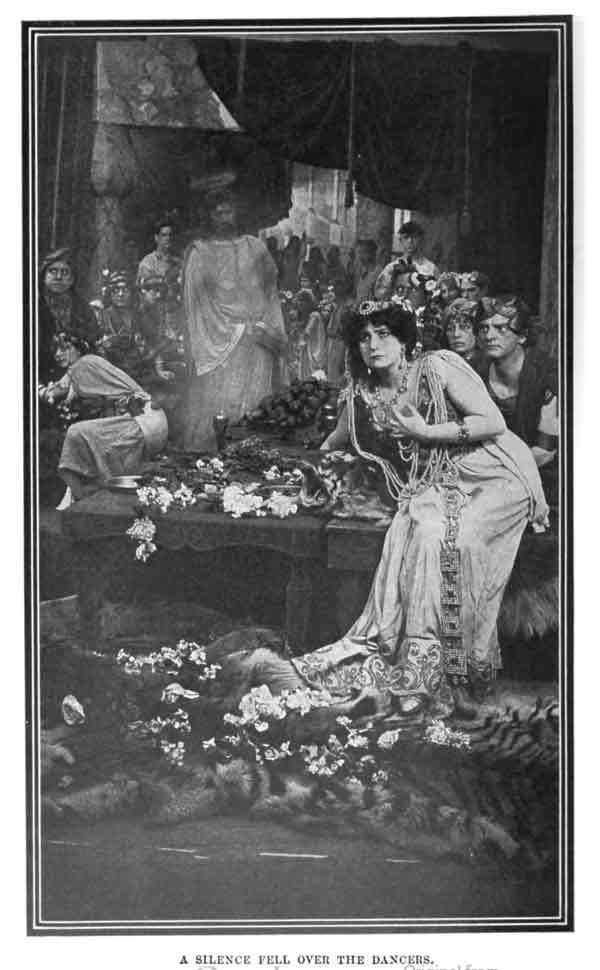
Though your Sins be as Scarlet (USA, 1911)
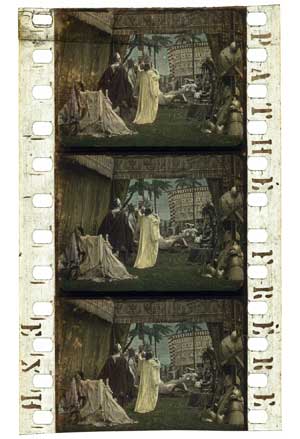
From 2 to 3.45 we will be showing 35mm films from the Joye collection in the National Film Archive and from 4.15 to 6pm films from archives in Paris, such as the Cinémathèque Française. What films exactly? Well, we are in final negotiations about that.
This year’s London film festival did not make life easy for cinemutophiles. Many of the silent films in the 2015 programme were scheduled slap-bang against each other, or almost, necessitating a frantic cab ride across to town. All very glamorous in its own way, and nice to be spoiled for choice, but frustrating for those who aren’t lucky enough to have seen some of these films in other festivals, or want to cram as much as possible into a trip to London. That said, the LFF pulled off a coup to make those Londoners who wished they were at Pordenone instead feel smug for once. The two festivals always clash, but if you stayed home this year, you’d have had the chance to see the restoration of Laurel and Hardy’s The Battle of the Century, a day before your counterparts in Pordenone. Ta-da.
As you might have noticed, your humble correspondent was indeed in Pordenone, but when I got home, I managed to squeeze in a few trips to the London film festival. Rude not to, after all. And if the programme seems a little light on silents at first, as is always the way, things pop up where you might not expect to find them. Festival opener Suffragette (Sarah Gavron, 2015) closed with a fragment of archive footage; and I spotted Gloria Swanson in one of the festival most-talked about movies, Todd Haynes’s magnificent Carol (2015).
Sherlock Holmes (1916). Cinémathèque française, Paris
Love makes gluttons of us all. So if you enjoyed Love Is All, Kim Longinotto’s romantic sweep through the film archives at the cinema, you may be toying with picking up the DVD also. Then again, there are so many great clips from brilliant films, both popular and obscure, in Love is All that it might have prompted you to buy several other DVDs instead.
Love is All sprawls across the history of cinema, picking up clips from classic films and home movie so the and editing them together into a gorgeous mess of love and romance. It contains flirtations, seductions, marriages and babies; young love, forbidden love, gay love and straight. It leans quite heavily on silent cinema, possibly because those films work particularly well in this treatment, possibly because they are just the most romantic. Who knows? And the whole thing is set to a gruffly melancholic soundtrack of songs by Richard Hawley. So it’s really rather eye-catching, but could be a head-scratcher too. What does it all mean?
Love is All (2014)
This DVD release from the BFI does attempt to reveal the mysteries of this swooping documentary, with a package of extras including explanatory essays and statements from the film-makers, plus a bundle of complete short silent films from the archive. There is also a recorded Q&A with Longinotto in which she happily admits that she had never heard of Hindle Wakes or Anna May Wong before including them in Love is All. Yes, really.
I reported on one Buster Keaton restoration project in the summer – and now there is another one. This one comes to us courtesy of the fabulous Lobster Films in Paris, and proves that there is more than one way to skin a cat.
This project has both a narrower and a wider focus – the aim is to complete restorations of Buster’s short films only, but the list runs to 32 and includes those that he made with Roscoe Arbuckle, such as his movie debut, The Butcher’s Boy (1917). And Lobster will be taking elements from archives and collections around the world, to get the best possible result. Not only that, the team will be commissioning new scores for all the films that they work on.
Here’s an extract from the polished version of The Playhouse (1920), to show you what is planned:
I’ll let the amazing Serge Bromberg explain further, and persuade you to kick in some coins:
Can you ever have too much Buster Keaton? I will let you decide that for yourself, but just think that if you do cough up, wherever he is, old Buster might look down on you and smile. Almost.
The Phantom of the Opera (1925). Photoplay Productions
At the end of life death is a departure; but at life’s beginning a departure is a death – Victor Hugo, Les Misérables
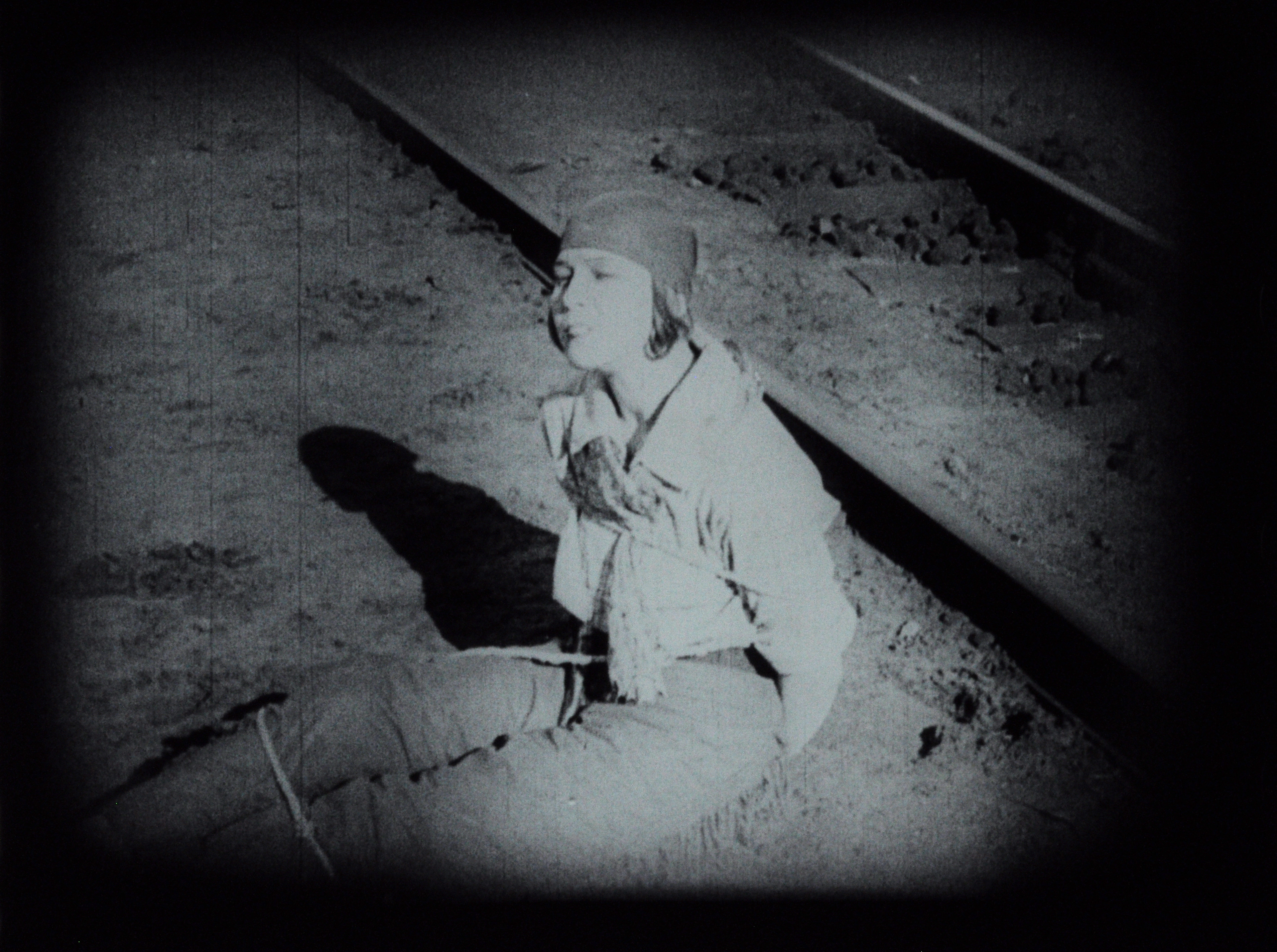
Back home, when they ask me what I saw at the Pordenone Silent Film Festival, I will have to confess that yes, indeed, I did see a woman tied to the train tracks this year. All their suspicions will be confirmed, although you and I will know that the scene in question was part of Kinokariera Zvonaria (A Bell-Ringer’s Film Career, 1927), a Russian spoof of the movie business. But if they don’t know that women being tied to the train tracks isn’t really a silent cinema staple, then they may not be familiar with Soviet comedy. Which I would say is a shame, although my favourite of this strand this year remains Dva Druga, Model I Poodruga. This breezy two-reeler was a sweet thing, with a reluctant star being caught in the snare of a travelling film company, whose motto was the less-than-inspiring: “Don’t waste film. Be economical.” A shocking waste of film that closes the movie elicited groans from the audience in Cinemazero – talk about singing to the choir.
KINOKARIERA ZVORNAIA (URSS 1927). Gosfilmofond of Russia, Moscow
The feature-length comedy on Saturday morning was less successful for me – mostly because it was quite hard to follow. In Serotsa I Dollary (Hearts and Dollars, 1924), mistaken identities complicated the central gag of a well-to-do American girl making her way in Russia. Familiar “types” from Soviet comedy abounded, but I couldn’t quite key in to this one, sadly.
We saw more westerners adrift in eastern parts with a film only recently made available again: Tod Browning’s opium-trade drama Drifting (1923). Priscilla Dean plays Cassie, the “poppy princess”, a opium dealer fallen on hard times in China, no doubt partly because her companion Molly has been getting high on the supply. Wallace Beery is her accomplice-cum-rival. Matt Moore is the American captain sent to China to put an end to the drugs trade, and as so often is the case, Anna May Wong is criminally underused as a local girl setting her cap at him. Set down on paper this looks like fiery stuff, and it is in parts, but the original story (in which Cassie has an even older career on the side) has been toned down, and the presentation of what remains is rather coy. There is an unexpected role for a cute tot, a small boy who belongs to an unseen missionary family, and it’s all very smartly shot and brightly tinted. Not everyone was as keen as I was on this one, but hey, we all get to be an outlier sometimes. Drifting was elevated hugely also by a superb accompaniment by Stephen Horne, who brilliantly caught the atmosphere of revolt threatened by the locals banging “sinister and solemn” drums in the background.
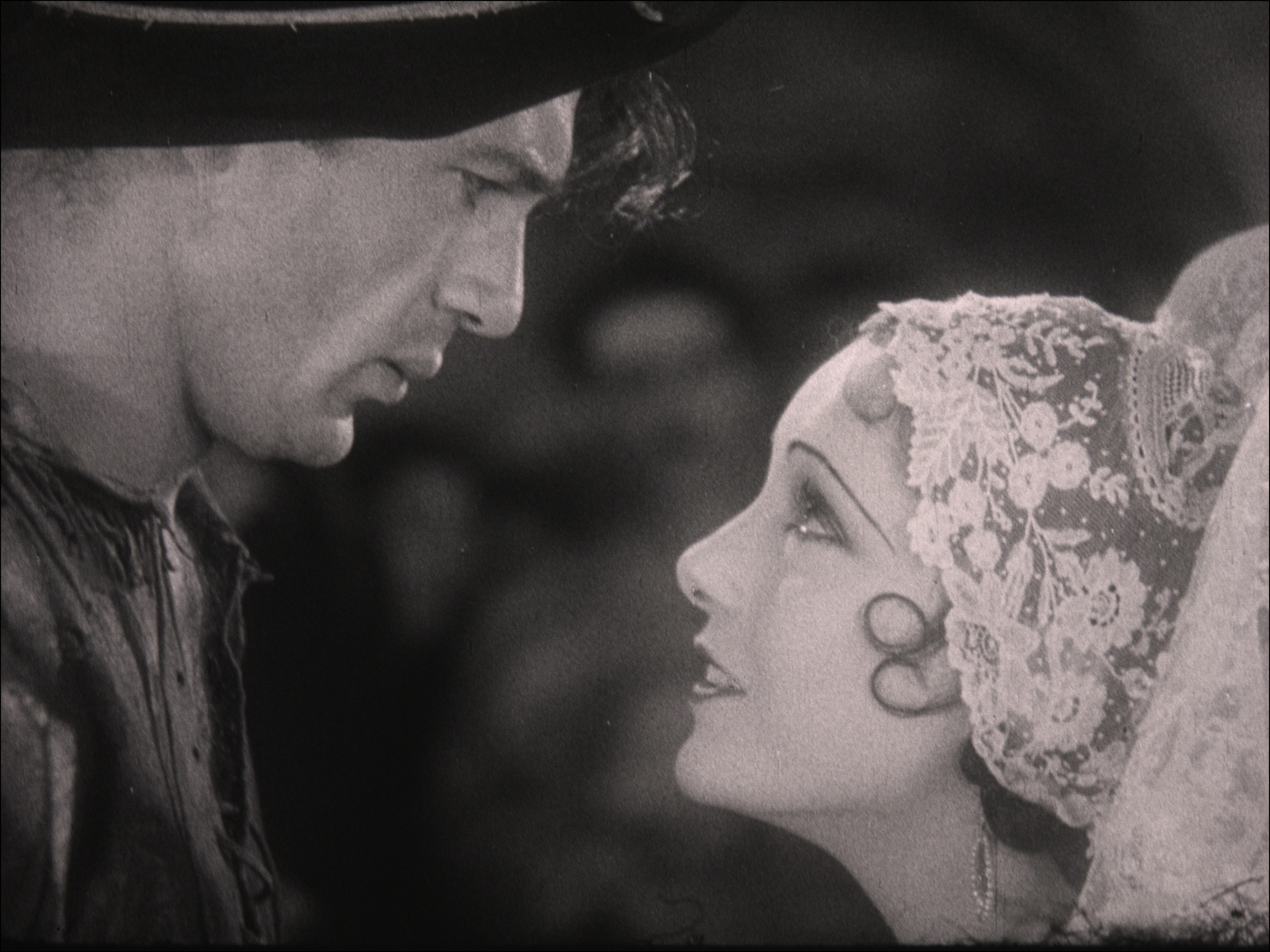
Wolf Song (1929) Library of Congress Packard Campus for Audio Visual Conservation, Culpeper, VA
We travelled way out west again after lunch, for another assignation with Victor Fleming. After a tantalising trailer for the lost film The Way of All Flesh, starring Emil Jannings, we were spoiled with a screening of Wolf Song (1929). This movie, a red-blooded western romance between trapper Sam (Gary Cooper) and a young Mexican woman called Lola (Lupe Vélez) was powerful stuff. Sam is torn between the lure of the mountain trail and his love for Lola, between the call of the “wolf song” and marital bliss. But what bliss! This is the kind of movie that reminds you that all silent cinema is effectively pre-code. The affair between the two leads is passionate, and there is enough steamy eye contact, questionable imagery and plimming bosoms to mist up your spectacles before you swoon at the sheer beauty of it. Cooper and Vélez are simply gorgeous leads, and if you haven’t heard about Cooper’s nude bathing scene in this film, well that would explain why you weren’t at the Giornate today. Seriously, though, this is the sort of film that reveals exactly why Hollywood was called a dream factory – it’s a collective fantasy, played out 10ft tall.Continue reading Le Giornate del Cinema Muto 2015: Pordenone post No 8→
The Battle of the Century (1927) Lobster Films, Paris
Laughter is sunshine, it chases winter from the human face – Victor Hugo, Les Misérables
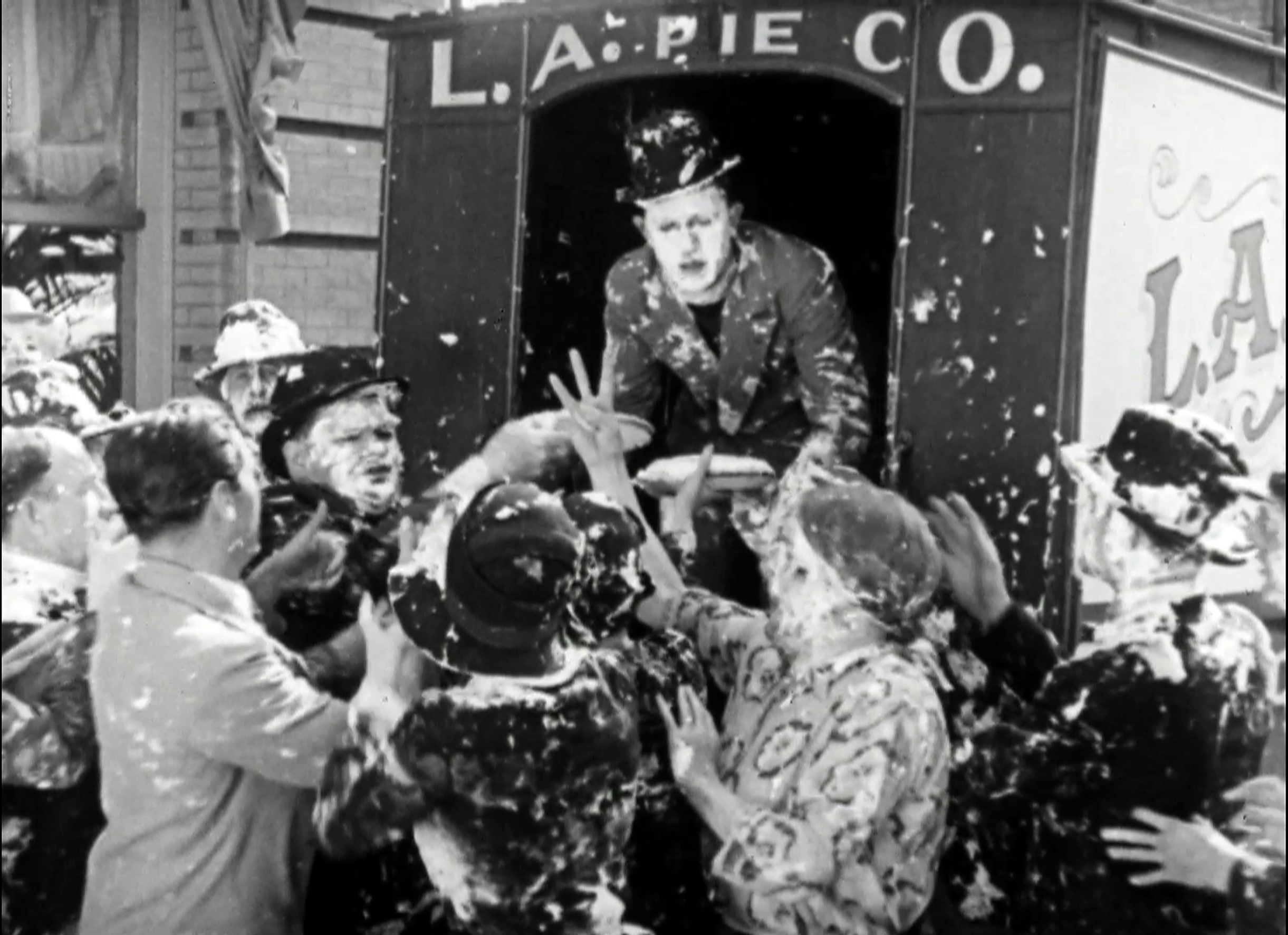
Sometimes, a seven-hour epic will come along to sweep you off your feet. At other times, 18 minutes will do the same job, or even just a few seconds. Friday at the Giornate was Laurel and Hardy’s day and no mistaking. The happy discovery of the missing reel of The Battle of the Century (1927) has been dominating the runup to the festival, and with good reason. The house was full for the evening screening, one of the first in the world, of the nearly restored, almost complete two-reel comedy. When I say full, yours truly was perched in the gods, nearly touching the ceiling. But if I was giddy, it was with excitement, and as Battle unspooled with its restorer, Serge Bromberg at the piano keys, we all felt a little thrill I’ll bet. The central pie fight sequence is slapstick gold – expertly orchestrated, constantly inventive and teasing us with the escalating violence. So often a group are poised with pies in hands … we know another splat is on its way, but we don’t know where it will come from. And because of that, seeing it in proper context, as a counterpoint to the damp squib boxing match in the first reel, was hugely satisfactory. The pie fight’s no longer a scene, but part of a real movie, albeit one with one sequence still missing.
And with that, Stan and Ollie were gone. To be replaced by something else entirely. Days don’t tend to have themes here at Pordenone, The programme is far too wide-ranging and eccentric for that. But Friday, I like to think, was also western day – with a feminine twist.
The morning dawned with cowboys – and what you might call cowgirls too. These short movies from the 1910s were equal-opportunity adventures, with women exploring the west along with their men. Of the few I saw, I most liked How States are Made (1912), in which a pioneer family must lay stake to their plot in the Cherokee Land Rush, but with hubby out of action due to a gunshot wound, it’s up to the missus (Anne Schaeffer) to ride west and beat their rivals in the big land rush.
The Call of the Canyon (1923) Gosfilmofond of Russia, Moscow
A double-bill (of sorts) of Victor Fleming westerns followed, and picked up the theme too. After a snippet of The Call of the Canyon (1923) in which young Carley must decide whether to follow her man out of the city and into the frontier land, we were treated to To the Last Man (1923), which was a real triumph. This film is based on a novel, which was based on a real family rivalry, a blood feud no less, which claimed several lives. In the fictional version at least, a youngster from each family have fallen in love, Romeo and Juliet style. As the two lovers, Richard Dix was a solid and handsome hero, and Lois Wilson was fantastic as young Ellen, seemingly the only woman for miles and miles around, whose reputation was cruelly slandered as a result. Lushly shot by James Wong Howe, with plenty of ferocious action (which Stephen Horne wrung the most out of), this was a winner from beginning to end. Except for one thing: this was a Russian print, and so were the intertitles, which means we now had third-hand versions of each line, which were often baffling, and sometimes incomprehensible. “And then your kisses were come-at-able,” for instance. This was really a minor inconvenience, but added a sour note to what would otherwise have been a sweet, sweet movie.Continue reading Le Giornate del Cinema Muto 2015: Pordenone post No 7→
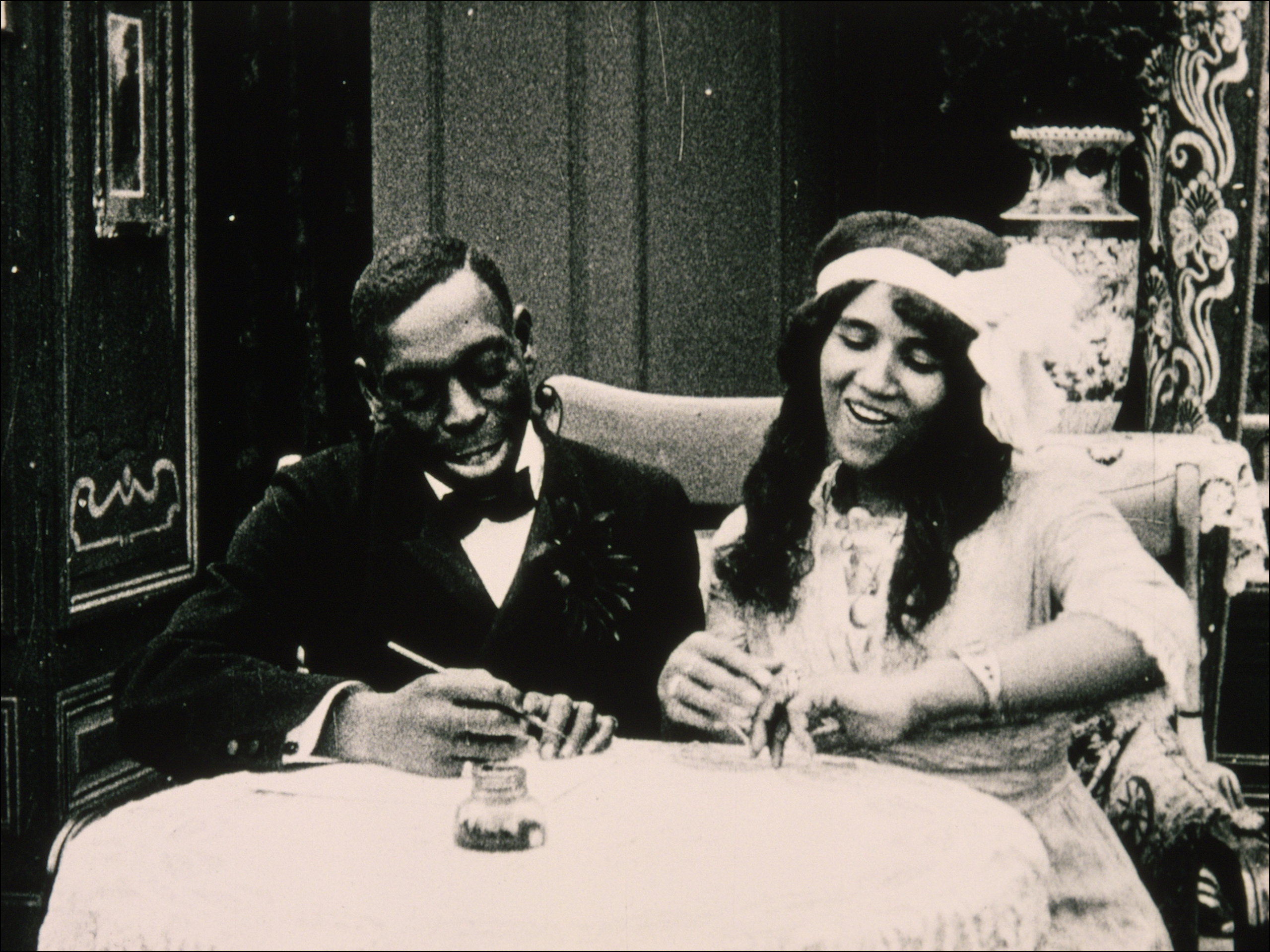
Lime Kiln Club Field Day (1913). The Museum of Modern Art, New York
This, too, is history – Victor Hugo, Les Misérables
You can blame it on too much caffé espresso, or Douglas Fairbanks withdrawal, or the collective post-Les Mis comedown. Whatever the reason, I saw two comedies today that I could only just follow, and which just occasionally made me laugh. If I tell you they were Soviet comedies, you might jump to a conclusion. But trust me, I have form in this area – I normally laughalonga-Lenin.
Tonight’s evening screening was Gosudarstvennyi Chinovnik (The State Official, 1931), a cheeky caper about a faceless state underling tempted by the chance to pilfer a suitcase of roubles for him and his missus and their young daughter. I suspect it is gentlest of comedy anyway, but with a propagandistic framing story about renovating the rolling stock on either end of it, it truly is, as I was warned, not a “comedy-comedy”.
Big Trouble (1930). Gosfilmofond of Russia, Moscow
Rating higher on the laughometer but lower on comprehensibility for my poor failing brain was Krupnaia Nepriyatnost (Big Trouble, 1930), in which the culture clash between old and new in a provincial village is exemplified by, at first, the rivalry between old-style carriages and imported American cars. The scene thus laid, the real set-to involves a mixup of of speakers at local events: the director of the new arts centre rocks up to the church, and the priest appears to address the culture vultures. Horror, and then an “exchange of hostages” ensues. This was much brighter, with vivid casting, compositions that took us by surprise and a real sense of pace and energy. Plus, inventive musical accompaniment courtesy of a Stephen Horne and Donald Sosin collaboration. We were still a little flummoxed though. The same director as Dva Druga, Model I Poodrugaand a similar sense of fun, but not as successful.
LES MISÉRABLES (FR 1925-26) Fondation Jérôme Seydoux-Pathé
Where the telescope ends the microscope begins, and which has the wider vision? – Victor Hugo, Les Misérables
You might be forgiven for thinking there was only one show in town today – the epic screening of Henri Fescourt’s Les Misérables. But not only were there several films on offer beforehand, there were schedule clashes – yes, clashes – meaning that I had to make some painful decisions. I can’t bear to tell you what I missed (“Here’s what you could have won,” as Jim Bowen would say), but this is what I saw before my voyage to Paris, when I took a detour to Cinemazero.
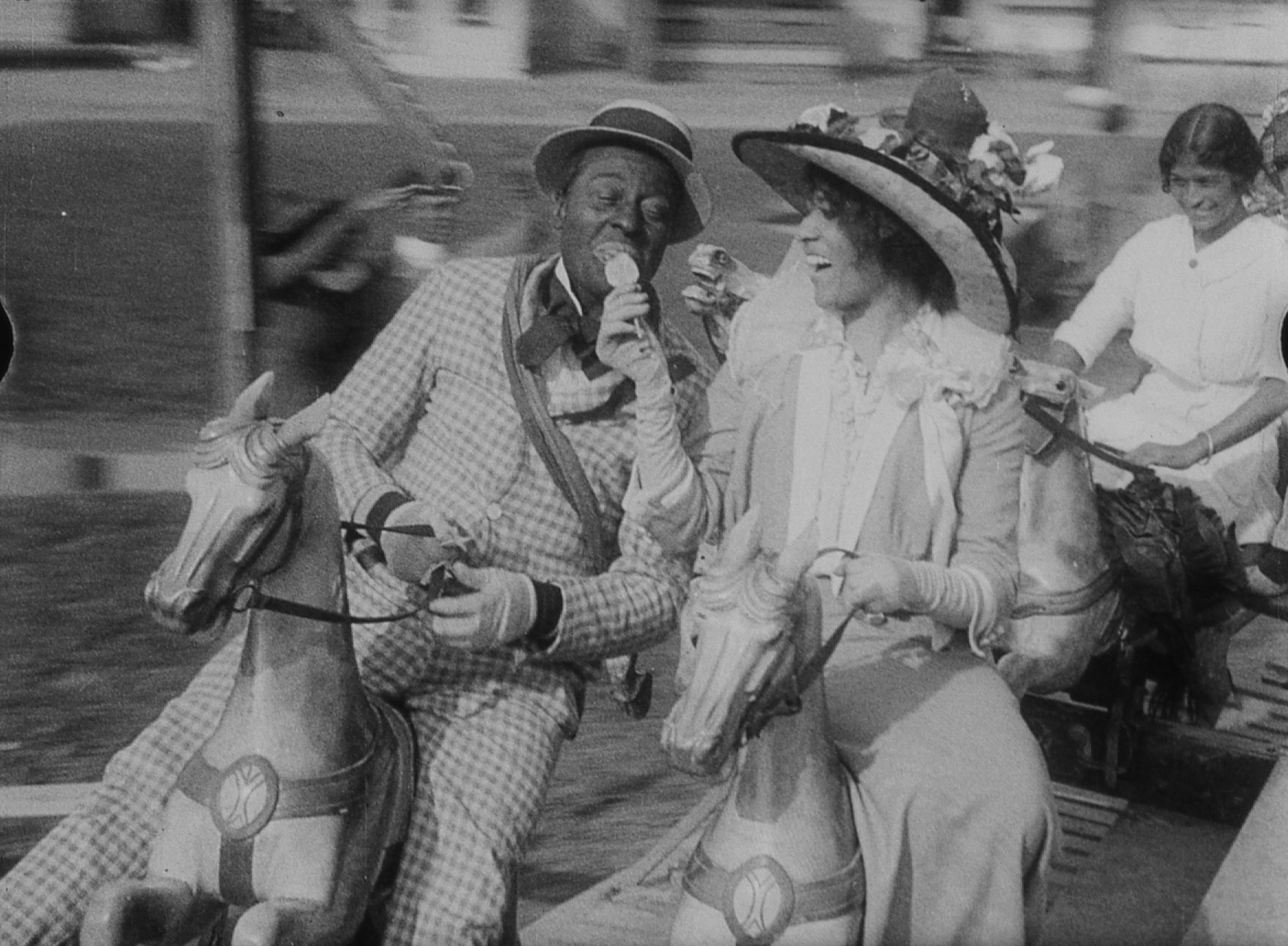
The morning began a little coldly with a sedate documentary about Gaston Méliès, brother of the more famous Georges, and his travels around the globe with a movie crew. Undoubtedly this is a fascinating topic – Gaston was an adventurous soul who travelled far and wide, making both fiction and documentary films, and occasionally hybrid affairs too. Wherever he went – Tahiti, Cambodia, Australia, New Zealand – he sought out the real locals, and cast these non-professional actors in dramatic roles. Back when so many people in the States were relying on blackface, as we have seen, Gaston sought a greater diversity and authenticity. A very interesting subject, but this film, Gaston Méliès and the Wandering Star Company (2015), was not full of the same enthusiasm as its protagonist. I wanted to know more – how he developed such wanderlust, how the films were received, how the communities he entered related to cinema after he left and whether all this jaunting about contributed to his brother’s financial ruin.
If anyone can raise the tempo it’s our British sweetheart Betty Balfour, and she starred in a new rediscovery, a German-UK-Sweden co-production that gives euro-puddings a good name. Would they were all as sweet. The plot was as intricate as the lovely lace gowns Betty was so fond of, but to be brief Flickorna Gyurkovics (A Sister of Six, 1926) is a comedy of repeated mistaken identities all coming between Balfour and her handsome archduke and a happy-ever-after. It’s mischievously funny, and wickedly shot too, being photographed by none other than Carl Hoffman. Balfour is brilliant, my own dear favourite Karin Swanström has a small role and there’s even a little monkey, followed around by Hoffman with a handheld camera. Such delightful touches abounded – for example, a POV shot of photograph of Balfour and her sisters, seen through a haze of cigarette smoke animated itself, as the girls wriggled and giggled. A real treat, even if it is nigh-on unsummarisable.
What is admirable in the clash of young minds is that no one can foresee the spark that sets off an explosion, or predict what kind of explosion it will be. – Victor Hugo, Les Misérables
Forgive me and my fellow delegates if we are a little dazed, but today an array of high-wattage stars dazzled the Verdi: Clara Bow, Ossi Oswalda and Douglas Fairbanks all took a turn in the spotlight, and didn’t we all know about it? But they were all playing second fiddle, I am afraid, to one of the festival’s guests of honour.
The real star of the day was Naum Kleiman, erstwhile director of the Moscow Cinema Museum, who was in town to deliver the Jonathan Dennis lecture at the Giornate. He didn’t really do that, though. He spoke a few words, and graciously answered our questions, but instead of a formal lecture we watched a new film that has been made about Kleiman, the Museum, and the frankly appalling state of affairs in Russia today, where the museum has been evicted and its good works all-but sacrificed to the opaque aims of the Ministry of Culture. It was called Cinema: a Public Affair, and it was directed by Tatiana Brandrup, who was also in attendance to answer questions. At an event where we have so much Russian cinema to celebrate, it is beyond distressing to learn that film culture in that country is in such a perilous position. Founded in 1989, the Cinema Museum used to show 20 – 20! – films a day. Important films, films from around the world, films that are now impossible to see in Russia. It was always run on a shoestring – Jean-Luc Godard made a gift to the Museum of a Dolby sound system ahead of a retrospective of his works there. But now, the situation is as absurd as something in one of the Soviet comedies screening at the Giornate. A new building intended to house the Museum has been repurposed as a parking garage, while the Museum’s collections are all in temporary storage at yes, garages at the Mosfilm studios…
Kleiman is an inspiring man, who spoke in the film movingly about the first film he remembered seeing as a four-year-old child. Before that point he had seen war, he had seen fear and devastation, in fact his own father was missing, but one night at a park near his refugee camp in Tashkent, he saw the cinema for the first time. That screening of Michael Powell’s The Thief of Bagdad was to him a “window on to another reality”. He stood on his bench, and flapped his hands, imagining that he had a magic carpet under his feet. And he has dedicated his life to sharing that magic, that escape, that understanding of a different world, with other people. A member of the Verdi audience asked simply: “How do you find the strength to go on fighting?” “I’m not fighting,” he replied. “I’m just working.”
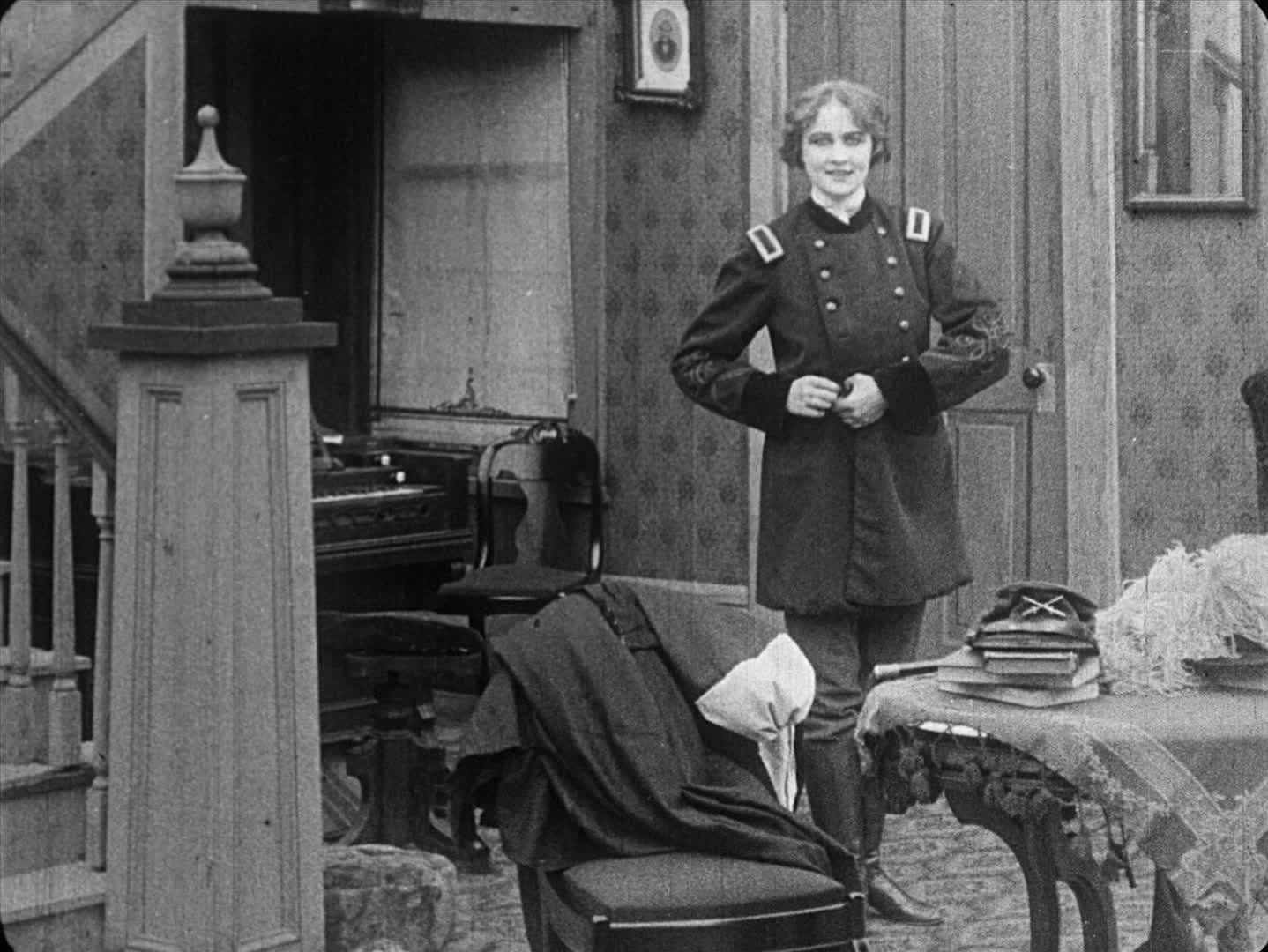
The Darling of the CSA. Courtesy of the NFPF
For Kleiman, the conversation that films can spark are almost the point of screening them. “The film begins when it’s over,” he said. And although they were lighthearted in tone, this morning’s programme of shorts illustrated that perfectly. A package put together by Laura Horak on the theme of cross-dressing girls on film, these movies, which were mostly comedies, were hugely intriguing, and provided delicious food for thought. The shorts included actresses playing boys, playing dual roles or simply playing characters who dress up as lads, or take on male characteristics. The way that the teens and twenties of the last century approach these ideas is consistently intriguing – so often they skirt close to something really subversive, something to challenge the relentless heterosexuality of so much silent Hollywood cinema, and then retreat, having nibbled their doughnut and kept it too. I enjoyed Anna Q Nilsson as a rebel spy in disguise during the civil war in The Darling of the CSA (1912) (riding sidesaddle even when in drag). I also liked a futuristic “nightmare” of 21st-century gender role reversals called What is the World Coming to? (1926), a surprisingly nifty restoration of a 16mm print, in which a kept husband worries that his bigshot wife spends too much time with her “sheik stenographer”.Continue reading Le Giornate del Cinema Muto 2015: Pordenone post No 4→
DVA DRUGA, MODEL I PODRUGA (KANITEL S MASHINKOI / NEOBYCHAINYE PRIKLIUCHENIIA AKHOVA I MAKHOVA) (URSS 1928) Gosfilmofond of Russia, Moscow
Of what does a revolt consist? Of everything and nothing, a spring slowly released, a fire suddenly breaking out, force operating at random, passing breeze
– Victor Hugo, Les Misérables
On a gloriously sunny day in northern Italy (and I do mean glorious) there is nothing to be done except to duck into a dark theatre and watch Soviet cinema, right? Right? Well, that’s how we roll here in Pordenone. Today I expected to be dominated by the screening of Eisenstein’s monumental October (1928), but as ever, the Giornate caught me by surprise. My day began with a simply stunning, and very refreshing Soviet comedy. Just as last year, the Russian Laughter strand is shaping up to be one of my favourites. And it ended with a Japanese film that I feared I wouldn’t get the most out of. Perhaps I didn’t, but I did love it all the same,
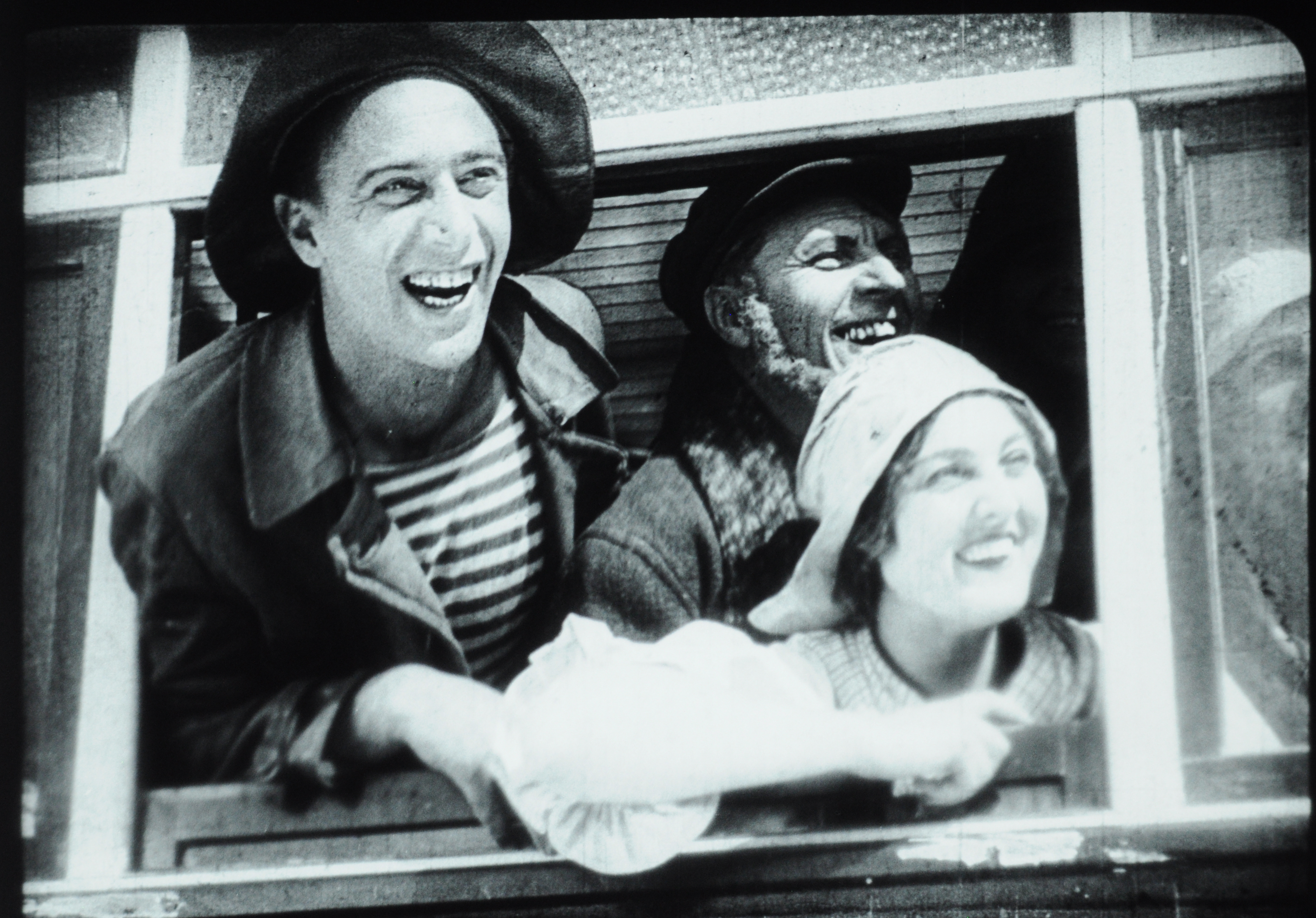
Back to Russia. That comedy, Dva Druga, Model I Podruga (Two Friends, a Model and a Girlfriend, 1928) was a real sparkler: it was gorgeously photographed, with sunlight dappling the river our heroes were pootling along, and brightly funny too. Unlike pure slapstick affairs, the comedy here was largely contained in the composition rather than the action – it was, if this is a thing, pictorially funny. Like a newspaper cartoon. Our heroes, the two friends, are seemingly daft soap factory workers who invent a machine, a contraption really, for making packing crates. They think it will increase efficiency at the factory (a noble Soviet aim, for sure) but their villainous overseer disagrees – they’re paid to work, not invent. In the end, the pals, a girl who has run away from her fiancee and this crazy “model” must travel to the big city by river to prove its worth. Endless fun, visually inventive at every turn, and so gentle it undercuts all one’s preconceptions of Soviet bombast at once. Please take any chance you get to see this one.
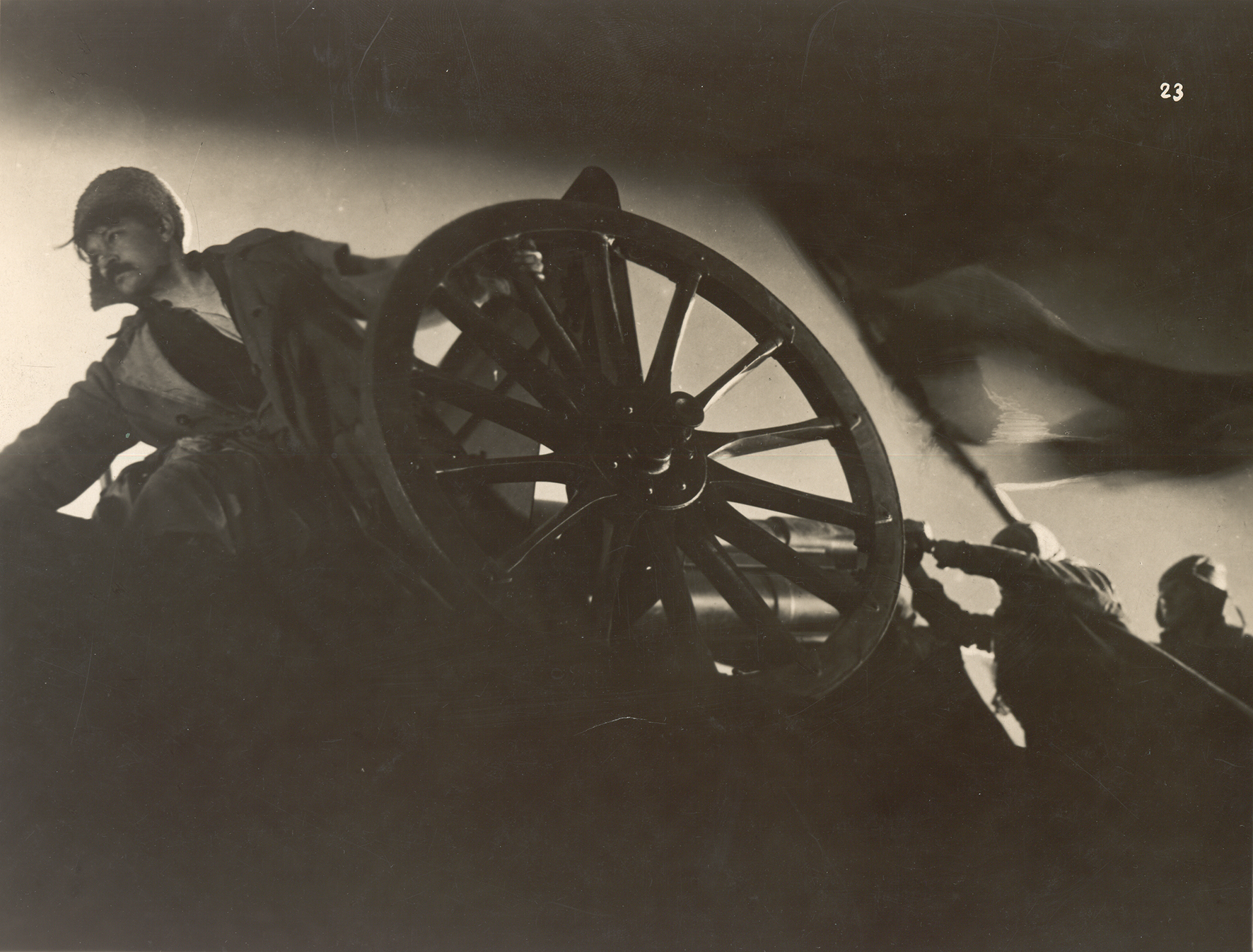
October (1928). Collection Austrian Film Museum, Vienna
But if you ordered bombast, today delivered. A two-hour-plus silent movie is a weighty proposition to be honest, but October, with its “catalogue of inventions” is so dazzling, energetic, ferocious and breathtakingly geometric that it feels more like a weekend than a month. Eisenstein’s document of the Russian revolution screened in the Canon Revisited strand, and it is certainly a film that repays the revisiting. Today we were especially lucky to have Günter Buchwald and Frank Bockius in the orchestra pit – performing a stirring score that was no doubt an exhausting feat. I am continually dumbfounded to find that some people are immune to this rousing strain of cinema. These Soviet classics were an early staging post on my route into exploring the silents. I came to them well before the Hollywood films, and they constantly define for me what silent cinema can achieve, which is to say what cinema in total can achieve. So there. The raising of the bridge sequence in October never fails to stop me in my tracks – from the naked viciousness of the bourgeoisie to the white horse martyred several feet above the Neva. And that poor young girl’s trailing hair … As the film continues there is far more to savour than I could even hint at here. The Women’s Death Battalion could furnish several blogposts of political-sexual analysis by themselves. By the time it was over I was ready to storm the palace of silent cinema and loot for more such treasures.
A Fool and his Money (1912) Library of Congress Packard Campus for Audio Visual Conservation, Culpeper, VA
And in the meantime we must scrutinize the things that have vanished, needing to know if only to avoid them. Counterfeits of the past, under new names, may easily be mistaken for the future. The past, that ghostly traveller, is liable to forge his papers – Victor Hugo, Les Misérables
You wait weeks for one Douglas Fairbanks picture and on a rainy Sunday in Pordenone you get two! I am beginning to suspect I may have a wee crush on Mr Fairbanks Sr, so help me. Don’t tell me we can’t be together.
Forget that nonsense for a minute, the wet Sunday morning began with another fine selection of City Symphonies. Much to admire in all of them, but my favourite was the lyrical De Steeg/The Alley (1932), a portrait of a street in Rotterdam, and the people who live there, shot so nimbly and sensitively I wanted to walk down that road and meet those people straight away. Second, for me, was a similar piece, Pierement (Barrel Organ, 1931), shot in a working-class district of Amsterdam. As we follow the progress of the organ down the road, we meet new faces, new places and the day winds on, with the passage of time marked as the barrel organ cards concertina into their neat stack at the back of cart. A simple idea, beautifully executed.
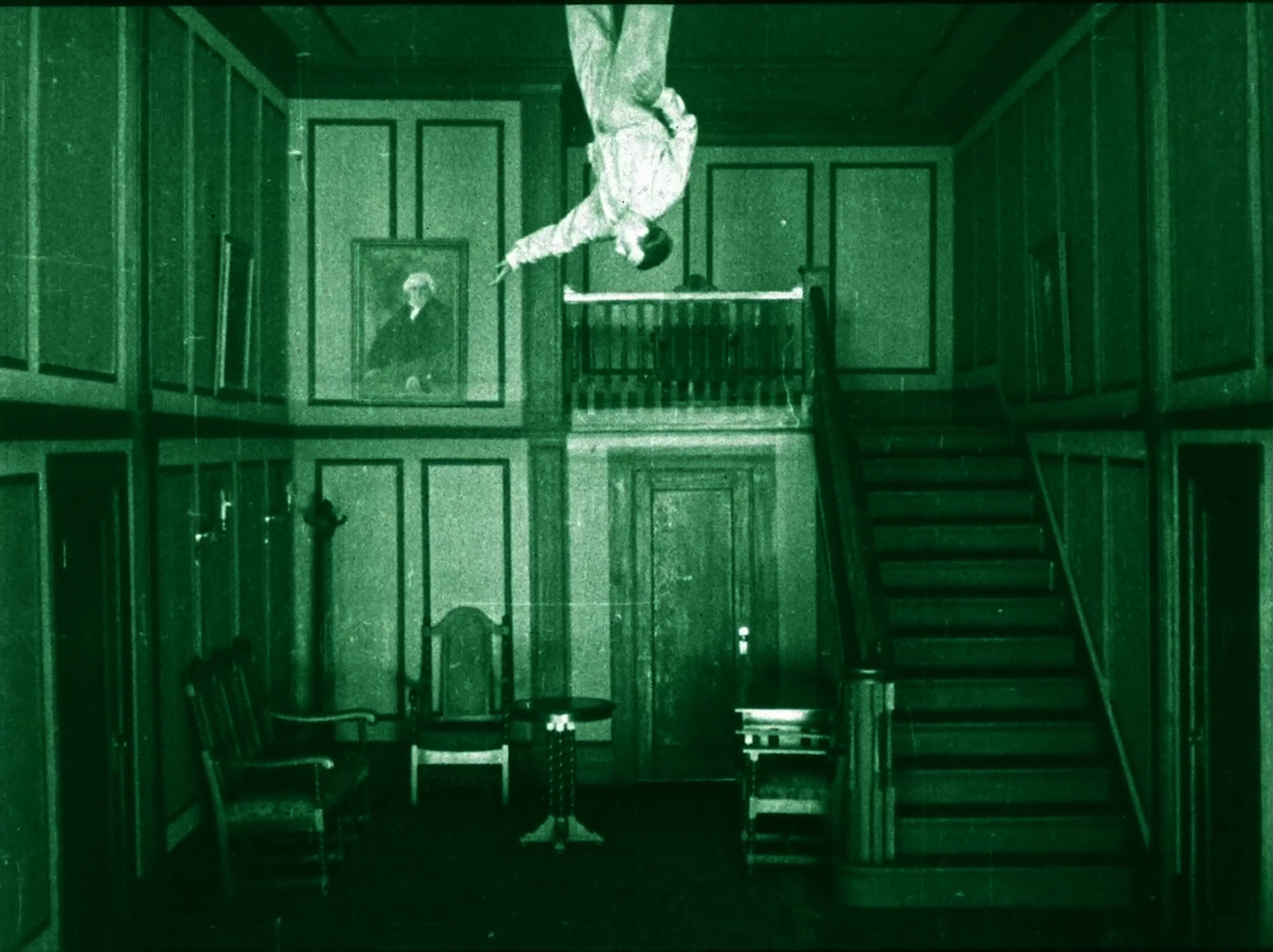
Softened up, we settled into the Woody Allen fever dream that is When the Clouds Roll By (1919), the first item in the much anticipated Victor Fleming retrospective. Dancing vegetables! Douglas Fairbanks walking on the ceiling! Fairbanks is astonishing in this one: vibrant and funny and handsome and romantic and mad all at once – and the film is shot with humour and ingenuity and bags of style. Plus, I cared about all the characters, despite the ludicrous story – the superstitious mania shared by Fairbanks and his lady-love was cute and quirky rather then maddening as it would be in real life. It is a real cutie this picture – come for the famous dream sequence and stay for Dougie’s magnetic personality.
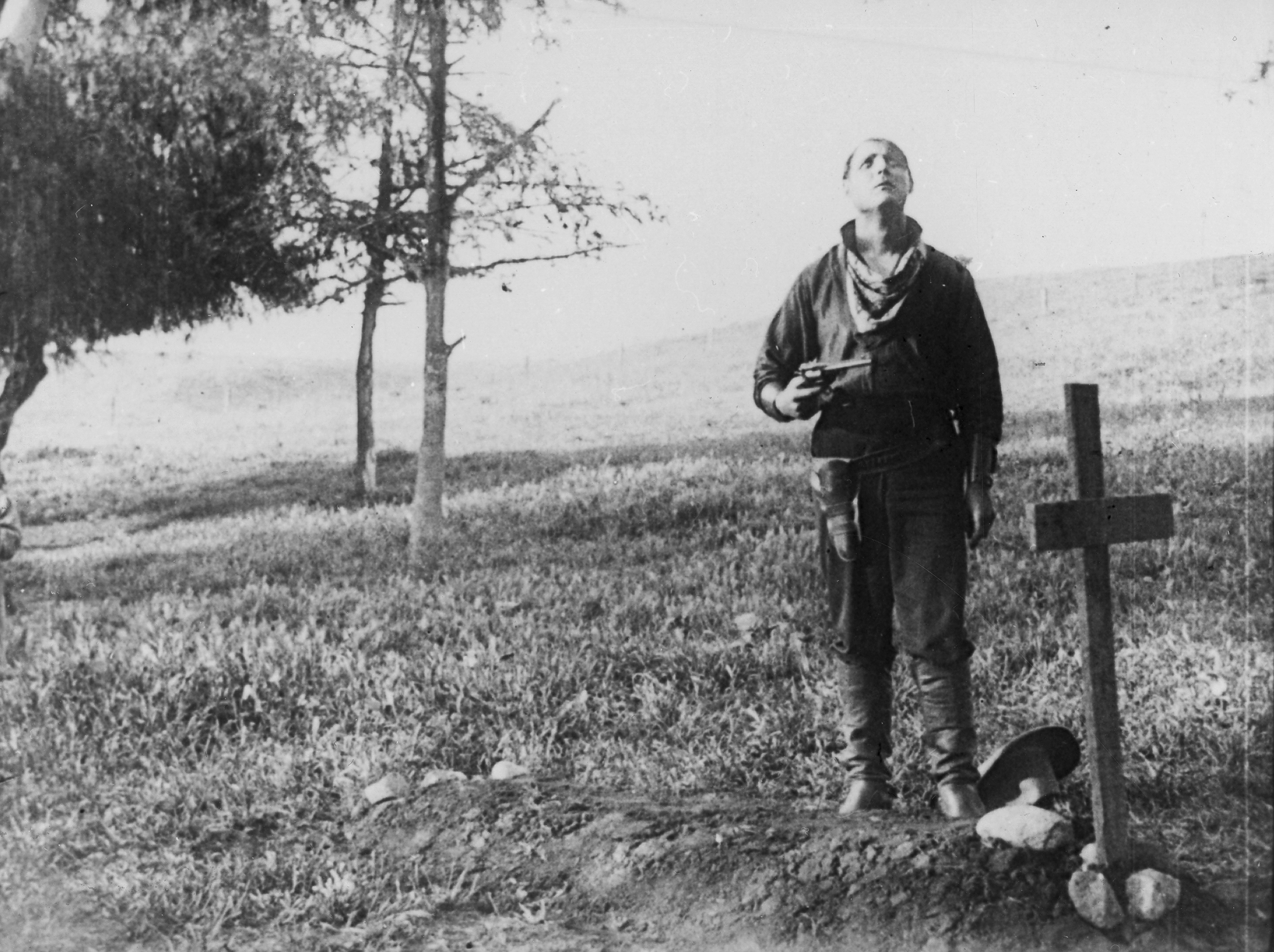
THE RANCHMAN’S VENGEANCE (US 1911). Collection EYE Filmmuseum
After Fairbanks, only the most masculine of movies could satisfy the Verdi audience, so a grab-bag of six westerns scratched the itch perfectly. These were a little rough and ready at times (just how we like em, eh?) but this was no endurance feat. These early westerns may have the slenderest of plots, are sometimes crudely performed and oddly staged, but they have a dynamism that’s hard to resist. And there were touches in each film (a desperate proposal on a playing card, for example) that made them irresitibly human. This programme flew by. It was like being the despatch rider in Saved by the Pony Express (1909) leaping on to a new horse as soon as one tired out. That would make Allan Dwan’s The Poisoned Flume, the wild stallion of the bunch … which is a fair shout. As Richard Abel points out in the Giornate catalogue, the irrigation of California would prove contentious on film right up to Chinatown and this is a captivating revenge drama, where the devil really was in the details.Continue reading Le Giornate del Cinema Muto 2015: Pordenone post No 2→
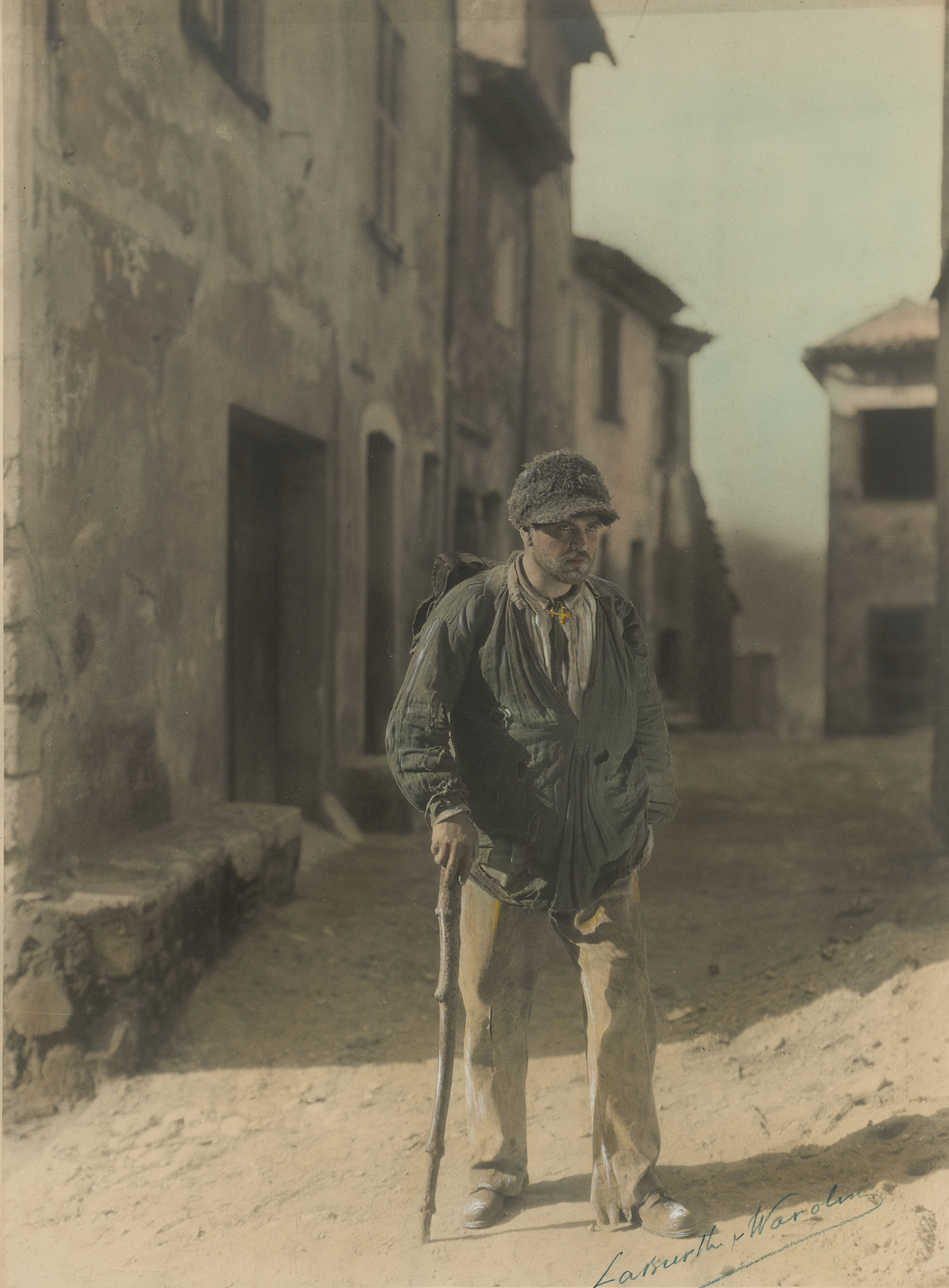
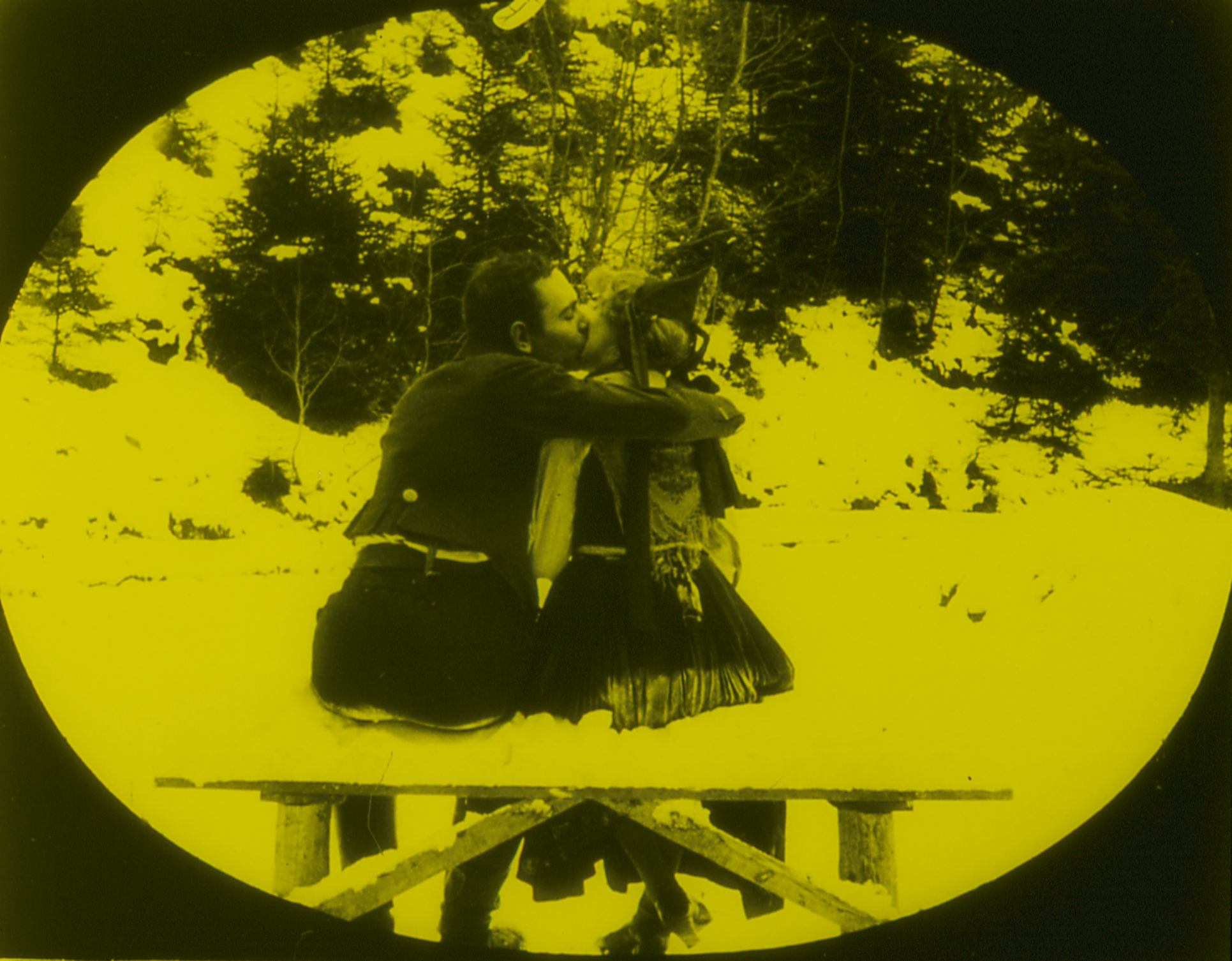
Romeo und Julia im Schnee (1920) Filmarchiv Austria, Wien
The town was like a loaded gun, needing only a spark to set it off – Victor Hugo, Les Misérables
“It’s the last time I shall say it, so I shall say it,” began David Robinson, introducing what is surely not his final Giornate, but the last over which he will preside as artistic director. The Robinson era will close with the 34th Giornate del Cinema Muto, which looks on paper at least as if it will be a very special festival, with a jewel-studded programme. And he hands the baton to the surest of hands: the marvellous Jay Weissberg of Variety, who joined him on stage tonight by way of introduction, and performed as Robinson’s personal interpreter too. We said another goodbye on Saturday evening – this festival will be dedicated to the memory of one of its staunchest supporters, Jean Darling, who passed away in early September. A snippet of her singing Always at a previous festival began our gala evening, as Robinson took to the stage to say… what was it? Ah yes. “Welcome home!”
But before we get to the gala, and the speeches and the changing of the guard, we have a full afternoon of films to catch up on. Fasten your seatbelts, fellow Pordenauts*, we’re going on a journey.
Our world tour began with trip to Berlin – this was not classic Symphony of a City territory mind, but a visit to Gypsy Berlin – from the camp to the racetrack to the streets. Terrifying to think what lay in store for the people featured in this film, Grossstadt-Zigeuner (1932), but it was a true gem, directed by the Constructivist Laszlo Moholy-Nagy with great verve and edited with playful intricacy. Despite its many stylistic flourishes, it’s a warm, humane portrait, and served as an excellent introduction to the main feature in this afternoon’s bill from the Other City Symphonies strand. The longer film was a document of Chicago, made by a German film-maker Heinrich Hauser in 1931. Weltstadt in Flegeljahren. Ein Bericht uber Chicago (A World City in its Teens. A Report of Chicago) carried itself at an unexpectedly relaxed pace, puttering up the Mississippi on a paddle steamer for the longest time before reaching the metropolis, and even then, we moved slowly, until the film suddenly discovered the residents of the city. It was heartbreaking to see the poverty caused by the Great Depression, etched in the faces of men being turned away from labour exchanges. When workers unloading banana boats at the dock empty the rotten fruit into the river, another group of men in row boats appear to scoop them out of the water. Elsewhere in the city, too, on the south side in the streets largely populated by African Americans, on the lake beach bursting with sun worshippers, Chicago was defined by its people, not its towering skyscrapers. Hats off too to Philip Carli, for fantastic piano accompaniment for both films.
Wanted: A Nurse, Accidentally Preserved Volume Three. Copyright: Ben Model
If films can be accidentally lost, then it stands to reason that they can also be accidentally preserved. Doesn’t It? Silent film musician slash historian Ben Model certainly thinks so. This week he released the third DVD in his Accidentally Preserved series: a compendium of short silent comedies, fished from obscurity, with brand new musical scores by Model himself.
You shouldn’t expect to find the big four (or five? or six?) of silent comedy in these discs. Accidentally Preserved is for fans who want to delve a little deeper into the world of silent comedy, and spend a little time with lesser known names such as Al Christie, Jay Belasco, Malcolm “Big Boy” Sebastian or Sidney Drew.
The Whirlwind, Accidentally Preserved Volume Three. Copyright: Ben Model
First the science bit. The overwhelming reason that most silent films are lost is that they were reels of nitrate film, which were either mislaid and left to decay (nitrate decays terribly), destroyed in a fire (nitrate is also inconveniently flammable) or recycled to use for another movie or even melted down to make plastic goods. Neglect could mean a death sentence.
The films that Model is releasing are from private collections of 16mm movies. These are silents that were printed on safety film stock (as the name implies, much less fragile that nitrate) mostly for home movie rentals. The 1930s and 1940s equivalent of Netflix being a 16mm projector and a subscription to a rental service. Some of the AP films were transferred to more stable stock for other reasons – for example, for rerelease or TV broadcast.
Model hasn’t, by and large, restored these films, but rescued and scored them. And reinserted intertitles where necessary. That’s no mean feat in itself, and of course it means that via the Accidentally Preserved DVD releases, and Model’s YouTube channel,we get to see movies that we might never even have heard of.
No Vacancies, Accidentally Preserved Volume Three. Copyright: Ben Model
So what of the films in volume three? After the Drew/Barrymore season at Pordenone last year, the sight of Sidney Drew and his “missus” in Vitagraph’s Wanted: A Nurse (1915) was like greeting an old pal. This is the slightest of comedies, with Drew malingering in order to gain the attentions of a pretty nurse, but he is such a great comic actor that it works, for just as long as the running time allows.
I was also especially taken with The Whirlwind (1922), a sort of low-rent Steamboat Bill Jr (1928) in which a tornado howls into town causing havoc, especially in the residents’ love lives. The child actors in this one are particularly effective. And if you like them, you’ll love Malcolm Sebastian’s turn in Hot Luck (1928), in which the young scamp gets up to mischief with his pet dog, as per, or the poor infant in Whose Baby? (1929) rescued from an onrushing tram by Arthur Lake in his familiar role as Dagwood Bumstead.
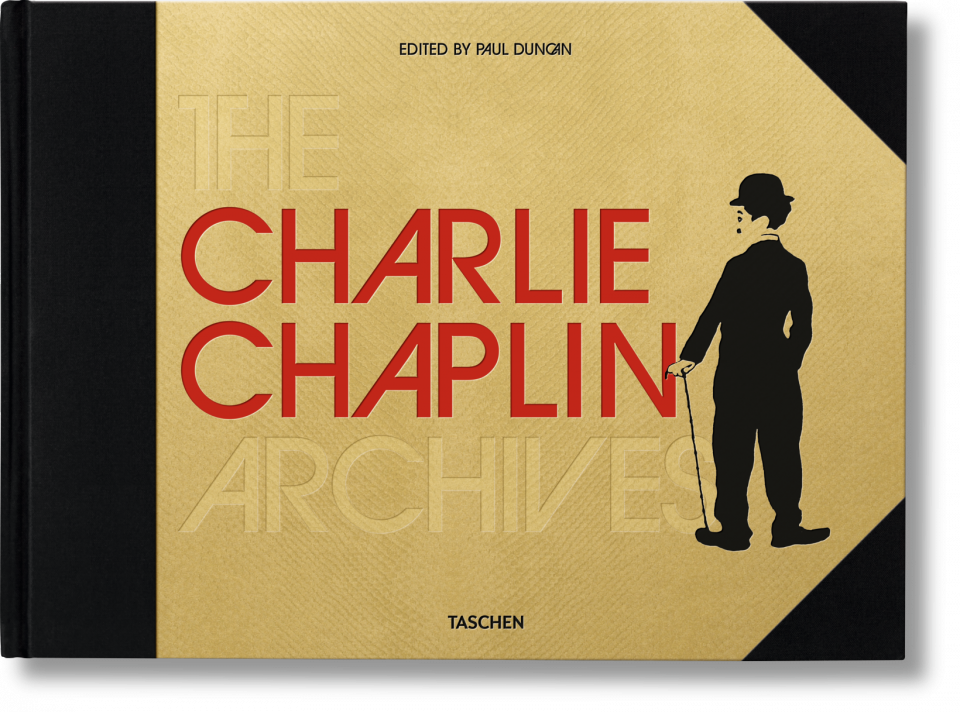
When Taschen sent me a copy of its latest book, I was overwhelmed. And so was the courier who brought it to my desk at work. Blimey, it’s big. Open the box, and you’ll discover that this is a very beautiful volume too. The Charlie Chaplin Archives is a stunning new book, which pays tribute to south London’s favourite son across 560 gorgeous pages crammed with quotes, archive imagery, classic film stills and snippets of Chaplinalia. It takes the reader step-by-step through all of Charlie Chaplin’s feature films and many of his shorter works. Along the way, you’ll find out how Chaplin made his movies, and a little bit more about Hollywood’s greatest ever rags-to-riches tale. As the foreword by editor Paul Duncan explains, Chaplin was famously secretive about the creative process, so these glimpses behind the camera are fascinating – especially when we learn how much was reworked and invented in the studio, rather than at the script stage. This is an oral history too: as much as possible, the story is told by Chaplin and his collaborators, from archive interviews and memoirs.
I wanted to do proper justice to a book that is so lavish and thorough and … majestic in scope. So I decided that the best way to review The Charlie Chaplin Archives was not with words, but with pictures.
As the nights draw in, the BFI is offering something to keep us warm and purring with satisfaction. The institute’s blockbuster season for 2015 is Love, a celebration of everything sexy, sentimental and swooningly romantic. It’s a capacious theme, but a winning one. For myself, I am never happier than when I am sobbing my heart out at an old film.
You’ll be glad to hear, however, that I managed to restrain myself on Tuesday morning, at the official press launch for the season, which offered a whirlwind romance with the history of love on screen, fromGA Smith’s A Kiss in the Tunnel (1899) to Brief Encounter (1945) to Trainwreck (2015). The BFI’s Rhidian Davis gave the presentation, which was a real joy, but his love train hit a bump when he arrived at the modern romcom. Judd Apatow’s growing influence over the genre was, he said, as if the little boys who wince when film stars start kissing are now directing the love scenes themselves. Modern romance is drowning in irony, and Seth Rogen is no Hugh Grant, he lamented.
That sounds about right – but I hope it’s not true. Perhaps this is just nostalgia, I thought, crossing my fingers. Maybe we never get over our first screen crushes, or could it be that old age knocks the corners off our screen romances, making vintage affairs seem more universal? Romance has been declared dead before, in fact. I have written a chapter for the BFI Love compendium, all about romantic films in the silent era – and believe me, at the dawn of the 1930s, plenty of critics believed that synchronised sound had murdered the art of love on screen.
The question that really made me channel my inner Carrie Bradshaw, with a winsome tilt of the head as I pushed open my laptop, arose at the Q&A afterwards. Jenni Murray was the chair, and her panellists perched on Mae West pout sofas were the BFI’s Davis and Laura Adams, director Mike Newell and screenwriter Tess Morris. It was Murray I think, who asked: where are the new Valentinos? The panel was stumped. Do we even, they pondered, need Rudolph Valentino any more?
For many a silent film fan, that’s a terrible question. Who could live without Valentino? Who would want to? Certainly, when he died young, hundreds of young women famously felt unable to carry on. For many a cinephile full-stop, the thought of a world without a Valentino figure is a glimpse of a hideously barren future. If we agree that the cinema taps into our collective subconscious, then where would our dreams be without a dream lover? Won’t anyone ever seduce us, and leave us breathless again? Continue reading Searching for the new Rudolph Valentino→
While life is undoubtedly busy, we always make time for the important things in life, like watching great films, and reading about them.
It’s not anything to complain about, but I find myself busier and busier these days – enjoyably so! Still, something has to give. I have been running Silent London for nearly five years now, and I don’t fancy stopping any time soon. So I won’t. But I have come to the decision that I will no longer be providing the listings service for screenings in London. I know it was a useful service – I had long wished that someone would do it, and lots of lovely people have been kind enough to tell me they value it at events around the city. But it does take up my time, and it can be a thankless task. Hopefully because I have done it for so long, I have increased awareness of where films are likely to be shown, and who might be likely to showing them, so it is not as necessary as it once was.
There are two ways of looking at Sunday’s programme. You might glance at the listings and say: “it’s the last day of the festival, the films finish early, it’s all winding down.” But if you were there with us, watching these films, you’d know different. Sunday at the BSFF offered a big finish, with three feature films shown: one of which was a gem, and two of which were genuine masterpieces. And there was plenty more besides.
Shall I begin with a confession? Reader, I slept in. And those extra zeds were delicious, but I did regret missing Bryony Dixon’s presentation on Gallilopi, a curtain-raiser for the screening of Tell England (1931) that was to follow.
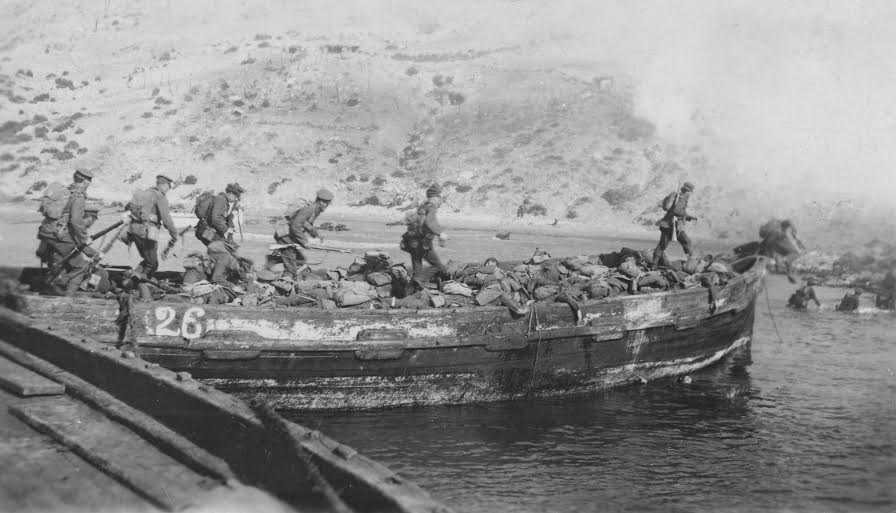
However, Tell England was a rousing start to the day – you couldn’t ask for better. We have been on a journey with these early sound films over the weekend – from the stumbling first steps of Dark Red Roses et al, via two beguiling movies on Saturday, to this, a real masterpiece. We were warned that the soundtrack was not of good quality, but really, it was not a problem. In fact, for every mishandled piece of dialogue here, there was a sound collage that did credit to co-directors Anthony Asquith and Geoffrey Barkas. And I suppose it does help that the actors offered a parade of perfectly clipped RP accents. Asquith and Barkas fold silent film-making techniques into their exploration of sound cinema – making this a bold and visually exciting war film. Tell England follows two young heroes (Tony Bruce and Carl Harbord) from their public school in divine middle England to the trenches of Gallipoli where the horrors of war and their duties as precociously promoted officers weigh heavy on their hearts. While the characters speak with traditional English restraint and understatement, the film whirls around them to show the physical violence of warfare (with mortar shells whirring and crashing on the soundtrack), and its psychological toll too, on the soldiers themselves and Fay Compton as a distraught mother almost driven mad by grief and fear. Not a documentary record of Gallilopi, although its vivid beach landing scenes are often cut up and used in factual programmes, but a fine dramatic film that would ideally be more widely available. So, insert a snide remark about the talkies catching on here.
After lunch, a commercial break, as the BFI’s Steve Foxon gave us a guided tour of screen advertising, from Edison’s short 1890s clip promoting Dewar’s whisky, to a bouncy Halas & Batchelor cartoon tribute to Kellogg’s Cornflakes in the1940s. All good fun, and the sort of presentation that provokes many more questions in the coffee break afterwards. Early screen advertising is both very different from and so similar to modern examples, with detergents cleaning whiter, and making easy work of tough jobs, as well as twee poetic tributes to the English countryside and even celebrity endorsements. And of course you can’t believe that anyone fell for these tricks. But we all do.
On Saturday, outside events threatened to intrude the sanctity of the festival – and we weren’t complaining. First, the morning’s historical presentations were timed around a break for an update on the Labour leadership decision. Is victor Jeremy Corbyn a silent movie fan? Here in “red” Leicester (that joke TM Peter Walsh) we assume he would be an Eisenstein man. And in the afternoon, we segued neatly from checking the football scores to taking our seats for The Great Game (1930), a rollicking good film, albeit a talkie, set in the world of soccer and strangely apt for the modern game. At night, we watched a film set during the Wars of the Roses, just a few feet from Richard III’s tomb. Perhaps it was all just meant to be …
Believing in fate is a double-edged sword, though. We started the day with a thoroughly intriguing film that danced with the dangers of destiny. The tale of a doomed ship, Windjammer (1930) was a haunting film that was shot as a silent documentary record of the final journey of sailing ship the Grace Harwar, but then had dramatic “talkie” scenes of life below-deck added to make it more palatable to the general public. Those fictional scenes added a plot, one that echoed the real-life tragedies that had taken place on board the Harwar on that long and difficult last voyage. The very handsome Tony Bruce plays a posh boy, Jack, who was travelling home after having his heart broken in Melbourne – and sad to say he meets a watery end. The scenes of the boat battling the waves are both beautiful and terrifying – the chat among the crew crude but naturalistic. More than a curio, but a curious beast all the same. And we were grateful to Laraine Porter’s exquisite introduction setting a complex film in its proper context.
More terror at sea in a very poignant presentation from Bryony Dixon on the films that tell the story of the sinking of the Lusitania in 1915. From newsreels of the aftermath of anti-German riots, to Winsor McCay’s stunning propaganda animation, this was an engrossing selection of films, rendered all the more powerful by the witness testimony Dixon read as the films played, and Stephen Horne’s sensitive accompaniment.









 Silent London