Tag Archives: Giornate del Cinema Muto

Le Giornate del Cinema Muto 2022: Pordenone Post No 5

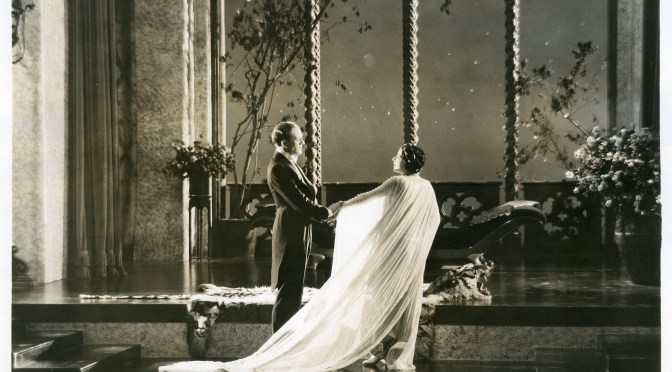
We have already established that Norma Talmadge is fond of a dual-role, but 1920’s Yes or No? (R. William Neill) pushes the boat out by having two Talmadge sisters on the cast list. of this New York drama Natalie T plays Emma, the maid of dissatisfied society lady Margaret (Norma) and sister of dutiful tenement housewife Minnie (also Norma). The clue is in the title here, and each woman will be asked to choose between temptation and courage, extramarital adventure and (often thankless) fidelity. So it’s a similar structure to that great Norma T melodrama Secrets (1924, Frank Borzage): a character study building to a question that tests that character. However, here we have two women, two questions, two answers – and two sets of consequences.

Choose carefully, ladies. The film is judging you. Literally, if those beartrap illustrations behind certain title cards are to be believed. In fact the title cards were a real highlight of the film, elegantly and often wittily illustrated. True, they were also a little sanctimonious, regressive… but it’s 1920 what can I say? The important point is that Norma is really splendid in this one. She does well with these two sympathetic characterisations, and while she is not charismatic in the way of a Swanson or a Pickford, she is very watchable. I am very much excited for the Normas to come. And thanks are due to José Maria Serralde Ruiz, for playing such an old-fashioned dramas if it were brand new, and building the tension beautifully.

Continue reading Le Giornate del Cinema Muto 2022: Pordenone Post No 5 →

Le Giornate del Cinema Muto 2022: Pordenone Post No 4

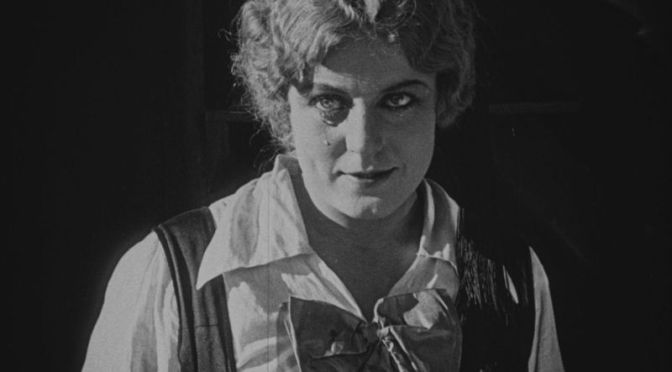
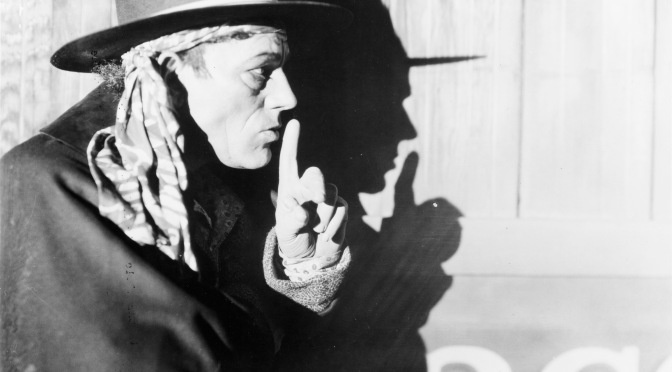
What’s your favourite Latvian nationalist historical fantasy war epic? From the silent era, I mean. Taking a little while to decide? Cool, I’ll share mine. It’s Lāčplēsis AKA The Bear Slayer (Aleksandrs Rusteiķis, 1930), newly restored by Riga’s Studio Locomotive.

To reassure the squeamish among you – there is no bear slaying in this film. The Bear Slayer is a strongman of Latvian legend, so burly he can kill a bear with his bare (sorry) hands, but he uses his might for right. This film starts with a hell of a bang, in full-on fantasy mode as an evil “Black Knight” (Osvalds Mednis) with an alarming bullet-shaped head and a supremely sinister gaze tries to bear down on a damsel in distress (Lilita Bērziņa) in a castle. She has an enchanted brooch that will save her, but the Knight gets his ghoulish, wizardy goblin pals to reverse that charm. They begin preparing the cauldron with the usual eye of newt etc and at the last minute, as they prepare to take the blood of an innocent dove, the Bear Slayer/Lāčplēsis (Voldemārs Dimze) throws his sword into the works and foils the dastardly scheme.

Continue reading Le Giornate del Cinema Muto 2022: Pordenone Post No 4 →

Le Giornate del Cinema Muto 2022: Pordenone Post No 3

Holiday hats on everyone. The sun is out in Pordenone. And although it can be a struggle to choose the dark of the cinema over basking in the Italian heat, there are compensations. Even if, this afternoon, the heavens opened in the Verdi with a screening of Joris Ivens’ splashy art film Regen (1929), part of the strand celebrating 90 years of the Venice Film Festival.

Continue reading Le Giornate del Cinema Muto 2022: Pordenone Post No 3 →

Le Giornate del Cinema Muto 2022: Pordenone Post No 2

There’s something about Nanook… A century after it was first released, you might not expect a film with such a complex history to be, as Jay Weissberg said, one of the most anticipated events of the festival. But it certainly was. A quick straw poll of Pordenone attendees confirmed that yes, most of us had first seen Nanook of the North in a film studies classroom or lecture hall, and that we had been told both that it was a box-office sensation, and that it was partly a dupe. But this centenarian film is more than just a notch on the documentary cinema timeline, and it has a beguiling beauty and humanity that commands respect.

Continue reading Le Giornate del Cinema Muto 2022: Pordenone Post No 2 →

Le Giornate del Cinema Muto 2022: Pordenone Post No 1

Welcome home, to your home away from home, Pordenauts. It’s the 41st Giornate del Cinema Muto and the assembled crowd in the Teatro Verdi is bursting with questions. Questions like: do we know what is unknown in The Unknown? Would you like to sin with Elinor Glyn? How much Norma is Talmadge? Does a Pathé-Baby sleep through the night? How many men could a Manxman mank if a Manxman could mank men? And (I may actually have been asked this one in all seriousness) can you point to Ruritania on a map?

Time will provide answers. Meanwhile, let us savour eight days in the make-believe land of silent cinema, once upon a time and far, far away from the troubles we left behind with our morning newspapers.

Continue reading Le Giornate del Cinema Muto 2022: Pordenone Post No 1 →

Pordenone calling: Collegium 2022

Are you under 30 and obsessed with silent film? Even a little? Would you like to spend a week at the world’s best silent film festival talking to the best people in the field about early and silent film? And would you like to win a prize?

If that sounds like you, you will probably be interested in applying for the Pordenone Silent Film Festival Collegium in 2022. It’s a fantastic opportunity for young people who are studying cinema (in any form) to meet, learn and expand their cinematic horizons. Succcessful applicants will be hosted by the festival and have access to the full week of screenings and events as well as the special Collegium “dialogues”.

Continue reading Pordenone calling: Collegium 2022 →

The Silent London Poll of 2021: And the winners are …

It may already feel like a long time ago, but 2021 was one heck of a year. We were online, we were in-venue, sometimes we were both. But we were all grateful for the films, and the music. Below, it gives me great pleasure to reveal your chosen favourites, and a selection of your insightful and amusing comments too.

Thank you for your votes. Here are your winners!

  1. Best real-world silent film screening of 2021

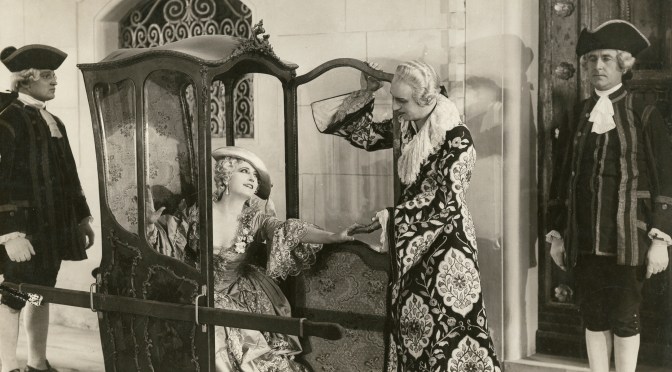
Your winner: Casanova (1927), accompanied by the Orchestra San Marco, conducted by Günter Buchwald, playing his new orchestral score

You said:

“Casanova at Teatro Verdi, by Gunther Buchwald. But I also want to mention: Shoes at the Frankfurt Schauspiele with Maud Nelissen trio and also Bett und Sofa at open-air Beykoz Kundura Istanbul with Korhan Futaci and his band.”

“I only saw one (down from pre-pandemic 30 or 40 a year). So that one wins! It was a goodie though. Pandora’s Box, 35mm, Hebden Bridge, with Darius Battiwalla. Well worth the terrifying road trip over icy moors!”

2. Best online silent film screening of 2021

Prix de Beauté (Augusto Genina, 1930)
Continue reading The Silent London Poll of 2021: And the winners are … →

Le Giornate del Cinema Muto 2021: Pordenone Post No 8

At the start of this festival I missed a date with An Old Fashioned Boy, but you can bet your last Euro I wasn’t going to pass up a rendez-vous with Casanova. Tonight, the final night of this very precious Giornate, belonged to Ivan Mosjoukine, his magnicifent eyebrows and the show-stopping music of Günter Buchwald.

Continue reading Le Giornate del Cinema Muto 2021: Pordenone Post No 8 →

Le Giornate del Cinema Muto 2021: Pordenone Post No 7

This is my tenth Giornate, which means I have graduated from newbie, all the way to novice, but also that I have been present for a quarter of the festival’s history. This is the 40th Pordenone Silent Film Festival – an annual celebration of silent cinema that began with a short retrospective of Max Linder films at Cinemazero in 1982, viewed by around eight people. Tonight in the Verdi, it seemed like every other seat was taken for a rendez-vous with Linder.

Continue reading Le Giornate del Cinema Muto 2021: Pordenone Post No 7 →

Le Giornate del Cinema Muto 2021: Pordenone Post No 6

Pordenone 6

Unprecedented scenes in the Teatro Verdi tonight, as the audience of customarily meek silent film enthusiasts stamped their feet, booed and exclaimed “outrageous!” “Close the curtains!” and “Down with this sort of thing!” But more reports on the incident the papers are calling the 2021 Giornate riot later.

Continue reading Le Giornate del Cinema Muto 2021: Pordenone Post No 6 →

Le Giornate del Cinema Muto 2021: Pordenone Post No 5

Anna Q Nilsson! Tom Moore! Dark deeds with gold mines, wedding regrets and stock certificates! A mysterious, abrupt finale! It can only be the welcome return this afternoon of the 1916 serial Who’s Guilty?, which we loved so much in 2016. This was a classic example, with Nilsson and Moore marrying in haste and repenting at leisure but Nilsson’s ex proving to be no better option. And that was before the mine gave up its gold. What a nostalgic treat.

Continue reading Le Giornate del Cinema Muto 2021: Pordenone Post No 5 →

Le Giornate del Cinema Muto 2021: Pordenone Post No 4

“I don’t think I’ll be falling in love with Ellen Richter any time soon,” said a gentleman to me in the hotel lift this lunchtime. Everyone else, please form an orderly queue. We sampled riches of Richter today, in three hour(ish)-long installments of Die Frau Mit Millionen (The Woman Worth Millions, Willi Wolff, 1923) – a fine example of her work in the “Reise- und Abenteuerfilme” or travel-and-adventure films genre.

Continue reading Le Giornate del Cinema Muto 2021: Pordenone Post No 4 →

Le Giornate del Cinema Muto 2021: Pordenone Post No 3

The lure of distant shores drew us into the Verdi this Monday morning, though initially it looked a little like false advertising. Ilka Schütze’s In Den Dschungeln Afrikas/In the Jungles of Africa (1921-24) was a stop-animation story of two dolls travelling via “balloon” not to another continent but only as far as their garden, or their dreams. If dolls can dream. I hope so, don’t you?

Continue reading Le Giornate del Cinema Muto 2021: Pordenone Post No 3 →

Le Giornate del Cinema Muto 2021: Pordenone Post No 2

Here in Pordenone, life is an endless round of parties, each more glamorous than the last. Sorry, that’s not my lifestyle but that of Ellen Richter and co in  Leben Um Leben (Richard Eichberg, 1916). This film is a sequel so abandon all hope of following the plot all ye who enter in. What I can tell you is that Weimar star Ellen Richter, subject of a retrospective here at the Giornate, plays a scheming Princess in this glitzy romp. There was a costume ball, a “jolly hunt”, some stolen pearls, a run on the “Volksbank” and non-stop shenanigans and all of it was entertaining but it didn’t quite add up to a whole film. Still there was a marvellous multi-tinted dance sequence, as if the star of the floor show was grooving under coloured electric lights, which was far more than set-dressing – it was an attraction all of its own, a very modern throwback.

Continue reading Le Giornate del Cinema Muto 2021: Pordenone Post No 2 →

Le Giornate del Cinema Muto 2021: Pordenone Post No 1

“Now more than ever, welcome home!” If Jay Weissberg’s address to the Verdi at tonight’s opening gala didn’t lodge a lump in your throat, you may be an irredeemable cynic. Or perhaps you were just marvelling at the man’s mastery of the Lubitsch Touch – the exquisite pain of terribly mixed emotions. But more on the importance of being Ernst later. Let us begin at Act One, Scene One. Enter your humble scribe, stage left.

Continue reading Le Giornate del Cinema Muto 2021: Pordenone Post No 1 →

Giornate journal 2020: Pordenone post No 7

The last night of Pordenone is always bittersweet – the fun is over for another year. There are bags to be packed and it’s time to make one’s journey home, marathons and rail strikes permitting.

The same melancholy accompanied the closing of the 39th Limited Edition, but there’s a note of triumph too. The online version snatched victory from the jaws of defeat, you might say. Fewer films, of course, and none of the bonhomie that brews in the Verdi and the Posta, but something else. A celebration of the global silent film community.

The Giornate welcomed twice as many accredited delegates as usual this year. Many of those will be people who can’t usually travel to Italy, but perhaps there are some among them who might visit for the first time in person next year – the dates are 2-9 October 2021 people, mark it in your diaries. The Limited Edition has been a great advertisement for the real deal.

Day Eight

Three things I can’t resist: a film about a ballerina, a Nordisk romantic drama from the early teens, and accompaniment by John Sweeney. So although I had an elsewhere to be on Saturday, I raced home to catch up with Balletten Datter (Holger-Madsen, 1913). German dancer Rita Sacchetto, known for her Tanzbilder dance interpretations of famous works of art, plays Odette, a feted ballerina who gives up the stage to marry a count. But the footlights are calling, and jealousy is festering between her titled husband and her dance director …

The absolute highlight was a solo scene in which Sacchetto plays dressup in her old stage gear in front of the mirror. A joyous diva moment, thrilling acted and deftly staged of course. This was, I fear, a silly film. But I loved it and the Danish Film Archive is to be credited for its recent swath of first-rate digital restorations, and for making them so accessible in this of all years. Sweeney, of course, did us proud with a film that swung between on and off-stage sequences – he made it all feel like a dance.

Continue reading Giornate journal 2020: Pordenone post No 7 →

Giornate journal 2020: Pordenone post No 6

By Friday night of Pordenone the cracks are usually beginning to show: sleep deprivation, caffeine addiction and FilmFair splurge-shopping. Are we holding up better or worse in this Limited Edition year? Hydrating, taking regular screen breaks and a minimum of 30 minutes of exercise a day? No, me neither. In fact I am just warming up, and I could handle a silent movie show every night please, for at least a month.

Day Seven

A showstopper of a masterclass today, as the multi-instrumentalists assembled: Gunther Buchwald, Stephen Horne and Frank Bockius. Another double book presentation too, and the announcement of the Jean Mitry prize, but all roads lead to Mary Pickford here on Silent London. And A Romance of the Redwoods, courtesy Cecil B DeMille and Jeanie MacPherson in 1917.

Continue reading Giornate journal 2020: Pordenone post No 6 →

Giornate journal 2020: Pordenone post No 5

Did you spend your Thursday evening straying with Brigitte Helm? I hope so …

Day Six

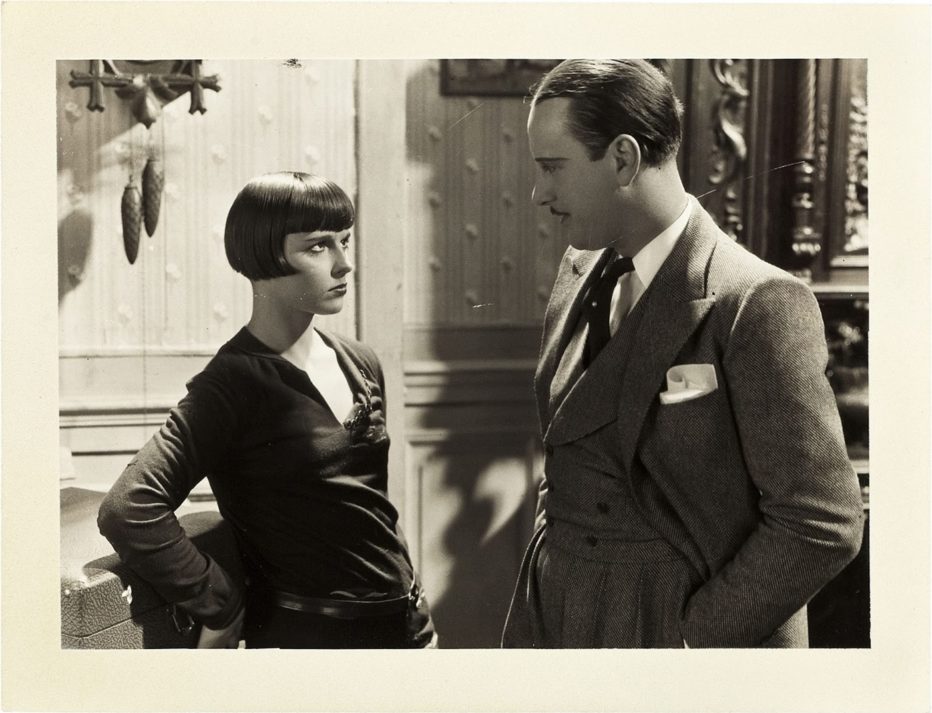
GW Pabst’s Abwege (1928) is, as Jay mentioned in his intro, a certain thread of what we think of when we imagine Weimar cinema. Not the exoticism of Expressionism of high-concept fiction, nor the relentless realism of Street Films, but a sampler of the era’s endless fetisished culture. This is a tale of infidelity, intrigue, independence and the famous temptations of the Berlin nightlife in the 1920s.

Continue reading Giornate journal 2020: Pordenone post No 5 →

Giornate journal 2020: Pordenone post No 4

Now remind me, did I mention already that I was in Athens recently? Yes, Athens, the cradle of western civilisation. Well I was. And today I returned there via the magic of silent cinema …

Day Five

But first, an audience with the maestro. I was lucky enough to catch the masterclass today and so I spent a happy hour listening to Mr Neil Brand discussing his career and approach to silent cinema accompaniment. His explanation of how to read a scene backs up my theory that the musicians have all the best critical insights when it comes to silent cinema. It’s all about close reading, and rolling with the narrative punches. Still, catch up with this for yourself if you can – Neil has far more interesting things to say than I do.

Continue reading Giornate journal 2020: Pordenone post No 4 →

Giornate journal 2020: Pordenone post No 3

Today’s trip to Pordenone should probably have been made available on the National Health, pandemic or no pandemic. In times of stress, laughter is the best medicine, after all.

Day Four

A real treat this afternoon before the films began was the masterclass of masterclasses. John Sweeney hosted a roundtable conversation between some of the Giornate’s wonderful accompanists: Philip Carli, José María Serralde Ruiz, Daan ven den Hurk and Mauro Colombis. Lots of insights here into writing, recording and improvising silent cinema scores, and I really like the way that Pordenone has incorporated live events into the online limited edition, and especially the sense of collegiate conversation, and the sharing of expertise that characterises a week in the Verdi. This was a superb example of that. Do catch up if you can, if only to understand why John and Philip have such an aversion to thinking of rabbits, or squirrels.

Continue reading Giornate journal 2020: Pordenone post No 3 →