This is a guest post for Silent London by Sean Crose, author of Catholic Girl: The Life and Times of Mabel Normand, published by BearManor Media. To order this biography of the iconic silent comedienne, click here.
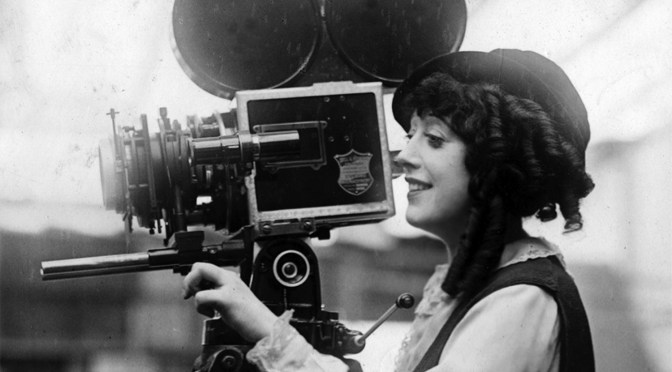
“My first parts were all in tragedies,” Mabel Normand told the Los Angeles Examiner in 1924. “Mr Griffith never could see me as a comedienne.” Sure enough, Mabel, the pioneering comedic icon of the silent era, got her start in film doing tragedies for director DW Griffith. Difficult though it may be to imagine, Mabel was more apt to be found on screen back then trying to steal the husband of Mary Pickford’s character than performing the groundbreaking, sometimes quite dangerous, slapstick she would become famous for. Over ninety years after Mabel’s death at the far-too-young age of 37, it’s worth asking how she made the transition from tragedy to comedy so masterfully.
The Criterion Collection has shared this very special clip with Silent London to mark the release of Chaplin’s City Lights on Blu-ray in the UK. It is presented courtesy of MK2.
In this footage we see Chaplin out of costume rehearsing one of the most graceful bits of comic business in the film, as the Tramp steps back to admire a statue in a department store window – with perilous results.
It’s a fascinating insight into the working processes of this famously perfectionist filmmaker, during what was very possibly his most painstaking, and certainly most protracted, shoot. It’s just one of the glimpses backstage offered on the new Blu-ray edition of the film.
This February, comedy fans will head west to Bristol, Unesco City of Film for the annual Slapstick Festival. As usual, there is plenty for fans of silent cinema in the programme, with stars from Charley Bowers to Harold Lloyd, Charlie Chaplin to Marlene Dietrich. Presenters include Kevin Brownlow, Steve Massa and Polly Rose, as well as the marvellous Ayşe Behçet, whose Charlie’s London posts you may remember from this very site, back in the day.
The 2023 Slapstick festival runs from 14-19 February this year, and here’s what’s coming up silent in the programme.
In stark contrast to most films made immediately after the Russian Revolution, this is an endearing rom-com filled with likeable characters and some self-effacing insights into the filmmaking process. At the centre of it all is cigarette seller Zina (played by the future Cannes award-winning director Yuliya Solntseva) and the love tangles that surround her when she is talent-spotted to become an actress. With an introduction from stand-up comedian and actor Lucy Porter and live piano accompaniment by John Sweeney.
The appeal of What Happened to Jones? is not hard to place – as long as you are in possession of a funny bone. It’s a cheeky, crowd-pleasing gag-fest, adapted from a Broadway farce of the same name that packed houses on Broadway and the West End in the late 1890s, even as it left the critics largely cold. What Happened to Jones? thrived in silent cinema, being adapted in 1915, 1920 and finally in 1926 – starring the fabulous Reginald Denny. It’s a breezy tale of a chap called Tom Jones who goes out gambling with his friend Ebenezer Goodly the night before his wedding. Comic complications ensue, as you would fervently hope!
Reginald Denny, the dapper star of this farce, may now be best remembered as a character actor in talkies, but in the silent era he was a leading man, a comic star. Though in truth his heart belonged to aviation and athleticism as much as it did to acting. He was born into a theatrical family in Richmond, Surrey, and although he had some success as a child actor, he was sent to boarding school aged 11 after his mother died. He ran away from school to London as a teenager – that’s where he took up boxing and eventually became a heavyweight champion.
This is a guest post for Silent London by the composer and author Carl Davis. Today is his 85th birthday, and his new album Buster Keaton: The Carl Davis Soundtracks is released next week, 5 November. The two-disc set comprises highlights from the Carl Davis soundtracks composed for the Buster Keaton movies commissioned for Thames Silents and The Cohen Film Collection. The music is composed and conducted by Carl Davis and performed by the Thames Silents Orchestra, the Chamber Orchestra of London and the Czech National Symphony Orchestra. recorded between 1984 and 2020.
What makes Buster Keaton different from his two great rivals, Charles Chaplin and Harold Lloyd in the Hollywood of the 1920s? These three artists played very defined and different characters and supporting them in their differences is the role of the music.
Charlie’s Tramp evolved from 1914 and he played him until 1936 when the character made his final appearance in Modern Times. Chaplin was himself a gifted composer. As soon as sound film became the standard he completed and recorded his score for City Lights (1931) and did so for the rest of his career. Chaplin’s scores evolved out of the pre-1914 world of Victorian Music Halls: sentimental ballads, waltzes and polkas as well as melodramatic underscoring.
Time flies when you’re getting nothing done. So I will forgive you if you don’t believe me, but this weekend the Silent Comedy Watch Party will webcast its 50th edition, a year to the day since the first show, back at a time when we were just getting our heads around this new word “lockdown”. That’s a whole year in which our Sundays have been blessed by silent comedy, live music and erudite introductions courtesy Ben Model, Steve Massa, and friends.
Silent London couldn’t let a milestone like that pass without a chat, and Ben and Steve were kind enough to take part in an interview with me, socially distanced at a range of around 3,500 miles.
Ben Model and Steve Massa
Congratulations on a year of webcasting live silent film and music shows from your homes. It’s an awesome achievement. My first question has to be: why did you start the Silent Comedy Watch Party?
Ben Model: I’d played a weekend of shows in Nebraska and came home – then two days later things started shutting down and all my gigs were cancelled. I thought of the people who’d have gone to them who were now at home and couldn’t. I’d had the concept for the show in my head for a few years but with all silent film showings cancelled, this seemed like the moment to give it a shot. The tech of it worked, thankfully, and even more overwhelming was the response we got on socials and in emails.
Steve Massa: Since all our live shows were suddenly cancelled it seemed like the perfect way to stay in touch with the silent comedy universe. Ben told me he thought that we could technically do it and asked what I thought. Of course I was onboard immediately. Once we started we discovered how therapeutic laughter really is, and it became a mission to provide a little needed relief during the pandemic.
Did you ever think it was too much to take on? The work involved, all the technical challenges?
SM: This is really a question for Ben as he’s producer, technical director, film historian and accompanist. In addition to co-hosting, I gather the photos and information on the films, but he’s got the real burden of technically making the shows happen.
BM: Yes. Every week. But also, where was I going? Where was anybody going? The responses we got on socials and emails from day one were so moving, that’s what’s kept me going. No matter what the tech issues I’ve dealt with have been – and thi sis the thing my wife Mana keeps reminding me – there are hundreds of people out there who count on the show being there, for the laughs they need to get through all this.
I’ve developed an even greater respect for projectionists – what I’m doing tech-wise is pretty much like what happens in a booth during a show. And I’m doing that while I’m also hosting and accompanying, plus the factor of functioning as the tech director of a small TV studio.
You don’t need me to tell you that it’s a tough time right now. All I can say is that I hope you’re all taking care of yourselves out there, celebrating the small wins and staying connected.
Talking of connections, I have news of upcoming online delights for silent cinephiles. Viz, to wit, henceforth, etc etc.
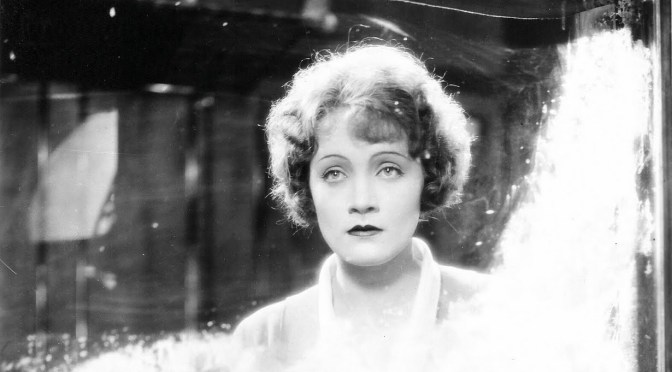
Hippfest is back! Yes, the Hippodrome Silent Film Festival returns, online, this 17-21 March. The star attraction here is the wonderful Marlene Dietrich silent The Woman Men Yearn For (1929), along with a new score from Frame Ensemble. But believe me there are more delights yet to be announced. I am sworn to secrecy, however, and shall remain silent until the full programme is announced on 16 February. Read more.
I trailed this event last year, but the full programme for Slapstick 2021 (1-17 March 2021) is a few steps closer to being announced – the full details will be revealed on Monday 25 January. Passes are on sale now, at a variety of price points, and individual tickets for each event will be on sale on Monday, too. Read more.
On 4 February Coram hosts an online roundtable celebrating the centenary of Charlie Chaplin’s The Kid, and its depiction of care, with Bryony Dixon and Kate Guyonvarch. Sounds fascinating. Book here.
The Silent Comedy Watch Party courtesy Ben Model and Steve Massa was a trailblazer in the online silent game during the early weeks of the pandemic, and has gone from strength to strength. Wouldn’t you know it, they will be celebrating their 50th edition a year to the day since they started, this March? Catch up with previous weeks and get set for future episodes (this Sunday we’re treated to Alice Howell, Martha Sleeper and Charley Chase) here.
Kennington Bioscope shows no sign of slowing down – the shows just seem to get better and better. The next episode, on Wednesday, promises a programme called “Daring Deeds”. I can’t wait for historian-host Michelle Facey to explain further. Set a reminder.
Today is the anniversary of the births of Yevgeni Bauer, DW Griffith, Conrad Veidtand Sergei Eisenstein. What special silent film powers are unleashed on 22 January?
Next week: I reveal the winners of the 2020 Silent London Poll! Iron your bowties and polish your stilettoes, ladies and gentlemen…
Stay safe, lovelies. I’ll be back in touch next week to open those golden envelopes.
• Silent London will always be free to all readers. If you enjoy checking in with the site, including reports from silent film festivals, features and reviews, please consider shouting me a coffee on my Ko-Fi page.
Some news from our good friends at the Slapstick Festival this morning. As you know, this annual showcase of physical comedy is a guaranteed good time, and it usually takes place in January, in venues across the city of Bristol.
Well, nothing is going to plan right now and Bristol is currently in the highest tier of Covid-19 restrictions. That means that there will be no IRL event this year, but there is good news, not unrelated to the £11,000 raised by the festival’s crowdfunding campaign during lockdown. Slapstick is shifting to March, and pivoting to online.
The last night of Pordenone is always bittersweet – the fun is over for another year. There are bags to be packed and it’s time to make one’s journey home, marathons and rail strikes permitting.
The same melancholy accompanied the closing of the 39th Limited Edition, but there’s a note of triumph too. The online version snatched victory from the jaws of defeat, you might say. Fewer films, of course, and none of the bonhomie that brews in the Verdi and the Posta, but something else. A celebration of the global silent film community.
The Giornate welcomed twice as many accredited delegates as usual this year. Many of those will be people who can’t usually travel to Italy, but perhaps there are some among them who might visit for the first time in person next year – the dates are 2-9 October 2021 people, mark it in your diaries. The Limited Edition has been a great advertisement for the real deal.
Day Eight
Three things I can’t resist: a film about a ballerina, a Nordisk romantic drama from the early teens, and accompaniment by John Sweeney. So although I had an elsewhere to be on Saturday, I raced home to catch up with Balletten Datter (Holger-Madsen, 1913). German dancer Rita Sacchetto, known for her Tanzbilder dance interpretations of famous works of art, plays Odette, a feted ballerina who gives up the stage to marry a count. But the footlights are calling, and jealousy is festering between her titled husband and her dance director …
The absolute highlight was a solo scene in which Sacchetto plays dressup in her old stage gear in front of the mirror. A joyous diva moment, thrilling acted and deftly staged of course. This was, I fear, a silly film. But I loved it and the Danish Film Archive is to be credited for its recent swath of first-rate digital restorations, and for making them so accessible in this of all years. Sweeney, of course, did us proud with a film that swung between on and off-stage sequences – he made it all feel like a dance.
Today’s trip to Pordenone should probably have been made available on the National Health, pandemic or no pandemic. In times of stress, laughter is the best medicine, after all.
Day Four
A real treat this afternoon before the films began was the masterclass of masterclasses. John Sweeney hosted a roundtable conversation between some of the Giornate’s wonderful accompanists: Philip Carli, José María Serralde Ruiz, Daan ven den Hurk and Mauro Colombis. Lots of insights here into writing, recording and improvising silent cinema scores, and I really like the way that Pordenone has incorporated live events into the online limited edition, and especially the sense of collegiate conversation, and the sharing of expertise that characterises a week in the Verdi. This was a superb example of that. Do catch up if you can, if only to understand why John and Philip have such an aversion to thinking of rabbits, or squirrels.
“My four-year-old thinks One Week is a Sybil Seely film that just has Buster Keaton in it.” Polly Rose said many wise things in her introductions to three restored Keaton shorts to kick off the Slapstick Festival this year, but this one really stuck with me. The annual celebration of visual comedy had a fantastic lineup of silent cinema this year, and I saw lots of it. In between chuckles, I had plenty of time to ponder the fact that that Rose’s four-year-old made a really good point.
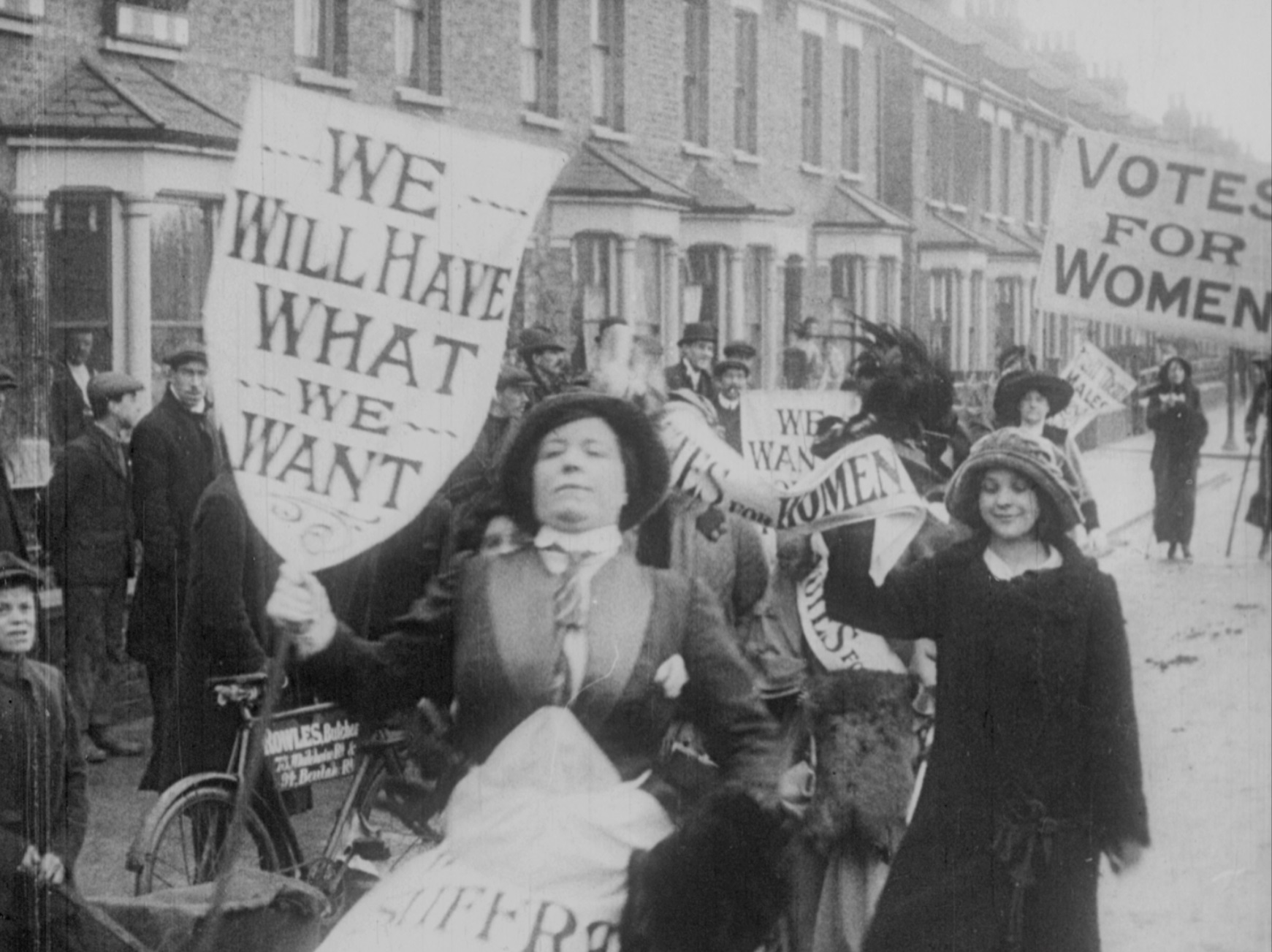
This year, as it has done for a few years now, Slapstick Festival goes beyond the big three, or big four, or however you want to cut the comedy canon. There are programmes devoted to those performers designated “forgotten clowns” and a dedication throughout the schedule to showcasing female talent. There was a screening of suffragette comedies for example, and even an entire distaff gala on Thursday evening – a presentation of female-led movies at Bristol Cathedral, introduced by Shappi Khorsandi, running along the same lines as the Friday night gala, hosted by Paul McGann and featuring Keaton, Chaplin, Laurel and Hardy. Applause emojis all round for all of this. I absolutely loved it.
The insightful conversation between (hero) Samira Ahmed and Lucy Porter about the manifestation of the campaign for universal suffrage in silent cinema was a real highlight for me. Great to see these newsreels and comedies not just shown, but contextualised and deeply considered as well. And Porter’s line about “Darren” will stick with me for a long time. There was quite a meandering discussion in the room and the bar afterwards about the intent of filmmakers presenting such violent farces as Milling the Militants or Did’ums Diddles the Policeman. And how audiences took them! It’s hard to know the truth, but I feel that copper-bashing suffragettes and those who opposed them had both become popular caricatures by this point. So, many people watching the films, instead of looking for points of identification or moral victory, would have been merely enjoying the spectacle of a bunfight between two camps reduced to their most absurd and extreme positions – like switching on Question Time, say. Certainly one could see a few upper-middle-class white men claiming to be oppressed by intersectional feminism in these comic shorts. Though, I guess I have just proved that we all bring our own perspective to the films we watch. Make your own minds up – you can see many of these films on the BFI Player or indeed on the fine BFI DVD Make More Noise.
This is a guest post for Silent London by Michelle Facey, a member of the programming team at the Kennington Bioscope.
Feeling a post-Easter ennui? Well, you could do no better than to ready your laughing gear and get yourselves down anywhichway to the Cinema Museum for all or part of a weekend of silent comedy fun 27-28th April, curated by us, especially for you, at the Kennington Bioscope.
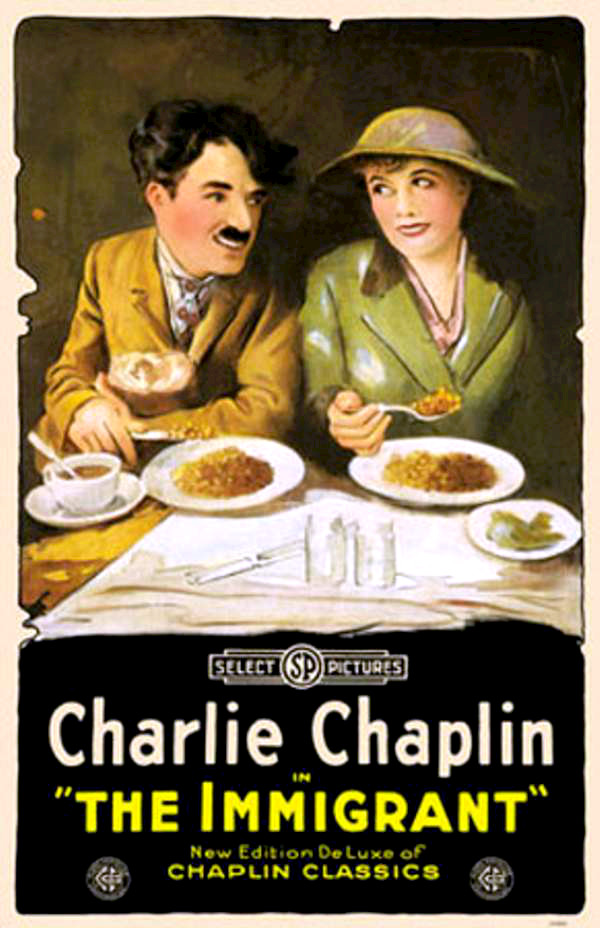
This last week saw the 130th anniversary of the birth of Lambeth’s most famous son, the Little Fellow himself, Charlie Chaplin, and as many of you may know, the Cinema Museum is of some significance in his origin story. The Master’s House, home of the Museum in Kennington, was at one time, part of the Lambeth Workhouse where Chaplin was sent as a child, and we will be marking his birthday anniversary with several programmes. Respected Chaplin biographer David Robinson will introduce Charlie’s stone-cold classic silent film, The Gold Rush (1925), showing with its recorded score. Filmmaker, collector and editor, Christopher Bird, brings us his original 16mm amber prints of The Immigrant (1917) and The Vagabond (1918). And (tweet tweet) that little Bird has told me his copy of the former “looks gorgeous.”
This article was originally published on the Drugstore Culture site on 23 November 2018. As that site is currently shuttered, I am reposting it here.
The career of Mabel Normand represents one of the biggest gaps in popular film history. Why isn’t this uproariously funny comic, who starred in more than 167 shorts and 23 features, remembered as one of the greats of silent comedy? Instead, there is a long-established male hierarchy in slapstick: Charlie Chaplin and Buster Keaton at the top, vying for the number one slot, with Laurel & Hardy and Harold Lloyd snapping at their heels. Then there’s Roscoe Arbuckle, Charlie Chase, Raymond Griffith and many more, cramming in to the picture like a cohort of bungling Keystone Cops. For years the top ranks have been pictured this way, as a boys-only club, with room only for comedians, not comediennes. In his 1975 slapstick bible The Silent Clowns, Walter Kerr even declared: ‘No comedienne ever became a truly important silent film clown.’ The reason being, he argued, the beauty standards required of women in the film industry. ‘Comediennes, from Mabel Normand all the way to Marion Davies, laboured under an instant handicap: they had to be pretty… The girl was expected to function as a girl, no matter what incidental nonsense she might be capable of; grotesques need not apply, except for supporting roles.’
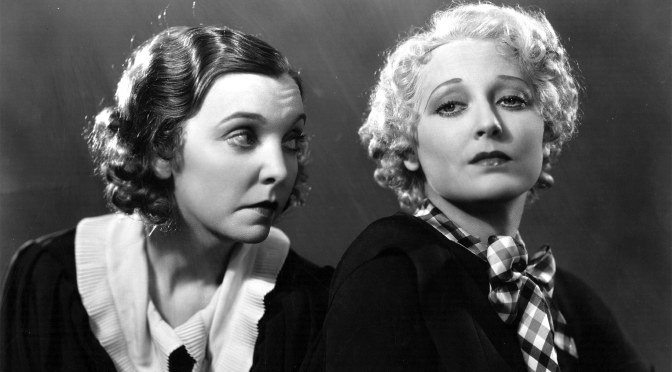
It’s a misperception that is finally shifting. A hundred years after the fact, it seems we are finally appreciating the contribution of women to the art of silent comedy, including many more great comediennes besides Normand and Davies. Recent books such as Steve Massa’s Slapstick Divas (2017) and Maggie Hennefeld’s Specters of Slapstick and Silent Film Comediennes (2018) are changing our idea of the comedy canon, and in the UK, screenings as part of the nationwide BFI Comedy Genius season and at the annual Slapstick Festival in Bristol should help to get the word out further. For the record, Marion Davies was deathlessly hilarious, squeezing acclaimed comic set pieces into the action of hit comedies including Show People (1928) and The Patsy (1964), and I would add to that list Marie Dressler, Beatrice Lillie, Colleen Moore, Alice Howell, Laura La Plante, Zasu Pitts and Mary Pickford, just for starters. If we go back further in time, a phalanx of rambunctious women were making boisterous comedies in the pre-Hollywood years: Cunégonde and Rosalie in France, Florence Turner, Laura Bayley and the ‘Tilly Girls’ in Britain. If you’ve been led to believe that women took only dramatic roles in silent cinema, take a second look at these comics, who were as comfortable falling, fighting and making a mess as any of their male counterparts.
Don’t ever make the mistake of assuming the writer wrote the headline. What Gilbey meant, I think, was why hasn’t there ever been a female comedy duo quite as successful as Laurel and Hardy? You could also ask, why hasn’t there ever been a male comedy duo quite as successful as Laurel and Hardy? But that’s not what Gilbey is getting at, writing very perceptively:
Never underestimate the ingrained sexism of male impresarios, who must have decreed that audiences simply don’t respond to female double acts, explaining away the ones that work as exceptions to the rule. But perhaps there is some deeper reason why the sight of two women performing harmoniously together as heightened versions of themselves has never properly clicked, or never been allowed to … Male friendship and rivalry is routinely the stuff of comedy. Does the notion of women getting along – or not – make us so uncomfortable that we can’t even bear to laugh at it?
Perhaps there is something in this. A deep-seated distrust of the idea that women can be funny, which doubles when there are two or more women on screen together? It’s very difficult to measure such a response, though. I’m more interested in where Gilbey went looking for his examples. He starts out in the 70s, and moves forward … citing French & Saunders as a prime example (but character comedy doesn’t count, apparently). Gilbey’s point is that female duos have a tougher time getting recommissioned – we, or the powers-that-be, don’t allow them to thrive. He may well be right there. Continue reading Looking for a female version of Laurel and Hardy?→
These reviews of Slapstick Divas: the women of Silent Comedy by Steve Massa and Specters of Slapstick & Silent Film Comediennes by Maggie Hennefeld first appeared in the June 2017 and July 2018 issues of Sight & Sound, respectively. I am reposting them here ahead of a slew of events celebrating silent cinema comediennes coming up soon.
Slapstick Divas: the Women of Silent Comedy by Steve Massa
In the silent era, as now, film comedy looks a lot like a boys’ club – and that disparity is more deeply entrenched in the arena of physical humour. For those who would like to see Marie Dressler and Marion Davies, let alone Flora Finch and Anita Garvin, as celebrated as their male peers, Steve Massa’s Slapstick Divas: the Women of Silent Comedy, will be a welcome resource. A followup to Massa’s survey of lesser-known male silent comedians, Lame Brains and Lunatics, Slapstick Divas tells an engrossing tale of female performers beating a path in the silent film industry.
An entire chapter is devoted to the most famous slapstick comedienne of them all, Mabel Normand, who segued from modelling work to acting, first in Vitagraph comedies and then at Biograph where she played dramatic roles for D.W. Griffith, but was happier putting over gags for Mack Sennett. Normand would become a fixture at Sennett’s new Keystone studio, starring in ever more physically demanding films. The chapter is named after a Photoplay description of Normand as “the sugar on the Keystone grapefruit”, but her work was as rough-and-tumble as her peers. “I have fought with bears, fallen out of a rapidly moving automobile, jumped off a second story roof into a flower bed and risked life, limb and peace of mind in innumerable ways,” she told the Los Angeles Times in 1916. She appeared in several films with Charlie Chaplin, including the feature Tillie’s Punctured Romance (1914) and was regularly paired with Roscoe “Fatty” Arbuckle. Although she was later dismissive of her skills behind the camera, she directed several films too, including Mabel’s Strange Predicament (1914), Chaplin’s first performance as the Tramp. Sadly, an accident on set one day contributed to Normand’s slow decline. While she continued to act into the 1920s, her career faltered owing partly to a series of scandals, but mostly her increasingly erratic behaviour in the studio, and gaunt appearance on film, consequences either of her brain injury, or her drug use. She died from tuberculosis in 1930, aged 37, and although she is the star of this volume, Massa notes that “her work has rarely been screened and her talent has been taken for granted”. Continue reading Sisters in slapstick: two books on silent comediennes→
This piece originally appeared in Sight & Sound magazine in 2016.
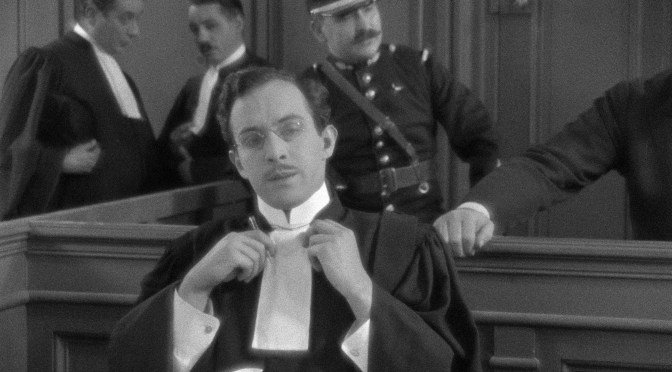
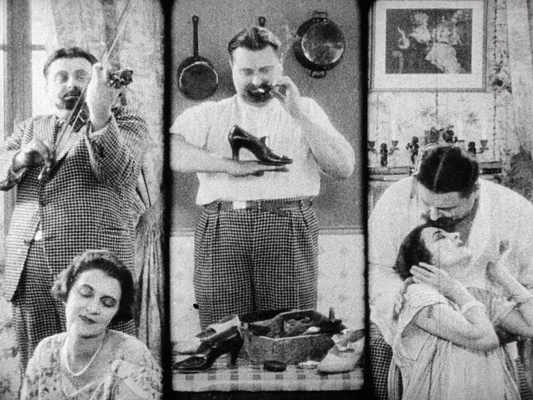
Among the treasures on display in Paris at Toute la Mémoire du Monde in February, one film seemed to justify the festival’s existence by itself. René Clair’s ingenious late silent Les Deux Timides/The Two Timid Ones (1928) harks back to an earlier age of film comedy, reworking the styles of Max Linder, Charlie Chaplin and Mack Sennett into something new and elegant. At the same time, the new restoration of this sublime farce reveals it as a silent classic in its own right – to be esteemed as highly as the films that inspired it. Thanks to a ravishing new restoration, it may be about to receive the credit it has long deserved.
By 1928, René Clair had moved on from his early art films, the science-fiction caper Paris qui dort (1923) and the cinéma pur of Entr’acte (1924) and joined Albatros, a French studio staffed mostly by Russian exiles. It was here that he made his best known silent, the beautifully elaborate farce Un chapeau de paille d’Italie/The Italian Straw Hat (1927). Clair’s 1930s triumphs Sous les toits de Paris (1930) and A nous la liberté (1931) were ahead of him, but Les Deux Timides is his silent masterpiece, folding the avant-garde and the comic into a delightful, expertly judged story of provincial romance and misapprehension.
Les Deux Timides (1928)
Les Deux Timides takes what could be a Linder scenario, of a young middle-class man overcoming obstacles in pursuit of a pretty girl, merges it with Chaplinesque outsider charm and punctuates it with Keystone-quality chaos. Clair’s film is as serious and silly as its predecessors at their best, a film that is so intensely funny it makes humour itself, and the business of film comedy, seem vitally important.
Silent Londoners are an erudite group, and no doubt we’re all regularly found in halls of academe, talking loftily of theories and histories, of books and poems and one-reel Snub Pollard movies. But even though we’re such scholars, we could all do with a trip to Cambridge this month to complete our silent film education.
The Cambridge Film Festival is one of the best regular film festivals in the country for silents, and this year, the programme of early film is full of surprises, and wonderful music. Here’s what you should be looking out for.
This is a guest post for Silent London by Katie Wright.
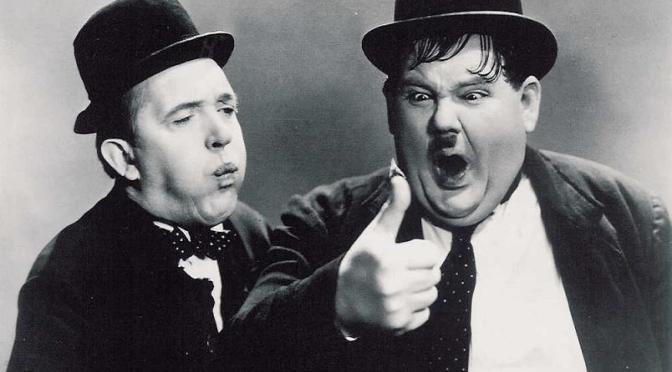
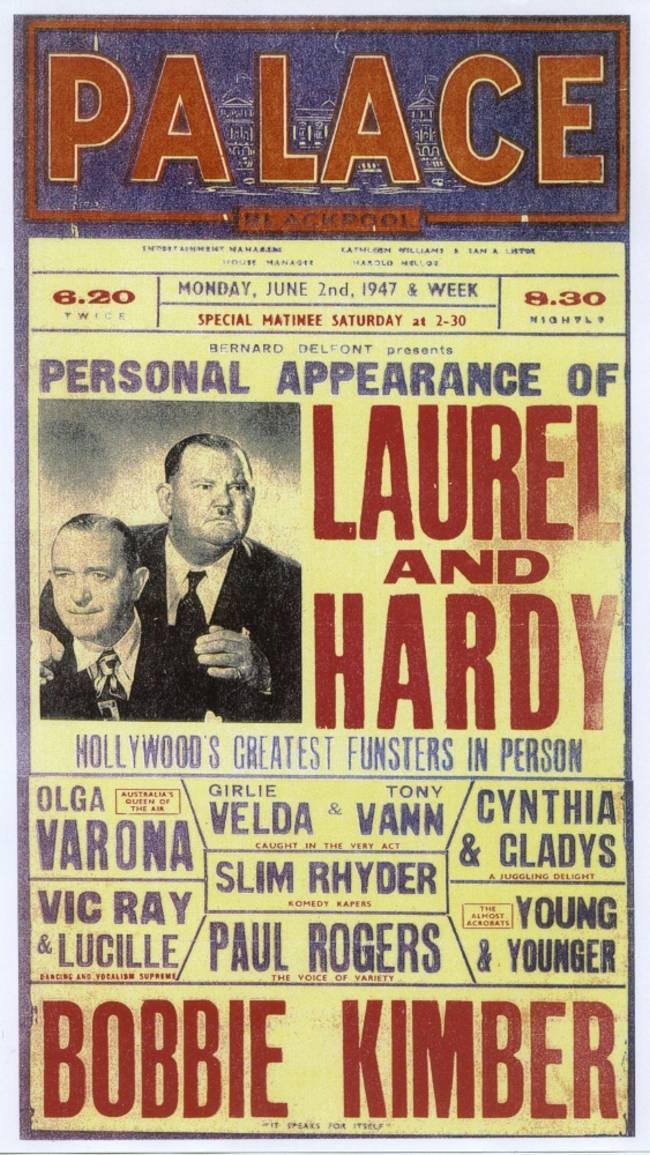
A pair of comics shuffle onstage at the Palace Theatre in Blackpool, England in June 1947. One is swimming in an oversized checked suit, dripping past his hands and towards the floor. The other is round and squat, sporting a moustache comically small for his wide face. Together, they frolic and play, every bit the annoyed schemer and his hapless buffoon. Laurel and Hardy finish their act to thunderous applause. The duo is famous all over the world, but one of them is playing to a “hometown” crowd.
The pair were best known for their feature films and silent shorts, and shared a bond as close as brothers, although Oliver Hardy hailed from Georgia while Stand Laurel remained a proud northern Briton throughout his life. While onstage Laurel played the fool, he was writer, director, and comic mastermind behind the pair’s success.
At the heart of Laurel’s stardom lies his boyhood as a young performer in Britain. Despite moving several times in his youth, the local boy who made good is revered in various “hometowns” across the north, and many avid fans and academics have sought to better understand the boy behind the man.
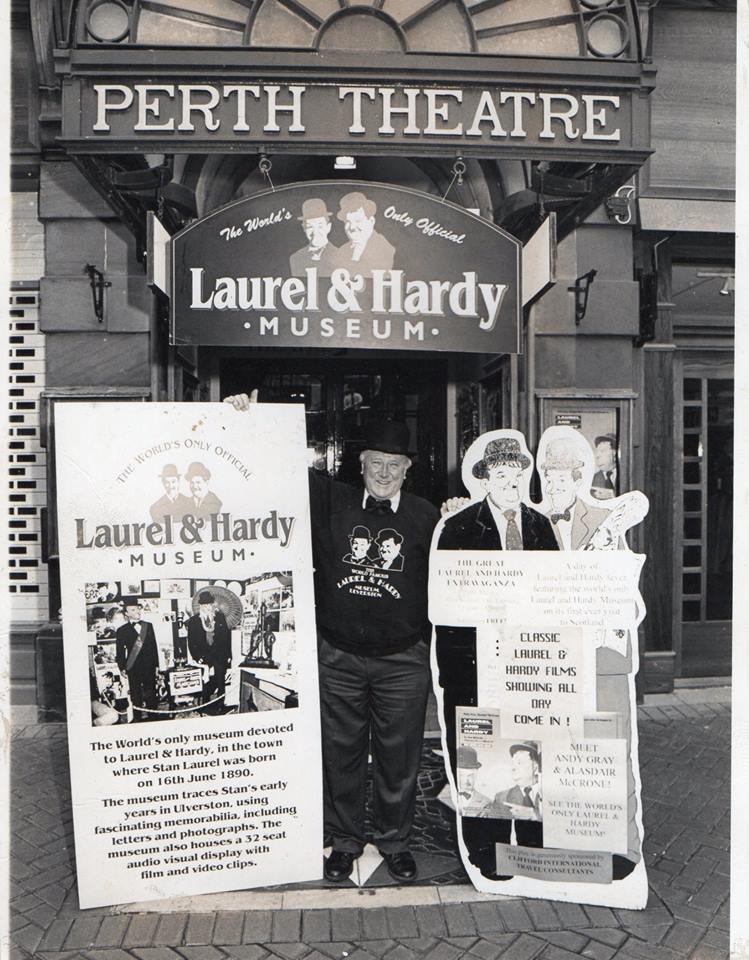
In Ulverston, Cumbria, where Laurel was born on 16 June, 1890, long-time admirer Bill Cubin put his lovingly assembled memorabilia collection on display in the mid 1980s, leading to what is now a full-fledged museum run by his grandson.
A statue of Laurel stands in Dockwray Square, North Shields, where he lived as a boy from 1897 to 1902. The Eden Theatre in Bishop Auckland, County Durham hosts a Laurel statue erected in 2008. There are more plaques in pubs and venues from Leicestershire to Glasgow.
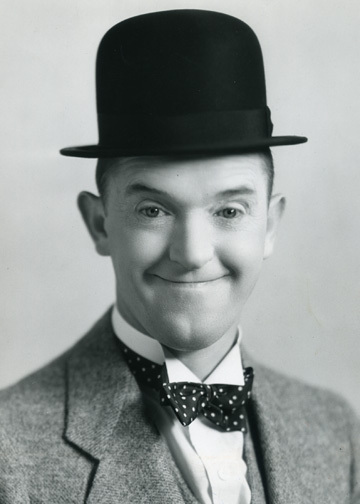
Stan Laurel
University of Nottingham professor of sociology Danny Lawrence grew up in North Shields, and sees in Laurel’s story a “parallel to [his] own life”. The connections drove him to begin researching Stan Laurel, and prompted his biography The Making of Stan Laurel: Echoes of a British Boyhood.
“I was born in the same town 50 years apart, nearly 100 yards from where he lived,” explains Lawrence. “Laurel lived in North Shields during the formative years of childhood and youth. It fascinated me to begin exploring the relationship between the town and the artist.”
Stan Jefferson, later Stan Laurel, began acting young, a student of Britain’s traditional music hall and pantomime. He eventually travelled to the USA with the Fred Karno troupe alongside a young Charlie Chaplin.
“It was by chance that he got to the States. I think that chance element makes his story alluring,” says Lawrence.
“His ability was there, but there was no distinctive character until he met Hardy. He only got that chance when the Karno tour was failing, and he instead chose to stay in the USA in search of greener pastures.”
Come break the Sound Barrier with us again. In this episode, we go to the edge of the world and the ends of the earth and back again with two animated features.
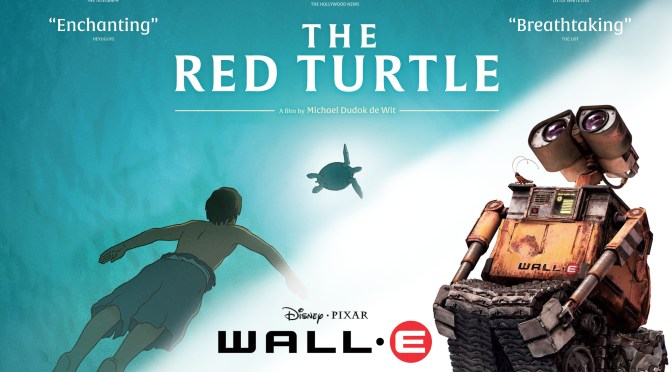
We’re talking about Studio Ghibli’s modern silent The Red Turtle (in cinemas now), and also Pixar’s beloved Wall-E from 2008. We talk about ‘Dustbuster Keaton’, teenage mutant turtles, pizza plants and bad romance, as well as artistic animation, dialogue-free direction and creation myths. You can even hear Pete sing!
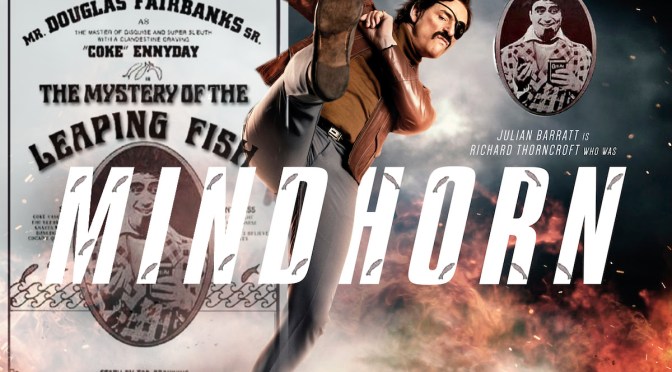
This episode of the Sound Barrier features two druggy and slightly dim detectives. We’re talking about Julian Barratt’s absurdly funny TV spoof Mindhorn and the cult favourite that is The Mystery of the Leaping Fish (1916), starring Douglas Fairbanks as sleuth Coke Ennyday. We talk about outrageous accents, preposterous plasticine, obscene graffiti and excessive amounts of cocaine.
The Silent London Podcast is also available on iTunes and Stitcher. If you like what you hear, please subscribe and leave a rating or review too. The podcast is presented in association with SOAS radio by Peter Baran and Pamela Hutchinson.
If you want to get in touch with us about anything you hear on the podcast then you can post a comment below, or tweet @silentlondon.
The next episode of Sound Barrier will appear in a fortnight’s time. We’ll announce the films for the next podcast about a week before it launches, so you can watch what we’re watching.
Silent London in no way, not even with a wink, endorses the consumption of illegal narcotics. We prefer the consumption of Class-A silent movies.







 Silent London