Call me Hedda Hopper*, because I have been keeping this one under my hat for quite some time. Coming on 13 January and available to pre-order now, Focus on Louise Brooks (Flicker Alley) is the perfect way to start your 2026 with a bang, or a pair of bangs, as the case may be. It’s a mutlifaceted tribute to the most iconic silent star of all time!
This gorgeous multiregion Blu-ray contains “a treasure trove of early and rare Louise Brooks performances”, with all the extant material from her early Hollywood films together in one place, newly restored and presented in this very special edition. All this!
As so often, I am going to have to ask a certain purist contingent to do their breathing exercises and locate the nearest fainting couch. Everyone else, buckle up!
I have not one but two cases of pop silents to report. And as ever, I remain optimistic for both. First up is one that may be familiar to many already. The Pet Shop Boys, one of the truly great pop bands of the 80s and 90s, wrote an electronic-orchestral score for Battleship Potemkin (Sergei Eisenstein, 1925) several years back. There was a special outdoor screening in Trafalgar Square, where the band performed the score with the Dresdner Sinfoniker, orchestrated by Torsten Rasch, back in 2004. I missed that occasion, but I heard that it was pretty epic, despite the rain. Talk about Eastern Bloc sailors and West End, um, squares.
Bonjour mes amis. Aimez-vous les films de Charlie Chaplin ? Are you wearing your pearls? Supping on truffle soup? Tooting your toy saxophone? Bien, alors nous pouvons commencer.
Very welcome news from Eureka Entertainment! The good people of Eureka, who have brought us so many beautiful silent film Blu-rays, in the past are releasing Pandora’s Box (GW Pabst, 1929) on Blu-ray on 30 October this year. This is the film’s debut on Blu-ray in the UK.
Co-curated by Laura Horak, Maggie Hennefeld and Elif Rongen-Kaynakçi, the Nasty Women project has trawled the archives for trailblazing examples of female energy, anger, transgression, rebellions and explosive hilarity in early cinema. The films have been shown at festivals around the globe and this summer you can take them home with you, courtesy of Kino Lorber, in the form of an “irreverent” four-disc box set, available in both DVD and Blu-ray flavours. Here’s the official spiel:
How are you doing? You can be honest here, you’re among pals. It’s a bit difficult out there these days isn’t it? Whether you’re out on the front line (thank you, THANK YOU), out-of-work, homeworking or home-schooling, life is stressful at the moment. Apparently we’re all either filling our time or switching off at night by streaming more than ever. Why not? There are some great resources out there for watching silents online (and more from me on this anon), but streaming is not the only fruit.
If you still have some pennies to spare in the age of lockdown, don’t forget that physical media is your best friend. Silents on Blu-ray (or DVD) won’t disappear at the whim of the rights-holder, or glitch or go lo-res every time your bandwidth gets overloaded by your flatmate’s Zoom cocktails or your kids’ homework chats. Not only that, but the best discs coming out these days are packed with commentaries and extras that celebrate the film and will expand your knowledge in the most entertaining way. Continue reading Buster Keaton: 3 Films review: discs the doctors would order→
Are we in the midst of a City Symphony revival? As well as recent essayistic examples from Terence Davies and Mark Cousins we have had last year’s London Symphony, and in 2016, Brighton Festival commissioned another, which has been screened a handful of times around the country and is now out on DVD, and about to screen again in London and Brighton soon.
I’ve been keen to set my eyes on Brighton: Symphony of a City for a while, especially once I started hearing such good things about it. The DVD it is available on is called Symphonic Visions, and it is a showcase for the work of composer Ed Hughes. Alongside Brighton: Symphony of a City, directed by Lizzie Thynne, which is a whisker over 47 minutes long, there are four silent shorts featuring new scores by Hughes and Sky Giant (1942), a British Movietone film from the Imperial War Museum archive about the Arvo Lancaster Bomber.
The BFI’s sumptuous restoration of Indian romance Shiraz is out on dual format DVD/Blu-ray now. Assuming that you took this website’s advice and already saw this lush film at the London Film Festival Archive Gala or on its recent theatrical run (actually, there are probably some more screenings coming up – check here) why should you buy it on disc?
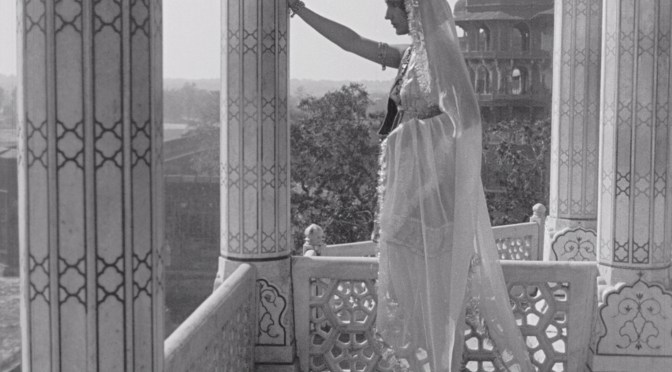
1) Because this is a film to wallow in. Hat-tip to the illustrious Anglo-German cinematography team of Henry Harris and Emil Schünemann. It takes repeat viewings of Shiraz to satisfy your hunger for those gorgeous landscapes and grand palaces. All that beauty looks great in high-definition on the Blu-ray – and you can watch a short demo of the restoration to see just the BFI put into making it look so stable and blemish-free. I am shameless, as you know by now, so I recommend using the scene selection function to skip straight to the kiss, or to the reveal of Taj Mahal. Not forgetting the fact that you can pause that elephant’s foot moment to see just how close a call it was.
2) Vintage extras. I really like the BFI’s habit of putting extra archive films on movie discs. In this case it the Temples of India, a short travelogue from 1938 that features the Taj Mahal, which was shot in blistering colour by none other than genius cinematographer Jack Cardiff. There’s also Musical Instruments of India – a government film designed to promote Indian culture, which might be of special interest if you’re drawn to reason Number Three …
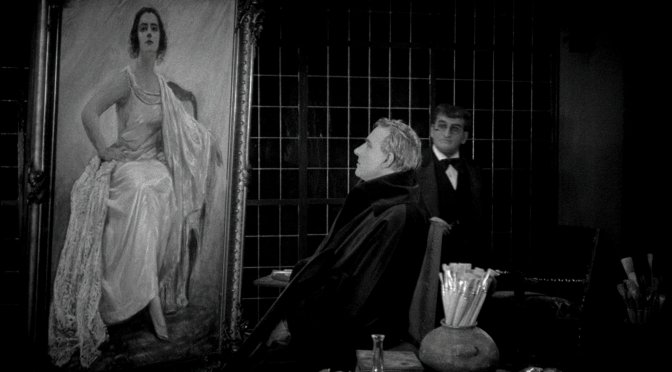
One of the strands running through Carl Th Dreyer’s beautiful drama Michael (1924) is the idea that art can only be truly great when it is animated by love. The artist protagonist Claude Zoret (Benjamin Christensen) struggles to finish a commissioned portrait of a rich countess – his passion project takes his young protégée Michael (a youthful, handsome Walter Slezak) as its model instead. When Michael finishes the portrait for his master, the quality of his work betrays the fact that his own affection has been transferred to the model.
The film’s famous line, “Now I may die content, for I have seen great love” carries this lesson over to the art of living itself. Better to have loved and lost, as the saying goes. It’s a conclusion that recalls the moving speech that caps off last year’s Call Me by Your Name. Far less explicitly than that film, Michael also takes gay love as its subject – a topic dealt with more openly in certain German films of the era (Sex in Chains, Different from the Others). It’s unmistakably a gay story, seen in the 21st century. Perhaps in 1924, some members of the audience might have missed it – although not in the US, where the film was released as The Invert, and not if they were familiar with the author of the film’s source novel Herman Bang, a gay writer who wrote heartfelt stories, largely, it seems, about lonely and unfulfilled women.
Were you at the Barbican for the London Film Festival Archive Gala last year? It was a really special evening: the premiere of the BFI’s immaculate new restoration of Indian-Anglo-German romance Shiraz: A Romance of India with a stunning new score composed by Anoushka Shankar. I was there, and you can read my review here.
However, whether you missed out, or you just want to relive the magic, there is good news. Shiraz gets a theatrical release very soon – it lands in cinemas from 2 February 2018. If you want to take Shiraz home, you’ll be able to buy it on DVD/Blu-ray on 26 February too. You’ll also be able to watch Shiraz on the BFI Player, and BBC4 will broadcast a behind-the-scenes documentary on the recording of Shankar’s ambitious score at some point during the year.
Anoushka Shankar accompanies Shiraz: A Romance of India at the BFI London Film Festival Archive Gala. Credit: Darren Brade Photography
Last night I had a sneak preview of the DCP of Shiraz – the digital version that will be shown in cinemas and appear on disc, with the recorded score. A repeat viewing confirmed that this is an especially gorgeous film, with beautifully composed frames full of detail. The first time round I was distracted by the leading players, but on second viewing the landscapes in the background caught my eye, not to mention a donkey scratching his neck on a tentpole, a potter spinning his wheel. And sorry, Hollywood, but all your grandest designs can’t compete with the stunning architecture in this film. Shankar’s score, too, is full of surprises, bold decisions and graceful melodies. The range of instruments and styles in this piece of music is really breathtaking, and yet it’s always sensitive to the film – a really accomplished silent movie score.
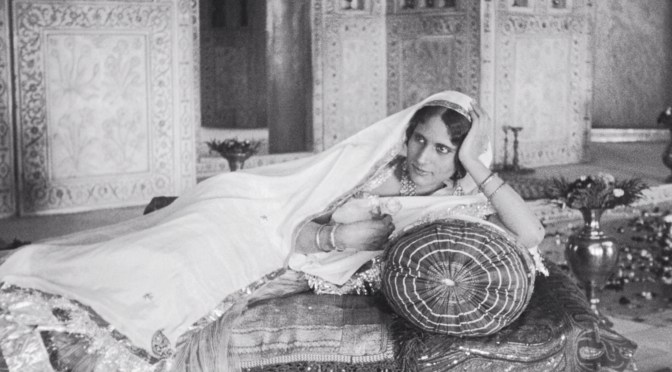
Seeta Devi (Dalia) in Shiraz: A Romance of India (1928, BFI National Archive)
There may be more good news too – although you’ll have to cross your fingers. The BFI hopes to stage some more screenings of the film with the music played live, but we will just have to wait and see …
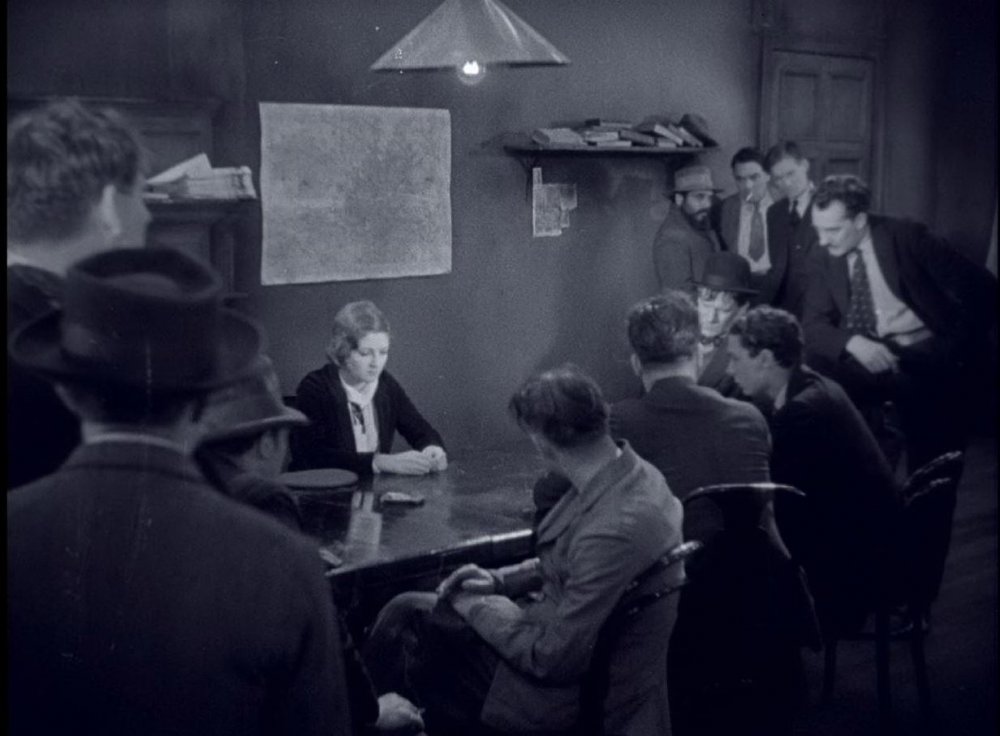
The Informer truly put the “international” into British International Pictures. This film, shot entirely in the Elstree studios in 1929, was adapted from an Irish novel, directed by a German, and starred a Swedish man and a Hungarian woman. As far as in-front-of-the-camera talent goes, this is exactly the kind of international collaboration that would perish with the coming of sound. Behind the scenes, British studios would only welcome in more European personnel through the 1930s, though sadly for the worst of reasons.
So The Informer is a movie on the cusp – geographically and historically. It’s fitting then that it was filmed in both silent and sound versions. The BFI restored the talkie Informer a while back, but in 2016, the silent version got the full makeover treatment, and was presented as the London Film Festival Archive Gala with a new score by Garth Knox.
And thank goodness it did, because, whether you have seen the stilted and shaky sound version or not, the silent Informer is a breath of fresh air. This is a truly accomplished late silent drama, with a graceful moving camera and fine performances, and all that emotion is heightened by slinky black shadows and high-angled shots that recall director Arthur Robison’s achievements in German Expressionism (you may have seen Warning Shadows, 1923). The story may be set in early 1920s Dublin, but this vampiric treatment suits it perfectly. Liam O’Flaherty pictured his moody thriller being made into a German film when it was still words on a page.
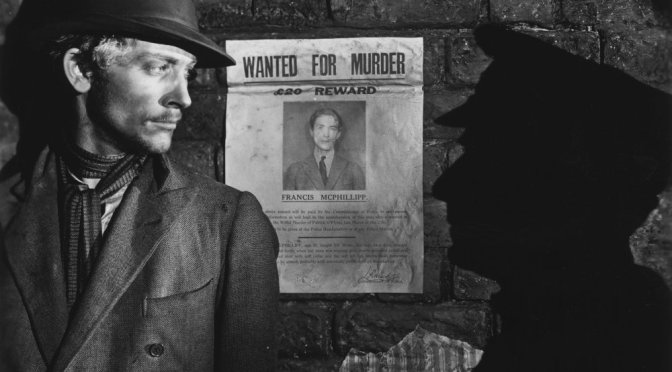
In this taut, cat-and-mouse thriller, Lars Hanson plays Gypo Nolan, one of a disintegrating band of Irish revolutionaries, who tips off the police to the whereabouts of his exiled comrade, Francis, played by Carl Harbord. Famed vamp star Lya de Putti plays the woman they both love. The story plays out in the mean streets of Dublin – there’s a claustrophobic sense of place as we feel that the characters are trapped in the city streets by their ideals as much as by their betrayals. But this city could also be any city where the people and the police are at odds. It could be Weimar Berlin, for example. And it’s uncannily like the crime-infested LA of 1940s film noir. Those shadows get everywhere.
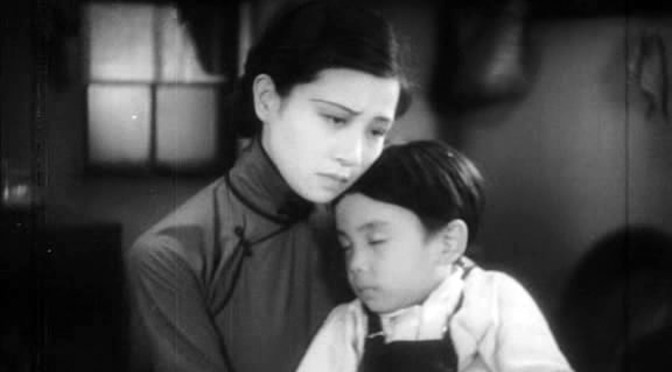
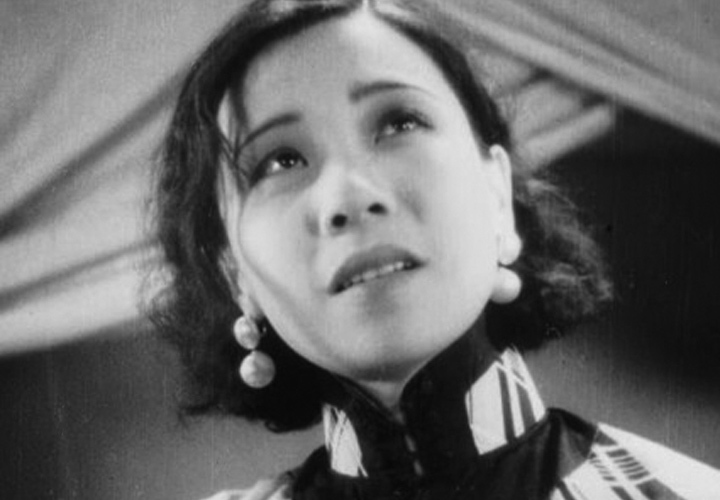
Ruan Lingyu appeared in her first film in 1927, aged 16. In 1935, she took her own life, just over a month before her 25th birthday. In that short time, she had appeared in many Chinese silent films and become one of the country’s best known actresses. Today she is celebrated for her delicately nuanced performances in those films that survive – she has been called the “Chinese Garbo”. However, if you’ve seen Stanley Kwan’s 1992 film Center Stage say, you will also know about the troubles Lingyu encountered, and the events leading up to her shocking suicide.
Lingyu’s private life shouldn’t concern us now, any more than in 1935, but when you watch The Goddess, a stunning Chinese silent film and one of the last she made, it is difficult not to make a link between the actress and the character she plays. Lingyu’s suicide note (which may have been forged) famously read “gossip is a fearful thing”, and her early death came after she had been monstered by the press over her love life. In The Goddess, Lingyu plays another woman devastated by malicious gossip. But it’s important not to take this comparison too far – the chatter of small-minded women is not the worst of her character’s problems.
The Goddess (1934)
The first thing to know about this film, which is every bit as beautiful and tragic as its star, is that “goddess” was a Chinese slang term for a prostitute, perhaps a slightly ironic one. Lingyu’s character embodies the perceived contradictions in that name: she is a loving mother who supports her son by nightly sex work. The crib is in the centre of her home, and her garish cheong sams are hanging on the wall. The nameless heroine has the misfortune of running into the house of a sleazy gambler, “The Boss”, when fleeing the police one night. From that moment one, her decides to exploit her, taking her earnings on the threat of harming her son. When the “goddess” attempts to send her son to school, the other mothers soon catch on to the way she earns her money, and complain to the principal, which is when our heroine faces the worst crisis of all.
Prostitution was rife in China in the 1930s and The Goddess’s story would not have been unusual. Many women were forced by poverty or trafficking into a career that was both illegal and made them vulnerable to pimps and clients – some of whom might be beasts like the Boss. If they aspired to a better, safer, more respectable life, the taint of sex work could hamper their efforts – which this film illustrates. The Goddess doesn’t feel like a campaigning film, despite a rousing speech made by the school principal, and you may feel let down by the ending. But this is a humane and very moving film – who knows whether it may have changed a few attitudes in its time?
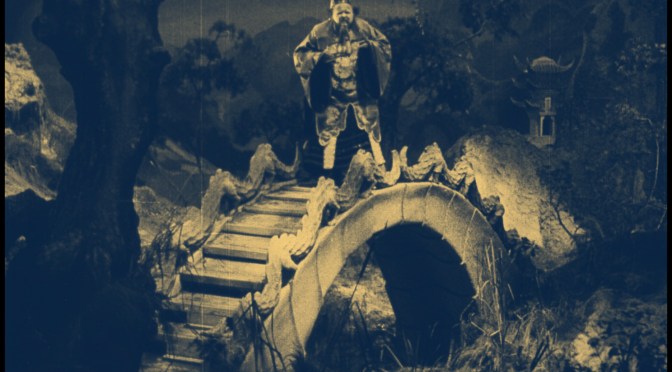
Well, this was clearly meant to be. Fritz Lang’s groundbreaking allegorical fantasy Der Müde Tod (1921) is getting a theatrical release in the UK and Ireland along with a DVD/Blu-ray edition:
Eureka Entertainment have announced the theatrical release of DER MÜDE TOD (aka Destiny), Fritz Lang’s visually ambitious, cinematic allegory starring Lil Dagover and Bernhard Goetzke, in cinemas nationwide (UK & Ireland) and Digital HD from 9 June 2017.
Talking to Françcois Truffaut many years later, Alfred Hitchcock recalled that when he saw Der Müde Tod it made a “special impression” on him. He will have seen it un 1924 under its British release name Destiny, at the Regent Street Polytechnic in London. I wonder if we will have a chance to see it in the same venue?
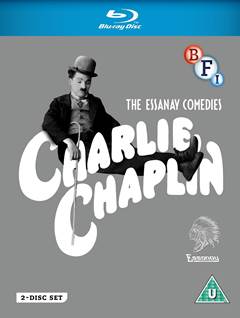
In 1914, Mack Sennett attempted to persuade Chaplin to renew his contract at Keystone. Chaplin demurred, declaring that he had no need of the Keystone facilities when all he needed to make a comedy was “a park, a policeman and a pretty girl”. And so, Chaplin turned his back on the “fun factory” and signed with the Chicago-based Essanay outfit, for a head-turning $1,250 a week and a frankly astonishing $10,000 handshake.
Despite the generous financial rewards on offer at Essanay (which itself took some time to materialise), Chaplin was largely unimpressed with the bare-bones setup. Still, he discovered a few great comic foils among the Essanay troupe including the rawboned, cross-eyed Ben Turpin. And while working at Essanay’s San Francisco studio, Chaplin first met Edna Purviance, a beautiful, funny young actor who enlivens both his Essanay films and many later works too.
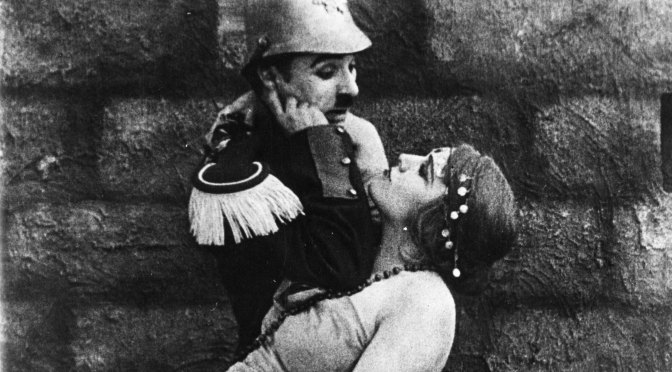
So the 14 films that Chaplin made at Essanay, which are collected on this BFI box set after being restored by Lobster Films and Cineteca di Bologna (a revamp of last year’s Flicker Alley release), are something more than rough diamonds. Chaplin gleams, whatever the setting, although many camera setups and the scenarios betray the fact that these movies were made in less-than-ideal circumstances. Or perhaps they were ideal – much here adheres to the classic “park, policeman, pretty girl” model after all. Chaplin’s earliest films at the studio, free-for-all slapstick parties such as ‘His New Job’ or ‘In the Park’, return to the barely controlled chaos of the Keystone mode, but with a central performance that elevates them to a kind of poetry.
Chaplin is magnetic, whether practising tiny bits of stage business such as flicking a single speck from a grubby jacket (‘Work’), or bouncing around a gymnasium in ornate setpiece gags that anticipate the boxing scenes in City Lights (‘The Champion’). The perfectionism of his stage training (best displayed in the theatre shtick of ‘A Night in the Show’) combine with his graceful movements and his way of spearing the camera lens with a winningly impish look to create an effect that is unmistakably cinematic.
Christmas is a time for happy endings. And box sets too, to be honest. Last year I posted about an ambitious new project from Kino Lorber – a box set of early work by African-American film pioneers. Films that were funded, produced, written, directed by and starring people of colour. These were films we have had precious few chances to see, or less than that, and they were going to be restored, and where appropriate, rescored. Not easy.
The first happy ending is that Kino pulled it off – and if you supported the project on Kickstarter, you may well have received a parcel this summer containing a shiny set of discs and a thick booklet of essays by Paul D Miller (DJ Spooky), Charles Musser, Jacqueline Najuma Stewart, Rhea L Combs and Mary N Elliott.
For those who didn’t have the cash to pledge at the time, or who can’t play imported discs, the BFI has stepped in to create another happy ending. This Christmas, the BFI has released its own matching version of the box set for the UK– and this isn’t so much a review as a recommendation.
This collection, The Pioneers of African-American Cinema, comprises five discs, with more than 20 hours of material, ranging from 1915-1946, with archive interviews from much later. There are feature-length musicals, war movies, evangelical films, anthropological footage shot by writer Zora Neale Hurston, amateur actualities by an Oklahoma Reverend, several works by Oscar Micheaux, and much more on these discs.
Watching these films is revelatory. In fact, just browsing the list of titles is an education. These films represent an obscured history of African-American filmmaking, an alternative film industry that existed largely separate to but alongside Hollywood, and a survey of African-American culture in the first half of the century. Many of these films directly address social issues, or comment slyly on Hollywood whitewashing. And many of them deal directly with faith and religion, from full-on cinematic sermons to the posturing preachers that so often appear in Micheaux’s films. As James Bell writes in his comprehensive review of the set in this month’s Sight & Sound: “Its significance for expanding a wider understanding of American cinema history can hardly be overstated.”
Ahead of the orchestral screening, cinema release and Blu-ray/DVD of Napoléon I am revisiting some old interviews I did at the time of the 2013 event at the Royal Festival Hall. Yesterday I published the edited transcript of my chat with Carl Davis about Roman orgies, perverting Beethoven and the pitfalls of watching Napoléon on a 1980s TV. Today, we have restorer Kevin Brownlow on his own epic Napoléon journey:
Kevin Brownlow (Vanityfair.com)It began with my 9.5mm film collection when I was a teenager. I had a film, another French silent film, funnily enough, by one of the pets of the French intellectuals at the time, Jean Epstein, which I thought was awful. And when I’ve got an awful film I can’t bear to have it around so I rang the library I got it from, which was in Bromley in Kent, and asked them if they had got anything else, and they said they had two reels of a thing called Napoléon Bonaparte and the French Revolution. So I said very knowledgeably: “Oh that will just be a classroom film, full of engravings and titles and all very static.” They said: “Well, it’s all we’ve got.” So I said “All right I’ll send this back if you’ll send that”, and meanwhile I rang up the British Film Institute and asked them for a review. And they said: “Well the only film that comes close is this 1927 French film but do you want me to read the review?” and I said “yes, go ahead” and I can still remember that it said: “The man playing plating Napoléon struts around with all the futile bombast of a turkey cock.” So I thought: “Oh my god, I’ve got another dud.”
I was at home, and suffering from flu or something. I wasn’t at school. And this parcel arrived and I made a miraculous recovery. I got my parents in the front room and we ran it on the wall, and I had never seen cinema like this. This is what I thought the cinema ought to be, but it never was. I realised that what I had got was two reels of a six-reel version put out for home cinema use in the 20s. My mother said: “ That’s the most beautiful film you’ve got.” And so I started advertising in the Exchange and Mart until, I got the rest of it. And then people started coming to see it. I remember David Robinson was brought by Derek Hill, who was the assistant editor of Amateur Cine World, and he’s coming again 60 years later on the 30th [the 2013 screening]. He now runs the Pordenone Silent Film Festival [Robinson actually stepped down this year, and the new artistic director is Jay Weissberg].
Abel GanceAt the very latest I saw it in 1954, but I think it was 1953. I can’t remember precisely but it is 60 years ago, since I first saw it, virtually 60 years ago since I saw it on the screen on my projector. And then I wrote a letter to Gance. I couldn’t believe what I’d seen. I wrote a letter, it must have been care of the Cinématheque Francaise and he actually got it, and even answered it, which was very, very unusual for celebrities. And I started asking people about him and the reaction was not very strong or even interested, except one journalist, Francis Koval, and he was very enthusiastic, remembered the picture and had actually interviewed Gance, in the 50s, just before I met him I think.
There are silent movies and then there is Napoléon (1927). Abel Gance’s legendary biopic is ambitious in scope, style, technique, length and even breadth. And while there are competing scores and restorations, for us only the Napoléon recreated by Kevin and Brownlow and Carl Davis will do. You can see this version of Napoléon at the Royal Festival Hall this November, with the Philharmonia orchestra playing Davis’s monumental music, and in a cinema (probably) near you too. Plus, you will be able to take the film home too. This wonderful film is finally coming to DVD and Blu-ray this year – a release from the BFI, which promises to come laden with lots of tempting extras.
Ahead of the Napoléon-fest that awaits us, I wanted to share something rather special with you. Last time Napoléon played in London, I interviewed Brownlow and Davis for the Guardian. Necessarily, the conversation was truncated and edited for publication, but I still have the transcripts. So here, only a little tidied-up, is Davis and Brownlow on Napoléon, full-width.
The film flies by, when I am conducting. Conducting the score requires a lot of concentration, so you forget the time. It is very long but I’m getting better at it, because when this was proposed and we did it in 1980, no one was doing this, this was something that was dead by about 1929. It was all over, so there was no one to turn to say: “How do you do it? How do you organise yourself to do it? How do you create a score that’s going to run for five hours? What should its structure be?” I had to reinvent the process for myself and Napoléon was the first. Fortunately, a whole career and a whole library followed, so now I have a very defined technique for how to create the score, which I did not have in 1980. The difficulties stop when you know how to do it, and then I didn’t know how to do it at all. I just threw things together.
There is a prehistory to Napoléon and a very important collaboration with Kevin Brownlow before Napoléon: a Thames television series called Hollywood, which was based on a book of Kevin’s called The Parade’s Gone By. My relationship with him and the whole question of silent film started in the mid 1970s, around 1976. I then had the opportunity to meet survivors of the silent period. There still were people, y’know, very old then, but who were young at the time. The two really key people I met were still working. They were still playing for silent film but mostly on the big organ in LA and the most interesting person was a lovely little woman who lived in a house just behind the Hollywood sign. And I asked her: “How do you build up a long score for a film, for your own performances on the organ?” Her name was Ann Leaf and she was known as the last organist of the Paramount Theater in New York, the last cinema organist.
Anyway, she still did shows, you see, so she went to a big cupboard she had, which was full of music, and she would start pulling pieces out. She would say: “You know this is very good for chase sequences, and here’s this piece by Grieg, this is very scary music and this is a very, very nice piece to play for a love scene and this is Roman orgies.” I remember the Roman orgy moment! They felt that world music was absolutely at their disposal. You went very, very far. And the film companies established music publishers who would provide mood music, There’s a vast amount of rather anonymous pieces written specifically for different moods you see. And every cinema musician of that period would have a big library to draw on, depending on what kind of film it was.
So that conversation was really very, very critical. One could be very broad in one’s thinking. And then we came to Napoléon, Kevin and I and a man named David Gill. When we came to the end of the series and the series was broadcast in 1980 and was a very successful and well-thought-of and sold like mad around the world, I said very loudly at a celebration party: “Now that I’ve written about 300 clips, why don’t we try to do a whole film?” And then Kevin and David came up with Napoléon – probably the longest film ever made and that ever will be made, and that was never finished anyway. It keeps growing as more of it keeps being found. The original performance, which I think was just under five, is now five and a half hours, it’s grown by half an hour. And you have to revise the score, open out the score. Because it wasn’t as if, “Oh, we’ve found this one scene,” it was “Well we’ve found this little bit and that little bit.” And that shot and that whatever. So I’m in terror, you know, that as archives open, y’know, and as people find things in attics, forgotten drawers that suddenly …
The concept of “Early Murnau” is a little bittersweet. The German director had such a short career that the films in this new collection from Masters of Cinema take us up to just six years before he died. And while his most famous film was made during the period (1921-25) covered by this box set, that work, Nosferatu, is not included. The set ends just one year before his hypnotic Faust was made, and two before his Hollywood masterpiece Sunrise.
This is technically middle Murnau, then, or “the Murnau you may have missed if you only knew Nosferatu and the surviving Hollywood work”. All the same, this is a gorgeous collection of distinctive, spectacular films, well worth adding to your shelf. All of the films in the set have been made available on DVD from Masters of Cinema previously, but here together, on Blu-ray, they represent a far better bargain.
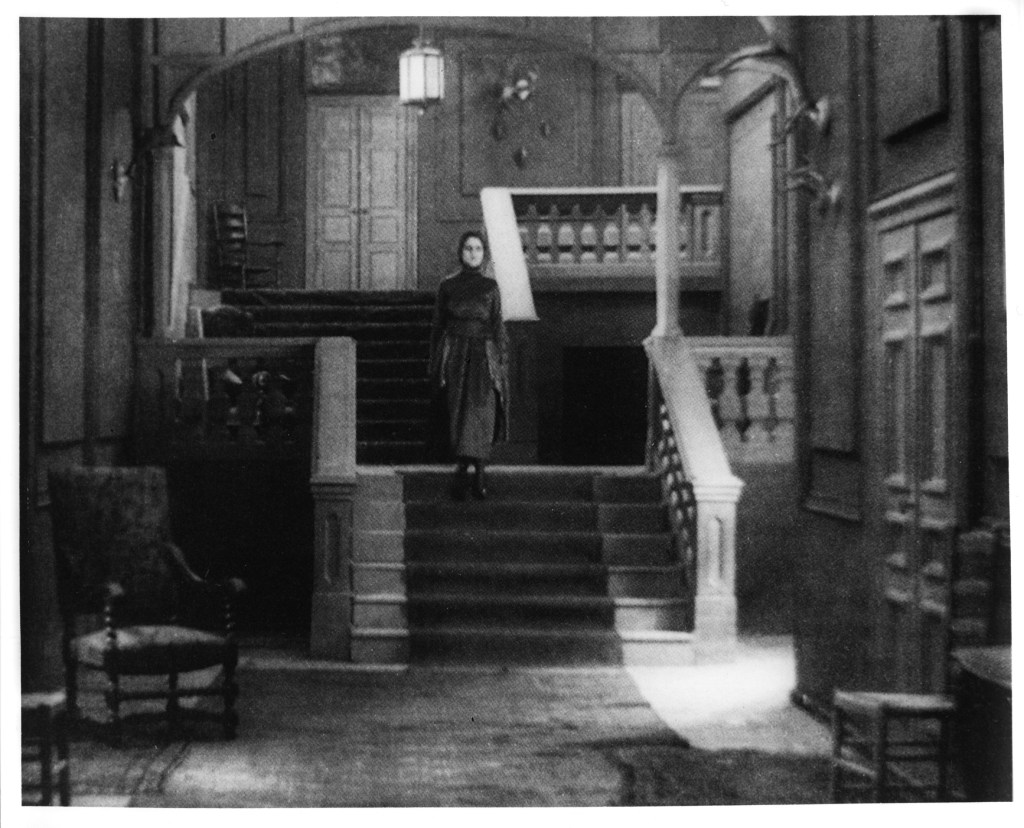
Schloss Vogelöd (1921)
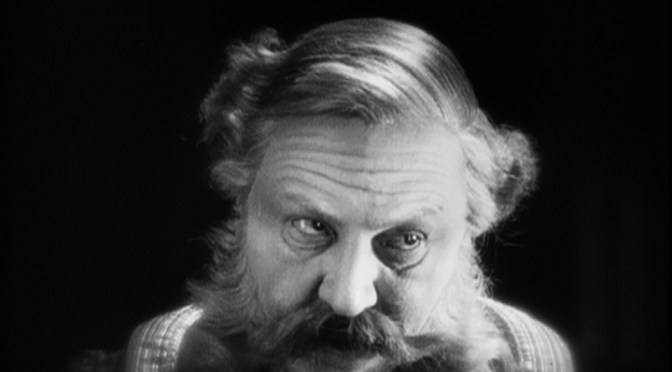
The journey through Murnau’s lesser-sung German work begins in 1921 with Schloss Vogelöd, a country-house mystery rendered mysterious and dreamlike at the director’s touch, and climaxes with the bracing and inventive Molière adaptation Tartuffe (1925), which introduces an especially noxious virtue-signalling hypocrite and hangs him out to dry. In between we delve into the romantic and financial misery of a poetically minded clerk in Phantom (1922), and the related entanglements of an aristocrat in Die Finanzen de Grossherzogs (1924). Indisputably, the highlight of the collection is the low-key masterpiece Die Letzte Mann (1924) starring Emil Jannings as the hotel doorman whose life hits a downward spiral when he is demoted to a toilet attendant.
As the many extra features and essays included with the set attest, Murnau’s oeuvre is hugely varied, swinging from genre to genre and rarely settling in one place for long. Stylistically, though, he is mistakably himself at all times. You can see the walls of the city bend down to oppress the heroes of both Phantom and Die Letzte Mann, for example. And you may already have noticed that the films above share a set of preoccupations with money and social position, with impossible aspirations and with toxic pride.
William Holden is drawn into the dysfunctional, secluded household of a fading Hollywood star, seduced and horrified by what he finds. In his familar crisp voice-over, he tells a sad story of Hollywood brutality. This beautiful screen siren, her heyday far behind her, has a terrible secret, but despite her advanced age, she remains fascinating, almost irresistible…
No, it’s not Sunset Boulevard, but Billy Wilder’s penultimate movie Fedora, which is released on Blu-ray and DVD by Masters of Cinema on Monday 26 September. Made in 1978, Fedora belongs to a different era than 1950’s Sunset Boulevard. “The kids with beards have taken over,” as Holden’s character laments, referring to those cinematic titans who were once movie brats: Coppola, Spielberg, Lucas, Scorsese. And Fedora is not a silent movie star either. She belongs especially to the 1930s and 1940s, when she made woman’s pictures, a genre that has gone out of date in 1978. But still, her career was suspiciously long.
It’s said that Wilder may have modelled Fedora on Pola Negri – she is Polish, aristocratic and melodramatic, and she was one of the women approached to play Norma Desmond way back then, too. Negri also retired to live quietly with a lady companion, after a couple of brief comebacks in the 1940s and 1960s. But Negri’s latter years were spent in San Antonio, Texas, devoted to Catholicism. Fedora skulks in an island villa in Corfu, and her end is much less pleasant.Wilder refused to pin this character down though. “I have known Garbo, Swanson, Dietrich, Lombard, and Monroe,” he said. “Fedora is a fictitious combination of them all.”In the opening sequence, in fact, Fedora looks like a much earlier screen goddess, Musidora, as she sprints in a fluttering black cloak towards her fate.
What if all your silent cinema dreams came true? What if they found those missing reels of Greed, or a pristine print of 4 Devils, and you had to admit you were disappointed? Say it isn’t so. But consider this: if 80% of silent films are lost, does that mean that silent cinephiles, by definition, are hooked on the chase, the thrill of forbidden fruit? There are so many films we will never get to see, and others that we see only rarely or in incomplete versions – perhaps we’re all addicted to the legend.
It’s worth thinking about at least, and it was at the forefront of my mind as I sat down early this morning to watch a preview of the digital restoration of Abel Gance’s Napoléon. Yes, that Napoléon, the version heroically pieced together by Kevin Brownlow and magnificently scored by Carl Davis. I have been lucky enough to see it once before, at the Royal Festival Hall in 2013 – before that, I was too skint to stump up for a ticket. It was amazing, and I will never forget the frisson I felt as the film began and I thought: “Finally, finally I am going to watch this thing!”
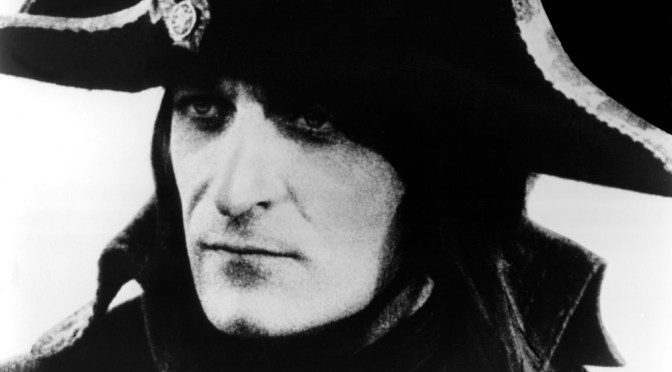
Napoléon (1927) Photograph: BFINow, something wonderful has happened. The film has been digitised, and the score has been recorded, so soon a digital, shareable, streamable Blu-rayable version of Napoléon will be out there – to play in a cinema, living room or desktop near you. So if you’ve never had the opportunity to see the gala presentation of this epic movie, with the full orchestra, glistening in 35mm, this digital version means that your luck could be about to turn.
However, if sitting down to watch Napoléon were just as simple as sitting down to watch Coronation Street – no dinner reservation, no train to London, no babysitter, no £40 ticket – would the thrill be the same? As I took my seat in NFT1 I began to worry that the sheen of Napoléon would have faded, but the truth is no, it has just shifted a little.











 Silent London