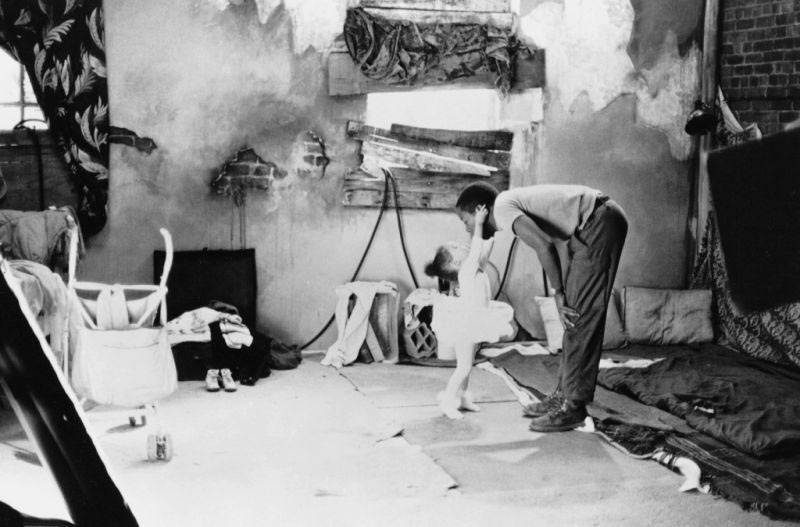
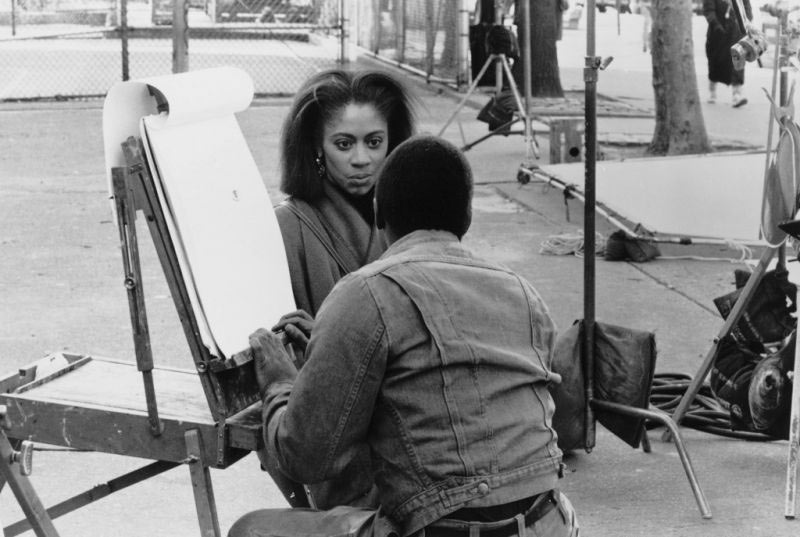
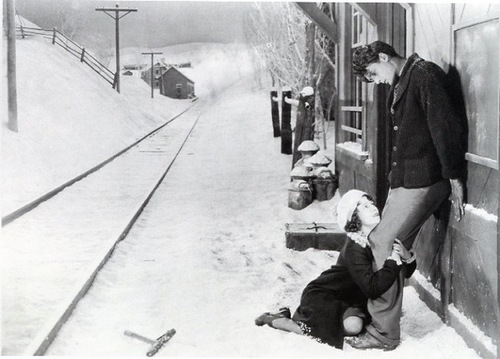
Sidewalk Stories (1989): Charles and Nicola Lane as the Artist and the Child. Photographer: Bill Dill
I barely knew a thing about Charles Lane this time last week. But since Saturday night I have been trying to find out as much as I can. Twenty five years ago, Lane directed a modern silent film of great style and bounteous charm, which was warmly received at the time, but has barely been heard from since. Like so much in the history of silent film, Sidewalk Stories (1989) is buried treasure, though from a rather more recent past. The good news is that the tail end of 2014 may finally be the time when Sidewalk Stories gets its due. The likelihood is that you will get a chance to see it soon, and I definitely recommend you take the opportunity when it arises.
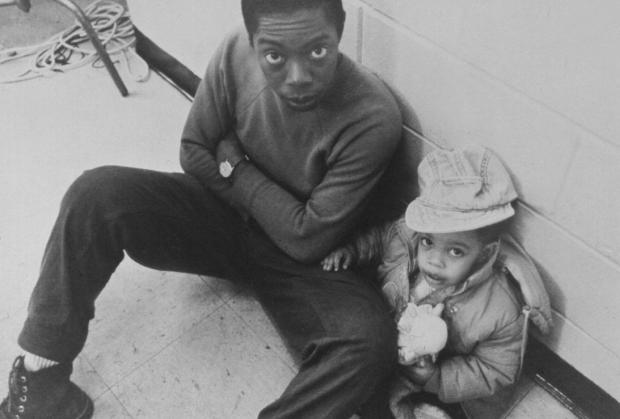
As a film student, Lane was apparently very sniffy about silents, but when a chum insisted that he catch a screening of The Gold Rush, he relented. Chaplin worked his magic, and Lane was hooked for life. The influence of Chaplin is powerfully strong in Sidewalk Stories, a silent black-and-white comedy shot on the streets of New York;Lane directs and stars in the film, which has more than a touch of The Kid about it. Lane plays a street artist, who sleeps rough in a derelict building in Greenwich Village (yes, you might say he was a tramp), but, through some convoluted circumstances finds himself in charge of a small child. No messing about: the Artist’s foldup easel looks uncannily like the window-repair kit Chaplin equips himself with in the earlier movie. It’s clear that Lane has an eye for the most devilish of details. Lane’s two-year-old daughter plays the Child, and although it seems strange to critique a toddler’s performance, she’s fantastic and of course, utterly adorable. Sandye Wilson, an elegant woman with a devastating smirk, plays the Artist’s bewildering and benevolent love interest. Lane’s character is a cheeky one, all right, and a dreamer too: a nonchalant riff on Chaplin’s Tramp, which retains the sweetness and the acrobatics of the original but with a pared-down ego. Lane’s Artist is a more of an everyman than a showstopping clown: a little guy in a zip-up denim shirt and cargo pants with neatly cropped hair. Perhaps it’s because the big city is just a wee bit more terrifying in the late 80s. The Manhattan of this movie is perniciously hostile: crushing Lane’s character, and maybe squashing his performance a little too.
Sidewalk Stories (1989)
No matter. Here’s why Sidewalk Stories is easily worth 97 minutes of your precious time. It’s funny, it’s touching, it’s very clever and it has a quite remarkable lightness of touch. There’s some virtuoso material here, including some fantastically choreographed fight scenes and (a first for a silent movie?) a fantasy slapstick sex nightmare. There’s not a single intertitle here either. Most impressive of all perhaps is a sustained tracking shot early on that takes us from one end of a street in the Village to another, from the panhandlers and street sleepers, to the Artist’s patch where he and his fellow dancers and magicians are busy making believe that they are anywhere but urban hell. There’s some comic business with a piece of string and two beds that is simultaneously hilarious and terribly sad. I also enjoyed the way that a laugh-out-loud, but silly, gag at the start of the movie with yuppies grappling over a yellow cab (it’s the 80s, I’m allowed to call them yuppies) was replayed later on with a more sinister meaning. I particularly liked the fact that the second time around the carfight takes place during a chase that’s straight out of Harold Lloyd’s Speedy – Lane was clearly in close touch with his New York silent forebears.
When I checked out the silent films on offer at the London Film Festival this year, I missed The Tribe. Luckily for me, the sharp-eyed Neil Alcock noticed it and pointed me in the right direction. The Tribe/Plemya is a modern film, from Ukraine – the debut feature from Kiev-born director Myroslav Slaboshpytskiy – and it was heavily garlanded in the critics’ week at Cannes this year, so it’s definitely worth a look. And it’s definitely of interest to silent cinema fans.
It’s tricky to describe this as a silent film, though, seeing as it has diegetic sound – real diegetic sound, which was all recorded on set, not added in post-production. Nor can we classify it “dialogue-free” … there appears to be plenty of dialogue in The Tribe, but all of the words spoken are in Ukrainian sign language. There are, the trailer proudly proclaims, no subtitles or voiceover to soften that blow. I can’t find figures for how many people in the world speak Ukrainian Sign Language, although this site affirms it is in a healthy state, and two years ago, the Daily Mail reported that inventors in Ukraine had developed a “super glove” to turn UKL into audible speech via a smartphone app. The point is that I suspect none of the Cannes judges were fluent in it, and for them, and most of us, this film will play more like a silent than a talkie.
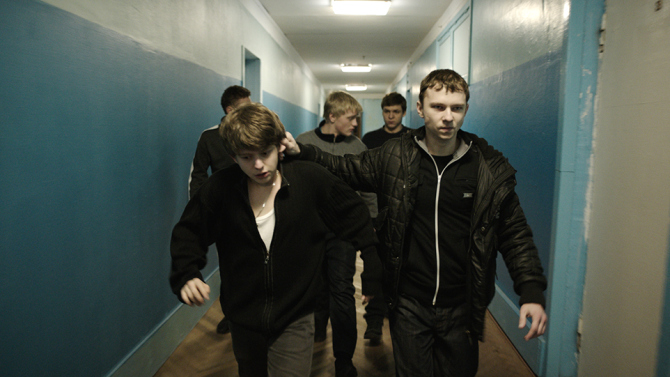
The Tribe (Plemya, 2014)
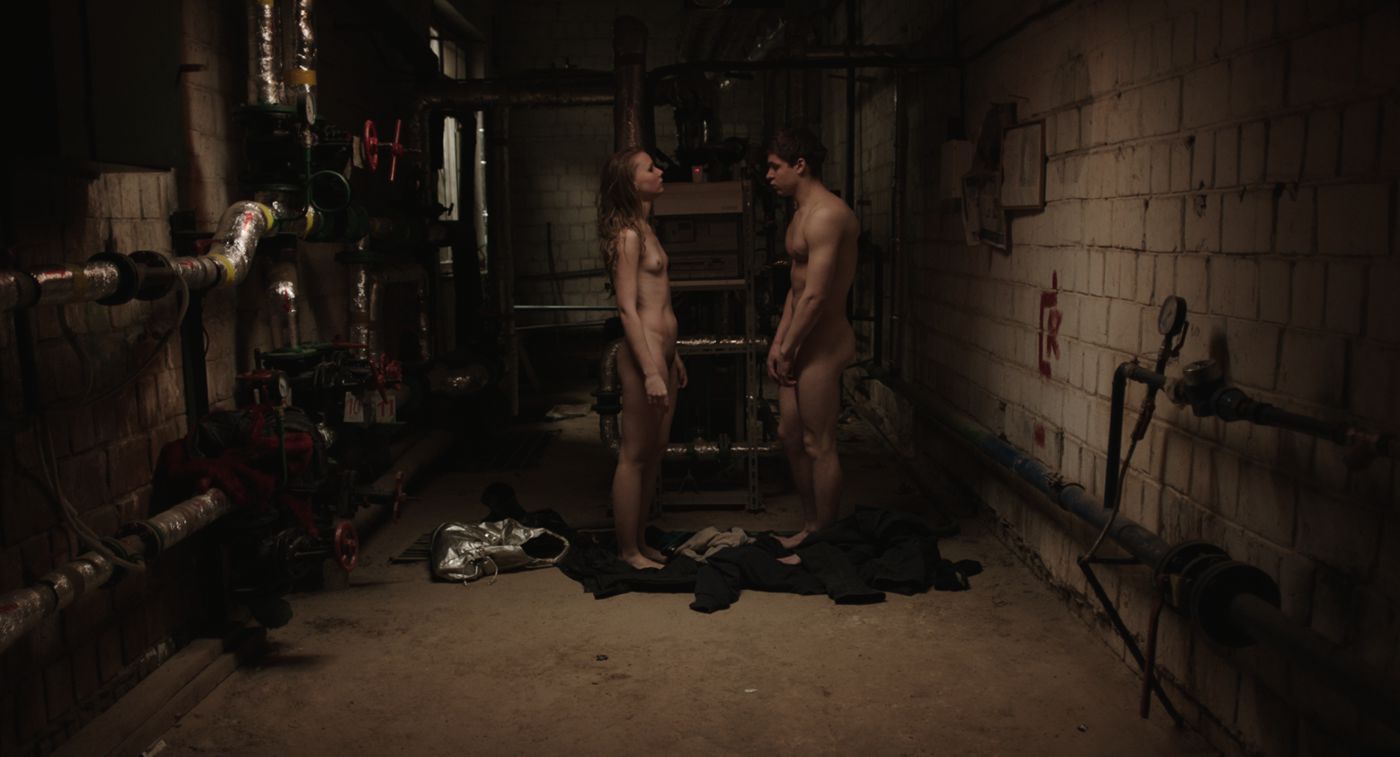
It’s a violent, gritty, sexually explicit film: the grim story of Sergey (Grigoriy Fesenko), a teenager at a boarding school for deaf-mute children. Said school is rife with gang violence and prostitution, and Sergey clambers his way to the top of the tree before risking it all by falling in love with the wrong girl. There’s little gloss here: the cast are all non-professionals, and UKL speakers, rather than hearing actors. Slaboshpytskiy made a short, and similarly brutal, film set in a boarding school like this one a few years back, a real-time drama called Deafness/Glukhota (2010) in which a police officer grills a deaf-mute teenager in his car – while suffocating him with a plastic bag.
The Tribe (Plemya, 2014)
The Tribe plays at the Toronto International Film Festival this week, before coming to London in October, and while we wait for reviews from that festival, this writeup for the TIFF programme by Dimitri Eipides sounds very promising:
Slaboshpytskiy constructs his film with no dialogue and no subtitles, allowing the story to be enlivened by the magnificent pantomimic acting of deaf-mute non-professionals, in a brilliant balance of clarity and ambiguity that puts hearing audiences in a fascinating, active position …
The Tribe peels away the tenderness of its protagonists, communicating in the purest cinematic forms the rawness hidden behind the fragility of youth.
I like that phrase abut the hearing audience being put in a “fascinating, active position”. Doesn’t that go straight to the heart of why we love silent cinema? In his review for Variety, Justin Chang expands on this idea, writing that:
Sans dialogue or translation, each interaction effectively becomes a puzzle to be solved, and Slaboshpytskiy is brilliant at using ambiguity to heighten rather than dull the viewer’s perceptions. Even when the meaning of a particular exchange eludes us, a greater sense of narrative comprehension begins to take hold.
The trailer for The Tribe is hugely intriguing too: I love the strict, square framing and its icily distant long takes. In the foreground of a shot of gang members signing vigorously to each other, one toughnut shoulder-shoves another – a gesture that is as clear as any dialogue. After a screeching hairpin camera-move, a young man’s confusion in the face of a semi-naked and angry young woman in a bedroom reminds us how much of teenage life is a struggle to negotiate a path between our own feelings and those of the people around us. And who could fail to be impressed by the stirring declaration that “for love and hatred you don’t need translation”.
The Tribe plays twice during the London Film Festival. It screens at 8.45pm, 15 October 2014 in NFT1, BFI Southbank and 8.30pm, 17 October 2014 at Screen 5, the Vue West End Cinema. Buy tickets here.
This is a guest post for Silent London by Duncan Carson, a film event producer who organises the Nobody Ordered Wolves screenings. You can follow Duncan on Twitter at @nowolvesplease
It would be easy enough to despair at our current cinema choices. Although film houses are more comfortable and technologically sophisticated than ever, what is actually on the screen is terrifyingly narrow. Even though almost every cinema in the land is now equipped for digital prints, opening up programmers to a cheap and vast library of films, this hasn’t broken the stranglehold of loud, ephemeral and repetitive Hollywood fare.
Standing as an antidote to this conservatism, Scalarama brings the weird, the underseen, the expanded and emboldened to the cinema and beyond. In its fourth year and now bolstered by BFI funding, Scalarama takes place across September and operates in a similar fashion to the Edinburgh festival fringe: the organisers take no cut of the profits, they only encourage a broadening of what is on offer. Originally created as a tribute to the freewheeling programming of the Scala Cinema in King’s Cross, it attempts to bolster film clubs, give cinemas the confidence to take on riskier programming and move cinema outside of its traditional homes.
Two films that are at the heart of Scalarama’s offering this year are of special interest to silent film lovers. The first will be familiar to all: Das Cabinet des Dr Caligari. The second is almost a ghost to all but a few dedicated film fans: Charles Lane’sSidewalk Stories.
Shot in 1989, Sidewalk Stories is a modern silent feature film. And it has an impressive progeny: Michael Hazanavicius, the director of the Oscar-winning behemoth The Artist, credits this neglected classic as the direct inspiration for his indie smash. Yet if this might lead you to expect a nostalgic recreation of cinema pre-1928, guess again. Lane’s setting and attitude is more Spike Lee than FW Murnau. Made the same year as Do the Right Thing, Sidewalk Stories is cut from the same cloth as other grimy pre-Giuliani New York city films like Taxi Driver, Serpico and The French Connection.
Sidewalk Stories (1989)
That said, the plot itself is pure Chaplin: the star (played by Lane himself) finds himself in loco parentis of a young girl when her father is killed. As with Chaplin’s The Kid, our hero’s hapless parenting is the centre of the story here. The dynamic between the two is heartwarming, no doubt because of their connection as real-life father and daughter. Having confessed to loathing silent cinema as an art student, Lane embraces the medium to tell a universal story about homelessness and desperation. It is a story of deep compassion and this is why it is being released in the UK in partnership with Open Cinema, a charity that provides opportunities to access culture and film skills for marginalised people. Londoners have two opportunities to catch the film: Nobody Ordered Wolves (AKA yours truly) will be showing the film at popup cinema Hollywood Spring with a live score by pianist Stephen Horne. Tickets here. Later in the month, Hotel Elephant will also be showing the film. To see where else in the UK this neglected gem is getting an outing, click here.
The Battles of Coronel and Falkland Islands (1927)
Name:The Battles of Coronel and Falkland Islands (1927).
Age: 87 years old. The clue’s in the number in brackets.
Appearance: Shiny and new.
Sorry, that doesn’t make sense – I thought you said it was 87 years old.The Battles of Coronel and Falkland Islands may be knocking on a bit, but it has been lovingly restored by the BFI and from what we gather, it’s looking pretty damn sharp. Just take a look at these stills.
Great, where can I see this beautiful old thing? At the Queen Elizabeth Hall on 16 October 2014 – it’s being shown at the London Film Festival as the Archive Gala. It will then be released in cinemas nationwide, and simultaneously on the BFIPlayer …
Blimey. And then it will be coming out on a BFI DVD.
Wonderful news, I’ll tell all my friends. Really?
No. I’ve never heard of it. Fair enough. You could have said that in the first place.
I was shy. Don’t worry, the BFI calls it a “virtually unknown film” on its website.
Phew. But you should have heard of the director, Walter Summers.
Rings a bell … He’s a Brit. Or he was, rather. And he was quite prolific, working in both the silent and sound eras. “I didn’t wait for inspiration,” he once said. “I was a workman, I worked on the story until it was finished. I had a time limit you see. We made picture after picture after picture.”
This is a guest post for Silent London by Tony Fletcher, film historian at the Cinema Museum, about director-actor Alf Collins. Some of Collins’ Gaumont films will be shown on 30 August at a special open-air screening on the site of the original studio in Camberwell, with musical accompaniment by Neil Brand.
Alfred Bromhead started the English agency for Gaumont in Britain in 1898. He distributed the films produced by the French arm of the company, which was run by Leon Gaumont, and he also attempted to produce a few films in Britain in 1899. He opened a small outdoor studio on a four-acre cricket field in Loughborough Junction in south-east London. The open-air stage measured 30ft x 15ft However, this venture was short-lived and lasted for only one summer.
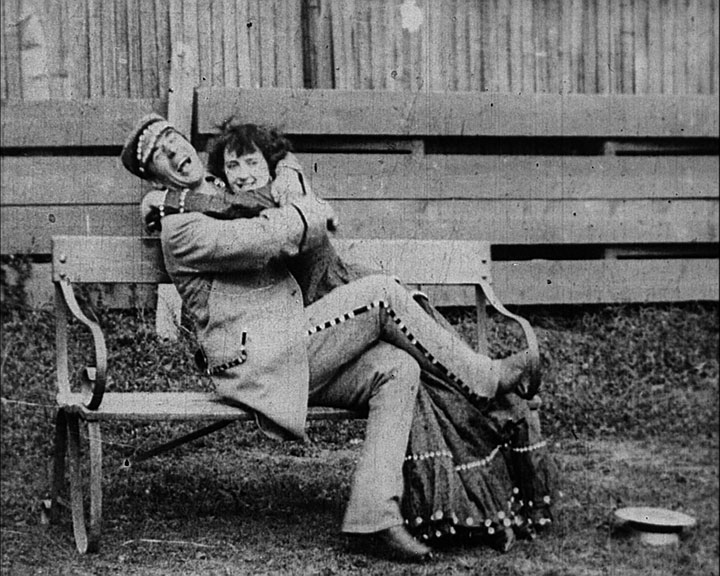
Alf and Maude Collins in Coster outfits in When Extremes Meet, 1905
In 1902, Bromhead decided to make another attempt at producing films. Alfred Collins came on board as stage manager, and Gaumont continued producing short films over the next seven to eight years. These were often shot in the streets of south-east London – pioneering chase comedies and dramas. Alf Collins had already had some film experience working with Robert Paul, as well as at the British Biograph Company. He had started performing at the Surrey Theatre under George Conquest, later joining the William Terris Company at the Lyceum Theatre. He also performed in Drury Lane Pantos playing The Copper in the Harlequinade. His full-time job between 1902 and 1932 was as the stage manager for the Kate Carney Company, which gave him opportunities to make films when they were appearing in London and the provinces.
During 1904, Bromhead moved studios from Loughborough Junction to a 14-acre site at Freeman’s cricket field, Champion Hill. Thomas Freeman was a local builder and decorator living at 127 Grove Lane. In 1891, he had acquired a site at the rear of Champion Hill House and Oakfield House (roughly where Sainsbury’s superstore and Dulwich Hamlet FC are now situated). Freeman built three wood and iron cricket pavilions which were hired out during the summer to the Champion Hill Cricket and Lawn Tennis Club and during the winter to Dulwich Hamlet FC. These appear in some of the films. Bromhead constructed an open-air stage to film interior shots as no artificial lights were available.
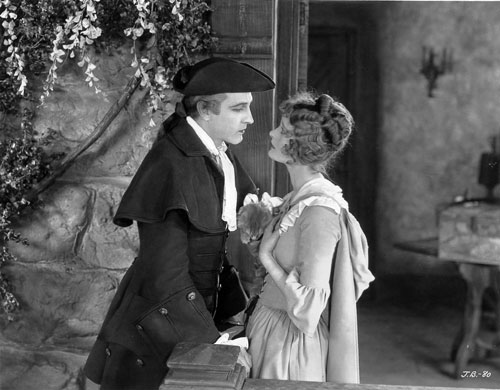
John Barrymore and Delores Costello in When a Man Loves (1927)
Have you booked your fights yet? The 33rd edition of the world’s most prestigious silent film festival in Pordenone, Italy is looming – it will take place from 4-11 October, and tantalisingly, a few details have already been released. There are a few screenings already listed on the official website, and a shiny new press release (written in Italian) too. With the help of Google translate, let me tell you what I learned on the internet.
I can tell you that there will be a gala screening on the last night of Chaplin‘s City Lights, with an orchestra playing the director’s original score, as reconstructed byTimothy Brock. Günter Buchwald will conduct. Elsewhere in the festival, four Chaplin shorts will screen with Benshi narration by Kenka Yasubei, who will also voice a classic Japanese film.
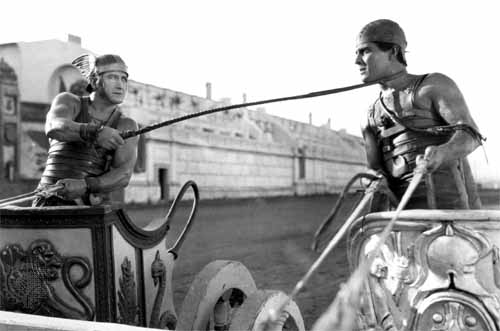
Ben-Hur (1925)
Did you know that this year marks the centenary of Technicolor? A dedicated strand at the Giornate will screen 30 full-length films and clips that showcase the pioneering colour technology. Watch out for The Black Pirate (1926) and Ben-Hur (1925).
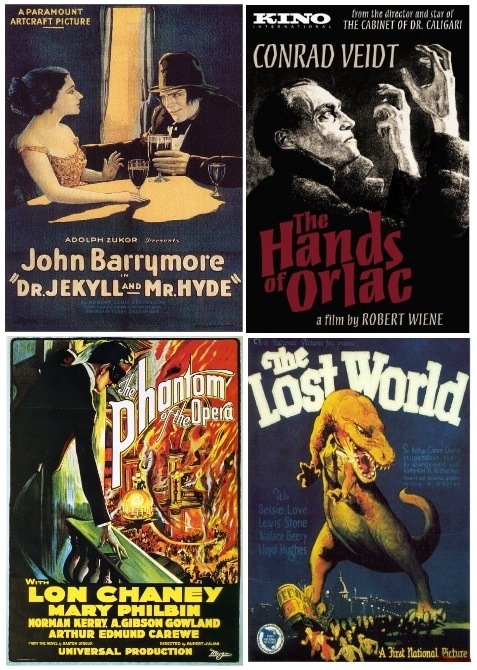
Hollywood royalty will be celebrated at Pordenone with a showcase for the silent films made by the Barrymore acting dynasty, including Dr Jekyll and Mr Hyde (1920), The Copperhead (1919), The Beloved Rogue (1927) and Beau Brummel (1924) – plus the two surviving reels of The Eternal City (1922). Films starring John, Ethel and Lionel Barrymore will be shown across the week, with When a Man Loves (The Loves of Manon Lescaut), 1927, starring “the Great Profile” himself and Delores Costello opening the Giornate on 4 October. When a Man Loves will be presented with its original Vitaphone soundtrack, composed by Henry Kimball Hadley, and will be supported by a programme of Vitaphone shorts.
A section entitled Russian Laughter will present comedies directed by Yakov Protazanov, selected by Peter Bagrov of Gosfilmofond in Moscow.
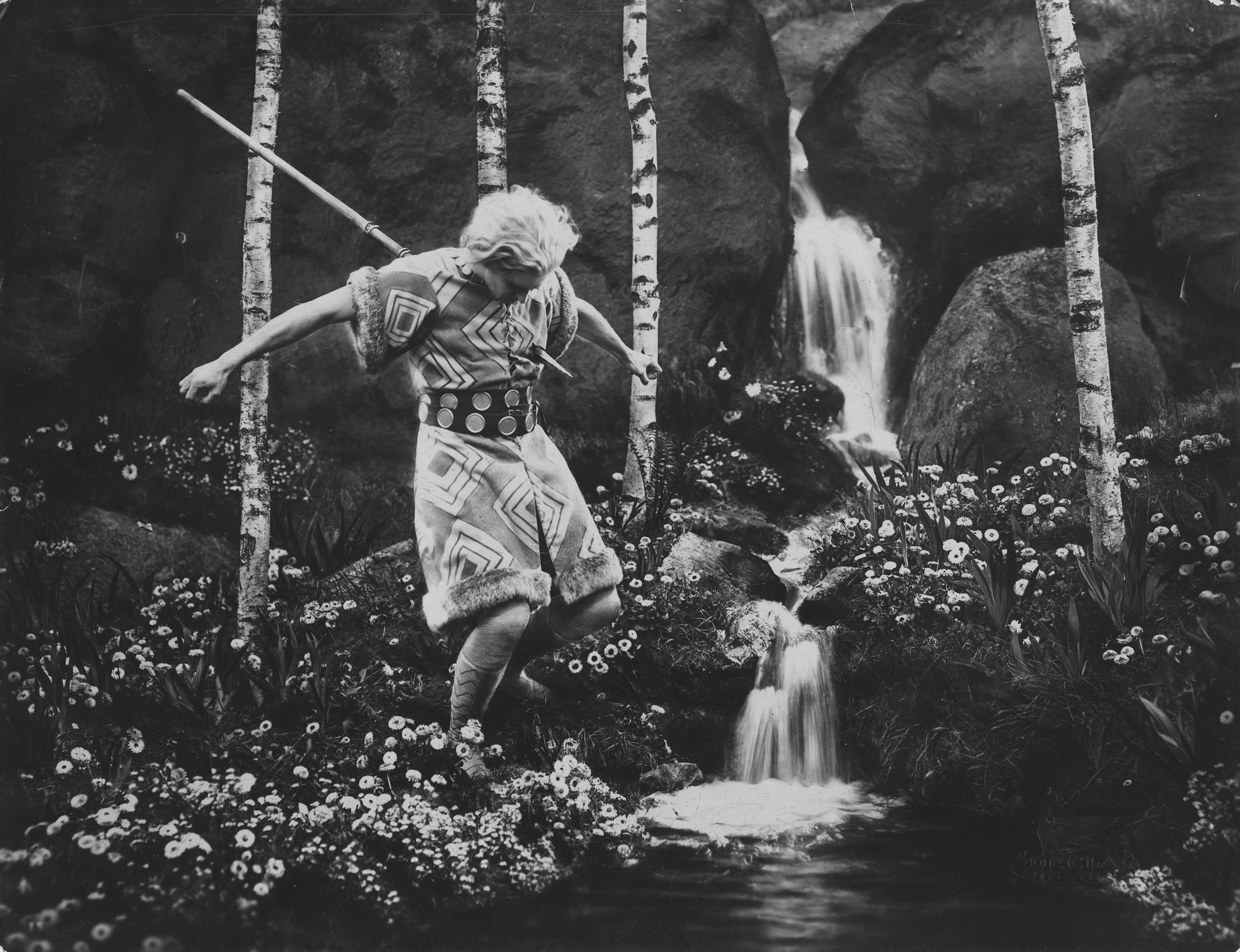
Die Nibelungen (1924)
The Canon Revisited, curated by Paolo Cherch Usai, is always popular and this year will feature Raoul Walsh’s gangster drama Regeneration (1915), both parts of Fritz Lang’s Die Nibelungen (1924) and Pudovkin’s epic Storm over Asia (1928). Also: GW Pabst’s Die Liebe der Jeanne Ney (1927) and Mauritz Stiller’s Herr Arnes Pengar (1919)
Hand-coloured films by George Méliès will be shown by AIRSC .
New discoveries and restorations at the festival this year will include Conrad Wiene’s adaptaion of Tolstoy’s The Power of Darkness (1924).
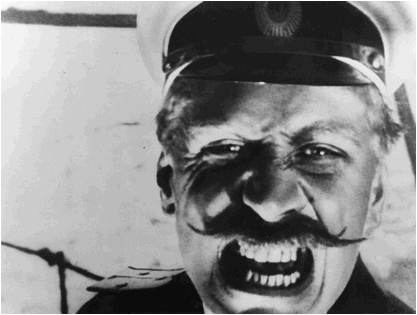
Battleship Potemkin (1925)
And finally … the sound version, yes sound version of Battleship Potemkin – a 1930 German release with a soundtrack recorded on disc.
Want more? This Nitrateville post from a few weeks ago contains a few extra titles – some of which are very exciting indeed. Premature? Out of date? Who knows? More fuel for the rumour mill, anyway.
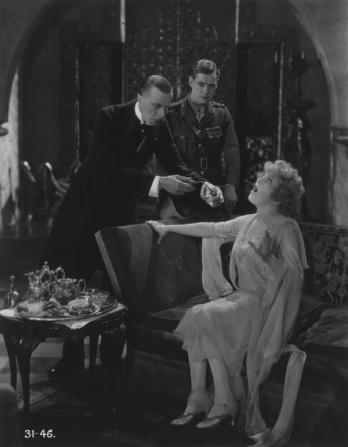
Alfred Hitchcock was born in the far east of London, in Leytonstone. So far east in fact, that it was Essex then, I think. But Hitch is still one of London’s most famous film directors, and it is fitting that one of his most famous films to be both set and filmed in the capital will be screening in his home borough of Waltham Forest this summer. The Barbican are showing the silent version of Blackmail, with Neil Brand’s tremendous score played by the Forest Philharmonic, at the Assembly Hall in Walthamstow, London E17. Be there or find yourself kicking your heels in a West End Lyon’s Corner House, rejected and alone.
Blackmail is a classic crime thriller, laden with Hitchcock’s signature suspense tricks, about a nice young girl (Anny Ondra) who commits a violent act one night in dire circumstances, and has to live with the consequences. Famously shot as both a silent and sound film, Blackmail reveals Hitchcock as a confident director revelling in the themes of murder and guilt that would become his home turf. In classic Hitchcock style, Blackmail also climaxes with a setpiece at a famous landmark – one slightly closer to home than Mount Rushmore. Every film fan in London should see this film, and the best way to see it is like this, with an orchestra and Brand’s wonderful music.
This is a really fascinating idea, and a hugely entertaining hour and a half of anyone’s time. The BFI has compiled a typical “mixed” cinema programme from a century ago, and is releasing it theatrically this summer. It’s called, of course, A Night at the Cinema in 1914, and it comes out in August. Yes, you may be seated in an air-conditioned room with comfy seats and Dolby 5.1 sound, but you’ll be able to watch a variety bill of drama, actuality, comedy, serials and travelogues – just like your own great-grandparents in the Hippodromes of yore.
Charlie Chaplin in A Film Johnnie (1914)
Some of the titles in the bill will be familiar to you, but there are a few surprises too – and the cumulative experience of watching 15 films in one sitting is wholly refreshing. There’s Chaplin, Florence Turner and Pimple larking about, but also newsreel footage from the front, and from suffragette demonstrations in London, and Ernest Shackleton’s preparations for his Antarctic voyage. Of course, there’s a segment from The Perils of Pauline, and an opportunity for a singalong too. Music is provided by an expert – Stephen Horne has recorded an improvised score for the whole shebang.
Good news for the silent film hipsters of east London: the Hackney Attic goes from strength to strength as a silent film venue. The Filmphonics group regularly take over the top of the Hackney Picturehouse for an increasingly ambitious series of silent film screenings with live music.
The next date for your diary is a showing of one of our favourites: Lon Chaney in the gorgeously grotesque The Phantom of the Opera (1925). You owe it to yourself to see this classic on the big screen!
A mad, disfigured composer seeks love with a lovely young opera singer…. Far beneath the majesty and splendour of the Paris Opera House, hides the Phantom in a shadowy existence. Shamed by his physical appearance and feared by all, the love he holds for his beautiful protégée Christine Daaé is so strong that even her heart cannot resist.
And there’s more: this screening of The Phantom of the Opera will be accompanied live by the marvellous Costas Fotopoulos on piano.
Costas is based in London and works internationally as a concert and silent film pianist, and as a composer and arranger for film, the stage and the concert hall. He regularly provides live piano improvisations to silent films at BFI Southbank and he has also accompanied films at other major British venues such as the Barbican Centre and the Prince Charles Cinema, as well as in New York, Warsaw and Northern Italy.
The Phantom of the Opera
The great news is that you could get your hands on a free pair of tickets to this screening. Get in! To win a pair of tickets to see The Phantom of the Opera at Hackney Attic, just send the answer to this question to silentlondontickets@gmail.com by noon on Wednesday 16 July 2014. The winner will be chosen at random from the correct entries.
Lon Chaney was known as the Man of a Thousand … what?
This is a guest post for Silent London by Sabina Stent. You can read more of her reviews at silverembers.com
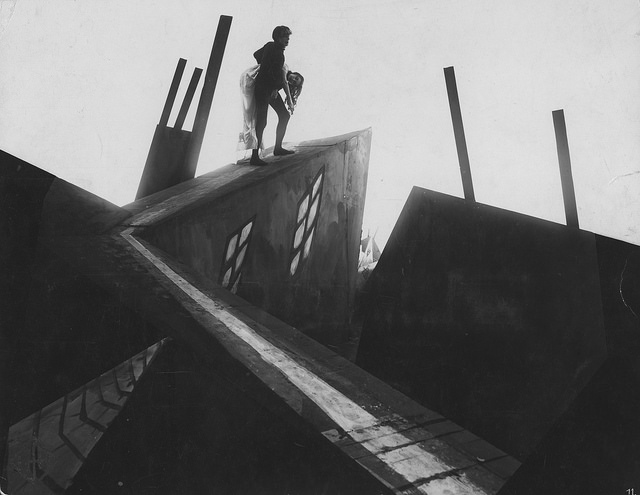
The name “Dr Caligari” may cause a shudder to those of a weaker disposition. The eponymous character of the 1920 classic Das Cabinets des Dr Caligari has long been a figure of terror – and with good reason. The film has been described not just as one of the first “horror” films, but one of the first examples of a movie generating a real psychological uneasiness in its audience. Caligari has been labelled in many different ways – German expressionism, horror story, psychological thriller and a classic of the silent era – but it was also Germany’s first postwar cinematic success, and it reflects the anguish of the people who had been through four terrible years.
Thanks to those classic expressionist touches, the sharp and angled sets, gothic imagery and expressionist undertones, Caligari was as visually frightening as its narrative. More recent audiences may have also been unsettle by the poor physical condition of prints of the film. Despite numerous attempts to finesse the quality of the film – first by the Filmmuseum München in 1980 and followed by the German Federal Film Archive (Bundesarchiv-Filmarchiv) in Koblenz (1984) and as part of the Lumière European MEDIA project in 1995 – imperfections were still evident: visible scratches, jumps and blank screens, blurred title cards, unstable images and bleached-out, near-featureless faces.
The Cabinet of Dr Caligari (1920)
Caligari’s story is told in partial flashback as Francis (Friedrich Fehér) tells the tale of the horrors that he and fiancée Jane (Lil Dagover) have endured at the hands of the Doctor. One day Francis and his friend Alan (Hans Heinrich von Twardowski) attend a local carnival where they watch the act of Dr Caligari (Werner Krauss) and the somnambulist Cesare (Conrad Veidt) “who has slept for 23 years but will tonight wake from his dream-like trance”. The only time Cesare speaks is to tell carnivalgoers their fortune. Cesare “knows the past and sees the future” and when Felix asks “how long will I live?” his serious, haunting response is: “To the break of dawn”. Yet the fear is not restricted to the carnival. At night Cesare is woken by Caligari to do his deathly bidding, and so begins a series of murders, abductions and mental unravelling.
On Saturday night at Glastonbury 2014, the mud, the terrible noodles and the hangovers will all be worth it. For the first time ever, a silent film will play the country’s leading rock festival. Neil Brand and the Dodge Brothers will perform their rousing score for William’s Wellman’s rail-riding rollercoaster Beggars of Life in the Pilton Palais cinema tent, at 6pm on 28 June. We’ll be there – will you?
This is a guest post for Silent London by Kelly Robinson. If you haven’t seen The Wind, be warned that this article discusses the ending of the film.
Ethereal, delicate, poetic, otherworldly are just some of the somewhat elusive adjectives used to describe Lillian Gish since the early years of her stardom. Effusive admirer Vachel Lindsay said “Lillian Gish could be given wings and a wand if she only had directors and scenario writers who believed in fairies.” However, in reality Gish had her feet firmly on the ground. She had a career spanning eight decades, was a spokeswoman for cinema’s history with high artistic ambitions for herself and for the medium. King Vidor, who directed her in La Boheme (1926) commented: “The movies have never known a more dedicated artist than Lillian Gish.”
In his autobiography A Tree is a Tree Vidor said that Gish was incredibly assertive and had her own thoughts about the filmmaking process. Indeed, she knew a great deal about cinematography and in particular lighting. She had learned her trade during the more collaborative process of the silent era, where she had received extensive tutelage from DW Griffith in a production context where actors frequently worked without scripts and where they were encouraged to collaborate on characterisation and staging. She may only have had had a small acting role in Griffith’s Intolerance (1916), however she designed and furnished sets, helped with lighting and cutting, wrote intertitles and advertising copy.
This is a guest post for Silent London by Kelly Robinson
Cecil B DeMille is perhaps predominantly remembered for his big-budgeted biblical epics of the 1940s and 50s. For instance, the captivatingly lurid Samson and Delilah and The Ten Commandments are both still television staples. However, DeMille had a career that spanned several decades and he made more than 50 films in the silent era alone. Many of these early titles were similarly lavish and sensationalist, whilst also seeking to exploit contemporary social concerns.
Jesse L Lasky, Vice President of Famous Players-Lasky (Paramount), encouraged “modern stuff with plenty of clothes, rich sets, and action”. Savvy to the growing female audience, Lasky contracted screenwriter Jeanie Macpherson to portray women “in the sort of role that the feminists in the country are now interested in … the kind of girl that dominates … who jumps in and does a man’s work.” The result was several delightful, enormously successful, marital comedies, starting with Old Wives for New and followed by Don’t Change Your Husband. Why Change Your Wife? completes the “does what it says on the tin” trilogy. With their focus on female glamour and desire, these films offer more permutations of the “New Woman”, which Birds Eye View has explored in previous Sound & Silents strands.
Why Change Your Wife? (1920)
Considering his somewhat indomitable, patriarchal image, it is perhaps surprising to find a large number of women amongst Demille’s regular collaborators. Anne Bauchens edited his films, from Carmen (1915) all the way through to The Ten Commandments (1959), his last film. In his unpublished autobiography he wrote that it was an essential clause in every contract that she be his editor. In the Los Angeles Herald Examiner he is quoted as saying that: “‘though a gentle person, professionally she is as firm as a stone wall … We argue over virtually every picture.”
Just like last year, the British Silent Film Festival hits London town, but not in its traditional form. Very much as was the the case last year, actually, the festival proceeds in a slightly cut-down version, comprising a symposium at Kings College London on Friday 2 May 2014 and a full day of screenings at the Cinema Museum on the next day.
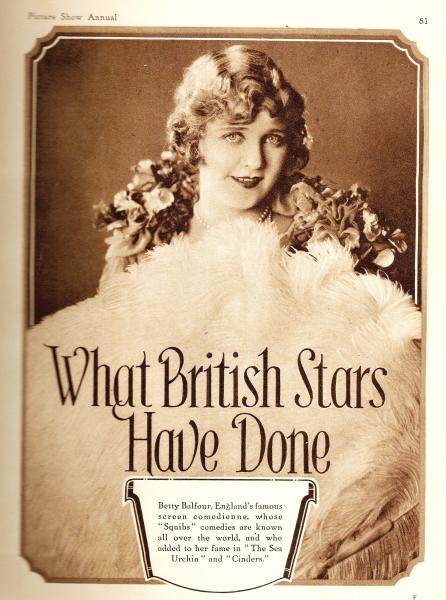
There’s a loose theme to those screenings at the Cinema Museum – runaway women or some such. I like. More to point: Betty Balfour fans – fill your boots. And if you want to submit a proposal for a paper to the symposium, you have until 31 March – so hurry up, clever clogses.
Here are the full details for each day:
The British Silent Film Festival Symposium 2014 will take place on 2nd May 2014 at King’s College, London.
Following the success of last year’s symposium, this one-day event again seeks to draw together scholars and enthusiasts of early British cinema, and operate as a forum for the presentation of new research, scholarship and archival work into film culture in Britain and its Empire before 1930. Possible areas may include but will not be confined to: Cinema in the context of wider theatrical, literary and popular culture; Empire and cinema; Cinema and the First World War.
An early evening screening of The Wonderful Story (Graham Cutts, 1922) will be included in the day’s events.
Proposals (around 200 words in length) are invited for 20 minute papers on any aspect of new research into film-making and cinema-going in Britain and its Empire before 1930. Please submit them to Lawrence.1.Napper@kcl.ac.uk by 31st March.
Put-upon ladies take on the world in this programme of rarely seen silents from the BFI National Archive.
A double bill from talented Hungarian director Geza von Bolvary, stars Britain’s favourite actress Betty Balfour as the stand-in princess in The Vagabond Queen (1929) and besotted bottle-washer in Bright Eyes (1929). Also yearning to break free, an oppressed wife hangs her hopes on a typewriter in J.M. Barrie’s The Twelve Pound Look (1920) and a programme of shorts continues the theme.
PROGRAMME
10.00-11.30 The Twelve Pound Look
11.30-12.00 Break
12.00-13.30 The Vagabond Queen
13.30-14.30 Lunch
14.30-16.00 Shorts programme
16.30-18.00 Champagner/Bright Eyes
Doors open at 09.00 for a 10.00 start.
Refreshments will be available in our licensed café/bar.
TICKETS & PRICING
£25 for the full day, £15 for a half day, £8 for one session. Sorry, no concessions.
Advance tickets may be purchased from WeGotTickets, or direct from the Museum by calling 020 7840 2200 in office hours.
I’ve just returned from the Hippodrome Festival of Silent Cinema in Bo’ness, Falkirk. It’s a fantastic event – I really enjoyed myself and only wish I could stay longer. To give you a flavour of the weekend, if you missed out this time, here’s a mini-podcast and a selection of social media updates too. Surely there is no cooler hashtag for a #silentfilm event than #hippfest?
Hats off to Alison Strauss and her team and Falkirk Community Trust to – Hippfest is a triumph.
In my screening programme Nobody Ordered Wolves, I am always seeking startling work that will match the shock of entering the unusual spaces I seek out for the events. When I happened upon Kilburn’s Tin Tabernacle – an amazing tin church built in the Victorian period, its insides later converted by sea cadets to surreally resemble a ship’s – I knew I needed a film that would produce the same “shock of the old”. As luck would have it, there remained a work about the sea that held the same surprise that entering a ship run aground in North London did for me. The film is Finis Terrae and it was produced by neglected master director Jean Epstein.
As a child, Jean Epstein (1897–1953) was, “afraid to go to the cinema”:
I had heard perfectly reasonable adults speak strongly about horrific details of the conflagration at the charity bazaar where, it seemed, a bishop was burned alive. In my premature logic, I told myself that if a bishop can die at the cinema, all the more reasonable that I would, since I was surely not so well protected by the will of God; I would cry and stamp my feet and enter into mad crises of despair when I would see my parents prepare to go to the cinema: I was never sure they’d return alive.
This piece of magical thinking maps out Epstein’s later career in the cinema. Filmmaking was a matter of mortal stakes for the Polish-French director, writer and poet, and was carried out with an evangelical, religious fervour. Despite crowning achievements and innovations in a variety of fields – encompassing silent and sound work, commercial biopics and avant-garde shorts, high cinema theory and thoroughgoing technical experimentation – Epstein’s ability to capture the life of the sea is unparalleled.
Whatever childhood qualms he held were brushed aside after making the acquaintance of the Lumière Brothers themselves. Abandoning his studies as a doctor, Epstein jumped at the chance to co-direct a film biography of Louis Pasteur. He then produced a string of studio works in the 1920s, before founding his own film company where he directed some startling narrative works, from melodrama (Coeur Fidele, 1923) to horror (The Fall of the House of Usher, 1928). In parallel, Epstein was bravely and idiosyncratically theorising the world of the cinema. Although the subjects in his writings are diverse (even choosing from the sadly limited number available in translation), his consuming passion is how to make the focus of cinema what he terms “photogénie”. While even Epstein himself admitted “you fall flat on your face trying to define photogénie”, at its core, it is the specific extra quality that objects take on when they are filmed, and the new light that this casts on them. Epstein describes this process in typically lyrical fashion:
One of cinema’s greatest power is its animism. On screen there is no still life. Objects have attitudes. Trees gesture. Mountains … signify. Each element of staging becomes a character.
For Epstein, this idea held equal weight in theory and practice: his version of The Fall of the House of Usher focuses on the desperate, haunted attempt by Roderick Usher to capture the image of his sister in a portrait that he is obsessively paints of her. This provides a ripe metaphor for Epstein’s own artistic battle, as he tries to use the aesthetic means of film to reflect the world back to the viewer. Epstein was known for his use of many formal techniques (superimpositions, slow-motion, extreme close up) but his aim was never to create an alienating surrealism, but instead cast a cinematic spell that would reveal an object as it truly is.
Yet, after producing … Usher, his most formally lavish film, he separated himself from the Paris cinema milieu and departed for remotest Brittany.
I had the feeling that it was impossible to further capture the real using the unreal. Finis Terrae was my attempt to get past this dead end.
Although Epstein had long been fascinated by the sea, it was a grotesque fascination: half disgust and half attraction. Citing Edgar Allen Poe’s story The Imp of the Perverse, he described his consuming fear of the ocean, though a fear ‘that obliges us to do what we are afraid to do.’ Epstein made five films about the sea across two decades, starting with Finis Terrae in 1929. All but one is set on the Breton coast; like the rhythms of the tide that he placed so centrally in these films, his mind and travel plans kept pulling him back to the region.
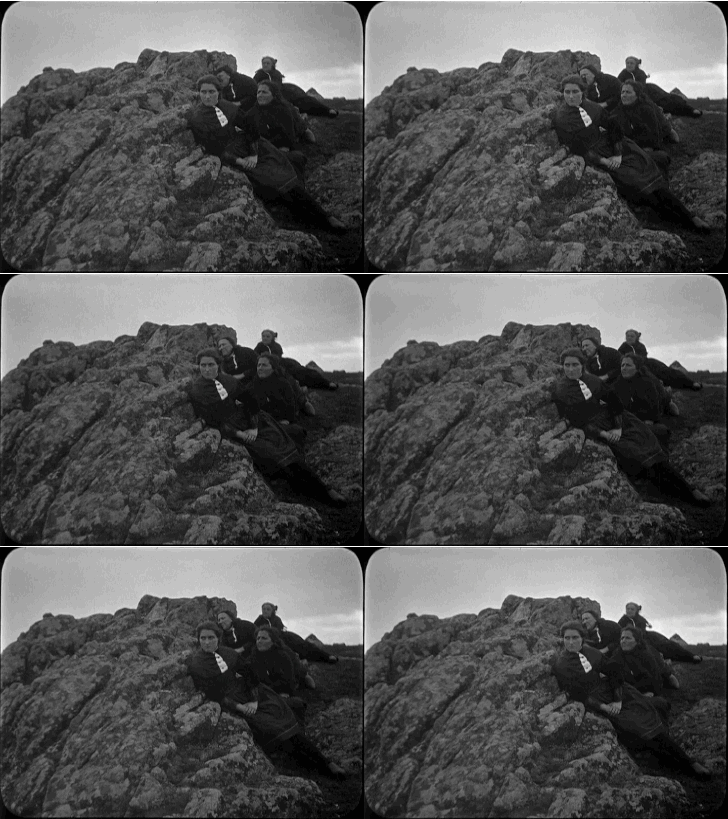
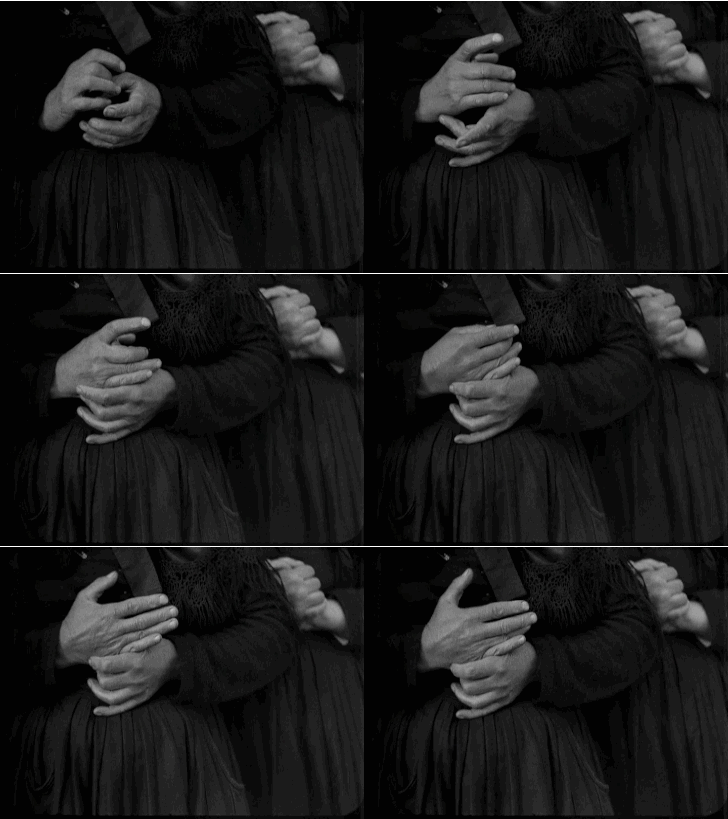
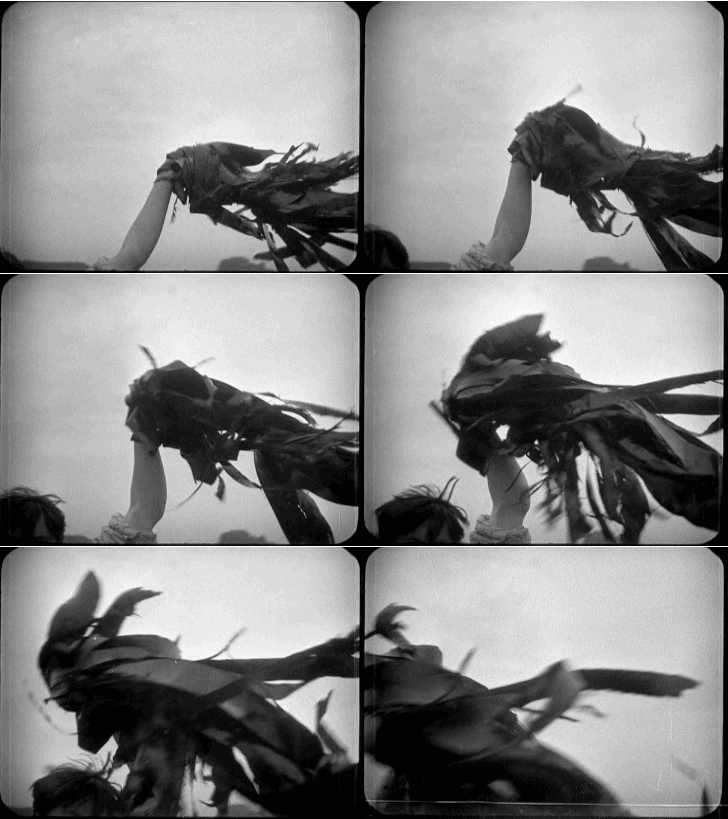
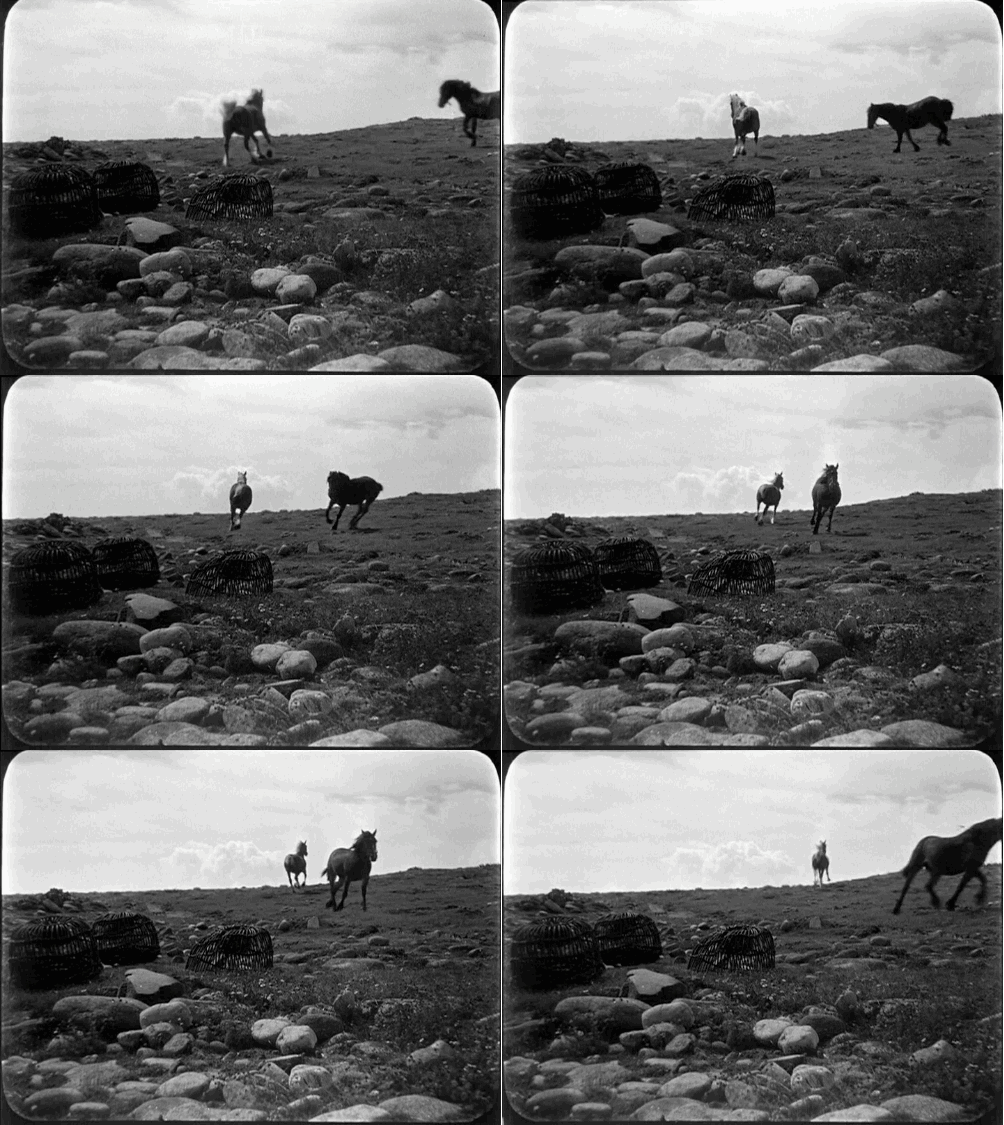
In Finis Terrae, the untouched quality of the Breton coastline allowed him to showcase seemingly simple elements to spectacular degree: the folding of a pair of arms, the fluttering of ribbons in a girl’s hair and, most persistently, the moods of the sea against the unchanging rocks. The space of Brittany gave him licence to completely renew his aesthetics, finding in the coastline the kind of natural photogénie that he had struggle to produce through artificial means in his earlier work:
Leaving the Ouessant archipelago, I felt I was taking with me not a film, but a fact and once this fact had been transported to Paris, something of the material and spiritual reality of the island life would henceforth be missing. An occult business.
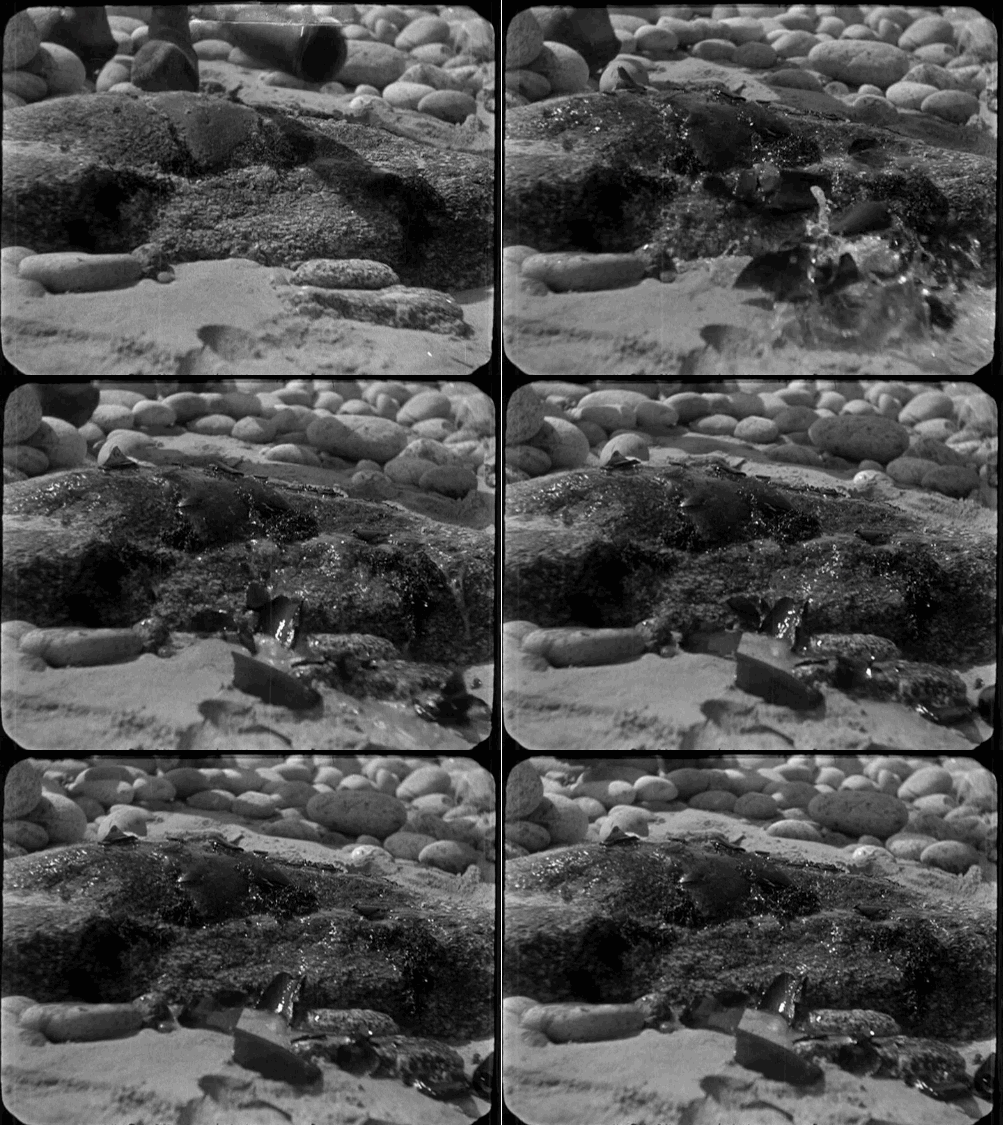
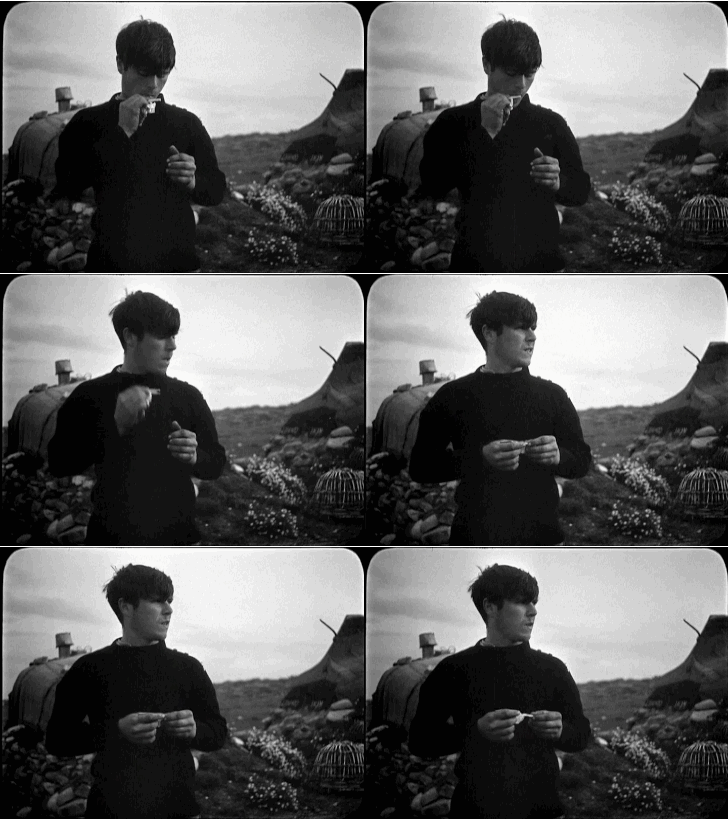
Epstein believed that cinema held the unique power to show us the fundamental objective truth that is usually shattered by subjectivity; he delighted in the French term for a camera lens, le objectif. Appropriately then, Finis Terrae’s plot was “torn from the headlines”, though markedly more sedate headlines than the cinema usually draws on. In the film, a seaweed gatherer on a remote coastal island accidentally cuts himself on a bottle, and the wound quickly becomes infected. Initially he is derided by the other seamen for his malingering, but soon they realise the mortal stakes and attempt the difficult sea crossing to the mainland.
As Epstein hoped, his mode of framing life in Ouessant acts as an “eye-freshener”: one comes away from the film brimming with cinema’s potential. Although Epstein exposes much that is exotic and novel in his docudrama, the film never patronises the Breton lifestyle. One thinks of Murnau and Flaherty’s Tabu: A Tale of the South Seas(1931), which, despite its beauty and “documentary” approach, has an outsider’s touch throughout, seeking to fillet the lives of the islanders for their “otherness”. Whether or not one can claim objectivity, Epstein was not simply another Paris intellectual seeking authenticity in the “naïve” life of the natives. Brittany represents a space of the uncanny for Epstein, where the smallest mistake can have life-threatening consequences:
In this place and people is resumed the mystery of men dedicated to land that is but rock, to sea that is but foam, to a hard and perilous trade suffering a meagre self-sufficiency.
Instead of “the other”, Epstein shows life in Brittany as a legitimate alternative to the alienation of modern life. He also had other reasons for seeking alternate lifestyles: as was uncovered when his full archives were made available, Epstein was gay and, under a pseudonym had written a pioneering treatise on Masculine Homosexual Ethics. With this information, the companionship between the younger seaweed gatherers takes on a new cast. Brittany at that time was heavily dominated by the Catholic church, but fishermen – unable to attend mass on a regular basis – were relatively exempt from their sway. In the male-only world of the archipelagos, a beautiful and separate world could flourish. The narrative trajectory of Finis Terrae can easily be read as a parable of two male lovers who come to realise their value to each other.
Epstein’s other works of the sea are equally compelling, but it is with this first work that he made his definitive statement about the power of the ocean. Coastal life is constantly in flux; for a filmmaker who believed that “still life is an abominable on screen … a sin against the very nature of cinema”, it allowed him the perfect location to capture the ecstatic essence of film.
This article is heavily indebted to Jean Epstein: Critical Essays and New Translations (Amsterdam University Press), which is available as a Creative Commons licenced free e-book here. Many thanks also to Bathysphere Productions for generously sharing a viewing copy of James June Schneider’s beautiful documentary Jean Epstein: Young Oceans of Cinema, which will be included in the upcoming (and much needed) box set of Jean Epstein’s works from Potemkine, due to be released in May 2014 to coincide with a retrospective of his works at the Cinemateque Française.
Scotland’s only silent film festival returns to the glorious Hippodrome cinema in Bo’ness with another impressively wide-ranging programme. There are some real treasures to be unearthed here: rare screenings of little-seen but highly valued films, and innovative ways to share the magic of silent cinema with younger audiences. Gala screenings include the Dodge Brothers‘ Scottish debut, accompanying the Hollywood classic Beggars of Life, starring Louise Brooks; Jacques Feyder’s heartstopping Visages d’Enfants closes the festival, with music from Stephen Horne; Frank Borzage’s wartime weepy Lucky Star plays on the Friday night, with Neil Brand on the piano; and Jane Gardner will perform a specially commissioned new score for Ozu’s gangster drama Dragnet Girl. German group The Aljoscha Zimmermann Ensemble will provide a score for Murnau’s timeless The Last Laugh; Jason Singh will create his magical vocal soundscapes for Grierson’s landmark documentary Drifters, live at the Hippodrome.
A drink, a snack and a temptingly toothsome silent movie? Perhaps with some live music too? And all in one of the coolest venues in London? I am super-excited to announce that Barts Pathology Museum (as promised, here on these very pages) is hosting a short silent film season in January. The films have been chosen because we think they are fabulous, and because they also have some relation to the research and study that goes on at Barts.
First, a recap. If you don’t know Barts Pathology Museum, that is because it is one of the capital’s best-kept secrets – a stunning Grade II listed 19th-century hall where quirky medical specimens are displayed. The hall has a glass roof, because once upon a time medical students would dissect cadavers there. You can read more about the history of the museum and its many fascinating artefacts on the museum blog, here. Entry to the museum is by appointment only, but the doors are open on selected evenings for a series of lectures and events on subjects ranging from film noir to taxidermy to dentistry. Your humble scribe was there last November, giving an illustrated talk on silent cinema.
The January screenings are supported by Hendrick’s Gin, and entry to each film includes a G&T and some delicious, freshly popped popcorn as well as the film. I will be there to introduce the screenings and the the first movie in the series features live musical accompaniment, too. Here’s what’s coming up in the new year.
Next weekend is spookier than most at BFI Southbank – which is saying something, since the BFI Gothic season rolled into town. The Hauntology weekend takes over, with a screening of the majorly creepy drama-documentary Häxan on Friday 13 December, and on Saturday night, a collection of gothic treasures soundtracked by a group of seriously talented musicians – Sarah Angliss and the Spacedog ensemble. Here’s a little more about what you can expect from the shows – scroll down for a chance to win tickets to see Häxan.
The ensemble was put together by Sarah Angliss, a composer, automatist and theremin player, whose singularly unsettling music was recently heard at the National Theatre as a tense underscore to Lucy Prebble’s The Effect. Angliss’ music for Gothic film will be performed by her band: recent Ghost Box guests Spacedog. They’ll be joined byExotic Pylon’s Time Attendant (Paul Snowdon) who will be supplying a new work on simmering, tabletop electronics. There will also be some extemporisations from Bela Emerson, a soloist who works with cello and electronics. Fellow Ghost Box associate Jon Brooks, composer of the haunting Music for Thomas Carnacki (2011), will also be creating a studio piece for the event.
Sourced by Bryony Dixon, the BFI’s curator of silent film, many of the short films inspiring these musicians were made in the opening years of the twentieth century. The Legende du fantôme (1908) and early split screen experiment Skulls Take Over (1901) are on the bill, along with the silent cubist masterpiece The Fall of the House of Usher (US version, 1928) and more.
“There is undoubtedly something uncanny about the earliest of these films”, said Angliss. “Many are stencil-coloured in vibrant hues, adding to that sense of the familiar taking on a strange cast. They seem to demand music that suggests rather than points up the horror, a motif that discomforts as it soothes, or a sweet sound that is somehow sickly, as though heard in a fever.”
Brooks added “the visuals suggest aural textures reminiscent of painted glass, to strange derivatives of stringed instruments. Hopefully I’ve conjured some playfulness amongst the macabre too.”
Adding to the strangeness are Angliss’ automata, who will also be performing live. These include a polyphonic, robotic carillon (bell playing machine) and Hugo, the roboticised head of a ventriloquist’s dummy who is of the same vintage as some of the films. The event will be directed by Emma Kilbey. After the BFI Southbank performance there are plans to take Vault to Gothic revivalist buildings around the UK.
Sarah Angliss is grateful to PRS for Music for financially supporting her new work. Vault: Music for Silent Gothic Treasures is part of the BFI’s Hauntology Weekend, in association with The Wire magazine (Fri 13 Dec – Sat 14 Dec)
To book tickets for Vault: Music for Silent Gothic Treasures, click here http://bit.ly/bfivault. The screening takes places a 8:45pm NTF1, BFI Southbank, Saturday 14 December.
Häxan (1922)
On the Friday night, the Häxan screening will also be accompanied by live music: a specially commissioned score from Demdike Stare.
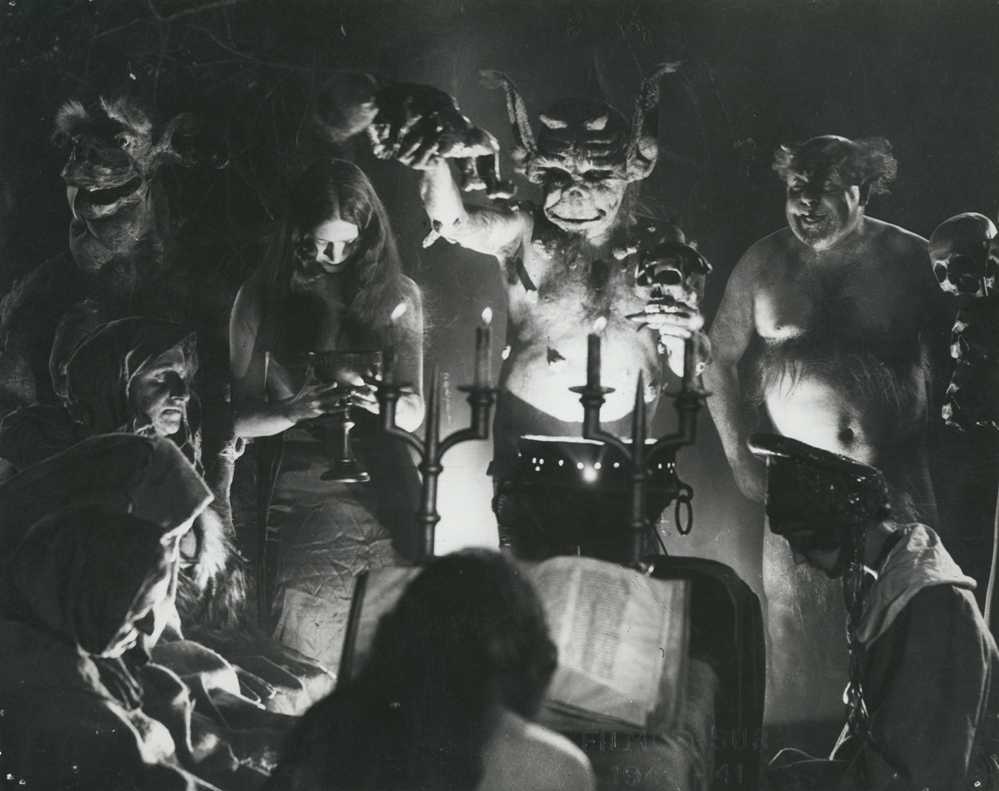
This 1922 documentary-horror masterpiece explores the effect of superstition on the collective medieval consciousness. Presented for the first time with a BFI-commissioned score by electronic artists Demdike Stare. The duo base their music on samples from old recordings, twisted into new sonic shapes. The blend of Demdike Stare’s resurrected aural phantoms and Christensen’s Satanic horror promises to be a singularly modern yet arcane live experience.
Häxan is a thrilling movie, and an amazing thing to experience on the big screen – an effect that will surely only be enhanced by those “aural phantoms”.
To book tickets for Häxan with Demdike Stare, in association with Wire Magazine, click here. The screening takes place at 7pm in NTF1, BFI Southbank, Friday 13 December. Tickets cost £15 full price – concessions are available.
Win! Win! Win!
To win a pair of tickets to Häxan with Demdike Stare, email the correct answer to this question to silentlondontickets@gmail.com with “Haxan” in the subject line by noon on Wednesday 11 December 2013.
Which American writer provided the voiceover for Häxan’s jazzy 1968 re-release?
The winner will be chosen at random and notified by email. Good luck!
Followers of Silent London intending to attend the London Symphony Orchestra’s live accompaniment to Michel Hazanavicius’ 2012 The Artist, in December this year, might care to know about Royal Albert Hall screenings of “the genuine article” in the 1920s.
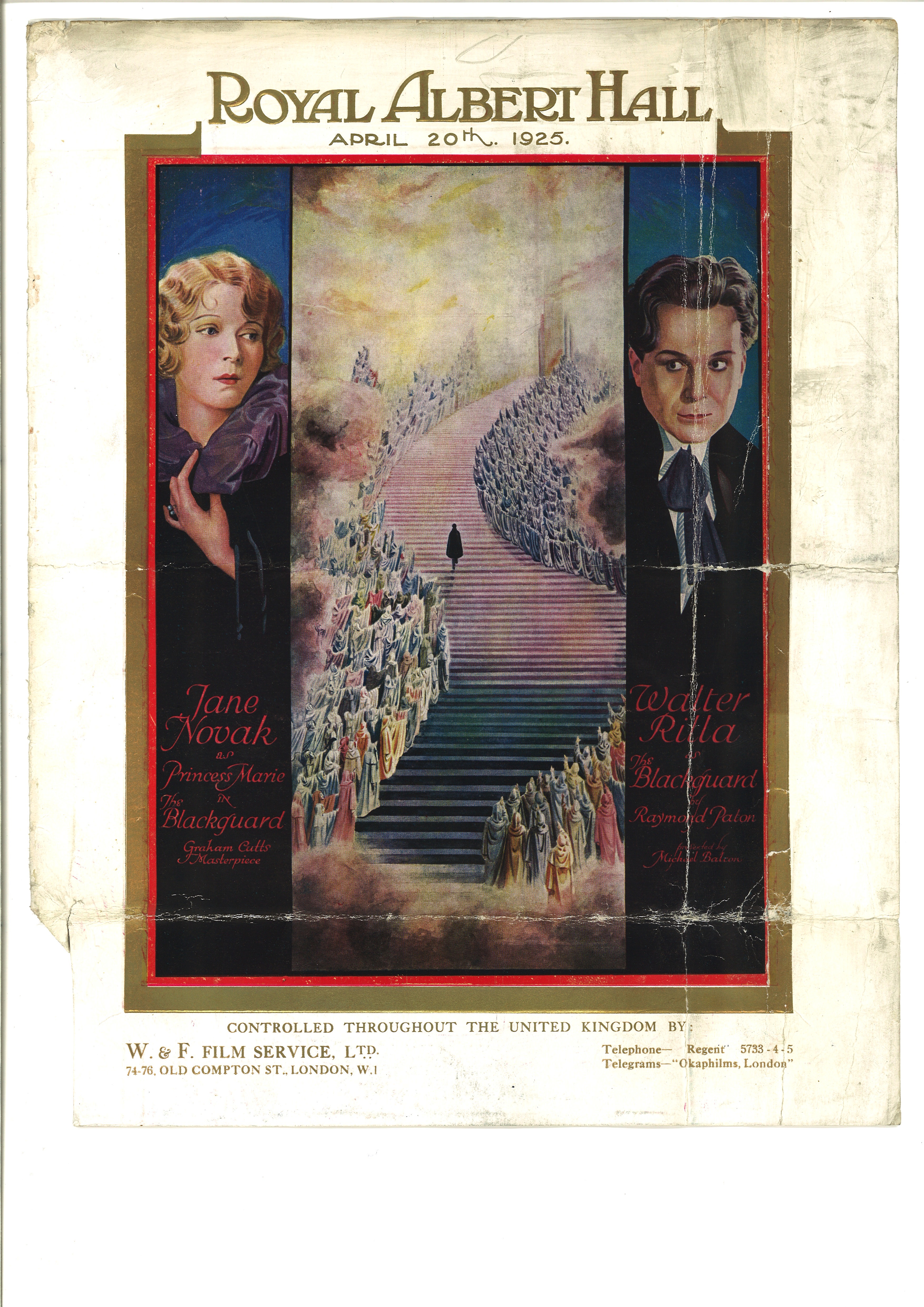
The end of the first world war was marked with a variety event, including films, at the hall. Subsequent presentations, running from October to December 1919, celebrated Allenby in Palestine and Lawrence in Arabia. Antarctic and Everest expeditions were commemorated in benefit screenings. In 1926, the RAF band contributed to a programme including a lecture by the aviator Alan Cobham, the film recording his arrival back in London after his flight to Australia, and an address from the prime minister of Australia: of course, the Imperial Institute was a close neighbour, perhaps influencing the selection of items recorded in the archive. European films screened included Murnau’s 1926 Faust and Turzhansky’s 1926 adaptation of Jules Verne’s Michel Strogoff. A lavish souvenir pamphlet (above) was published to accompany the trade show of Graham Cutts’ 1925 TheBlackguard, an adaptation of Raymond Paton’s novel, featuring a romance between a Russian princess and a violinist. A special attraction at the event was a dance performed by Serge Morosov “of the Imperial Russian School of Ballet”.
Faust (1926)
The novelist Naomi Mitchison, sister of JBS Haldane (a founding member of the Film Society) recalled in her memoirs the long run of Fritz Lang’s Die Nibelungen in the summer of 1924. The London Symphony Orchestra performed a Wagnerian prelude and a sub-Wagnerian score for the film (commented upon by Picturegoer critics as derivative), composed by G Huppertz.
The Sea Hawk (1924)
In addition to orchestral accompaniments, programmes give details of songs and soloists. Furthermore, for Frank Lloyd’s swashbuckler The Sea Hawk (1924), the prow of a ship was installed in front of the screen, while for Southern Love (Herbert Wilcox, 1924), balcony decorations and special effects were provided.
Indeed, a brief survey of Royal Albert Hall programmes confirms a more general observation to be drawn from the trade and general press: in the 1920s, performance and staging manifestly contributed much to the cinematic experience in London and to British audiences’ enjoyment of films, even outside regular cinema venues.
Amy Sergeant
The Artist screens at the Royal Albert Hall on 30 & 31 December 2013, with the London Symphony Orchestra and composer-pianist Ludovic Bource, conducted by Ernst Van Tiel. There is no official dress code for this event but anyone who wishes is encouraged to celebrate the elegance and style of Hollywood’s Golden Age of Glamour, and not just for the New Year’s Eve performances.











 Silent London