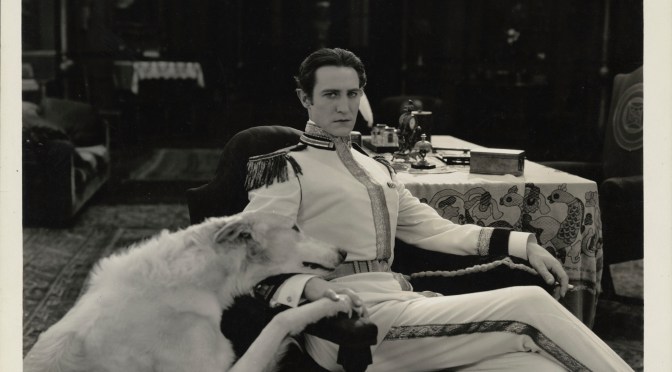
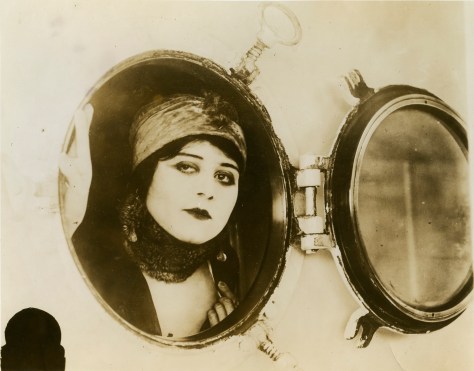
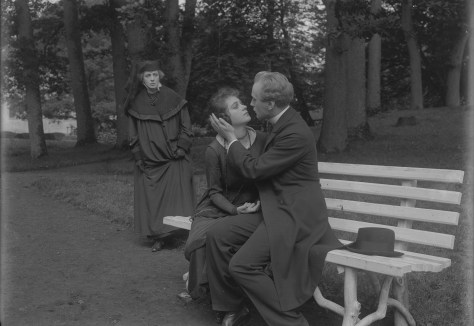
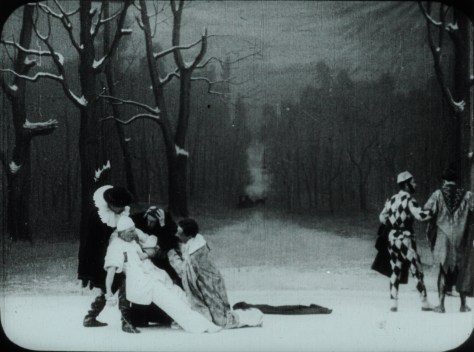
To reverse the usual order of proceedings, let’s start with the music, not the movies. This morning, in a Pordenone first for me, I attended one of the masterclasses AKA a crash course in silent film accompaniment, from the professionals, for the benefit of the Giornate audience and two very talented students. This was a fun session, led by Neil Brand and Gabriel Thibaudeau (with a little light heckling from Philip Carli and John Sweeney), who put Richard Siedhoff and Bryson Kemp through their paces with the help of some carefully chosen film clips.
Their instructions were wise, inspired, and stricter than I expected. Also quite bizarre. At one point a student was required to play to The General in the style of Wagner, and then with an added Bossanova rhythm. Another was asked to score the same film just on one bass note, and then to perform a “one-fingered love song”. Don’t google that last one, I fear you might end up somewhere untoward. From the secrets of playing ice, say, or heroism, but with fear, or without patriotism, to the use and abuse of musical cliché and the “toolbox” with which an accompanist can suddenly summons bells, trains, or even China, this was invaluable advice. Brand’s exercise in reading a film, guessing where the narrative and the characters will go next (Beggars of Life was the chosen example), was useful for us critics and punters too.
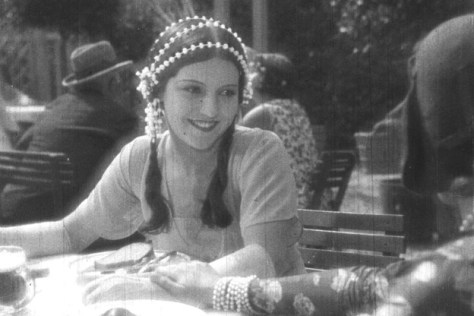
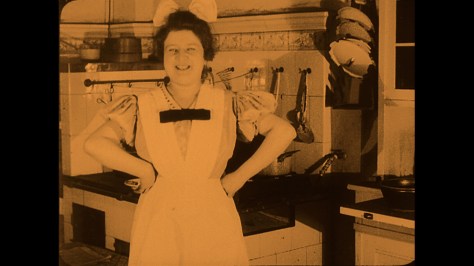
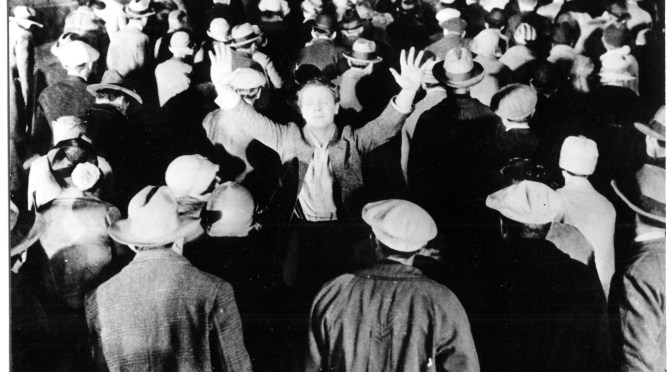
SAMMELT KNOCHEN! (DE 1918) Credit: Lobster Films, Paris
If you are the kind of fool who thinks a programme of Soviet travelogues sounds a bit dry, then you are the same kind of fool as I am. However – as I once advised on this site, when you’re at Pordenone watch one thing that scares you everyday. So I was in the Verdi for the 9am travelogues and boy was I smug about it afterwards. Pamir. Krishna Mira (The Roof of the World, Vladimir Yerofeyev, 1927) was an absolutely fascinating journey through remote mountainous Kyrgyzstan, with just the right balance of intriguing domestic minutiae and awe-inspiring geographical grandeur. One series of intertitles pithily explained: “The women do all the chores … the men mostly do nothing … Occasionally they go hunting.” Actually, there was more to it than that. The men also whittle, weave, smoke opium, traverse perilous mountain passes and even perform very watchable partner dances in costume: the horse and the rider, the old man and the young girl, the fox and the marmot.
Photographed in regions where the air is so thin that water boils at 86 degrees Celsius or so cold that film itself can freeze, this can’t have been an easy documentary to shoot, but if offers a vision of another world, and now, I would guess, one that is almost entirely lost. I am sure that Günter Buchwald’s meticulous accompaniment on piano and violin was key to the success of this screening, providing a silk thread through the film’s essentially episodic structure.
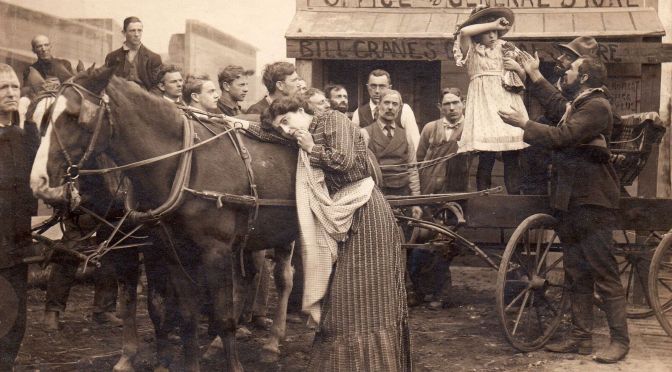
From raw ethnography to dream-factory fantasy, with another parcel of early Euro westerns. These are rather slight things, but the devil, or rather the joy, is in the detail. Le Railway de la Mort (Jean Durand, 1912) was a kind of compact Greed – no, really, with a not dissimilar ending, augmented by a ferocious, red-tinted explosion. And before that, a series of train stunts that Hollywood, in any era, would have been proud of. In Italian western Nel Paese dell’Oro (1914) the star was not a gunslinger, but Toby the faithful dog, who helped to build barricades, did his level best to throttle the villain, and even rescued a lost tot from kidnappers and cold water, Rescued by Rover style. A canine who can.
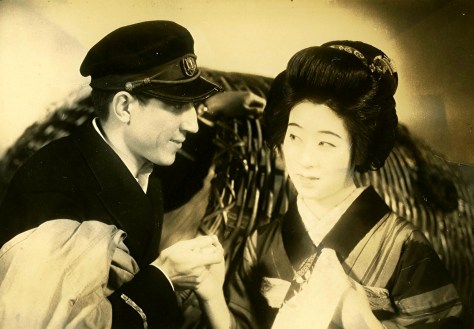
SHIMA NO MUSUME (JP 1933) Credit: National Film Center, Tokyo / Shochiku
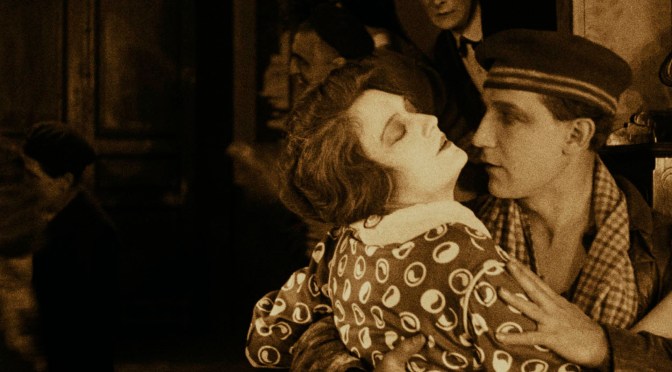
Happily, I had the chance to return to Shima No Musume this lunchtime and what a pleasure it was. This melancholic drama is a little like a Japanese Borzage movie, with an unrepentantly sorrowful conclusion. Suffering is a woman’s lot, so just tough it out for the sake of your loved ones, be they living or dead. Sensitive performances, sharp dialogue, nuanced photography … such a surprise that it was one of four films rushed out to capitalise on a surprise hit single, and such a shame that the director, Hotei Nomura, a Japanese film pioneer, died a year later.
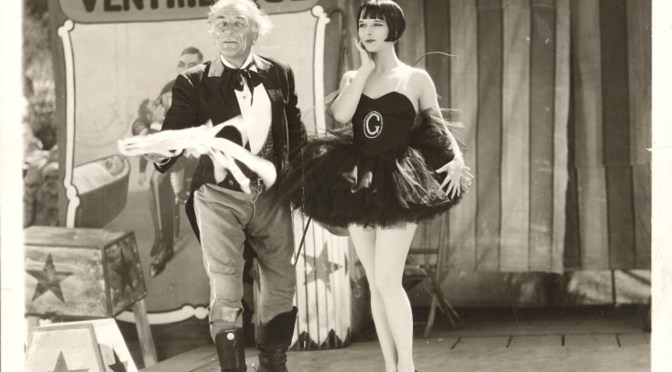
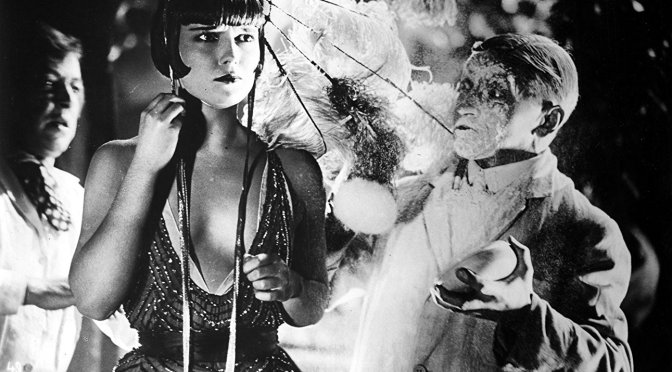
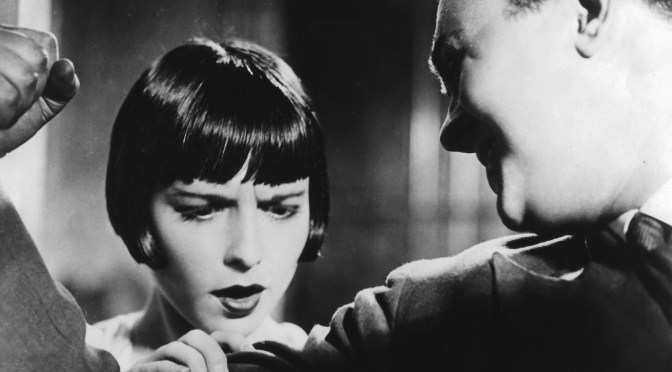
Louise Brooks is everywhere this year, not least here at the Giornate, where she adorns tote bags, mugs, programmes, T-shirts and even the festival office. The reason for the Louise love-in is that the Verdi welcomed a snippet of previously thought lost Brooks footage tonight – a few minutes of the Raymond Hatton-Wallace Beery comedy Now We’re in the Air, featuring Brooks as twins. I saw this footage at San Francisco earlier in the year. There is little to it, and Hatton and Beery are as unfunny a comic pairing as you may have already heard, but Brooks is beyond elegant, despite the material. And perhaps I did find it a little sparkier second time round.
It’s frustrating to see those two clutzes hogging the screentime while Brooksie stands idly by. At one point she is giving it her best pout-and-shout, basically rehearsing her Lulu as she rebels against her dodgy boss, but the scene is so poorly blocked she is hardly visible behind the villain in a top hat and cape. A certain kid of person would take this as a cue to rant about the limited opportunities for women in Hollywood both now and 90 years ago. I am that kind of person, but I’ll spare you.
However, if you’re familiar with Pandora’s Box, you may get a little thrill from her appearance in this film. A publicity still of Brooks in costume for this film is used in the scene where the Egyptian bids for Lulu in the casino boat. Far more wholesome in this context, but some would say about as funny.
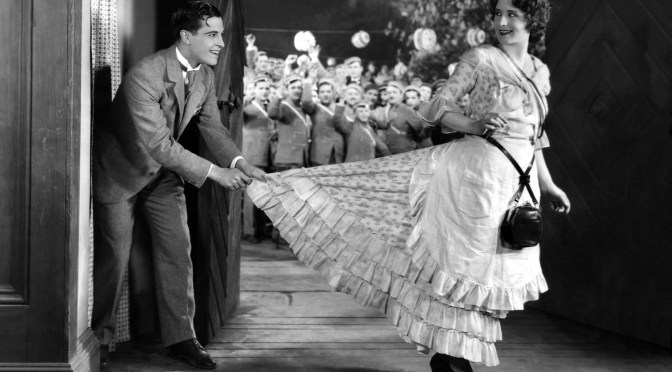
THE RECKLESS AGE (US 1924) Credit: Bison Archives/Marc Wanamaker
Any day that closes with a Pola Negri film is a good day, and Sunday was a very good day. La Negri, my personal favourite silent movie star and the owner of the best peepers in the pictures, bar none, features in three films in the official Giornate programme this year (plus a schools matinee of The Wildcat). I knew artistic director Jay Weissberg was a fan, but well, consider me chuffed.
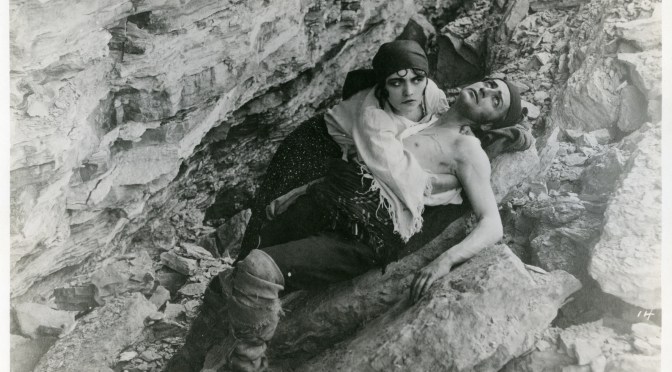
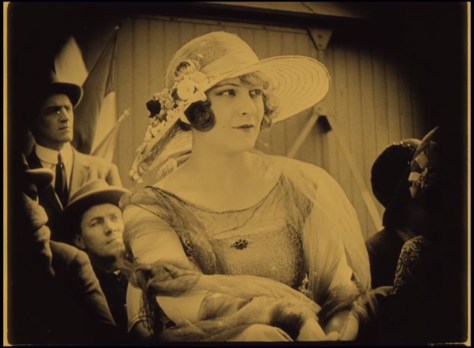
Tonight’s Negri film was Der Gelbe Schein (1918), often known as The Yellow Ticket. Negri plays a young medical student with a melodramatically plotted backstory that slowly unfurls as the film progresses. Suffice it to say that aside from some nice location shooting in Warsaw and the very striking image of a champagne glass full of coins in a brothel scene, this film lives and dies by Negri’s mesmeric performance. She radiates emotion, from those incredible eyes to her fluid posture, and even this early in her career she has the “star quality” that divides actors from icons. We saw the film tonight with a klezmer-tinged folky score from Alicia Svigals that worked very well, giving he melodrama enough room to breathe and softening the edges of a film in which structure runs the risk of overwhelming character.
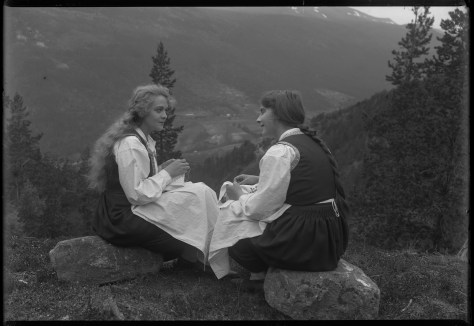
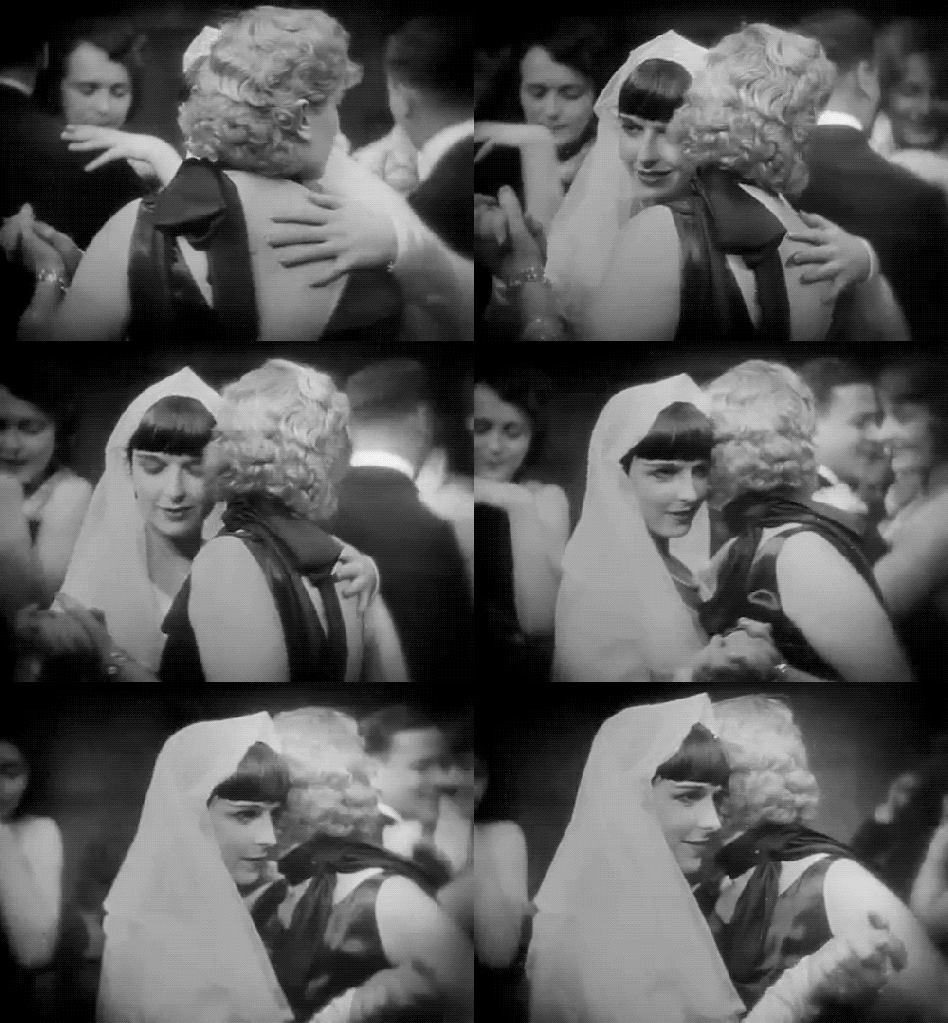
Back to the beginning, though, and there is nothing like breathing fresh mountain air first thing in the morning. While Pordenone may not be as rural as all that, we were in the hills today, with A Norway Lass (1919), part of the Swedish Challenge strand. No one I spoke to denied that this film proceeded at a sedate, almost glacial pace, but all agreed also that it was astonishingly beautiful, romantic, inventive, charming and felt far more advanced than many 1919 movies. Two youngsters on neighbouring farms fall in love, but he, Thorgbjorn (Lars Hanson) is a hothead and so she, Synnöve (Karin Molander) must wait for him to grow and earn her love. Although, he’s clearly a good guy from the start, and sometimes it seemed as if the more passionate relationship was that between Synnöve and Thorgbjorn’s sister Ingrid (see below), especially when they danced in the high pasture. An excellent portrayal here of a slow-burning romance set in a place torn between puritanism and paganism, with contrasting Midsummer rituals. Also, a rather mischievous, gargoyle-faced young farmhand was busy persuading Thorgbjorn of the existence of a troll family in the valley (cue excellent inserted troll feasts) when he was the only goblin in sight and all too human at that.
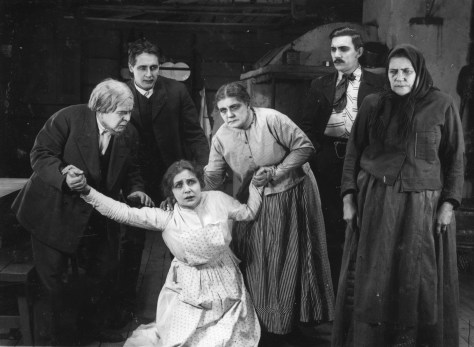
SYNNÖVE SOLBAKKEN (SE 1919) Credit: Svenska Filminstitutet, Stockholm
The Brits are coming! Where have I heard that before? Hmmm… Anyway, it seems there is a UK invasion of Pordenone this year, with what looks like a bigger than usual home crowd in attendance already. And a British movie on the first day! After a journey that involved a plane, a train, an automobile, and a bus, I am part of that merry band. Jubilations, I even made it into the Verdi for the first film of the festival, which doesn’t always happen.
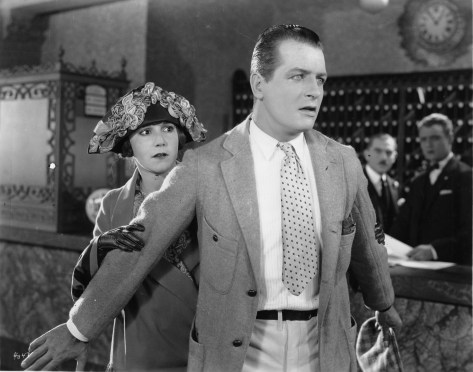
And that film was … 3 Days to Live (Tom Gibson, 1924). This was a pacey, if hokey melodrama, hinging on some awful foreign types manipulating the stock market in San Francisco and driving good men to suicide. Yes, it was not very 2017. It was more like 1917, or earlier, racial politics wise (see 1915’s The Cheat, for example), and definitely not a classic, though it had effective moments. A series of three closeups of a woman’s tapping feet, twisting hands and mobile face when she was waiting for her boyfriend to ask her father that question, was one. Another was a set of dissolves between empty rooms in an abandoned house. In such highlights we might detect the hand of youthful assistant director, editor and title writer Frank Capra. Or perhaps not – will we ever know?
I had to miss most of a package of early French Westerns. Yes, French Westerns. Just when you think you have seen it all … I did see Le Revolver Matrimonial (Jean Durand, 1912) thought. This was sweet ersatz Americana trifle in which Arizona Bill woos wealthy Maud (un homme in drag) and must lasso a sympathetic pastor to seal the union. There’s romance for you.
The Scapegrace (Edwin J Collins, 1913) finished the set. This was a British two-reeler though, and I expected Brian Aherne on his hobby horse a la Shooting Stars, but realism prevailed, to a point. This was a sprightly if slightly directionless drama in which black sheep Jack flees to the Yukon to escape his gambling debts and mend his ways. He finds, gold, a girl and forgiveness from his father so all’s well that ends, you know. And The Scapegrace was a Cricks studio production so that makes Croydon the wild frontier … I guess.
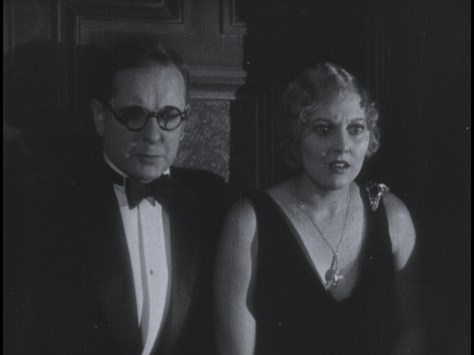
L’Autre Aile (1924) Credit: Cinématheque Française, Paris
In case you are wondering, this is the correct order of business, in my humble opinion: watch the film, then read the book, then watch the film again. Repeat as required and enjoy!
So I have a few dates and venues confirmed, where you can come along, watch the film, with an introduction or Q&A from moi, and if you feel so inclined, buy a copy of the book (very reasonably priced, lots of pictures). It would be great to see some Silent Londoners in the audience. As more dates are arranged, I’ll add them to this post, but as ever, pay attention to the Silent London social media channels to get the breaking news.
So far, ALL these screenings are 35mm projections with live musical accompaniment. Because if a thing is worth doing, it’s worth doing properly. And seeing Pandora’s Box on the big screen is definitely a thing worth doing.
19th November 2017: NFT1, BFI Southbank, London: 35mm projection, introduction, live piano accompaniment by John Sweeney, book launch. Book tickets here from 3 October on.
24th November 2017: Cube Cinema, Bristol: 35mm projection, introduction, live piano accompaniment by John Sweeney. Book tickets here.
3rd December 2017: Phoenix Cinema, Finchley, London: 35mm projection, introduction, live accompaniment by Stephen Horne. Book tickets here.
10th December: Eden Court, Inverness: 35mm projection, Q&A, live accompaniment by Stephen Horne. Book tickets here.
28th January 2018, Home, Manchester: 35mm projection, introduction, live accompaniment by Stephen Horne. Book tickets here.
There are at least two more dates to be announced and yes, they are further north than these three. Watch this space for details …
Before Hollywood became the heart of the American film industry, New Jersey was studio city. About 20 miles from West Orange, where Thomas Edison’s famous Black Maria swiveled to catch the light in the 1890s, the town of Fort Lee became the site of DW Griffith’s acting debut in 1908, and the birth of movie mammoths now known as Universal, MGM and 20Th Century Fox.
Now, to best understand the history of Fort Lee, and its importance to the US film business, you should read Richard Koszarski’s 2005 book Fort Lee: The Film Town. This DVD set from Milestone, The Champion: A story of American’s first film town, could work either as a companion to that volume, or as the best kind of introduction to the subject. Whatever you have or haven’t read, this set represents an exceptionally entertaining way to potter around movie history for three hours.
Well, are you? Time is rushing by. Summer has barely ended, the LFF programme is out, the Pordenone programme will be released soon and the 19th British Silent Film Festival kicks off next week. Next week!
The festival runs 13-17 September 2017 at the Phoenix Arts Centre in Leicester and each day or five-day pass covers you for lunch as well as every screening on that date.The full timetable for the festival is online here. You can book here and let all your friends know you are attending by clicking on the Facebook event.
To get you up to speed on what to expect in Leicester, the festival* has been posting blogs on the festival site. Yes, silent film blogging is all the rage now. Here are all the posts so far:
Competition time! I hope you’re feeling lucky, because I have a very special prize to give away. You may remember reading on these pages about a screening of silent classic The Phantom of the Opera coming up in London. Not just any screening, but the premiere of Roy Budd’s symphonic score for the film, at the Coliseum opera house in London. Sadly, composer Budd died just before the planned premiere of the score in 1993. But now, more than 20 years later, his music can take its place alongside this beautiful, chilling silent film from 1925.
The even better news for one of you is that I have a pair of tickets to give away to this special event, which takes place on 8 October 2017.
To win a pair of tickets for this prestigious screening, just send the answer to this question to silentlondontickets@gmail.com by midnight on 19 September 2017.
Lon Chaney was known as ‘The man of a thousand … ‘what?
A) Eyes
B) Miles
C) Faces
Good luck! The winner be chosen at random from the correct answers and will be notified by email.
You can find out more, and book tickets for The Phantom of the Opera, here.
The cat is out of the bag. The programme for the 61st London Film Festival has been announced and there is only one question on our lips: “Got any silents?” The answer is …
Shiraz (1928)
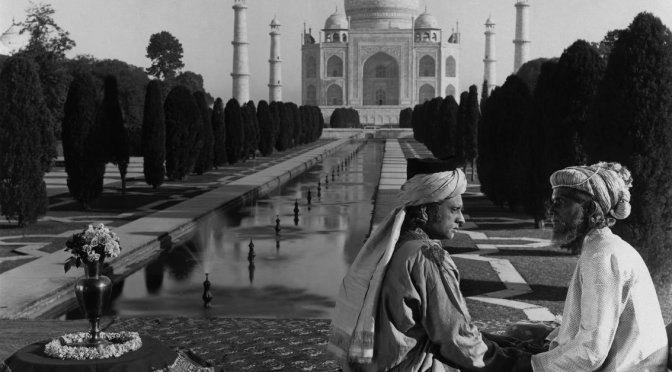
First things first, we already knew that this year’s LFF Archive Gala would be Shiraz, a sumptuous late-silent Indo-German production, which relates the romantic story behind the building of the Taj Mahal. This gorgeous film, freshly restored by the BFI, will be accompanied by a new score, composed by Anoushka Shankar. The gala screening takes place on 14 October 2017 at the Barbican and tickets are already on sale now. Read more here. And why not book a ticket here too?
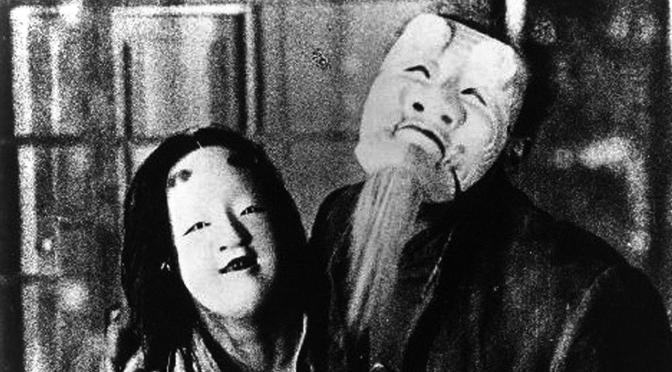
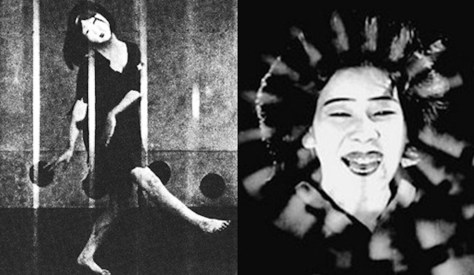
Here’s something you don’t see very often. Screenings of silent films crop on this page quite often, but there is no other silent film like this one. A Page of Madness is a brilliantly dazzling, utterly uncategorisable Japanese silent from 1926, one that was thought lost for years, and now that it has been found, seems to belong to no time at all, past or future. There’s a very rare, and beautifully curated, screening of the film coming up soon, in London, so read on.
“When’s the last time you were surprised by a silent film? Impressed, dazzled, yes, but genuinely surprised? You’d think by 2017, with all the silent-era history scholarship behind us, that authentic, mutant-DNA “Holy Crap” moments would be rare on the ground, and, of course, they are. But there’s no amount of buckling up that can prepare a well-versed silent cinephile for the utter unheralded weirdness of Teinosuke Kinugasa’s A Page of Madness (Kurutta Ichipeiji). Scan the sacred texts, from Paul Rotha onward—it’s not there, as if it were a disturbing dream filmgoers may’ve thought they’d had, fleeting but creepy, after a big meal and too much wine.”
Intrigued, eh?
A Page of Madness has often been compared to The Cabinet of Caligari – thanks to its fragmented flashback narrative and haunting, stylised design. In fact, Teinosuke Kinugasa’s masterpiece is a kind of Japanese Expressionist film, whose artifice helps to expose emotional truths. It is really, a story of insanity, love and loss, about a man who takes a job at a mental asylum to be close to his wife, who is a patient there. It may well be inspired a little by FW Murnau’s The Last Laugh, and like that film, it doesn’t rely on intertitles. There is just one caption card here. When the film was screened in Japan on its original release, it would have been accompanied by a benshi narrator, who would attempt to draw out the narrative, or at least accompany the audience on this strange journey. This London screening will honour that tradition.
A Page of Madness (1926)
The Japanese Avant-Garde and ExperimentalFilm Festival will screen A Page of Madness on 24 September at King’s College London. The film will be shown on film, from a 35mm print, and will be accompanied by Benshi Tomoko Komura (who performs in English) as well as musicians Clive Bell, Sylvia Hallett and Keiko Kitamura offering a live score on the shakuhachi, piano and koto.
The film will be introduced on video by Professor Aaron Gerow, the author of the definitive book on A Page of Madness and will be followed by a panel discussion. I am honoured to be part of that panel, along with Japanese cinema expert Jasper Sharp and Tomoko Komura.
For other people, anniversaries are a good excuse for a party. For Silent Londoners, they’re a great excuse for a screening. You will have noticed by now that 2017 marks 100 years since the Russian Revolution – there have been exhibitions, books and screenings all year. The year isn’t over yet though. There’s another event coming up in October that is more epic than the rest.
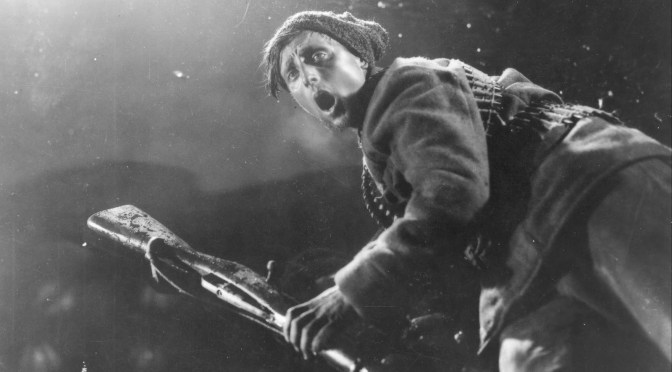
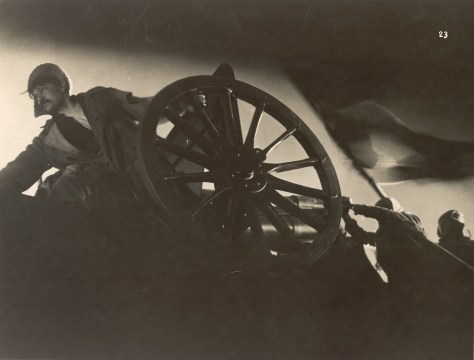
October you say? Yes, that October. On 26 October this year, Kino Klassika and the London Symphony Orchestra present Sergei Eisenstein’s masterpiece October at the Barbican Centre. This 1927 film charts, in its own often creative but always thrilling manner, the events of October 1917: the famous “10 days that shook the world” in which the Bolsheviks revolted against the Provisional Government, marched on St Petersburg, stormed the Winter Palace and prepared to build a new Soviet state.
It’s a magnificent, riveting film, thanks to Eisenstein’s electric direction – and the fact that the authorities gave him the run of the city to make it. You may already know the famous, actually quite harrowing, bridge sequence – but if you don’t, no spoilers here.
October (1928). Collection Austrian Film Museum, Vienna
If you have seen October before bear in mind that the film was banned in England and not shown here until 1934 – in fact there are still many censored versions going the rounds. This screening is the real deal, and not only is the film itself complete, it will be accompanied by Edmund Meisel’s original score, reconstructed by the Munich Film Museum and the European Film Philharmonic, and played by the London Symphony Orchestra. Not a night to be missed, if you possibly can. October still represents a dazzling highpoint of cinematic experimentation and sheer excitement.
Kino Klassika and the London Symphony Orchestra present October at the Barbican on 26 October 2017. You can book tickets here.
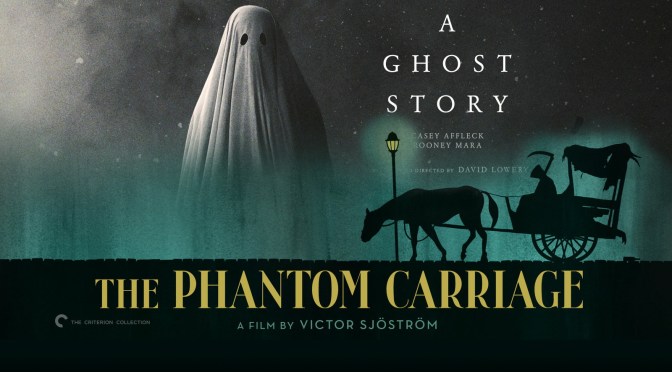
A spooky double-bill for our eighth Sound Barrier podcast: A Ghost Story, David Lowery’s high-threadcount, high-concept tale of love and loss, and The Phantom Carriage, Victor Sjöström’s long, dark night of the soul.
FYI the song you can hear in the trailer for A Ghost Story throughout the podcast is I Get Overwhelmed by Dark Rooms – it’s the song that Casey Affleck’s character writes and records in the film. But movies lie to you.
The Silent London Podcast is also available on iTunes and Stitcher. If you like what you hear, please subscribe and leave a rating or review too. The podcast is presented in association with SOAS radio by Peter Baran and Pamela Hutchinson.
If you want to get in touch with us about anything you hear on the podcast then you can post a comment below, or tweet @silentlondon.
The next episode of Sound Barrier will appear in a fortnight’s time. We’ll announce the films for the next podcast about a week before it launches, so you can watch what we’re watching.
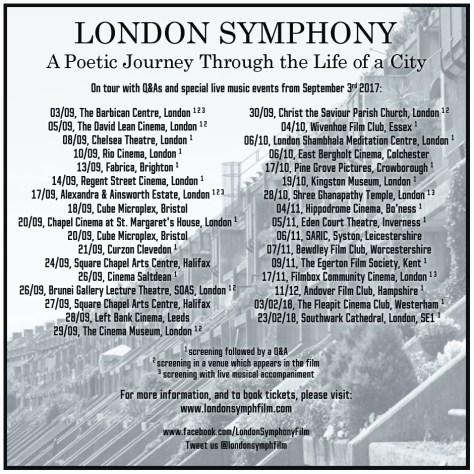
I have been talking to you about London Symphony, the modern City Symphony film, for a while now, but finally it’s time for you to see it. Or at least book a ticket to see it. yes, London Symphony is coming to a cinema near you, even if you don’t live in the capital. Details of the tour as it stands now are copied below, but I recommend you keep an eye on this page for up-to-date information from the horse’s mouth.
You’ll see that some of the screenings have live music, are followed by a Q&A or take place in a venue that appears in the film – or all three! The screening at Southwark Cathedral, I’m told, will take place by candlelight. You don’t get that kind of atmosphere with Dunkirk …
Meanwhile, don’t miss Kim Newman’s review of the film in this month’s Sight & Sound, which although it completely neglects to mention my own appearance in the film (yes, really) rightly praises its “seductive parade of striking images and juxtapositions”.
Just a short note, to give you a little bit of news. The book I’ve been writing, well actually wrote last summer, has a release date! It’s a short book in the BFI Film Classics series, about one of the most beautiful and fascinating of all silent movies, GW Pabst’s Pandora’s Box (1929), starring the unique Louise Brooks. #pandorasbook
Bad news for now – the book isn’t out until 21 November.
Good news for now – you can pre-order the book already, on Amazon, on the Palgrave site, or in a selection of other bookshops.
Good news to come – I’m talking to several people at venues up and down the UK, about screenings of the film to tie in with the launch. The deal is: I’ll come along, chat about the film, sell you a book and it will be midwinter magic all round. Details of those events to come, so watch this space …
Thanks for all your support. It’s also exactly a year today since I quit my full-time job and I have had a fabulous, busy 12 months of freelance film-related work. It’s enough to make a girl want to dance …
Competition time! And this time I am giving away three pairs of tickets for some silent movie screenings at one of London’s most atmospheric venues. The team at the Lucky Dog Picturehouse have teamed up with Wilton’s Music Hall, a historical theatre in the east end of London, to put on four nights of silent cinema and live music.
The Lucky Dog Picturehouse is dedicated to recreating the original cinema experience, bringing together classic silent films and live, period specific music. Working with some of the best young musicians in London, they have performed at numerous venues including the BFI Southbank, LoCo Film Festival, Hackney Picturehouse, Standon Calling festival and Abney Park’s outdoor cinema series. The Lucky Dog Picturehouse also run a series of educational programmes introducing silent film to children in a fun and interactive way.
To win a pair of tickets for one of these screenings, just send the answer to this question to silentlondontickets@gmail.com by midnight on 7 August 2017 – and don’t forget to let me know which film you’d like to see.
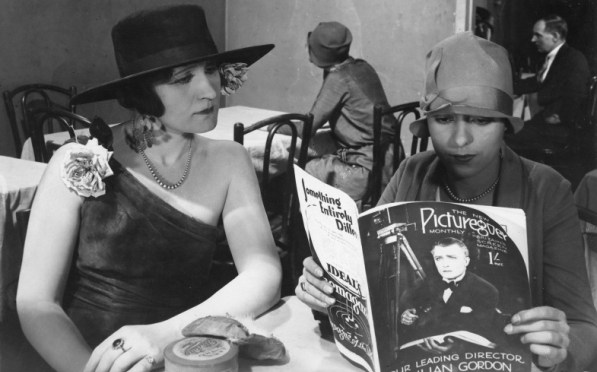
What is the name of the cowboy star played by Brian Aherne in Shooting Stars?
A) Tom Mix
B) Julian Gordon
C) William S Hart
Good luck! The winner be chosen at random from the correct answers and will be notified by email.
The Sound Barrier returns with two wartime blockbusters. In this episode, Pete Baran and I are joined in the studio by the Guardian’s Nick Dastoor.
We’re debating the relative merits of Christopher Nolan’s smash-hit WWII spectacle Dunkirk and Walter Summers’ patriotic WWI re-enactment film The Battles of Coronel and Falkland Islands (1927)
The Silent London Podcast is also available on iTunes and Stitcher. If you like what you hear, please subscribe and leave a rating or review too. The podcast is presented in association with SOAS radio by Peter Baran and Pamela Hutchinson.
If you want to get in touch with us about anything you hear on the podcast then you can post a comment below, or tweet @silentlondon.
The next episode of Sound Barrier will appear in a fortnight’s time. We’ll announce the films for the next podcast about a week before it launches, so you can watch what we’re watching.
Read more about The Battles of Coronel and Falkland Islands (1927)
This is a guest post for Silent London by David Cairns, a film-maker and lecturer based in Edinburgh who writes the fantastic Shadowplay blog.
The so-called “Italian diva” school of silent cinema presents challenges for those in love with narrative and closure, and not just because many of the films are incomplete or untranslated. These movies seem genuinely less concerned with plot than surrounding national cinemas, though this assertion must be qualified in a number of ways.
What the films definitely are obsessed with is their stars, such women as Lyda Borelli, Francesca Bertini, and Pina Menichelli, around whom the films revolve, wholly. It’s as if the Italians noted that stars seemed to be what the public cared for most, and so decided to put everything else on the back burner while serving up long, langurous shots of languishing, anguished beauties. Superficially resembling both the kohl-daubed vamps of the Theda Bara school, and the later Swanson type of clothes-horse drama queen, Borelli and her sisters in sin dominated their films in a way few stars have been allowed to. Dietrich, maybe, or Garbo, but even those screen queens had to make way for plotting and forward momentum.
This is a guest post for Silent London by the Lumière Sisters, a collective of writers who hang out over at the Chiseler.
The Victorians were falling away. And with them a withered system of reality embodied in overwrought virtuoso performances. Technique as a means of reflecting Nature – or, to quote Balzac, the “conjugation of objects with light” – was displaced, uncrowned by painters pursuing a darker mirror, a diabolical truth for smashing the mendacity of a bloodless representational art.
It was finally time for Edgar Allan Poe’s crepuscular light to shine. Not solely via accepted modes but written alchemically in cinematographic rays beamed through silver salts. Filmmaking is the darkest and unholiest of arts (done right, that is), and the director was emerging now – supreme pimp to a coterie of fallen angels, nymphs and sirens.
Modernism began materialising, slowly and unevenly at first, as an answer to 19th-century illusionism. The rank trickery of which academic art’s heroes lay dead and dying – granting Poe a new, posthumous plasticity to actualise delirium, converting it from literature into an art… art worthy of the name. And here, the “Decadents” became forerunners. Consider Surrealism, its nose-dive into the gulf of interiority, as a bequest from Poe – via his greatest interpreter.
In Odilon Redon’s Germination (1879), a wan, baleful, free-floating arabesque of heads of indeterminate gender suggests either a linear, ascending involution, or a terrifying descent from an unlit celestial void into a bottomless pit of an all-too-human, devolving identity. Redon’s disembodied heads gradually take on more human characteristics, culminating into a black haloed portrait in profile. The cosmos of Redon’s etching is governed by an unexplained, inexplicable moral sentience, which absorbs the power of conventional light. Thus black is responsible for building its essential form, while glimmers of white, hovering above and below, prove ever elusive; registering as somehow elsewhere, beyond the otherwise tenebrous unity of the picture plane; adding to the depth of its unsettling dimensions.
In the Three Flavours: Cornetto trilogy directed by Edgar Wright, the joke was that Simon Pegg and Nick Frost’s characters find themselves thrust into an ersatz version of the media they consume. In Shaun of the Dead (2004), it was zombie movies, in Hot Fuzz (2007), action blockbusters, and in The World’s End (2013), apocalyptic sci-fi. Similarly, in the same director’s Scott Pilgrim vs the World (2010), a geeky musician in Toronto is faced with a set of super-villains to battle. The film was adapted from a series of graphic novels and incorporates comic-book styling in its mise en scene as well as its plot. Its structure and visual style also intentionally recall video games, and the Xbox and PlayStation adaptations were released alongside the movie.
Wright’s latest film, Baby Driver, is about a young man living inside a music video, or attempting to. Specifically, a music video that Wright himself directed, for ‘Blue Song’ by Mint Royale, in which Noel Fielding plays a getaway driver who grooves along to a track on his CD player while his fellow crims rob a bank. Our callow, taciturn hero, Baby (Ansel Elgort), was listening to his iPod when his parents were killed in a car collision, and now he can only get through the day with his earplugs in, tapping his head to a carefully selected soundtrack, and lipreading his way through his interactions with others. The tunes are there to down out his tinnitus, caused by the crash, but it’s heavily implied that they protect him from emotionally engaging with other people too.
On a good day for Baby, as for all of us, his iPod track of choice synchs perfectly with the world around him. There is an especially fun sequence, almost like something from a musical, when he buys coffee to the sound of ‘Harlem Shuffle’. Or, in his work as a getaway driver, he can play air-drums to ‘Bellbottoms’ by the Jon Spencer Blues Explosion in the time it takes for his employers to relieve a bank of its cash. On a bad day, the city does not groove to Baby’s vibe, and a holdup in the holdup will mean he has to grab his iPod and rewind ‘Neat Neat Neat’ by the Damned to keep on track.
There’s something very attractive about staying plugged in, and living life to your own soundtrack, seeing the world as if it were a silent movie, or a succession of three-to-five-minute silent movies, all strung together. So I was intrigued by Wright’s new film, as a former Walkman-addicted teenager, and a silent-movie buff both. Of course, Baby’s failure to listen to the world around him would make his stunt-driving even more lethal than it already is. And his lip-reading skill a) has to be explained by giving him a deaf foster father* and b) has to be translated on screen into floating intertitles.
Though, to be honest, the dialogue is largely redundant in this likeable, if slight film: Baby drives a getaway car for a man called Doc (Kevin Spacey, camp as Christmas); Baby falls in love with a waitress called Debora (Lily James, doing the best she can) and wants to go straight; Baby has to do One Last Job. The film begins as quite charming, almost whimsical, but gets better, and far more action-heavy in the last half hour. Sadly the characters that surround young Baby are barely sketched, or even named. He has a colleague called Bats who is, well, batty (Jamie Foxx, providing most of the humour) and another just called Buddy (a menacing, enjoyably odd, Jon Hamm), whose girlfriend is called Darling (Eiza Gonzalez, though why they bothered casting anyone for such a thinly drawn role is beyond me).
The influences on Baby Driver extend beyond the world of pop videos, but not much further. Much here, from the slightly dreamy twist on60s-Americana settings (check out the Technicolor washing in the laundromat) to the pop-culture chit-chat, recalls Quentin Tarantino (apparently a supporter of the project) and it is little surprise that when a pizza restaurant appears it is called Goodfellas. Martin Scorsese’s 1990 gangster saga is surely the ultimate in jukebox movies, and although Wright’s playlists skew more 90s indie and cult classics than the stomping sounds of the 60s and 70s, it’s clear what Baby Driver’s pop collage aspires to. As those two influences suggest, there’s a retro tinge to Baby Driver. Baby may be only a young man, but this is an action movie with a title taken from a Simon and Garfunkel B-side and a soundtrack that could have been lifted straight from Radio 6 Music. Even Baby’s collection of iPods, like his C90s full of sampled electronica, are pretty outdated these days. Hasn’t he heard of Spotify Premium?
However it appears, the film is smothered in music, and a lot has been written about Hollywood films ditching most of their dialogue to play well in Asian markets, but surely these aural reference points would reverse that? And Baby Driver is full of chatter too, which even if it isn’t as comic as Wright’s previous work, is often full of geeky pleasures. Debora and Baby leap straight into a discussion about the songs featuring their names; the best, possibly only, joke here, involves a heavy mistaking comedian Mike Myers for Michael Myers from Halloween. Ultimately, Baby Driver is a very likeable, entertaining film (Spacey is fabulous and the stunt sequences are brilliant) but emotionally every bit as a shallow as a pop video. After every setpiece, it seems to start again from first positions, especially for the blank female characters. It’s like La La Land, but if nobody got out of their cars. And Baby’s non-committal moral stance and self-enforced social isolation is hard to root for, which wouldn’t be a problem if the plot didn’t later hinge on him being a saintly kind of criminal.
Maybe one day Wright will channel this particular strategy, which has worked so often before, but backfired here, into a drama about a young man whose world transforms into a silent drama. That I would like to see. Or a woman, for once, even more so.
Baby Driver is released on 28 June, but preview screenings are available now.
*I give the film credit for casting a deaf actor, CJ Jones, in this role.