I reported on one Buster Keaton restoration project in the summer – and now there is another one. This one comes to us courtesy of the fabulous Lobster Films in Paris, and proves that there is more than one way to skin a cat.
This project has both a narrower and a wider focus – the aim is to complete restorations of Buster’s short films only, but the list runs to 32 and includes those that he made with Roscoe Arbuckle, such as his movie debut, The Butcher’s Boy (1917). And Lobster will be taking elements from archives and collections around the world, to get the best possible result. Not only that, the team will be commissioning new scores for all the films that they work on.
Here’s an extract from the polished version of The Playhouse (1920), to show you what is planned:
I’ll let the amazing Serge Bromberg explain further, and persuade you to kick in some coins:
Can you ever have too much Buster Keaton? I will let you decide that for yourself, but just think that if you do cough up, wherever he is, old Buster might look down on you and smile. Almost.
Charlie Chaplin and Buster Keaton – the Beatles and the Rolling Stones of silent comedy. They say you have to pick one to love, but there is nothing to stop you admiring both. If you’re a Keaton devotee, though, you may have watched the progress of the Cineteca di Bologna’s Chaplin Project with green eyes. Though of course your expression will have been too deadpan to reveal your true feelings.
Over several years and many gala screenings, the Cineteca and the L’Immagine Ritrovata lab, working in collaboration with archives, labs and historians across the world, restored all of Chaplin’s works to the utmost technical standards. You can see the results of these labours in releases such as the recent Chaplin Mutuals Blu-ray, which really is worth adding to your Christmas list. Now it’s Buster’s turn. Using material from the Cohen Film Collection, the Keaton Project will set about buffing and shining all the silent shorts and features made by the Great Stoneface. It’s a mammoth task for the ladies and gents in the lab, but a massive treat for those of us who get to watch the finished films.
Hello silent film fans. The wonderful people at the Lucky Dog Picturehouse, who put on some wonderful, and very eclectic, silent film/live music shows around the capital, have a special offer for you – and some tickets to give away too. First, here’s how to acquire some tickets for a night of Buster Keaton films in Streatham, and enjoy a buffet too.
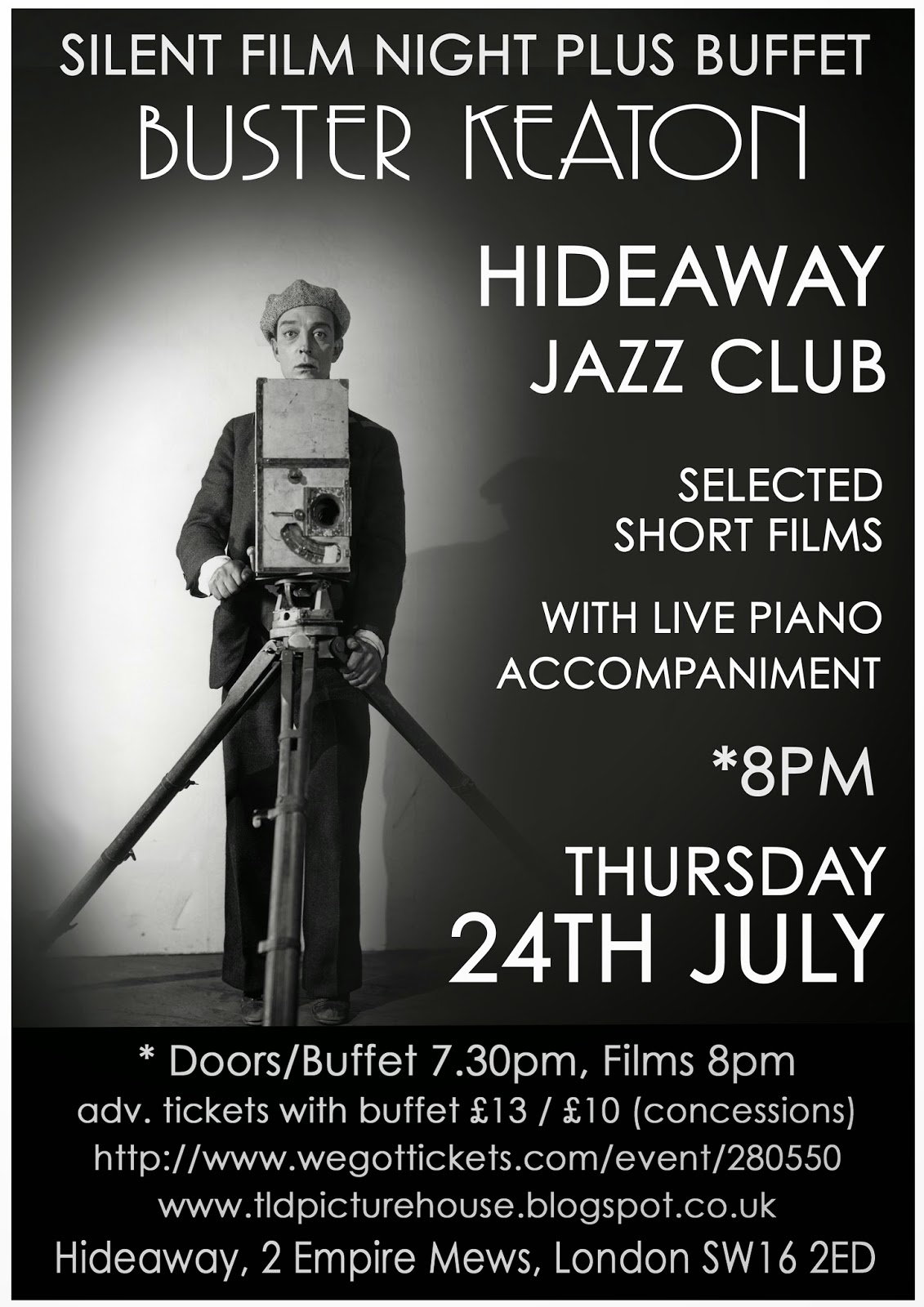
Join us at London’s famous Hideaway Jazz Club for our Buster Keaton Special! Some of Buster Keaton’s most well loved short films and a few surprises along the way … Live piano accompaniment by Tom Marlow, musician at The Lucky Dog Picturehouse (performed: BFI, Wilton’s Music Hall)
We’ve got a fantastic offer of FILMS PLUS BUFFET just £13 (£10 concessions) next Thursday 24th July at the famous Hideaway Jazz Club, Streatham. Click here to buy tickets.
Advance Tickets include finger buffet from the Hideaway kitchen. Please arrive at 7.30pm for buffet (includes vegetarian selection).
Please note: Tickets purchased after 21st of July will not include the buffet selection, but will be at the reduced price of £10. Food may be ordered separately at the venue.
But don’t forget – The Lucky Dog Picturehouse has two pairs of tickets to give away to Silent London readers. Just email your name to tldpicturehouse@hotmail.co.uk to enter the ballot. Here’s hoping you’re a lucky dog too!
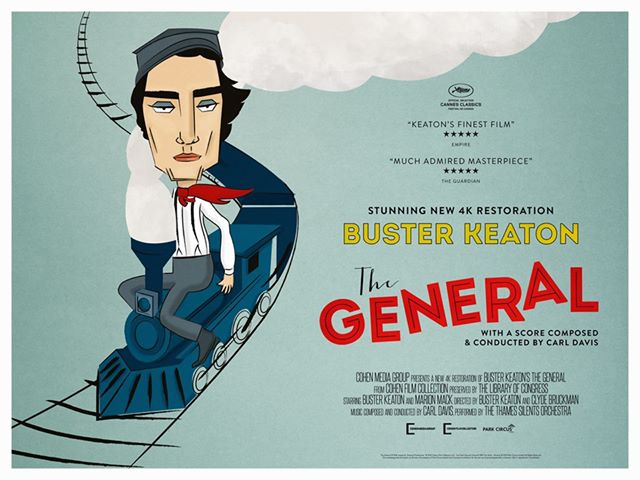
Buster Keaton’s The General (1927) goes on theatrical release this Friday – which should be cause for celebration and mass ticket-buying among all of you. However, if you are a regular reader of this blog, you have probably seen this classic, poll-bestriding Civil War caper before, very possibly in the dim and distant. What worries me, what keeps me up at night, is that if so, you may feel a bit “so-whattish” and “seen-it-all-beforeish” about Keaton’s masterpiece. That would be a tragedy, as The General is one of the funniest, most ingenious and gosh-darn exciting films you will ever see in your long and happy life. If familiarity has bred a touch of contempt, or just complacency, in your bosom, I would gladly bend your ear about the pin-sharp 4k transfer, and the booming rendition of Carl Davis’s nimble and turbo-charged score on this digital print. But that geeky stuff isn’t for everyone, so if that doesn’t tempt you, here are five more reasons to see The General … again.
The early, funny stuff
So we all know The General as a chase film, packed with stunts and crashing locomotives. Well, it actually starts in a very sedate fashion, as our hero Johnnie (Buster Keaton) goes to visit his girl Annabelle, who prompts him to enlist and fight for the South. Patience is a virtue – don’t be in a rush to get to the fast and furious business on the tracks. Johnnie’s pratfall as he leaves Annabelle’s house, the beautiful recruiting-office sequence and that wonderful selfie of Johnnie and his other beloved are all worth arriving at the cinema nice and early for. The scene-setting opening ends with one of the quietest, but most dangerous stunts in the whole movie, as Johnnie perches forlornly on the coupling rods of a locomotive that is picking up speed …
Annabelle Lee
The General‘s Southern belle is far more than a damsel in distress. To be frank, she’s a pain in the neck – watch her daintily selecting firewood and feel Johnnie’s pain. But to be fair, she takes more than her share of punishment too: kidnapped, soaked (twice), caught in a bear trap, stuffed into a sack and loaded as freight. Not only that, but consider this: to paraphrase Ginger Rogers, you try doing everything Buster Keaton does, but backwards and in a crinoline.
There is another reason to take note of Annabelle – she is played by a fascinating woman. Marion Mack knew more than most about the silent movie business. A former Mack Sennett Bathing Beauty, she later turned her hand to screenwriting, including a semi-autobiographical flick called Mary of the Movies, which she also acted in. In the the 30s, she even wrote a talkie short for Keaton. And when critical favour began to smile on The General in the 70s, she was on hand to speak at screenings and festivals, explaining what it was like to play one of Keaton’s not-so-straight women. We don’t have opportunities like that any more, so thank you Marion.
Yes, that is a real train
The one that falls through the burning Rock River Bridge? Yup. It’s not a model (you’re thinking of The Blacksmith). And if you thought it was CGI – shame on you. Famously, the destruction of the train in The General is the most expensive shot in silent movie history, and it’s a salient reminder that everything you see on screen here is real – including the danger that Keaton and Co frequently faced as they went about those wild stunts.
Those damn Yankees
Marion Mack isn’t the only thing here that gives us a flashback to Mack Sennett’s mid-teens romps. Those Yankee soldiers giving chase to Johnnie and Annabelle are enjoyably, hilariously inept. Hoot as a whole gaggle of them fail to fix the points our man has so thoroughly snookered, until their driver appears with a an axe and a shove; chortle as they topple like dominoes with every jolt of the engine. These buffoons are Keystone Kops in all but name. A guilty pleasure in a very sophisticated film.
War is hell
It’s not all larks and big kids playing with big train sets, of course. The General is a war movie, based on a true story – the hijacking of a train headed for Chattanooga, Tennessee. And it’s easy to forget that The General has a rather grim battle scene of its own, with swords and snipers and several deaths. Even the jokes fail to lighten the mood here. The flag gag, in which Johnnie grabs a confederate pennant from his falling comrade’s hand, and waves it in victory from a rocky outcrop, only to discover he has seriously misplaced his feet, is an unexpected splash of black humour. It’s a nifty moment that sharply undercuts any jingoistic vibes you may get from this story of a plucky underdog and his little engine that could.
Bonus reason
If you see The Generalon its extended run at BFI Southbank, it will accompanied by Keaton’s sublime early short One Week. If you were to ask me, right now, which of the two were the better film, I would have to say … “tough call”.
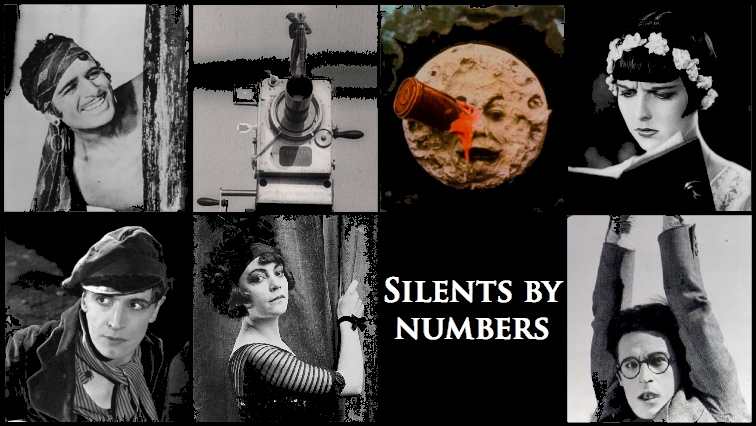
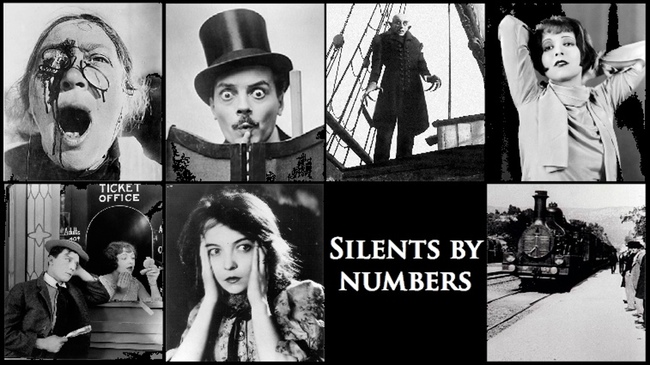
This is a guest post for Silent London by Alison Strauss, director of the Hippodrome Festival of Silent Cinema, Bo’ness. The Silents by Numbers strand celebrates some very personal top 10s by silent film enthusiasts and experts.
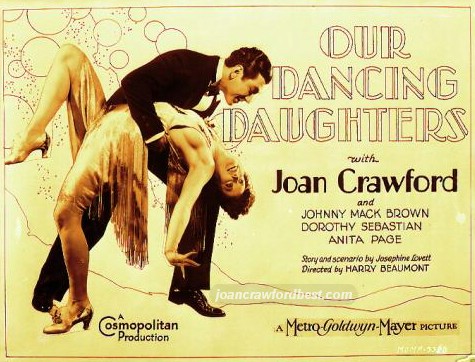
Our Dancing Daughters (1928)
Our Dancing Daughters (1928, Harry Beaumont)
The moment when fun-loving flapper Joan Crawford launches herself on to the dance floor and sets the party alight with a high-tempo Charleston, ripping her skirt to a more liberating length as she goes.
Danse Serpentine (1896, Auguste and Louis Lumiere)
The 45-second kaleidoscopic record of a vaudeville dance – created by pioneering dancer Loie Fuller – in which an anonymous performer elegantly whirls her arms in the long-flowing fabric of her costume to mesmerising effect, thanks to the immaculate hand-tinting work of the Lumiere Brothers’ army of finely skilled women behind the scenes.
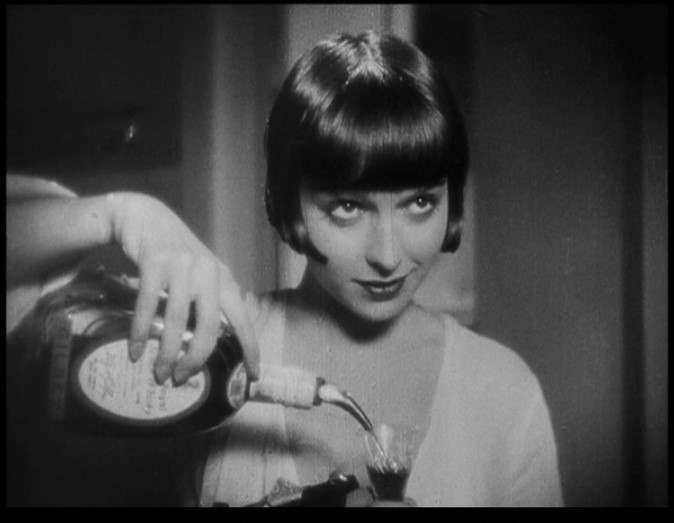
Pandora’s Box (1929, Georg Wilhelm Pabst)
Trained dancer and former Ziegfeld Follies girl, Louise Brooks is electrifying as Lulu, especially when, with all eyes on her, she takes to the floor at her own wedding with yet another admirer – a female guest – and the pair dance in a sexually charged vertical embrace.
The Four Horsemen of the Apocalypse (1921, Rex Ingram)
Another raunchy tango, this time with Rudolph Valentino in a sequence that launched him as a legend. The woman in Julio’s arms submits to his overpowering masculinity in this iconic routine that set the standard for all subsequent movie tangos.
(Watch from 14 mins, 50 seconds)
That’s My Wife (1929, Lloyd French)
Stan Laurel is persuaded by Oliver Hardy to masquerade as his wife in order to secure the bequest of a rich uncle. In one of the funniest sequences Stan, looking lovely in an evening gown, dances the two-step with Ollie in an effort to shimmy a stolen necklace down through his undergarments!
This is a guest post for Silent London by Paul Joyce, who blogs about silent and classic cinema at Ithankyouarthur.blogspot.co.uk. The Silents by Numbers strand celebrates some very personal top 10s by silent film enthusiasts and experts.
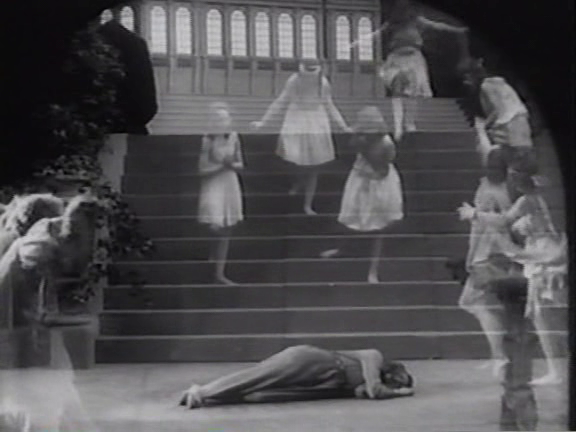
Cinematic dreams are a staple of the silent era more than any other, possibly because much of what was on screen had only previously been experienced in dreams for contemporary audiences. Now our dreams are founded on over a century of cinema and we’re so much harder to impress but … we can still dream on. Here’s a top ten of silent dreams with a couple of runners up as a bonus.
The Astronomer’s Dream (1898)
A madly inventive three minutes from George Méliès in which an old astronomer is bothered by a hungry moon as the object of his observation makes a rude appearance in order to eat his telescope.
Dream of a Rarebit Fiend (1906)
A feast of special effects in Edwin S Porter’s cautionary tale on the matter of over-indulging in beer and cheese. Jack Brawn plays the titular fiend who suffers all manner of indignities once he staggers home to his bed, whereupon his sleep is interrupted by rarebit imps and his bed flies him high into the night sky … Proof that the whole cheese-and-dreams rumour is actually true.
Atlantis (1913)
Atlantis (1913)
In August Blom’s classic – the first Danish feature film – Olaf Fønss’ doctor dreams of walking through the sunken city of Atlantis with his dead friend, as the passenger ship he is on begins to sink. It’s either a premonition or recognition that his true feelings have been submerged … JG Ballard was obviously later inspired to write The Drowned World.
Poor Little Rich Girl (1917)
Poor Little Rich Girl (1917)
After being accidentally overdosed with sleeping draught by careless servants, Mary Pickford’s character falls into a deep and dangerous sleep … As she hovers on the edge of oblivion the story runs parallel between the doctor trying to save her and her dreams in which those she knows are transformed in her Oz-like reverie. Sirector Maurice Tourneur excels as “the hopes of dreamland lure the little soul from the Shadows of Death to the Joys of Life”.
When the Clouds Roll By (1919)
When the Clouds Roll By (1919)
Douglas Fairbanks is harassed by vengeful vegetables after being force-fed too many in an effort to drive him to suicide (yep, it’s a comedy). Directed by Victor Fleming, who later returned to dreams with Dorothy and that Wizard. Continue reading The top 10 silent film dream sequences→
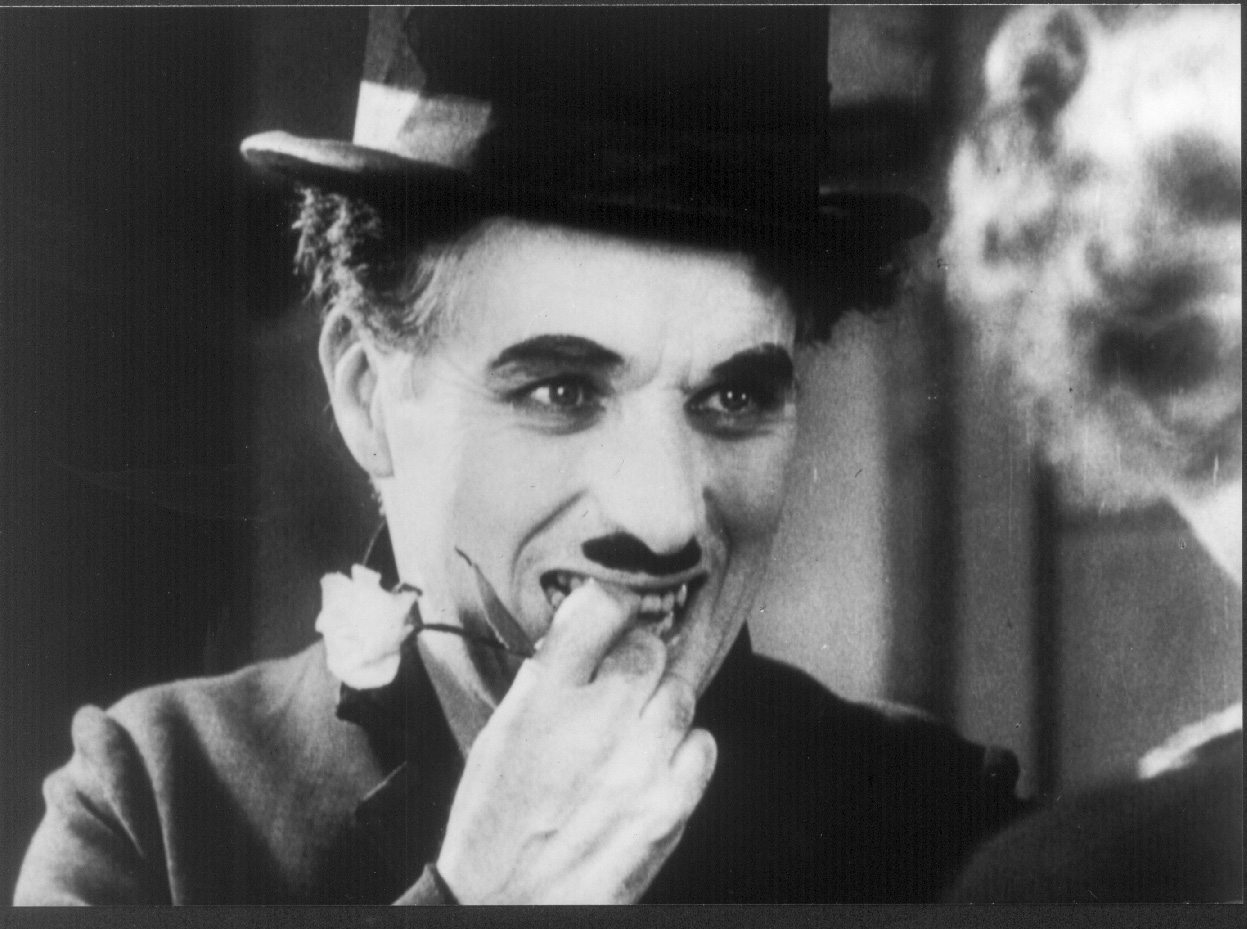
The funniest weekend of the year is back: Bristol’s own rib-tickling Slapstick Festival. This year marks not only the 10th year of the festival but, as you all very well know, the 100th anniversary of Chaplin’s iconic Little Tramp. The Slapstick Festival will be celebrating the tramp in fine style with an orchestral gala screening of the the wonderful City Lights (1931), recently voted into the Top 10 Silent Movies by the Guardian and Observer. The screening will be introduced by comedian Omid Djalili and music will be provided by the 39-piece Bristol Ensemble.
There’s a full weekend of funny films beyond the Chaplin too. Check the listings below for details. Notable screenings inlcude the Societ laugh-riot The Extraordinary Adventures of Mister West in the Land of the Bolsheviks (1924), the rarely shown Raymond Grifffith romp Hands Up! (1926) and a chance to see Constance Talmadge in Her Sister From Paris (1925). And don’t miss Harold’s Lloyd’s classic Safety Last! (1923) with Radio 4’s Colin Sell on the piano.
Max Davidson
More treasures are to be found in the talks and lecture events: David Robinson on the Tramp, Kevin Brownlow on Chaplin and the Great War, all three Goodies on Buster Keaton and Graeme Garden delving into the work of German Jewish comic Max Davidson.
There will be some modern work featured too: from Wallace & Gromit (naturally) to The Meaning of Life and Withnail & I. Yes, Tim Vine will be offering a tribute to Benny Hill too!
The 10th Slapstick Festival will be held at various venues across Bristol from 24-26 January 2014. Visit the website for more details, or read on for full listings and ticket information.
That’s all, folks. I don’t know about the other festival delegates, but I am utterly and completely scherben*. it has been a fantastic festival: eight days to wallow in the full diversity of what we call silent cinema. I have learned a lot, met some wonderful people and enjoyed many, many movies.
The final day began with rain, a sleepy trek to the Cinemazero and some really quite startling footage, completely unsuited to the tender hour. I am not talking about Felix the Cat, who entertained a select crowd with his adventures as a wildlife documentarian in Felix the Cat in Jungle Bungles (1928). I am talking about the new documentary feature by David Cairns and Paul Duane, Natan. This award-winning doc tells the truth, or attempts to, about Bernard Natan and his incredible life.
Competition time again, Silent Londoners, and this time I am giving away tickets for a night of silent film and live music at one of our favourite venues, Hackney Attic. The lucky winner can look forward to an uproarious evening, featuring Buster Keaton, Charlie Chaplin, Laurel & Hardy (in their first film together) and even Felix the Cat – plus a surprise! This latest event in the Filmphonics series has been put on by the silent film fanatics at the Lucky Dog Picturehouse. Here’s what they have to say about it:
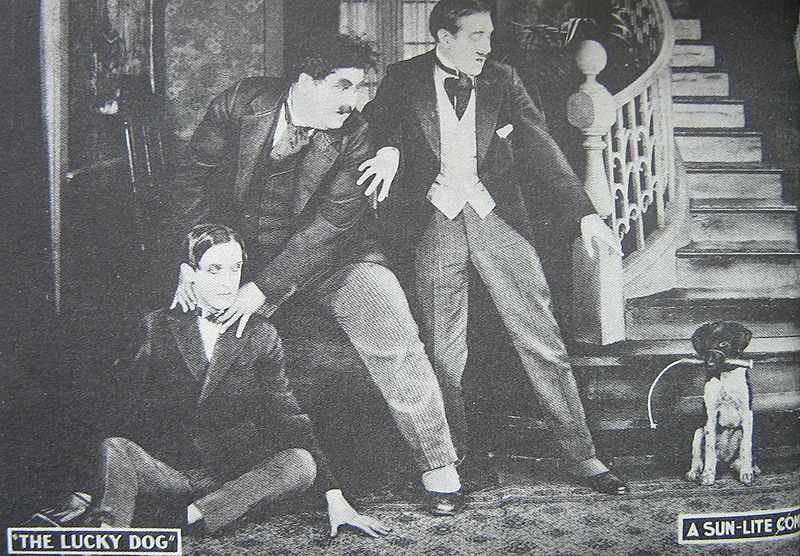
The Lucky Dog Picturehouse specialise in providing an authentic 1920’s silent film experience, with live piano soundtrack. Collecting together 5 of the best silent film shorts ever made by some of the world’s greatest silent stars. Buster Keaton attempts to build his new flat-pack home in the stunt-filled ‘One Week’. You’ll find a love-lorn Charlie Chaplin in ‘The Pawn Shop’. Laurel & Hardy team up for the first time ever in ‘The Lucky Dog’ (featuring a dog to rival Uggie from The Artist). To balance the dog ‘Felix the Cat’ makes a madcap appearance. And the final film is “TBC” but it might involve a certain “Trip to the Moon”. All of the films will be scored by live keyboard accompaniment. Just as they were supposed to be seen.
To win a pair of tickets to the Lucky Dog Picturehouse night, simply email the answer to this simple question to silentlondontickets@gmail.com with Lucky Dog in the subject header by noon on Friday 17 May 2013.
In which British town was Stan Laurel born?
The Lucky Dog Picturehouse night at Hackney Attic is on Sunday 19 May at 7.30pm. Tickets start at 7pm for members (with £2 off if you book for The Great Gatsby the same day). Click here to book and for more information.
The Hackney Attic at London’s newest Picturehouse cinema is becoming to make name for itself as a silent film venue, with recent screenings ranging from Piccadilly to Aelita: Queen of Mars. Heartening news, then, that this trend continues with another Filmphonics presentation of a silent classic this month: Buster Keaton’s groundbreaking comedy The General, on 20 January 2013.
Surely The General needs no introduction from me: the funniest war film you’ll ever see, an astonishing technical achievement and did I mention it was hilarious too? If you need a taster though, you could do worse than this sampler from film critic AO Scott:
There’s more good news: this screening of The General will be accompanied live by the marvellous Costas Fotopoulos on piano.
Costas has now been working for many years as an improvising silent film pianist at BFI Southbank and he has also accompanied silent films at the Barbican Centre, the Prince Charles Cinema, Riverside Studios, Chelsea Arts Club among other venues, as well as scoring many silents in the London Film Festival.
The even better news is that you could get your hands on a free pair of tickets to this screening. Free. To win a pair of tickets to see The General at Hackney Attic, just send the answer to this question to silentlondontickets@gmail.com by noon on Wednesday 16 January. The winner will be chosen at random from the correct entries.
The West London Trades Union Club in Acton, London W3 is a welcoming place for those who enjoy a well-kept ale and a natter, and a haven for left-leaning cinephiles too. The venue’s Saturday afternoon film club is friendly, and pleasingly broad-minded: recent seasons have taken a look at the work of film-makers ranging from Joseph Losey to Paul Robeson as well as giving club members the chance to show their own favourite titles, week by week.
Last year I spent four hugely enjoyable, chatty Saturday afternoons in west London showing silent films chosen in collaboration with members of the club. The discussions afterwards were well-informed, not to say boisterous, and one topic we often returned to was: what are you going to show next year?
So, the silent film club is back, with some much-longed for comedy, another British film, some Weimar glamour and French impressionism. Here’s what’s coming up this autumn in Acton:
Comedy double-bill: The General (1926) and The Circus (1928)
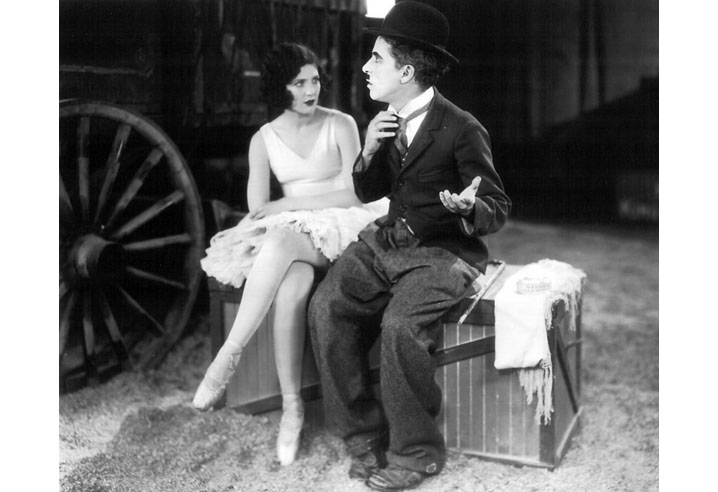
Two classic films from the two titans of silent comedy: Buster Keaton’s ingenious civil-war chase film The General and Chaplin’s poignant, hilarious The Circus. These two films offer an opportunity to marvel at the best of silent comedy, but also to compare and contrast the different styles of these two great film-makers. Buster Keaton’s deadpan mechanical inventiveness versus Chaplin’s sentimental appeal and graceful physicality – you decide. 8 September 2012, 4pm
Hindle Wakes (1927)
This adaptation of the much-loved northern melodrama was filmed by Maurice Elvey, a giant of British silent cinema, now sadly all but forgotten. Elvey was a trade unionist himself, and Hindle Wakes is the story of a clandestine romance between a factory worker and an industrialist’s son. It’s gorgeously filmed, with some fantastic “Wakes Week” sequences shot in Blackpool – and the heroine, played by Estelle Brody, is a refreshingly modern woman. Not to be missed. 20 October 2012, 4pm
Louise Brooks in Pandora’s Box (1929)
Pandora’s Box (1929)
Another modern woman, and one of the most famous films of the silent era. Louise Brooks is truly iconic as the liberated, amoral Lulu breaking hearts in swinging Weimar Germany. Erotic, witty and ultimately tragic, Pandora’s Box is a classic that rewards repeated viewing and while coolly received at the time, has subsequently made an international star or its reckless leading lady – it now stands as the definitive portrait of a decadent society. 10 November 2012, 4pm
L’Argent (1928)
When Marcel Herbier announced his intention to adapt Zola’s L’Argent but to place it in the contemporary setting of the 1920s Paris stockmarket, many were horrified that he would take an acclaimed historical novel about ruthlessly greedy, over-reaching bankers out of its context. But Herbier’s passion, “to film at any cost, even (what a paradox) at great cost, a fierce denunciation of money”, proved as pertinent in pre-crash Europe as it does now, in the fallout of the global financial crisis. L’Argent is not just social commentary, it’s an ambitiously innovative film, a masterpiece of poetic impressionism. 15 December 2012, 4pm
Charlie Chaplin in The Circus (1928)
You don’t have to be a member of the club, or even of a trade union, to turn up and receive a warm welcome – and you will find the venue at 33 Acton High Street, London W3 6ND. It’s about five minutes walk from Acton Central train station, and on plenty of bus routes.
Another podcast, and this time it’s all about the laughs in our comedy special. I’m joined in the studio by Phil Concannon of Philonfilm.net, Ayse Behçet, who writes the Charlie’s London series for Silent London, and podcast expert Pete Baran. Plus Chris Edwards of the wonderful Silent Volume blog also contributes a few well-chosen words on his favourite silent film: Exit Smiling, starring Beatrice Lillie.
We’ll be talking about our favourite silent comedies, and yours, and perhaps touching on a few films and film-makers you won’t expect. Plus we’ll be reviewing some recent silent film screenings, Ayse will be reporting back from the Cinema Ritrovato festival in Bologna and we’ll be taking a look at the calendar too.
There’s also a lot of business about trousers. And possibly the odd 90-year-old spoiler.
The Farnborough Symphony Orchestra begins its 90th anniversary year by performing the live accompaniment to two screenings of the 1927 comedy classic silent film The General at Farnham Maltings on Saturday 17 March. The General, directed by and starring Buster Keaton, was recently listed in The Independent as one of the 10 best silent films, and features some of the most dangerous (and explosive) stunts with steam trains ever filmed. Carl Davis’ score includes every famous civil war song, as well as a tender folk song the composer’s grandmother used to sing him when he used to sit on her knee. The General was described by Orson Welles as “the greatest comedy ever made, the greatest Civil War film ever made, and perhaps the greatest film ever made” and this unique performance, conducted by the FSO’s charismatic musical director Mark Fitz-Gerald, will delight young and old alike.
The General screens on Saturday 17 March at at 3pm & 7.45pm. Tickets are priced at £10 for adults or £5 for children or students in full-time education and are available from the FSO Ticket Secretary on 07775 789477, Farnham Maltings Box Office on 01252 745444 or online at www.farnboroughsymphony.org.uk
I hate to admit it, but there are good reasons to leave London sometimes. Bristol, for example, can lay a good claim to being the capital of silent cinema in this country, thanks mostly to the year-round efforts of the marvellous people at Bristol Silents. Indeed, come January there is nowhere finer for the discerning silent comedy fan to be. The annual Slapstick Festival is a four-day, multi-venue extravaganza of comedy, mostly of the silent era, presented by comedians and experts – and accompanied by live music.
The 2012 Slapstick Festival will take place from 26-29 January 2012, and the full lineup has just been announced. Yes, there will be some more recent comedy courtesy of gala screenings featuring Dad’s Army, Monty Python and the French film-maker Pierre Étaix. But Slapstick Festival is noted for its passionate endorsement of silent comedy, and it’s here in spades.
Buster Keaton in The General (1926)
Kevin Brownlow will be talking about Buster Keaton and showing footage from his documentary A Hard Act to Follow, while Griff Rhys-Jones will introduce a night of silent comedy including a screening of The General at Colston Hall with music from Günter Buchwald and performed by The European Silent Screen Virtuosi and Bristol Ensemble. On the last day of the festival, Bill Oddie, Tim Brooke-Taylor, Ian Lavender and Barry Cryer will also introduce their favourite Buster Keaton shorts.
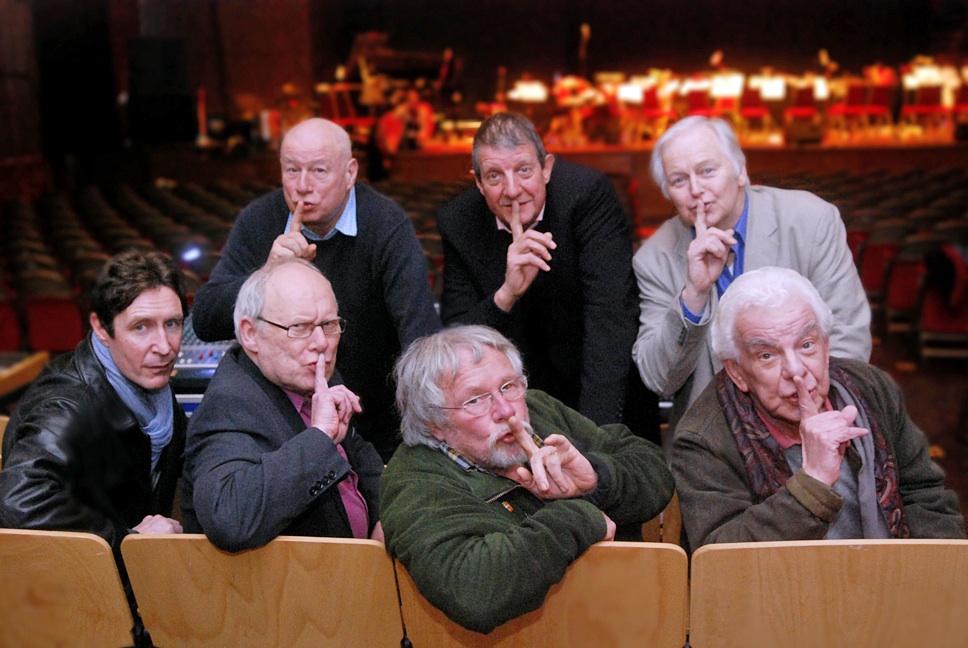
The Slapstick Festival team: Neil Innes, Chris Serle and Ian Lavender (back row); Paul McGann, Graeme Garden, Bill Oddie and Barry Cryer
Historian David Robinson will give an illustrated lecture, with clips, on Charlie Chaplin and also discuss his work with fan and comedian Sanjeev Bhaskar; Barry Cryer will present a Harold Lloyd double-bill and Graeme Garden will make a case for the debonair Charley Chase. David Wyatt will give two presentations: one talking about lesser-known silent comics such as Max Davidson and Larry Semon and the other on the spoofs and parodies rife in silent-era comedy.
Slapstick Festival events will take place in Colston Hall, the Watershed Cinema and the Arnolfini Arts Centre, Bristol from 26-29 January 2012. See the Slapstick Festival website for more details and to book tickets.
And don’t forget, the Slapstick Festival has its own real ale, brewed locally, especially for the event. The launch of the Slapstick Beer takes place at the Victoria Pub, Clifton on Friday 9 December at 7.30pm. Details on Facebook.
Everyone loves Buster Keaton, but the readers of Silent London love him more than most. So today, on 4 October 2011, which would have been Buster Keaton’s 116th birthday, let’s pause to celebrate the Great Stone Face. After all, if it wasn’t for Buster Keaton, this blog wouldn’t exist. My first silent film and live music experience was a double-bill of Sherlock Jr and Steamboat Bill Jr accompanied by the Harmonie Band. What a treat. I was already smitten with early film before I went, but that evening turned me into an evangelist for the ‘live cinema’ experience.
I have Buster Keaton news to share, also. In the US, movie channel TCM is celebrating by showing Keaton’s films every Sunday throughout October. Sadly, that pleasure is not available on these shores, but Scottish film blogger Jon Melville isn’t going to let that stop him. He will be rewatching the same films on DVD, and writing them up for his Holyrood or Bust(er) project. Follow his progress on his blog here.
Over in LA, The Kitty Packard Pictorial blog is hosting a month-long Buster Keaton party – and everyone is invited:
Project Keaton will be a month long open forum in which writers, artists, everyday Joes and everyday Janes (like me) from all over the world are being invited to tip their pork pie to Buster. The goal is to foster a month of creative exchange, with Buster as muse, and to celebrate one of cinema’s few, true geniuses. There are no rules as to content: essays, reviews, art, critiques, tributes, prose, poetry, all are welcome. And, since this is a month long project, there are no pressing deadlines: participants may contribute as little or as much as they wish any time at all during the course of October.
Find out more, including how to contribute to Project Keaton, here.
If all this has reawakened your love of Buster Keaton, then you may want to join the Blinking Buzzards – the UK Buster Keaton society, who produce quarterly newsletters and hold regular meetings. They are even working on a clothing range and talking about a festival, too. There is not much information on their website at present, but their next meeting will be held at the Cinema Museum on 22 October. You can follow them on Twitter or Facebook, where they are far more talkative and a regular source of Buster Keaton clips and news.
Buster Keaton in The General (1926)
The final titbit I’ve been keeping stashed under my pork-pie hat is a date for your diary. You may already know that The Slapstick Festival, an annual orgy of silent comedy in Bristol, will take place from 26-29 January next year. This festival is organised by the fabulous people at Bristol Silents and is always enormous fun, with an enchanting mix of silent film geekery and out-and-out hilarity. Although it’s too early for the full lineup to be revealed, the four galas, the flagship events of the weekend, have been announced.
May I draw your event to the event taking place on Friday 27 January? Comedian Griff Rhys Jones will introduce a screening of Buster Keaton’s masterpiece The General (1926), with a new score written by Günter Buchwald and performed by members of the European Silent Screen Virtuosi and Bristol Ensemble. There will also be a chance to see Laurel and Hardy in The Finishing Touch (1928) and Charlie Chaplin in The Adventurer (1916), as well as a performance by the Matinee Idles, featuring actor Paul McGann. The Gala takes place at Colston Hall in central Bristol, and tickets are available here.
There are few things more joyous than watching a Buster Keaton classic with live music, but this event might be one of them. It’s a fundraiser for the Sing for Joy Bloomsbury choir, incorporating a concert by the group themselves and a screening of Sherlock Jr, with piano accompaniment by the marvellous John Sweeney.
Sing for Joy is made up of singers who have Parkinson’s disease or other neurological conditions, and their friends and carers. Singing as a group isn’t just fun, it boosts confidence and helps with the speaking and breathing exercises that people with Parkinson’s do to keep tremors under control. You can find out more about the choir, and their director Carol Grimes, here.
If you’re not familiar with Sherlock Jr, it’s one of Keaton’s most inventive and charming films. Keaton plays a projectionist who fantasises about being a detective hero in a movie. When he falls asleep in the projectionist’s booth one night, he dreams that he walks through the cinema screen and into the heart of the action. You may have seen some clips of it if you watched The Story of Film on Saturday night.
The Sing for Joy Sherlock Jr event will take place in the hall of The Church of Our Most Holy Redeemer (full disabled access) 24 Exmouth Market, EC1R 4QE (nearest tube Farringdon) on 13 October 2011. Tickets cost £18, which includes a buffet dinner. They are availale from Mike Blackstaffe on 07584 471 104 or tickets@blackstaffe.demon.co.uk. Doors open at 7pm, which is when dinner will be served. The programme begins at 7.45pm and there will be a licensed bar.
• Update: Sorry, guys, I’ve just been told that these events have been cancelled. Don’t know why as yet, but hope to find out more soon – including whether they will be rescheduled for later in the year.
Have you ever been to a Silent Disco? It’s great fun. You dance around in a huge group of people but the music isn’t played out loud, it’s piped into your headphones. Hilarious for onlookers, but there’s a great sense of community on the dancefloor – like you’re sharing a secret with everyone in the crowd. The Silent Cinema in Deptford, south London, works on the same principle, but with films. The wireless headphones deliver the film’s soundtrack, but filter out the popcorn munching and chatter from your fellow audience members.
Although the name has obviously caught my attention before, I never thought they would show silent films there. But I was wrong. Silent Cinema is devoting a weekend in August to … silent cinema. They’re calling the programme the “Black & White Classics Weekend”, and why not? Here’s the lineup:
“If you’ve never watched a silent movie before, this is the time to do it,” says the Stratford Picturehouse. That’s the spirit. The east London cinema is having a day of cinematic interactive fun on Sunday – including screenings of Buster Keaton’s Sherlock Jr and One Week. After watching the first film, the audience will be encouraged to play along to the short, One Week, so if you’ve ever wondered what it would be like to accompany a silent film, this is your big chance. Although the setup might be a little more raucous that your average screening at the BFI – audience members are asked to bring their own instruments, whether “real” or homemade.
The day of events is free and as well as the two Keatons, there will be “film karaoke”, plus screenings of The Gruffalo, krumping documentary Rize with a street-dance workshop and, as a finale, Singalonga Grease. Everything kicks off at 12 noon – for more details, click here.
There’s very little that Silent London enjoys more than a touch of Hollywood glamour, and evidently the National Portrait Gallery agrees. Their new exhibition, which opens on Thursday 7 July, is entitled Glamour of the Gods: Hollywood Portraits and features photographs taken from The John Kobal Collection. To accompany the show, which includes stunning pictures of Greta Garbo, Jean Harlow, Clark Gable and other beautiful megastars, the Gallery has programmed a series of events, including free film screenings on Sunday afternoons.
Fittingly, two of the films come from Hollywood’s most glamorous decade, the 1920s. First, Buster Keaton’s cattle-herding adventure Go West (1925) will be screened on 17 July. You may have seen this film featured on Paul Merton’s Birth of Hollywood documentary recently. This is the film that apparently offers a glimpse of Roscoe Arbuckle in drag, long after he was officially exiled from the movies.
Second, one of the silent era’s slinkiest actresses, Louise Brooks, stars in the notoriously decadent Pandora’s Box (1929) on 31 July. Brooks’s effortless sex appeal in this film really set the template for Hollywood glamour for decades to come, so you can’t afford to miss it.
Go West screens in the Ondaatje Wing Theatre of the National Portrait Gallery at 3pm on 17 July 2011. Pandora’s Box screens in the Ondaatje Wing Theatre of the National Portrait Gallery at 3pm on 31 July 2011. Entrance to both films is free. Entrance to the Glamour of the Gods Exhibition is £6, less for concessions or free for members. You can book tickets online here. Glamour of the Gods runs from 7 July to 23 October 2011.
Hat-tip to @soshanau on Twitter for telling me about this one.
It’s not too often you get to watch silent films in a Tudor mansion in Hackney, so grab this chance while you can. The Sutton House Music Society is staging a night of classic silent comedy with accompaniment from jazz pianist Dave Morecroft on Sunday 10 July. The National Trust describes Sutton House this way:
Built in 1535 by prominent courtier of Henry VIII, Sir Ralph Sadleir, Sutton House retains much of the atmosphere of a Tudor home despite some alterations by later occupants, including a succession of merchants, Huguenot silkweavers and squatters. With oak-panelled rooms, original carved fireplaces and a charming courtyard.
Not your run-of-the-mill cinema then. They will be showing four films: Earl McCarthy stars as Hairbreadth Harry in Sign Them Papers; Ben Turpin chases a pancake in Why Babies Leave Home; Harold Lloyd is a piano player in a wild west saloon in Two-Gun Gussie; and Buster Keaton dabbles in DIY in the sublime One Week.
What’s more, there will be cocktails and popcorn – and guests are encouraged to dress “film star fabulous”. I think they’re suggesting you channel Bebe Daniels rather than Snub Pollard, but heck, it’s up to you.
Doors open for the Silent Film Night at 6pm, and the movies will begin at 7pm, on 10 July 2011. Tickets cost £10 or £8 for concessions and include £1 membership of the Sutton House Music Society Film Club. Sutton House is at 2&4 Homerton High Street, London E9 6JQ.








 Silent London