All posts by PH

Pamela Hutchinson is a freelance writer, critic, historian and curator.

Le Giornate del Cinema Muto 2017: Pordenone post No 3

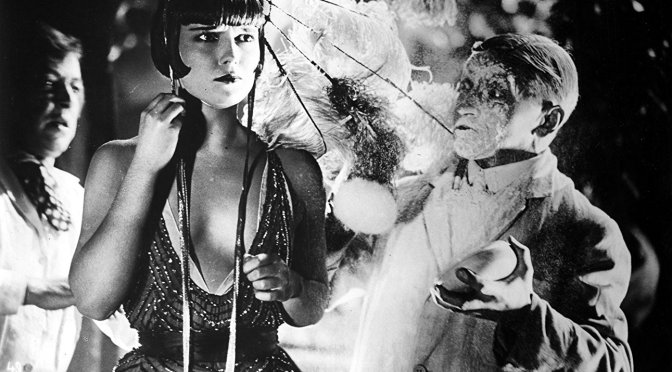
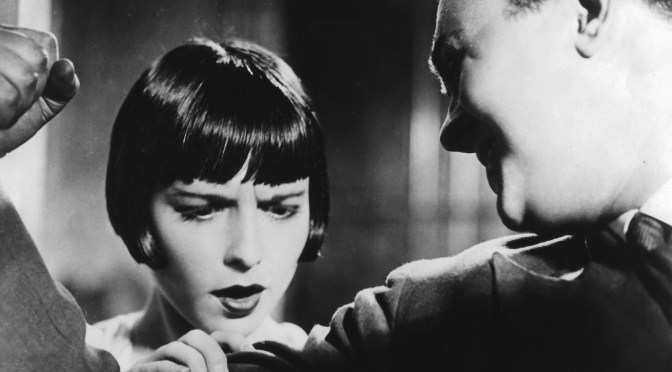
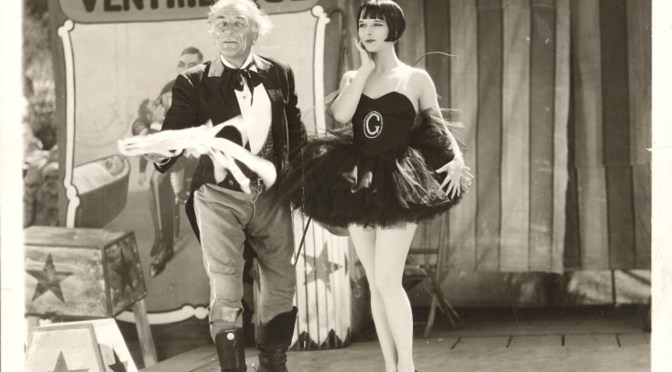
Louise Brooks is everywhere this year, not least here at the Giornate, where she adorns tote bags, mugs, programmes, T-shirts and even the festival office. The reason for the Louise love-in is that the Verdi welcomed a snippet of previously thought lost Brooks footage tonight – a few minutes of the Raymond Hatton-Wallace Beery comedy Now We’re in the Air, featuring Brooks as twins. I saw this footage at San Francisco earlier in the year. There is little to it, and Hatton and Beery are as unfunny a comic pairing as you may have already heard, but Brooks is beyond elegant, despite the material. And perhaps I did find it a little sparkier second time round.

It’s frustrating to see those two clutzes hogging the screentime while Brooksie stands idly by. At one point she is giving it her best pout-and-shout, basically rehearsing her Lulu as she rebels against her dodgy boss, but the scene is so poorly blocked she is hardly visible behind the villain in a top hat and cape. A certain kid of person would take this as a cue to rant about the limited opportunities for women in Hollywood both now and 90 years ago. I am that kind of person, but I’ll spare you.

However, if you’re familiar with Pandora’s Box, you may get a little thrill from her appearance in this film. A publicity still of Brooks in costume for this film is used in the scene where the Egyptian bids for Lulu in the casino boat. Far more wholesome in this context, but some would say about as funny.
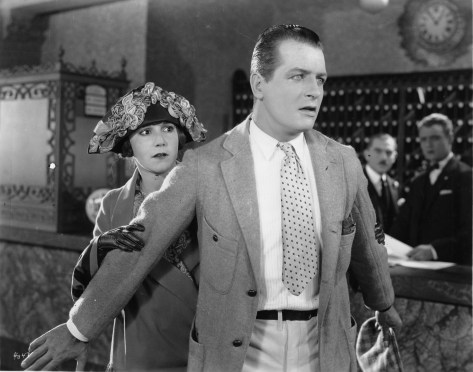
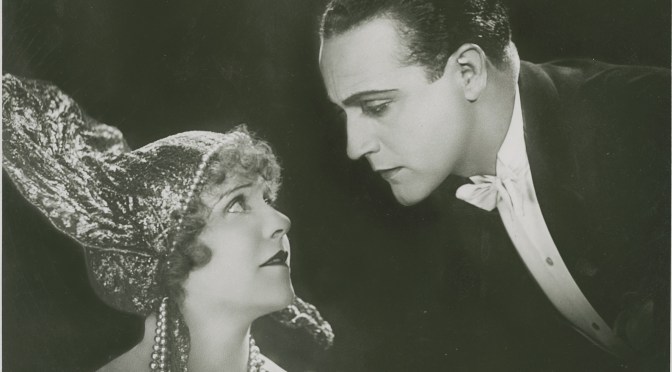
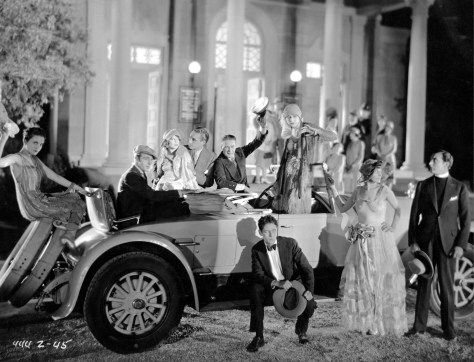
THE RECKLESS AGE (US 1924) Credit: Bison Archives/Marc Wanamaker

Continue reading Le Giornate del Cinema Muto 2017: Pordenone post No 3

Le Giornate del Cinema Muto 2017: Pordenone post No 2

Any day that closes with a Pola Negri film is a good day, and Sunday was a very good day. La Negri, my personal favourite silent movie star and the owner of the best peepers in the pictures, bar none, features in three films in the official Giornate programme this year (plus a schools matinee of The Wildcat). I knew artistic director Jay Weissberg was a fan, but well, consider me chuffed.

Tonight’s Negri film was Der Gelbe Schein (1918), often known as The Yellow Ticket. Negri plays a young medical student with a melodramatically plotted backstory that slowly unfurls as the film progresses. Suffice it to say that aside from some nice location shooting in Warsaw and the very striking image of a champagne glass full of coins in a brothel scene, this film lives and dies by Negri’s mesmeric performance. She radiates emotion, from those incredible eyes to her fluid posture, and even this early in her career she has the “star quality” that divides actors from icons. We saw the film tonight with a klezmer-tinged folky score from Alicia Svigals that worked very well, giving he melodrama enough room to breathe and softening the edges of a film in which structure runs the risk of overwhelming character.

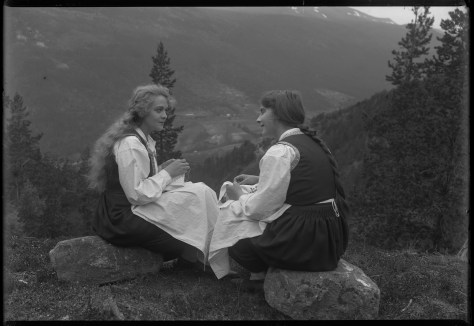
Back to the beginning, though, and there is nothing like breathing fresh mountain air first thing in the morning. While Pordenone may not be as rural as all that, we were in the hills today, with A Norway Lass (1919), part of the Swedish Challenge strand. No one I spoke to denied that this film proceeded at a sedate, almost glacial pace, but all agreed also that it was astonishingly beautiful, romantic, inventive, charming and felt far more advanced than many 1919 movies. Two youngsters on neighbouring farms fall in love, but he, Thorgbjorn (Lars Hanson) is a hothead and so she, Synnöve (Karin Molander) must wait for him to grow and earn her love. Although, he’s clearly a good guy from the start, and sometimes it seemed as if the more passionate relationship was that between Synnöve and Thorgbjorn’s sister Ingrid (see below), especially when they danced in the high pasture. An excellent portrayal here of a slow-burning romance set in a place torn between puritanism and paganism, with contrasting Midsummer rituals. Also, a rather mischievous, gargoyle-faced young farmhand was busy persuading Thorgbjorn of the existence of a troll family in the valley (cue excellent inserted troll feasts) when he was the only goblin in sight and all too human at that.

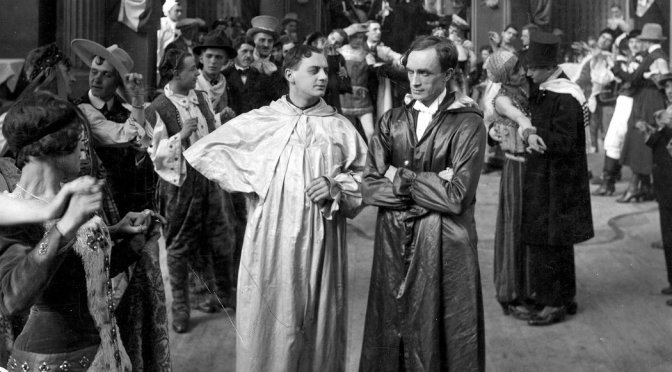
SYNNÖVE SOLBAKKEN (SE 1919) Credit: Svenska Filminstitutet, Stockholm

Continue reading Le Giornate del Cinema Muto 2017: Pordenone post No 2

Le Giornate del Cinema Muto 2017: Pordenone post No 1

The Brits are coming! Where have I heard that before? Hmmm… Anyway, it seems there is a UK invasion of Pordenone this year, with what looks like a bigger than usual home crowd in attendance already. And a British movie on the first day! After a journey that involved a plane, a train, an automobile, and a bus, I am part of that merry band. Jubilations, I even made it into the Verdi for the first film of the festival, which doesn’t always happen.

And that film was … 3 Days to Live (Tom Gibson, 1924). This was a pacey, if hokey melodrama, hinging on some awful foreign types manipulating the stock market in San Francisco and driving good men to suicide. Yes, it was not very 2017. It was more like 1917, or earlier, racial politics wise (see 1915’s The Cheat, for example), and definitely not a classic, though it had effective moments. A series of three closeups of a woman’s tapping feet, twisting hands and mobile face when she was waiting for her boyfriend to ask her father that question, was one. Another was a set of dissolves between empty rooms in an abandoned house. In such highlights we might detect the hand of youthful assistant director, editor and title writer Frank Capra. Or perhaps not – will we ever know?

I had to miss most of a package of early French Westerns. Yes, French Westerns. Just when you think you have seen it all … I did see Le Revolver Matrimonial (Jean Durand, 1912) thought. This was sweet ersatz Americana trifle in which Arizona Bill woos wealthy Maud (un homme in drag) and must lasso a sympathetic pastor to seal the union. There’s romance for you.

The Scapegrace (Edwin J Collins, 1913) finished the set. This was a British two-reeler though, and I expected Brian Aherne on his hobby horse a la Shooting Stars, but realism prevailed, to a point. This was a sprightly if slightly directionless drama in which black sheep Jack flees to the Yukon to escape his gambling debts and mend his ways. He finds, gold, a girl and forgiveness from his father so all’s well that ends, you know. And The Scapegrace was a Cricks studio production so that makes Croydon the wild frontier … I guess.

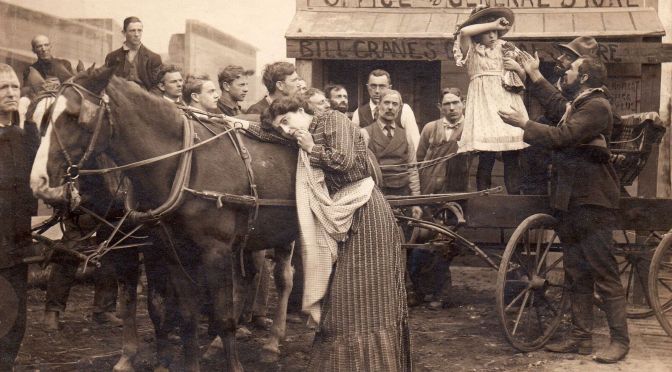
L’AUTRE AILE (FR 1924).jpg
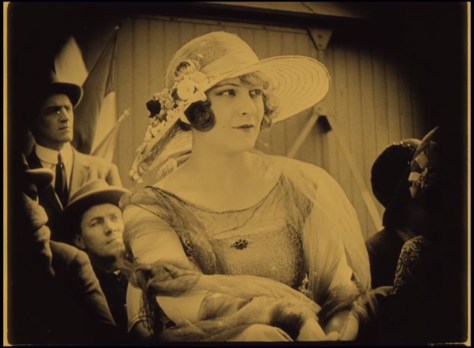
L’Autre Aile (1924) Credit: Cinématheque Française, Paris

Continue reading Le Giornate del Cinema Muto 2017: Pordenone post No 1

Watch, read, repeat: Pandora’s Box at the pictures

A few weeks ago I brought you news about a release date for my book on Pandora’s Box. In that post I also promised you some news about opportunities to see the film too. Here we go …

In case you are wondering, this is the correct order of business, in my humble opinion: watch the film, then read the book, then watch the film again. Repeat as required and enjoy!

So I have a few dates and venues confirmed, where you can come along, watch the film, with an introduction or Q&A from moi, and if you feel so inclined, buy a copy of the book (very reasonably priced, lots of pictures). It would be great to see some Silent Londoners in the audience. As more dates are arranged, I’ll add them to this post, but as ever, pay attention to the Silent London social media channels to get the breaking news.

So far, ALL these screenings are 35mm projections with live musical accompaniment. Because if a thing is worth doing, it’s worth doing properly. And seeing Pandora’s Box on the big screen is definitely a thing worth doing.

  • 19th November 2017: NFT1, BFI Southbank, London: 35mm projection, introduction, live piano accompaniment by John Sweeney, book launch. Book tickets here from 3 October on.
  • 24th November 2017: Cube Cinema, Bristol: 35mm projection, introduction, live piano accompaniment by John Sweeney. Book tickets here.
  • 3rd December 2017: Phoenix Cinema, Finchley, London: 35mm projection, introduction, live accompaniment by Stephen Horne. Book tickets here.
  • 10th December: Eden Court, Inverness: 35mm projection, Q&A, live accompaniment by Stephen Horne. Book tickets here.
  • 28th January 2018, Home, Manchester: 35mm projection, introduction, live accompaniment by Stephen Horne. Book tickets here.


There are at least two more dates to be announced and yes, they are further north than these three. Watch this space for details …


The Champion review: hooray for Fort Lee

Before Hollywood became the heart of the American film industry, New Jersey was studio city. About 20 miles from West Orange, where Thomas Edison’s famous Black Maria swiveled to catch the light in the 1890s, the town of Fort Lee became the site of DW Griffith’s acting debut in 1908, and the birth of movie mammoths now known as Universal, MGM and 20Th Century Fox.

Now, to best understand the history of Fort Lee, and its importance to the US film business, you should read Richard Koszarski’s 2005 book Fort Lee: The Film Town. This DVD set from Milestone, The Champion: A story of American’s first film town, could work either as a companion to that volume, or as the best kind of introduction to the subject. Whatever you have or haven’t read, this set represents an exceptionally entertaining way to potter around movie history for three hours.

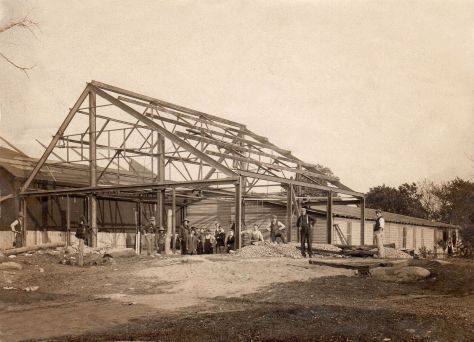
The Champion Studio under construction

Continue reading The Champion review: hooray for Fort Lee

The best of everything at the 19th British Silent Film Festival

How to relate five days of silent and early sound cinema in a pithy blogpost form? I have honestly no idea, but here goes …

The best film on Wednesday

A small choice here, cos I am selecting only from the evening screening of Edgar Allan Poe shorts at St Mary de Castro church. The rest of the day was devoted to papers. This was a wonderfully atmospheric night event though, with the candlelit church forming an eerie backdrop to the (non-German) Expressionism on the big screen. I am going to plump for a British effort – Castleton Knight’s Prelude. This is more or less Eraserhead in seven short minutes, with disquieting images proceeding across the screen motivated by a spooky kind of dream logic. And the accompaniment was sublime – John Sweeney playing Rachmaninov’s Prelude (of course) behind the screen.

The best film on Thursday

Just one silent film was shown on Thursday, and I have made my feelings about Pat and Patachon clear elsewhere, but today would have almost certainly been carried by a talkie anyway. I had heard a lot about Walter Summers’s Suspense (1930) but I wasn’t prepared for just how devastating it could be. We’re in the thick of the First World War, but happily in a “posh trench, with a clean dugout and a cushy job” when the soldiers begin to hear Germans laying mines beneath their feet. Something about the mood of the piece tells you early on that there will be no happy ending here. Eerily photographed and vibrantly acted by its ensemble cast, this a claustrophobic war epic confined into 81 minutes. There’s much enjoyment also in the dialogue, which, cleaned of actual swearing, becomes positively Shakespearean in its baroque ribaldry: “You do a mucky lot, you windsucker.”

Continue reading The best of everything at the 19th British Silent Film Festival

Are you ready for the 19th British Silent Film Festival?

Well, are you? Time is rushing by. Summer has barely ended, the LFF programme is out, the Pordenone programme will be released soon and the 19th British Silent Film Festival kicks off next week. Next week!

The festival runs 13-17 September 2017 at the Phoenix Arts Centre in Leicester and each day or five-day pass covers you for lunch as well as every screening on that date.The full timetable for the festival is online here.  You can book here and let all your friends know you are attending by clicking on the Facebook event.

To get you up to speed on what to expect in Leicester, the festival* has been posting blogs on the festival site. Yes, silent film blogging is all the rage now. Here are all the posts so far:

And don’t forget to follow the festival on social media: Twitter and Facebook for more updates for news during the festival itself.

See you in Leicester!

giphy (5)

Competition: Win tickets for The Phantom of the Opera at the Coliseum

Competition time! I hope you’re feeling lucky, because I have a very special prize to give away. You may remember reading on these pages about a screening of silent classic The Phantom of the Opera coming up in London. Not just any screening, but the premiere of Roy Budd’s symphonic score for the film, at the Coliseum opera house in London. Sadly, composer Budd died just before the planned premiere of the score in 1993. But now, more than 20 years later, his music can take its place alongside this beautiful, chilling silent film from 1925.

The even better news for one of you is that I have a pair of tickets to give away to this special event, which takes place on 8 October 2017.

To win a pair of tickets for this prestigious screening, just send the answer to this question to silentlondontickets@gmail.com by midnight on 19 September 2017.

Lon Chaney was known as ‘The man of a thousand … ‘what?

A) Eyes

B) Miles

C) Faces

Good luck! The winner be chosen at random from the correct answers and will be notified by email. 

  • You can find out more, and book tickets for The Phantom of the Opera, here.

London Film Festival 2017: the silent preview

The cat is out of the bag. The programme for the 61st London Film Festival has been announced and there is only one question on our lips: “Got any silents?” The answer is …

Shiraz (1928)

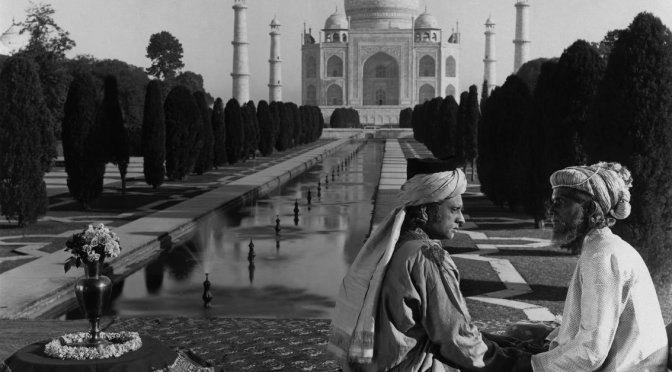
First things first, we already knew that this year’s LFF Archive Gala would be Shiraz, a sumptuous late-silent Indo-German production, which relates the romantic story behind the building of the Taj Mahal. This gorgeous film, freshly restored by the BFI,  will be accompanied by a new score, composed by Anoushka Shankar. The gala screening takes place on 14 October 2017 at the Barbican and tickets are already on sale now. Read more here. And why not book a ticket here too?

Plays: 14 October 2017, Barbican

Continue reading London Film Festival 2017: the silent preview

A Page of Madness: a masterpiece of Japanese avant-garde silent cinema

Here’s something you don’t see very often. Screenings of silent films crop on this page quite often, but there is no other silent film like this one. A Page of Madness is a brilliantly dazzling, utterly uncategorisable Japanese silent from 1926, one that was thought lost for years, and now that it has been found, seems to belong to no time at all, past or future. There’s a very rare, and beautifully curated, screening of the film coming up soon, in London, so read on.

Here’s Michael Atkinson’s introduction to his excellent essay on the film for this year’s San Francisco Silent Film Festival:

“When’s the last time you were surprised by a silent film? Impressed, dazzled, yes, but genuinely surprised? You’d think by 2017, with all the silent-era history scholarship behind us, that authentic, mutant-DNA “Holy Crap” moments would be rare on the ground, and, of course, they are. But there’s no amount of buckling up that can prepare a well-versed silent cinephile for the utter unheralded weirdness of Teinosuke Kinugasa’s A Page of Madness (Kurutta Ichipeiji). Scan the sacred texts, from Paul Rotha onward—it’s not there, as if it were a disturbing dream filmgoers may’ve thought they’d had, fleeting but creepy, after a big meal and too much wine.”

Intrigued, eh?

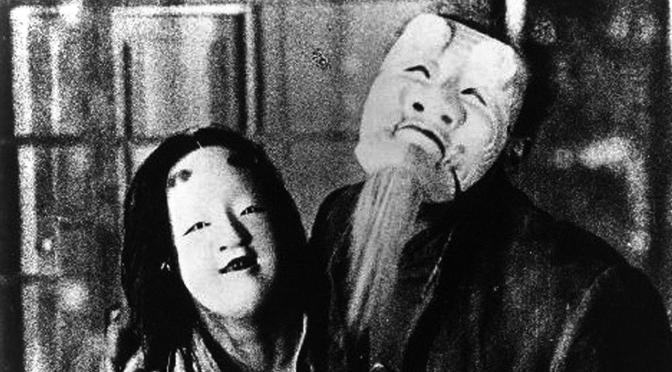
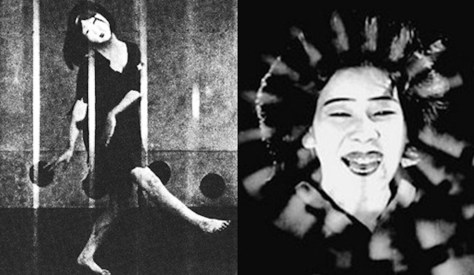
A Page of Madness has often been compared to The Cabinet of Caligari – thanks to its fragmented flashback narrative and haunting, stylised design. In fact, Teinosuke Kinugasa’s masterpiece is a kind of Japanese Expressionist film, whose artifice helps to expose emotional truths. It is really, a story of insanity, love and loss, about a man who takes a job at a mental asylum to be close to his wife, who is a patient there. It may well be inspired a little by FW Murnau’s The Last Laugh, and like that film, it doesn’t rely on intertitles. There is just one caption card here. When the film was screened in Japan on its original release, it would have been accompanied by a benshi narrator, who would attempt to draw out the narrative, or at least accompany the audience on this strange journey. This London screening will honour that tradition.

A Page of Madness (1926)

The Japanese Avant-Garde and Experimental  Film Festival will screen A Page of Madness on 24 September at King’s College London. The film will be shown on film, from a 35mm print, and will be accompanied by Benshi Tomoko Komura (who performs in English) as well as musicians Clive Bell, Sylvia Hallett and Keiko Kitamura offering a live score on the shakuhachi, piano and koto.

The film will be introduced on video by Professor Aaron Gerow, the author of the definitive book on A Page of Madness and will be followed by a panel discussion. I am honoured to be part of that panel, along with Japanese cinema expert Jasper Sharp and Tomoko Komura.

You can book tickets herePlease don’t miss out, on what promises to be a very special evening.

1917, 1927, 2017: Kino Klassika presents October at the Barbican

For other people, anniversaries are a good excuse for a party. For Silent Londoners, they’re a great excuse for a screening. You will have noticed by now that 2017 marks 100 years since the Russian Revolution – there have been exhibitions, books and screenings all year. The year isn’t over yet though. There’s another event coming up in October that is more epic than the rest.

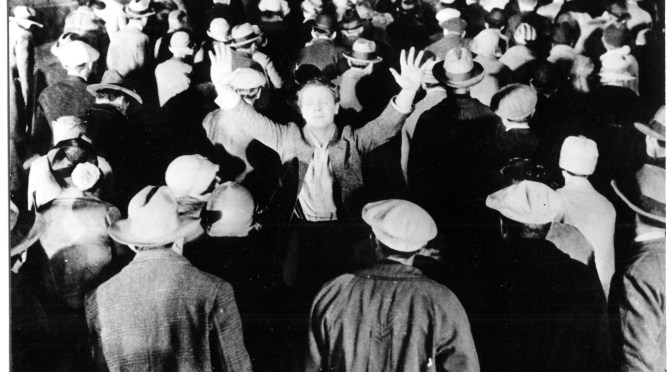
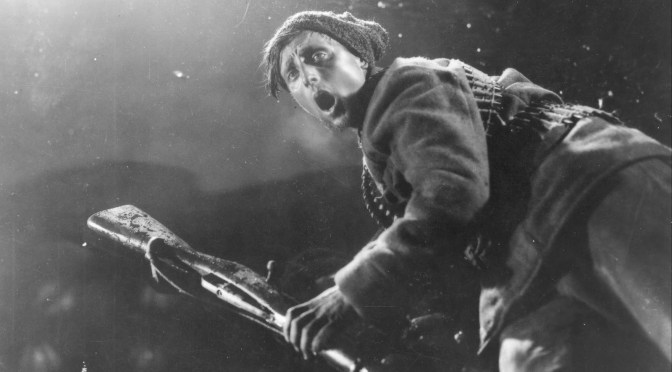
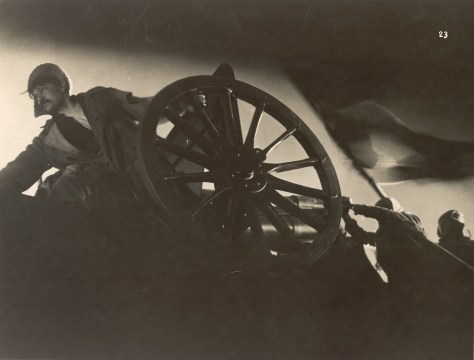
October you say? Yes, that October. On 26 October this year, Kino Klassika and the London Symphony Orchestra present Sergei Eisenstein’s masterpiece October at the Barbican Centre. This 1927 film charts, in its own often creative but always thrilling manner, the events of October 1917: the famous “10 days that shook the world” in which the Bolsheviks revolted against the Provisional Government, marched on St Petersburg, stormed the Winter Palace and prepared to build a new Soviet state.

It’s a magnificent, riveting film, thanks to Eisenstein’s electric direction – and the fact that the authorities gave him the run of the city to make it. You may already know the famous, actually quite harrowing, bridge sequence – but if you don’t, no spoilers here.

October (1928). Collection Austrian Film Museum, Vienna

If you have seen October before bear in mind that the film was banned in England and not shown here until 1934 – in fact there are still many censored versions going the rounds. This screening is the real deal, and not only is the film itself complete, it will be accompanied by Edmund Meisel’s original score, reconstructed by the Munich Film Museum and the European Film Philharmonic, and played by the London Symphony Orchestra. Not a night to be missed, if you possibly can. October still represents a dazzling highpoint of cinematic experimentation and sheer excitement.

Read more


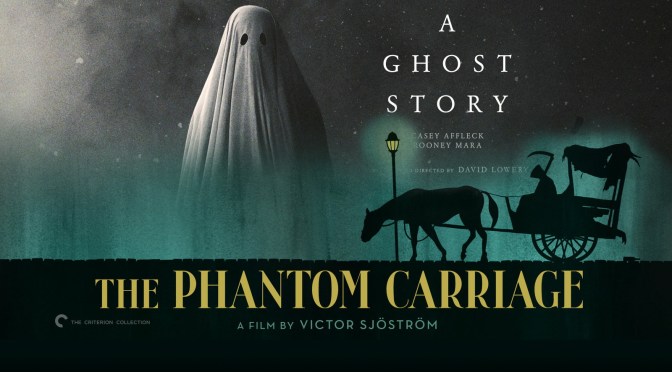
Sound Barrier: A Ghost Story (2017) & The Phantom Carriage (1921)

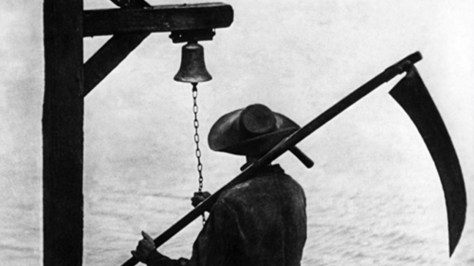
A spooky double-bill for our eighth Sound Barrier podcast: A Ghost Story, David Lowery’s high-threadcount, high-concept tale of love and loss, and The Phantom Carriage, Victor Sjöström’s long, dark night of the soul.

Sound Barrier: A Ghost Story (2017) & The Phantom Carriage (1921)

FYI the song you can hear in the trailer for A Ghost Story throughout the podcast is I Get Overwhelmed by Dark Rooms – it’s the song that Casey Affleck’s character writes and records in the film. But movies lie to you.


The Silent London Podcast is also available on iTunes and Stitcher. If you like what you hear, please subscribe and leave a rating or review too. The podcast is presented in association with SOAS radio by Peter Baran and Pamela Hutchinson.

If you want to get in touch with us about anything you hear on the podcast then you can post a comment below, or tweet @silentlondon.

The next episode of Sound Barrier will appear in a fortnight’s time. We’ll announce the films for the next podcast about a week before it launches, so you can watch what we’re watching.

Highlights of the 19th British Silent Film Festival

Exciting news from the British Silent Film Festival – the first programme announcements are out and passes are on sale now!

PH's avatarBritish Silent Film Festival

13-17 September 2017,
Phoenix Cinema, Leicester

Vampyr (Carl Th. Dreyer, 1932) Vampyr (Carl Th. Dreyer, 1932)

The British Silent Film Festival returns to the Phoenix in Leicester this September and the good news is that you can book your tickets and passes now. We are excited to unveil our four-day programme of silent and early sound cinema from around the world – with a special focus on British film.

All the silent films will be accompanied by some of the world’s best silent film musicians, including a very special score for Vampyr, by Stephen Horne and Minima. This haunting, hallucinatory horror film was directed by Carl Th Dreyer in 1932 with barely any dialogue. It is based on the writings of Sheridan le Fanu and follows a young scholar of the occult who enters a village that is under the curse of a vampire.

More silent horror in the programme comes courtesy of…

View original post 397 more words

London Symphony on tour

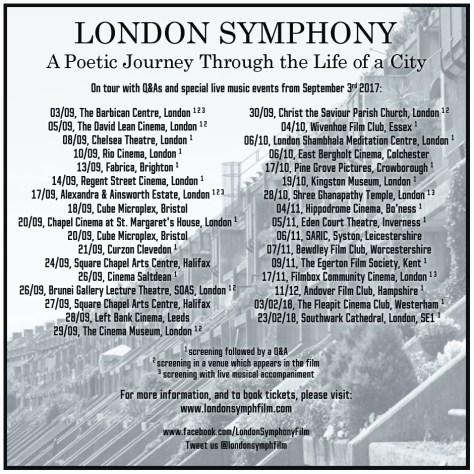
I have been talking to you about London Symphony, the modern City Symphony film, for a while now, but finally it’s time for you to see it. Or at least book a ticket to see it. yes, London Symphony is coming to a cinema near you, even if you don’t live in the capital. Details of the tour as it stands now are copied below, but I recommend you keep an eye on this page for up-to-date information from the horse’s mouth.

You’ll see that some of the screenings have live music, are followed by a Q&A or take place in a venue that appears in the film – or all three! The screening at Southwark Cathedral, I’m told, will take place by candlelight. You don’t get that kind of atmosphere with Dunkirk

Meanwhile, don’t miss Kim Newman’s review of the film in this month’s Sight & Sound, which although it completely neglects to mention my own appearance in the film (yes, really) rightly praises its “seductive parade of striking images and juxtapositions”.

LSTourDatesPoster


Pandora’s book: news update

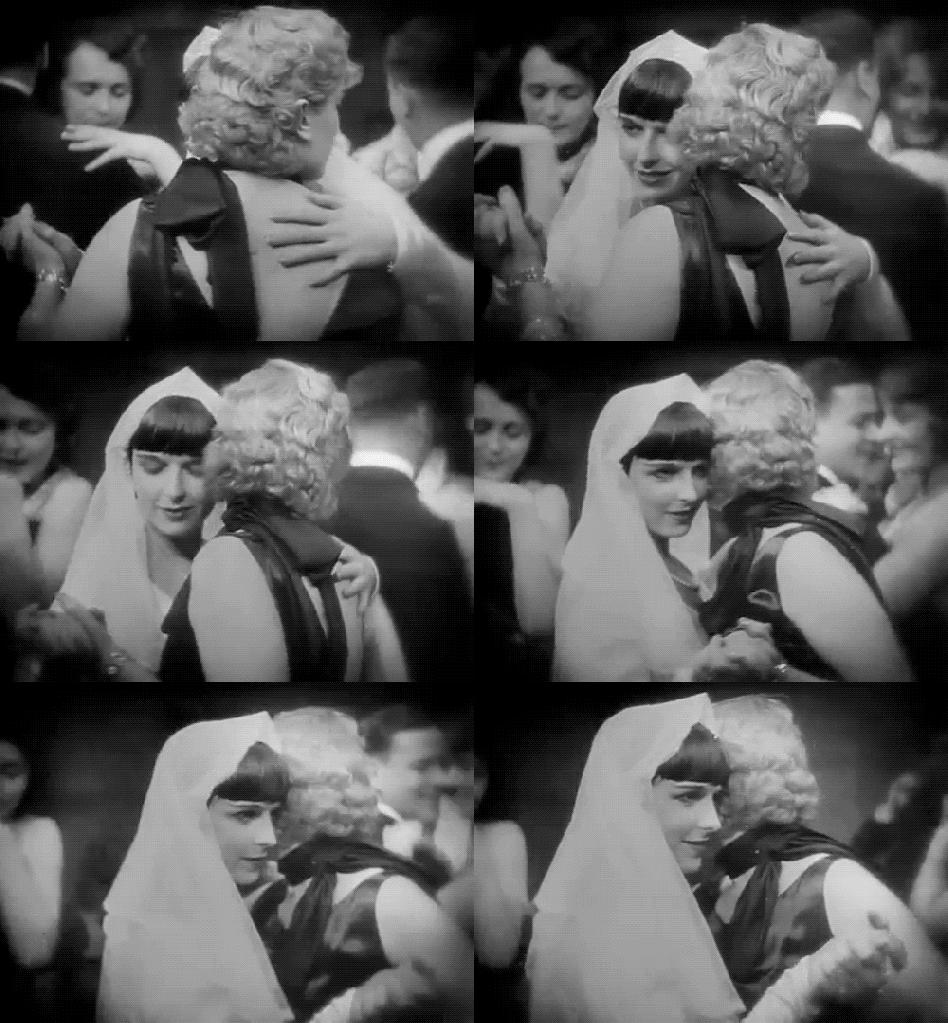
Just a short note, to give you a little bit of news. The book I’ve been writing, well actually wrote last summer, has a release date! It’s a short book in the BFI Film Classics series, about one of the most beautiful and fascinating of all silent movies, GW Pabst’s Pandora’s Box (1929), starring the unique Louise Brooks. #pandorasbook

Bad news for now – the book isn’t out until 21 November.

Good news for now – you can pre-order the book already, on Amazon, on the Palgrave site, or in a selection of other bookshops.

Good news to come – I’m talking to several people at venues up and down the UK, about screenings of the film to tie in with the launch. The deal is: I’ll come along, chat about the film, sell you a book and it will be midwinter magic all round. Details of those events to come, so watch this space …

Thanks for all your support. It’s also exactly a year today since I quit my full-time job and I have had a fabulous, busy 12 months of freelance film-related work. It’s enough to make a girl want to dance …

PandoraTango

Competition: win tickets for silent films at Wilton’s Music Hall

Competition time! And this time I am giving away three pairs of tickets for some silent movie screenings at one of London’s most atmospheric venues. The team at the Lucky Dog Picturehouse have teamed up with Wilton’s Music Hall, a historical theatre in the east end of London, to put on four nights of silent cinema and live music.

The Lucky Dog Picturehouse is dedicated to recreating the original cinema experience, bringing together classic silent films and live, period specific music. Working with some of the best young musicians in London, they have performed at numerous venues including the BFI Southbank, LoCo Film Festival, Hackney Picturehouse, Standon Calling festival and Abney Park’s outdoor cinema series. The Lucky Dog Picturehouse also run a series of educational programmes introducing silent film to children in a fun and interactive way.

To win a pair of tickets for one of these screenings, just send the answer to this question to silentlondontickets@gmail.com by midnight on 7 August 2017 – and don’t forget to let me know which film you’d like to see.

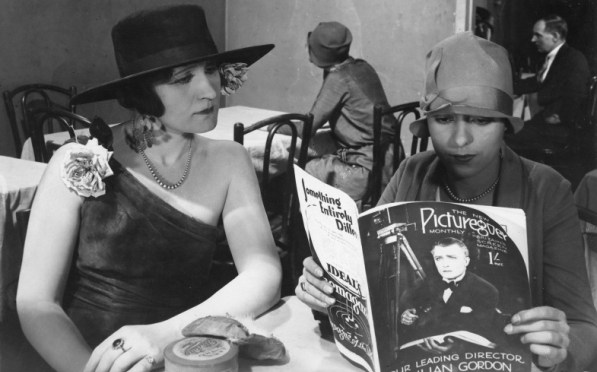
What is the name of the cowboy star played by Brian Aherne in Shooting Stars?

A) Tom Mix

B) Julian Gordon

C) William S Hart

Good luck! The winner be chosen at random from the correct answers and will be notified by email. 

Sound Barrier: Dunkirk (2017) & The Battles of Coronel and Falkland Islands (1927)

The Sound Barrier returns with two wartime blockbusters. In this episode, Pete Baran and I are joined in the studio by the Guardian’s Nick Dastoor.

We’re debating the relative merits of Christopher Nolan’s smash-hit WWII spectacle Dunkirk and Walter Summers’ patriotic WWI re-enactment film The Battles of Coronel and Falkland Islands (1927)

Sound Barrier: Dunkirk (2017) & The Battles of Coronel and Falkland Islands (1927)

The Silent London Podcast is also available on iTunes and Stitcher. If you like what you hear, please subscribe and leave a rating or review too. The podcast is presented in association with SOAS radio by Peter Baran and Pamela Hutchinson.

If you want to get in touch with us about anything you hear on the podcast then you can post a comment below, or tweet @silentlondon.
The next episode of Sound Barrier will appear in a fortnight’s time. We’ll announce the films for the next podcast about a week before it launches, so you can watch what we’re watching.

Read more about The Battles of Coronel and Falkland Islands (1927)

Drifters: Following the fleet around the coast of Great Britain

I just wanted to drop you a line (geddit? you will in a minute) about a very special silent-film-and-live-music tour happening this summer. You may know Drifters, John Grierson’s silent debut, a gorgeous, choppily edited and Soviet-inspired promotional film for the fishing industry. I would always highly recommend you see with with Jason Singh’s stripped-down “vocal sculpture” score, although I hear it has actually been improved on and expanded since I first saw it in 2012.

Now Singh is taking Drifters to the sea – to the fishing towns that will best recognise the labour and the courage shown in Grierson’s evocative film. He’ll be accompanying the film in a series of special screenings in Leith, Hull, South Shields, Aldeburgh and Great Yarmouth.

Drifters (1929)
Drifters (1929)

The 2017 Following The Fleet: DRIFTERS tour will visit six of the UK’s important fishing ports, re-tracing the historic journey of boats, men and women in pursuit of the once abundant herring shoals. Commencing in the major port of Leith on Saturday 5th August, the tour will then be dropping anchor for a free atmospheric outdoor screening at Hull Marina as part of The Floating Cinema’s ‘In Dialogue’ film programme within Hull UK City of Culture 2017 (10th August), before calling at SeahousesHUB (22nd September), The Customs House, South Shields (24th September), Aldeburgh Cinema (28th September), finishing at SeaChange Arts, Great Yarmouth (30th September).

But there’s more. Shona Thomson of A Kind of Seeing has commissioned site-specific archive film screenings to show alongside the film. Each Drifters event should have a unique appeal to the community it appears in – a really powerful combination of archive film and live music.

  • Leith-based female singing collective Davno will celebrate the major port’s East European connections of the past and present with their ethereal arrangements of traditional songs from Poland, Russia and Ukraine.
  • As part of his On the Bench film series and waterways tour from Sheffield to Hull, Yorkshire artist Harry Meadley will present live narration for a selection from amateur filmmaker John Turner’s Hull Street Scenes film series of the 1950s exploring our presumptions of what ‘archive footage’ might be.
  • Northumberland-based singer/songwriter Andy Craig brings his historical knowledge of the landscape to explore the transformation of the once-thriving fishing village of Seahouses to a busy tourism destination.
  • 21-year-old Aaron Duff – whose deep maritime connections in North Shields through his seafaring grandfather he honours by performing under the name of the last ship under his command Hector Gannet – will perform a new live soundtrack commemorating those lost at sea. Also on the bill is 17-year-old Eve Simpson, a mesmerising and accomplished live performer from South Shields whose passionately political voice will be accompanying films from the North East Film Archive around the role of women in the South Shields and Tyneside port industries.
  • The haunting, raucous and joyous East Anglian ensemble Dead Rat Orchestra bring their own innovative blend of folk and improvisation to explore the urgent issue of coastal erosion around Aldeburgh, Suffolk.
  • A group of fresh, talented performers from the Portuguese-speaking community of Great Yarmouth accompanying films of the golden days of the 1950s seaside resort, reflecting on the changes the town has seen and is still going through.

To find out more, and to book tickets, visit the website.

Drifters_Banner_BIG.jpg

Ritrovato Roundtable: Il Cinema Ritrovato 2017 podcast report

I’m back from Bologna and joined in the podcast studio by Pete Baran and film writer Philip Concannon. We’re chatting about our highlights, discoveries and duds from the Il Cinema Ritrovato festival – a banquet of archive, vintage and restored cinema, spanning silent and sound films.

Ritrovato Roundtable: Il Cinema Ritrovato 2017 podcast report

Sensation Seekers (Lois Weber, 1927)

The Silent London Podcast is also available on iTunes and Stitcher. If you like what you hear, please subscribe and leave a rating or review too. The podcast is presented in association with SOAS radio by Peter Baran and Pamela Hutchinson.

If you want to get in touch with us about anything you hear on the podcast then you can post a comment below, or tweet @silentlondon.


Beggars of Life: a Companion to the 1928 Film review – behind the scenes of a silent classic

Nobody knows more about Louise Brooks than Thomas Gladysz. Having founded the Louise Brooks Society in 1995, he has spent more than two decades researching her life and work, curating memorabilia and writing about this most fascinating of silent era actresses. A few years back he published a sumptuous illustrated edition of the novel that Brooks’s second German film, Diary of a Lost Girl (G. W. Pabst, 1929) was based on, and he has contributed audio commentaries to American DVDs of that film, and her finest Hollywood movie, Beggars of Life (William Wellman, 1928).

Which brings us up to date with Gladysz’s latest publication – a short book about the Wellman film, packed with anecdotes and information. Beggars of Life: A Companion to the 1928 Film is a quick, satisfying read, illustrated with promotional material, posters and stills as well as press clippings. In these pages, Gladysz takes us through the making and the reception of the film and clears up a few mysteries too.

Beggars of Life (1928)

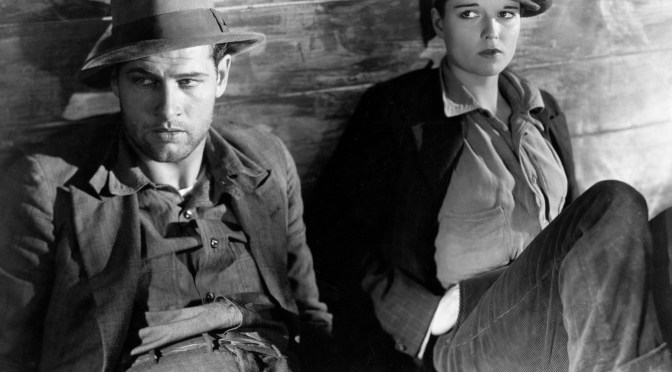
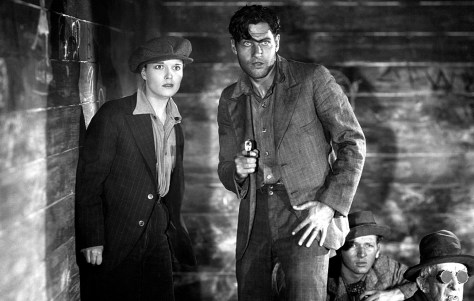
The film, which you may have been lucky enough to see accompanied by a live score from the fabulous Dodge Brothers, features Brooks as an orphan fugitive, dressed as a boy and riding the rails with a handsome tramp played by Richard Arlen and a gang of his peers, including the the menacing Oklahoma Red, played by Wallace Beery. It’s adapted from a famous book by “hobo author” Jim Tully, and although it was a little sanitised by Hollywood, it’s still a remarkably raw, realist film. Not least of its strengths is that Brooks here gives an excellent performance as a survivor of sexual abuse, as she would in her two Pabst films, drawing perhaps on her own experiences as a child.

Continue reading Beggars of Life: a Companion to the 1928 Film review – behind the scenes of a silent classic